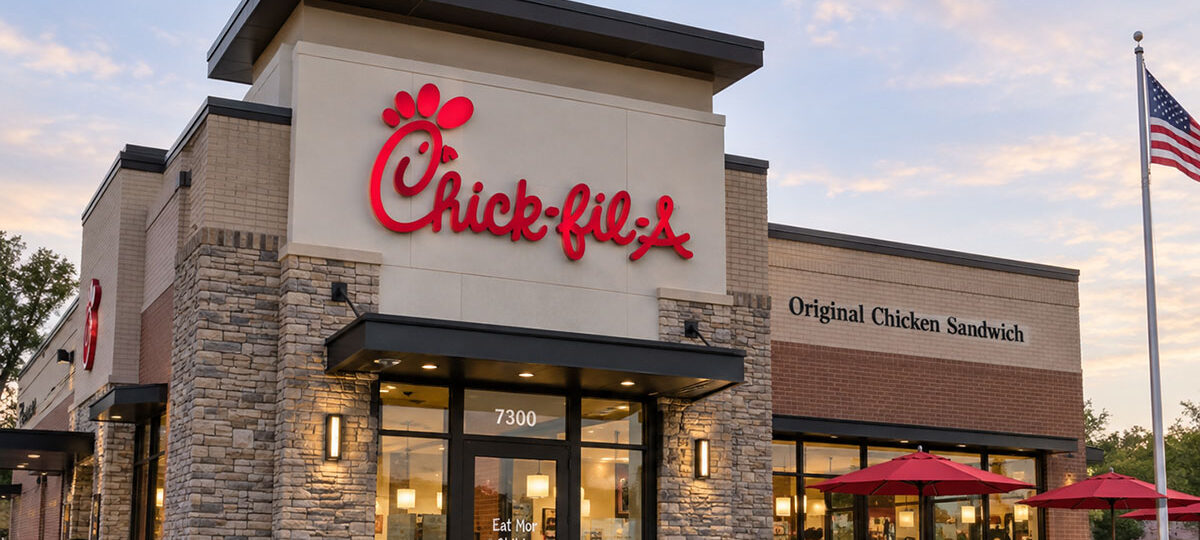
The Chick-fil-A logo stands as one of the most recognized symbols in American fast food. It combines clever wordplay with visual design that tells you exactly what the company sells before you even walk through the door.
Within the broader landscape of fast food logos, Chick-fil-A’s mark occupies a unique position. It doesn’t rely on golden arches or cartoon mascots. Instead, it uses a simple but effective visual trick that’s been working since 1967.
The current version of the logo was refined in 2012, though its core concept has remained intact for decades. S. Truett Cathy founded the company in Atlanta, Georgia, and the brand has gone through roughly four major logo iterations since then.
What is the Chick-fil-A Logo?
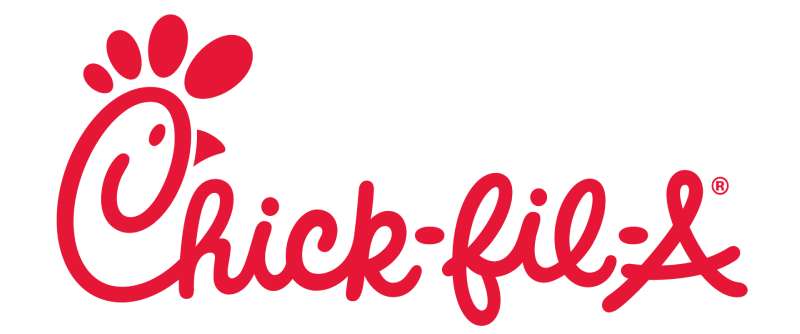
The Chick-fil-A logo is a combination mark featuring a stylized chicken silhouette cleverly integrated into the capital letter “C.” It was introduced in its original form in 1967 and represents the company’s focus on chicken-based menu items through simple visual wordplay.
Design Type: Combination mark (symbol plus wordmark)
Primary Elements:
- Stylized chicken head forming the negative space within the letter “C”
- Custom wordmark spelling “Chick-fil-A”
- Red color as the dominant visual element
Official Introduction Date: 1967 (original), 2012 (current refined version)
Designer/Agency: The original concept came from internal development, though specific designer attribution remains unclear in public records.
Trademark Status: Registered trademark of Chick-fil-A, Inc.
Color Palette:
- Primary Red: #E51636
- White: #FFFFFF
Usage Context: Restaurant signage, packaging, mobile app, uniforms, marketing materials, merchandise, and digital platforms.
How Has the Chick-fil-A Logo Evolved Over Time?
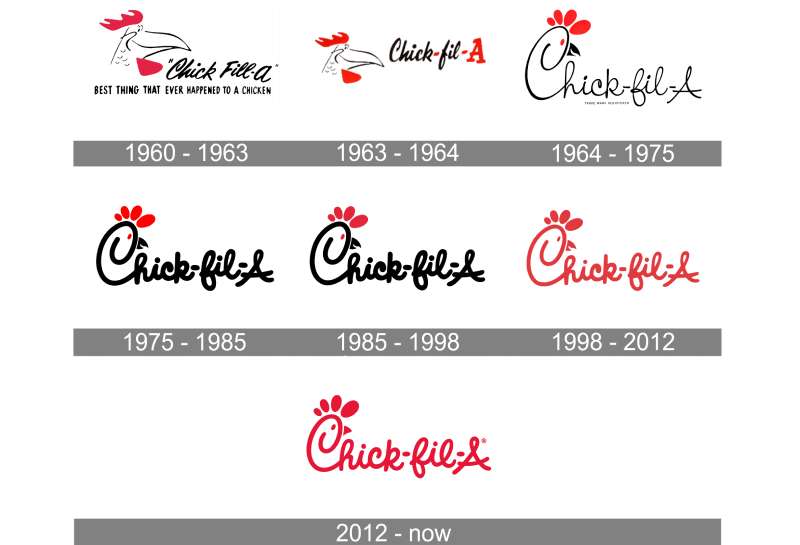
The Chick-fil-A logo has maintained its core chicken-in-C concept since 1967, with refinements focusing on typography and proportions rather than complete redesigns.
Four major versions have existed. Each one kept the central idea intact while updating the execution for modern contexts.
Original Chick-fil-A Logo (1967-1970s)
Years Active: 1967 to early 1970s
Design Description: The first logo introduced the chicken silhouette within the “C” concept. Typography was more ornate, reflecting design trends of the era.
Color Scheme: Red and white, establishing the brand’s signature palette from day one.
Context: S. Truett Cathy had operated the Dwarf House restaurant since 1946. When he created the boneless chicken sandwich and opened the first Chick-fil-A in Atlanta’s Greenbriar Mall, he needed a distinct identity.
Cultural Significance: This logo established visual language that would define the brand for decades.
Refined Chick-fil-A Logo (1970s-1998)
Years Active: Mid-1970s through 1998
Design Description: The chicken silhouette became more defined. Typography shifted toward cleaner lines.
Key Changes from Previous: Simplified overall composition. The wordmark became more standardized.
Context: Rapid expansion across the American South required a logo that reproduced well across various applications.
Updated Chick-fil-A Logo (1998-2012)
Years Active: 1998 to 2012
Design Description: Further refinement of proportions. The chicken head gained more detail and the typography became bolder.
Color Scheme: Same red and white, with more consistent color application across materials.
Key Changes from Previous: Increased visual weight. Better scalability for digital applications.
Current Chick-fil-A Logo (2012-Present)
Years Active: 2012 to present
Design Description: The most polished version. Clean lines, optimized proportions, and typography that works across all screen sizes.
Key Changes from Previous: Subtle adjustments to the chicken silhouette. Typography refined for digital-first applications.
Cultural Significance: This version coincided with Chick-fil-A’s expansion into a national powerhouse and its growing digital presence.
What Do the Design Elements of the Chick-fil-A Logo Mean?
The chicken silhouette within the “C” serves as visual shorthand for the brand’s core product.
It’s not subtle. And that’s the point.
You see a chicken, you think chicken sandwich. The design communicates before you’ve read a single word.
Why Did Chick-fil-A Choose These Specific Colors?
Red dominates the Chick-fil-A logo, and there’s solid reasoning behind this choice rooted in color psychology.
Primary Red (#E51636):
- Symbolic meaning: Energy, appetite stimulation, urgency
- Psychological impact: Red triggers hunger responses and creates excitement
- Brand connection: Aligns with the fast food industry’s widespread use of red
White (#FFFFFF):
- Symbolic meaning: Cleanliness, simplicity, trust
- Psychological impact: Creates contrast and improves readability
- Brand connection: Suggests quality and purity of ingredients
This combination appears throughout red logos in the food industry. It works because human brains are wired to respond to these colors when thinking about food.
What Typography Style Is Used in the Chick-fil-A Logo?
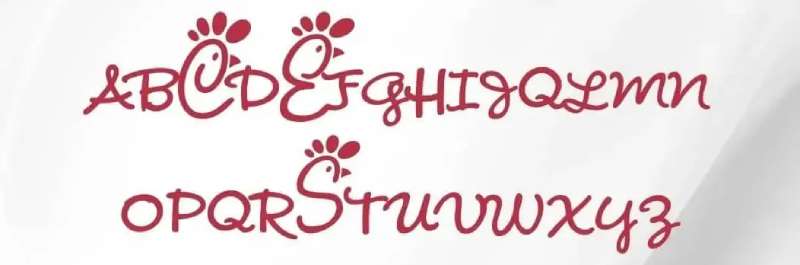
The Chick-fil-A wordmark uses a custom sans-serif font with distinctive characteristics.
It’s bold without being aggressive. The letterforms have slight curves that soften the overall appearance.
Readability was clearly a priority. The letters maintain clarity at small sizes, which matters for everything from app icons to drive-through menus.
The hyphenated spelling “Chick-fil-A” required careful kerning to ensure the hyphens didn’t disrupt visual flow.
What Are the Hidden Meanings in the Chick-fil-A Logo?
The chicken-in-C design isn’t really hidden. It’s right there once you see it.
But that’s what makes it effective. The moment of recognition creates a small mental reward.
Some have noted the chicken appears to be smiling, though whether this was intentional remains unclear from official sources.
The name itself contains wordplay: “Chick-fil-A” sounds like “chicken fillet,” referencing the product that made the company famous.
How Does the Chick-fil-A Logo Compare to Competitor Logos?
Among major chicken-focused chains, Chick-fil-A takes a distinctly different approach than competitors like KFC.
KFC relies on Colonel Sanders as a mascot. Chick-fil-A integrates its subject directly into the letterform.
Compared to McDonald’s or Wendy’s, the Chick-fil-A mark feels more restrained. No golden arches or pigtailed girls. Just a clever visual pun.
Popeyes and Wingstop take entirely different routes with their branding.
The Chick-fil-A approach works because it’s memorable without trying too hard. It respects the viewer’s intelligence.
What Are the Technical Specifications of the Chick-fil-A Logo?
Official Color Codes:
Primary Red:
White:
- Hex: #FFFFFF
- RGB: (255, 255, 255)
- CMYK: (0, 0, 0, 0)
Dimensions and Proportions:
- The logo maintains consistent proportions across applications
- Minimum size requirements ensure the chicken silhouette remains recognizable
- Clear space specifications protect the logo from crowding by other elements
What Cultural Impact Has the Chick-fil-A Logo Had?
The Chick-fil-A logo has achieved something rare: instant recognition without relying on a separate mascot character.
Well, technically there are the cows. But they’re part of the advertising, not the logo itself.
The “Eat Mor Chikin” campaign cows have become cultural icons in their own right, but the primary logo predates them by decades.
That chicken silhouette has appeared on billions of cups, bags, and wrappers. It’s become visual shorthand for a particular kind of fast food experience.
How Does the Chick-fil-A Logo Fit Into the Overall Brand Identity?
The logo serves as the anchor point for Chick-fil-A’s broader visual system.
Everything connects back to that red-and-white combination. Store interiors, employee uniforms, packaging design, and digital interfaces all reference the same palette.
The company’s brand guidelines ensure consistency across thousands of locations.
This tight control creates a cohesive experience. You know you’re at a Chick-fil-A before anyone says “my pleasure.”
How Should the Chick-fil-A Logo Be Used?
Official Usage Guidelines:
- The logo should never be stretched, skewed, or modified
- Color applications must follow official specifications
- Minimum clear space must be maintained around the logo
- The chicken silhouette should always remain clearly visible
Where to Access Official Logos:
Franchisees and approved partners receive logo files through official Chick-fil-A channels. Public use requires explicit permission.
Trademark Protection:
The Chick-fil-A logo is a registered trademark. Unauthorized commercial use can result in legal action. This includes parody uses that might create confusion about brand affiliation.
For press or media inquiries, Chick-fil-A’s corporate communications team handles logo usage requests on a case-by-case basis.
FAQ on The Chick-Fil-A Logo
What Does the Chick-fil-A Logo Look Like?
The Chick-fil-A logo features a stylized chicken silhouette hidden within a large red letter “C.”
The brand identity combines this symbol with a custom wordmark. White and red make up the official color scheme.
It’s a combination mark that works at any size.
What Is the Meaning Behind the Chick-fil-A Logo?
The chicken head inside the “C” directly references the company’s signature product: chicken sandwiches.
This visual wordplay communicates the menu focus instantly. No explanation needed.
The design reflects logo design principles that prioritize clarity and memorability.
When Was the Chick-fil-A Logo Created?
The original Chick-fil-A logo debuted in 1967 when S. Truett Cathy opened the first location in Atlanta, Georgia.
The logo evolution has included four major versions since then.
The current refined version launched in 2012.
Who Designed the Chick-fil-A Logo?
Specific designer attribution remains unclear in public records. The concept developed internally within the company.
Unlike some famous graphic designers with credited work, this logo’s creator stayed behind the scenes.
The Cathy family oversaw its development.
What Colors Are in the Chick-fil-A Logo?
Red (#E51636) and white (#FFFFFF) form the official color palette.
Red stimulates appetite and creates urgency. White provides contrast and suggests cleanliness.
These restaurant branding colors appear on all Chick-fil-A signage and marketing materials.
Has the Chick-fil-A Logo Changed Over Time?
Yes. The logo history includes four distinct versions spanning 1967 to present.
Core elements stayed consistent. The chicken-in-C concept never changed.
Updates focused on refining proportions and improving the typeface for modern applications.
What Font Does Chick-fil-A Use in Its Logo?
Chick-fil-A uses a custom wordmark. It’s not a publicly available font.
The letterforms feature bold, rounded characteristics with careful tracking between characters.
This custom approach ensures the brand owns its visual identity completely.
Why Is There a Chicken in the Chick-fil-A Logo?
The chicken represents the company’s core product. S. Truett Cathy invented the boneless chicken sandwich.
Integrating the chicken into the letterform creates instant brand recognition. It’s clever storytelling through design.
You see the logo, you think chicken.
Can I Download the Chick-fil-A Logo?
Official logo files are available only through authorized Chick-fil-A channels. The trademark protects against unauthorized use.
Media inquiries go through corporate communications. Franchisees receive files directly.
Using the logo without permission risks legal consequences.
What Does “Fil-A” Mean in Chick-fil-A?
“Fil-A” sounds like “fillet” when spoken aloud. It references the chicken fillet sandwich that launched the company.
The capital “A” suggests grade-A quality. This wordplay reinforces the brand’s focus on premium chicken products.
Pretty clever naming, honestly.
Conclusion
The Chick-fil-A logo proves that simple ideas often work best. A chicken inside a letter. That’s it.
Yet this visual identity has driven brand recognition for nearly six decades across thousands of restaurant locations.
The design succeeds because it follows solid graphic design principles. Clear focal point. Strong corporate identity. Consistent application.
Whether on a cup, a billboard, or an app icon, that chicken silhouette delivers instant recognition.
Few quick service restaurant logos achieve this level of trademark memorability. The Chick-fil-A emblem earned its place among the most effective in fast food branding.

Renowned for his expertise in logo design and visual branding, Bogdan has developed a multitude of logos for various clients.
His skills extend to creating posters, vector illustrations, business cards, and brochures. Additionally, Bogdan's UI kits were featured on marketplaces like Visual Hierarchy and UI8.
He also wrote in the past years on sites like Design Your Way, WebDesignerDepot, WPDean, Designmodo, Speckyboy, Slider Revolution, and more.
- Canva vs PowerPoint: Which Is Better for Presentations? - 22 September 2026
- How to Install Fonts on Mac (Step-by-Step Guide) - 20 September 2026
- From Mockup to Code: How AI-Augmented Development Speeds Up the Design Handoff - 19 September 2026

Bogdan Sandu is a seasoned designer who has been designing websites since 2008. Renowned for his expertise in logo design and visual branding, Bogdan has developed a multitude of logos for various clients. His skills extend to creating posters, vector illustrations, business cards, and brochures. Additionally, Bogdan's UI kits were featured on marketplaces like Visual Hierarchy and UI8. He also wrote in the past years on sites like Design Your Way, WebDesignerDepot, WPDean, Designmodo, Speckyboy, Slider Revolution, and more.
You Might Also Like