

The Wendy’s logo stands as one of the most recognizable symbols in the quick-service restaurant industry. A freckled girl with red pigtails has represented this brand since 1969. That’s over five decades of consistent visual identity, which is actually pretty rare in fast food branding.
Dave Thomas founded Wendy’s in Columbus, Ohio, naming the company after his daughter Melinda Lou “Wendy” Thomas. The logo has gone through roughly five major iterations since launch. Each version refined the mascot while keeping her core identity intact.
The current design was introduced in 2013. It dropped the previous wordmark-heavy approach for a cleaner, more modern look that works better across digital platforms.
What is the Wendy’s Logo?
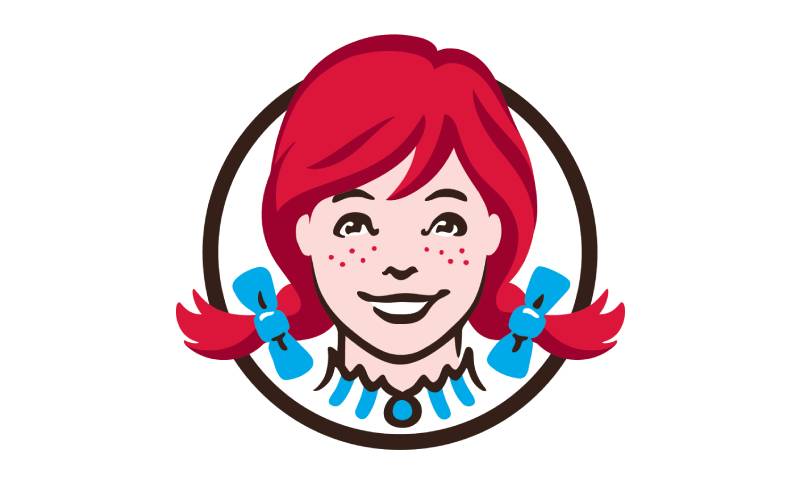
The Wendy’s logo is a combination mark featuring a stylized illustration of a young girl with red pigtails, freckles, and a blue-striped collar. Introduced in its current form in 2013, the design was created by Tesser. It symbolizes the brand’s commitment to fresh, quality food through its wholesome, friendly imagery.
Key attributes of the current Wendy’s logo:
- Design Type: Combination mark (mascot illustration with wordmark)
- Primary Elements: Illustrated girl portrait, custom “Wendy’s” lettering, cameo-style circular frame
- Official Introduction Date: October 2012 (rolled out through 2013)
- Designer/Agency: Tesser (San Francisco-based branding agency)
- Trademark Status: Registered trademark of The Wendy’s Company
- Official Colors: Wendy’s Red (#e2203d), Wendy’s Blue (#199fda), White (#ffffff)
- Usage Context: Restaurant signage, packaging, digital platforms, advertising, merchandise, mobile app
How Has the Wendy’s Logo Evolved Over Time?

The Wendy’s logo has transformed through five distinct versions since 1969. Each redesign modernized the mascot while preserving the red-haired girl as the central element.
The evolution moved from detailed, realistic illustration toward simplified, stylized graphics. Typography shifted from elaborate scripts to clean, approachable lettering.
Original Wendy’s Logo (1969-1970)
- Years Active: 1969-1970
- Design Description: Simple black and white design featuring “Wendy’s” in a casual script with “Old Fashioned HAMBURGERS” beneath it
- Color Scheme: Black and white only
- Designer: Unknown (likely internal)
- Context: Created for the first Wendy’s restaurant opening in Columbus, Ohio
- Key Changes from Previous: N/A (original design)
- Cultural Significance: Established the brand name but lacked the iconic mascot
First Mascot Logo (1970-1983)
- Years Active: 1970-1983
- Design Description: Introduction of the Wendy character, a realistic illustration of a girl with red pigtails in a red and white striped dress
- Color Scheme: Red, yellow, white, black, flesh tones
- Designer: Unknown
- Context: Dave Thomas wanted his daughter’s likeness to represent the brand’s family values
- Key Changes from Previous: Added the mascot character that would define the brand
- Cultural Significance: Created instant recognition and warmth in an industry dominated by clowns and kings
Refined Mascot Logo (1983-2012)
- Years Active: 1983-2012
- Design Description: More polished Wendy illustration with a yellow circular background, red “Wendy’s” script, and “OLD FASHIONED HAMBURGERS” tagline
- Color Scheme: Red, yellow, white, blue collar stripes
- Designer: Unknown (corporate redesign)
- Context: Updated to look more professional as Wendy’s expanded nationally and internationally
- Key Changes from Previous: Cleaner lines, added yellow background circle, standardized typography
- Cultural Significance: This version became the most recognized, lasting nearly three decades
Current Wendy’s Logo (2012-Present)
- Years Active: 2012-present
- Design Description: Simplified, modern Wendy portrait without the rectangular frame, featuring softer colors and a cameo-style presentation
- Color Scheme: Red (#e2203d), Blue (#199fda), White
- Designer: Tesser
- Context: Part of a brand refresh to appeal to younger consumers and work better on digital platforms
- Key Changes from Previous: Removed “Old Fashioned Hamburgers” tagline, simplified the overall design, updated typography to a cleaner sans-serif style
- Cultural Significance: Represents Wendy’s shift toward a more contemporary, social media-savvy brand personality
What Do the Design Elements of the Wendy’s Logo Mean?

The Wendy’s logo design centers on authenticity and approachability. Every element, from the mascot’s freckles to her braided pigtails, communicates the brand’s “fresh, never frozen” positioning.
The girl represents real people and real food. It’s a deliberate contrast to the cartoonish mascots used by competitors.
Why Did Wendy’s Choose These Specific Colors?
Red dominates the Wendy’s color palette for good reason. It’s the most common color in restaurant branding because it stimulates appetite and creates urgency.
The specific shade, Wendy’s Red (#e2203d), is warm and inviting rather than aggressive.
Blue appears in Wendy’s collar stripes and accent elements. According to color psychology principles, blue builds trust and reliability.
It balances the energetic red. Together, these colors create a palette that feels both exciting and dependable.
What Typography Style Is Used in the Wendy’s Logo?
The current Wendy’s wordmark uses a custom sans-serif typeface. It replaced the script typography from earlier versions.
The letterforms are rounded and friendly. They avoid sharp edges that might feel cold or corporate.
Readability was a primary concern. The font needed to work on everything from highway billboards to mobile app icons. Simple, bold characters accomplish this across all sizes.
What Are the Hidden Meanings in the Wendy’s Logo?
Look closely at Wendy’s collar. Some people claim the ruffles spell out “MOM.” Wendy’s initially denied this was intentional, though they later leaned into it as a happy accident.
The freckles and pigtails aren’t random. They’re based on actual childhood photos of Melinda Lou Thomas.
This authenticity matters. The mascot represents a real person, which reinforces the brand’s messaging about real ingredients and honest food.
How Does the Wendy’s Logo Compare to Competitor Logos?
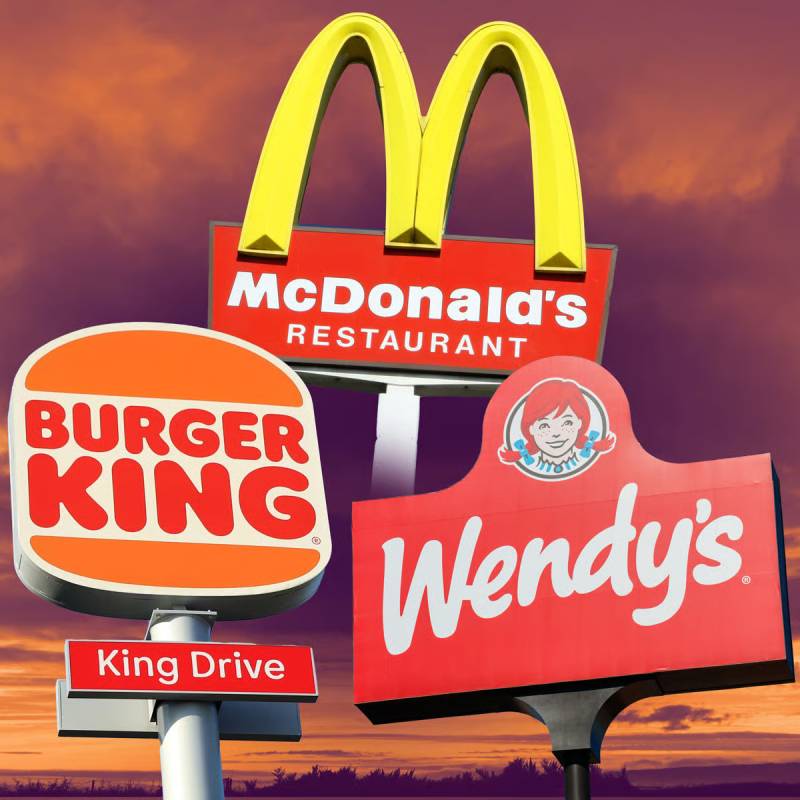
Wendy’s takes a unique approach in the fast food landscape. While McDonald’s uses abstract golden arches and Burger King relies on a text-based “bun” design, Wendy’s features an actual human face.
This creates immediate emotional connection. People respond differently to faces than to symbols.
Competitive logo comparison:
- McDonald’s: Abstract symbol (golden arches), no human element, focuses on architectural recognition
- Burger King: Text-focused design with bun imagery, impersonal but descriptive
- Wendy’s: Human mascot, emotional appeal, suggests personal touch and care
- Chick-fil-A: Stylized chicken symbol, clever but not human
- Taco Bell: Abstract bell shape, geometric and modern
The human mascot strategy positions Wendy’s as more personal and trustworthy. It’s harder to distrust a freckled girl than a corporate symbol. At least, that’s the psychology behind it.
What Are the Technical Specifications of the Wendy’s Logo?
Official Color Codes:
Wendy’s Red
Wendy’s Blue
- Hex: #199fda
- RGB: (25, 159, 218)
- CMYK: (75, 20, 0, 0)
- Pantone: PMS 299 C
White
- Hex: #ffffff
- RGB: (255, 255, 255)
- CMYK: (0, 0, 0, 0)
Dimensions and Proportions:
- Aspect Ratio: The standalone Wendy portrait is roughly circular (1:1), while the full logo with wordmark varies by application
- Minimum Size: 0.5 inches (12.7mm) for the icon mark in print applications
- Clear Space: Minimum clear space equal to the height of the “W” in the wordmark on all sides
- File Formats: Available in vector formats (AI, EPS, SVG) and raster formats (PNG, JPG) through official brand resources
What Cultural Impact Has the Wendy’s Logo Had?

Wendy’s mascot became a cultural icon beyond just representing hamburgers. The brand’s aggressive, witty social media presence turned the red-haired girl into a symbol of corporate sass.
Their Twitter account regularly roasts competitors and customers alike. The logo now carries associations with clever marketing, not just food.
The “MOM” collar discovery sparked viral discussions and countless memes. It shows how logo details can take on lives of their own in internet culture.
How Does the Wendy’s Logo Fit Into the Overall Brand Identity?
The Wendy’s logo anchors a complete visual identity system. It connects to packaging, restaurant interiors, uniforms, advertising, and digital presence.
Everything ties back to the mascot’s personality. Warm, approachable, slightly cheeky.
The brand guidelines ensure consistency across thousands of franchise locations. Same Wendy, same colors, same feeling, whether you’re in Ohio or overseas.
Recent brand evolution has emphasized flexibility. The logo works as a full lockup or as the standalone Wendy portrait for social media avatars and app icons.
How Should the Wendy’s Logo Be Used?

Official Usage Guidelines:
- Do: Use official logo files from Wendy’s brand portal
- Do: Maintain proper clear space around the logo
- Do: Use approved color variations (full color, single color, reversed)
- Don’t: Alter the logo proportions or colors
- Don’t: Add effects like shadows, gradients, or outlines
- Don’t: Place the logo on busy backgrounds that reduce legibility
Accessing Official Logos:
Franchisees and approved partners can access logo files through Wendy’s internal brand portal. Media outlets may request logo files through Wendy’s corporate communications department.
Unauthorized commercial use of the Wendy’s logo constitutes trademark infringement. The Wendy’s Company actively protects its intellectual property.
Trademark Information:
The Wendy’s name, logo, and mascot are registered trademarks of The Wendy’s Company. First registered in 1969, the trademark has been continuously renewed and protected.
FAQ on The Wendy’s Logo
What Does the Wendy’s Logo Represent?
The Wendy’s logo represents freshness, family values, and quality food. The red-haired girl mascot is based on founder Dave Thomas’s daughter.
Her wholesome appearance communicates trust. The focal point is her friendly face, creating instant brand recognition across restaurant signage and marketing materials.
Who Designed the Current Wendy’s Logo?
Tesser, a San Francisco branding agency, designed the current Wendy’s logo in 2012. They modernized the classic mascot while keeping her core identity.
The redesign followed solid logo design principles. It simplified the illustration for better digital platform performance without losing emotional connection.
When Was the First Wendy’s Logo Created?
The original Wendy’s logo appeared in 1969 when Dave Thomas opened his first restaurant in Columbus, Ohio. That first version was simple black and white text.
The iconic girl mascot came in 1970. She’s been the visual identity cornerstone ever since.
Why Does the Wendy’s Logo Feature a Girl?
Dave Thomas named Wendy’s after his daughter Melinda Lou, nicknamed “Wendy.” Her childhood photo inspired the mascot design.
Using a real person adds authenticity. It’s storytelling through design. The personal touch differentiates Wendy’s from competitors using abstract symbols or cartoon characters.
What Are the Official Wendy’s Logo Colors?
Wendy’s Red (#e2203d) dominates the color scheme. It stimulates appetite and grabs attention on highway signage.
Blue (#199fda) appears in the collar details. Understanding color theory explains why this combination works. Red excites. Blue builds trust. Together they balance each other perfectly.
How Many Times Has the Wendy’s Logo Changed?
The Wendy’s logo has undergone five major redesigns since 1969. Each version refined the brand image while maintaining the girl mascot.
The biggest changes happened in 1983 and 2012. Both logo updates modernized the look for contemporary audiences and new media formats.
What Font Does Wendy’s Use in Their Logo?
Wendy’s uses a custom typeface in the current logo. Earlier versions featured script lettering that felt more traditional.
The switch to clean, rounded letterforms improved readability. Works better on mobile apps and small digital displays. Smart move.
Is There a Hidden Message in the Wendy’s Logo?
Some people spot “MOM” hidden in Wendy’s collar ruffles. The company initially called it coincidental.
They’ve since embraced it. Whether intentional or not, the design elements created a viral marketing moment. Everyone loves finding hidden details in corporate branding.
Who Is Wendy Thomas, the Girl in the Logo?
Melinda Lou “Wendy” Thomas-Morse is Dave Thomas’s daughter. Born in 1961, she inspired both the restaurant name and mascot design.
She’s appeared in Wendy’s advertising campaigns as an adult. The real Wendy still has those signature red pigtails, by the way.
Can I Use the Wendy’s Logo for My Project?
The Wendy’s logo is a registered trademark. Unauthorized commercial use is prohibited and actively enforced.
Media requests go through corporate communications. Franchisees access official files via internal portals. Everyone else should check the company’s brand style guide policies first.
Conclusion
The Wendy’s logo proves that mascot-based branding still works. Five decades later, that red-haired girl remains one of the most recognized symbols in the quick-service restaurant industry.
Smart design choices made the difference. The visual hierarchy keeps Wendy’s face as the clear focus. Strong contrast between red and blue creates visual impact.
Corporate identity built on a real person feels authentic. That’s the brand equity edge competitors can’t easily replicate.
Whether intentional or accidental, the “MOM” collar detail shows how small design elements spark cultural conversations. Good logos do more than identify. They connect.

Renowned for his expertise in logo design and visual branding, Bogdan has developed a multitude of logos for various clients.
His skills extend to creating posters, vector illustrations, business cards, and brochures. Additionally, Bogdan's UI kits were featured on marketplaces like Visual Hierarchy and UI8.
He also wrote in the past years on sites like Design Your Way, WebDesignerDepot, WPDean, Designmodo, Speckyboy, Slider Revolution, and more.
- Canva vs PowerPoint: Which Is Better for Presentations? - 22 September 2026
- How to Install Fonts on Mac (Step-by-Step Guide) - 20 September 2026
- From Mockup to Code: How AI-Augmented Development Speeds Up the Design Handoff - 19 September 2026

Bogdan Sandu is a seasoned designer who has been designing websites since 2008. Renowned for his expertise in logo design and visual branding, Bogdan has developed a multitude of logos for various clients. His skills extend to creating posters, vector illustrations, business cards, and brochures. Additionally, Bogdan's UI kits were featured on marketplaces like Visual Hierarchy and UI8. He also wrote in the past years on sites like Design Your Way, WebDesignerDepot, WPDean, Designmodo, Speckyboy, Slider Revolution, and more.
You Might Also Like


