

The Little Caesars logo features a cartoon Roman emperor wrapped in a toga, holding a spear and pizza. It’s one of the most recognizable symbols in the fast food logos category.
This mascot-based design has represented the Detroit-founded pizza chain since the 1960s. The brand itself launched in 1959 by Mike and Marian Ilitch.
Over six decades, the logo has gone through several updates. Each version kept the core Roman theme while adapting to modern design trends. The current iteration dates back to 2021.
Few pizza chains have maintained such a consistent visual identity for this long. That consistency matters. It builds trust.
What Is the Little Caesars Logo?
The Little Caesars logo is a combination mark featuring a cartoon Roman emperor mascot alongside the brand’s wordmark. Officially updated in 2021, the design represents affordability and fun through its playful character holding a pizza on a spear.
Design Specifications
- Design Type: Combination mark (mascot plus wordmark)
- Primary Elements: Roman emperor character in toga, spear with pizza, laurel wreath implied through crown
- Official Introduction Date: Current version launched 2021
- Designer/Agency: In-house design team (specific designer not publicly credited)
- Trademark Status: Registered trademark of Little Caesar Enterprises, Inc.
- Color Palette: Orange (#F37321), Black (#000000), White (#FFFFFF)
- Usage Context: Storefronts, pizza boxes, uniforms, digital platforms, advertising, merchandise
How Has the Little Caesars Logo Evolved Over Time?
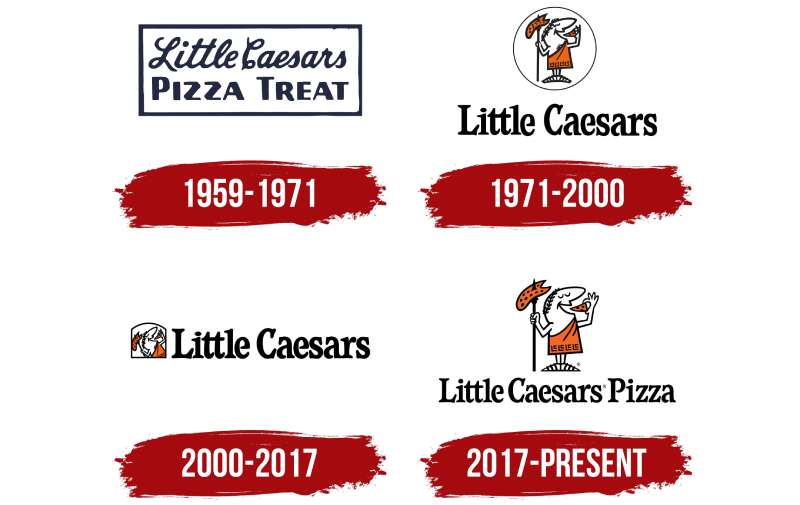
The Little Caesars logo has undergone five major redesigns since 1959. Each update refined the Roman emperor mascot while keeping him central to the brand.
Early versions were more detailed and illustrative. Later iterations simplified the character for better reproduction across media.
Original Little Caesars Logo (1959-1971)
- Years Active: 1959-1971
- Design Description: Hand-drawn Roman emperor with detailed toga folds, holding a spear. More realistic proportions than later versions.
- Color Scheme: Orange and black on white background
- Designer: Not publicly documented
- Context: Created for the first location in Garden City, Michigan. Mike Ilitch wanted a character that felt approachable yet memorable.
- Cultural Significance: Established the Roman theme that would define the brand for decades
Second Little Caesars Logo (1971-1989)
- Years Active: 1971-1989
- Design Description: Slightly cartoonish emperor with exaggerated features. The pizza on spear became more prominent.
- Color Scheme: Brighter orange, bolder black outlines
- Key Changes from Previous: More cartoon-like proportions, cleaner lines for easier printing
- Context: Franchise expansion required a logo that reproduced well on signage and packaging
Third Little Caesars Logo (1989-1997)
- Years Active: 1989-1997
- Design Description: Refined mascot with a friendlier expression. Toga simplified.
- Color Scheme: Standardized orange and black
- Key Changes from Previous: Warmer facial expression, streamlined details
- Context: The “Pizza! Pizza!” campaign needed a mascot that felt fun and family-friendly
Fourth Little Caesars Logo (1997-2021)
- Years Active: 1997-2021
- Design Description: Further simplified character with cleaner geometry. Bold black outlines.
- Color Scheme: Orange (#F26522), Black, White
- Key Changes from Previous: Reduced detail for digital reproduction, stronger contrast
- Context: Digital age demanded logos that worked at small sizes on screens
- Cultural Significance: This version became iconic through the Hot-N-Ready era
Current Little Caesars Logo (2021-Present)
- Years Active: 2021-present
- Design Description: Modern refresh with refined linework. The emperor appears more confident. Typography updated.
- Color Scheme: Orange (#F37321), Black (#000000), White (#FFFFFF)
- Key Changes from Previous: Subtle proportional adjustments, updated wordmark, cleaner overall appearance
- Context: Brand refresh to compete with modernizing competitors
What Do the Design Elements of the Little Caesars Logo Mean?
The Roman emperor character symbolizes quality and value, drawing from the historical association of Rome with abundance and celebration. The pizza on his spear? That’s confidence in the product.
Every element serves a purpose.
Why Did Little Caesars Choose These Specific Colors?
Orange dominates the Little Caesars color palette for good reason. It triggers appetite and creates energy.
This puts Little Caesars firmly in the orange logos category alongside other food brands that understand color psychology.
- Orange (#F37321): Stimulates hunger, conveys warmth and friendliness, stands out on signage
- Black (#000000): Provides contrast, adds boldness, ensures readability
- White (#FFFFFF): Creates breathing room, keeps design clean
What Typography Style Is Used in the Little Caesars Logo?
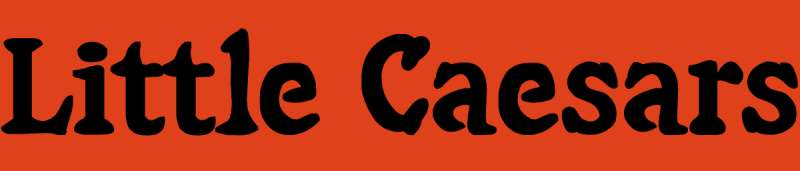
The wordmark uses a custom sans-serif font with rounded edges. It feels approachable, not corporate.
The letterforms are bold and slightly condensed. Good for fitting on pizza boxes.
Readability was clearly a priority. You can spot that typography from across a parking lot.
What Are the Hidden Meanings in the Little Caesars Logo?
The spear isn’t just decorative. It suggests speed and directness, which aligns with the Hot-N-Ready concept.
The emperor’s confident pose implies authority over pizza quality. Some see the circular pizza as a shield, reinforcing the Roman warrior theme.
No confirmed Easter eggs exist in the design. But that confident stance? Intentional.
How Does the Little Caesars Logo Compare to Competitor Logos?
Among major pizza chains, Little Caesars stands alone with its mascot-based approach. Most competitors use abstract symbols or pure wordmarks.
The Pizza Hut logo relies on its iconic red roof shape. Clean, architectural, no character.
The Domino’s Pizza logo uses a domino tile. Simple geometry.
Papa John’s logo features just typography with a flag motif.
Little Caesars’ mascot creates personality that these competitors lack. It’s harder to forget a face than a shape.
What Are the Technical Specifications of the Little Caesars Logo?
Official Color Codes
- Primary Orange: Hex #F37321, RGB (243, 115, 33), CMYK (0, 65, 95, 0), Pantone 1585 C
- Black: Hex #000000, RGB (0, 0, 0), CMYK (0, 0, 0, 100)
- White: Hex #FFFFFF, RGB (255, 255, 255), CMYK (0, 0, 0, 0)
Dimensions and Proportions
- Aspect Ratio: Varies by lockup (horizontal vs. stacked)
- Minimum Size: 1 inch width for print, 72 pixels for digital
- Clear Space: Minimum padding equal to height of the “L” in wordmark
- File Formats: Available in vector graphics (AI, EPS, SVG) and raster formats (PNG, JPEG)
What Cultural Impact Has the Little Caesars Logo Had?
The Little Caesar character became a pop culture fixture through decades of advertising. Kids grew up recognizing that toga-wearing emperor.
The mascot’s “Pizza! Pizza!” catchphrase made the character inseparable from the brand promise of two pizzas for one low price.
You see him on everything from Halloween costumes to memes. That’s cultural staying power.
How Does the Little Caesars Logo Fit Into the Overall Brand Identity?
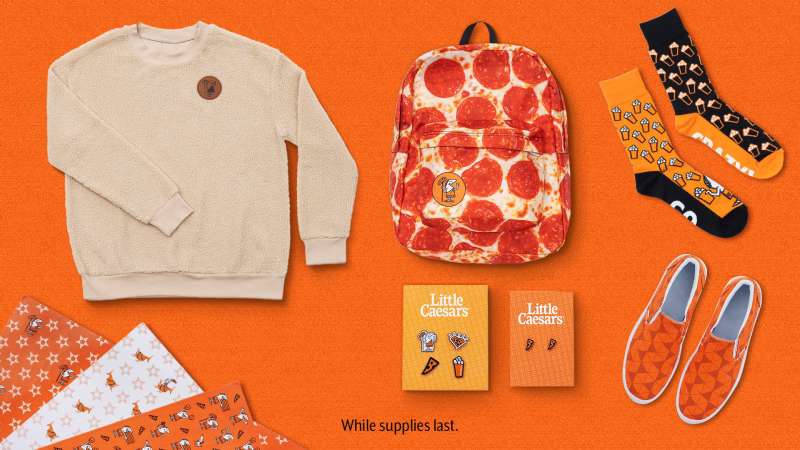
The logo anchors a broader brand guidelines system that includes store design, packaging, uniforms, and advertising. Everything connects back to the Roman theme.
Store interiors feature columns and arches. Employees wear orange. Even the Crazy Bread name fits the playful tone the mascot establishes.
The brand style guide ensures consistency across thousands of franchise locations worldwide.
How Should the Little Caesars Logo Be Used?
Official Usage Guidelines
- Do: Use official files from corporate resources, maintain clear space, preserve color integrity
- Don’t: Stretch or distort, change colors, add effects, place on busy backgrounds
- Access: Franchisees receive assets through the corporate portal
- Licensing: Unauthorized commercial use prohibited under trademark law
- Trademark: “Little Caesars” and the emperor design are registered trademarks of Little Caesar Enterprises, Inc.
For media or partnership inquiries, contact the corporate communications team directly.
FAQ on The Little Caesars Logo
What Does the Little Caesars Logo Represent?
The logo represents value and fun through its cartoon Roman emperor mascot. He holds a pizza on a spear, suggesting confidence in the product.
The toga-wearing character connects to the brand name. It’s playful, memorable, and works across all franchise signage.
Who Designed the Little Caesars Logo?
The original design came from the Ilitch family’s early branding efforts in 1959. No single designer receives public credit.
Later updates were handled by in-house teams at Little Caesar Enterprises in Detroit, Michigan. The 2021 refresh followed the same approach.
When Was the Current Little Caesars Logo Introduced?
The current version launched in 2021. It refined the classic mascot with cleaner linework and updated typography elements.
The pizza chain has used variations of this Roman character since Mike Ilitch founded the company. That’s over six decades of brand consistency.
What Colors Are in the Little Caesars Logo?
Orange, black, and white make up the official palette. The primary orange (hex #F37321) triggers appetite and creates energy on storefronts.
Black outlines provide visual hierarchy. White backgrounds keep everything readable. Simple but effective for quick service restaurant branding.
Why Does Little Caesars Use a Roman Emperor Mascot?
The name “Little Caesars” demanded Roman imagery. Mike Ilitch wanted something that felt approachable yet distinctive in the pizza industry.
The emperor character suggests abundance, which aligns with their “Pizza! Pizza!” value proposition. Historical inspiration meets modern logo design principles.
Has the Little Caesars Logo Changed Over Time?
Yes. The brand has gone through five major redesigns since 1959. Each version simplified the mascot while keeping him central to the identity.
Early versions were more detailed. Later iterations prioritized reproduction across digital platforms and packaging design.
What Font Does Little Caesars Use?
The wordmark uses a custom typeface with rounded edges and bold weight. It’s condensed slightly to fit packaging.
You won’t find this exact font for download. The company created it specifically for brand recognition across thousands of franchise locations.
Can I Download the Official Little Caesars Logo?
Franchisees access official files through corporate resources. The public can’t legally download trademarked assets for commercial use.
Media outlets sometimes receive logo files for editorial purposes. Contact Little Caesar Enterprises directly for licensing or partnership inquiries.
What Does the Spear in the Logo Mean?
The spear holding a pizza suggests speed and directness. It reinforces the Hot-N-Ready concept of grab-and-go convenience.
Some see it as a Roman warrior’s weapon, connecting to the emperor theme. Others view the circular pizza as a shield. Both interpretations work.
Is the Little Caesars Character Based on Julius Caesar?
The mascot draws general inspiration from Roman Empire imagery rather than depicting Julius Caesar specifically.
The cartoon character wears a toga and crown, but he’s a fictional creation. The playful style distances him from any historical figure portrayal.
Conclusion
The Little Caesars logo proves that mascot-based branding still works. Six decades later, that Roman emperor character remains instantly recognizable across thousands of franchise locations.
Few pizza companies have maintained this level of visual consistency. The toga, spear, and orange palette all reinforce the brand promise of affordable, fun food.
Whether on pizza boxes, storefront signage, or mobile app icons, the design scales without losing impact.
That’s good logo work. Simple enough to remember. Distinctive enough to stand apart from competitors in the quick service restaurant industry.

Renowned for his expertise in logo design and visual branding, Bogdan has developed a multitude of logos for various clients.
His skills extend to creating posters, vector illustrations, business cards, and brochures. Additionally, Bogdan's UI kits were featured on marketplaces like Visual Hierarchy and UI8.
He also wrote in the past years on sites like Design Your Way, WebDesignerDepot, WPDean, Designmodo, Speckyboy, Slider Revolution, and more.
- Jujutsu Kaisen Font Generator - 12 October 2026
- The Windsurf Logo History, Colors, Font, And Meaning - 10 October 2026
- How to Remove Background From Product Photos (No Photoshop) - 10 October 2026

Bogdan Sandu is a seasoned designer who has been designing websites since 2008. Renowned for his expertise in logo design and visual branding, Bogdan has developed a multitude of logos for various clients. His skills extend to creating posters, vector illustrations, business cards, and brochures. Additionally, Bogdan's UI kits were featured on marketplaces like Visual Hierarchy and UI8. He also wrote in the past years on sites like Design Your Way, WebDesignerDepot, WPDean, Designmodo, Speckyboy, Slider Revolution, and more.
You Might Also Like


