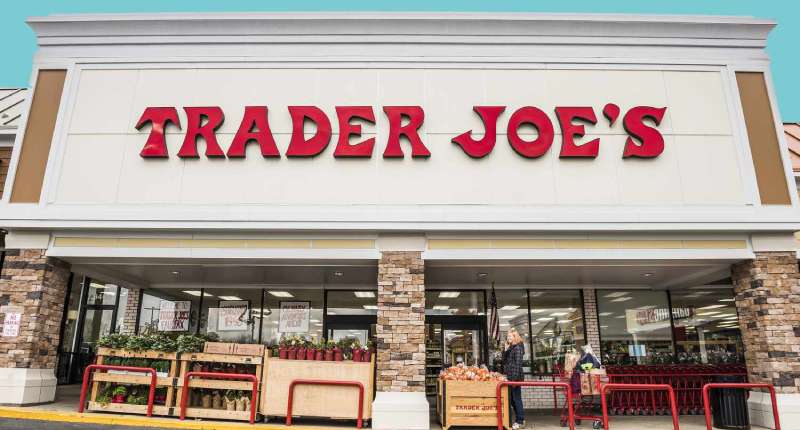
The Trader Joe’s logo is a hand-lettered wordmark that has represented one of America’s most distinctive specialty grocery chains since the brand’s early days. It pairs a warm, informal script with a deep red color to signal approachability and value. The design avoids the polished, corporate look of most retail competitors, leaning instead into a quirky, neighborhood-store personality that has become instantly recognizable across the United States.
Within grocery retail branding history, Trader Joe’s occupies a rare position: a major chain that deliberately chose an un-slick identity. Most large grocery brands shifted toward clean, geometric logos through the 1980s and 1990s. Trader Joe’s went the opposite direction, holding onto its hand-crafted aesthetic while competitors like Whole Foods Market and Kroger refined their visual systems with modern design agencies.
The current logo version uses a custom hand-drawn script wordmark in red and white. It was refined over several decades, with no single redesign credited to a named design agency. The brand was founded by Joe Coulombe in 1967 in Pasadena, California, and the logo has gone through roughly four to five notable iterations since then.
What is the Trader Joe’s Logo?
The Trader Joe’s logo is a hand-lettered red wordmark using a custom informal script typeface. Introduced in its current form in the early 1990s, it was developed in-house without a credited external agency. The design reflects the brand’s casual, value-focused identity rooted in its South Seas nautical theme.
- Design Type: Wordmark (hand-lettered script)
- Primary Elements: Custom script typography, red background or red lettering, occasionally paired with a circular badge format on store signage
- Official Introduction Date: Current version refined circa early 1990s; brand logo first appeared 1967
- Designer/Agency: Developed in-house; no external agency officially credited
- Trademark Status: Registered trademark held by Trader Joe’s Company (subsidiary of Aldi Nord)
- Color Palette: Primary Red (#BB2029 approximate), White (#FFFFFF)
- Usage Context: Store signage, private label product packaging, shopping bags, digital platforms, marketing materials, and merchandise
How Has the Trader Joe’s Logo Evolved Over Time?
The Trader Joe’s logo started as a fairly basic retail sign in the late 1960s and gradually developed its signature hand-crafted character through the 1970s and 1980s.
The red color deepened and the script became more defined over successive versions.
By the 1990s the wordmark had settled into the recognizable form most shoppers know today, with only minor refinements since then.
Original Trader Joe’s Logo (1967-1972)
- Years Active: 1967-1972
- Design Description: Simple block lettering with minimal stylization, closer to a standard retail sign than a crafted brand identity
- Color Scheme: Red and white
- Designer: Unknown; developed internally
- Context: Joe Coulombe opened the first store in Pasadena and needed basic storefront signage. Brand identity was not a priority at this stage.
- Key Changes from Previous: N/A (first version)
- Cultural Significance: Established the red-and-white color pairing that would define the brand for decades
Nautical Theme Era Logo (1972-1988)
- Years Active: 1972-1988
- Design Description: Introduction of the South Seas nautical aesthetic. Script lettering became more informal and hand-drawn in character. Occasional use of rope-style borders and tropical motifs on packaging.
- Color Scheme: Red, white, and occasional navy accents
- Designer: In-house
- Context: Coulombe leaned into a “trader” narrative, positioning the stores as exotic import shops selling interesting products at fair prices. The logo identity shifted to match.
- Key Changes from Previous: More expressive script, warmer and more casual overall tone
- Cultural Significance: This era established the brand’s counter-cultural, anti-corporate personality
Refined Script Logo (1988-Present)
- Years Active: 1988-present (with minor refinements)
- Design Description: The current hand-lettered script wordmark. The letters are irregular in a deliberate way, suggesting they were drawn by hand rather than set digitally. The “T” and “J” carry the most visual weight.
- Color Scheme: Deep red (#BB2029 approximate) and white
- Designer: In-house refinement; no external designer credited
- Context: As the chain expanded nationally through the late 1980s and 1990s, the logo was tightened for consistency across more locations while retaining its handmade quality.
- Key Changes from Previous: More consistent letterform proportions, cleaner execution without losing the informal script character
- Cultural Significance: The version that turned Trader Joe’s into a cult grocery brand with genuine fan loyalty
What Do the Design Elements of the Trader Joe’s Logo Mean?
The hand-lettered script is the core design decision. It signals that Trader Joe’s is not a faceless corporation but a store with personality and a point of view.
The red color carries energy and appetite associations, which is a deliberate choice in food retail.
Together these elements say: approachable, fun, and worth your time.
What Does the Hand-Lettered Script Symbolize?
Script that looks hand-drawn communicates authenticity in a way that a clean sans-serif simply cannot.
It suggests that real people are behind the brand, not a committee.
For a grocery store selling private-label products, this matters a lot. It makes unfamiliar products feel trustworthy.
The slight imperfections in the letterforms are not accidents. They are the point.
What Is the Historical Context Behind the Logo Style?
The style draws loosely from mid-century American signage traditions, where hand-painted store signs were the norm.
Trader Joe’s leaned into this look right as the rest of retail was moving toward computerized, uniform typography.
That contrast made the logo stand out without any dramatic redesign work.
What Cultural References Does the Logo Draw From?
The name “Trader Joe’s” references a romanticized idea of a traveling merchant bringing exotic goods from distant places.
The South Seas aesthetic that ran through the brand’s early decades (Hawaiian shirts on staff, nautical store decor) fed directly into how the logo felt.
It borrowed from tiki culture and mid-century Americana simultaneously.
How Does the Logo Connect to the Brand’s Values?
The logo communicates value, accessibility, and a mild irreverence toward mainstream grocery culture.
It does not try to look premium or luxury. That is intentional.
Trader Joe’s competes on product quality and price, not prestige signaling, and the logo reflects that honestly.
Why Did Trader Joe’s Choose These Specific Colors?

- Red (#BB2029 approximate)
- Symbolic meaning: Energy, warmth, appetite stimulation
- Psychological impact: Red is one of the most proven colors in food retail for driving attention and purchase intent. It also reads as bold and confident without being aggressive in this softer, hand-drawn context.
- Brand connection: Red logos are common in the food and grocery sector. Brands like Target use red to signal value and accessibility. Trader Joe’s red sits in similar territory.
- White (#FFFFFF)
- Symbolic meaning: Cleanliness, simplicity, contrast
- Psychological impact: White creates the breathing room that lets the red script read clearly. Without it, the logo would feel heavy.
- Brand connection: The red-on-white or white-on-red combination has been consistent across every logo iteration, tying all versions together visually.
What Typography Style Is Used in the Trader Joe’s Logo?
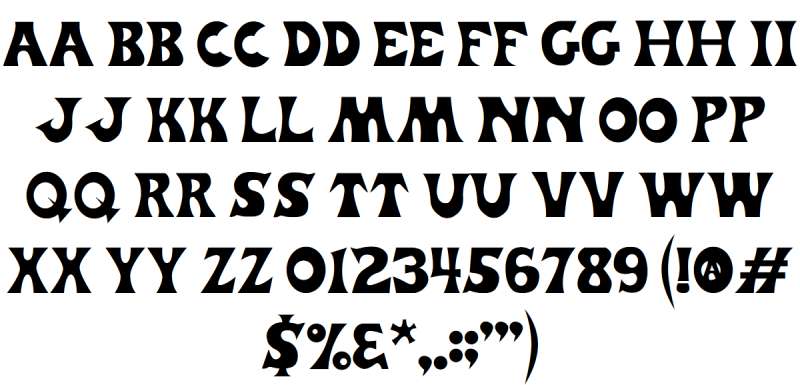
The typography is a custom hand-lettered script font, not a commercially available typeface.
The letterforms have variable stroke widths and slight baseline irregularities that mimic handwriting.
This makes it extremely readable at large sizes on store signage while still feeling personal and informal.
The font has not changed dramatically since the late 1980s, which is actually unusual. Most brands of this size have updated their typography at least once in that timeframe.
What Are the Hidden Meanings in the Trader Joe’s Logo?
There are no confirmed hidden symbols or visual tricks in the Trader Joe’s logo. It does not have a hidden arrow like FedEx or a smiling face like Amazon.
What it does have is intentional imperfection. The hand-drawn quality is a design decision that functions as a kind of hidden message: “we are not like other grocery stores.”
Some observers note that the casual script makes the brand feel less intimidating than upscale competitors, which may quietly support the store’s positioning as a fun place to shop rather than a chore.
How Does the Trader Joe’s Logo Compare to Competitor Logos?
Trader Joe’s logo is significantly more informal than any major grocery competitor. Most chains use clean, geometric, or structured wordmarks. Trader Joe’s deliberately goes the other direction.
This sets it apart visually on signage and packaging in a crowded sector.
Among specialty and natural food retailers, the contrast is especially clear.
Here is how the Trader Joe’s logo compares to key competitors:
- Trader Joe’s vs. Whole Foods Market: Whole Foods uses a clean, structured sans-serif wordmark in green. It signals premium and health-focused positioning. Trader Joe’s script is warmer and more casual, signaling value and fun. Both are specialty grocers but the logos push in opposite directions.
- Trader Joe’s vs. Aldi: Aldi (Trader Joe’s parent company through Aldi Nord) uses a sharp, geometric wordmark. The two brands share ownership but have completely different visual identities. Aldi reads as efficient and no-frills; Trader Joe’s reads as quirky and welcoming.
- Trader Joe’s vs. Sprouts Farmers Market: Sprouts uses a clean green logotype with nature references. It leans into the health and organic space more directly than Trader Joe’s. The Trader Joe’s logo does not try to look “natural” or “organic” through color or imagery.
- Trader Joe’s vs. Publix: Publix uses a classic green script wordmark, making it one of the few major chains with any script similarity to Trader Joe’s. But Publix’s script is more polished and formal. Trader Joe’s version is rougher and more expressive.
- Trader Joe’s vs. Wegmans: Wegmans uses a refined green and white wordmark designed to signal quality and regional pride. It is clean and respectable. Trader Joe’s makes no attempt at that kind of refinement.
The consistent pattern: Trader Joe’s is the only major grocery chain leaning this hard into hand-drawn informality. That alone is a meaningful competitive differentiator, not just a style choice.
What Are the Technical Specifications of the Trader Joe’s Logo?
Note: Trader Joe’s does not publish an official brand guidelines document publicly. The specifications below are based on widely documented approximations used in design and branding analysis.
Official Color Codes
- Primary Color: Trader Joe’s Red
- Hex: #BB2029
- RGB: (187, 32, 41)
- CMYK: (0, 83, 78, 27)
- Pantone: Approx. Pantone 485 C
- Secondary Color: White
- Hex: #FFFFFF
- RGB: (255, 255, 255)
- CMYK: (0, 0, 0, 0)
- Pantone: White
Dimensions and Proportions
- Aspect ratio: Approximately 4:1 (width to height) for the horizontal wordmark
- Minimum size requirements: Not officially published; best practice minimum is approximately 1 inch wide in print to maintain script legibility
- Clear space specifications: Not officially published; standard practice recommends clear space equal to the cap height of the logotype on all sides
- File formats in use: The logo appears as vector graphics on signage and packaging, and as raster formats (JPEG, bitmap PNG) in digital contexts
- DPI for print: Standard minimum DPI of 300 for any printed application
- Official usage guidelines: Not publicly available; the brand manages logo use internally
What Cultural Impact Has the Trader Joe’s Logo Had?
The Trader Joe’s logo has become one of the most recognizable grocery identities in the United States, despite never running major national advertising campaigns. That is a genuinely unusual achievement.
The logo appears on tote bags that shoppers buy and carry voluntarily. That level of brand loyalty is rare in the grocery sector.
It has influenced how people think about specialty grocery branding. Several smaller, independent food retailers have borrowed the hand-drawn script approach in their own identities, whether consciously or not.
The logo also plays a direct role in how Trader Joe’s private label products feel on the shelf. The consistent application of the hand-lettered wordmark across thousands of product labels creates a cohesive, almost editorial feel that shoppers associate with discovery and good value.
Among grocery store logos in general, it stands as one of the clearest examples of a brand identity that works because of its personality, not despite it.
How Does the Trader Joe’s Logo Fit Into the Overall Brand Identity?
The logo is the anchor of an identity system that runs through every single customer touchpoint. Store decor, employee uniforms, product packaging, the Fearless Flyer newsletter, shopping bags, all of it draws from the same hand-crafted, slightly irreverent visual language.
The brand style is unusually consistent for a chain of this size, especially one that does not publish formal brand guidelines.
The logo connects directly to the store’s product naming conventions. Products with “Trader” in their name (Trader Ming’s, Trader Giotto’s, Trader Jose’s) extend the wordmark’s personality into the product itself, turning the entire store into a cohesive brand experience.
The visual hierarchy across store signage puts the wordmark at the top, with product and department signage below it in complementary hand-lettered styles. Everything feels like it came from the same hand.
This kind of end-to-end brand consistency, built on an informal and seemingly simple logo, is actually sophisticated work. Most brands that try to look this casual end up looking sloppy. Trader Joe’s avoids that because the underlying system is well thought out, even if it never looks designed.
How Should the Trader Joe’s Logo Be Used?
Official Usage Guidelines
Trader Joe’s does not publish a public brand guidelines document. All logo usage is controlled directly by the company.
- Do: Use official logo files sourced directly from Trader Joe’s for any authorized partnership or press use
- Do: Maintain the original red and white color combination in all reproductions
- Do: Preserve the aspect ratio and do not stretch or distort the wordmark
- Do not: Recreate the logo using approximate fonts or hand-lettering
- Do not: Use the logo on merchandise, products, or promotional materials without explicit written permission from Trader Joe’s
- Do not: Alter the colors, add effects, or place the logo over busy backgrounds that reduce legibility
- Do not: Use the logo in any context that implies endorsement or partnership without authorization
Where to Access Official Logo Files
Official logo files are not available through a public press kit. Media and press inquiries should go through Trader Joe’s corporate communications directly at their Monrovia, California headquarters. Unauthorized downloads from third-party sites are not officially sanctioned.
Trademark and Licensing
- Trademark holder: Trader Joe’s Company (a subsidiary of Aldi Nord)
- Trademark status: Federally registered in the United States
- Licensing: Trader Joe’s does not license its brand or logo to third parties for merchandise or co-branding purposes
- Fan use: Informal fan art and personal use exists in a gray area; commercial use without permission is a trademark violation
- Press and editorial use: Generally permitted under fair use for editorial, news, and educational contexts, but always with proper attribution and without implying official endorsement
FAQ on the Trader Joe’s Logo
What does the Trader Joe’s logo look like?
It is a hand-lettered script wordmark in red and white.
The letterforms are deliberately irregular, giving it a handmade quality. No symbol or icon accompanies the text. Just the name, drawn to look like someone with good handwriting wrote it.
What font does Trader Joe’s use in its logo?
There is no commercially available font that matches it exactly. The custom script typeface was developed in-house and has never been released publicly.
Designers sometimes approximate it with informal brush script fonts, but none are an exact match.
What color is the Trader Joe’s logo?
The primary brand color is a deep red, approximately #BB2029 in hex.
White is used as the contrasting secondary color. The red-and-white combination has stayed consistent across every logo version since the store opened in 1967.
Has the Trader Joe’s logo ever changed?
Yes, several times. The original 1967 version used simpler block lettering.
The logo evolution moved toward a more expressive hand-drawn script through the 1970s and 1980s. The current refined version has been in use since roughly the early 1990s with only minor adjustments.
Who designed the Trader Joe’s logo?
No external design agency has ever been officially credited. The brand identity was developed internally over time rather than through a single commissioned redesign.
This is unusual for a chain of Trader Joe’s size, but it fits the brand’s DIY personality.
What is the meaning behind the Trader Joe’s logo design?
The hand-drawn style signals approachability and authenticity. It deliberately avoids the polished look of mainstream grocery store branding.
The red color drives appetite and energy associations. Together, the elements communicate: this is a fun, unpretentious store with good products at fair prices.
How does the Trader Joe’s logo compare to other grocery store logos?
It is the most informal wordmark among major U.S. grocery chains. Competitors like Safeway and Albertsons use clean, geometric type.
Trader Joe’s script stands out in the specialty grocery sector precisely because it looks nothing like a corporate retail logo.
Is the Trader Joe’s logo trademarked?
Yes. The Trader Joe’s wordmark is a federally registered trademark held by the Trader Joe’s Company, a subsidiary of Aldi Nord.
Unauthorized commercial use, including on merchandise or promotional materials, is a trademark violation.
Where can I download the official Trader Joe’s logo?
Trader Joe’s does not offer a public press kit or logo download page. There is no official source for high-resolution logo files outside of direct corporate contact.
Third-party downloads are unofficial and not sanctioned by the brand.
Why does the Trader Joe’s logo look hand-drawn?
That is a deliberate retail branding choice. The hand-lettered aesthetic reinforces the store’s identity as a quirky, neighborhood-style market rather than a faceless national chain.
It builds trust with shoppers in a category where most competitors look interchangeable.
Conclusion
The Trader Joe’s logo is proof that a hand-lettered script wordmark in red and white can outperform far more expensive brand identity systems when the design actually fits the business behind it.
Its custom typography, consistent retail brand identity, and deliberate informality have built recognition that most grocery chains spend decades trying to achieve through major redesigns and agency work.
The logo has stayed relevant because it was never chasing trends. It just stayed honest about what the store is.
For anyone studying logo design principles, Trader Joe’s is one of the cleaner case studies out there.

Renowned for his expertise in logo design and visual branding, Bogdan has developed a multitude of logos for various clients.
His skills extend to creating posters, vector illustrations, business cards, and brochures. Additionally, Bogdan's UI kits were featured on marketplaces like Visual Hierarchy and UI8.
He also wrote in the past years on sites like Design Your Way, WebDesignerDepot, WPDean, Designmodo, Speckyboy, Slider Revolution, and more.
- How to Install Fonts on Mac (Step-by-Step Guide) - 20 September 2026
- From Mockup to Code: How AI-Augmented Development Speeds Up the Design Handoff - 19 September 2026
- The Beehiiv Logo History, Colors, Font, And Meaning - 18 September 2026

Bogdan Sandu is a seasoned designer who has been designing websites since 2008. Renowned for his expertise in logo design and visual branding, Bogdan has developed a multitude of logos for various clients. His skills extend to creating posters, vector illustrations, business cards, and brochures. Additionally, Bogdan's UI kits were featured on marketplaces like Visual Hierarchy and UI8. He also wrote in the past years on sites like Design Your Way, WebDesignerDepot, WPDean, Designmodo, Speckyboy, Slider Revolution, and more.
You Might Also Like