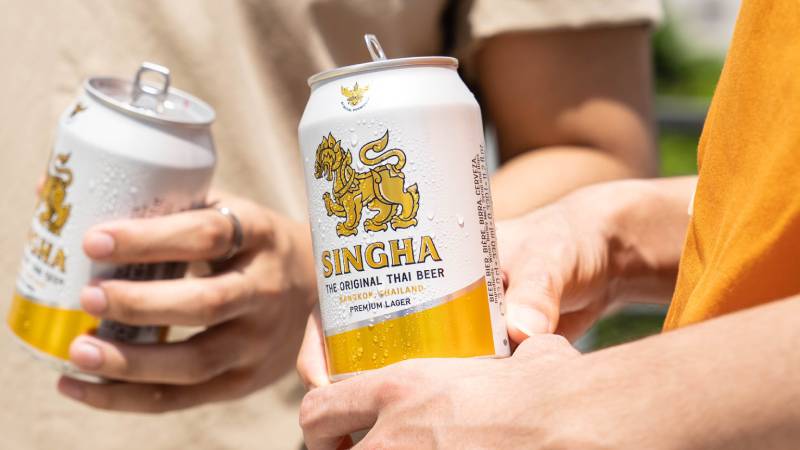
The Singha logo is one of the most recognizable marks in Asian beer branding. It features a golden mythical lion figure rooted in Thai mythology, paired with bold capitalized lettering beneath. Boon Rawd Brewery introduced this logo in 1933 when Thailand’s first brewery opened its doors in Bangkok.
Within the global beer industry, Singha’s mark sits alongside names like Heineken and Carlsberg as a brand that’s instantly tied to its country of origin. The current version, refined around 2018 and further updated through a corporate identity overhaul completed in 2022, represents the fourth major iteration of the design. Phraya Bhirom Bhakdi (born Boonrawd Sreshthaputra) founded the brewery in 1933, and the lion symbol has been part of it from day one.
What Is the Singha Beer Logo?
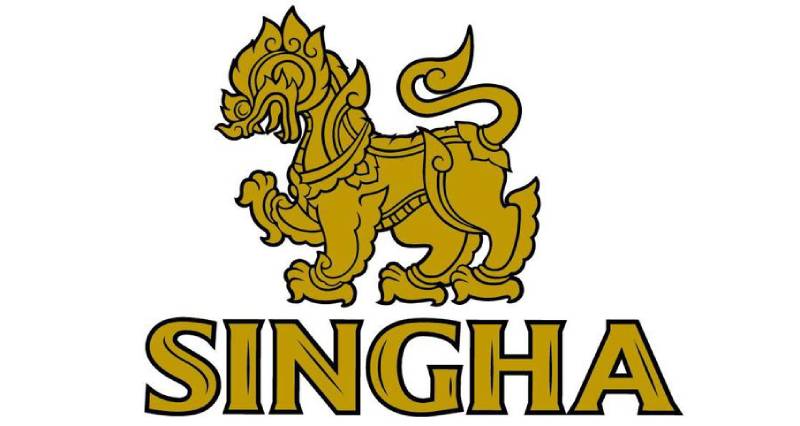
The Singha logo is a combination mark featuring a stylized mythical lion (known as a “singha” in Thai tradition) rendered in gold, positioned above the brand name “SINGHA” in bold uppercase lettering. The design was first introduced in 1933 alongside the brewery’s founding and most recently refined by Bangkok-based studio TNOP Design, with the updated identity launching in early 2022. The lion symbolizes strength, courage, and royal heritage.
Design Type: Combination mark (illustrative emblem plus wordmark)
Primary Elements: A stylized lion figure in profile facing left, with flame-tipped mane, ornamental body detailing suggesting armor or royal dress, and the word “SINGHA” in block capitals beneath. The Garuda (a royal Thai seal of approval) appears on bottle labels above the lion.
Official Introduction Date: 1933, with the founding of Boon Rawd Brewery
Designer/Agency: The original designer is unknown. The most recent corporate identity refresh (2020-2022) was handled by TNOP Design, a Bangkok studio led by Tnop Wangsillapakun. This redesign won a Good Design Award from Japan Institute of Design Promotion in 2022.
Trademark Status: Registered trademark. The Singha name and lion symbol are protected intellectual property of Singha Corporation Co., Ltd. (a subsidiary of Boon Rawd Brewery). The brand also holds the rare privilege of displaying the Royal Garuda, granted in 1939 by King Rama VIII.
Color Palette: Gold/yellow (#DDB056), olive, maroon, and black. The corporate identity also uses dark navy (#00263E) and white (#FFFFFF).
Usage Context: Beer bottles and cans (330ml, 490ml, 620ml), tap handles, bar signage, sports sponsorship materials (Chelsea FC, Leicester City FC, MotoGP, Formula One), merchandise, product packaging, Singha Park Chiang Rai entrance statues, and digital platforms across 50+ export markets.
How Has the Singha Beer Logo Evolved Over Time?
The Singha logo has gone through four documented versions since 1933. Each version kept the mythical lion as the central figure but adjusted details like line weight, posture, and surrounding ornamentation.
The changes were always subtle. Singha never did a dramatic “tear it all down” rebrand. Instead, the lion got cleaner and more defined with each pass, while the lettering shifted from ornate to structured.
Original Singha Logo (1933-1957)
Years Active: 1933-1957
The first Singha logo appeared when Boon Rawd Brewery started production in Bangkok. It featured a detailed hand-drawn lion figure with heavy ornamentation and Thai script elements.
The artwork reflected the period’s illustration style. Lots of fine lines. Dense detailing throughout the mane and body. The word “Singha” sat below the lion, though the overall layout was less standardized than what came later.
This was also the era when the brewery received the Royal Garuda endorsement from King Rama VIII in 1939, which got added to the bottle design.
Revised Singha Logo (1957-1990)
Years Active: 1957-1990
The lion figure was redrawn with slightly more structure. The lines became more consistent, and the ornamental details got a bit more organized.
Color usage shifted toward the gold and olive palette that people associate with Singha today. The typography beneath the lion became more uniform, moving away from the looser hand-lettered feel of the original.
This version coincided with Singha’s growing presence in Thai culture. The beer was becoming a national symbol, and the logo needed to work consistently across bottles, signage, and advertisements.
Modernized Singha Logo (1990-2018)
Years Active: 1990-2018
A more significant cleanup happened here. The lion’s form got sharper. Line weights were evened out, and the ornamental chest and leg patterns became more geometric and readable at smaller sizes.
The “SINGHA” wordmark below solidified into the bold, all-caps sans-serif style that most people recognize. The gold tones were standardized across print and digital applications.
This was the version that traveled internationally. As Singha expanded to 50+ countries and started sponsoring Chelsea FC in 2010, the logo had to work on everything from stadium boards to tiny can labels. That kind of demand pushed the design toward simplicity.
Current Singha Logo (2018-Present)
Years Active: 2018-present
The current mark is the cleanest version yet. TNOP Design refined the Singha symbol between 2020 and 2022 as part of a full corporate identity project. Their approach was minimal face-lift, not overhaul.
Lines and curves in the lion were made clearer and more open. Grid placement and optical alignment were adjusted. TNOP also created a responsive logo system with simplified versions for small applications and even a favicon version that fits in 16×16 pixels.
A custom corporate font called “Singha Corp. Sans” was developed alongside it, with five styles in both Thai and Latin characters. New color, typographic, and pattern systems were created and applied across all touchpoints.
What Do the Design Elements of the Singha Beer Logo Mean?
Every piece of the Singha logo points back to Thai culture and the brand’s positioning as a premium product. The mythical lion isn’t decoration. It’s a deliberate cultural reference that carries specific meaning for Thai audiences and communicates quality to international markets.
The creature is called a “singha” in Thai tradition. It comes from Himmapan Forest mythology, a part of Buddhist and Hindu cosmology where powerful beings live.
Why Does the Singha Logo Use a Mythical Lion?
The singha (or singh) is a powerful creature from Thai and Hindu mythology. It represents strength, courage, leadership, and perseverance. In Thai culture, it’s considered a protector figure.
Phraya Bhirom Bhakdi chose this symbol because it was easily recognizable across Thai society. Just about everyone in Thailand in the 1930s knew what a singha was, and the association with royal power and protection fit perfectly for a brand seeking credibility.
Look at the figure’s pose: facing left in profile, mouth slightly open showing teeth, flame-tipped mane flowing backward. The shapes used suggest forward motion and authority. The armor-like patterns on the body connect to royalty and military strength, which ties back to how Thai kings historically used lion symbols.
Why Did Singha Choose These Specific Colors?
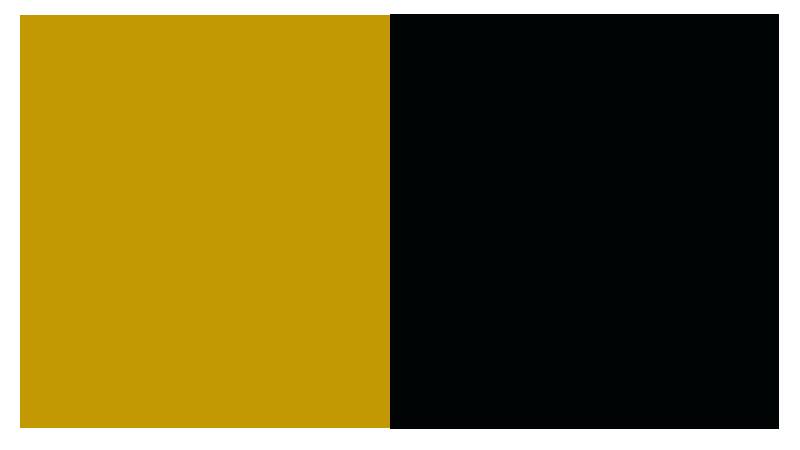
Gold/Yellow (#DDB056): The dominant color. Gold signals premium quality, tradition, and prestige. In color psychology, gold connects to wealth and accomplishment. For a beer brand positioning itself above local competitors, gold does the heavy lifting. It says “this costs more and it’s worth it” without any words.
Olive/Dark Green: Appears in background elements and label details. Green suggests natural ingredients and freshness, which makes sense for a brand that brews with 100% barley malt and European hops.
Maroon/Dark Red: Used as an accent. It adds depth and warmth to the overall color palette, and red tones in Thai culture relate to power and good fortune.
Black (#000000): Grounding color for text and outlines. Provides contrast against the gold, making the logo readable at any size.
Navy (#00263E): Part of the corporate identity system since the 2022 refresh. Used as a background color for formal corporate applications.
What Typography Style Is Used in the Singha Logo?
The “SINGHA” wordmark uses bold, all-caps letterforms that are custom to the brand. It’s not a commercially available typeface. The letterforms are straightforward, with a slight personality in how certain characters are shaped.
Since the 2022 identity update, TNOP Design created “Singha Corp. Sans” as the official corporate font. The design was inspired by the curves in the lion symbol itself. It comes in five weight styles and covers both Thai and Latin characters.
The letter spacing in the wordmark is generous. Each character has room to breathe. This works well at large sizes on signage and at small sizes on cans where cramped text would become unreadable.
What Are the Hidden Meanings in the Singha Logo?
The wavy, flowing lines around the lion’s mane and body aren’t random decoration. They suggest liquid movement, a reference to the beer itself. Some interpret these as representing the golden color of the lager pouring.
Then there’s the Garuda above the lion on bottles. That’s not technically part of the logo, but it’s so closely tied to the mark that most people think of them together. The Garuda is a royal emblem, granted only to companies with outstanding reputations. Boon Rawd received this honor in 1939, and it’s been on every bottle since.
The lion’s leftward-facing orientation is also worth noting. In Southeast Asian art traditions, the direction a creature faces carries meaning. Left-facing can suggest protection of something behind it, a visual guardian stance.
How Does the Singha Logo Compare to Competitor Logos?
Most Thai and Asian beer logos lean on cultural symbols. Singha went with a mythical lion, while competitors picked different routes. The result is a pretty distinct lineup on store shelves.
Chang Beer (also by Boon Rawd’s competitors) uses an elephant pair, which is another Thai cultural symbol but reads as more approachable and less premium. Leo Beer, which is actually a Boon Rawd product too, goes with a leopard figure in a more casual, budget-friendly design.
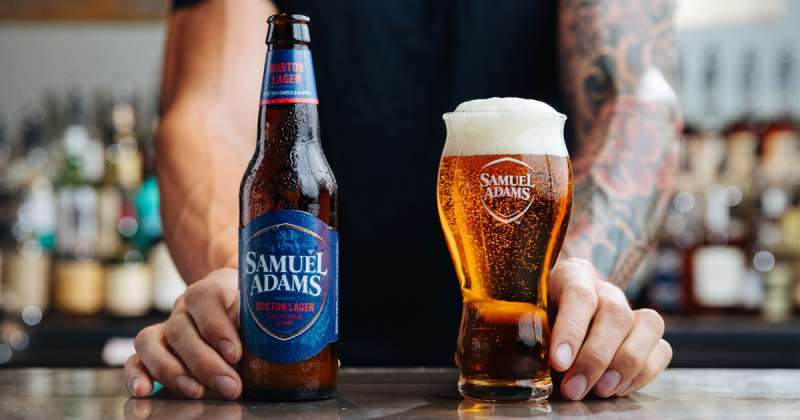
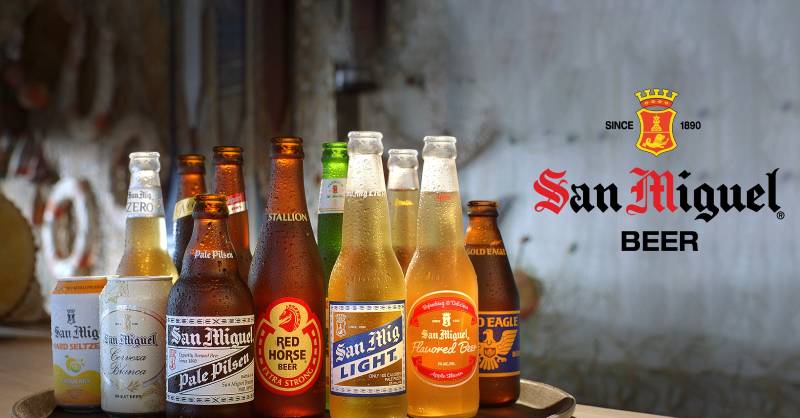
Internationally, Guinness uses a harp, Stella Artois relies on a horn and star crest, and Corona keeps things simple with its crown and wordmark. Among Asian competitors, Kirin uses a mythical creature too (a dragon-horse), and Asahi goes with clean modern type.
What sets Singha apart? The level of illustrative detail. Most beer brand marks have moved toward simplification. Singha’s lion still carries ornamental complexity, which actually becomes its differentiator. It looks hand-crafted in an age of minimal design trends.
What Are the Technical Specifications of the Singha Logo?
Official Color Codes
Primary Color: Gold Hex: #DDB056 | RGB: (221, 176, 86) | CMYK: (0, 20, 61, 13)
Secondary Color: Dark Navy Hex: #00263E | RGB: (0, 38, 62) | CMYK: (100, 39, 0, 76)
Accent Color: White Hex: #FFFFFF | RGB: (255, 255, 255) | CMYK: (0, 0, 0, 0)
Text/Outline Color: Black Hex: #000000 | RGB: (0, 0, 0) | CMYK: (0, 0, 0, 100)
Dimensions and Proportions
The lion illustration sits above the wordmark at roughly a 2:1 height ratio. The overall mark is taller than it is wide, giving it a vertical orientation that works well on bottle labels and narrow can surfaces.
Since the 2022 update, TNOP Design introduced a responsive system. The full detailed lion appears on large applications. A simplified version with reduced line detail is used for medium applications. And a minimal favicon-ready version was created for 16×16 pixel uses, which required stripping the lion down to its most basic recognizable form. This kind of responsive approach follows strong logo design thinking.
Clear space around the logo should equal at least the height of the “S” in the wordmark on all sides. The minimum reproduction size varies by application, but the simplified version was specifically designed for situations where the full mark becomes illegible.
What Cultural Impact Has the Singha Logo Had?
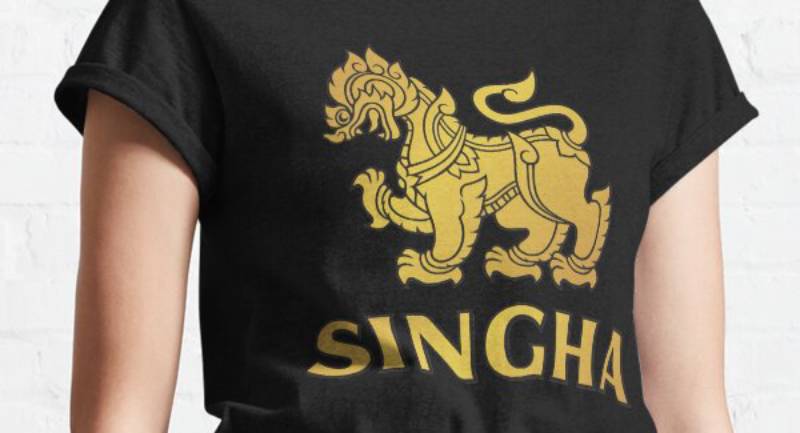
The Singha lion is more than a beer label in Thailand. It’s a piece of national identity. You’ll find the logo on t-shirts, posters, bar decorations, and as a massive statue at Singha Park in Chiang Rai. Tourists photograph it. Locals wear it.
Through football sponsorships (Chelsea FC from 2010 to 2022, Leicester City from 2015), MotoGP, and Formula One partnerships with Kimi Räikkönen, the logo has appeared in front of hundreds of millions of viewers globally.
It’s become a visual shorthand for “Thai premium product.” When people see that gold lion abroad, the association is immediate. Thailand, quality beer, cultural heritage. Few beverage brands from Southeast Asia have achieved that kind of instant recognition.
How Does the Singha Logo Fit Into the Overall Brand Identity?
Singha Corporation is bigger than beer. The parent company, Boon Rawd Brewery, also makes Leo Beer, Singha Drinking Water, and other beverages. There’s Singha Estate (real estate), Singha Park (agriculture and tourism), and various food brands.
The lion symbol ties all of it together. It functions as a trust mark across product categories. When Singha Estate develops a property, the lion appears. When Singha sponsors a racing team, the lion is on the car.
The 2022 identity refresh by TNOP Design was specifically about making this work better. They built a system, not just a mark. Custom typeface, defined brand guidelines, responsive versions for different sizes, and coordinated applications from digital platforms to physical signage. That’s what carries a single symbol across an entire corporate structure without it feeling random.
How Should the Singha Logo Be Used?
Do: Use the officially provided logo files from Singha Corporation. Maintain the designated clear space around the mark. Apply the correct color version for each background (gold on dark, navy on light). Use the simplified version at small sizes rather than shrinking the full detailed version.
Don’t: Alter the lion’s proportions, change the official colors, rotate the mark, add effects like drop shadows or gradients that aren’t in the original, or place the logo over busy imagery where it loses readability.
Official vector files of the Singha logo are available through Singha Corporation’s brand resources. The logo is a registered trademark, so any commercial use requires authorization from Singha Corporation Co., Ltd.
For press, media, and partnership inquiries about logo usage, contact Singha Corporation directly through their official channels. Unauthorized reproduction or modification of the mark can result in legal action, especially given the Royal Garuda’s presence on their product labels, which carries additional legal protections under Thai law.
FAQ on The Singha Logo
What Does the Singha Logo Represent?
The Singha logo represents a mythical lion from Thai and Hindu mythology called a “singha.” It symbolizes strength, courage, and leadership.
Boon Rawd Brewery chose this creature in 1933 because it was widely recognized across Thailand as a guardian figure tied to royal heritage and protection.
Who Designed the Singha Beer Logo?
The original 1933 designer remains unknown. The most recent identity refresh was handled by TNOP Design, a Bangkok studio led by Tnop Wangsillapakun.
Their work ran from 2020 to 2022 and included a refined lion symbol, a custom corporate font with careful spacing, and a responsive logo system.
What Colors Are in the Singha Logo?
The primary brand colors are gold (#DDB056), olive, maroon, and black. The 2022 corporate refresh added dark navy (#00263E) and white (#FFFFFF).
Gold dominates the mark. It signals premium quality and connects to Thai cultural associations with royalty and prestige.
Has the Singha Logo Changed Over the Years?
Yes. Four documented versions exist: 1933-1957, 1957-1990, 1990-2018, and 2018-present. Each kept the mythical lion emblem but refined its lines and details.
The changes were always gradual. Singha never did a dramatic rebrand, just steady cleanup toward a cleaner, more scalable mark.
What Is the Lion Creature on the Singha Bottle?
It’s a singha, a mythical lion from Himmapan Forest in Buddhist and Hindu cosmology. This creature has appeared in Thai art and temple architecture for centuries.
The emphasis on the lion’s fierce pose, flame-tipped mane, and ornamental armor reflects its role as a protector in Thai tradition.
What Is the Bird Symbol Above the Singha Lion?
That’s the Royal Garuda, not technically part of the logo itself. King Rama VIII granted Boon Rawd Brewery permission to display it in 1939.
Only Thai companies with long-standing excellent reputations receive this honor. It functions as a royal seal of approval on every Singha bottle.
What Font Does the Singha Logo Use?
The wordmark uses custom lettering specific to the brand. It’s bold, uppercase, and not commercially available.
TNOP Design also created “Singha Corp. Sans” during the 2022 refresh. Five weight styles cover both Thai and Latin characters, inspired by curves from the lion symbol.
Where Can I Download the Official Singha Logo?
Official logo files are controlled by Singha Corporation Co., Ltd. The mark is a registered trademark, and commercial use requires authorization.
Third-party sites offer vector versions in formats like EPS, SVG, and PNG. But using them commercially without permission risks legal issues, especially given the protected Garuda element.
How Does Singha’s Logo Compare to Other Thai Beer Brands?
Chang Beer uses paired elephants. Leo Beer features a leopard in a simpler, more casual layout. Singha’s ornate golden lion sits clearly at the premium end.
Among Asian brands that use gold in their marks, Singha’s illustrative complexity makes it stand out against the trend toward flat, simplified design approaches.
Why Is the Singha Logo Considered Iconic?
It’s been around since 1933 with the same core symbol. Ninety-plus years of consistent use across Thailand and 50+ export markets built deep recognition.
The logo appears on sports sponsorships, Singha Park statues, merchandise, and street signage throughout Bangkok. That kind of visual presence across physical and digital touchpoints is hard to replicate.
Conclusion
The Singha logo has held its ground for over nine decades. That golden mythical lion, born from Thai brewing heritage and Himmapan Forest mythology, still works on a beer can in Bangkok or a Formula One car in Monaco.
Few beverage brand marks manage that range.
What makes it last? Boon Rawd Brewery never abandoned the core symbol. They refined it. The 2022 identity system by TNOP Design proved you can modernize a 1933 emblem without losing what made it recognizable in the first place.
The Singha lion isn’t going anywhere. It’s earned its spot among the most story-driven beer brand identities in Southeast Asia and beyond.

Renowned for his expertise in logo design and visual branding, Bogdan has developed a multitude of logos for various clients.
His skills extend to creating posters, vector illustrations, business cards, and brochures. Additionally, Bogdan's UI kits were featured on marketplaces like Visual Hierarchy and UI8.
He also wrote in the past years on sites like Design Your Way, WebDesignerDepot, WPDean, Designmodo, Speckyboy, Slider Revolution, and more.
- The Windsurf Logo History, Colors, Font, And Meaning - 10 October 2026
- How to Remove Background From Product Photos (No Photoshop) - 10 October 2026
- How Designers can Build a Stronger Online Creative Identity - 9 October 2026

Bogdan Sandu is a seasoned designer who has been designing websites since 2008. Renowned for his expertise in logo design and visual branding, Bogdan has developed a multitude of logos for various clients. His skills extend to creating posters, vector illustrations, business cards, and brochures. Additionally, Bogdan's UI kits were featured on marketplaces like Visual Hierarchy and UI8. He also wrote in the past years on sites like Design Your Way, WebDesignerDepot, WPDean, Designmodo, Speckyboy, Slider Revolution, and more.
You Might Also Like