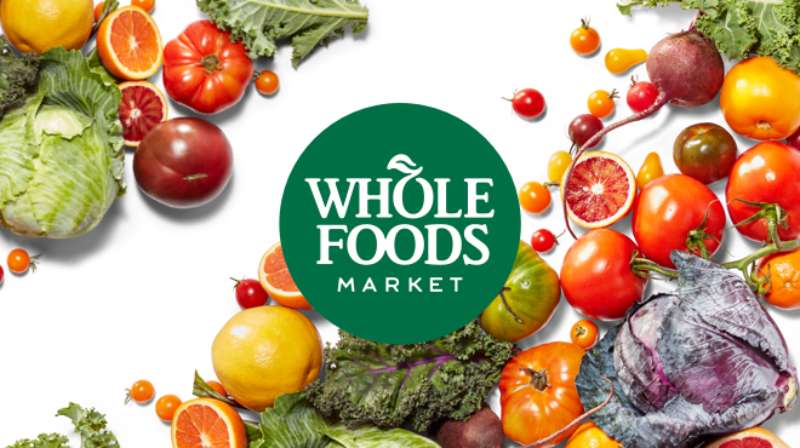
The Whole Foods Market logo is a green wordmark that represents one of the most recognized natural and organic grocery brands in the United States. It communicates the company’s commitment to natural foods, sustainability, and health-conscious retail. Since Amazon acquired Whole Foods in 2017, the logo has maintained its identity while appearing across a significantly expanded brand presence.
Among grocery store logos, Whole Foods stands out for its consistent use of green long before sustainability became a mainstream branding trend. The logo helped define what an organic food retailer could look like visually, influencing a wave of health-focused brands that followed.
The current logo is a clean, all-lowercase green wordmark reading “whole foods market,” introduced in its refined form in the early 2000s. The original company was founded in 1980 in Austin, Texas, and the brand has gone through several logo iterations since then.
What Is the Whole Foods Market Logo?
The Whole Foods Market logo is an all-lowercase green wordmark featuring a custom sans-serif typeface. It was refined into its current recognizable form in the early 2000s, with design work handled internally. The green color signals the brand’s organic and natural food focus.
- Design Type: Wordmark (logotype only, no symbol or icon)
- Primary Elements: All-lowercase lettering, custom sans-serif typography, solid green color
- Official Introduction Date: Current version refined circa 2003-2004; original logo from 1980
- Designer/Agency: Developed through internal brand teams; no single external agency publicly credited
- Trademark Status: Registered trademark held by Whole Foods Market IP, L.P., a subsidiary of Amazon
- Color Palette: Primary green (#00674B), with white and black versions for alternate usage
- Usage Context: Store signage, packaging, digital platforms, marketing materials, uniforms, and private label products
How Has the Whole Foods Market Logo Evolved Over Time?
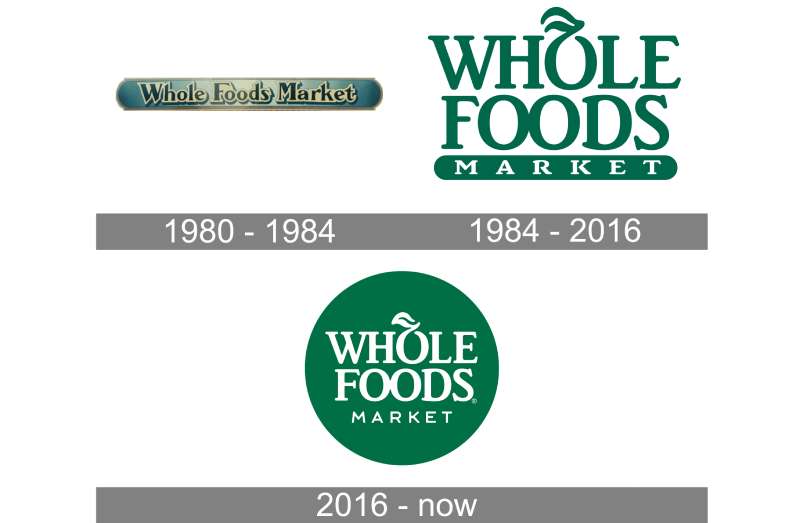
The Whole Foods Market logo has gone through gradual refinements since the brand launched in 1980, moving from a more decorative, illustrated style toward the clean green wordmark used today.
Each version reflected where the brand was at the time, from scrappy local health food store to a nationally recognized premium grocer.
Original Whole Foods Market Logo (1980-1991)
- Years Active: 1980-1991
- Design Description: Featured more ornate lettering with illustrated natural elements, including leaf motifs; felt handcrafted and artisan in style
- Color Scheme: Green and brown tones
- Designer: Not publicly documented
- Context: Launched when Whole Foods opened its first store in Austin, Texas, merging SaferWay and Clarksville Natural Grocery
- Key Changes from Previous: N/A (first version)
- Cultural Significance: Positioned the brand as part of the early natural food movement, well before organic went mainstream
Second Whole Foods Market Logo (1991-2003)
- Years Active: 1991-2003
- Design Description: A transitional wordmark with cleaner lettering, moving away from illustrated elements toward a more straightforward type treatment
- Color Scheme: Green, shifting toward a more consistent brand green
- Designer: Internal design team
- Context: Accompanied the brand’s rapid national expansion through acquisitions and new store openings
- Key Changes from Previous: Removed decorative illustration elements; cleaner, more scalable lettering
- Cultural Significance: Reflected Whole Foods growing from a regional chain into a national grocery brand
Current Whole Foods Market Logo (2003-Present)
- Years Active: 2003-present
- Design Description: All-lowercase custom sans-serif wordmark in solid green; simple, clean, and highly legible at any size
- Color Scheme: Signature dark green (#00674B) on white; white version for dark backgrounds
- Designer: Internal brand development
- Context: Introduced as the brand scaled aggressively and needed a cleaner visual identity for signage, packaging, and digital use
- Key Changes from Previous: Fully standardized typography, removed any remaining decorative elements, stronger brand identity consistency across all touchpoints
- Cultural Significance: Became one of the most recognized grocery logos in the US, synonymous with premium organic retail
What Do the Design Elements of the Whole Foods Market Logo Mean?
Every element in the Whole Foods Market logo is deliberate. The all-lowercase treatment feels approachable rather than corporate. The green is unmistakably tied to nature and health.
Together, these choices communicate that Whole Foods is less about processed convenience and more about real, natural food.
The wordmark relies entirely on typography with no symbol, which is a bold choice. It says the name alone is enough, that the brand recognition is strong enough to carry without a graphic icon.
Why Did Whole Foods Choose These Specific Colors?
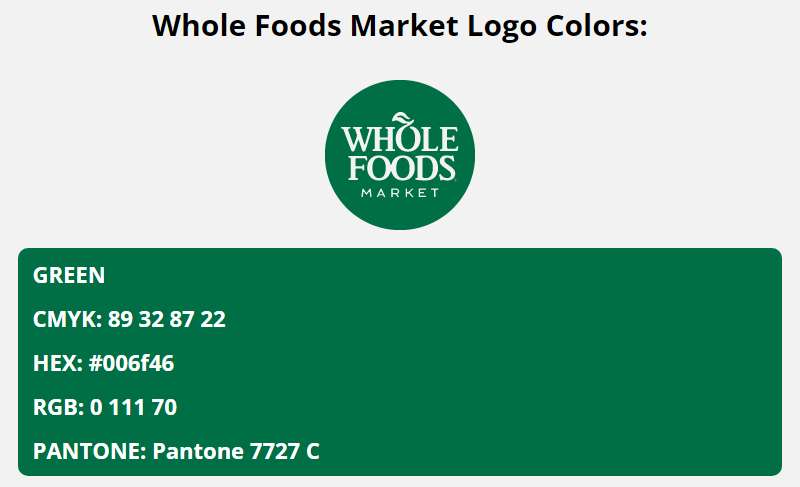
- Dark Green (#00674B)
- Color Name: Whole Foods Green
- Pantone: Pantone 3435 C (approximate match)
- Symbolic Meaning: Nature, health, organic agriculture, environmental responsibility
- Psychological Impact: Green triggers associations with freshness, safety, and wellness. It also reads as premium when used in a dark, saturated tone rather than a bright lime. Understanding color psychology explains why this specific shade works so well for a health-focused brand.
- Brand/Industry Connection: Green is the default color signal for organic and natural food retail; Whole Foods helped establish that connection
- White
- Symbolic Meaning: Cleanliness, simplicity, transparency
- Usage: Used as the background color and as the reversed logo version on dark or green backgrounds
What Typography Style Is Used in the Whole Foods Market Logo?
The logo uses a custom all-lowercase sans-serif typeface with rounded terminals and consistent stroke weight.
The rounded forms make it feel friendly and organic rather than rigid or industrial.
Lowercase lettering was a deliberate call. It softens the brand, making it feel less like a big corporation and more like something personal. Legibility is strong at both large signage scale and small packaging applications.
Earlier versions used slightly more stylized letterforms. The current iteration stripped those back in favor of clean, neutral type that doesn’t compete with product packaging or store environments.
What Are the Hidden Meanings in the Whole Foods Market Logo?
There are no widely documented hidden symbols or subliminal elements in the Whole Foods logo. That’s actually part of the point.
The brand chose restraint. No hidden arrows, no dual-meaning shapes. The meaning is direct: green equals nature, clean type equals trustworthiness.
Some brand analysts note that the all-lowercase treatment subtly communicates humility, as if the brand isn’t trying to shout. Whether that was an intentional message or just a stylistic preference is not publicly documented by the design team.
The emphasis is on the name itself, not on tricks. For a brand built on transparency and clean ingredients, a logo without hidden games actually fits the mission.
How Does the Whole Foods Market Logo Compare to Competitor Logos?
Whole Foods sits at the premium end of grocery branding. Its logo is cleaner and more minimal than most competitors, which tend to use brighter colors, crests, or more aggressive typography.
Compared to Trader Joe’s, which uses a warm, hand-lettered style that feels casual and fun, Whole Foods reads as more polished and upscale.
The Sprouts Farmers Market logo leans harder into the farmers market aesthetic with a sprout icon. Whole Foods skips the icon entirely, betting on wordmark recognition alone.
Chains like Kroger and Albertsons use more dynamic, colorful logos designed to feel accessible and value-oriented. Whole Foods green communicates something different: premium quality over bargain pricing.
Among green logos across industries, Whole Foods is one of the strongest examples of a brand owning a color. The dark forest green is immediately associated with the brand without needing any other context.
What Are the Technical Specifications of the Whole Foods Market Logo?
Official Color Codes
- Primary Color: Whole Foods Green
- Hex: #00674B
- RGB: (0, 103, 75)
- CMYK: (100, 0, 27, 60)
- Pantone: 3435 C (approximate)
- Secondary Color: White
- Hex: #FFFFFF
- RGB: (255, 255, 255)
- CMYK: (0, 0, 0, 0)
- Alternate Color: Black
- Hex: #000000
- RGB: (0, 0, 0)
- CMYK: (0, 0, 0, 100)
Dimensions and Proportions
- Aspect Ratio: Horizontal wordmark; approximately 6:1 width-to-height ratio for full “whole foods market” lockup
- Minimum Size Requirements: Not publicly specified; standard practice suggests no smaller than 1 inch wide in print
- Clear Space: Brand guidelines typically require clear space equal to the cap-height of the logo on all sides
- File Formats Available: Vector graphics (SVG, EPS, PDF) for scalable use; PNG with transparent background for digital; JPEG for general web use. Note that raster formats like bitmap files are not recommended for logo reproduction due to quality loss at scale
- Approved Variations: Full green on white, white reversed on green, black on white (for single-color applications)
- Print Resolution: Minimum 300 DPI for print applications
What Cultural Impact Has the Whole Foods Market Logo Had?
The Whole Foods logo became a cultural shorthand for a certain kind of consumer identity. By the mid-2000s, carrying a Whole Foods bag or shopping there said something about who you were.
The logo and brand became so associated with affluent, health-conscious urban consumers that “Whole Foods shopper” became a recognizable cultural archetype in American media and humor.
That kind of cultural weight is genuinely rare in grocery retail. Most supermarket brands don’t carry lifestyle associations the way Whole Foods does.
The green wordmark also influenced a generation of organic and natural food startups that adopted similar color palettes and clean typography to signal premium health positioning. You can see that influence across everything from juice bars to supplement brands.
After Amazon’s 2017 acquisition, there was real public concern that the logo and brand identity would shift toward something more corporate. It didn’t. Maintaining the logo was itself a cultural statement: the brand’s values, at least visually, stayed intact.
How Does the Whole Foods Market Logo Fit Into the Overall Brand Identity?
The logo is the anchor for a broader identity system that includes store design, private label packaging, employee uniforms, and digital properties.
The green carries through every customer touchpoint, from the exterior signage to the 365 by Whole Foods private label line.
The wordmark pairs with clean sans-serif body type across marketing materials, consistent with the brand’s overall commitment to simplicity. The brand guidelines maintain tight control over color usage and typography to protect that consistency.
Within the Amazon ecosystem, Whole Foods branding now appears alongside Prime membership benefits, delivery services, and in-store discount systems. The logo had to hold up across both a physical retail environment and a digital commerce platform. It does.
The overall identity communicates four things consistently: natural, premium, trustworthy, and knowledgeable about food. The logo, simple as it is, carries all of that.
How Should the Whole Foods Market Logo Be Used?
Official Usage Guidelines
- Do: Use approved color versions (green on white, white on green, black on white)
- Do: Maintain required clear space around the logo at all times
- Do: Use vector source files for any print or large-format applications
- Do: Follow official proportions; never stretch or distort the wordmark
- Don’t: Recreate the logo using standard system fonts; the typeface is custom
- Don’t: Place the logo on busy backgrounds that reduce legibility
- Don’t: Use unapproved color variations, gradients, or drop shadows
- Don’t: Combine the Whole Foods logo with other brand logos without explicit permission
Where to Access Official Logos
- Official press assets are available through the Whole Foods Market press center at media.wholefoodsmarket.com
- Brand partnership requests go through Amazon’s co-marketing and vendor relations teams
- Third-party vendors and suppliers should request logo files directly through their Whole Foods Market category buyer contact
Licensing and Trademark Information
- The Whole Foods Market logo is a registered trademark of Whole Foods Market IP, L.P., a wholly owned subsidiary of Amazon
- Unauthorized commercial use of the logo constitutes trademark infringement
- Editorial and journalistic use is generally permitted under fair use, but commercial reproduction requires written authorization
- Amazon’s legal team handles trademark enforcement; disputes or licensing inquiries should be directed through official Amazon/Whole Foods legal channels
FAQ on The Whole Foods Market Logo
What color is the Whole Foods Market logo?
The logo uses a dark forest green, hex code #00674B.
This specific shade was chosen to signal organic retail and natural food values. It sits closer to a deep emerald than a bright lime, which gives the brand its premium feel.
What font does the Whole Foods Market logo use?
The wordmark uses a custom sans-serif typeface with rounded terminals and even stroke weight.
It is not a standard system font. The all-lowercase setting was a deliberate choice to keep the brand approachable rather than corporate.
Has the Whole Foods Market logo ever changed?
Yes, several times since the brand launched in 1980.
Early versions included illustrated leaf motifs and more decorative lettering. The brand gradually refined toward the clean green wordmark used today, dropping all graphic elements along the way.
Who designed the Whole Foods Market logo?
No single external agency has been publicly credited for the current logo design.
The visual identity was developed through internal brand teams over multiple iterations. This is fairly common for large retailers that build design capabilities in-house over time.
What does the Whole Foods Market logo symbolize?
The green color directly references nature, health, and organic food sourcing.
The all-lowercase wordmark typography communicates approachability. Together, the design signals a brand that is premium but not intimidating, knowledgeable but not cold.
Did the logo change after Amazon acquired Whole Foods?
No. The logo remained unchanged after Amazon’s 2017 acquisition.
That decision was significant. Keeping the existing brand identity intact signaled that Amazon intended to preserve what made Whole Foods recognizable, at least visually.
What file formats are available for the Whole Foods Market logo?
Official assets are available as vector files (SVG, EPS) and raster formats (PNG, JPEG) through the Whole Foods press center.
Vector formats are preferred for print and signage. PNG with a transparent background works best for digital use.
Is the Whole Foods Market logo trademarked?
Yes. The logo is a registered trademark held by Whole Foods Market IP, L.P., a subsidiary of Amazon.
Unauthorized commercial reproduction is trademark infringement. Editorial use is generally acceptable under fair use principles.
How does the Whole Foods logo compare to other grocery store logos?
Most competing grocery store logos use brighter colors or more complex visual marks.
Whole Foods goes the opposite direction: one color, no icon, clean type. Among natural food retailers, this minimalist approach has been widely imitated but rarely matched in terms of brand recognition.
Where can I download the official Whole Foods Market logo?
Official logo files are available at media.wholefoodsmarket.com through the brand’s press resource center.
Third-party vendors and partners should request assets directly through their Whole Foods category contact. Do not use logo files pulled from unofficial sources, as these are often low resolution or incorrectly colored.
Conclusion
The Whole Foods Market logo is a strong example of how a simple wordmark can carry real brand equity across decades of retail growth and corporate change.
Its dark green color palette, clean sans-serif font, and all-lowercase font treatment work together to communicate organic credibility without overexplaining it.
No icon. No gradient. Just a wordmark that has become one of the most recognized identities in the natural grocery sector.
For anyone studying logo design principles or organic retailer branding, Whole Foods is a case worth paying close attention to.

Renowned for his expertise in logo design and visual branding, Bogdan has developed a multitude of logos for various clients.
His skills extend to creating posters, vector illustrations, business cards, and brochures. Additionally, Bogdan's UI kits were featured on marketplaces like Visual Hierarchy and UI8.
He also wrote in the past years on sites like Design Your Way, WebDesignerDepot, WPDean, Designmodo, Speckyboy, Slider Revolution, and more.
- How to Install Fonts on Mac (Step-by-Step Guide) - 20 September 2026
- From Mockup to Code: How AI-Augmented Development Speeds Up the Design Handoff - 19 September 2026
- The Beehiiv Logo History, Colors, Font, And Meaning - 18 September 2026

Bogdan Sandu is a seasoned designer who has been designing websites since 2008. Renowned for his expertise in logo design and visual branding, Bogdan has developed a multitude of logos for various clients. His skills extend to creating posters, vector illustrations, business cards, and brochures. Additionally, Bogdan's UI kits were featured on marketplaces like Visual Hierarchy and UI8. He also wrote in the past years on sites like Design Your Way, WebDesignerDepot, WPDean, Designmodo, Speckyboy, Slider Revolution, and more.
You Might Also Like