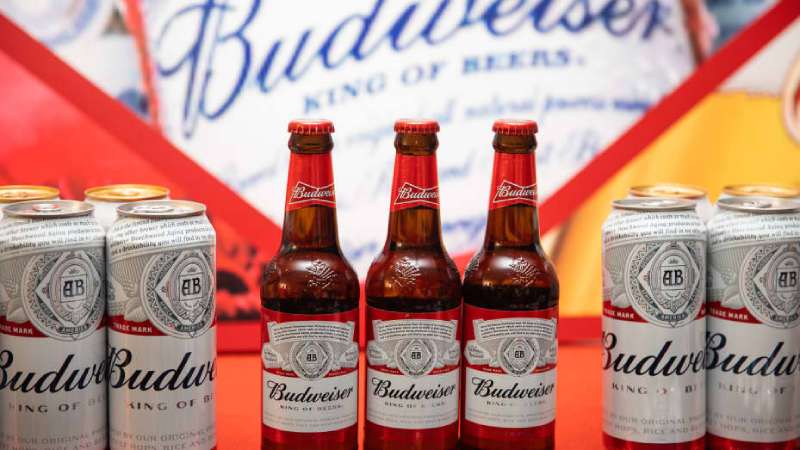
The Budweiser logo is one of the most recognized beer brand marks in the United States and across the globe. It belongs to Anheuser-Busch, a company that traces its roots to a small brewery in St. Louis, Missouri, opened in the 1850s. The logo itself first appeared in 1876 when Adolphus Busch introduced Budweiser as a national beer brand.
Within the broader history of beer logos, few have changed as frequently or as deliberately. Budweiser’s mark has gone through roughly 15 redesigns. That’s a lot. But each version kept enough visual DNA from the last one to stay recognizable on a shelf, on a billboard, or flashing across a Super Bowl commercial.
The current version, refined in 2016 by the agency Jones Knowles Ritchie (JKR), is a flat red bowtie shape with the word “Budweiser” in white script across it. The brand was founded in 1876 by Adolphus Busch in partnership with Eberhard Anheuser, and today it falls under the AB InBev umbrella.
What Is the Budweiser Logo?
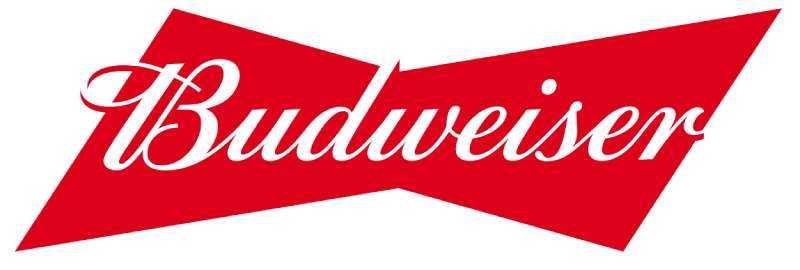
The Budweiser logo is a combination mark featuring the brand name “Budweiser” written in a custom script typeface placed on a red, bowtie-shaped background. Jones Knowles Ritchie designed the current version, which was rolled out globally in 2016. The logo signals the brand’s position as the self-proclaimed “King of Beers.”
Here’s a breakdown of the key attributes:
- Design Type: Combination mark (wordmark inside a geometric shape)
- Primary Elements: Custom script wordmark, red bowtie figure, optional crown emblem above the wordmark on extended versions
- Official Introduction Date: The original logo appeared in 1876. The current simplified version launched in early 2016.
- Designer/Agency: Jones Knowles Ritchie (JKR), New York. Tosh Hall served as creative director for the 2016 rebrand.
- Trademark Status: The “BUDWEISER” word mark was first registered with the U.S. Patent and Trademark Office in 1907 (Registration No. 0064125). The stylized bowtie version holds a separate registration (Registration No. 5389475). The brand has been involved in a long-running international trademark dispute with Czech brewery Budějovický Budvar.
- Color Palette: Budweiser Red (Hex: #DD1731, Pantone PMS 199 C) and White (Hex: #FFFFFF). Some extended brand materials also include gold and navy blue.
- Usage Context: Beer cans, bottles, packaging design, digital ads, stadium signage, merchandise, broadcast commercials, and global sponsorship materials.
How Has the Budweiser Logo Evolved Over Time?
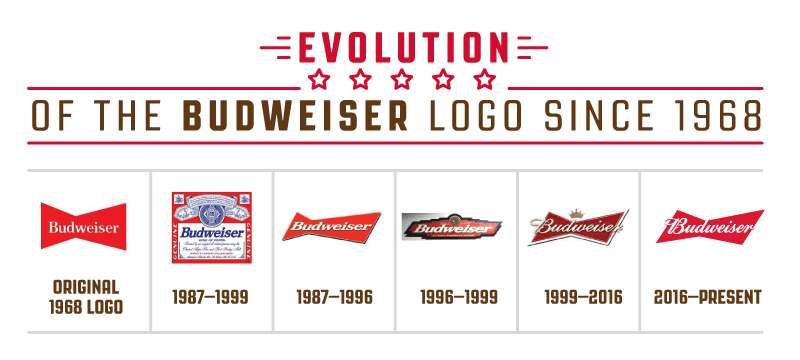
Budweiser has redesigned its logo approximately 15 times since 1876. The early versions were detailed, ornate, and packed with text. Over the decades, the brand slowly stripped things away until arriving at the flat, two-color bowtie mark used today.
It’s a textbook case of a beer brand moving from Victorian complexity toward modern simplicity. And honestly, that shift mirrors what happened across the entire packaging industry.
Original Budweiser Logo (1876–1910)
Years Active: 1876–1910
The first Budweiser logo was a rectangular label design, heavily decorated with ornamental borders, detailed text, and references to European brewing heritage. The label included “Budweiser Lager Beer” along with production details and the name “C. Conrad & Co.” (the original distributor before Anheuser-Busch acquired full rights in 1883).
Color Scheme: Red, white, gold, and black.
Designer: Attributed to the collaborative vision of Adolphus Busch, who wanted to fuse European brewing aesthetics with American market appeal.
Context: This was the Gilded Age. Everything in branding and label design leaned toward dense ornamentation. The original label was registered as a trademark in March 1886, making it one of the oldest active design mark registrations in the U.S.
Cultural Significance: The label wasn’t just decoration. It told you everything: where the beer came from, who made it, and what was in it. That kind of transparency was a selling point back then, especially for a brand trying to build trust as the first national beer in America.
The Banner and Seal Era (1910–1945)
Years Active: 1910–1945
In 1910, Budweiser introduced a banner element to the logo. The Anheuser-Busch seal (the eagle and “A” emblem) became a fixed part of the design. “C. Conrad & Co.” had already been replaced with the Anheuser-Busch name by 1909.
Color Scheme: Still red, white, gold, and black. But the layout became slightly more organized.
Key Changes: The supplemental text was translated from German to English during World War I. Production halted entirely from 1919 to 1933 due to Prohibition. In 1936, “Lager Beer” returned to the label.
Cultural Significance: This era tested Budweiser’s survival. The brand managed to maintain its identity through Prohibition by selling non-alcoholic products, which is impressive for a company whose entire visual identity was built around beer.
The Bowtie Introduction (1952–1968)
Years Active: 1952–1968
This is where things get interesting. In 1952, Budweiser adopted a triangular logo with rounded edges and a wide black outline. The bowtie shape (well, technically two connected triangles) appeared during this period.
Color Scheme: Red background with white gradient, white bold wordmark, black outline.
Designer: Internal Anheuser-Busch team.
Context: Post-war America was all about modernization. Brands across every industry were simplifying. Budweiser followed suit, shifting from the heavy Victorian label toward something that could work on cans and in television advertising (which was just taking off).
Key Changes: The “King of Beers” tagline appeared prominently beneath the wordmark. The Anheuser-Busch eagle seal moved to a supporting position above.
The Colorful Transition (1968–1987)
Years Active: 1968–1987
Budweiser went bold. The 1968 redesign featured the brand name in red letters, the “King of Beers” subtitle, and an abstract background with geometric shapes in shades of blue, yellow, green, and dark blue, all within a silver rectangular frame.
Color Scheme: Multi-color with red as the dominant.
Context: The late ’60s brought a wave of experimentation in brand design. Budweiser leaned into brighter, more playful visuals to compete in a market that was becoming increasingly crowded.
Cultural Significance: This was Budweiser at its most “fun.” The design felt less corporate, more friendly. It reflected the brand’s growing investment in sports sponsorships and pop culture advertising.
The Bowtie Refinement (1987–2011)
Years Active: 1987–2011
Through the late ’80s and into the 2000s, the bowtie shape became the dominant visual element. The script wordmark settled into its now-familiar cursive form. Gold accents became more prominent, and a crown element appeared above the wordmark to reinforce the “King of Beers” tagline.
Color Scheme: Red, white, and gold with silver accents.
Key Changes: The 3D effects came and went. Shadows, gradients, metallic finishes. This was the era when beverage brands in general loved that shiny, “premium” look.
Context: Competition from craft breweries was growing but hadn’t peaked yet. Budweiser focused on looking polished and aspirational.
The 2011 Redesign
Years Active: 2011–2016
JKR (who had been working with the brand since this point) gave the bowtie a more prominent, standalone role. The bowtie shape was styled with a red outline and white interior, and it started appearing as a standalone symbol on packaging.
Color Scheme: Red, white, gold, with a prominent red bowtie outline.
Key Changes: The bowtie became the focal element rather than just a background shape. The overall design moved toward a cleaner look but still retained 3D textures and gold elements.
Current Budweiser Logo (2016–Present)
Years Active: 2016–present
The 2016 redesign stripped everything down. No more gold. No more 3D effects. Just a flat red bowtie with white script lettering. JKR also created two custom fonts for the brand: Bud Bold (inspired by industrial lettering from the original 1860s brewery) and Bud Crafted (a slab serif replicating the Budweiser wordmark style of the 1960s).
Color Scheme: Budweiser Red (#DD1731) and White (#FFFFFF). A navy blue variant exists for aluminum cans and bottles.
Context: Craft beer was booming. Consumers wanted authenticity. JKR’s response was to strip the design back to its visual essentials, putting all the focus on the crest and creed. This was also the first time Budweiser used the same packaging worldwide.
Cultural Significance: That same summer, Budweiser temporarily replaced its name on packaging with “America” for a patriotic campaign leading up to the 2016 election and Rio Olympics. It was audacious. And it worked, at least as a conversation starter.
What Do the Design Elements of the Budweiser Logo Mean?
Every piece of the Budweiser logo carries meaning, whether it was planned that way or just evolved over 150 years of branding decisions. The bowtie shape, the script lettering, the crown, the colors. None of it is random.
Let’s break these down individually.
What Does the Bowtie Shape Represent?
The bowtie (two connected, slanted triangles) has been part of the Budweiser identity since the late 1950s. It started as a label shape and grew into the brand’s primary symbol.
The psychology of shapes tells us that angular forms suggest energy and forward motion. The bowtie’s slanted orientation reinforces this, giving the logo a sense of dynamism even when static.
It also doubles as a ribbon or badge shape, which ties back to the brand’s self-image as a premium, award-worthy product. The “King of Beers” positioning runs deep through every visual choice.
Why Did Budweiser Choose These Specific Colors?
Budweiser’s palette is deliberately narrow. Two colors do all the heavy lifting.
Budweiser Red
Red is aggressive. It grabs attention from across a bar or a grocery aisle. Research consistently shows that red stimulates appetite, which is a nice bonus for a beer brand. But more than that, red signals energy, courage, and passion. Budweiser leans into this association hard, especially in its advertising.
From a color psychology standpoint, red also creates urgency. It says “pick me up right now,” which is exactly what you want on a shelf full of competing red logos.
White
- Hex: #FFFFFF
- RGB: (255, 255, 255)
- CMYK: (0, 0, 0, 0)
White provides the contrast that makes the red pop. It also communicates cleanliness, purity, and simplicity. Together, the red and white combination carries strong American patriotic associations, which aligns perfectly with how Budweiser has marketed itself for over a century.
Gold appears in extended brand materials and heritage versions. It reinforces the “King” positioning, adding a layer of prestige. But in the primary logo? Just red and white. Clean.
What Typography Style Is Used in the Budweiser Logo?
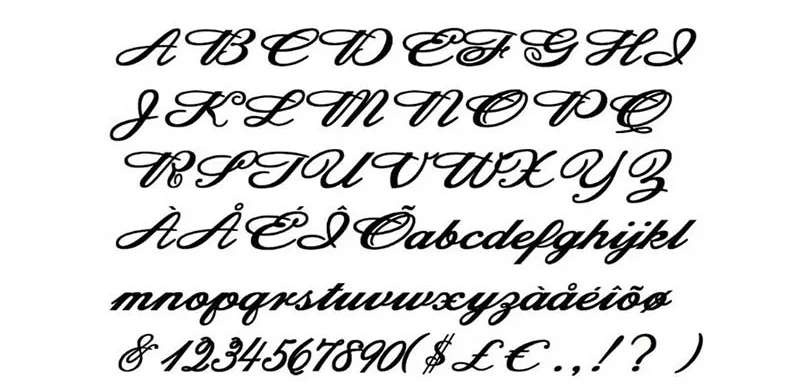
The Budweiser wordmark uses a custom script font that looks handwritten, connected, and slightly slanted to the right.
Michael Hagemann of FontMesa created the closest publicly available version, called Brewmaster, inspired directly by the Budweiser lettering from the late 1800s. But the actual logo uses proprietary lettering that Anheuser-Busch owns outright.
Script typography does something interesting here. It feels personal. Warm. Almost like a signature. For a mass-produced beer made by one of the largest beverage companies on the planet, that warmth matters. It makes the brand feel less industrial and more, well, human.
JKR also developed Bud Bold and Bud Crafted as supporting typography elements for the broader brand system. Bud Bold draws from the brewery’s industrial lettering circa 1860. Bud Crafted is a slab serif that echoes the 1960s wordmark era. Together, they let the brand toggle between “modern confidence” and “craft heritage” depending on the context.
What Are the Hidden Meanings in the Budweiser Logo?
Look, “hidden meanings” might be overstating it a bit. But there are layered design decisions worth pointing out.
The bowtie shape doubles as an abstracted ribbon, suggesting achievement and celebration. The crown that appears in extended versions directly references the “King of Beers” tagline, which has been part of the brand since 1968 as a registered trademark.
In earlier, more complex versions, you could find the Anheuser-Busch eagle (strength, freedom), hops and grain illustrations (brewing heritage), and the “AB” monogram (company identity). These elements aren’t in the current stripped-down logo, but they still appear on labels and promotional materials.
JKR’s Tosh Hall stated that the goal of the 2016 redesign was to apply the same care to design as Budweiser does to brewing (roughly 30 days per batch). Every line and curve was drawn by hand. That’s an intentional craft statement, even if most consumers won’t consciously notice it.
How Does the Budweiser Logo Compare to Competitor Logos?
Budweiser sits in a very crowded category. Beer brand visual identities range from the ultra-traditional to the deliberately quirky. Budweiser lands somewhere in the middle, with a heritage-heavy identity that has been modernized just enough to not feel outdated.
Here’s how it stacks up.
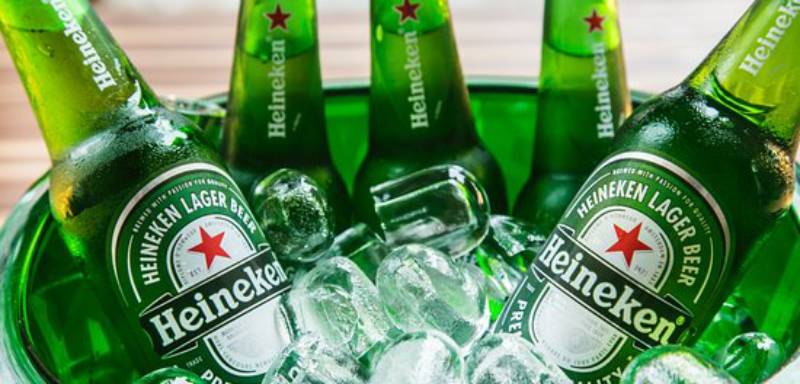
The Heineken logo uses green and a red star. Completely different approach. Where Budweiser goes with warm red and script lettering, Heineken goes cool and structured. Both work because they commit to their respective directions.
The Corona logo leans into a crown and gold tones, positioning itself as premium. Similar “royalty” messaging to Budweiser but executed through different design elements and a lighter overall feel.
The Miller Lite logo recently reverted to its retro 1970s look, heavy uppercase lettering on a white background. It’s the opposite of Budweiser’s script warmth, going for blunt, no-nonsense directness.
Guinness takes the heritage angle even further, with the harp symbol and a dark color scheme that feels centuries old (because, well, it kind of is). Budweiser can’t quite match that level of history, but its bowtie is arguably more commercially versatile.
And then there’s Stella Artois, which goes all-in on European elegance with a detailed crest, horn symbol, and gold-on-white coloring. Budweiser and Stella actually share a parent company (AB InBev), but their visual identities couldn’t be more different.
The takeaway? Budweiser carved out a unique position: American, bold, red, approachable. Most competitors go either more refined or more casual. Budweiser occupies that sweet spot in the middle.
What Are the Technical Specifications of the Budweiser Logo?
Official Color Codes
Primary Color: Budweiser Red
- Hex: #DD1731
- RGB: (221, 23, 49)
- CMYK: (7, 100, 88, 1)
- Pantone: PMS 199 C
Secondary Color: White
- Hex: #FFFFFF
- RGB: (255, 255, 255)
- CMYK: (0, 0, 0, 0)
Accent (Extended Palette): Gold
Used in heritage versions and some packaging. Gold tones appear in Anheuser-Busch’s broader brand system, including gradient applications.
Alternate: Navy Blue
Used on aluminum can versions and select merchandise lines.
Dimensions and Proportions
The bowtie shape follows a consistent geometric ratio. The horizontal axis is wider than the vertical, with the two triangular halves meeting at a narrow center point. The wordmark sits at the widest section, centered vertically within the shape.
Anheuser-Busch maintains strict brand guidelines regarding minimum size requirements and clear space around the logo. The bowtie must not be distorted, recolored beyond approved variants, or placed on backgrounds that reduce legibility.
For digital use, the logo is provided as vector graphics (SVG, EPS, AI formats) to allow scaling at any DPI without quality loss. Raster formats (JPEG, PNG) are also available for specific use cases where vector isn’t practical.
What Cultural Impact Has the Budweiser Logo Had?
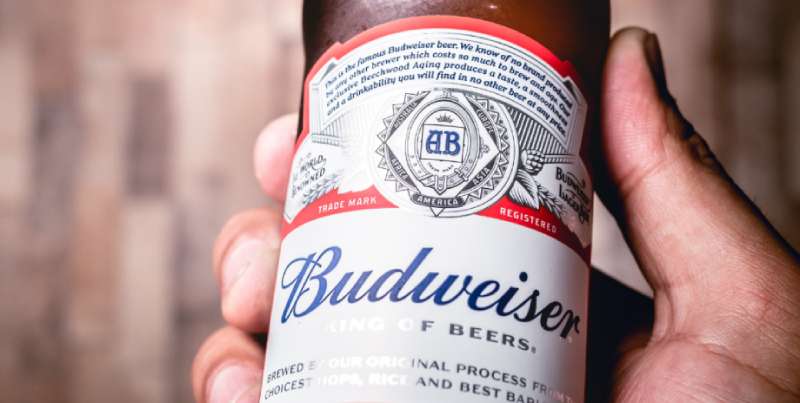
Budweiser’s logo has done something that very few brand marks manage. It became part of American cultural identity itself.
The bowtie shape has appeared in Super Bowl commercials watched by hundreds of millions. It’s been plastered across NASCAR vehicles, Major League Baseball stadiums, and FIFA World Cup broadcasts. The Budweiser Clydesdales, which always appear alongside the logo, became cultural icons in their own right.
In 2016, the brand literally replaced its own name with “America” on its cans for a summer campaign. That’s something only a brand with massive cultural equity can pull off without looking absurd. Whether you think it was brilliant or cheesy, the fact that it sparked a national conversation says a lot about how deeply embedded this logo is in American consciousness.
The red bowtie has also influenced how other beer brands approach their visual identities. When Budweiser simplified, several competitors followed with their own minimalist design approaches. The brand’s moves ripple outward across the industry.
How Does the Budweiser Logo Fit Into the Overall Brand Identity?
The logo isn’t a standalone thing. It’s one piece of a much larger brand system that includes the Budweiser Clydesdales, the “King of Beers” tagline, the Anheuser-Busch crest, the specific shade of red on every can, and the brand’s voice across advertising.
AB InBev manages this ecosystem carefully. The Budweiser brand style guide covers everything from how the logo interacts with photography to which supporting typefaces are allowed in different contexts.
Budweiser also sits within a family of AB InBev brands (Bud Light, Busch, Michelob Ultra), each with its own visual identity. The 2016 redesign specifically allowed Budweiser to fully own the color red within the portfolio. Bud Light dropped its red accents to avoid overlap. That kind of strategic color ownership across a brand portfolio is something you rarely see discussed, but it’s a big deal in shelf visual hierarchy.
JKR’s custom typography (Bud Bold and Bud Crafted) gives the brand flexible tools for storytelling across different touchpoints. Heritage campaigns use Bud Crafted. Modern, forward-looking campaigns use Bud Bold. The logo stays consistent while the surrounding type adapts.
How Should the Budweiser Logo Be Used?
Official Usage Do’s and Don’ts
Like most global brands, Budweiser has strict rules about logo usage:
Do:
- Use the provided vector or approved raster files
- Maintain the required clear space around the bowtie
- Use only approved color variants (red/white primary, navy/silver for cans, and black/white for monochrome applications)
- Follow minimum size requirements to maintain legibility
Don’t:
- Stretch, skew, rotate, or otherwise distort the bowtie shape
- Place the logo on busy or low-contrast backgrounds
- Alter the color palette outside approved variants
- Separate the wordmark from the bowtie shape in contexts where they appear together
- Add effects like drop shadows, gradients, or outlines that aren’t part of the official design system
Where to Access Official Logos
Official Budweiser brand assets are managed by AB InBev. Licensed partners, distributors, and approved vendors can access logo files through AB InBev’s brand portal. For anyone else, reaching out to Anheuser-Busch’s advertising department directly is the recommended route.
Licensing and Trademark Protection
The Budweiser name and bowtie design are registered trademarks of Anheuser-Busch, LLC. Unauthorized commercial use is a trademark infringement. The brand actively monitors and enforces its trademark rights across all markets.
And then there’s the international trademark dispute with Budějovický Budvar, which has been running for over a century. In the U.S. and Canada, Anheuser-Busch holds exclusive rights. In most of Europe, Budvar holds the rights. In the UK, both companies can use “Budweiser.” If you want the Czech version in America, you’ll need to look for “Czechvar.” Took me a while to figure that one out, honestly.
For commercial use of any Budweiser-associated visual element (the bowtie, the wordmark, the crown, the color palette), proper licensing from AB InBev is required. Period.
FAQ on The Budweiser Logo
What Does the Budweiser Logo Look Like?
The current Budweiser logo features a flat red bowtie shape with the word “Budweiser” in white script lettering across it. No gradients, no 3D effects. Just two colors and a custom wordmark that’s been refined over nearly 150 years of beer branding.
Who Designed the Current Budweiser Logo?
Jones Knowles Ritchie (JKR) designed the current version, rolled out globally in 2016. Tosh Hall served as creative director.
JKR also created two custom typefaces for the brand: Bud Bold and Bud Crafted. The agency had been working with Anheuser-Busch since the 2011 redesign.
What Font Is Used in the Budweiser Logo?
Budweiser uses a proprietary script font owned by Anheuser-Busch. The closest publicly available match is Brewmaster Regular, designed by Michael Hagemann of FontMesa.
Hagemann actually based Brewmaster on the Budweiser lettering from the late 1800s. But it’s not the official artwork.
What Are the Official Budweiser Logo Colors?
Red and white. That’s it for the primary color palette.
The red is Hex #DD1731, Pantone PMS 199 C. White is #FFFFFF. Extended brand materials sometimes include gold and navy blue, but the core logo stays strictly two-color.
Why Is the Budweiser Logo Shaped Like a Bowtie?
The bowtie shape first appeared in the 1950s as a label design. It stuck because it’s distinctive and works at any size.
Angular shapes suggest movement and energy. The slanted bowtie also functions like a ribbon or badge, reinforcing Budweiser’s “King of Beers” positioning. It became the brand’s most recognizable visual element over time.
How Many Times Has the Budweiser Logo Changed?
Roughly 15 times since 1876. Early versions were ornate rectangular labels packed with text and European-style decoration.
The Budweiser logo evolution moved steadily from Victorian complexity toward modern simplicity. Each redesign kept enough visual DNA to stay recognizable while adapting to shifting design trends and consumer tastes.
What Does the Crown on the Budweiser Logo Mean?
The crown directly references Budweiser’s famous tagline, “King of Beers,” which has been a registered trademark since 1968. It appears in extended logo versions and on packaging.
In the current flat logo, the crown is sometimes omitted. But it still shows up on labels, cans, and promotional materials for the AB InBev brand.
Is the Budweiser Logo Trademarked?
Yes. The “BUDWEISER” word mark was first registered with the U.S. Patent and Trademark Office in 1907. The stylized bowtie design holds a separate registration.
There’s also a century-old international trademark dispute with Czech brewery Budějovický Budvar that’s produced over 100 lawsuits across dozens of countries. Still ongoing.
What Is the Difference Between the Budweiser and Bud Light Logos?
Completely different visual identities. Budweiser owns red with its bowtie and script lettering. Bud Light uses blue tones and heavy uppercase type inside a rectangular frame.
The 2016 JKR redesign deliberately separated the two. Bud Light dropped its red accents so Budweiser could fully own that color within the Anheuser-Busch portfolio.
Can I Use the Budweiser Logo for My Project?
Not without permission. Any commercial use of the Budweiser bowtie, wordmark, or associated brand elements requires licensing from AB InBev.
Official assets are managed through their brand portal for approved partners. For everyone else, contact Anheuser-Busch’s advertising department. Unauthorized use is trademark infringement, and they do enforce it.
Conclusion
The Budweiser logo has survived Prohibition, world wars, the craft beer boom, and roughly 15 redesigns. That’s not luck. It’s the result of deliberate brand consistency paired with a willingness to adapt when the market shifts.
From its ornate 1876 label to the flat red bowtie we see today, the visual identity reflects how Anheuser-Busch thinks about its audience. Every color choice, every curve in that script lettering, every decision to strip away gold accents or drop the crown serves a purpose.
What makes this beer brand mark endure isn’t complexity. It’s clarity. Red and white, a bowtie, a name you can read from across the room.
Few American lager brands can match that kind of instant recognition. And with AB InBev continuing to manage the brand globally, the Budweiser emblem isn’t going anywhere soon.

Renowned for his expertise in logo design and visual branding, Bogdan has developed a multitude of logos for various clients.
His skills extend to creating posters, vector illustrations, business cards, and brochures. Additionally, Bogdan's UI kits were featured on marketplaces like Visual Hierarchy and UI8.
He also wrote in the past years on sites like Design Your Way, WebDesignerDepot, WPDean, Designmodo, Speckyboy, Slider Revolution, and more.
- How photo recovery software works and when to use it - 7 October 2026
- Top Source Sans Pro Font Pairing for Clean UIs - 6 October 2026
- Best Email Design System Examples From Leading Brands - 5 October 2026

Bogdan Sandu is a seasoned designer who has been designing websites since 2008. Renowned for his expertise in logo design and visual branding, Bogdan has developed a multitude of logos for various clients. His skills extend to creating posters, vector illustrations, business cards, and brochures. Additionally, Bogdan's UI kits were featured on marketplaces like Visual Hierarchy and UI8. He also wrote in the past years on sites like Design Your Way, WebDesignerDepot, WPDean, Designmodo, Speckyboy, Slider Revolution, and more.
You Might Also Like