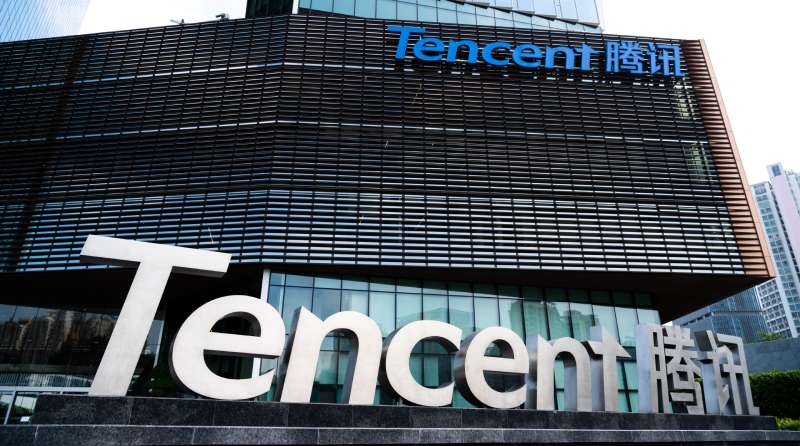
The Tencent logo is one of the most recognized corporate marks in Asia’s tech industry. It belongs to Tencent Holdings, a Chinese multinational conglomerate founded in 1998 by Ma Huateng (Pony Ma) and Zhang Zhidong in Shenzhen, China. The company operates WeChat, QQ, and dozens of other digital products used by over a billion people worldwide.
As a wordmark, the Tencent logo carries a custom italicized sans-serif typeface rendered in blue on a white background. Its current version was introduced in 2017, designed in collaboration with Monotype. That makes roughly two main logo iterations across the company’s history, which is pretty restrained for a company this size.
The logo says a lot about how Tencent wants to be perceived. Clean. Professional. Forward-moving. The upward arrow built into the lowercase “t” is a small but effective touch. It adds direction and energy without cluttering the design.
What Is the Tencent Logo?
The Tencent logo is a custom wordmark featuring the company name in an italicized sans-serif typeface, rendered in blue (#3458B0) on a white background. It was redesigned in 2017 by Monotype, with type designers Julius Hui and Juan Villanueva leading the project. The mark conveys trust, forward momentum, and professionalism.
Here’s a breakdown of its key attributes:
- Design Type: Wordmark (no icon or symbol accompanies the text in the primary version)
- Primary Elements: Custom italic sans-serif typography with an upward arrow element integrated into the lowercase “t”
- Official Introduction Date: Original logo in 1998, current version in 2017
- Designer/Agency: Monotype (Julius Hui led Chinese characters, Juan Villanueva handled Latin design, Akira Kobayashi designed Japanese fonts)
- Trademark Status: Registered trademark of Tencent Holdings Limited
- Color Palette: Tencent Blue (#3458B0) on white
- Usage Context: Corporate communications, digital platforms, advertising, product branding across WeChat, QQ, Tencent Games, Tencent Cloud, and all subsidiary materials
How Has the Tencent Logo Evolved Over Time?
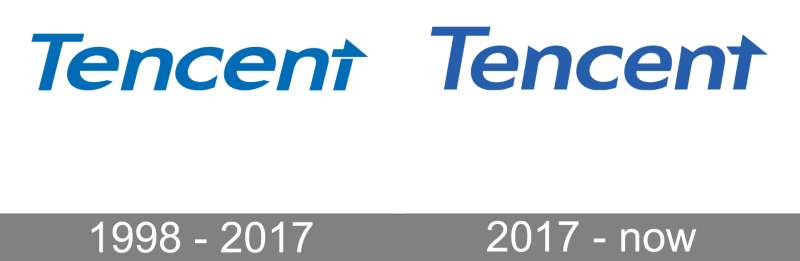
The Tencent logo has gone through two main phases since 1998. It started as a bilingual wordmark with both Chinese and English text, then simplified to an English-only version. The 2017 redesign brought a refined custom typeface created by Monotype, giving the mark a more modern and globally consistent appearance.
The changes have been subtle rather than dramatic. Tencent kept its core identity intact while sharpening the details. That’s a rare approach in tech, where companies tend to rebrand every few years.
Original Tencent Logo (1998-2017)
Years Active: 1998 to 2017
The first Tencent logo was a bilingual wordmark, featuring both Chinese characters and the English company name set in a single line. The English portion was slightly italicized.
Both names were rendered in a calm, light blue shade. That blue carried a friendly, approachable feel, which worked well for a company that was just starting to build trust with Chinese internet users.
The most distinctive feature? An arrow-like element replacing the horizontal bar on the final letter “T.” It was a small design choice that gave the wordmark a sense of direction and purpose. Even back then, the logo leaned toward a minimalist design approach.
Eventually, Tencent dropped the Chinese characters from the primary version and went with a Latin-only wordmark. This reflected the company’s growing global ambitions. The blue color stayed consistent, and the overall structure remained the same.
The logo did its job well during a period of massive growth. From QQ’s explosion in popularity to the launch of WeChat in 2011, this wordmark was the face of one of China’s fastest-growing companies.
Redesigned Tencent Logo (2017-Present)
Years Active: 2017 to present
In 2017, Tencent partnered with Monotype to develop a fully custom typeface called Tencent Sans. This was timed with the company’s 19th anniversary.
The redesign was subtle but meaningful. The letters got slightly straighter, with a reduced tilt angle. Sharp cuts were added to the letterforms, particularly on the “n” and “t” characters. The overall effect is cleaner and more refined.
The blue shifted to a slightly darker, more intense shade. The arrow element on the “t” was integrated more tightly into the letterform, making it feel like a natural part of the character rather than a separate detail.
What made this project interesting is the scope. Monotype didn’t just redesign a font for one language. They built a complete typeface system covering Chinese, Japanese, and Latin characters. All three scripts share similar entry and exit strokes, so the brand voice stays consistent across languages.
The cultural significance here is real. This was one of the first times a major Chinese tech company invested this heavily in a custom global typeface. It signaled Tencent’s shift from a Chinese internet company to a worldwide technology conglomerate.
What Do the Design Elements of the Tencent Logo Mean?

Every piece of the Tencent logo carries meaning. The italicized letterforms suggest forward momentum and speed. The upward arrow on the “t” represents growth and progress. And the blue color palette communicates reliability and trust, which are qualities that matter a lot when you process billions of digital transactions.
The absence of a separate icon or symbol is a deliberate choice. Tencent lets the wordmark do all the talking.
Why Did Tencent Choose These Specific Colors?
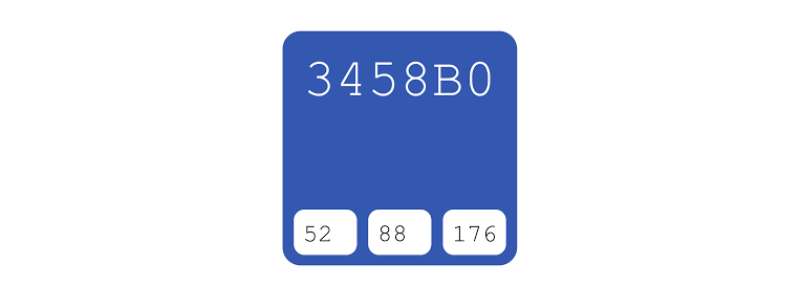
Tencent’s primary color is a medium-dark blue, often cited around hex #3458B0.
In terms of color psychology, blue signals dependability and stability. It’s the go-to for tech companies because it builds trust without feeling aggressive. Think about how many blue logos dominate the tech space.
The white background creates strong contrast and keeps things readable at any size. It also gives the wordmark breathing room, which is smart when you consider how many different platforms this logo appears on.
There’s no secondary accent color in the corporate wordmark itself. Though Tencent’s QQ mascot, a penguin, wears a red scarf, that red doesn’t carry over to the main company logo. The single-color approach keeps the brand looking focused and professional.
What Typography Style Is Used in the Tencent Logo?
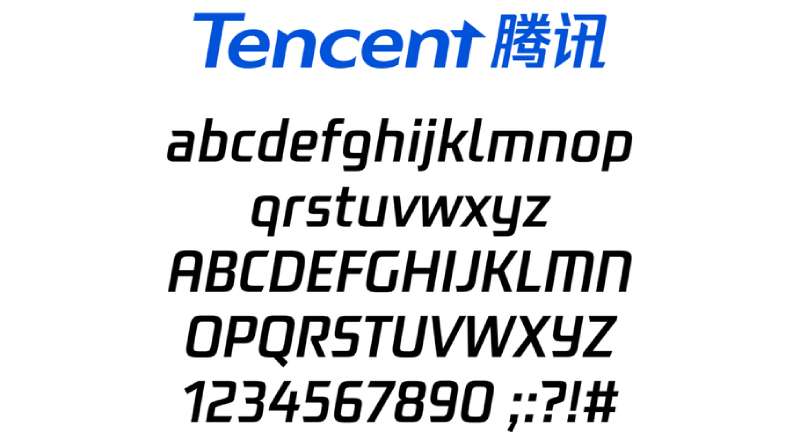
The Tencent logo uses a custom typeface called Tencent Sans, designed by Monotype in 2017.
Juan Villanueva designed the Latin version as a low-contrast oblique sans-serif. He blended early geometric sans influences (like Paul Renner’s original Futura drawings) with more rational industrial forms. The result feels modern without being cold.
Sharp cuts on specific letters, especially the “n” and “t,” give the wordmark its recognizable edge. The italic angle creates a sense of speed and forward direction, which ties back to the company’s focus on progress. The kerning is tight but readable, giving the logo a compact, confident feel.
What Are the Hidden Meanings in the Tencent Logo?
The most talked-about detail is the arrow element above the lowercase “t.” It looks like a partial arrow pointing upward and to the right. Some people also see it as a paper airplane, which adds a layer of friendliness to what is otherwise a very corporate mark.
The italic angle itself is intentional. Julius Hui noted that the forward slant creates a sense of speed and momentum. It’s a small detail, but it shifts the entire feel of the wordmark from static to active.
And then there’s what’s not there. No icon. No mascot (in the corporate logo, at least). That absence is its own message: Tencent is big enough that the name alone carries the weight.
How Does the Tencent Logo Compare to Competitor Logos?
In the landscape of tech company logos, Tencent’s wordmark sits in a specific category. It’s text-only, like the Cisco logo or the Sony logo. But its italic angle and custom cuts give it more personality than most corporate wordmarks.
Compare it to other Chinese tech giants. Baidu’s logo uses a bear paw icon alongside its wordmark, creating a combination mark. Huawei’s logo has a distinct flower-petal symbol. Alphabet’s logo (Google’s parent) is also a wordmark, but it uses a straightforward sans-serif without the italic slant.
Tencent’s approach is closer to what you’d see from Western enterprise software companies. The Salesforce logo and the SAP logo both lean on text-heavy marks, though they pair theirs with icons. Tencent skips the icon entirely, which is a bold move in a world where every company seems to want a little symbol for their app drawer.
The consistent use of blue also places Tencent in a crowded category. Companies like Facebook, Dell, and Intel all lean on blue for the same trust-building reasons. What separates Tencent is the custom typography. Most competitors use off-the-shelf fonts or simpler custom versions. Tencent’s investment in a full multilingual type system is unusual and gives them an edge in consistency across global markets.
What Are the Technical Specifications of the Tencent Logo?
Official Color Codes
- Primary Color: Tencent Blue
- Hex: #3458B0
- RGB: (52, 88, 176)
- CMYK: (70, 50, 0, 31)
- Background: White
- Hex: #FFFFFF
- RGB: (255, 255, 255)
- CMYK: (0, 0, 0, 0)
Dimensions and Proportions
The Tencent logo SVG file on Wikimedia Commons is nominally sized at 3,456 x 464 pixels, giving it a wide aspect ratio of roughly 7.4:1. That’s typical for a wordmark with seven characters and no accompanying icon.
The vector graphics format ensures it scales cleanly at any size. Clear space requirements (as with most corporate logos) call for maintaining a buffer zone around the wordmark equal to at least the height of the lowercase letters.
The logo works well across both digital and print applications. Its simple color scheme and clean lines mean it holds up at small sizes on mobile screens and at large sizes on building signage.
What Cultural Impact Has the Tencent Logo Had?
The Tencent logo might not be as visually flashy as some gaming company logos, but its cultural weight is significant. It represents one of the most valuable companies on the planet, a firm that touches the daily lives of over a billion people through messaging, payments, gaming, and social media.
In China, the Tencent brand is practically unavoidable. The logo appears on everything from WeChat payment terminals to the loading screens of some of the world’s most-played mobile games. It’s on the Tencent Seafront Towers in Shenzhen’s Nanshan District, one of the most photographed tech headquarters in Asia.
The 2017 type redesign itself became a cultural moment. Chinese internet users debated the changes online, with reactions ranging from admiration for the investment to commentary about how subtle the differences actually were. That kind of public discussion about typeface choices shows just how much brand presence Tencent has built.
How Does the Tencent Logo Fit Into the Overall Brand Identity?
The Tencent logo functions as the anchor of a much larger brand system. Tencent operates dozens of subsidiaries, each with its own visual identity. WeChat has its green speech-bubble icon. QQ has the penguin mascot. Tencent Games uses a “Spark More” flame mark. But they all trace back to the parent company’s blue wordmark.
This structure follows a “house of brands” model more than a “branded house” approach. The corporate logo isn’t always front and center on consumer products. But it shows up in investor materials, corporate partnerships, and press coverage. A well-defined set of brand guidelines ensures the wordmark stays consistent across all these touchpoints.
The custom Tencent Sans typeface extends the brand identity beyond just the logo itself. It’s used across corporate communications, advertisements, and headlines. That means even when you don’t see the logo directly, you still feel the brand through its typographic elements.
How Should the Tencent Logo Be Used?
Tencent maintains specific rules for how its logo appears in public. Here’s what you should know:
- Do not alter the logo’s proportions, colors, or orientation. The wordmark should always appear in its original blue on a white or light background, or in white on a dark background. Stretching, rotating, or recoloring is not allowed.
- Maintain clear space. The logo needs adequate breathing room on all sides. Crowding it with other design elements weakens its impact. Understanding white space is key here.
- Don’t combine the logo with unauthorized text or images. Adding taglines, drop shadows, or decorative effects to the official mark is a no-go.
- Official assets are available through Tencent’s media resources page. If you need the logo for editorial or partnership purposes, always download from an official source rather than grabbing a screenshot from Google Images.
- Trademark protections apply. The Tencent name and logo are registered trademarks. Using them for commercial purposes without authorization can lead to legal action.
For press and media use, Tencent provides downloadable logo files through its official newsroom and media resources section. These include vector formats suitable for both digital and print work.
FAQ on The Tencent Logo
What Does the Tencent Logo Look Like?
The Tencent logo is a blue wordmark using a custom italicized sans-serif typeface. It spells out “Tencent” in title case with sharp letterform details on the “n” and “t.” There’s no icon or symbol. Just the name, rendered on a white background.
Who Designed the Current Tencent Logo?
Monotype designed the current version in 2017. Julius Hui led the Chinese character design, Juan Villanueva handled the Latin letterforms, and Akira Kobayashi created the Japanese version. The project produced a full font spacing system called Tencent Sans.
What Color Is the Tencent Logo?
The primary color is a medium-dark blue, approximately hex #3458B0. This hue communicates trust and professionalism. The background is always white. No gradient or secondary color appears in the corporate mark.
Has the Tencent Logo Changed Over the Years?
Barely. The original 1998 version was a bilingual wordmark in light blue. Tencent later dropped the Chinese characters for global use. The 2017 redesign refined the typeface with sharper cuts and a slightly darker blue. Two major versions total.
What Font Does the Tencent Logo Use?
Tencent Sans is the custom typeface built by Monotype. The Latin version blends geometric and industrial sans-serif influences. It covers Chinese, Japanese, and Latin scripts with matching stroke characteristics. You won’t find it available for public download.
What Does the Arrow in the Tencent Logo Mean?
The upward arrow element sits on the lowercase “t.” It represents growth and forward progress. Some also interpret it as a paper airplane, which adds a friendlier tone. This detail has been part of the Tencent design elements since the original 1998 version.
Where Can I Download the Official Tencent Logo?
Tencent provides official logo files through its media resources page at tencent.net.cn. Files are typically available in PNG and SVG formats. Always use official sources. Grabbing a low-res screenshot from a search result won’t give you usable DPI for professional work.
Why Is the Tencent Logo Italicized?
The italic angle creates a sense of speed and forward movement. Julius Hui explained that the slant conveys momentum, which fits Tencent Holdings’ identity as a fast-growing tech conglomerate. It also helps the wordmark stand out among competitors using upright lettering.
Does Tencent Have a Mascot Logo?
Not in the corporate logo. But Tencent’s QQ messaging platform uses a penguin mascot wearing a red scarf. That penguin is closely associated with the brand in China. The main Tencent logo, however, stays strictly as a wordmark with no mascot or focal point icon.
Can I Use the Tencent Logo for My Project?
It depends. The Tencent name and logo are registered trademarks. Editorial and informational use is generally fine. Commercial use without permission is not. Check Tencent’s official brand style guide or contact their legal team before using the mark in any commercial context.
Conclusion
The Tencent logo proves that a wordmark doesn’t need flashy icons to leave a mark. Two decades of restrained evolution, a custom multilingual typeface from Monotype, and a consistent blue identity have turned seven letters into one of the most recognized corporate symbols in global tech.
From its Shenzhen roots to the Hong Kong Stock Exchange, the logo scales across every touchpoint. Digital platforms, packaging design, investor decks, Tencent Games loading screens. It works everywhere because the logo design principles behind it prioritize clarity over complexity.
That arrow on the “t” still points forward. And so does the company behind it.

Renowned for his expertise in logo design and visual branding, Bogdan has developed a multitude of logos for various clients.
His skills extend to creating posters, vector illustrations, business cards, and brochures. Additionally, Bogdan's UI kits were featured on marketplaces like Visual Hierarchy and UI8.
He also wrote in the past years on sites like Design Your Way, WebDesignerDepot, WPDean, Designmodo, Speckyboy, Slider Revolution, and more.
- The Windsurf Logo History, Colors, Font, And Meaning - 10 October 2026
- How to Remove Background From Product Photos (No Photoshop) - 10 October 2026
- How Designers can Build a Stronger Online Creative Identity - 9 October 2026

Bogdan Sandu is a seasoned designer who has been designing websites since 2008. Renowned for his expertise in logo design and visual branding, Bogdan has developed a multitude of logos for various clients. His skills extend to creating posters, vector illustrations, business cards, and brochures. Additionally, Bogdan's UI kits were featured on marketplaces like Visual Hierarchy and UI8. He also wrote in the past years on sites like Design Your Way, WebDesignerDepot, WPDean, Designmodo, Speckyboy, Slider Revolution, and more.
You Might Also Like