The Panasonic Logo is one of the most recognized marks in consumer electronics. It belongs to a Japanese multinational that started as Matsushita Electric in 1918, founded by Konosuke Matsushita in Osaka. The brand name “Panasonic” first appeared in 1955 on audio speakers built for export markets.
Over more than six decades, the logo has only gone through about four major changes. That kind of restraint is rare in tech branding. The current version, a clean blue wordmark, has been in use since 1971. It became the official corporate logo in 2008 when the entire company rebranded from Matsushita Electric to Panasonic Corporation.
Few tech company logos have stayed this consistent for this long. And that consistency says something about how seriously Panasonic treats its visual identity.
What Is the Panasonic Logo?
The Panasonic logo is a wordmark that spells “Panasonic” in a bold, custom sans-serif font closely based on Helvetica Black. Officially introduced in its current form in 1971, the logo uses Panasonic Blue as its signature color. It represents the brand’s commitment to reliability and technological progress.
Here is a breakdown of the logo’s main attributes:
- Design Type: Wordmark (text-only logotype with no icon or symbol)
- Primary Elements: The word “Panasonic” in title case, set in a heavy sans-serif typeface. No accompanying graphic mark or emblem
- Official Introduction Date: 1971 (current wordmark form). Adopted as the sole corporate logo in October 2008
- Designer/Agency: Created through collaborative in-house design efforts at Matsushita Electric. No single designer has been publicly credited
- Trademark Status: Registered and renewed with the United States Patent and Trademark Office (USPTO) under Registration Number 3108573, originally filed March 13, 2003. Also protected internationally through the Madrid System (International Registration Number 1211986)
- Color Palette: Panasonic Blue (Hex: #0040BE, RGB: 0, 64, 190, CMYK: 92, 79, 0, 0, Pantone: PMS 2728 C) on a white background. Black and white versions also exist for specific use cases
- Usage Context: Products, retail packaging, digital platforms, corporate communications, sponsorship materials (Olympic Games, FIFA), and advertising across all Panasonic divisions including Panasonic Energy, Panasonic Automotive, and Lumix cameras
How Has the Panasonic Logo Evolved Over Time?
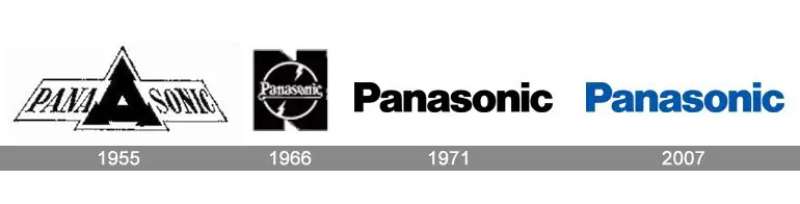
The Panasonic logo has gone through four main versions since 1955. Each redesign simplified the mark further, moving from a decorative badge with geometric symbols to the clean, single-word logotype we see today.
The company barely touched the logo after 1971. Over 50 years with the same basic design. That is unusual for a brand this size.
Original Panasonic Logo (1955-1966)
The first Panasonic logo showed up in 1955 when Matsushita Electric needed a brand name for speakers being exported to the United States. “National” was already trademarked in America by another company, so they combined “pan” (meaning all) and “sonic” (meaning sound).
The design featured a monochrome badge with the word “Panasonic” split into two halves by a bold black triangle. Small arrow-like shapes sat at each corner of the triangle, pointing outward.
Both halves of the text tilted inward toward the center, creating a kind of upward motion. The whole thing was framed by a thin black border that followed the badge’s shape.
It looked ambitious. Maybe even a little complicated. But for the 1950s, this kind of detailed brand mark was common. The triangle and arrows were meant to suggest progress and forward movement, which made sense for a company pushing into new international markets.
The psychology of shapes was already at work here, even if nobody called it that back then.
Revised Panasonic Logo (1966-1968)
By 1966, the logo got its first serious overhaul. The cluttered badge was gone.
In its place: a smooth, bold sans-serif wordmark in all capitals. The letters had rounded edges and clean contours, which gave it a much more modern feel compared to the 1955 version.
To the left of the wordmark sat a new emblem. It was a white circle placed over a black shape that resembled the letter “N.” Inside the circle, the word “Panasonic” appeared in small type. This “N” was a nod to the National brand that the parent company used in Japan and Europe.
Below the right side of the wordmark, a tagline read “By Matsushita Electric” in a lightweight sans-serif. It was a bridge between the export brand and the parent company’s identity.
The whole approach was cleaner. More confident. The font choices alone showed a company that was growing up and starting to think globally about its brand guidelines.
Simplified Panasonic Wordmark (1968-1971)
This version did not last long. Just three years.
The designers stripped away the circle emblem and the “By Matsushita Electric” tagline. What remained was only the “PANASONIC” wordmark in heavy, black uppercase letters.
The typography was similar to the 1966 version but slightly refined. Sharper angles. More defined letter shapes. Cleaner lines overall.
It was a transitional logo, honestly. A stepping stone. The company was clearly moving toward something even more stripped down, and this version was the proof of concept.
Current Panasonic Logo (1971-Present)
In 1971, the logo arrived at its final form. And it has not changed since.
The wordmark switched from all-caps to title case. “Panasonic” in blue. No emblem, no tagline, no border. Just the name, set in a typeface closely related to Helvetica Black.
This was also the first time color entered the picture. Panasonic Blue replaced the black that had defined every previous version. That hue of medium-dark blue became the brand’s signature.
When Matsushita Electric officially renamed itself Panasonic Corporation in October 2008, this same logo became the corporate identity for the entire organization. No redesign needed. It just… worked.
The longevity is remarkable. Most brands in consumer electronics have redesigned their logos multiple times since the 1970s. Panasonic kept the same one. That takes confidence.
What Do the Design Elements of the Panasonic Logo Mean?

Every piece of the Panasonic logo carries meaning, from the specific blue to the weight of the letterforms. The name itself is symbolic: “pan” comes from Greek, meaning “all,” and “sonic” refers to sound. Together, they communicate a brand that aims to bring sound and technology to everyone.
The minimalist design is not accidental. It reflects a philosophy rooted in clarity and function.
Why Did Panasonic Choose These Specific Colors?
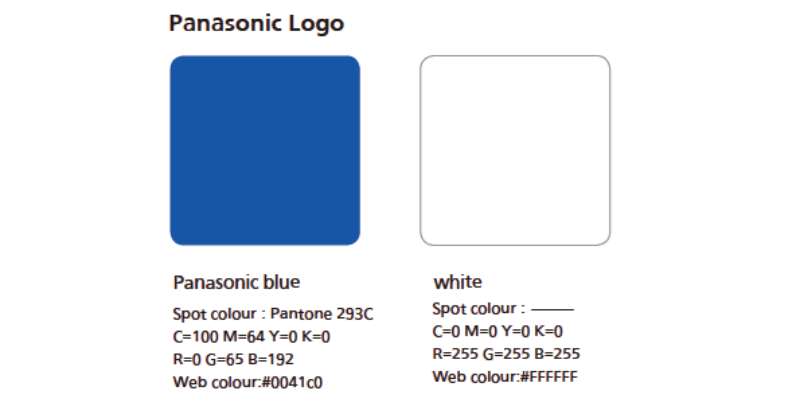
Panasonic Blue is the brand’s defining color. It has been the primary logo color since 1971.
According to color psychology, blue signals trust, competence, and dependability. For a company selling electronics that people rely on daily, that association matters a lot.
Here are the official color specs:
- Panasonic Blue: Hex #0040BE | RGB (0, 64, 190) | CMYK (92, 79, 0, 0) | Pantone PMS 2728 C. This shade communicates reliability and forward-thinking innovation. It sits in a medium-dark range that reads well on white backgrounds and product surfaces
- White: Hex #FFFFFF | RGB (255, 255, 255). Used as the default background color, providing maximum contrast with the blue wordmark
- Black: Hex #000000 | RGB (0, 0, 0). Used in monochrome applications where color printing is not available or on dark product surfaces
The color palette is deliberately limited. Two or three options total. No gradients, no secondary accent colors. This tight restriction makes the brand immediately recognizable in any context, from a tiny label on a battery to a billboard at the Olympic Games.
What Typography Style Is Used in the Panasonic Logo?
The Panasonic logo uses a typeface based on Helvetica Black, sometimes described as similar to Sequel Sans Black Display. Thick strokes, rounded forms, and straight terminal cuts define the lettering.
The x-height is generous, which gives the wordmark strong readability even at small sizes. Kerning between the letters is tight but uniform, creating a compact block of text that holds together as a single visual unit.
There are no thin strokes anywhere in this logo. Every letter carries the same heavy weight. That kind of consistency in stroke width communicates stability, something you want from a brand selling electronics you plan to use for years.
The move to title case in 1971 was a smart call. All-caps can feel aggressive. Title case feels approachable while still looking professional.
What Are the Hidden Meanings in the Panasonic Logo?
The logo does not contain hidden symbols or subliminal imagery. What you see is what you get, and that is actually the point.
The intentional simplicity signals transparency and honesty. No tricks, no visual gimmicks. Just a name and a color. Panasonic’s designers have stated that the brand’s visual identity is meant to feel accessible and unpretentious.
Some design analysts point out that the tight letter spacing creates a sense of unity and cohesion, reflecting the company’s integrated approach to product development. But that is probably reading a bit too much into it. Sometimes font spacing is just good typography.
How Does the Panasonic Logo Compare to Competitor Logos?
Panasonic sits in a competitive space where every major brand uses a wordmark-based logo. Sony, LG, and Samsung all rely heavily on their name as the primary visual element. But the approaches differ in interesting ways.
Sony uses a custom serif-influenced typeface that feels premium and editorial. Samsung uses a rounded, slightly geometric sans-serif in blue (yes, also blue). LG combines a wordmark with a stylized face icon using the letters L and G.
Panasonic’s logo is the heaviest of the group in terms of stroke weight. It has more visual mass than Sony’s thinner letterforms or Samsung’s more spaced-out characters. That weight gives it a sense of solidity that the others do not quite match.
All four brands use blue as a primary or secondary logo color. This is not a coincidence. In the electronics industry, blue dominates brand color choices because of its associations with trust and technology. You will find the same trend across logo design in general when brands want to communicate dependability.
Where Panasonic really stands apart is longevity. Sony has tweaked its logo several times. Samsung has gone through multiple redesigns. LG changed its identity significantly. Panasonic? Same logo since 1971. That kind of visual consistency builds a different kind of brand equity over time.
What Are the Technical Specifications of the Panasonic Logo?
Official Color Codes:
- Primary Color – Panasonic Blue: Hex #0040BE | RGB (0, 64, 190) | CMYK (92, 79, 0, 0) | Pantone PMS 2728 C
- Background – White: Hex #FFFFFF | RGB (255, 255, 255) | CMYK (0, 0, 0, 0)
- Alternate – Black: Hex #000000 | RGB (0, 0, 0) | CMYK (0, 0, 0, 100)
Dimensions and Proportions:
Panasonic’s brand guidelines specify strict rules around how the logo can appear. The wordmark must maintain its original proportions at all times. It cannot be stretched, compressed, or rotated.
Clear space around the logo is required. The minimum clear space is typically defined as the height of the capital “P” in the wordmark, measured on all four sides. Nothing, not text, images, or other brand elements, should enter that zone.
Minimum size requirements exist to keep the logo readable. For print, the wordmark generally should not drop below a certain width (often around 25mm, though this varies by application). For digital use, there is a corresponding pixel minimum to keep the letterforms crisp.
The logo must always appear on either a Panasonic Blue, white, or black background. No exceptions listed in the official guidelines. The registered trademark symbol must sit at the top-right of the wordmark, superscript, at all times.
What Cultural Impact Has the Panasonic Logo Had?
The Panasonic logo has been a fixture in global culture for over five decades. Its presence at the Olympic Games, FIFA World Cup events, and on millions of consumer products has made the blue wordmark familiar to people who do not even own Panasonic products.
In Japan, the transition from Matsushita Electric to the Panasonic name in 2008 was a significant cultural moment. It marked the end of a naming tradition that went back to the company’s founder. The logo stayed the same, but the meaning behind it shifted from “export brand” to “everything we are.”
The logo also shows up in unexpected places. It appears on the scoring displays at tennis tournaments, on automotive battery packs (through the Tesla partnership), and on broadcast cameras used by news networks worldwide. That kind of range is hard to find with any other single brand mark.
How Does the Panasonic Logo Fit Into the Overall Brand Identity?
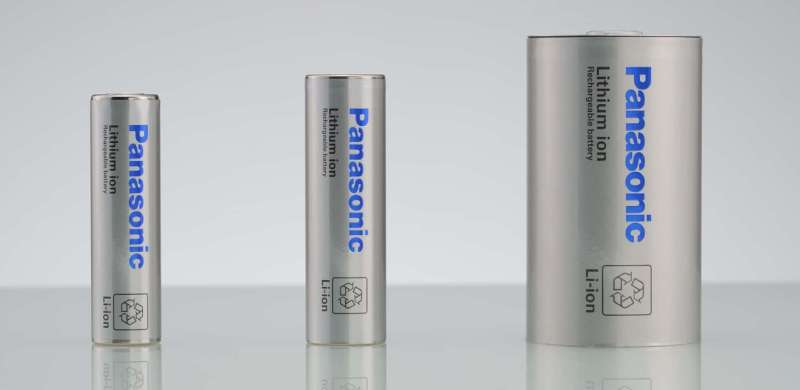
The logo sits at the top of a structured brand hierarchy. Panasonic Holdings Corporation uses it as the master brand, and every sub-brand connects back to it in some way.
Below the corporate logo, Panasonic operates business brands like Technics (audio equipment), Lumix (cameras), Toughbook (rugged laptops), and Eneloop (rechargeable batteries). Some carry the Panasonic name directly. Others are “Panasonic-endorsed,” meaning the Panasonic logo appears alongside the sub-brand’s own mark.
The brand style guide controls how all of these pieces relate visually. The blue stays the same. The typography principles stay the same. White space rules are consistent across every application.
This kind of tight control over visual hierarchy is what keeps the brand from looking fragmented even though it operates in dozens of product categories, from batteries to airplane entertainment systems.
How Should the Panasonic Logo Be Used?
Official Usage Do’s:
- Always use the official logo files provided by Panasonic
- Maintain the required clear space around the wordmark
- Place the logo on approved backgrounds only (Panasonic Blue, white, or black)
- Include the registered trademark symbol (R) at the top-right corner
- Use the exact Panasonic Blue color values specified in the brand guidelines
Official Usage Don’ts:
- Do not alter the logo’s proportions, stretch it, or compress it
- Do not change the logo’s colors to anything outside the approved palette
- Do not place the logo on busy or patterned backgrounds that reduce readability
- Do not add effects like shadows, outlines, or gradients to the wordmark
- Do not recreate the logo using substitute fonts
Accessing Official Logos:
Official Panasonic logo files are available through Panasonic’s corporate brand portal. Partners, distributors, and media outlets typically receive approved assets through their business contacts at Panasonic. The company also publishes brand guideline documents (like the PIDSA Style Guide) that specify exactly how the logo should appear in every context.
Trademark Protection:
The Panasonic wordmark is a registered trademark of Panasonic Holdings Corporation. It is protected in virtually every jurisdiction with a trademark system, using both national filings and the WIPO Madrid System for international coverage. Unauthorized use of the logo, including modified or altered versions, can result in legal action. The trademark covers an extremely broad range of product and service categories, from chemicals and electronics to advertising and financial services.
FAQ on The Panasonic Logo
What Does the Panasonic Logo Look Like?
The Panasonic logo is a clean wordmark spelling “Panasonic” in title case. It uses a bold sans-serif typeface similar to Helvetica Black.
No icon. No emblem. Just the name in Panasonic Blue on a white background. Simple and direct.
When Was the Current Panasonic Logo Introduced?
The current version launched in 1971. It replaced earlier designs that included geometric symbols and secondary emblems.
Panasonic Corporation adopted it as the official corporate logo in 2008 when Matsushita Electric changed its name. Over 50 years unchanged.
What Font Does the Panasonic Logo Use?
The logo uses a typeface based on Helvetica Black. Some sources also compare it to Sequel Sans Black Display.
Thick strokes, rounded forms, straight terminal cuts. The leading and letter weight give it a solid, stable presence at any size.
What Color Is the Panasonic Logo?
Panasonic Blue. Hex #0040BE. That is the official primary color, matched to Pantone PMS 2728 C.
Black and white versions exist for specific applications. But the blue version is what most people recognize on products and packaging worldwide.
What Does the Panasonic Name Mean?
“Pan” comes from Greek, meaning “all.” “Sonic” means sound. Together, Panasonic translates roughly to “all sound.”
Matsushita Electric created the name in 1955 for audio speakers exported to the United States. The original meaning tied directly to their product line.
Who Designed the Panasonic Logo?
No single designer has been publicly credited. The logo came from in-house design teams at Matsushita Electric.
It was a collaborative effort. The brand’s visual identity evolved through internal decisions rather than a famous outside agency. Collective work, not one person’s vision.
Is the Panasonic Logo Trademarked?
Yes. The stylized wordmark is registered with the USPTO under Registration Number 3108573. It is also protected internationally through WIPO’s Madrid System.
Panasonic Holdings Corporation holds trademark rights in virtually every country with a trademark system. Broad coverage across dozens of product categories.
How Many Times Has the Panasonic Logo Changed?
Four major versions since 1955. The first featured a triangular badge. The 1966 version added a circular “N” emblem. A stripped-down wordmark appeared in 1968.
Then the 1971 version arrived. It stuck. That is only three redesigns in nearly 70 years of brand history.
Can I Use the Panasonic Logo for My Project?
Not without permission. The Panasonic trademark is legally protected, and unauthorized use can lead to legal action.
Partners and media outlets get approved logo files through Panasonic’s brand portal. Official brand style guides specify exactly how the mark should appear in every context.
Why Has Panasonic Kept the Same Logo for So Long?
The 1971 design works. It reads well at every size, reproduces cleanly across all media, and carries decades of brand recognition.
Changing a logo that already performs this well would be a risk with little upside. Consistency builds trust, and Panasonic clearly values that.
Conclusion
The Panasonic Logo proves that good design does not need constant reinvention. A single wordmark, one shade of blue, and a Helvetica-based typeface have carried this Japanese multinational for over five decades.
From Konosuke Matsushita’s original company in Osaka to a Fortune Global 500 corporation, the logo scaled with the business without losing clarity.
It works on Lumix cameras, Toughbook laptops, Eneloop batteries, and Olympic scoreboards. That kind of range from one mark is rare.
Panasonic’s logo design principles come down to restraint. Strip away what you do not need. Keep what works. Let consistency do the heavy lifting over time.

Renowned for his expertise in logo design and visual branding, Bogdan has developed a multitude of logos for various clients.
His skills extend to creating posters, vector illustrations, business cards, and brochures. Additionally, Bogdan's UI kits were featured on marketplaces like Visual Hierarchy and UI8.
He also wrote in the past years on sites like Design Your Way, WebDesignerDepot, WPDean, Designmodo, Speckyboy, Slider Revolution, and more.
- The Windsurf Logo History, Colors, Font, And Meaning - 10 October 2026
- How to Remove Background From Product Photos (No Photoshop) - 10 October 2026
- How Designers can Build a Stronger Online Creative Identity - 9 October 2026

Bogdan Sandu is a seasoned designer who has been designing websites since 2008. Renowned for his expertise in logo design and visual branding, Bogdan has developed a multitude of logos for various clients. His skills extend to creating posters, vector illustrations, business cards, and brochures. Additionally, Bogdan's UI kits were featured on marketplaces like Visual Hierarchy and UI8. He also wrote in the past years on sites like Design Your Way, WebDesignerDepot, WPDean, Designmodo, Speckyboy, Slider Revolution, and more.
You Might Also Like