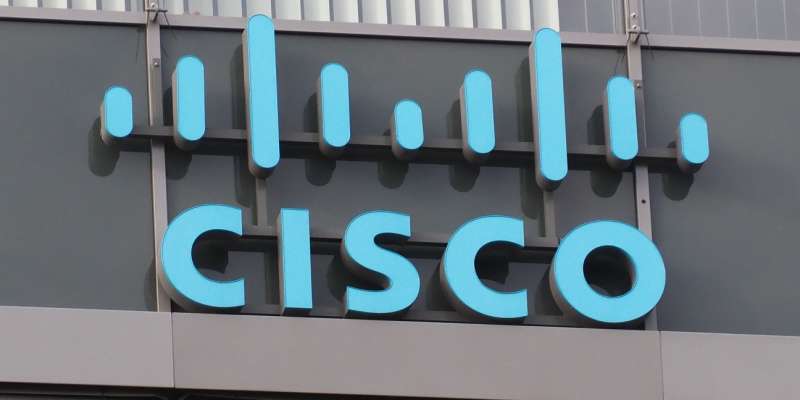
The Cisco logo is one of the most recognized marks in the technology industry. It features a series of vertical lines of varying heights arranged above the lowercase wordmark “cisco,” and the whole thing is rendered in a single shade of blue. Those lines represent the Golden Gate Bridge in San Francisco, the city that gave the company its name.
Cisco Systems was founded in 1984 by Leonard Bosack and Sandy Lerner, both from Stanford University. The logo has gone through roughly five major versions since then. The current version, introduced in 2013, simplified everything down to one blue color and dropped the red that had been part of the identity for decades.
Within the broader history of tech company logos, the Cisco mark stands out because it has kept the same core concept, that bridge silhouette, for over 40 years. Most tech brands have completely abandoned their original symbols by now. Cisco just kept refining theirs.
The design was originally created in-house under Gary McCavitt, Cisco’s Director of Brand Identity. The 2006 version, which forms the basis of what we see today, was designed by Jerry Kuyper and Joe Finocchiaro.
What Is the Cisco Logo?
The Cisco logo is a combination mark featuring nine vertical lines of different heights that form an abstract representation of the Golden Gate Bridge, placed above the word “cisco” in a bold, geometric sans-serif font. It was introduced in its current form in 2013 and designed by Jerry Kuyper and Joe Finocchiaro.
Here’s the breakdown of what the mark actually consists of:
- Design Type: Combination mark (symbol plus wordmark)
- Primary Elements: Nine rounded vertical bars forming a bridge shape, paired with the lowercase “cisco” wordmark beneath
- Official Introduction Date: The current all-blue version launched in 2013, based on the 2006 redesign
- Designer/Agency: Jerry Kuyper and Joe Finocchiaro created the 2006 base design. Tolleson Design handled the 2013 color shift
- Trademark Status: “Cisco” and the Cisco Systems logo are registered trademarks of Cisco Systems, Inc. in the United States and other countries
- Color Palette: Cisco Blue (#049FD9), with black and white alternatives permitted under brand guidelines
- Usage Context: Appears on networking hardware, software products, marketing materials, Cisco Webex, digital platforms, corporate documents, and event signage
How Has the Cisco Logo Evolved Over Time?
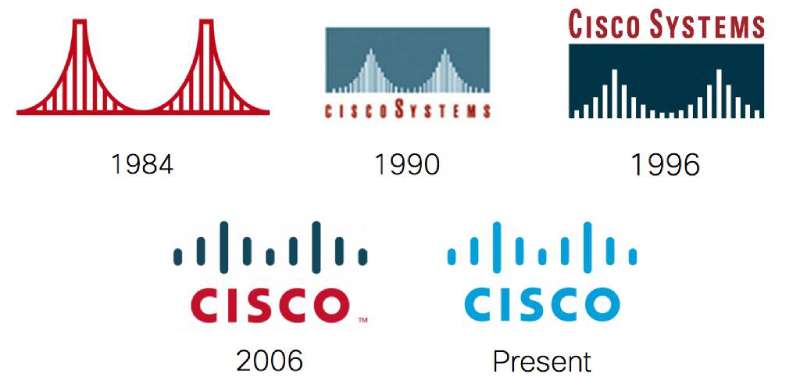
The Cisco logo has gone through five distinct versions since 1984. Each redesign simplified the Golden Gate Bridge graphic further while keeping the basic concept intact.
The progression moved from a detailed red bridge illustration to an abstract set of blue vertical lines. Along the way, the company name shifted from “Cisco Systems” to just “Cisco,” and the color scheme went from red and blue to a unified blue.
Original Cisco Logo (1984-1990)
Years Active: 1984 to 1990
The first logo was a red, fairly detailed illustration of the Golden Gate Bridge. Thin lines of varying heights formed the bridge’s towers and cables. It looked pretty realistic, honestly.
There was no company name in the design. The mark was developed in-house under Gary McCavitt.
Legend has it that the founders saw the Golden Gate Bridge while driving to Sacramento to register the company. That image stuck. The name “Cisco” itself is just the last five letters of “San Francisco.”
This version used only red and had a hand-drawn quality to it. For a startup in 1984, it worked. But it wouldn’t scale well as the company grew.
Second Cisco Logo (1990-1996)
Years Active: 1990 to 1996
The bridge became abstract. White vertical lines of different heights sat inside a sea-blue rectangle. Below that, the red “ciscoSystems” text appeared as one word, all lowercase for “cisco.”
This was the first version to include the company name. The sea-blue, white, and red color palette was meant to communicate trust, power, and passion.
Cisco was growing fast during this period. The company launched new routers and started making acquisitions. The logo needed to look more corporate, more credible. The rectangular containment of the bridge graphic did that job.
Third Cisco Logo (1996-2006)
Years Active: 1996 to 2006
This was more of a refinement than a full redesign. The blue background got darker. The white bridge lines became cleaner and more distinct.
The text moved above the rectangle. “Cisco” and “Systems” were now two separate words, with the “C” and “S” capitalized. The rest stayed lowercase.
Under CEO John Chambers, this version aligned with the Internet Protocol era. The bridge shape started looking less like an actual bridge and more like a digital signal. That dual reading was probably intentional.
Fourth Cisco Logo (2006-2013)
Years Active: 2006 to 2013
Big change here. The rectangular background disappeared. Nine bold, rounded vertical lines in dark blue formed the bridge on a transparent background. “Systems” was dropped from the name.
The red “CISCO” wordmark sat below in all caps, using a typeface close to Futura Bold. Jerry Kuyper and Joe Finocchiaro designed this version.
This redesign came with the “Human Network” marketing campaign. Cisco was pushing beyond routers and switches into collaboration, video conferencing, and what would eventually become IoT. The simpler mark communicated that broader vision.
The bridge symbol now doubled as a representation of signal bars or digital connectivity. Clever move.
Current Cisco Logo (2013-Present)
Years Active: 2013 to present
The only change from 2006? Color. The red text and dark blue icon were unified into a single light blue (Cisco Blue, #049FD9). Tolleson Design handled the transition.
Everything else stayed the same. Same nine lines. Same wordmark. Just one color now.
This was a smart, subtle move. Dropping the red-and-blue combination gave the logo a more modern, digital-first feel. One color works better on screens, in apps, on product interfaces. It’s the kind of update that most people didn’t even notice at first, which is actually a sign it was done right.
What Do the Design Elements of the Cisco Logo Mean?
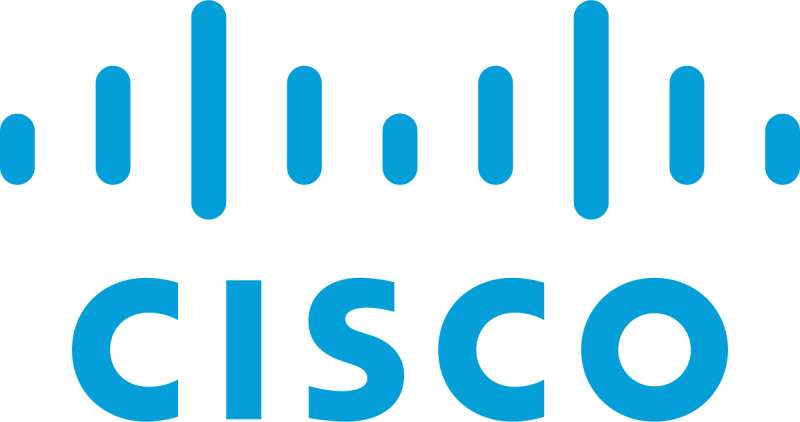
Every part of the Cisco logo ties back to either the company’s origin story or its business mission. The vertical lines represent the Golden Gate Bridge, but they also look like signal bars or data transmissions.
That dual meaning is the whole point. Connection, both physical and digital.
Why Did Cisco Choose These Specific Colors?
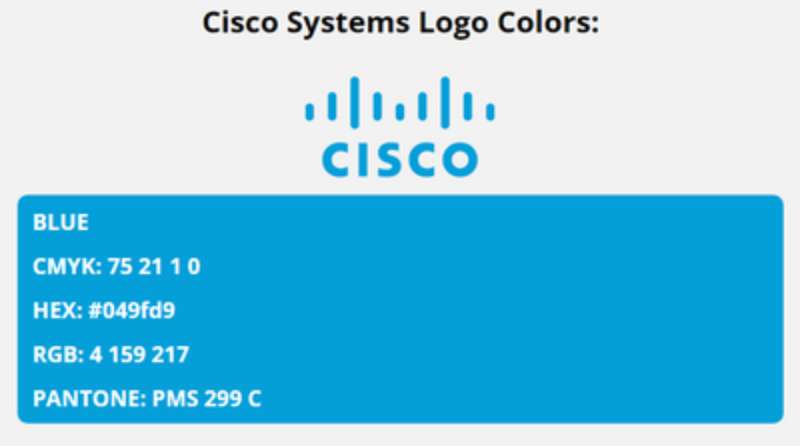
The current logo uses a single color:
Blue is the default color for tech brands, and for good reason. According to color psychology, blue communicates trust, reliability, and intelligence. For a company selling networking infrastructure that businesses depend on, those associations matter.
Previous versions used red alongside blue. Red brought energy and urgency to the identity. But when Cisco dropped it in 2013, the single-color approach made the logo feel cleaner and more at home in digital spaces. It sits alongside other blue logos in the tech sector, from IBM to Intel, but the specific shade keeps it distinct.
What Typography Style Is Used in the Cisco Logo?
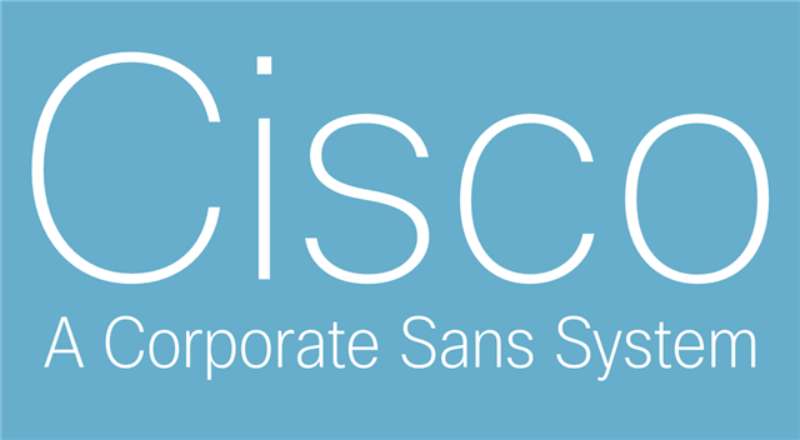
The wordmark uses a custom geometric sans-serif that’s very close to Futura Bold, designed by Paul Renner. Some sources also compare it to Ricardo Extra Bold by Jasper de Waard.
Cisco also has a proprietary font family called Cisco Sans, used across corporate materials and their website. But the logo typeface is its own thing.
The letters are all lowercase with generous tracking, which gives the mark a modern, open feel. The even letter spacing adds to the sense that this is a company that values clarity and accessibility.
What Are the Hidden Meanings in the Cisco Logo?
The nine vertical lines aren’t random. They form the shape of the Golden Gate Bridge when you look at their varying heights, tallest in the center, shorter on the sides.
But look at them again. They also resemble a digital signal pattern, or signal reception bars on a device. That’s not accidental.
The designers created a symbol that works on two levels. For people who know the origin story, it’s a bridge. For everyone else, it reads as “technology” and “connectivity.” According to the psychology of shapes, vertical lines suggest growth, stability, and strength, which is exactly what you’d want a networking company to communicate.
How Does the Cisco Logo Compare to Competitor Logos?
Most networking and enterprise tech companies use wordmarks or abstract symbols. Cisco’s approach of embedding a real-world landmark into a tech symbol is unusual for the category.
Compared to Fortinet or Palo Alto Networks, which use more abstract or shield-based marks, Cisco’s logo carries a story. It has a specific geographic reference baked in. That gives it personality that most enterprise logos lack.
Salesforce uses a friendly cloud icon. VMware relies on clean wordmark styling. IBM has its famous horizontal stripes. Each takes a different route to convey trust and technical capability.
What sets Cisco apart is that the bridge symbol creates an immediate visual anchor. You see it once, and it sticks. Most competitors can’t say that about their marks. The vertical lines manage to feel both technical and human at the same time, which is tricky to pull off.
What Are the Technical Specifications of the Cisco Logo?
Official Color Codes
- Primary Color: Cisco Blue – Hex: #049FD9, RGB: (4, 159, 217), CMYK: (75, 21, 1, 0), Pantone: PMS 299 C
- Secondary Color: Dark Blue – Hex: #004BAF, RGB: (0, 75, 175), CMYK: (100, 65, 0, 10)
- Neutral: Black – Hex: #000000, used for single-color applications
- Neutral: White – Hex: #FFFFFF, used for reversed applications on dark backgrounds
Dimensions and Proportions
Cisco’s brand style guide specifies the following rules:
- Minimum Size: The logo should not appear smaller than 1/2 inch wide in print
- Clear Space: Adequate spacing must surround the logo on all sides, typically defined by the height of the “c” in cisco
- Aspect Ratio: The bridge symbol and wordmark must maintain their fixed proportions. No stretching or compressing
- File Formats: EPS is recommended for print, SVG and PNG for digital applications
- TM Symbol: Should not be included if the logo appears smaller than 3/4 inch wide, and is generally omitted in most web applications
What Cultural Impact Has the Cisco Logo Had?
The Cisco logo has become shorthand for internet infrastructure itself. When people think of the hardware that makes the internet work, routers, switches, and networking gear, the Cisco bridge symbol is often the first image that comes to mind.
Its Golden Gate reference made it one of the few tech logos that carries a specific sense of place. Silicon Valley culture, San Francisco roots, California innovation. All of that is baked into those nine vertical lines.
The logo also played a role in shifting perceptions of Cisco from a hardware vendor to a broader technology company. The 2006 simplification coincided with the “Human Network” campaign, which positioned Cisco as a company that connects people, not just machines. The mark helped sell that idea visually.
How Does the Cisco Logo Fit Into the Overall Brand Identity?
The logo sits at the center of a brand system that includes the Cisco Sans font family, the Cisco Blue color palette, and a clean minimalist design language across all touchpoints.
Sub-brands like Webex, Meraki, and Talos each have their own identities, but they all live under the Cisco umbrella. The bridge symbol provides the visual unity that ties everything together.
On Cisco’s website, product packaging, event signage, and digital platforms, the logo is always presented in Cisco Blue on white or reversed out on dark backgrounds. The consistency is strict. That level of discipline in brand application is what makes the mark instantly recognizable across very different contexts, from a router box to a conference keynote.
How Should the Cisco Logo Be Used?
Cisco is protective of its brand assets. Here’s what you need to know if you’re working with the logo:
- Do: Use the logo files provided by Cisco in the specified colors (Cisco Blue, black, or white)
- Do: Maintain the required clear space around the logo at all times
- Do: Use EPS format for print and vector formats for scalable digital use
- Don’t: Alter the logo colors, proportions, or arrangement of elements
- Don’t: Place the logo on promotional merchandise, packaging, or hardware without written permission
- Don’t: Use the Cisco logo alongside your own branding in a way that suggests partnership or endorsement without approval
Official logo files and usage guides are available through the Cisco Brand Exchange, which requires a Cisco.com account. Eligible nonprofit grantees and certified partners can request logo usage permission through specific Cisco programs.
The Cisco name and logo are registered trademarks. Unauthorized use can result in legal action. Cisco has been involved in multiple trademark disputes over the years, including the well-known 2007 “iPhone” case with Apple, where Cisco owned the trademark through its Linksys subsidiary.
FAQ on The Cisco Logo
What does the Cisco logo represent?
The Cisco logo represents the Golden Gate Bridge in San Francisco. The nine vertical lines form an abstract bridge silhouette while also resembling digital signal bars. It reflects both the company’s California roots and its networking mission.
Who designed the current Cisco logo?
Jerry Kuyper and Joe Finocchiaro designed the 2006 version that serves as the foundation for today’s mark. Tolleson Design then handled the 2013 color update that shifted everything to a single blue.
What font is used in the Cisco logo?
The Cisco wordmark uses a custom geometric sans-serif closely resembling Futura Bold by Paul Renner. Some sources identify it as similar to Ricardo Extra Bold. The company also uses a proprietary Cisco Sans family for corporate materials.
What are the official Cisco logo colors?
The current logo uses Cisco Blue with hex code #049FD9. In Pantone, that’s PMS 299 C. Black and white versions are also approved under Cisco’s brand standards for specific use cases.
Why did Cisco name itself after San Francisco?
The founders, Leonard Bosack and Sandy Lerner, took the last five letters of “San Francisco.” The story goes that they saw the Golden Gate Bridge on their way to register the company and chose it as their visual symbol right then.
How many times has the Cisco logo changed?
The logo has gone through five versions since 1984. Major redesigns happened in 1990, 1996, and 2006. The 2013 update only changed the color scheme, keeping the same structure from 2006.
Can I download and use the Cisco logo?
Official logo files are available through the Cisco Brand Exchange, which requires a Cisco.com account. Unauthorized use is restricted. The Cisco name and bridge symbol are registered trademarks in the U.S. and other countries.
What is the difference between the old and new Cisco logo?
The original 1984 mark was a detailed red bridge illustration. Today’s version is a simplified set of nine blue vertical lines with the “cisco” wordmark underneath. The company also dropped “Systems” from its name in 2006.
Why is the Cisco logo blue?
Cisco switched to an all-blue palette in 2013. Blue signals trust, intelligence, and professionalism. For a company selling critical networking infrastructure, those associations matter. Previous versions combined red and blue, but the single color works better on screens.
What makes the Cisco logo different from other tech logos?
Most enterprise tech brands use abstract symbols or plain wordmarks. Cisco’s bridge reference gives it a geographic identity that competitors lack. The vertical lines work as both a landmark and a signal icon, which is a rare dual reading in logo design.
Conclusion
The Cisco Logo has stayed rooted in the same idea for over four decades. Nine vertical lines, one bridge, one story. Few design elements in corporate branding carry that kind of staying power.
What started as a red sketch of the Golden Gate Bridge is now a clean, single-color mark that works across hardware, apps, and global campaigns. The shift from Cisco Systems to just Cisco mirrored a company outgrowing its original scope.
The 2013 move to unified Cisco Blue kept things simple. One color, no clutter. It reads well at any size and on any screen.
For a company built on connecting networks, having a logo that literally represents a bridge is about as fitting as it gets. The mark does its job without trying too hard, and that’s what makes it last.

Renowned for his expertise in logo design and visual branding, Bogdan has developed a multitude of logos for various clients.
His skills extend to creating posters, vector illustrations, business cards, and brochures. Additionally, Bogdan's UI kits were featured on marketplaces like Visual Hierarchy and UI8.
He also wrote in the past years on sites like Design Your Way, WebDesignerDepot, WPDean, Designmodo, Speckyboy, Slider Revolution, and more.
- Canva vs PowerPoint: Which Is Better for Presentations? - 22 September 2026
- How to Install Fonts on Mac (Step-by-Step Guide) - 20 September 2026
- From Mockup to Code: How AI-Augmented Development Speeds Up the Design Handoff - 19 September 2026

Bogdan Sandu is a seasoned designer who has been designing websites since 2008. Renowned for his expertise in logo design and visual branding, Bogdan has developed a multitude of logos for various clients. His skills extend to creating posters, vector illustrations, business cards, and brochures. Additionally, Bogdan's UI kits were featured on marketplaces like Visual Hierarchy and UI8. He also wrote in the past years on sites like Design Your Way, WebDesignerDepot, WPDean, Designmodo, Speckyboy, Slider Revolution, and more.
You Might Also Like