


The Alphabet logo is one of those corporate marks that doesn’t try to be anything more than what it is. A red wordmark. Clean. Flat. No mascot, no abstract swoosh, no hidden arrow.
It showed up in October 2015, right when Google restructured itself under a new parent company called Alphabet Inc. Larry Page and Sergey Brin wanted a visual identity that felt grown-up compared to Google’s playful multicolor look. And honestly? The design team nailed it. The in-house creatives at Google, including Alex Cook, Jonathan Jarvis, and Jonathan Lee, built the logo using a modified version of Product Sans. It was a clear break from the “fun startup” vibe, moving toward something that screams corporate holding company without actually screaming anything at all.
Alphabet Inc. currently ranks among the world’s most valuable companies by revenue. The logo has remained unchanged since its debut, which is rare for a tech brand. One version. That’s it. No redesigns, no “refreshes,” no subtle tweaks announced via a 2,000-word blog post. Just the same red wordmark it launched with.
What Is the Alphabet Logo?
The Alphabet logo is a red wordmark written in a modified version of the Product Sans typeface, introduced on October 2, 2015, when Google restructured under a new parent company. It was designed in-house by Google’s creative team and represents maturity, clarity, and corporate structure.
Here’s what defines the mark:
- Design Type: Wordmark (text-only, no icon or symbol)
- Primary Elements: The word “Alphabet” in title case, featuring one uppercase “A” followed by lowercase letters. The glyph shapes are geometric and clean, with no decorative details
- Official Introduction Date: October 2, 2015
- Designer/Agency: Google’s in-house design team (Alex Cook, Jonathan Jarvis, Jonathan Lee)
- Trademark Status: Registered with the USPTO. Serial number 86877241, registration number 5336003. Filed January 15, 2016, registered November 14, 2017. BMW also holds the “Alphabet” name for fleet management services, which led to a dispute settled in 2016
- Color Palette: Single-color red (#ED1C24). Set against a white or transparent background
- Usage Context: Corporate communications, SEC filings, investor presentations, annual reports, the abc.xyz domain, and internal documentation across Alphabet subsidiaries
How Has the Alphabet Logo Evolved Over Time?
This is going to be the shortest evolution section you’ve ever read. The Alphabet logo has had exactly one version since the company was created in 2015.
No redesigns. No subtle weight changes. No quiet color shift from one shade of red to another.
It launched with the current design and has stayed that way. That kind of consistency is actually unusual for tech company logos, where rebrands seem to happen every few years.
The Original (and Only) Alphabet Logo (2015 to Present)
- Years Active: October 2015 to present
- Design Description: A red title-case wordmark using a modified Product Sans font. No accompanying icon, emblem, or tagline. The letterforms are geometric with consistent stroke widths and rounded terminals on specific characters
- Color Scheme: Vivid red (#ED1C24) on white
- Designer: Google’s internal creative team
- Context: Created during Google’s corporate restructuring. The company needed a separate visual identity for the holding company that felt distinct from Google’s colorful, approachable brand. The logo was meant to signal seriousness and maturity
- Key Changes from Previous: Not applicable. There was no previous Alphabet brand. But compared to the Google logo it evolved from (conceptually), Alphabet dropped the multicolor palette, the rounded friendliness, and the playful energy. It went monochrome. Single color. Adult.
- Cultural Significance: The logo marked one of the biggest corporate restructurings in tech history. It signaled that Google’s experimental projects (self-driving cars, life sciences, venture capital) were now separate entities under a parent company. The simple wordmark communicated that Alphabet itself wasn’t a consumer-facing brand
What Do the Design Elements of the Alphabet Logo Mean?
Every piece of the Alphabet logo was chosen to communicate structure and seriousness. The red color grabs attention but avoids the playfulness of Google’s rainbow palette.
The title case format (capital “A,” lowercase for the rest) gives it a formal but not stiff appearance. And the lack of any icon or symbol? That’s the point. Alphabet isn’t selling you a product. It’s a holding company.
Why Did Alphabet Choose This Specific Color?
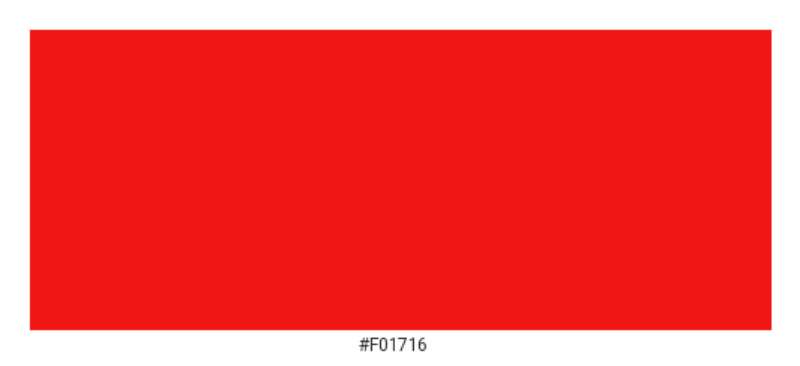
Alphabet uses one color. Just one. And that choice carries weight from a color psychology standpoint.
- Color Name: Alphabet Red
- Hex Code: #ED1C24
- RGB: (237, 28, 36)
- CMYK: (0, 88, 85, 7)
- Pantone: PMS 485 C
- Symbolic Meaning: Red conveys energy, confidence, and leadership. It grabs your eye without needing multiple colors to do it
- Psychological Impact: Red increases urgency and draws attention faster than most other colors. For a corporate identity that rarely appears in consumer-facing contexts, red makes the logo stick in memory during the limited moments it is seen
- Brand Connection: Using a single bold color instead of Google’s four-color scheme creates clear separation between parent and subsidiary. The red says “we’re related” (Google uses red too) but “we’re not the same”
It is worth noting that many red logos carry this same sense of authority. But Alphabet’s specific shade leans warm and vivid, not dark and corporate like you might expect from a trillion-dollar holding company.
What Typography Style Is Used in the Alphabet Logo?
The wordmark uses a modified version of Product Sans, a geometric sans-serif font that Google created in-house back in 2015.
Product Sans was originally built for Google’s own rebrand. Then Alphabet borrowed it with some adjustments. The typography is clean and medium-weight, with consistent stroke widths.
The letterforms sit on a steady baseline with generous font spacing between characters, which adds to the feeling of openness. The x-height is fairly tall relative to the cap height, which makes the lowercase letters feel substantial even next to the capital A.
Readability was clearly a priority. At any size, the logo remains legible, which matters when it shows up on everything from SEC documents to tiny footers on investor pages.
What Are the Hidden Meanings in the Alphabet Logo?
Look, there’s no arrow hidden between letters like in the FedEx logo. But there are a few things worth noticing.
Branding experts have pointed out that the counter (the enclosed space) inside the lowercase “a” resembles a water droplet. Whether that’s intentional or just a happy accident of geometry, it adds a subtle organic quality to an otherwise rigid mark.
The name itself carries meaning. Larry Page explained that “Alphabet” represents language, which he called one of humanity’s biggest achievements. There’s also the “alpha-bet” reading, which refers to investment returns above a benchmark. A nod to the company’s financial ambitions.
Design critic Steven Heller described the logo as a shift from “adolescence into young adulthood.” That reading makes sense when you put it next to Google’s logo, which feels younger and more colorful by comparison.
How Does the Alphabet Logo Compare to Competitor Logos?
Compared to other major tech holding companies and conglomerates, Alphabet’s logo sits at the minimal end of the spectrum. It doesn’t try to compete visually.
The Microsoft logo, for example, pairs a wordmark with a four-color window icon. The IBM logo uses its famous horizontal-striped letters. Sony’s logo leans on a classic serif wordmark that’s been around since the 1970s.
Alphabet took the opposite approach. No icon. No graphic element. Just type and color. This makes it closer in spirit to something like the Stripe logo or the Salesforce logo in terms of simplicity, though those brands still use accompanying symbols.
Where Alphabet really stands apart is usage context. Most competing tech brands plaster their logos across consumer products, storefronts, and advertising. Alphabet’s logo mostly lives in corporate filings and investor materials. It doesn’t need to sell anything to the general public, which is why it can afford to be so restrained.
That restraint actually follows core logo design principles pretty closely. The best marks do one job well, and the Alphabet logo’s job is to look credible at a board meeting, not to catch your eye on a billboard.
What Are the Technical Specifications of the Alphabet Logo?
Official Color Codes
- Primary Color: Alphabet Red
- Hex: #ED1C24
- RGB: (237, 28, 36)
- CMYK: (0, 88, 85, 7)
- Pantone: PMS 485 C
- Background Color: White (#FFFFFF) or transparent, depending on application
Some sources list a slightly different hex value (#F01716), which is close but not the same. The discrepancy likely comes from different screen renderings or unofficial brand palette databases. The #ED1C24 value appears more consistently across trusted sources.
Dimensions and Proportions
Alphabet hasn’t publicly released a detailed brand guidelines document the way Google has. But based on the official logo files (available as SVG on Wikimedia Commons and referenced in SEC filings), here’s what we can observe:
- Aspect Ratio: Approximately 4.5:1 (wide horizontal wordmark)
- Minimum Size Requirements: Not publicly specified, but the clean sans-serif typography elements allow it to scale down well. At very small sizes, the letterforms remain distinct
- Clear Space: Standard practice for wordmarks is to maintain clear space equal to the height of the lowercase letters around all sides. Alphabet appears to follow this convention based on official usage
- File Formats: The logo is distributed as vector graphics (SVG), which keeps it sharp at any DPI. Pixel-based versions in PNG format are also available for web use
What Cultural Impact Has the Alphabet Logo Had?
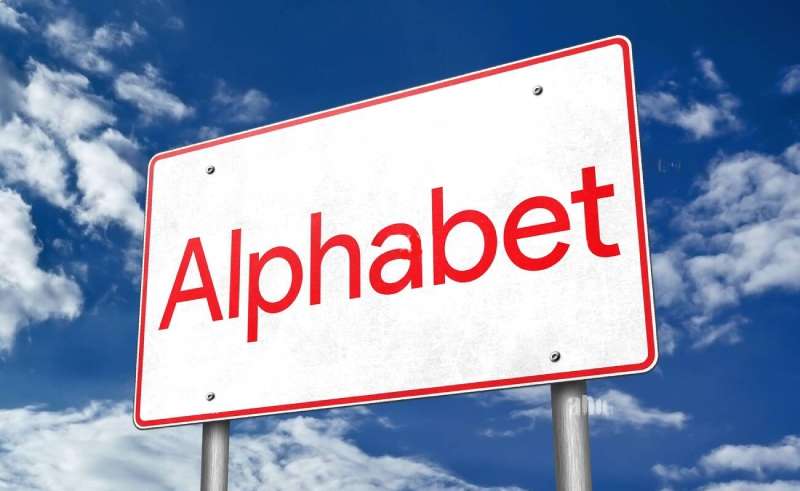
The Alphabet logo didn’t become a pop culture icon. And that’s fine, because it was never supposed to.
Its biggest cultural moment was its introduction itself. When Google announced the restructuring in August 2015, the tech world went sideways for a few days. Everyone was talking about Alphabet. The logo became the visual shorthand for one of the most significant corporate reorganizations in Silicon Valley history.
Beyond that, the logo has shown up in financial news graphics, earnings report headers, and business school case studies about corporate structure. It’s become a reference point for discussions about how holding companies brand themselves differently from their consumer-facing subsidiaries.
The BMW trademark dispute also gave the logo some unexpected media attention. BMW already owned the “Alphabet” name for its fleet management services, and the overlap created headlines. The two companies settled in 2016, but it put the Alphabet brand in the news for reasons that had nothing to do with design.
How Does the Alphabet Logo Fit Into the Overall Brand Identity?
Alphabet’s logo is the visual anchor for a company that deliberately stays in the background. It ties together a network of subsidiaries that each have their own branding: Google, Waymo, Verily, DeepMind, Calico, X Development, and others.
The relationship works like this. Each subsidiary operates with its own logo, color palette, and brand guidelines. Alphabet’s red wordmark sits above them all as the corporate parent, appearing mainly where investors and regulators look, not consumers.
This is what’s called a “branded house” architecture in reverse. Google is the house most people visit. Alphabet is the foundation they never see.
The Product Sans typeface connection between Alphabet and Google is the one visible thread linking the two brands. It tells you they share DNA without making them look like the same company. Smart move, actually. The parent feels related to the child brand without borrowing its personality.
How Should the Alphabet Logo Be Used?
Alphabet isn’t a brand you’ll slap on a t-shirt or a coffee mug. Its usage is narrow by design.
Official usage guidelines (based on observed practice):
- Do: Use the logo in corporate communications, investor relations materials, annual reports, and official legal filings
- Do: Maintain the red color on white or light backgrounds for maximum readability
- Do: Preserve clear space around the wordmark
- Don’t: Apply the Alphabet logo to consumer products (those carry subsidiary branding like Google, Nest, or Fitbit)
- Don’t: Alter the proportions, colors, or spacing of the letterforms
- Don’t: Place the logo on busy or dark backgrounds without ensuring proper contrast
Where to access official logos: Alphabet’s official site is abc.xyz. Press resources and logo files are typically made available through the investor relations section and press inquiries.
Licensing: The Alphabet name and logo are registered trademarks. Third-party use requires permission from Alphabet Inc. Given the narrow usage scope (mostly corporate and financial contexts), unauthorized use is uncommon but still legally protected.
Trademark protection: Registration number 5336003 with the USPTO, covering holding company services. The company has shown it will defend the mark, as seen in the BMW dispute. International trademark protections also apply through various filings.
FAQ on The Alphabet Logo
Who Designed the Alphabet Logo?
Google’s in-house creative team built it. Alex Cook, Jonathan Jarvis, and Jonathan Lee led the project. They used a modified version of the Product Sans typeface, which Google had already developed for its own 2015 rebrand.
When Was the Alphabet Logo Created?
It launched on October 2, 2015. That’s the same day Google officially restructured under Alphabet Inc. as its parent company.
Larry Page and Sergey Brin announced the holding company in August 2015. The logo went live when the corporate transition completed.
What Font Does the Alphabet Logo Use?
A slightly modified version of Product Sans, a geometric sans-serif typeface created by Google. The letterforms are medium-weight with consistent stroke widths and clean geometry. The kerning between characters is generous, keeping the wordmark open and readable.
What Color Is the Alphabet Logo?
Vivid red. The hex code is #ED1C24. In RGB values, that’s (237, 28, 36).
The Pantone match is PMS 485 C. It’s a warm, high-energy red that stands apart from Google’s multicolor scheme while still feeling related to the brand family.
Has the Alphabet Logo Ever Changed?
No. Not once. The same red wordmark has been in use since 2015 with zero modifications.
That’s unusual for a major tech brand. Most companies tweak their marks every few years. Alphabet hasn’t touched theirs.
What Does the Alphabet Logo Symbolize?
Structure and maturity. The name references language itself, something Larry Page called one of humanity’s greatest achievements. There’s also a financial reading: “alpha-bet” as in investment returns above benchmark.
The single-color minimalist design signals that this isn’t a consumer brand. It’s a corporate holding company.
Where Is the Alphabet Logo Used?
Mostly in places regular people never look. Investor relations pages, SEC filings, annual reports, and corporate communications.
You won’t find it on products. Google, Waymo, DeepMind, and other subsidiaries each carry their own visual identity. Alphabet stays behind the scenes.
Is the Alphabet Name Trademarked?
Yes. Registered with the USPTO under registration number 5336003. Filed in January 2016, officially registered November 2017.
BMW also holds the “Alphabet” trademark for fleet management services. The two companies settled their dispute in 2016 and now coexist in different sectors.
Why Is the Alphabet Logo So Simple?
Because it doesn’t need to sell anything to consumers. Its audience is investors, regulators, and business partners.
The clean wordmark follows graphic design principles that favor clarity over decoration. No icon, no gradient, no extra elements. Just the name in red.
How Is the Alphabet Logo Different from the Google Logo?
Google’s logo uses four colors (blue, red, yellow, green) and feels approachable. Alphabet’s uses a single red and feels corporate.
Both share the Product Sans type family, which is the only visible connection. Design critics have described the difference as “teenager versus adult.” Same DNA, completely different personality.
Conclusion
The Alphabet logo does exactly what a holding company wordmark should do. It communicates authority through a single red color, clean sans-serif letterforms, and zero visual clutter.
No redesigns since 2015. No icon. No tagline. Just Product Sans on a white background, showing up where it matters: NASDAQ GOOGL filings, investor pages, and corporate documents.
Sundar Pichai runs Google underneath it. Waymo, DeepMind, and Verily operate beside it. The Alphabet brand ties them together without competing for attention.
It’s proof that sometimes the strongest visual hierarchy means knowing when to step back and let the subsidiaries do the talking.

Renowned for his expertise in logo design and visual branding, Bogdan has developed a multitude of logos for various clients.
His skills extend to creating posters, vector illustrations, business cards, and brochures. Additionally, Bogdan's UI kits were featured on marketplaces like Visual Hierarchy and UI8.
He also wrote in the past years on sites like Design Your Way, WebDesignerDepot, WPDean, Designmodo, Speckyboy, Slider Revolution, and more.
- The Windsurf Logo History, Colors, Font, And Meaning - 10 October 2026
- How to Remove Background From Product Photos (No Photoshop) - 10 October 2026
- How Designers can Build a Stronger Online Creative Identity - 9 October 2026

Bogdan Sandu is a seasoned designer who has been designing websites since 2008. Renowned for his expertise in logo design and visual branding, Bogdan has developed a multitude of logos for various clients. His skills extend to creating posters, vector illustrations, business cards, and brochures. Additionally, Bogdan's UI kits were featured on marketplaces like Visual Hierarchy and UI8. He also wrote in the past years on sites like Design Your Way, WebDesignerDepot, WPDean, Designmodo, Speckyboy, Slider Revolution, and more.
You Might Also Like


