Jeopardy! uses ITC Korinna for its on-screen clue cards, a serif typeface originally released by the H. Berthold AG type foundry in 1904 and revived in 1974 by Ed Benguiat and Vic Caruso for the International Typeface Corporation.
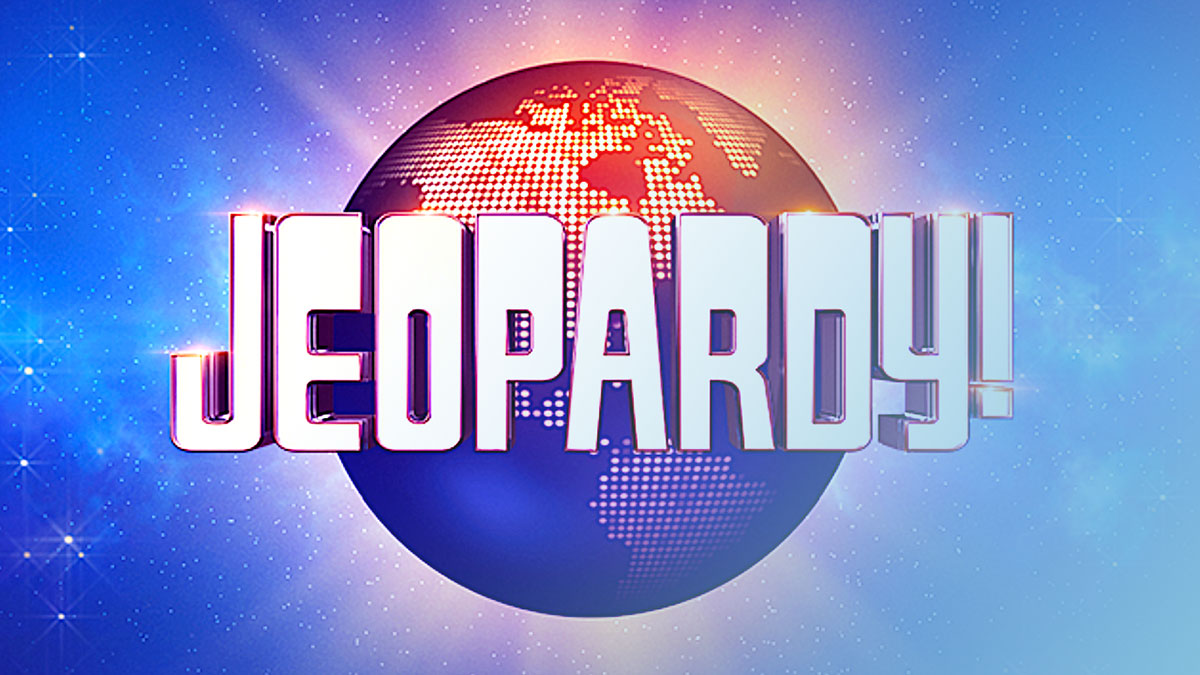
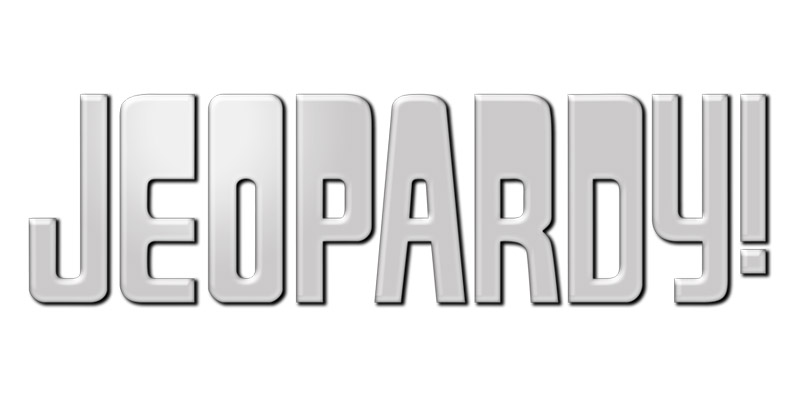
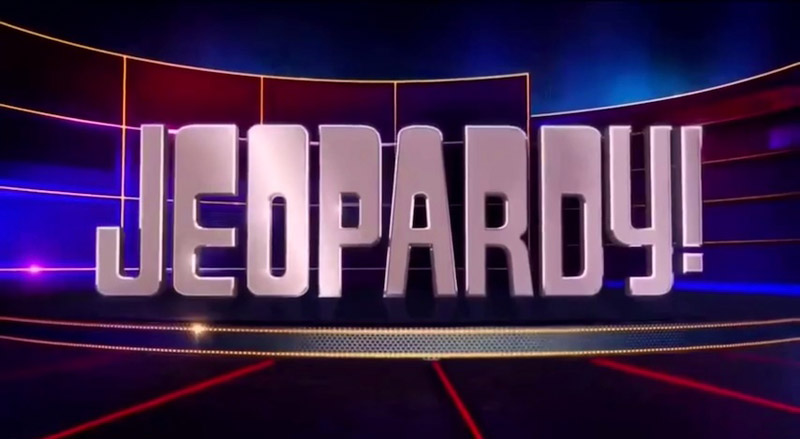
The game board categories and dollar amounts use Swiss 911, Bitstream’s version of Helvetica Compressed. The show’s logo, introduced in 1984, is based on a custom display typeface closely resembling a phototype face known as Anonymous, with Gyparody (by Ray Larabie) being its most recognized free alternative.
What Type of Font Is ITC Korinna?
ITC Korinna is a serif typeface with Art Nouveau-influenced letterforms. It features high x-height, moderate stroke contrast, and slightly flared terminals that give it an unusual visual character compared to most broadcast-era serifs.
The ITC revival introduced multiple weights (Light through Ultra) and increased the x-height compared to the 1904 original. In the context of Jeopardy!, clues are set in all-caps ITC Korinna, which highlights the typeface’s wide, open letterforms.
Swiss 911, used on the game board, is a condensed sans-serif. It belongs to the neo-grotesque classification and was published by Bitstream as a digitization of Helvetica Compressed. The show has used multiple widths of Swiss 911 across different seasons, including Ultra Compressed and Extra Compressed variants.
Understanding the difference between a serif font like ITC Korinna and a sans-serif font like Swiss 911 matters here, because Jeopardy! deliberately uses both to separate visual functions on screen.
Who Designed ITC Korinna?
Ed Benguiat and Vic Caruso designed the ITC Korinna revival in 1974, working through Photo Lettering, Inc. in New York. The typeface is named after the ancient Greek poet Corinna.
Ed Benguiat was one of the most prolific type designers of the 20th century, responsible for dozens of iconic fonts. The original 1904 version was created by H. Berthold AG in Germany. Berthold was compensated for the use of the name when ITC released its revival in 1974.
The Jeopardy! logo typeface is not publicly attributed to a single named designer. Research from Fonts In Use suggests it derives from a late-1960s phototype face called Anonymous. The closest public interpretation is Gyparody, designed by Ray Larabie of Typodermic Fonts in 1998 and updated in 2010.
Swiss 911 was designed by Matthew Carter and Hans Jörg Hunziker, published by Bitstream.
Is ITC Korinna Free to Use?
No. ITC Korinna is a commercial typeface licensed through Monotype (which now owns the ITC library). A desktop license starts at approximately $140 USD via fonts.com or MyFonts.
It is not available on Google Fonts or Adobe Fonts. Some sites distribute unauthorized copies, but using those carries legal risk. If you need it for a project, purchase it directly from Monotype. Understanding proper font licensing is worth the time before you commit to a typeface for any commercial use.
Swiss 911 is also a paid commercial font, available through Bitstream/MyFonts. Gyparody, the logo-inspired alternative, is free for personal and commercial use from Typodermic Fonts.
What Font Did Jeopardy Use Before?
The original Jeopardy! series launched in 1964 with a different visual identity entirely. The first logo used outlined serif lettering with uppercase characters slanted in alternating directions, giving it a playful, almost chaotic feel.
The modern typographic system (ITC Korinna for clues, Swiss 911 for the board) was introduced with the syndicated relaunch in 1984. The logo redesign that year established the custom display lettering still in use today.
For the dollar figures, the show actually moved through several typefaces. The 1984 to 1991 sets used Hector-Regular. Later sets shifted to Helvetica Extra Compressed, and then back to various widths of Swiss 911. Since 2009, Swiss 911 UCm BT (Ultra Compressed) has been the consistent choice for dollar amounts on the board.
The credits and titles used Galette Medium from Season 28 through Season 33, then switched to Korinna from Season 34 onward.
What Are the Best Free Alternatives to ITC Korinna?
If you want a Korinna-like feel without the commercial license, here are 4 usable options:
| Font | Similarity | License | Source |
| Gyparody | Closest match to the Jeopardy! wordmark. | Free (Commercial) | Typodermic |
| Libre Baskerville | High x-height; mimics the clue readability. | OFL (Free) | Google Fonts |
| Playfair Display | High-contrast; used for “prestige” titles. | OFL (Free) | Google Fonts |
| Lora | Balanced serif; good for smaller UI/text. | OFL (Free) | Google Fonts |
For Swiss 911 alternatives, Arial Narrow and Univers Condensed are functional substitutes. Impact is another option for tight, condensed display needs, though it’s much heavier in feel.
If you’re working in Canva or Google Slides and need something in that direction, Oswald and Raleway (condensed setting) both get close enough for most non-broadcast uses.
How to Use a Jeopardy-Style Font in Your Design
In Canva or Google Slides
For the logo style: Upload Gyparody (downloaded from Typodermic Fonts) via Canva’s brand kit upload or Google Slides font import. Set it in uppercase, tight tracking, and a heavier weight for the best match.
For the board style: Use a condensed sans-serif. Oswald Bold Condensed in Google Fonts is the most accessible substitute for Swiss 911 in web-based tools.
In Figma or Photoshop
If you’ve licensed ITC Korinna, install it at the system level and it will appear in both apps automatically. For Gyparody, same process: install via your OS font folder, then restart the app.
For the game board dollar amounts, set text in a condensed font at around 80–90% horizontal scale if you can’t source Swiss 911 directly. Tight kerning and all-caps setting will get you close to the on-screen look.
For a Jeopardy-Style Game Template
Set category headers in a bold condensed sans-serif (Swiss 911 or Oswald Bold). Use all-caps ITC Korinna or Libre Baskerville for the clue text.
- Background: deep blue (#060CE9 is close to the classic board color)
- Dollar amounts: yellow or gold, condensed sans-serif
- Clues: white text on blue, serif for contrast
The visual hierarchy of the board relies entirely on size and typeface contrast between the category headers and the clue text below. That separation is what makes it readable at a glance.
Why Did Jeopardy Choose These Fonts?
The choice of ITC Korinna in 1984 was practical, not purely aesthetic. Early Chyron graphics systems (the hardware used to generate on-screen text in broadcast) came with a limited library of fonts on 8-inch floppy disks. Korinna was one of the few that came in multiple sizes, which made it technically viable for the clue cards.
Swiss 911 on the game board was chosen for a specific reason: maximum text density in minimum space. The ultra-compressed proportions allowed category names and dollar figures to be set as large as possible within fixed screen regions on early 13-inch television monitors.
That same logic is why the fonts haven’t been replaced. Broadcast typography has its own rules. Readability at distance, under studio lighting, on screens of varying quality, pushes designers toward proven workhorse typefaces rather than trendy ones. The Jeopardy visual identity is a case where technical constraints in 1984 created a typographic system that just stuck.
There’s also a font psychology argument. ITC Korinna reads as warm and approachable for a serif, which suits a prime-time quiz show. Swiss 911’s compressed authority signals structure and stakes. Together they build the show’s tone without a single word being read.
If you’re curious how other shows and brands make these decisions, it’s worth looking at what font NASA uses, what National Geographic uses, or even what Adult Swim uses. Each one is a different answer to the same question: what does this typeface say before the content does?
It’s also worth comparing Jeopardy’s approach to something like Vogue’s font strategy or Wes Anderson’s typography choices, both of which use typeface selection as an intentional part of brand storytelling.
FAQ on The What Font Does Jeopardy Use
What font does Jeopardy use for its clue cards?
Jeopardy! uses ITC Korinna for all clue card text, set in all-caps.
It’s a commercial serif typeface revived by Ed Benguiat and Vic Caruso for the International Typeface Corporation in 1974. The show has used it consistently since the 1984 syndicated relaunch.
What font is used on the Jeopardy game board?
The game board categories and dollar amounts use Swiss 911, Bitstream’s condensed digitization of Helvetica.
Different widths have appeared across seasons. Since 2009, Swiss 911 UCm BT (Ultra Compressed) has been the standard for dollar figures.
What font is the Jeopardy logo?
The logo introduced in 1984 is based on a custom display typeface derived from a phototype face called Anonymous.
No commercially available version matches it exactly. Gyparody, designed by Ray Larabie, is the closest free alternative and is widely used for Jeopardy-style game templates.
Is the Jeopardy font free to download?
ITC Korinna and Swiss 911 are both paid commercial fonts. Neither is available on Google Fonts or Adobe Fonts.
Gyparody is free for personal and commercial use from Typodermic Fonts. It covers the logo style but not the clue card or board typefaces.
Who designed the ITC Korinna font?
Ed Benguiat and Vic Caruso designed the ITC Korinna revival in 1974, working through Photo Lettering, Inc. in New York.
The original Korinna dates to 1904, created by H. Berthold AG. It’s named after the ancient Greek poet Corinna.
What font did Jeopardy use before ITC Korinna?
The 1964 original used outlined serif lettering with alternating slanted characters. The 1984 relaunch introduced ITC Korinna for clues and Swiss 911 for the board.
Dollar figures used Hector-Regular from 1984 to 1991 before the show moved to Helvetica Extra Compressed variants.
What is the best free alternative to the Jeopardy font?
For the logo style, Gyparody by Typodermic Fonts is the go-to free option. For the clue card serif feel, Libre Baskerville and Playfair Display are solid Google Fonts substitutes.
For the condensed board text, Oswald Bold Condensed is the most accessible free match for Swiss 911.
Why does Jeopardy use ITC Korinna?
The choice was largely technical. Early Chyron broadcast systems in 1984 came with a limited font library on 8-inch floppy disks.
Korinna was one of the few available in multiple sizes, making it viable for clue card display. The constraint created a typographic identity that has stayed for over 40 years.
Can I use the Jeopardy font in PowerPoint or Canva?
Yes, if you license ITC Korinna from Monotype (starting around $140 USD), you can install it system-wide and use it in any app including PowerPoint and Canva.
For a free option, upload Gyparody to Canva via the brand kit or use it directly in PowerPoint after installing it on your system.
What font does Jeopardy use for player scores?
Player scores are displayed using a condensed sans-serif. Research from Fonts In Use identifies it as Univers LT 75 Black in more recent seasons.
Category titles on the modern board use Helvetica Inserat LT. The show has always kept score displays visually separate from clue text through typeface contrast.
Conclusion
So, what font does Jeopardy use? Three typefaces, each with a specific job: ITC Korinna for clue cards, Swiss 911 for the game board, and a custom Anonymous-derived display face for the logo.
None of it was accidental. Broadcast typography constraints in 1984 made these choices, and decades of viewer recognition locked them in.
If you need a Jeopardy-style typeface for your own project, Gyparody covers the logo, Oswald Bold Condensed handles the condensed sans-serif board look, and Libre Baskerville gets you close enough on the clue card serif side.
The trivia show visual design has stayed consistent longer than most TV brands manage. That consistency is the point.

Renowned for his expertise in logo design and visual branding, Bogdan has developed a multitude of logos for various clients.
His skills extend to creating posters, vector illustrations, business cards, and brochures. Additionally, Bogdan's UI kits were featured on marketplaces like Visual Hierarchy and UI8.
He also wrote in the past years on sites like Design Your Way, WebDesignerDepot, WPDean, Designmodo, Speckyboy, Slider Revolution, and more.
- The Cursor Logo History, Colors, Font, And Meaning - 24 September 2026
- Canva vs PowerPoint: Which Is Better for Presentations? - 22 September 2026
- How to Install Fonts on Mac (Step-by-Step Guide) - 20 September 2026

Bogdan Sandu is a seasoned designer who has been designing websites since 2008. Renowned for his expertise in logo design and visual branding, Bogdan has developed a multitude of logos for various clients. His skills extend to creating posters, vector illustrations, business cards, and brochures. Additionally, Bogdan's UI kits were featured on marketplaces like Visual Hierarchy and UI8. He also wrote in the past years on sites like Design Your Way, WebDesignerDepot, WPDean, Designmodo, Speckyboy, Slider Revolution, and more.
You Might Also Like