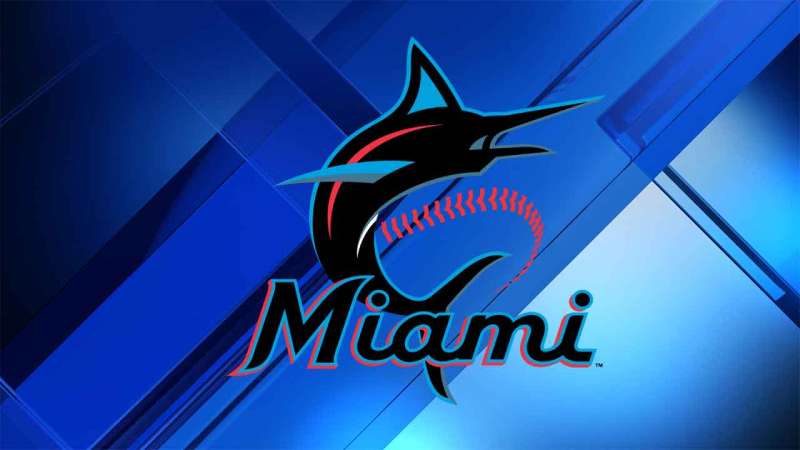
The Miami Marlins logo is one of the more recognizable marks in Major League Baseball. It features a stylized marlin fish in blue, red, and black, leaping alongside baseball stitching, with a cursive “Miami” wordmark underneath. The current version was introduced for the 2019 season after the franchise went through multiple identity changes since its founding in 1993.
For a team that has only been around since the early ’90s, the Marlins have packed a lot of visual history into their branding. Four distinct primary logos, two name changes, and enough color swaps to make any fan’s head spin. The franchise sits in the National League East Division and plays home games at LoanDepot Park in Miami, Florida.
What makes this particular logo interesting is how much it tells you about the team’s shifting identity, ownership changes, and the city it represents. It is not just a mark on a cap. It is a reflection of Miami’s culture, its Latin American roots, and a front office that was never afraid to start over.
What Is the Miami Marlins Logo?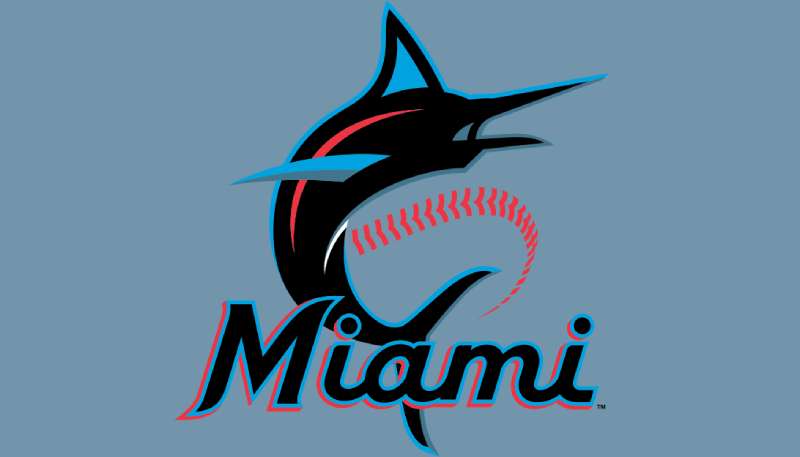
The Miami Marlins logo is a combination mark featuring a marlin fish rendered in Miami Blue, Caliente Red, and Midnight Black, positioned above a cursive “Miami” wordmark with baseball lace details. It was officially unveiled on November 15, 2018, and first worn on March 28, 2019.
Here is a breakdown of the logo’s core attributes:
- Design Type: Combination mark (symbol plus wordmark)
- Primary Elements: A stylized marlin fish in an athletic, upward-leaping pose, baseball stitching integrated into the composition, and a custom cursive “Miami” script beneath
- Official Introduction Date: Unveiled November 15, 2018. First used in games on March 28, 2019
- Designer/Agency: Developed in-house by the Miami Marlins organization under the direction of CEO Derek Jeter and the new ownership group led by Bruce Sherman
- Trademark Status: Registered trademark held by Marlins Teamco LLC, filed with the United States Patent and Trademark Office. The mark covers merchandise, printed materials, and entertainment services
- Color Palette: Midnight Black (#000000), Miami Blue (#00A3E0), Caliente Red (#EF3340), Slate Gray (#41748D), White (#FFFFFF)
- Usage Context: Jerseys, caps, merchandise, stadium signage at LoanDepot Park, digital platforms, broadcast graphics, and all official team communications
The secondary logo places the same marlin swimming through the seams of a baseball inside a circular shape, and it appears on alternate jerseys and caps.
How Has the Miami Marlins Logo Evolved Over Time?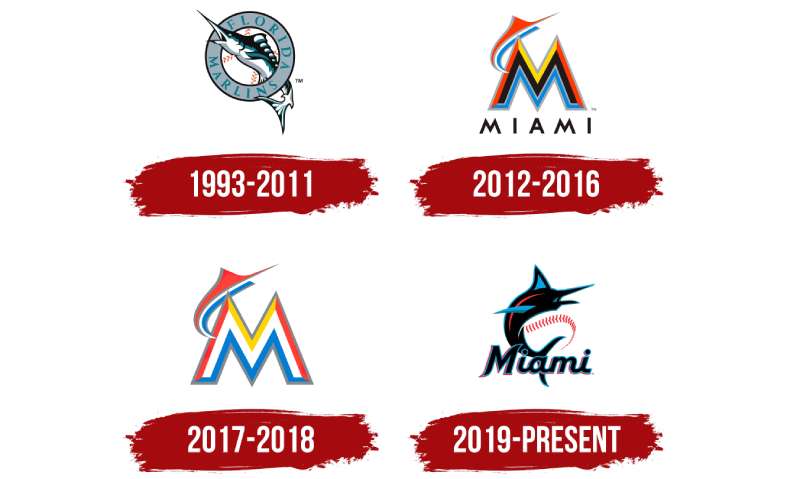
The Miami Marlins logo has gone through four major versions since the franchise started play in 1993.
Each redesign reflected ownership changes, a stadium move, and the team’s desire to better connect with Miami’s identity.
The original Florida Marlins mark lasted nearly two decades before three updates in just seven years reshaped the brand completely.
Original Florida Marlins Logo (1993-2011)
- Years Active: 1993-2011
- Design Description: A teal, black, and silver marlin leaping through a silver circle with the wordmark “FLORIDA MARLINS” arched around the perimeter. An orange-stitched baseball sat in the background
- Color Scheme: Teal, black, silver, orange, white
- Designer: Jamie Styles at Midnight Oil, a Boston-based design firm, working with Anne Occi (MLB Properties Design Director) and input from owner Wayne Huizenga and his nephew Ray Goldsby-Huizenga
- Context: Unveiled July 18, 1991, two years before the team’s first season. MLB recommended teal as a primary color after Huizenga initially wanted a pink flamingo theme. Teal was trending in sports at the time thanks to the Charlotte Hornets and San Jose Sharks
- Key Changes from Previous: This was the first logo, so there was nothing before it
- Cultural Significance: The first MLB logo to feature teal. It became the identity the team wore during both World Series wins in 1997 and 2003. Teal was gradually reduced from the mid-’90s onward, with black becoming the dominant cap color by the late 1990s
First Miami Marlins Logo (2012-2016)
- Years Active: 2012-2016
- Design Description: A large stylized block letter “M” in orange, yellow, blue, and black with a colorful marlin leaping over its left peak. The word “MIAMI” appeared below in a clean sans-serif font
- Color Scheme: Red-orange, black, yellow, blue, silver, white
- Designer: Directed by owner Jeffrey Loria, an art collector who drew inspiration from the work of Spanish artist Joan Miro
- Context: Introduced alongside the team’s move to Marlins Park (now LoanDepot Park) in the Little Havana neighborhood. The rebrand from “Florida” to “Miami” was a condition of the stadium deal with Miami-Dade County
- Key Changes from Previous: Complete departure from the teal-and-silver look. Modern art style replaced the traditional sports logo approach. The “M” became the dominant graphic element rather than the fish
- Cultural Significance: Loria described the colors as representing Miami’s sunsets, citrus, ocean, and sky. The design was polarizing among fans, with many calling it too busy and too far removed from traditional baseball branding
Refined Miami Marlins Logo (2017-2018)
- Years Active: 2017-2018
- Design Description: The same “M” structure from the 2012 version, but with black replaced by white and silver, giving the logo a lighter and brighter feel. The “MIAMI” text was removed
- Color Scheme: Red-orange, white, yellow, blue, silver
- Designer: Updated under continuing direction from the Marlins organization
- Context: A mid-cycle refresh. Derek Jeter’s ownership group purchased the team in 2017 and this logo served as a bridge before the full 2019 rebrand
- Key Changes from Previous: Dropped the “MIAMI” wordmark. Swapped black for white. The gray outline around the “M” and the marlin became slightly wider
- Cultural Significance: This version is often forgotten. It only lasted two seasons. But it signaled that the new ownership was ready to move the brand in a different direction
Current Miami Marlins Logo (2019-Present)
- Years Active: 2019 to present
- Design Description: A marlin in blue, red, and black leaping with an open mouth. To its right, baseball stitching in red on a transparent background. Below, a custom cursive “Miami” wordmark in black with blue and red trim
- Color Scheme: Midnight Black, Miami Blue, Caliente Red, Slate Gray, White
- Designer: Developed under CEO Derek Jeter and the new ownership group
- Context: Unveiled November 15, 2018, under the #OurColores campaign. The redesign aimed to connect more deeply with Miami’s Latin American heritage and the city’s baseball history, including a nod to the Cuban Sugar Kings
- Key Changes from Previous: Removed the block “M” entirely. The marlin fish became the primary visual element again. Introduced a cursive script inspired by Latin American lettering traditions. Completely new color palette
- Cultural Significance: The organization said the colors and font style were chosen to reflect Miami’s diversity. The cursive script echoes lettering found on vintage minor league jerseys, particularly the Havana Sugar Kings of the 1950s. The marlin’s body position was described as “athletic and powerful”
What Do the Design Elements of the Miami Marlins Logo Mean?
The marlin fish is the center of everything. It represents speed, power, and a deep connection to the Atlantic Ocean off the South Florida coast.
The fish has an open mouth and an upward-leaning body, which gives it an aggressive, athletic look.
Baseball stitching appears to the right of the marlin, grounding the whole composition in the sport itself. And the cursive “Miami” script below ties the team directly to the city, not the state, not the region.
Why Did the Miami Marlins Choose These Specific Colors?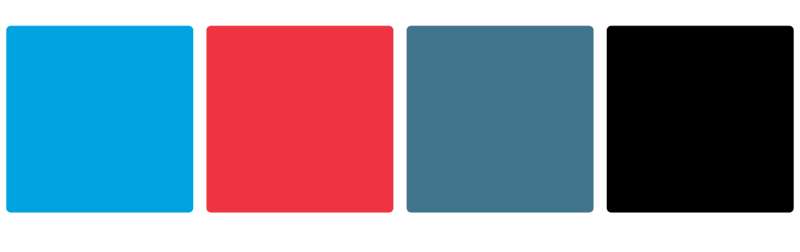
Each color in the current palette was picked to reflect something specific about Miami.
- Midnight Black (#000000) – Pantone Black 6 C. The base color. It represents Miami’s nightlife and gives the other colors a stage to pop against. Most caps and primary jerseys use black as the foundation
- Miami Blue (#00A3E0) – Pantone 299 C. Represents the ocean and sky. This is the color most closely tied to the city’s coastal identity. RGB values are (0, 163, 224), with CMYK at (74, 19, 0, 0)
- Caliente Red (#EF3340) – Pantone 032 C. Represents the energy and Latin heat of the city. It adds a punch of intensity to the script and the marlin’s accents. RGB: (239, 51, 64), CMYK: (0, 94, 76, 0)
- Slate Gray (#41748D) – Pantone 7698 C. A supporting color used in secondary applications. It softens the palette and adds depth. RGB: (65, 116, 141), CMYK: (78, 46, 32, 6)
- White (#FFFFFF) – Used for home jerseys and as negative space within the logo composition
The organization specifically described the pairing of Miami Blue and Caliente Red as colors that “pop off of the base color of Midnight Black,” creating an electric look that matches the city’s energy and nightlife.
These colors show up on flags throughout Miami’s neighborhoods. That was intentional. The design team wanted fans to see their city in the uniform, not just the team. Understanding color psychology helps explain why these choices work so well together.
What Typography Style Is Used in the Miami Marlins Logo?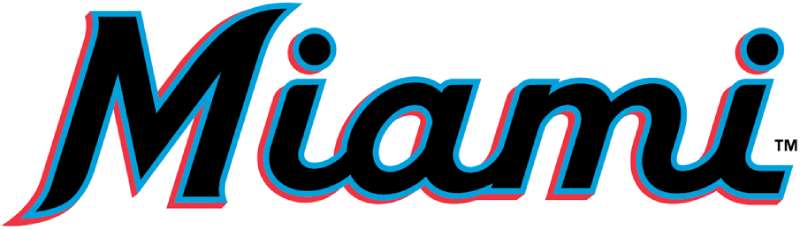
The current logo uses a custom cursive script for the “Miami” wordmark. It tilts slightly to the right with semi-connected letterforms and smooth transitions between characters.
Some of the letter tails are sharpened, which adds a modern edge to what is otherwise a flowing, organic typeface.
The style was inspired by lettering traditions common in Latin American baseball culture, particularly the script fonts used by teams like the Havana Sugar Kings in the 1950s. The uniform jerseys use the same font family across home, road, and alternate sets.
What Are the Hidden Meanings in the Miami Marlins Logo?
The baseball stitching in the logo is not immediately obvious at first glance. It sits between the marlin and the wordmark, woven into the composition rather than placed on top of a literal baseball shape.
The marlin’s upward body position was designed to look athletic, as if it is breaking through the surface. That is a direct reference to the team’s desire to rebuild and push forward under new ownership.
The cursive lettering nods to the Cuban Sugar Kings, connecting the franchise to Miami’s deep Latin American baseball roots. CEO Derek Jeter said the team “wanted to capture the diversity of the Miami region” when developing the logo.
How Does the Miami Marlins Logo Compare to Competitor Logos?
Most NL East rivals go with more traditional looks. The Atlanta Braves use a classic tomahawk and script “A” that has barely changed in decades. The New York Mets keep things conservative with their interlocking “NY” and skyline silhouette.
The Washington Nationals lean into patriotic reds and blues with a curly “W” that feels very D.C. And the Philadelphia Phillies have stuck with variations of the same “P” and liberty bell concept for years.
The Marlins stand out because their logo is the most stylistically different in the division. It uses a custom cursive script where most others use block lettering. It leans on a marine animal mascot rendered in a modern, sharp style instead of heritage marks or traditional typography.
Across MLB, the Marlins logo sits in the same camp as teams like the Arizona Diamondbacks and Tampa Bay Rays, teams that have gone through multiple recent rebrands and adopted more contemporary design approaches. Compare that to the New York Yankees or Boston Red Sox, whose logos have remained largely untouched for the better part of a century.
Among all baseball team logos, the Marlins’ current mark is one of the few that uses a full animal illustration as its primary element rather than relying on letterforms or abstract shapes.
What Are the Technical Specifications of the Miami Marlins Logo?
Official Color Codes
- Midnight Black – Hex: #000000, RGB: (0, 0, 0), CMYK: (0, 0, 0, 100), Pantone: PMS Black 6 C
- Miami Blue – Hex: #00A3E0, RGB: (0, 163, 224), CMYK: (74, 19, 0, 0), Pantone: PMS 299 C
- Caliente Red – Hex: #EF3340, RGB: (239, 51, 64), CMYK: (0, 94, 76, 0), Pantone: PMS 032 C
- Slate Gray – Hex: #41748D, RGB: (65, 116, 141), CMYK: (78, 46, 32, 6), Pantone: PMS 7698 C
- White – Hex: #FFFFFF, RGB: (255, 255, 255), CMYK: (0, 0, 0, 0)
- Uniform Gray (Road Jerseys) – Hex: #ABA7AC, RGB: (171, 167, 172), CMYK: (28, 27, 22, 6)
Dimensions and Proportions
- Aspect Ratio: The primary logo is wider than it is tall due to the horizontal orientation of the marlin and the wordmark below it. The secondary circular logo uses a 1:1 ratio
- Minimum Size Requirements: Per MLB brand standards, team logos must maintain legibility at all reproduction sizes. The marlin’s details require a minimum display size to avoid losing the red accents and stitching details
- Clear Space: Official team brand assets must maintain adequate clear space around the logo, which is typically defined as a percentage of the logo’s height on all sides
- Official Usage Guidelines: All logo usage is governed by Major League Baseball Properties, Inc. The mark should not be altered, recolored, or used on unauthorized merchandise. The logo must be reproduced from official vector graphics files to maintain accuracy across print and digital formats
What Cultural Impact Has the Miami Marlins Logo Had?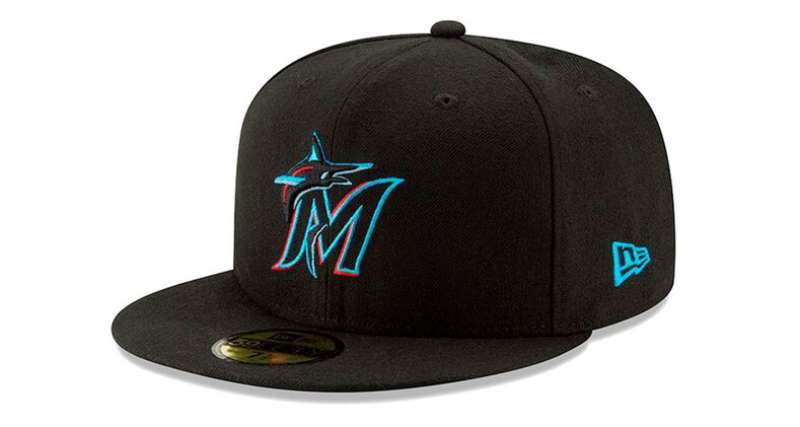
The Marlins’ branding tells the story of a franchise that has always been searching for its identity. And that is kind of fitting for a team based in Miami, a city that is itself a mix of many cultures and influences.
The 2019 rebrand was the most culturally significant change. By naming the campaign #OurColores (mixing English and Spanish), the team directly acknowledged its Latin American fanbase.
The 2021 City Connect uniforms took it further. They paid tribute to the Cuban Sugar Kings, a minor league team that helped bring Latin American players into organized baseball. The cap featured a sugar bag with a crown, the letters “MM,” and design cues that connected modern Miami to its baseball heritage from the 1950s.
The logo has also become part of Miami’s broader visual culture. You see the marlin mark on murals, in street fashion, and at LoanDepot Park, where it blends with the city’s Art Deco architecture and Latin-influenced design.
Took me a while to appreciate the 2019 version, honestly. The 2012 design was so loud and so different from anything else in baseball that it kind of overshadowed the quieter, more confident approach that came later.
How Does the Miami Marlins Logo Fit Into the Overall Brand Identity?
The logo is one piece of a bigger system. The Marlins’ brand identity includes the primary marlin logo, the secondary circular mark, the “M” cap logo, the cursive “Miami” and “Marlins” wordmarks, and the full brand style guide that controls how all of these are used together.
The primary logo appears on jerseys, merchandise, and digital platforms. The secondary logo shows up on alternate caps and sleeve patches. And the wordmarks are used across four different jersey designs: home white, road gray, black alternate, and blue alternate.
All of it ties back to the same color theory choices and the same custom script. That kind of consistency matters. When you see Caliente Red and Miami Blue together, you think Marlins, whether it is on a jersey, a stadium banner, or a social media post.
LoanDepot Park itself is part of the brand. The stadium’s design, its public art, and its neighborhood in Little Havana all reinforce the Latin American connection that the logo hints at.
How Should the Miami Marlins Logo Be Used?
Official Usage Guidelines
- Do: Use official logo files provided by the team or MLB. Reproduce the logo in its approved colors. Maintain the required clear space around the mark. Use the logo at sizes where all details remain visible
- Don’t: Alter the logo’s colors, proportions, or layout. Place the logo on busy backgrounds that reduce legibility. Use the logo on unauthorized merchandise or commercial products without a license. Recreate the logo from scratch, always use the official vector files
Where to Access Official Logos
Official logo assets for media use can be requested through the Miami Marlins press office or through MLB’s media resources. Licensed merchandise featuring the logo is available through the team’s official store, MLBShop.com, and authorized retailers like Fanatics and New Era.
Licensing Information
All Miami Marlins logos, wordmarks, and color combinations are properties of Marlins Teamco LLC and are managed by Major League Baseball Properties, Inc. Any commercial use requires a licensing agreement. This includes merchandise, promotional materials, and any product bearing the team’s marks.
Trademark Protection
The Miami Marlins logo and related marks are federally registered trademarks. The “MIAMI” wordmark with its stylized fish design is registered with the USPTO. MLB actively enforces trademark protections across physical and digital products, and unauthorized use can result in legal action.
FAQ on The Miami Marlins Logo
What does the Miami Marlins logo look like?
The current primary logo shows a marlin fish in Miami Blue, Caliente Red, and Midnight Black. It leaps beside baseball stitching with a cursive “Miami” wordmark below.
The combination mark blends animal imagery with custom script lettering. It replaced the stylized “M” that defined the previous era of the franchise’s brand guidelines.
When was the current Miami Marlins logo introduced?
The logo was unveiled on November 15, 2018, under the #OurColores campaign. It was first worn during games on March 28, 2019.
Derek Jeter’s ownership group led the redesign after purchasing the team in 2017. The rollout included four new uniform designs in Midnight Black, Miami Blue, Caliente Red, and Slate Grey.
What are the official Miami Marlins logo colors?
The official colors are Midnight Black (#000000), Miami Blue (#00A3E0), Caliente Red (#EF3340), Slate Gray (#41748D), and White (#FFFFFF).
These replaced the orange, yellow, and blue palette from the 2012 rebrand. The team said they were inspired by the flags seen throughout Miami’s neighborhoods and the city’s sunset tones.
Who designed the original Florida Marlins logo?
Jamie Styles at Midnight Oil, a Boston-based design firm, created the original 1993 mark. Anne Occi from MLB Properties directed the project alongside owner Wayne Huizenga and his nephew Ray.
Occi pushed for teal as the primary color. Huizenga originally wanted pink flamingos, but MLB suggested a different direction that better fit the sports market at the time.
How many times has the Marlins logo changed?
Four primary logo versions exist. The original Florida Marlins mark lasted from 1993 to 2011. Then came the 2012 rebrand, a 2017 refresh, and the current 2019 design.
Each change matched a shift in team ownership or stadium location. The biggest jump happened in 2012 when the franchise moved to Marlins Park and dropped “Florida” entirely.
What font is used in the Miami Marlins logo?
The wordmark uses a custom cursive script that tilts slightly right. The letterforms are semi-connected with smooth transitions and sharpened tails on certain characters.
It draws from Latin American font psychology and lettering traditions. The style echoes vintage minor league jerseys, particularly those of the 1950s Havana Sugar Kings.
What does the marlin symbolize in the logo?
The marlin represents speed, strength, and South Florida’s connection to the Atlantic Ocean. Its upward body position was specifically designed to look athletic and powerful.
The fish also connects to the team’s name origin. Founder Wayne Huizenga was an avid fisherman who had caught black and blue marlin off the Florida coast.
Why did the Marlins change their logo in 2019?
New ownership under Derek Jeter wanted to better reflect Miami’s culture and diversity. The previous logo, with its art-inspired “M,” felt disconnected from the city’s baseball roots.
Jeter said the team listened to fans and worked to create a “multicultural logo” that matched the region. The emphasis shifted from abstract modern art back to the marlin itself.
Where can I download the official Miami Marlins logo?
Media professionals can request official assets through the Marlins press office or MLB’s media portal. Fans can find licensed merchandise with the logo at MLBShop.com, Fanatics, and New Era.
The logo is a registered trademark of Marlins Teamco LLC. Unauthorized reproduction or commercial use without an MLB licensing agreement is not permitted.
How does the Miami Marlins logo compare to other MLB logos?
It is one of the more modern marks in baseball. Most MLB teams rely on letterforms or heritage designs. The Marlins use a full animal illustration with a custom script, which stands apart.
Compared to division rivals like the Chicago Cubs or St. Louis Cardinals, the Marlins lean toward contemporary graphic design principles over traditional baseball aesthetics.
Conclusion
The Miami Marlins logo tells the story of a franchise that has never been afraid to start fresh. Four redesigns in roughly three decades is a lot for any MLB team, but each version matched where the organization was headed.
The current mark gets it right. The marlin is back as the focal point, the custom cursive script connects to Miami’s Latin American heritage, and the Midnight Black, Miami Blue, and Caliente Red complementary color scheme feels like the city itself.
Whether you are a longtime fan or just curious about sports team branding, this logo is worth studying. It shows how visual hierarchy, smart color choices, and cultural awareness can turn a simple emblem into something that actually means something to a community.

Renowned for his expertise in logo design and visual branding, Bogdan has developed a multitude of logos for various clients.
His skills extend to creating posters, vector illustrations, business cards, and brochures. Additionally, Bogdan's UI kits were featured on marketplaces like Visual Hierarchy and UI8.
He also wrote in the past years on sites like Design Your Way, WebDesignerDepot, WPDean, Designmodo, Speckyboy, Slider Revolution, and more.
- Canva AI Features Reviewed: Are They Actually Useful? - 4 October 2026
- The Substack Logo History, Colors, Font, And Meaning - 2 October 2026
- How UX Design Impacts SaaS User Retention and Churn - 1 October 2026

Bogdan Sandu is a seasoned designer who has been designing websites since 2008. Renowned for his expertise in logo design and visual branding, Bogdan has developed a multitude of logos for various clients. His skills extend to creating posters, vector illustrations, business cards, and brochures. Additionally, Bogdan's UI kits were featured on marketplaces like Visual Hierarchy and UI8. He also wrote in the past years on sites like Design Your Way, WebDesignerDepot, WPDean, Designmodo, Speckyboy, Slider Revolution, and more.
You Might Also Like