The Chicago White Sox logo is one of the most recognized marks in American professional sports. It’s also one of the few MLB logos that crossed over into mainstream culture, particularly hip-hop, during the early 1990s.
The current version features a Gothic-style “SOX” wordmark rendered in black with silver trim, set on a diagonal from upper left to lower right. It was introduced in 1991 as part of a full rebrand led by Rob Gallas, the team’s senior vice president of marketing, with prototypes famously tested at a neighborhood block party in Tinley Park, Illinois.
Founded in 1900 as the Chicago White Stockings (shortened to White Sox in 1904), this American League charter franchise has gone through more than 20 logo changes. The current mark, though, has outlasted them all. It’s been in use for over three decades with only minor adjustments.
What Is the Chicago White Sox Logo?
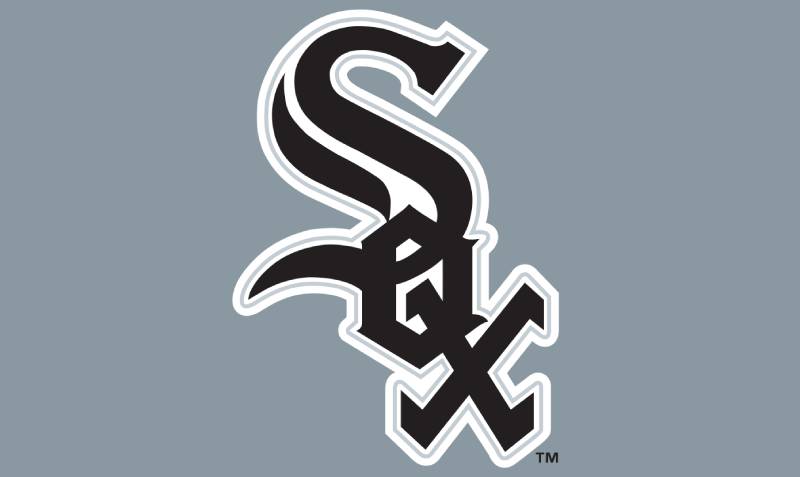
The Chicago White Sox logo is a diagonal Old English-style wordmark spelling “SOX” in black with white and silver outlines. Introduced in 1991, it was created under the direction of Rob Gallas and the team’s internal marketing department. It represents strength, tradition, and the club’s South Side Chicago identity.
- Design Type: Wordmark (combination of stylized lettering with no accompanying icon in the primary mark)
- Primary Elements: Three Gothic letters, “S,” “O,” and “X,” arranged diagonally. The “S” is enlarged, and the “O” and “X” overlap slightly. Each character is outlined in white, allowing placement on various backgrounds
- Official Introduction Date: September 1990 (unveiled at old Comiskey Park’s final series), fully adopted for the 1991 season
- Designer/Agency: Developed in-house by the White Sox marketing team under Rob Gallas (SVP of Marketing and Broadcasting) with Mike Bucek (Director of Marketing) handling fan testing and prototype development
- Trademark Status: Registered with the USPTO. Chicago White Sox, Ltd. holds approximately 35 active trademark registrations covering the logo across entertainment, apparel, merchandise, and food service categories. The original “SOX” diagonal chainlink design was first registered in 1968
- Color Palette: Black (Hex: #27251F, Pantone PMS Process Black) and Silver (Hex: #C4CED4, Pantone PMS 877 C), with white (#FFFFFF) as a supporting color
- Usage Context: Game uniforms, caps (manufactured by New Era), merchandise, digital platforms, stadium signage at Rate Field, broadcast graphics, and licensed products through Fanatics and MLB Properties
How Has the Chicago White Sox Logo Evolved Over Time?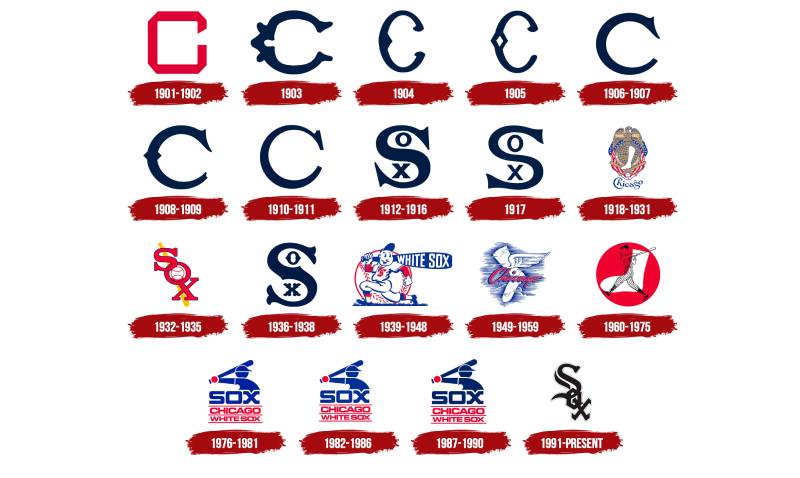
The White Sox have redesigned their logo more than 20 times since 1901. Early versions used simple letter “C” marks.
The “Sox” wordmark first appeared in 1912, disappeared during the 1970s in favor of graphic badges, and returned for good in 1991.
The current Gothic version has been the longest-running design in franchise history.
Original Chicago White Stockings Logo (1901-1903)
- Years Active: 1901-1903
- Design Description: A single block letter “C” representing Chicago, rendered in a custom sans-serif style with angular edges and a diagonal cut at the upper line’s end
- Color Scheme: Dark red (1901), then bright blue (1903)
- Designer: Unknown, likely produced internally
- Context: The team was one of the American League’s eight charter franchises. Logo design in this era was simple and functional. Teams cared about readability on wool jerseys, not brand strategy
- Key Changes from Previous: This was the first logo. Each year brought a slightly different “C” shape
- Cultural Significance: The plain letterform was typical of early 1900s baseball. Nothing flashy. Just a letter on a chest
The Wishbone “C” Era (1904-1911)
- Years Active: 1904-1911
- Design Description: A wishbone-style letter “C” in blue, with pointed elements on the inside of the letter. Some years included a small white oval detail on the left portion
- Color Scheme: Blue with white accents
- Designer: Unknown
- Context: The team officially shortened its name from White Stockings to White Sox in 1904. Chicago Tribune sports editors had already been using the shorter version on scorecards
- Key Changes from Previous: Shifted from block letter to a decorative wishbone shape. The letterform gained curves and subtle ornamentation
- Cultural Significance: This style of ornamental “C” became a template that several Chicago teams would later adopt in different forms
First “Sox” Wordmark (1912-1938)
- Years Active: 1912-1938 (with variations)
- Design Description: The first appearance of the word “Sox” as a logo. A capital “S” with a small “o” at the top and a small “x” at the bottom, stacked diagonally. The overall look was dark blue with occasional red accents
- Color Scheme: Dark blue, with red outlines in some versions
- Designer: Unknown
- Context: This era covered the 1917 World Series championship and the infamous 1919 Black Sox Scandal. The visual identity during this period was straightforward, text-driven
- Key Changes from Previous: Abandoned the single letter “C” entirely. Introduced the diagonal “Sox” arrangement that would become the franchise’s signature layout
- Cultural Significance: The 1912 layout is basically the DNA of the current logo. Took me a while to realize how much the 2020s mark owes to this 110-year-old concept
The Winged Sock Badge (1949-1970)
- Years Active: 1949-1970
- Design Description: A yellow circular badge with black outline, featuring a white sock with a wing on it. A cursive “Chicago” inscription sat across the image. This was the “Go-Go Sox” era look
- Color Scheme: Yellow, black, and white
- Designer: Commissioned under Chuck Comiskey, who became VP of operations at age 22 in 1948
- Context: Chuck Comiskey wanted something lighter and more playful. This was a young executive putting his stamp on a family-owned franchise. The 1959 AL Pennant-winning team wore this mark
- Key Changes from Previous: Complete departure from text-based logos. First graphical badge in team history. Added an actual sock illustration for the first time
- Cultural Significance: This logo defined the Go-Go Sox era. It was fun, a little campy, and perfectly captured the optimism of mid-century baseball in Chicago
Red and White Sock Emblem (1971-1975)
- Years Active: 1971-1975
- Design Description: A white sock on a solid red circle, with a baseball player silhouette drawn in thin black lines over the sock image. No text or framing
- Color Scheme: Red and white
- Designer: Unknown
- Context: The team was struggling at the gate and trying different looks to generate interest. The stripped-down badge was a shift toward a more serious, less playful identity
- Key Changes from Previous: Dropped the yellow color scheme and cursive text entirely. The circular badge stayed but became simpler
- Cultural Significance: Short-lived but memorable. It’s a favorite among vintage baseball team logo collectors
The Batter Logo (1976-1990)
- Years Active: 1976-1990 (briefly returned in 2014)
- Design Description: A blue silhouette of a baseball batter positioned above a three-line “CHICAGO WHITE SOX” inscription. Each line was underlined. The text used a sleek extended sans-serif typeface
- Color Scheme: Blue and red
- Designer: Unknown, part of a broader rebrand under Bill Veeck’s ownership era
- Context: Bill Veeck was known for bold promotional ideas. This logo came with some of baseball’s wildest uniform experiments, including shorts in 1976. And yes, they actually wore shorts during a game
- Key Changes from Previous: Completely different from anything before it. First logo to use a human figure as the primary graphic element
- Cultural Significance: This was a polarizing design. Some fans loved the modern feel. Others wanted the classic Sox script back. The tension between those camps directly led to the 1991 rebrand
Current Gothic “SOX” Logo (1991-Present)
- Years Active: 1991-present
- Design Description: Gothic Old English-style “SOX” in black, outlined in white with silver trim, placed diagonally from upper left to lower right. The “S” is larger than the “O” and “X,” which overlap each other
- Color Scheme: Black, white, and silver
- Designer: White Sox internal marketing team under Rob Gallas (SVP) and Mike Bucek (Director of Marketing), with external design consultants
- Context: Introduced alongside the opening of the new Comiskey Park (now Rate Field). This was a full franchise reset. New stadium, new look, new identity. The prototypes were tested at a block party in Tinley Park. Fans overwhelmingly chose the Gothic design
- Key Changes from Previous: Returned to the diagonal “Sox” arrangement from the 1912-1938 era but in a bold Gothic style instead of the earlier script. Swapped blue and red for black and silver. The monochrome color approach was a deliberate contrast to the previous era’s multicolor designs
- Cultural Significance: The logo became a cultural phenomenon almost immediately. Ice Cube wore the cap in the “Steady Mobbin” video in 1991. Dr. Dre sported it in “Nothin but a G Thang.” New Era went from producing 9,000 White Sox caps in 1990 to 544,000 in 1991. The hat became the third-best seller in MLB, behind only the A’s and Yankees
What Do the Design Elements of the Chicago White Sox Logo Mean?
The Gothic lettering carries a deliberate weight. It’s meant to communicate toughness, permanence, and tradition.
South Side Chicago is a working-class community with deep roots, and the logo was designed to reflect that character.
Every part of the mark, from the letter style to the angle to the color choices, was built around a specific idea of what the franchise wanted to say about itself.
Why Did the Chicago White Sox Choose These Specific Colors?
The black, white, and silver palette was a direct callback to older White Sox uniforms from the 1950s and 1960s.
Fan surveys during the 1990 redesign process confirmed it. People kept referencing those earlier eras when asked what they wanted the team to look like.
- Black (Hex: #27251F, Pantone PMS Process Black, RGB: 39, 37, 31, CMYK: 0, 0, 0, 100): Represents power, authority, and the gritty identity of South Side Chicago. Black became the primary uniform color for the first time in franchise history with this rebrand. According to color psychology, black signals strength and formality, which fits the team’s desired image
- Silver (Hex: #C4CED4, Pantone PMS 877 C, RGB: 196, 206, 212, CMYK: 5, 0, 0, 20): Adds a metallic accent that keeps the otherwise stark black logo from feeling flat. Silver trim on the letterforms gives the mark depth and a slightly premium quality
- White (Hex: #FFFFFF, RGB: 255, 255, 255, CMYK: 0, 0, 0, 0): Used for outlines around each letter. This is what makes the logo work on dark backgrounds, like the famous black cap. Without that white outline, the whole thing would fall apart at small sizes
What Typography Style Is Used in the Chicago White Sox Logo?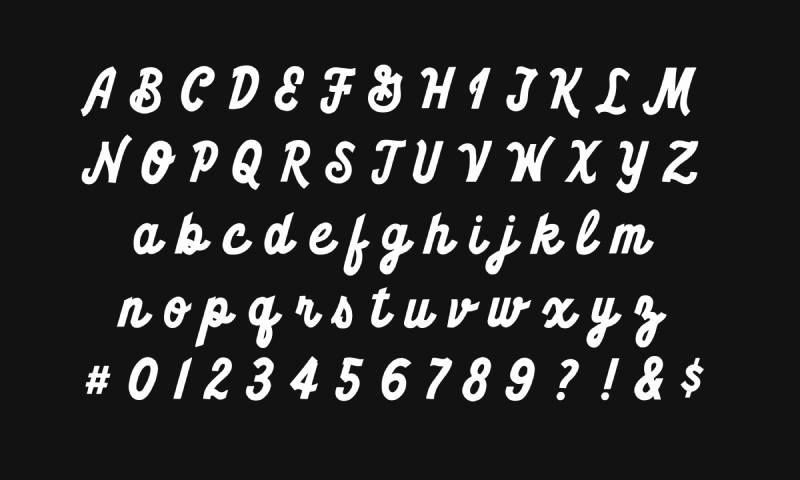
The lettering is a custom Old English Gothic style. Not pulled from a commercial font library. It was created specifically for the team.
The thick strokes, sharp angles, and slightly arched contours give the letters a handcrafted look. Each character has weight to it.
For secondary uses like jersey names and numbers, the team uses Gotham Bold, which is a completely different feel. Clean, modern, geometric. The contrast between the Gothic primary mark and the modern secondary typography actually works pretty well together.
What Are the Hidden Meanings in the Chicago White Sox Logo?
There’s a well-known observation that the diagonal placement and Old English styling of the letters can make “SOX” resemble “SEX” at a quick glance.
Nobody from the team has confirmed this was intentional. But it’s been discussed by fans and design observers for decades.
What is confirmed: the diagonal orientation was a deliberate choice to create a sense of movement and energy. The overlapping of the “O” and “X” creates visual unity between the characters, making the three letters read as a single shape rather than separate pieces.
How Does the Chicago White Sox Logo Compare to Competitor Logos?
Most MLB logos fall into two camps: graphical mascot emblems or text-based wordmarks. The White Sox sit firmly in the wordmark category, but their Gothic approach is unique in baseball.
Compare it to the New York Yankees logo, which also uses a text-driven mark but in a completely different style. The interlocking “NY” is upright, formal, and traditionally American. The Sox wordmark leans, overlaps, and carries a street-level attitude.
The Detroit Tigers use an Old English “D” that shares some stylistic DNA with the White Sox, but it’s a single letter. Not nearly as complex in its arrangement. The Boston Red Sox logo, despite sharing the “Sox” name, uses a pair of red socks as its primary image, going the graphical route instead.
Crosstown rivals the Chicago Cubs use a bright red “C” on a blue circle. Friendly. Approachable. The White Sox logo, by contrast, feels like it’s staring you down.
Among NBA logos, NFL logos, and NHL logos, the White Sox mark holds its own because of the monochrome boldness. Most professional sports teams use at least two or three vivid colors. The Sox’ commitment to black, white, and silver gives the logo a distinct look across all major American sports, not just baseball.
What Are the Technical Specifications of the Chicago White Sox Logo?
Official Color Codes
- Primary Color: Black
- Hex: #27251F
- RGB: (39, 37, 31)
- CMYK: (0, 0, 0, 100)
- Pantone: PMS Process Black
- Secondary Color: Silver
- Hex: #C4CED4
- RGB: (196, 206, 212)
- CMYK: (5, 0, 0, 20)
- Pantone: PMS 877 C
- Accent Color: White
- Hex: #FFFFFF
- RGB: (255, 255, 255)
- CMYK: (0, 0, 0, 0)
Dimensions and Proportions
The logo’s diagonal orientation means aspect ratio isn’t measured in the standard way you’d measure a horizontal wordmark. The bounding box that contains the full diagonal “SOX” is roughly square when the mark is positioned at its intended angle.
For digital use, the logo is typically distributed as a vector graphic (SVG, EPS, or AI format) through MLB Properties and the team’s official brand guidelines. The white outline around each letter serves as built-in clear space, but official guidelines require additional spacing when placed alongside sponsor logos or other MLB marks.
Minimum size requirements follow standard MLB guidelines to keep the letterforms legible. Below a certain pixel threshold, the overlapping “O” and “X” start to lose definition. For print applications, higher DPI settings are recommended to preserve the sharp angles and fine trim details of the Gothic letterforms.
What Cultural Impact Has the Chicago White Sox Logo Had?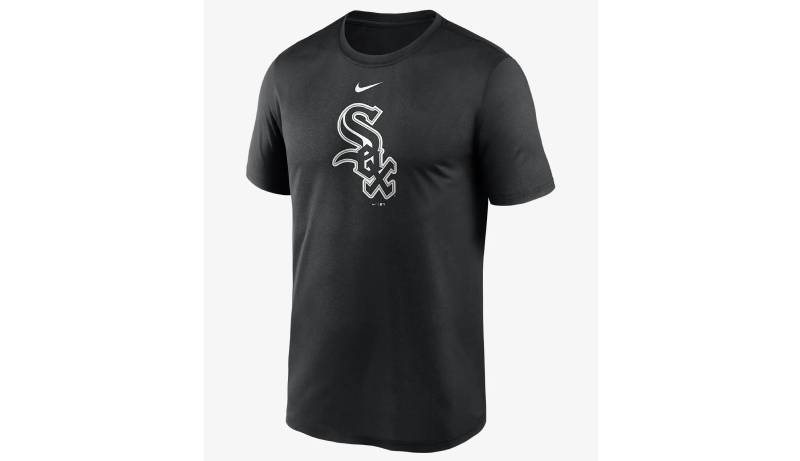
Few sports logos have crossed into popular culture as forcefully as this one did in the early 1990s.
The Black cap with the white Gothic “SOX” became a staple of West Coast hip-hop. Ice Cube, Dr. Dre, Eazy-E, and other artists wore it regularly.
As Ice Cube explained, Old English lettering had deep roots in street culture. People grew up ironing those kinds of letters onto their clothes. The White Sox cap just fit. It wasn’t a baseball decision. It was a style decision.
New Era had to shut down production of all other MLB caps twice just to keep up with White Sox demand. In-stadium merchandise sales increased by nearly 2,000 percent between 1989 and 1991. For two straight years, White Sox merch accounted for 20 percent of all MLB merchandise sold nationally. One team, out of 26, selling a fifth of everything.
The 2005 World Series championship added another layer. Seeing that logo on the field during a sweep of the Houston Astros cemented it for a whole new generation of Chicago fans.
How Does the Chicago White Sox Logo Fit Into the Overall Brand Identity?
The logo anchors a larger system. The primary “SOX” mark connects to the team’s secondary sock-in-diamond logo, the “Chicago” road jersey script, and the black-and-silver color palette that runs across everything.
Rate Field (the home stadium) uses the same black, white, and silver scheme in its signage and interior design. The team mascot, Southpaw, wears the colors. Broadcast graphics follow the palette.
The brand style guide ensures consistency across licensed merchandise, digital content, social media, and stadium materials. The Gothic “SOX” works as the main identifier, while supporting elements (the wordmark, alternate logos, type treatments) flex for different contexts.
It’s a tight system. Everything looks like it belongs together because the design principles are consistent. The same weight, the same tonal contrast, the same attitude.
How Should the Chicago White Sox Logo Be Used?
Official usage rules are governed by Major League Baseball Properties, Inc. All team names, logos, uniform designs, and color combinations are registered trademarks. You cannot use the White Sox logo for commercial purposes without a license.
Do’s:
- Use official logo files from MLB-licensed sources
- Maintain proper clear space around the mark
- Reproduce the logo in its approved color combinations (black/white/silver, or single-color black, or single-color white for reversed applications)
- Follow MLB’s brand usage guidelines for sizing and placement
Don’ts:
- Alter the logo’s proportions, colors, or letter arrangement
- Place the logo on busy backgrounds without the white outline buffer
- Use the logo to imply endorsement without written permission
- Recreate or approximate the Gothic letterforms for unofficial merchandise
Where to access official logos: Licensed partners and media can obtain approved assets through MLB’s brand portal. Consumer-level logo files (typically JPEG or PNG) are available on the team’s official website and MLB.com.
Licensing: All commercial use requires a license through MLB Properties. The White Sox organization (Chicago White Sox, Ltd.) holds trademark registrations with the USPTO covering entertainment services, apparel, food service, and merchandise categories. Licensing terms vary by product category and distribution channel.
Trademark protection: The “SOX” wordmark has been trademarked since 1968. Additional trademark filings in 1991 covered the current Gothic design across multiple categories. MLB actively monitors and enforces against unauthorized use of all team marks.
FAQ on The Chicago White Sox Logo
What does the Chicago White Sox logo look like?
It’s a diagonal Gothic-style wordmark spelling “SOX” in black with white and silver trim. The “S” sits larger than the “O” and “X,” which overlap each other. The letters read from upper left to lower right.
Simple mark. Hard to forget once you’ve seen it.
When was the current White Sox logo introduced?
The current logo debuted in September 1990 during the final series at old Comiskey Park. It became the official primary mark for the 1991 season.
That makes it over three decades old. Still unchanged in any major way.
Who designed the Chicago White Sox logo?
Rob Gallas, the team’s senior vice president of marketing, led the redesign process. His director of marketing, Mike Bucek, tested prototypes at a block party in Tinley Park, Illinois.
Fans at that party picked the Gothic design. The rest is history.
What are the official colors of the White Sox logo?
Black (Hex: #27251F), silver (Hex: #C4CED4), and white (#FFFFFF). The team switched to this monochrome palette in 1991, dropping the blue and red from the previous era.
The black and silver combination was a callback to 1950s and 1960s Sox uniforms.
What font is used in the White Sox logo?
The primary logo uses a custom Old English Gothic typeface created specifically for the team. It’s not available in any commercial font library.
For jersey names and numbers, the club uses Gotham Bold. Two completely different styles that somehow work together.
How many times has the White Sox logo changed?
More than 20 times since 1901. The franchise started with a plain “C” lettermark, moved through various “Sox” scripts, tried graphic badges in the 1970s, and landed on the current Gothic version in 1991.
No other American League charter franchise has experimented this much with its visual identity.
Why did the White Sox logo become popular in hip-hop?
The Old English lettering matched street culture aesthetics on the West Coast. Ice Cube wore the cap in his 1991 “Steady Mobbin” video. Dr. Dre followed.
New Era went from making 9,000 White Sox caps in 1990 to 544,000 in 1991. The hat became a fashion statement beyond baseball.
Is the Chicago White Sox logo trademarked?
Yes. Chicago White Sox, Ltd. holds roughly 35 active trademark registrations with the USPTO. The original “SOX” mark was first registered in 1968. The current Gothic design was filed across multiple categories in 1991.
MLB Properties enforces against unauthorized commercial use.
What does the Sox logo symbolize?
The three letters represent the team’s shortened name. But the Gothic styling, diagonal placement, and color palette communicate something bigger. Toughness. South Side Chicago identity. A working-class franchise that doesn’t try to be polished.
The overlapping characters create a sense of connection between the letters.
Where can I download the official White Sox logo?
Official logo files are available through MLB.com and the team’s website in PNG and JPEG formats. Licensed partners can access vector files through MLB’s brand portal.
Any commercial use requires a license from MLB Properties. Personal use has fewer restrictions, but reproducing the mark on products for sale is not allowed without permission.
Conclusion
The Chicago White Sox logo has done something most MLB team branding marks never manage. It outlasted every trend thrown at it since 1991.
That Gothic “SOX” wordmark works on a baseball cap in the South Side bleachers and on a streetwear rack in Los Angeles. Few sports emblems pull that off.
The black and silver color scheme, the custom Old English lettering, the diagonal arrangement. Every piece was built with purpose by a team that actually asked its fans what they wanted.
Over thirty years later, it still holds up. That’s not luck. That’s brand identity done right.

Renowned for his expertise in logo design and visual branding, Bogdan has developed a multitude of logos for various clients.
His skills extend to creating posters, vector illustrations, business cards, and brochures. Additionally, Bogdan's UI kits were featured on marketplaces like Visual Hierarchy and UI8.
He also wrote in the past years on sites like Design Your Way, WebDesignerDepot, WPDean, Designmodo, Speckyboy, Slider Revolution, and more.
- The Windsurf Logo History, Colors, Font, And Meaning - 10 October 2026
- How to Remove Background From Product Photos (No Photoshop) - 10 October 2026
- How Designers can Build a Stronger Online Creative Identity - 9 October 2026

Bogdan Sandu is a seasoned designer who has been designing websites since 2008. Renowned for his expertise in logo design and visual branding, Bogdan has developed a multitude of logos for various clients. His skills extend to creating posters, vector illustrations, business cards, and brochures. Additionally, Bogdan's UI kits were featured on marketplaces like Visual Hierarchy and UI8. He also wrote in the past years on sites like Design Your Way, WebDesignerDepot, WPDean, Designmodo, Speckyboy, Slider Revolution, and more.
You Might Also Like