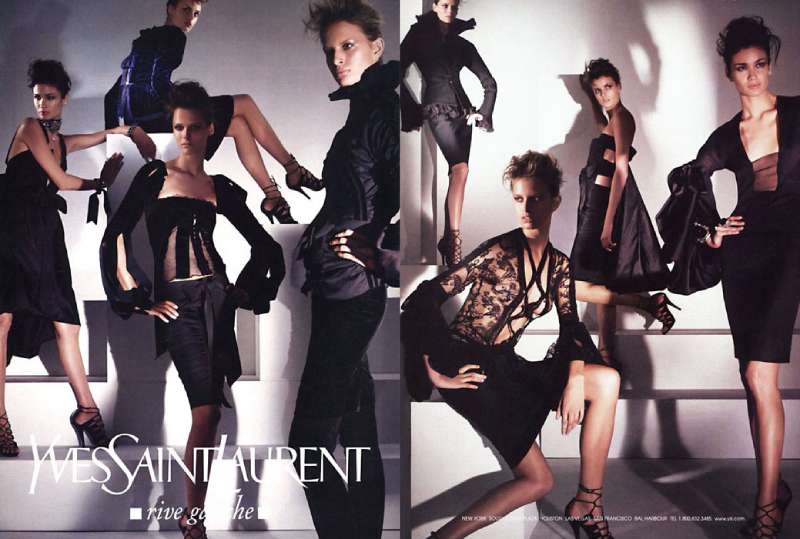
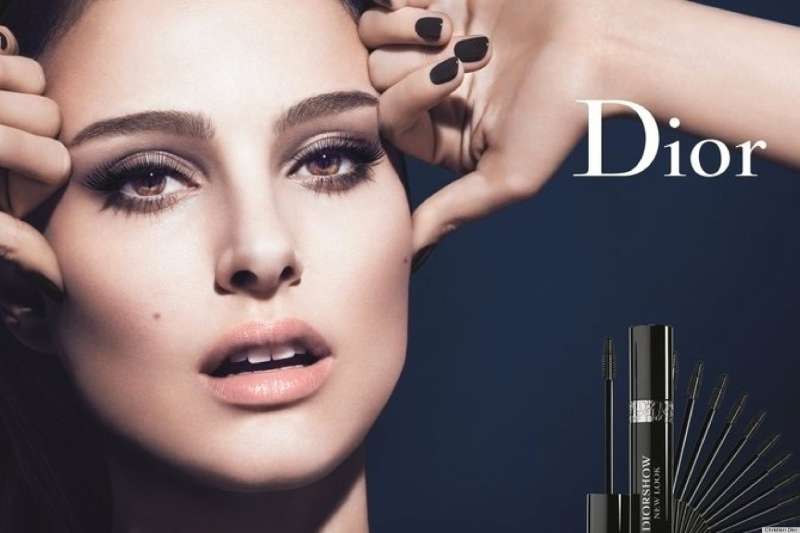
A white wall, a hard flash, and a face you recognise from a film or a record. That is most of what Marc Jacobs ads have looked like since 1998.
The brand ran 28 years of campaigns with no taglines and no headlines, and a wordmark small enough to miss.
This page covers each campaign with its photographer, year and market, plus the layout and typography decisions underneath.
- Daisy, Bang, Oh Lola! and Perfect, the Coty fragrance work
- Heaven, the Ava Nirui line running a separate visual system
- The Tote Bag ads and the TikTok content that replaced the hero image
Marc Jacobs Advertising at a Glance
Marc Jacobs has advertised under its own name since 1998, when Juergen Teller shot the first ready-to-wear campaign. The fragrance ads sit with Coty, the fashion ads with an in-house team. The visual signature stays constant: white seamless ground, wide-tracked capitals, direct flash.
| Attribute | Value |
|---|---|
| First major campaign | Juergen Teller ready-to-wear ads, 1998 |
| Lead photographers | Juergen Teller (1998-2014), Harley Weir, Tyrone Lebon, Nick Newbold, David Sims |
| Art direction | Peter Miles Studio; Triboro (2022 identity); Ava Nirui (Heaven) |
| Best-known fragrance campaigns | Daisy (2007), Bang (2010), Oh Lola! (2011), Perfect (2020) |
| Primary media | Magazine print, out-of-home, cinema, TikTok, Instagram |
| Wordmark typeface | Engravers Gothic, customised, letterspacing opened up |
| Fragrance licensee | Coty, since 2001 |
| Ownership | LVMH; sale to WHP Global announced May 2026, Jacobs stays creative director |
Two things carry almost every image in this list: a photographer who refuses to retouch, and a logo that never fights the picture.
Which Marc Jacobs Ad Campaigns Are the Most Famous?
The 7 campaigns below cover 1998 to 2025: the Teller fashion ads, Daisy, Bang, Oh Lola!, Perfect, Heaven, and The Tote Bag. Four are fragrance work made with Coty. Three are house campaigns shot for ready-to-wear and accessories.
Juergen Teller’s Fashion Campaigns (1998-2014)

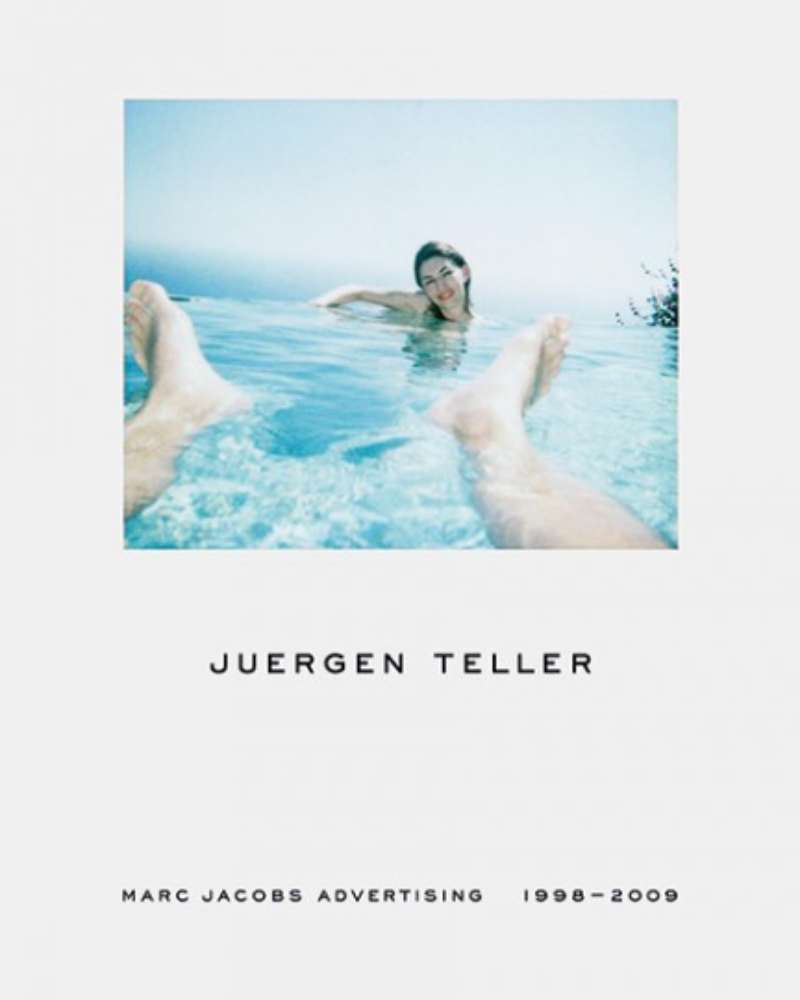
Teller photographed every Marc Jacobs and Marc by Marc Jacobs campaign from 1998 until 2014, working across ready-to-wear, accessories and fragrance. The casting was the concept: writers, musicians, directors, artists.
Sofia Coppola, Kim Gordon, Cindy Sherman, Winona Ryder, William Eggleston, Charlotte Rampling and Victoria Beckham all sat for him.
Steidl collected the run in a 576-page book published in 2009. Flick through it and the layout barely changes across eleven years. That is the point.
Daisy (2007-Present)

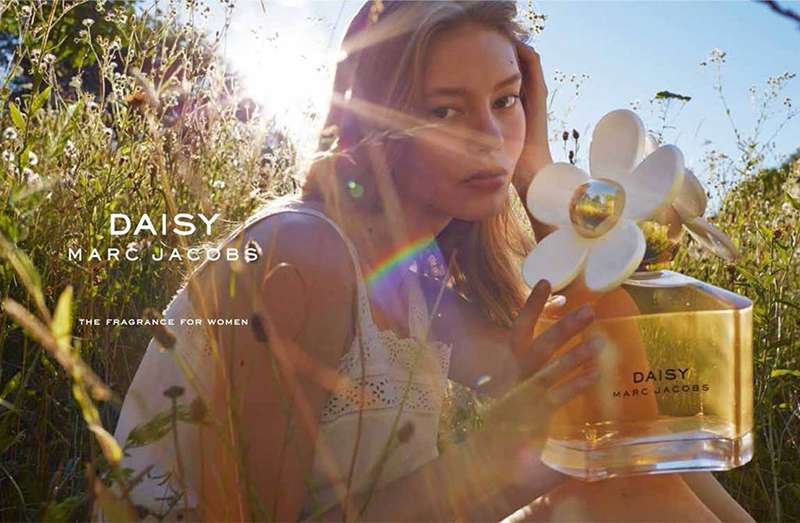
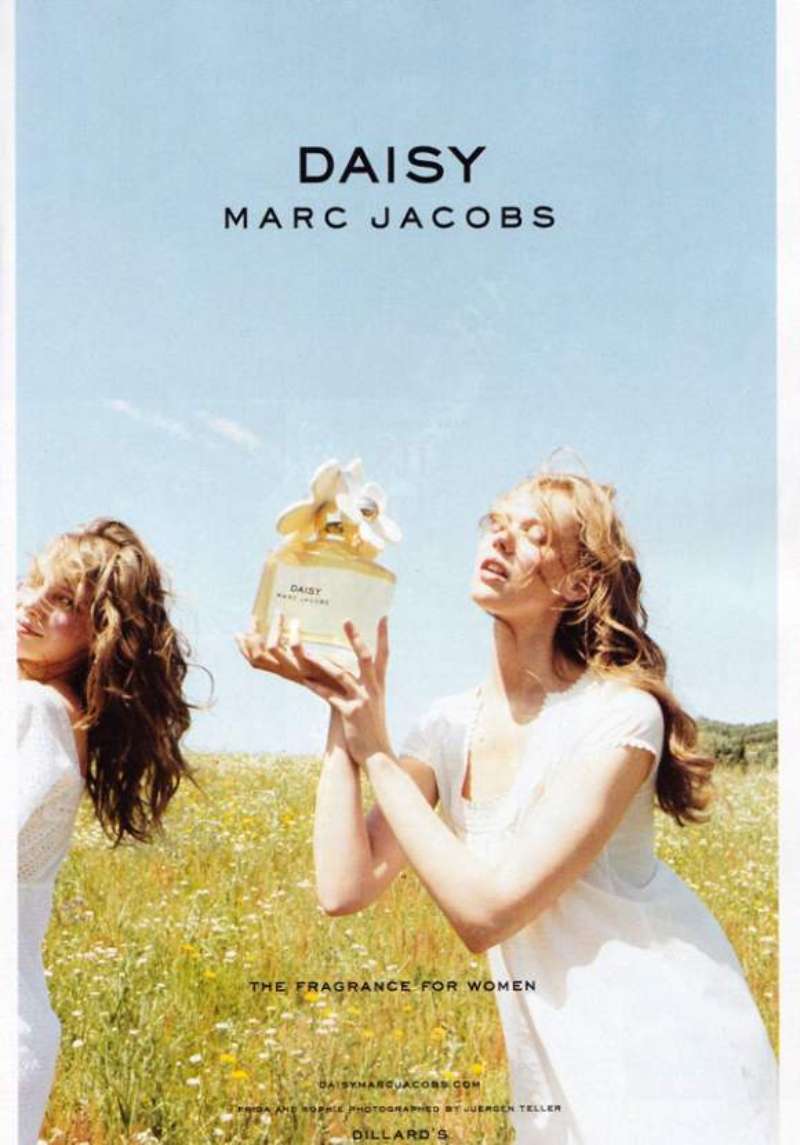
Launched: July 2007, developed with Coty, photographed by Teller.
Setting: daisy fields in southern Spain, models in white cotton, no styling that reads as styling.
Cast over time: Frida Gustavsson, Sophie Srej, Hannah Holman, Ondria Hardin.
The franchise brought in roughly $300 million in annual retail sales, according to WWD, and Coty reported Daisy as the number one fragrance franchise in the UK in its FY25 first-half results.
Bang (2010)
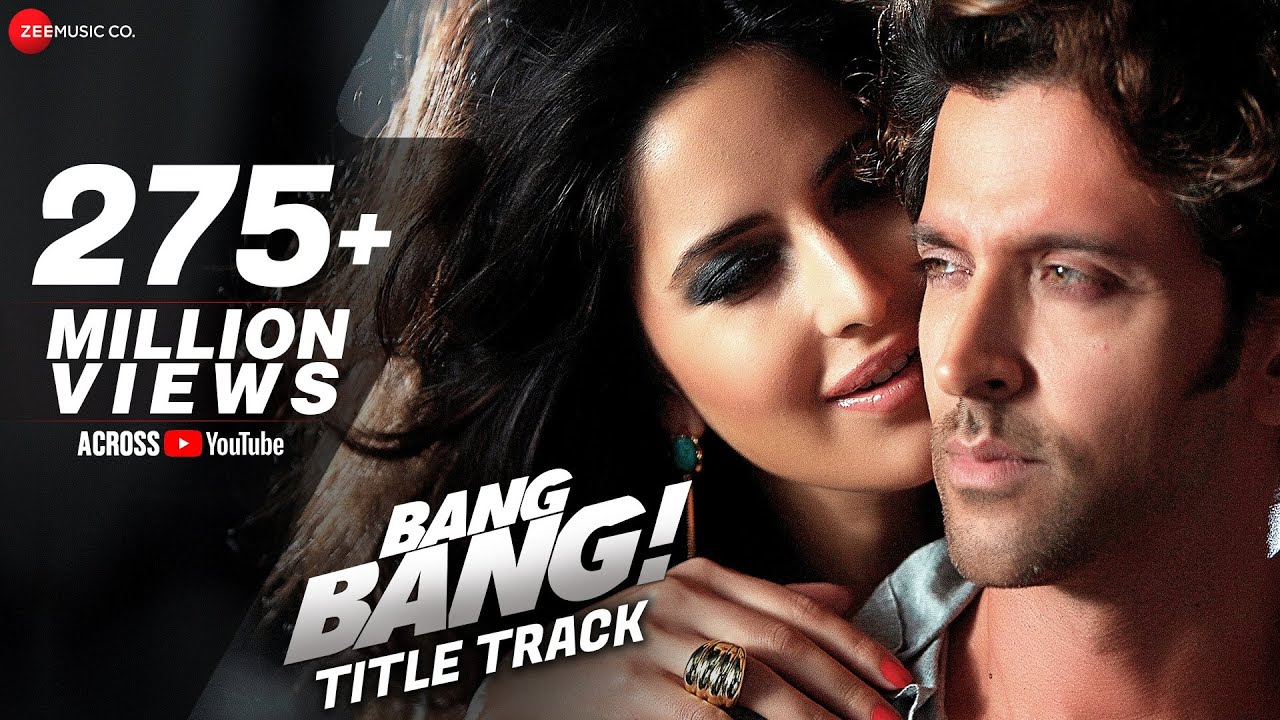
Jacobs appeared in his own advertising for the first time.
Teller shot him on a silver Mylar sheet with an oversized bottle placed for modesty. Robert Duffy, his business partner, suggested it. Peter Miles art directed.
The scent reached about 1,800 US department and speciality stores, with the full image running in September titles. A shoulders-up crop ran in more conservative markets, and the Middle East version showed only the bottle. Same campaign, three levels of nerve.
Oh Lola! (2011)

The Advertising Standards Authority banned the UK print ad in November 2011 after four complaints.
- Subject: Dakota Fanning, then 17, photographed by Teller for Coty UK
- Placement: Sunday Times Style and ES Magazine, both aimed at over-25s
- Ruling: irresponsible and likely to cause serious offence
Coty argued the image was provoking rather than indecent. The ASA disagreed. Worth reading the full adjudication if you work anywhere near advertising design for regulated categories.
Perfect (2020)

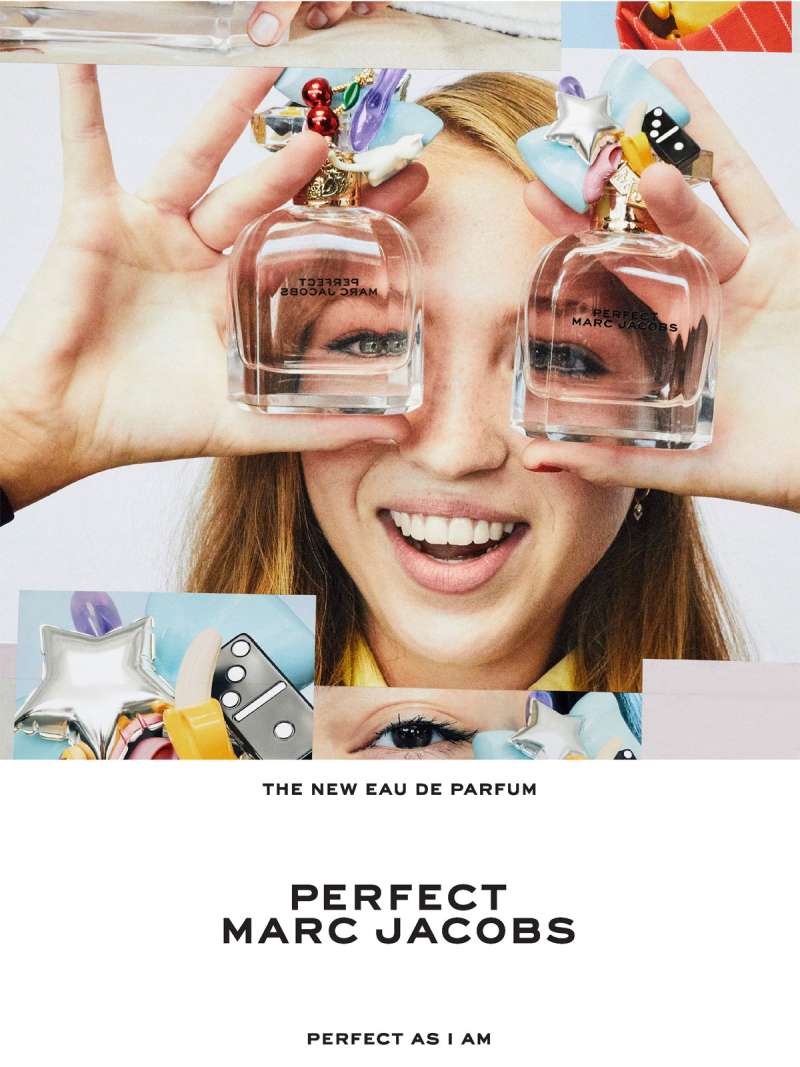
Teller shot the Perfect launch with creative direction by Katie Grand, and the campaign was built around a cast of 42 people, partly scouted through an open social media casting call.
Cast members chose and styled their own clothes from Marc Jacobs pieces and vintage. Lila Moss, Alek Wek and Mei Kawajiri appear alongside people with no modelling history.
The layout is a portrait collage rather than a single hero image, which is a real departure for a house built on one picture per spread.
Heaven by Marc Jacobs (2020-Present)

Heaven launched in September 2020 as a direct-to-consumer line under Ava Nirui, and its campaigns run on a completely separate visual system from the main house.
Shoichi Aoki, founder of the Japanese street-style magazine FRUiTS, shot the first lookbook. Harley Weir has shot several since.
- Casting mixes 90s figures with current ones: Pamela Anderson, Kyle MacLachlan, Doja Cat, Charli XCX, Dev Hynes
- Christina Ricci fronted 2021; Nicki Minaj fronted SS22
- Typography borrows from zines, flyers and grunge design rather than the house wordmark
The Tote Bag and the Essentials Ads (2019-Present)

Google search data made The Tote Bag the top-trending tote of 2023. The medium size sells at $195 across nine colourways.
Kim Kardashian fronted Fall 2023, shot by Tyrone Lebon and styled by Alastair McKimm. Debbie Harry, Ever Anderson and Lila Moss carried the St. Marc bag the same year.
The 2024 Essentials campaign put four silhouettes together: The Tote Bag, The Snapshot, The Sack Bag and The Mini Bag. Product name set large, bag centred, nothing else on the page.
How Do Marc Jacobs Print Ads Work Visually?
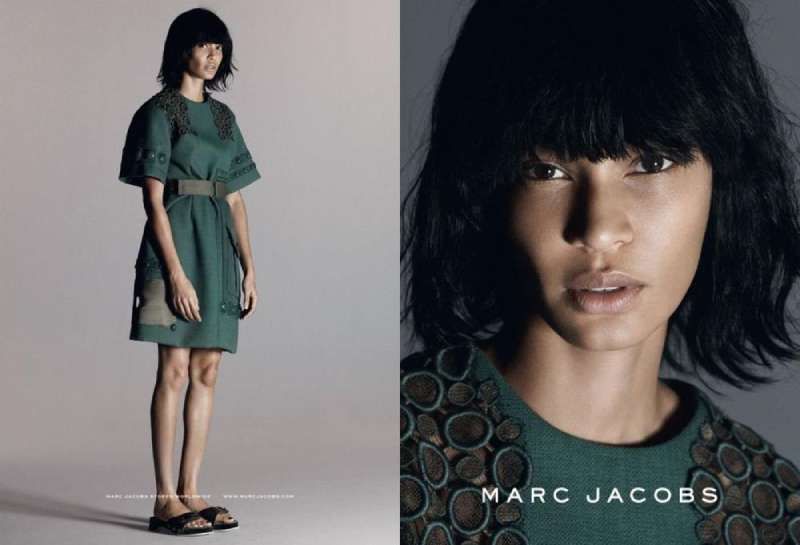
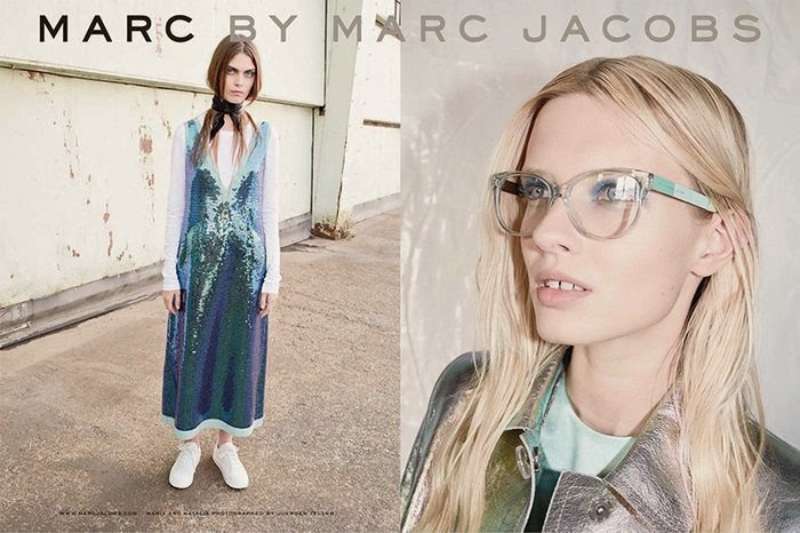
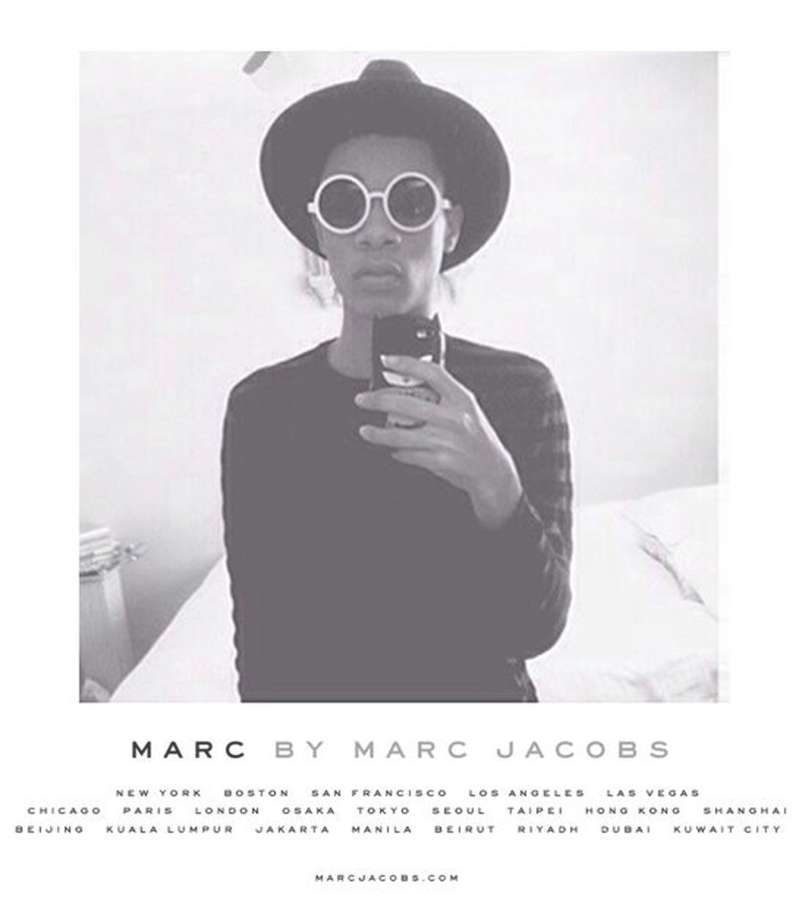
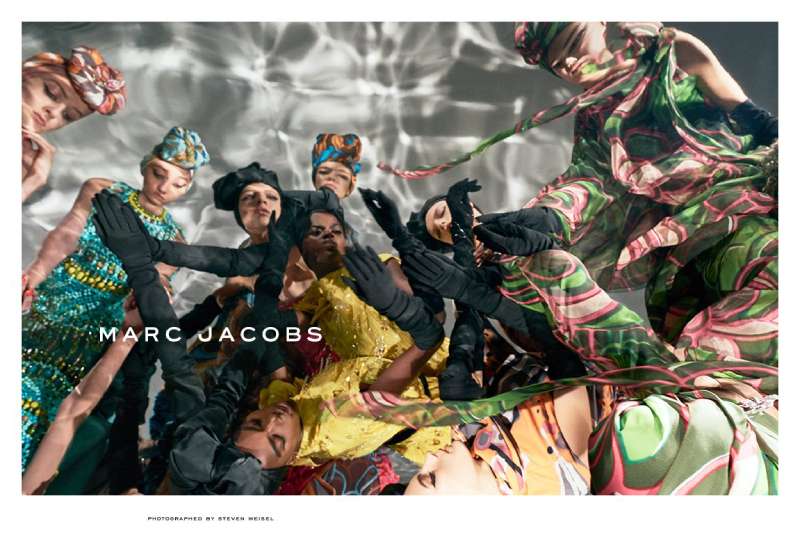
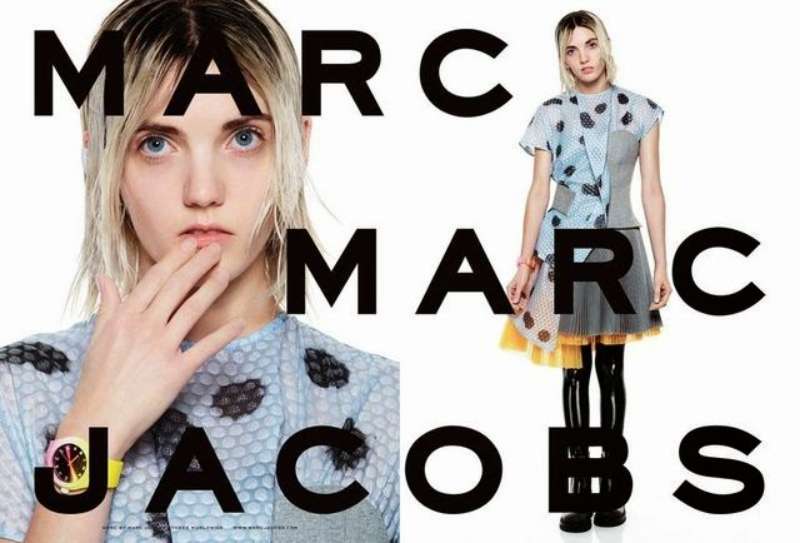
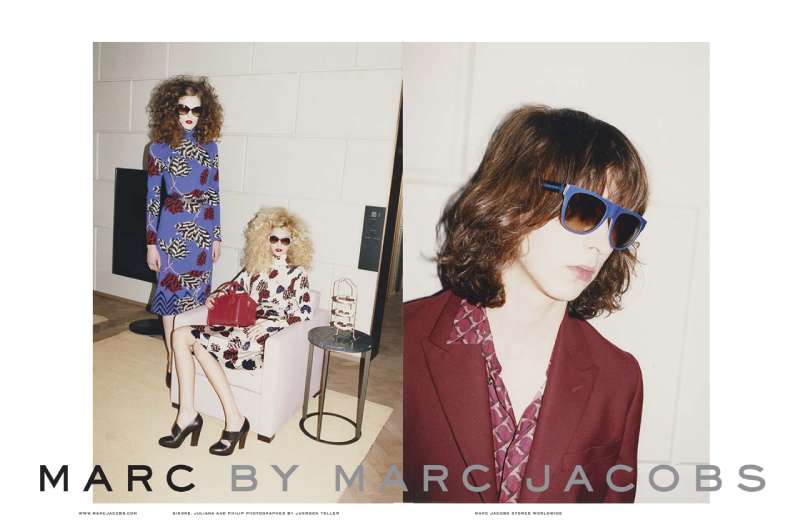
Marc Jacobs print ads use a three-element system: one subject on a plain or shallow-depth ground, the wordmark set small in wide-tracked capitals, and no body copy. The image carries the entire message. Product names appear as labels, not headlines.
The tracking on that wordmark does most of the branding work. Engravers Gothic, letterspaced well past its default, has become the default signature of high-end fashion (Fantastic Man, Mr Porter, half of menswear). Marc Jacobs got there before the trend.
Teller’s images are lit with direct on-camera flash, which flattens skin, blows out backgrounds and kills the gradient falloff you get from studio softboxes. That flatness is what lets a small line of type sit anywhere on the frame without losing visual hierarchy.
Palette: black, white, and whatever the clothes bring. The house colour palette stayed near-monochrome for two decades before Triboro added a neon yellow in 2022.
Placement: the wordmark usually sits bottom-centre or bottom-right, small enough that the eye lands on the face first. Compare that to the logo-first print design approach most luxury houses used through the 2000s.
Copy device: there isn’t one. No tagline, no headline, no strapline. The sans-serif name is the whole verbal identity.
How Do Marc Jacobs TV Commercials Differ From Its Print Ads?
The films add narrative and music, which the print work refuses. Sofia Coppola has directed most of the Daisy spots since 2007. Where a Teller still gives you one frozen moment, a Coppola film gives you a sequence with a beginning, a mood shift, and a product reveal at the end.
Daisy, directed by Sofia Coppola, 2015. Malaika Firth, Ondria Hardin, Antonia Wesseloh and Sophia Ahrens run through a field. Coppola shoots on long lenses with heavy backlight, so the film reads warmer than the print campaign it sits beside.
Daisy Dream, 2014. Teller shot the stills, Coppola directed the spot. The two ran simultaneously, which makes it the cleanest available comparison of what each medium does with an identical brief.
Nara Smith bakes The Tote Bag, TikTok, August 2024. Smith mixes flour, eggs and food colouring into a red tote in her signature deadpan ASMR format. The video hit 17 million views and generated $966,000 in media impact value.
Adriana Lima on the Essentials set, TikTok, 2024. A behind-the-scenes clip of Lima describing her favourite sandwich filling reached 29 million views. No product hero shot anywhere in it.
The gap between the two formats is storytelling. Print states. Film explains.
How Has Marc Jacobs Advertising Evolved Since 1998?
Marc Jacobs advertising moves through 4 phases: the Teller portrait era, the Coty fragrance expansion, the celebrity accessories era, and the current creator-led social era. Each phase changed the medium first and the visual language second.
| Period | Strategic shift | Representative campaign |
|---|---|---|
| 1998-2006 | Cultural casting over model casting | Teller ready-to-wear portraits |
| 2007-2014 | Fragrance becomes the volume driver | Daisy, Bang, Oh Lola! |
| 2015-2022 | Celebrity leads, photographer rotates | Miley Cyrus (David Sims), Kim Kardashian (Tyrone Lebon) |
| 2023-2025 | Platform-native content replaces the hero image | TikTok creator programme, JOY |
The 2014 Miley Cyrus campaign marks the break. Teller declined to shoot it, David Sims took over, and the brand stopped having a single photographic author for the first time in sixteen years.
By 2024 the TikTok account had gone from zero to 362,000 followers across 165 videos, averaging 1.5 million views and a 9.7% engagement rate, double the industry benchmark.
Fall 2025 pulled back toward craft. Nick Newbold directed JOY with Mona Tougaard, Xiao Wen Ju and Diana Silvers, staging accessories against work by contemporary artists in New York interiors.
Which Agencies and Studios Created Marc Jacobs Advertising?
Marc Jacobs has never used a traditional advertising agency of record. The work is made by a small group of named individuals: a photographer, an art director, a stylist, and the designer himself.
Peter Miles Studio designed the logo, packaging and campaign layouts, and art directed the Bang campaign in 2010. Miles built his reputation on pared-back compositions and wide-spaced fonts, and he has worked with Teller across multiple brands.
Triboro developed the 2022 brand identity directly with Jacobs. The studio kept the logotype essentially unchanged from its early-80s debut and added a typographic pattern, a bright yellow and a white framing device.
Ava Nirui joined Marc Jacobs in 2019 as Director of Special Projects and created Heaven in 2020. She casts, styles and directs the Heaven campaigns, and her brand identity design for that line shares almost nothing with the parent house.
Katie Grand creative directed the Perfect campaign in 2020 with Teller behind the camera.
Coty has held the fragrance licence since 2001 and acquired the makeup licence from LVMH in 2023.
What Can Designers Learn From Marc Jacobs Ads?
Six things transfer directly to commercial work, whether you are laying out a spread or building a brand system.
- Track your wordmark wide and set it small. Presence comes from letterspacing, not point size
- Cast for interest, not symmetry. A face people recognise from music or film holds a page longer than a conventionally beautiful unknown
- Cut the headline. If the image needs a line of copy to work, fix the image
- Use hard flash to flatten the frame. Flat light gives you room to place type anywhere without breaking the focal point
- Keep the ground empty. Generous white space is what makes a $195 tote read as luxury next to a $2,000 one
- Split the system when the audience splits. Heaven proves a second visual language beats stretching the first one thin
The last one gets ignored most often. Most brands try to make one brand typography system serve every audience, then wonder why the youth line looks embarrassed.
How Do Marc Jacobs Ads Compare to Calvin Klein and Gucci Ads?
Marc Jacobs and Calvin Klein both build on the American snapshot tradition, but they diverge on subject. Calvin Klein ads centre the body, cropped tight, usually monochrome, with the logo set in a compact grotesque near the frame edge. Marc Jacobs centres the face and the personality attached to it.
Gucci ads under Alessandro Michele went the opposite direction entirely: dense set dressing, maximal props, saturated colour and heavy art historical reference. Where Gucci filled the frame, Marc Jacobs emptied it.
Prada advertising campaigns sit closer, sharing the cool studio ground and the intellectual casting, though Prada leans on constructed sets and Marc Jacobs on found rooms and daylight.
The useful contrast for designers is copy-to-image ratio. Calvin Klein and Gucci both run taglines. Marc Jacobs, across 28 years, mostly has not.
What Makes Marc Jacobs Advertising Work?
Three decisions carry the whole body of work.
The brand hands one photographer sustained control rather than rotating creatives every season, which is why a 2003 image and a 2011 image share a grammar. It casts people who already have a public identity, so the picture arrives with meaning attached before anyone reads the product name.
And it keeps the page close to empty, which forces attention onto the person instead of the layout.
None of that costs much. A white wall, a hard flash, a name set small in the corner.
The transferable lesson for anyone working in minimalist design is that restraint only reads as luxury when the subject survives it. Weak casting on an empty page is just an empty page.
Marc Jacobs Ads Examples



FAQ on Marc Jacobs Ads
Who photographs Marc Jacobs ads?
Juergen Teller shot nearly every campaign from 1998 to 2014. Since then the credit rotates: David Sims, Harley Weir, Tyrone Lebon, Alasdair McLellan and Nick Newbold have all worked on recent seasons.
Why was the Oh Lola! ad banned in the UK?
The Advertising Standards Authority upheld four complaints in November 2011 and ruled the print ad irresponsible. Dakota Fanning was 17 at the time. Coty UK argued the image was provoking rather than indecent.
Who directs the Marc Jacobs Daisy commercials?
Sofia Coppola has directed most Daisy films since the line launched in 2007. She also appeared in the first Daisy print campaign, which Teller shot the same year.
Did Marc Jacobs appear in his own advertising?
Yes, once. Teller photographed him nude on a silver Mylar sheet for the Bang men’s fragrance in 2010, with Peter Miles art directing. Robert Duffy suggested it. Cropped versions ran in more conservative markets.
Who fronted the Daisy Wild campaign?
Nick Newbold photographed Daisy Wild in 2024 with Ever Anderson, Grace Burns, Alva Claire, Marlee Guillory, Erin Kim and Lennon Sorrenti. Katie Grand styled it. The fragrance retails at $125.
Why did The Tote Bag go viral?
Naming did a lot of the work, and TikTok did the rest. Nara Smith’s video of her baking a red tote hit 17 million views and $966,000 in media impact value.
How do Heaven campaigns differ from the main brand?
Heaven runs its own visual language under Ava Nirui: zine typography, subculture references, 90s casting. Shoichi Aoki of FRUiTS shot the first lookbook in 2020. The parent wordmark barely appears.
Does Marc Jacobs cast models or celebrities?
Both, plus a third category. The Teller years favoured artists, musicians and directors over professional models. Recent seasons mix supermodels with TikTok creators like Alex Consani and Rickey Thompson.
Who styles Marc Jacobs campaigns?
Katie Grand creative directed Perfect and styled Daisy Wild. Alastair McKimm styled the Kim Kardashian Fall 2023 work and the Lil Uzi Vert anniversary tote. Stella Greenspan styled Fall 2025.
Where do Marc Jacobs print ads appear?
Fashion and lifestyle monthlies remain the core placement, alongside out-of-home in New York. The Oh Lola! ad ran in Sunday Times Style and ES Magazine, both aimed at readers over 25.
Conclusion
Look across three decades of Marc Jacobs ads and the consistency is almost stubborn. Same flat light, same wide-tracked capitals, same refusal to write a headline.
The casting carries the meaning. Cindy Sherman, Winona Ryder, Kim Gordon, Lil Uzi Vert: people with a reputation of their own walking into a frame that gives them nothing to hide behind.
Coty built the fragrance side on that same logic, and Daisy has held its position for close to twenty years because the imagery never chased the trend cycle.
For art directors, the useful takeaway is restraint with a strong subject. Empty the composition, then make sure the person in it can hold the page.
Steal the discipline. Not the wordmark.

Renowned for his expertise in logo design and visual branding, Bogdan has developed a multitude of logos for various clients.
His skills extend to creating posters, vector illustrations, business cards, and brochures. Additionally, Bogdan's UI kits were featured on marketplaces like Visual Hierarchy and UI8.
He also wrote in the past years on sites like Design Your Way, WebDesignerDepot, WPDean, Designmodo, Speckyboy, Slider Revolution, and more.
- The Windsurf Logo History, Colors, Font, And Meaning - 10 October 2026
- How to Remove Background From Product Photos (No Photoshop) - 10 October 2026
- How Designers can Build a Stronger Online Creative Identity - 9 October 2026

Bogdan Sandu is a seasoned designer who has been designing websites since 2008. Renowned for his expertise in logo design and visual branding, Bogdan has developed a multitude of logos for various clients. His skills extend to creating posters, vector illustrations, business cards, and brochures. Additionally, Bogdan's UI kits were featured on marketplaces like Visual Hierarchy and UI8. He also wrote in the past years on sites like Design Your Way, WebDesignerDepot, WPDean, Designmodo, Speckyboy, Slider Revolution, and more.
You Might Also Like