The In-N-Out Burger logo stands as one of the most recognizable symbols in American fast food. It represents more than a restaurant chain. It captures a specific slice of California culture that started in 1948.
Within the broader landscape of fast food logos, this design holds a unique position. While competitors constantly refresh their visual identities, In-N-Out has maintained remarkable consistency.
The current logo features a distinctive yellow arrow pointing rightward with red text. Harry Snyder, the founder, introduced the first version when he opened the original Baldwin Park location. The brand has seen only minor refinements across three logo iterations in over seven decades.
What is the In-N-Out Burger Logo?
The In-N-Out Burger logo is a combination mark featuring a bold yellow arrow with the brand name in red lettering. Introduced in 1948 by founder Harry Snyder, the design symbolizes the drive-thru concept and forward movement. The arrow represents the restaurant’s original speedy service model.
Design Specifications
- Design Type: Combination mark (symbol plus wordmark)
- Primary Elements: Yellow directional arrow, red “In-N-Out” text, “Burger” wordmark beneath
- Official Introduction Date: 1948
- Designer: Harry Snyder (founder)
- Trademark Status: Registered trademark of In-N-Out Burgers, actively protected
- Color Palette: Primary Yellow (#FFD700), Primary Red (#C8102E), White (#FFFFFF)
- Usage Context: Restaurant signage, packaging, uniforms, merchandise, digital platforms
How Has the In-N-Out Burger Logo Evolved Over Time?
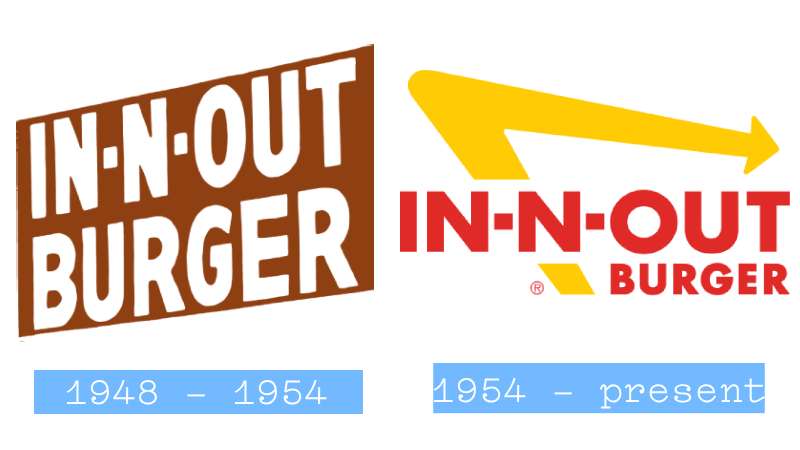
The In-N-Out Burger logo has remained surprisingly stable since 1948. Most changes involved subtle refinements rather than complete overhauls.
The arrow shape and color scheme have stayed consistent throughout. This makes it one of the least-changed logos in the fast food industry.
Original In-N-Out Burger Logo (1948-1954)
- Years Active: 1948-1954
- Design Description: Simple yellow arrow with hand-painted lettering, designed for the first drive-thru location
- Color Scheme: Yellow arrow, red text on white background
- Designer: Harry Snyder
- Context: Created for California’s first drive-thru hamburger stand in Baldwin Park
- Cultural Significance: Represented the new American car culture and quick-service dining concept
Refined In-N-Out Burger Logo (1954-1990s)
- Years Active: 1954-1990s
- Design Description: Cleaner arrow shape with standardized typography across growing locations
- Color Scheme: Brighter yellow, consistent red lettering
- Key Changes from Previous: More uniform letterforms, refined arrow proportions
- Context: Expansion throughout Southern California required consistent branding
Modern In-N-Out Burger Logo (1990s-Present)
- Years Active: 1990s to present
- Design Description: Polished version with precise geometry and digital-ready formats
- Color Scheme: Standardized yellow and red with exact color specifications
- Key Changes from Previous: Minor typography adjustments, optimized for various media
- Context: Digital age required scalable vector graphics versions
What Do the Design Elements of the In-N-Out Burger Logo Mean?
The arrow symbolizes movement and direction. It literally pointed customers toward the drive-thru lane in the original restaurant.
Beyond function, it suggests speed and efficiency. The forward-pointing shape implies progress and momentum.
Why Did In-N-Out Burger Choose These Specific Colors?

The yellow grabs attention from the roadside. It triggers feelings of warmth, happiness, and hunger. You’ll notice many yellow logos in food service for exactly this reason.
Red stimulates appetite and creates urgency. Combined with yellow, it forms a classic fast food color combination rooted in color psychology.
- Yellow: Hex #FFD700, Pantone 116 C. Represents optimism, visibility, and California sunshine
- Red: Hex #C8102E, Pantone 186 C. Conveys energy, appetite stimulation, and boldness
- White: Hex #FFFFFF. Provides contrast and cleanliness
What Typography Style Is Used in the In-N-Out Burger Logo?
The typography uses a custom sans-serif font with slightly rounded edges. It feels friendly without being childish.
The letters have good weight for roadside visibility. They read clearly at highway speeds, which was the whole point back in 1948.
The stacked arrangement places “In-N-Out” prominently with “Burger” below in smaller type. This creates clear typographic hierarchy.
What Are the Hidden Meanings in the In-N-Out Burger Logo?
The arrow does double duty. It functions as both a directional sign and a speed indicator.
Some see the hyphenated name inside the arrow as representing the quick “in and out” customer experience. You drive in, get your food, drive out. Simple.
The continuous arrow shape also suggests an unbroken chain of quality. That interpretation might be reading too much into it, but customers find meaning where they want to.
How Does the In-N-Out Burger Logo Compare to Competitor Logos?
Most burger chains have redesigned their logos multiple times. McDonald’s logo went through major changes before settling on the golden arches.
Wendy’s logo has been updated several times. Five Guys logo takes a completely different approach with its patriotic styling.
In-N-Out stands apart through sheer consistency. While competitors chase modern trends, this California chain trusts what has always worked.
The Shake Shack logo represents newer burger branding with its clean, contemporary aesthetic. But In-N-Out’s retro vibe has become its own kind of modern appeal through authenticity.
What Are the Technical Specifications of the In-N-Out Burger Logo?
Official Color Codes
- Primary Yellow: Hex #FFD700, RGB (255, 215, 0), CMYK (0, 16, 100, 0), Pantone 116 C
- Primary Red: Hex #C8102E, RGB (200, 16, 46), CMYK (0, 100, 79, 20), Pantone 186 C
- White: Hex #FFFFFF, RGB (255, 255, 255), CMYK (0, 0, 0, 0)
Dimensions and Proportions
- Aspect Ratio: Approximately 3:1 (horizontal orientation)
- Minimum Size: 1 inch width for print applications
- Clear Space: Minimum clearance equal to the height of the letter “I” on all sides
- File Formats: Available in vector (AI, EPS, SVG) and raster (JPEG, PNG) formats for authorized use
What Cultural Impact Has the In-N-Out Burger Logo Had?

The logo has become a California cultural icon. Tourists photograph the signs as landmarks.
It appears on countless t-shirts, hats, and unofficial merchandise. The brand carefully protects its trademark while benefiting from organic fan enthusiasm.
When In-N-Out opens in new states, the logo generates genuine excitement. People recognize it immediately even if they have never eaten there. That kind of recognition takes decades to build.
How Does the In-N-Out Burger Logo Fit Into the Overall Brand Identity?
The logo anchors a cohesive visual system. Everything connects back to those red and yellow colors.
Restaurant interiors feature the same palette. Employee uniforms carry the branding. Even the palm trees on cups relate to the California identity the arrow represents.
The company’s brand guidelines ensure consistency across every touchpoint. From napkins to building architecture, everything feels unmistakably In-N-Out.
How Should the In-N-Out Burger Logo Be Used?
Official Usage Guidelines
- Do: Use official logo files from authorized sources only
- Do: Maintain proper clear space around the logo
- Do: Use approved color variations for different backgrounds
- Don’t: Alter colors, proportions, or element positions
- Don’t: Add effects like shadows, gradients, or outlines
- Don’t: Use the logo for unauthorized commercial purposes
Licensing and Trademark Information
In-N-Out Burger aggressively protects its trademark. Unauthorized use can result in legal action.
The company does not license its logo to third parties. Official merchandise comes exclusively through In-N-Out corporate channels.
Media outlets may use the logo for editorial purposes under fair use provisions. Commercial use requires explicit written permission from the company.
FAQ on The In-N-Out Burger Logo
What Does the In-N-Out Burger Logo Look Like?
The logo features a bold yellow arrow pointing right with red “In-N-Out” text inside.
“Burger” appears below in smaller lettering. The design creates a clear visual hierarchy that draws your eye immediately to the brand name.
When Was the In-N-Out Burger Logo Created?
Harry Snyder created the original logo in 1948 for the first Baldwin Park, California location.
That makes it over 75 years old. The core arrow design has survived with only minor refinements since opening day.
Who Designed the In-N-Out Burger Logo?
Founder Harry Snyder designed the original himself. No fancy agency involved.
He needed signage for California’s first drive-thru hamburger stand. The arrow literally directed cars through the lot. Function came first, and the iconic look followed naturally.
What Do the Colors in the In-N-Out Burger Logo Mean?
Yellow signals warmth and visibility from the roadside. Red triggers appetite and energy.
This combination follows proven color theory used throughout the restaurant industry. The high saturation ensures the sign pops against any background.
Has the In-N-Out Burger Logo Changed Over the Years?
Barely. The chain has made only subtle refinements across seven decades.
Compare that to competitors who completely overhaul their branding every few years. In-N-Out trusts its original design elements. If something works, why mess with it?
What Font Is Used in the In-N-Out Burger Logo?
The brand uses a custom typeface with rounded edges and solid weight.
It reads clearly at highway speeds. The kerning keeps letters tight but legible. Nothing fancy, just functional California roadside design from the 1940s.
Why Does In-N-Out Use an Arrow in Their Logo?
The arrow served a practical purpose originally. It pointed customers toward the drive-thru lane.
Now it symbolizes speed and forward movement. The psychology of shapes tells us arrows suggest progress and direction. Pretty clever for 1948.
Can I Download the Official In-N-Out Burger Logo?
Not legally for commercial use. The company protects its trademark aggressively.
You might find files online, but using them without permission creates legal risk. Media outlets can use it editorially. Everyone else needs written authorization from corporate.
Is the In-N-Out Burger Logo Trademarked?
Yes. In-N-Out Burgers holds registered trademarks on the logo and brand name.
They actively pursue unauthorized use. The company does not license their branding to third parties. All official merchandise comes directly through corporate channels only.
What Makes the In-N-Out Burger Logo So Iconic?
Consistency built the recognition. While other burger chains chase trends, In-N-Out stayed the course.
The design achieves strong contrast and balance through simple shapes. Regional loyalty turned a local sign into a West Coast cultural symbol over decades.
Conclusion
The In-N-Out Burger logo proves that good design does not require constant reinvention. Harry Snyder’s 1948 creation still works because it followed solid logo design principles from day one.
That yellow arrow became a California icon through repetition and consistency. The brand never chased trends.
While competitors update their restaurant branding every few years, this West Coast burger chain trusts its original visual identity. The result? Instant recognition across generations.
Sometimes the best brand style guide is simply knowing when to leave things alone.

Renowned for his expertise in logo design and visual branding, Bogdan has developed a multitude of logos for various clients.
His skills extend to creating posters, vector illustrations, business cards, and brochures. Additionally, Bogdan's UI kits were featured on marketplaces like Visual Hierarchy and UI8.
He also wrote in the past years on sites like Design Your Way, WebDesignerDepot, WPDean, Designmodo, Speckyboy, Slider Revolution, and more.
- Canva vs PowerPoint: Which Is Better for Presentations? - 22 September 2026
- How to Install Fonts on Mac (Step-by-Step Guide) - 20 September 2026
- From Mockup to Code: How AI-Augmented Development Speeds Up the Design Handoff - 19 September 2026

Bogdan Sandu is a seasoned designer who has been designing websites since 2008. Renowned for his expertise in logo design and visual branding, Bogdan has developed a multitude of logos for various clients. His skills extend to creating posters, vector illustrations, business cards, and brochures. Additionally, Bogdan's UI kits were featured on marketplaces like Visual Hierarchy and UI8. He also wrote in the past years on sites like Design Your Way, WebDesignerDepot, WPDean, Designmodo, Speckyboy, Slider Revolution, and more.
You Might Also Like