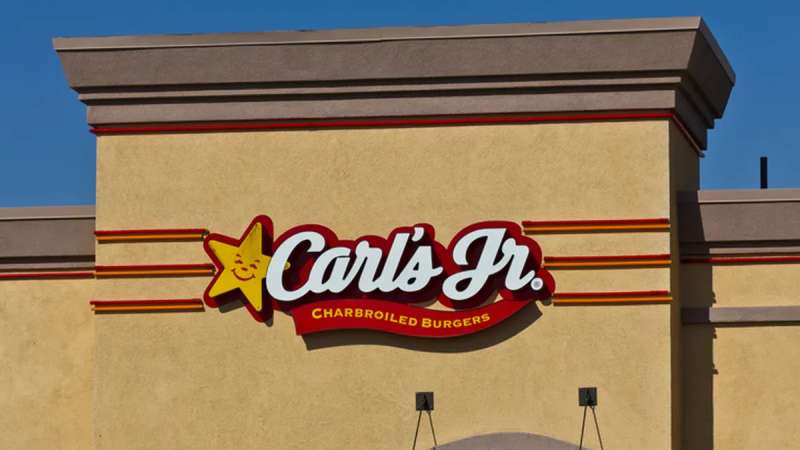
The Carl’s Jr. logo stands as one of the most recognizable marks in American fast food. That smiling yellow star has been greeting hungry customers since the 1950s, though it’s gone through quite a few changes along the way.
Carl Karcher founded the company in 1941 as a hot dog cart in Los Angeles. The brand has cycled through roughly seven different logo versions since then. The current design dates back to 2017, featuring a simplified star icon paired with bold red typography.
Within the broader history of fast food logos, Carl’s Jr. carved out a unique space. While competitors leaned into golden arches or crowned imagery, this brand bet everything on a friendly star character.
What Is the Carl’s Jr. Logo?
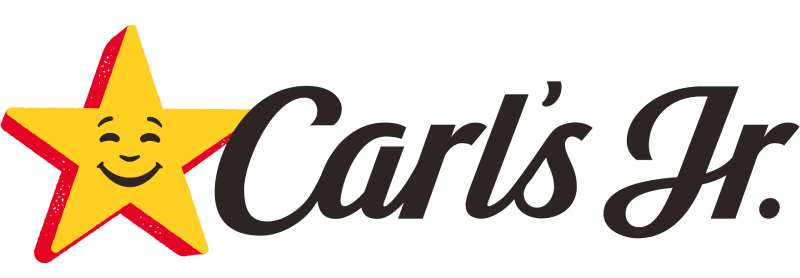
The Carl’s Jr. logo is a combination mark featuring a yellow star mascot called “Happy Star” alongside bold sans-serif wordmark typography. Introduced in its current form in 2017, the design was created by the Troika agency. It symbolizes quality, friendliness, and the brand’s California roots.
Design Type: Combination mark (mascot plus wordmark)
Primary Elements:
- Yellow five-pointed star with a smiling face (Happy Star mascot)
- Bold red “Carl’s Jr.” wordmark
- Clean sans-serif typography
Official Introduction Date: 2017 (current version)
Designer/Agency: Troika Design Group
Trademark Status: Registered trademark owned by CKE Restaurants Holdings, Inc.
Color Palette:
- Star Yellow: #FFD700
- Brand Red: #ED1C24
- Black accents for facial features
Usage Context: Restaurant signage, food packaging, digital platforms, advertising campaigns, merchandise, drive-thru menus, mobile apps
How Has the Carl’s Jr. Logo Evolved Over Time?
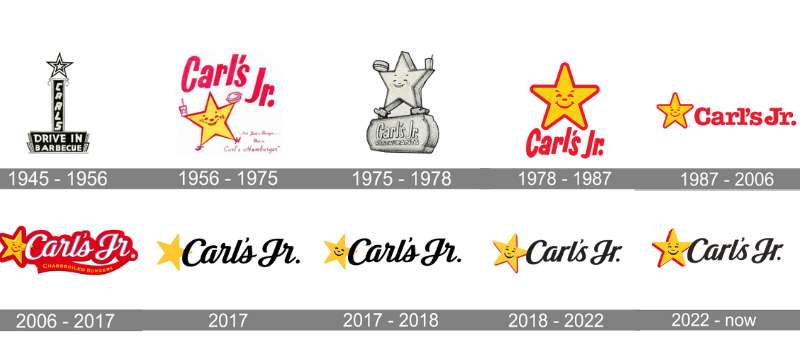
The Carl’s Jr. logo has transformed significantly across eight decades. Starting as a simple text-based sign in the 1940s, it adopted the Happy Star mascot in 1956.
Major redesigns occurred in 1985, 2006, and 2017. Each update refined the star character while modernizing the typography.
Original Carl’s Jr. Logo (1941-1956)
Years Active: 1941-1956
Design Description: Simple hand-painted signage with “Carl’s Drive-In Barbecue” text. No mascot or distinctive symbol yet. Very much a product of its time, honestly.
Color Scheme: Red and white, typical of roadside eateries from that period
Designer: Unknown (likely local sign painter)
Context: Carl Karcher expanded from hot dog carts to full drive-in restaurants. The branding was functional, nothing fancy.
Cultural Significance: Represented post-war California car culture and the birth of fast food
Happy Star Introduction (1956-1985)
Years Active: 1956-1985
Design Description: First appearance of the smiling star character. The star had a more cartoon-like, hand-drawn quality. Kind of charming in a retro way.
Color Scheme: Yellow star, red background elements, white text
Key Changes from Previous: Introduction of mascot-based branding, shift from pure text to combination mark
Context: The late 1950s saw fierce competition among burger chains. A friendly mascot helped differentiate the brand from competitors.
Cultural Significance: Aligned with the era’s love of mascot characters in advertising
Modernized Star Era (1985-2006)
Years Active: 1985-2006
Design Description: Happy Star got a facelift. Cleaner lines, more geometric proportions. The star’s smile became more standardized.
Color Scheme: Brighter yellow (#FFD700), bolder red typography
Designer: In-house CKE design team
Key Changes from Previous: More polished illustration style, updated typeface, better reproduction quality for various media
Context: The fast food industry was booming. Carl’s Jr. needed a logo that worked on TV commercials and printed materials alike.
Dual-Brand Era (2006-2017)
Years Active: 2006-2017
Design Description: CKE acquired Hardee’s, leading to visual alignment between both brands. The star design remained but was refined for consistency.
Color Scheme: Same core palette with slight adjustments for brand cohesion
Key Changes from Previous: Subtle refinements to star proportions, typography adjustments
Context: Corporate merger required visual harmony across both restaurant chains
Current Carl’s Jr. Logo (2017-Present)
Years Active: 2017-present
Design Description: Streamlined Happy Star with simplified facial features. Bolder, more modern sans-serif wordmark. The whole thing feels cleaner.
Color Scheme: Classic yellow and red maintained
Designer: Troika Design Group
Key Changes from Previous: Flatter design approach, simplified details for digital applications, stronger typography
Context: Digital-first design thinking required logos that worked at any size, from app icons to highway billboards
What Do the Design Elements of the Carl’s Jr. Logo Mean?
The Happy Star represents more than just a cute mascot. Its five points, smiling face, and warm yellow color all communicate specific brand values.
The star shape suggests quality and excellence. The smile creates an emotional connection with customers.
Why Did Carl’s Jr. Choose These Specific Colors?
The yellow and red combination is no accident. These colors trigger specific psychological responses that work well for food brands.
Yellow creates feelings of happiness and optimism. It’s attention-grabbing without being aggressive. The warmth of the hue makes people feel welcome.
Red stimulates appetite. There’s solid research behind this. Red also conveys energy and urgency, which is perfect for quick service restaurants. Understanding color psychology explains why so many burger chains gravitate toward these same tones.
Yellow (Star):
- Hex: #FFD700
- Pantone: 116 C
- Meaning: Optimism, friendliness, warmth
- Brand connection: California sunshine, happy dining experiences
Red (Wordmark):
- Hex: #ED1C24
- Pantone: 485 C
- Meaning: Energy, appetite stimulation, passion
- Brand connection: Bold flavors, charbroiled cooking
What Typography Style Is Used in the Carl’s Jr. Logo?
The current wordmark uses a custom sans-serif font with bold weight. It’s confident without being aggressive.
The letterforms are clean and highly legible. Works great on drive-thru menus where you’ve got maybe two seconds to read it.
Previous versions used different typefaces with varying degrees of personality. The current choice feels more timeless.
The apostrophe in “Carl’s” adds a personal touch. It reminds customers this brand started with one guy and his hot dog cart.
What Are the Hidden Meanings in the Carl’s Jr. Logo?
The star’s five points aren’t random. Some brand historians suggest they originally represented the five core menu items or five family values.
The smile on Happy Star faces slightly to the right. This subtle detail creates a sense of forward motion and progress.
The rounded star points feel approachable rather than sharp or corporate. It’s the kind of detail you don’t notice consciously, but it affects how you feel about the brand.
There’s no secret arrow or hidden message here. Just solid, intentional design choices that add up to something memorable.
How Does the Carl’s Jr. Logo Compare to Competitor Logos?
Within the burger chain category, Carl’s Jr. stands apart. Most competitors use abstract symbols, text-only marks, or human mascots.
The star shape is unique in this space. It’s instantly recognizable even without the brand name.
The McDonald’s logo relies on golden arches. Burger King uses a burger-shaped emblem. Wendy’s logo features a human character.
Carl’s Jr. went with something different. A star. Simple and bold.
The Hardee’s logo is basically a sibling, since both brands share ownership under CKE Restaurants. They use similar star imagery, though Hardee’s leans more into a different regional identity.
Compared to In-N-Out Burger logo with its arrow-based design, Carl’s Jr. feels warmer and more playful. In-N-Out goes for retro simplicity while Carl’s Jr. embraces character-driven branding.
What Are the Technical Specifications of the Carl’s Jr. Logo?
Official Color Codes:
Primary Yellow:
- Hex: #FFD700
- RGB: (255, 215, 0)
- CMYK: (0, 16, 100, 0)
- Pantone: 116 C
Primary Red:
- Hex: #ED1C24
- RGB: (237, 28, 36)
- CMYK: (0, 95, 100, 0)
- Pantone: 485 C
Black (Facial Features):
- Hex: #000000
- RGB: (0, 0, 0)
- CMYK: (0, 0, 0, 100)
Dimensions and Proportions:
- The star icon can be used independently at minimum 0.5 inches
- Full lockup requires minimum 1 inch width for legibility
- Clear space around logo equals the height of the letter “C” in the wordmark
- Aspect ratio of full lockup is approximately 3:1 (horizontal)
The logo exists as vector graphics for scalability. This means it can be blown up to billboard size or shrunk to favicon dimensions without losing quality.
What Cultural Impact Has the Carl’s Jr. Logo Had?
Happy Star became a cultural icon in the Western United States. For millions of Californians, that smiling yellow star triggers instant nostalgia.
The logo appeared in countless road trip memories. It marked pit stops on drives through Arizona, Nevada, and Texas.
Carl’s Jr. advertising pushed boundaries in the 2000s with provocative campaigns. The Happy Star logo remained consistent through controversy, providing brand continuity.
In recent years, the star has appeared in video games, pop culture references, and social media memes. It transcended its commercial origins.
How Does the Carl’s Jr. Logo Fit Into the Overall Brand Identity?
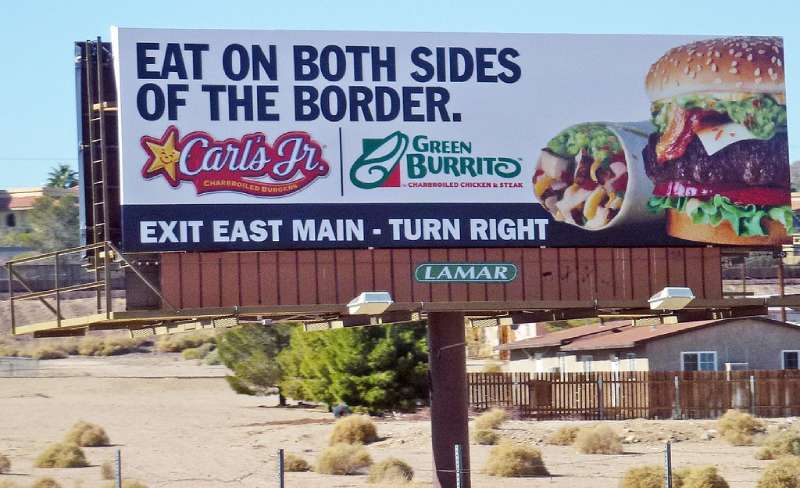
The logo anchors everything else. Menu design, store interiors, packaging, uniforms. All of it connects back to that yellow star.
CKE Restaurants maintains detailed brand guidelines covering every possible application. The goal is consistency across thousands of locations.
Marketing campaigns can get wild, but the logo stays stable. It’s the constant while everything else can experiment and shift.
The relationship between Happy Star and the wordmark follows clear logo design principles. The mascot creates emotional connection. The text provides clarity.
How Should the Carl’s Jr. Logo Be Used?
Official Usage Guidelines:
Do:
- Use official logo files from CKE brand portal
- Maintain required clear space
- Use approved color combinations only
- Scale proportionally
Don’t:
- Stretch or distort the logo
- Change the colors
- Add effects like shadows or gradients
- Place on busy backgrounds that reduce visibility
- Modify Happy Star’s expression
Access: Franchisees access official assets through CKE’s internal brand management system. Media inquiries for logo usage go through CKE corporate communications.
Licensing: The Carl’s Jr. trademark and Happy Star character are protected intellectual property. Unauthorized commercial use will trigger legal action.
Trademark Protection: Registered with the United States Patent and Trademark Office. International protections exist in markets where Carl’s Jr. operates.
FAQ on The Carl’s Jr. Logo
What Does the Carl’s Jr. Logo Look Like?
The logo features a yellow five-pointed star with a smiling face, known as Happy Star. Bold red text spells out “Carl’s Jr.” beside the mascot.
This combination mark balances friendly imagery with clear brand identification. The star acts as the focal point of the entire design.
When Was the Carl’s Jr. Logo First Created?
Carl Karcher launched his first hot dog cart in 1941 in Los Angeles. The original branding was basic signage.
The Happy Star mascot debuted in 1956. That’s when the logo truly became recognizable.
The current version dates to 2017.
Who Designed the Current Carl’s Jr. Logo?
Troika Design Group created the 2017 refresh. They streamlined Happy Star’s features and modernized the wordmark.
Earlier versions came from in-house teams at CKE Restaurants. The original star concept emerged during the California fast food boom of the 1950s.
What Is the Happy Star Mascot?
Happy Star is the smiling yellow star character central to Carl’s Jr. branding. It represents friendliness and quality.
The mascot has appeared in advertising since 1956. Understanding psychology of shapes explains why stars communicate excellence and aspiration.
What Colors Are Used in the Carl’s Jr. Logo?
The official color palette includes golden yellow and vibrant red. Black outlines define Happy Star’s facial features.
Yellow connects to optimism and California sunshine. Red stimulates appetite, a common strategy among yellow logos and red logos in food service.
Has the Carl’s Jr. Logo Changed Over Time?
Yes. The brand has used roughly seven different logo versions since 1941.
Major redesigns happened in 1956, 1985, 2006, and 2017. Each update refined the star while keeping core design elements intact.
The evolution reflects changing trends in quick service restaurant branding.
What Font Does Carl’s Jr. Use in Their Logo?
The current wordmark uses a custom bold font designed for maximum legibility. It’s confident and modern.
Previous versions featured different typography styles. The apostrophe in “Carl’s” adds a personal, founder-driven touch to the restaurant logo design.
Why Does Carl’s Jr. Use a Star in Their Logo?
Stars symbolize quality, excellence, and achievement. The shape stands out among competitor burger chain logos.
It also connects to California’s entertainment industry heritage. The star creates strong contrast against competitors using arches, crowns, or human mascots.
Is the Carl’s Jr. Logo the Same as Hardee’s?
Not identical, but related. Both brands operate under CKE Restaurants and share similar star-based imagery.
Carl’s Jr. dominates Western states. Hardee’s covers the East and Midwest.
The visual unity between both marks reflects their shared corporate ownership and charbroiled burger focus.
Can I Use the Carl’s Jr. Logo for My Project?
Probably not without permission. The trademark is registered with the United States Patent and Trademark Office.
CKE Restaurants protects their intellectual property aggressively. Contact their corporate communications team for licensing inquiries or media usage requests.
Conclusion
The Carl’s Jr. logo proves that simple ideas can build lasting brand recognition. A smiling star. Yellow and red. That’s it.
Eight decades of evolution refined the Happy Star without losing its soul. CKE Restaurants understood something important: consistency builds trust.
From Carl Karcher’s hot dog cart in Anaheim to thousands of locations across the Western United States, this visual identity anchored everything.
The logo works because it balances storytelling with simplicity. It feels human in a corporate world. And that yellow star? Still smiling after all these years.

Renowned for his expertise in logo design and visual branding, Bogdan has developed a multitude of logos for various clients.
His skills extend to creating posters, vector illustrations, business cards, and brochures. Additionally, Bogdan's UI kits were featured on marketplaces like Visual Hierarchy and UI8.
He also wrote in the past years on sites like Design Your Way, WebDesignerDepot, WPDean, Designmodo, Speckyboy, Slider Revolution, and more.
- Best Visual Regression Testing Tools for Web and App Design in 2026 - 13 October 2026
- Jujutsu Kaisen Font Generator - 12 October 2026
- The Windsurf Logo History, Colors, Font, And Meaning - 10 October 2026

Bogdan Sandu is a seasoned designer who has been designing websites since 2008. Renowned for his expertise in logo design and visual branding, Bogdan has developed a multitude of logos for various clients. His skills extend to creating posters, vector illustrations, business cards, and brochures. Additionally, Bogdan's UI kits were featured on marketplaces like Visual Hierarchy and UI8. He also wrote in the past years on sites like Design Your Way, WebDesignerDepot, WPDean, Designmodo, Speckyboy, Slider Revolution, and more.
You Might Also Like