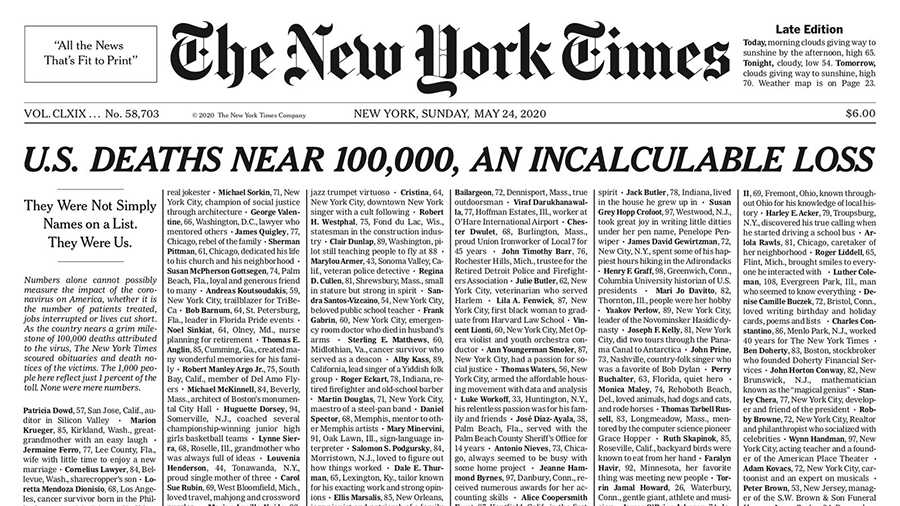
The New York Times does not use a single font. It runs a system of 4 proprietary typefaces, each assigned to a specific role: NYT Cheltenham for headlines, NYT Imperial for print body text, Georgia for digital body text, and NYT Franklin for captions, metadata, and navigation.
The masthead – the iconic blackletter logo at the top of every front page – is a hand-drawn proprietary design based on Textura Gothic, refined most recently by type designer Ed Benguiat in 1967.
All four primary typefaces are custom-commissioned. None are publicly available for licensing.
—
What Type of Font Does the New York Times Use?
The NYT runs a deliberate mix of serif fonts and a sans-serif font to create a clear visual hierarchy across its pages.
Here is how the typefaces break down by role:
| Typeface | Category | Role | Platform |
| NYT Cheltenham | Old style / transitional serif | Headlines | Print + Digital |
| NYT Imperial | Robust newspaper serif | Body text | |
| Georgia | Screen-optimized serif | Body text | Digital |
| NYT Franklin | Industrial grotesque sans-serif | Captions, navigation, labels | Print + Digital |
Cheltenham sits in an unusual typographic spot. It has elements of both old-style and transitional serif design, which is part of why it reads well under almost any body text. It has a moderate stroke contrast, substantial bracketed serifs, and a relatively large x-height – all of which keep it legible at smaller print sizes and in condensed headline widths.
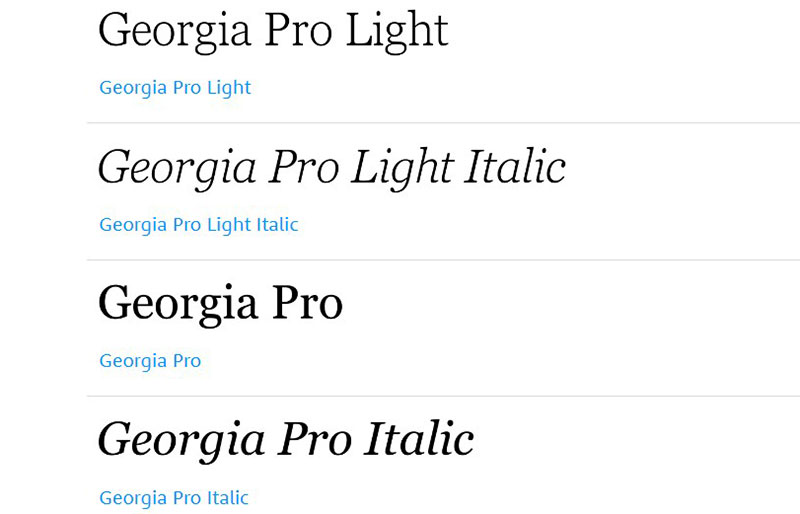
Georgia, used for web body text since 2007, was specifically built for screen rendering. It has wider letterforms and more generous character spacing than Times New Roman, which makes it noticeably easier to read on low-resolution displays and small mobile screens.
—
Who Designed the New York Times Fonts?
Matthew Carter is the most important name here. He did the most significant modern work on the NYT’s custom typefaces.
Carter, working through his foundry Carter & Cone, developed multiple weights of NYT Cheltenham in the early 2000s for the Times. He also designed NYT Franklin, a custom version of Franklin Gothic, around 2007. And of course, he designed Georgia in 1993 for Microsoft – the same font the NYT later adopted for its web platform.
The original Cheltenham typeface dates back to 1896. It was drawn by architect Bertram Grosvenor Goodhue and Ingalls Kimball, director of the Cheltenham Press in New York. Morris Fuller Benton of American Type Founders later expanded it into a broad type family in the early 1900s.
NYT Imperial traces its roots to Edwin W. Shaar, who designed the original Imperial for Intertype (later Ludlow Typograph) in the 1950s. The NYT adopted it in 1967 for print body text. A modern custom cut was later developed for the Times, also linked to Carter’s work.
The masthead lettering was refined by type designer Ed Benguiat in 1967. The original 1851 design was created by Henry Jarvis Raymond, founder of the paper, modeled on the lettering style of The Times of London.
—
Are the New York Times Fonts Free to Use?
Short answer: no. NYT Cheltenham, NYT Imperial, and NYT Franklin are all proprietary. They were commissioned by and for the New York Times and are not available for public download or commercial licensing.
Georgia is the exception. It ships pre-installed on virtually every operating system and is free to use as a web-safe font.
The commercial version of Cheltenham – ITC Cheltenham – is available through Monotype, Adobe Fonts, and Linotype. It differs from the NYT’s custom cut but shares the same visual DNA. Expect to pay for a full family license.
Font licensing summary:
- NYT Cheltenham: Proprietary – not publicly available
- NYT Imperial: Proprietary – not publicly available
- NYT Franklin: Proprietary – not publicly available
- Georgia: Free – pre-installed on most systems
- ITC Cheltenham: Commercial – available via Monotype and Adobe Fonts
Using the NYT’s proprietary fonts without authorization risks cease-and-desist letters and potential statutory damages. The safer path is licensing ITC Cheltenham or using free alternatives covered below.
For more context on how this works, see our guide on font licensing.
—
What Font Did the New York Times Use Before?
Before 2003, NYT headlines used a mix of multiple typefaces including a sans-serif, creating what typography historians describe as a “Victorian mix” of display faces. Cheltenham was already in use, but it shared space with several other typefaces.
In 2003, design director Tom Bodkin commissioned Matthew Carter to unify the headline typography under a single Cheltenham system. Carter developed multiple new weights and a condensed width to replace Bookman, a Latin Extra Condensed face, and a variant of Century Bold that had been in use.
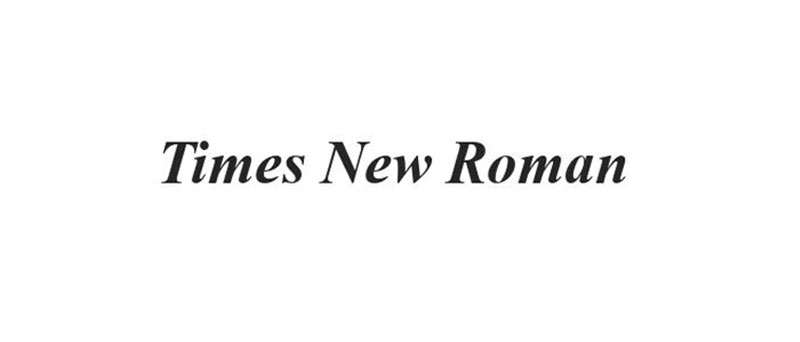
For body text, the NYT used Times New Roman as its primary article font before switching to Georgia in 2007. The switch to Georgia was driven by screen legibility. Times New Roman was designed for ink on paper – its thin strokes break down on low-resolution digital displays.
The masthead design has stayed essentially unchanged since 1851, with only minor refinements: the hyphen between “New” and “York” was removed, terminals were smoothed, and the period at the end of the title was dropped in 1967. That last change cost the paper roughly 1,000 subscribers.
—
What Are the Best Free Alternatives to NYT Cheltenham and Georgia?
You won’t find the actual NYT fonts on Google Fonts. But you can get very close with these free and commercially available options.
| Font | Replaces | Similarity | Source |
| Chomsky | NYT masthead | Built specifically to mimic the NYT nameplate | Free (OFL) |
| Playfair Display | NYT Cheltenham | High-contrast editorial serif, strong in headlines | Google Fonts |
| Georgia | NYT Imperial (digital) | Exact match – the NYT uses it on their website | System font (free) |
| Libre Franklin | NYT Franklin | Open-source Franklin Gothic spinoff | Google Fonts |
| PT Serif | NYT Imperial | Sturdy, high-legibility newspaper serif | Google Fonts |
Chomsky was designed specifically to approximate the NYT masthead and is released under the SIL Open Font License – free for personal and commercial use.
If you’re building a news-style layout, the Playfair Display + Georgia combination is probably the most practical. Both are free, both are on Google Fonts or pre-installed, and together they come close to the NYT’s print-to-digital feel.
Libre Franklin is worth knowing about specifically because ITC Franklin Gothic has been widely criticized for modifying the family’s structure – Libre Franklin stays much closer to the original 1903 Benton design.
Looking for more options? Our roundup of the best fonts for magazines covers several editorial-grade typefaces that pair well with these choices. You might also find useful pairings in our Georgia font pairing guide.
—
How to Use NYT-Style Fonts in Your Own Projects
In Figma or Canva
For headlines: Use Playfair Display Bold at tight letter-spacing (around -0.02em). Pair it with Georgia for body text.
For captions and labels: Use Libre Franklin in a lighter weight, set in uppercase with slightly loose tracking.
Canva has Georgia and Libre Franklin available in its font library. You can also upload custom fonts to Canva if you’ve purchased a license for ITC Cheltenham.
In CSS (Web Development)
This is what a basic NYT-inspired CSS font stack looks like:
“ / Headlines / h1, h2, h3 { font-family: 'Playfair Display', 'Georgia', serif; font-weight: 700; letter-spacing: -0.02em; line-height: 1.1; }
/ Body text / p { font-family: ‘Georgia’, ‘Times New Roman’, serif; font-size: 1.125rem; line-height: 1.6; color: #333333; }
/ Captions and bylines / .caption, .byline { font-family: ‘Libre Franklin’, ‘Helvetica’, sans-serif; text-transform: uppercase; font-size: 0.75rem; letter-spacing: 0.05em; } `
One thing most people miss: the NYT sets body text in a soft grey (around #333), not pure black. That alone makes a measurable difference in reading comfort over long articles.
In Photoshop or Illustrator
If you want to use ITC Cheltenham in Photoshop, you’ll first need to purchase a license and install it. The process is the same for any desktop font – download, install at the OS level, then restart the application.
Our guides on how to add fonts to Photoshop and how to add fonts to Adobe Illustrator walk through the full process.
—
Why Did the New York Times Choose These Fonts?
The NYT’s typography choices are not about aesthetics alone. Each decision has a functional reason.
Cheltenham for headlines: The typeface has elements of both old-style and transitional design, which means it sits comfortably next to almost any body text. Its bracketed serifs and moderate stroke contrast survive the ink spread that happens on newsprint. It also condenses well – critical for fitting long headlines into narrow column widths without losing legibility.
Imperial for print body text: Designed specifically for high-speed letterpress printing, Imperial has a large x-height and open letter counters. Both features prevent text from closing up when ink bleeds into cheap newsprint at speed.
Georgia for digital body text: The NYT’s shift to Georgia in 2007 was a direct response to screen rendering. Georgia was built by Matthew Carter in 1993 specifically for low-resolution displays – its wider proportions and stronger stroke weights remain crisp at small sizes where Times New Roman falls apart.
Franklin Gothic for metadata: The NYT uses NYT Franklin for everything that isn’t editorial copy: bylines, timestamps, captions, section labels, navigation. The grotesque sans-serif style signals “functional information” rather than narrative. It’s a typographic cue that tells readers: this is a label, not a story.
The NYT’s design team standardized the Cheltenham system across the entire paper in 2003, replacing a mix of several headline fonts. That shift brought visual consistency that had previously been missing from the print edition – what Tom Bodkin described at the time as replacing a “Victorian mix of headline faces.”
This is what thoughtful typographic hierarchy looks like in practice: not one font doing everything, but a system where each typeface has a specific job and stays in its lane. The result is a publication where readers navigate from headline to subhead to body copy to caption without ever consciously thinking about the type.
The NYT’s approach also reflects a broader principle in editorial typography: legibility over novelty. Cheltenham is not a trendy typeface – it was designed in 1896. But it is exceptionally good at its job. The same is true of Georgia and Franklin Gothic. None of these are fashionable choices by 2025 standards, but that’s precisely the point. They are iconic fonts built for sustained readability, not seasonal appeal.
Other major publications have taken note. Several American newspapers, including the Los Angeles Times and the Chicago Tribune, have used versions of Cheltenham in their own headline systems. The typeface’s association with editorial authority runs deep in American newspaper design – deep enough that many designers now refer to any similar-looking headline serif as having a “Times look.”
If you’re curious how other publications make their font choices, it’s worth comparing: see how Vogue uses typography for fashion editorial, or how Time magazine approaches its font choices for a newsweekly context. And for a broader look at publication typography, our guide to newspaper fonts covers the typefaces most commonly used across major dailies.
FAQ on What Font Does New York Times Use
What is the main font used in New York Times headlines?
The NYT uses NYT Cheltenham for headlines. It’s a custom serif typeface derived from the original Cheltenham design, commissioned from type designer Matthew Carter in the early 2000s. It appears in both print and digital editions.
What font does the New York Times use for body text?
Georgia handles body text on the digital platform. Print editions use NYT Imperial. Both are serif typefaces chosen specifically for long-form reading comfort and high legibility under different reproduction conditions.
Is the New York Times font free to download?
No. NYT Cheltenham, NYT Imperial, and NYT Franklin are all proprietary. Georgia is the exception – it’s free and pre-installed on most systems. See our full breakdown of font licensing to understand usage rights.
What font does the New York Times logo use?
The masthead is a hand-drawn proprietary design rooted in Textura Gothic blackletter style, refined by Ed Benguiat in 1967. It isn’t based on any single commercial font. The closest free alternative is Chomsky, released under the SIL Open Font License.
What font did the New York Times use before Georgia?
Before 2007, the NYT used Times New Roman for article body text. The switch to Georgia came down to screen legibility. Times New Roman was built for print – its thin strokes degrade on digital displays, especially at smaller sizes.
Who designed the New York Times fonts?
Matthew Carter is behind the most significant modern NYT typefaces. He developed NYT Cheltenham, NYT Franklin, and designed Georgia. The original Cheltenham was drawn by Bertram Grosvenor Goodhue in 1896 and later expanded by Morris Fuller Benton.
What sans-serif font does the New York Times use?
The NYT uses NYT Franklin – a custom version of Franklin Gothic – for captions, bylines, section labels, and navigation. It’s a grotesque sans-serif font designed to contrast the editorial serif typefaces and signal functional, non-narrative content.
What are the best free alternatives to New York Times fonts?
Playfair Display is the closest free headline substitute for NYT Cheltenham. For body text, Georgia itself is free. Libre Franklin replaces NYT Franklin well. All three are available on Google Fonts for websites at no cost.
Does the New York Times use the same font in print and online?
Not exactly. NYT Cheltenham appears in both, but body text differs. Print uses NYT Imperial, optimized for newsprint ink absorption. Digital uses Georgia, built for screen rendering. The leading and spacing also adjust between the two formats.
What font pairing does the New York Times use?
The core pairing is NYT Cheltenham (serif headlines) with NYT Franklin (sans-serif labels). Georgia handles digital body copy. It’s a classic serif and sans-serif pairing approach – each typeface assigned a distinct role within a strict typographic hierarchy.
Conclusion
Now you know what font does New York Times use: a carefully built system of proprietary typefaces, not a single font.
NYT Cheltenham leads headlines, Georgia carries digital body text, NYT Imperial handles print, and NYT Franklin manages labels and navigation.
Each typeface earns its place through function, not fashion. The editorial typography choices reflect decades of refinement across print and digital publishing.
None of the custom cuts are publicly available, but free alternatives like Playfair Display, Georgia, and comparable serif typefaces can get you close for your own blog or editorial layout.

Renowned for his expertise in logo design and visual branding, Bogdan has developed a multitude of logos for various clients.
His skills extend to creating posters, vector illustrations, business cards, and brochures. Additionally, Bogdan's UI kits were featured on marketplaces like Visual Hierarchy and UI8.
He also wrote in the past years on sites like Design Your Way, WebDesignerDepot, WPDean, Designmodo, Speckyboy, Slider Revolution, and more.
- From Mockup to Code: How AI-Augmented Development Speeds Up the Design Handoff - 19 September 2026
- The Beehiiv Logo History, Colors, Font, And Meaning - 18 September 2026
- Why Small Teams Wait Too Long to Bring On Specialist Engineers - 17 September 2026

Bogdan Sandu is a seasoned designer who has been designing websites since 2008. Renowned for his expertise in logo design and visual branding, Bogdan has developed a multitude of logos for various clients. His skills extend to creating posters, vector illustrations, business cards, and brochures. Additionally, Bogdan's UI kits were featured on marketplaces like Visual Hierarchy and UI8. He also wrote in the past years on sites like Design Your Way, WebDesignerDepot, WPDean, Designmodo, Speckyboy, Slider Revolution, and more.
You Might Also Like