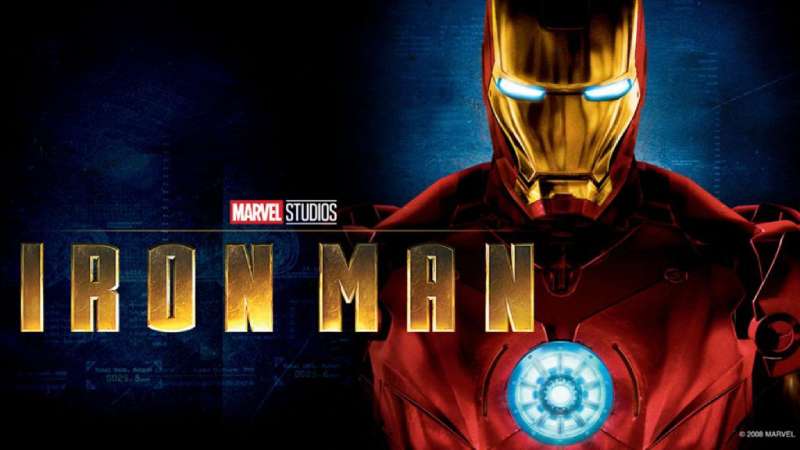
The Iron Man logo is one of the most recognized symbols in superhero branding. It represents Tony Stark, Marvel’s genius billionaire engineer who built a powered armor suit to become Iron Man. The logo has evolved alongside the character through comics, animated series, and the Marvel Cinematic Universe. Rooted in themes of technology, power, and innovation, it sits at the intersection of pop culture and graphic design history, with its arc reactor and helmet imagery becoming shorthand for the entire Avengers franchise.
What Is the Iron Man Logo?
The Iron Man logo is a superhero emblem centered on Tony Stark’s armored helmet and chest arc reactor symbol, officially developed for Marvel Comics beginning in 1963 and refined through multiple MCU film adaptations, with no single external design agency credited for its creation.
- Design Type: Emblem and icon-based mark
- Primary Elements: Stylized Iron Man helmet, arc reactor chest symbol, angular armor shapes
- Official Introduction Date: 1963 (comics); MCU version debuted 2008
- Designer/Agency: Marvel Design Group (comics); various in-house MCU designers
- Trademark Status: Registered trademark owned by Marvel Entertainment, LLC, a subsidiary of The Walt Disney Company
- Color Palette: Red (#C0392B), Gold (#D4AC0D), and Black (#1A1A1A) as primary brand colors
- Usage Context: Merchandise, film marketing, digital platforms, theme parks, video games, and licensed products worldwide
How Has the Iron Man Logo Evolved Over Time?
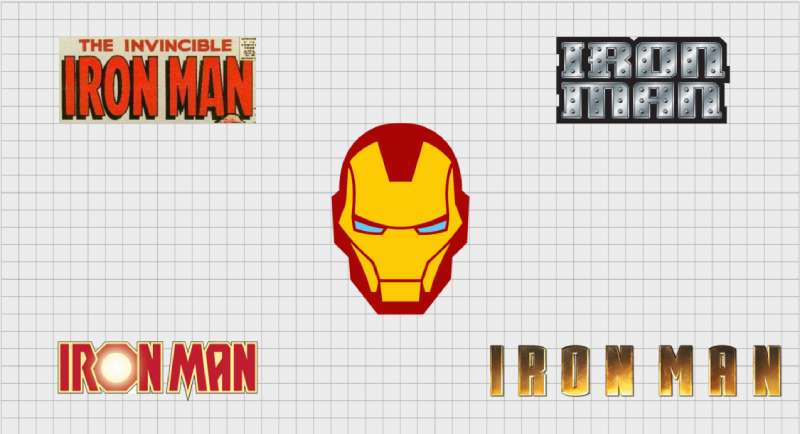
The Iron Man visual identity started as a basic comic illustration in 1963 and went through several shifts in armor design, color, and style across six decades, with the MCU pushing it toward a polished, cinematic version that now defines the character globally.
Original Iron Man Logo (1963–1966)
- Years Active: 1963–1966
- Design Description: Bulky, gray iron suit with minimal detail; resembled medieval armor more than a sleek superhero costume
- Color Scheme: Gray and gunmetal
- Designer: Don Heck and Jack Kirby
- Context: Introduced in Tales of Suspense #39 during the Cold War era, the design reflected anxieties about technology and warfare
- Key Changes from Previous: N/A, first version
- Cultural Significance: Established Iron Man as a tech-driven hero at a time when space exploration and military technology dominated public consciousness
Red and Gold Transition Logo (1966–1980s)
- Years Active: 1966–1980s
- Design Description: Shift to the now-iconic red and gold armor; sleeker silhouette with more defined facial features on the helmet
- Color Scheme: Red and gold
- Designer: Gene Colan (primary comic artist of the era)
- Context: Marvel wanted a more visually striking hero to compete with DC’s colorful roster
- Key Changes from Previous: Full color shift from gray to red/gold; helmet became more expressive
- Cultural Significance: This version cemented the red and gold as Iron Man’s permanent identity, a combination that now ranks among the most recognized red logos in entertainment history
Modern Extremis and MCU Logo (2005–Present)
- Years Active: 2005–present
- Design Description: Highly detailed, photorealistic armor design influenced by the Extremis comic arc; clean geometric shapes, glowing arc reactor centerpiece
- Color Scheme: Deep red, bright gold, black accents, with glowing blue for the arc reactor
- Designer: Phil Saunders and Ryan Meinerding (MCU concept artists)
- Context: Developed for the 2008 Iron Man film, then refined across 10+ MCU appearances through Avengers: Endgame
- Key Changes from Previous: Three-dimensional rendering, integrated lighting effects, far more surface detail and articulation
- Cultural Significance: Became the defining visual for the entire MCU era, reproduced across billions of merchandise units globally
What Do the Design Elements of the Iron Man Logo Mean?
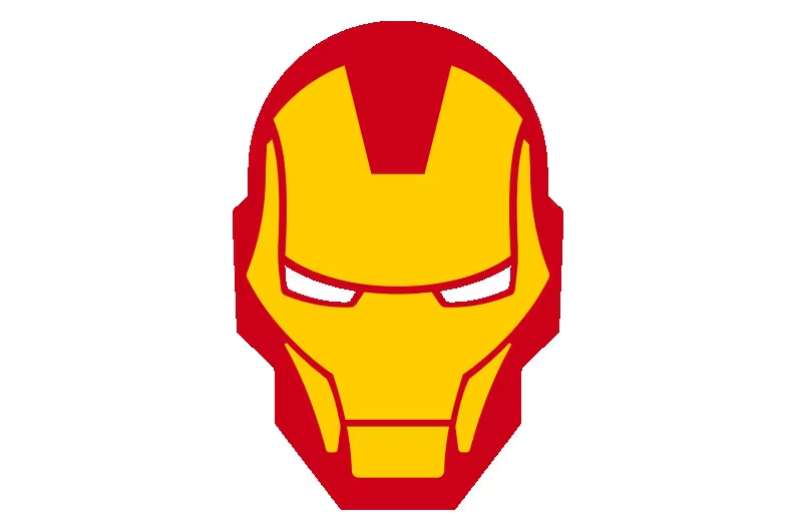
Every element in the Iron Man logo carries deliberate meaning. The helmet communicates protection and identity concealment. The arc reactor symbol at the chest signals the character’s literal and metaphorical heart. Together they tell a story about a man whose technology both shields and defines him.
What Does the Iron Man Helmet Symbolize?
The helmet is the character’s mask and his most recognizable feature.
It hides Tony Stark’s face while projecting something more powerful than any individual identity.
That tension between vulnerability and strength is built directly into the shape. The angular faceplate and narrow eye slits suggest focus and controlled aggression rather than warmth.
In terms of shape psychology, sharp angles communicate precision, competence, and dominance, all qualities central to the Iron Man character.
Why Did Iron Man’s Designers Choose These Specific Colors?
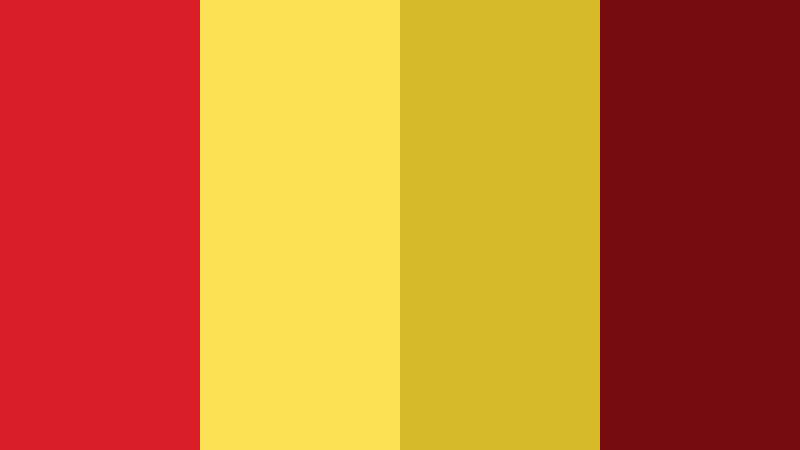
- Red (#C0392B)
- Symbolic meaning: Energy, danger, power, urgency
- Psychological impact: Commands attention, signals action
- Brand connection: Positions Iron Man as an active, aggressive protector rather than a passive one
- Gold (#D4AC0D)
- Symbolic meaning: Wealth, genius, excellence, prestige
- Psychological impact: Elevates the design above ordinary superhero fare; connects to Tony Stark’s billionaire status
- Brand connection: Makes the armor feel aspirational. Among gold logos in pop culture, Iron Man’s is probably the most technically detailed use of the color
- Black (#1A1A1A)
- Symbolic meaning: Sophistication, authority, weight
- Psychological impact: Grounds the red and gold, preventing the palette from reading as purely festive
- Brand connection: Used for outlines and shadow detail to add depth and realism
- Blue (Arc Reactor, #5DADE2)
- Symbolic meaning: Technology, intelligence, energy
- Psychological impact: The cool blue creates complementary contrast against the warm red and gold, making the arc reactor the natural focal point of the design
- Brand connection: The glowing blue has become a standalone symbol of the character’s power source
What Typography Style Is Used in the Iron Man Logo?
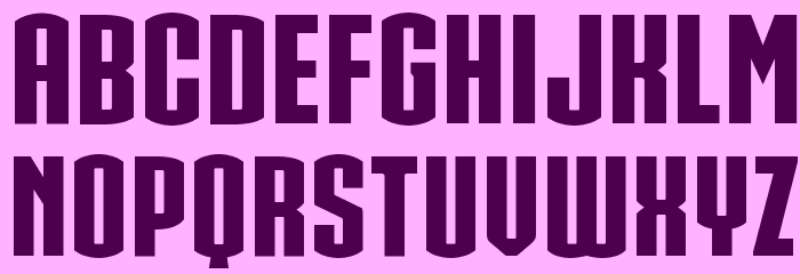
There’s no single, standardized typeface officially associated with the Iron Man logo itself.
The character’s name, when it appears in film titles or marketing materials, typically uses custom or heavily modified sans-serif lettering, bold and condensed, designed to feel industrial and authoritative.
Marvel’s own wordmark uses a modified slab-style approach. For Iron Man-specific materials, the typography choices lean toward mechanical, geometric forms that echo the armor’s hard edges.
There’s no registered custom font for the character the way some brands have proprietary typefaces. Designers working on Iron Man materials typically select heavy geometric sans-serif fonts for headlines and avoid anything with softness or script qualities.
What Are the Hidden Meanings in the Iron Man Logo?
The arc reactor placement at the chest is intentional on multiple levels. It marks the exact spot where Tony Stark keeps shrapnel from killing him, literally the device keeping his heart beating.
So the logo’s most prominent secondary element is also a reminder of mortality. That’s not accidental.
The symmetry of the helmet design reinforces stability and control, qualities Tony Stark projects but frequently lacks personally.
Some designers have noted that the narrow eye slits read almost like a predator’s gaze, which fits the character’s combat function while also creating subtle unease, a deliberate tension between hero and weapon.
How Does the Iron Man Logo Compare to Competitor Logos?
Among superhero logos, Iron Man’s stands apart because it’s three-dimensional by nature. Most superhero emblems work as flat, two-color symbols. Iron Man’s identity is inseparable from a full suit of armor, making simplified versions feel incomplete by comparison.
The Captain America logo is a clean shield, immediately readable at any size. The Spider-Man logo uses a spider silhouette that works as a pure icon. Iron Man’s helmet symbol functions similarly but carries more visual complexity, which is both a strength and a limitation at small sizes.
Compared to the Thor logo or the Black Panther logo, Iron Man’s design is the most overtly technological. It doesn’t rely on mythology or nature for its visual language. It’s purely engineered, which is the point.
DC comparisons are interesting too. The Wonder Woman logo uses an eagle-wing motif with classical roots. The The Flash logo is a lightning bolt, one of the simplest and most scalable superhero symbols in existence. Iron Man sits at the opposite end of that simplicity spectrum. Its complexity communicates sophistication but requires more careful handling across different applications.
What Are the Technical Specifications of the Iron Man Logo?
Official Color Codes
- Primary Color: Red
- Hex: #C0392B
- RGB: (192, 57, 43)
- CMYK: (0, 70, 78, 25)
- Pantone: 485 C
- Secondary Color: Gold
- Hex: #D4AC0D
- RGB: (212, 172, 13)
- CMYK: (0, 19, 94, 17)
- Pantone: 7549 C
- Accent Color: Arc Reactor Blue
- Hex: #5DADE2
- RGB: (93, 173, 226)
- CMYK: (59, 23, 0, 11)
- Pantone: 292 C
- Base Color: Black
- Hex: #1A1A1A
- RGB: (26, 26, 26)
- CMYK: (0, 0, 0, 90)
- Pantone: Black 6 C
Dimensions and Proportions
- Aspect Ratio: Typically 1:1 for the helmet icon; variable for full logo lockups
- Minimum Size Requirements: Marvel guidelines generally require no smaller than 1 inch / 72px for digital use to maintain legibility of helmet detail
- Clear Space: Minimum clear space equal to the height of the “I” in Iron Man on all sides
- File Formats: Official assets distributed as vector graphics (SVG, AI, EPS) for scalable use; JPEG and PNG for digital applications
- Resolution: Print applications require minimum 300 DPI; web use typically 72-96 DPI
- Official Usage Guidelines: Governed by Marvel’s brand standards; no unauthorized distortion, recoloring, or modification permitted
What Cultural Impact Has the Iron Man Logo Had?
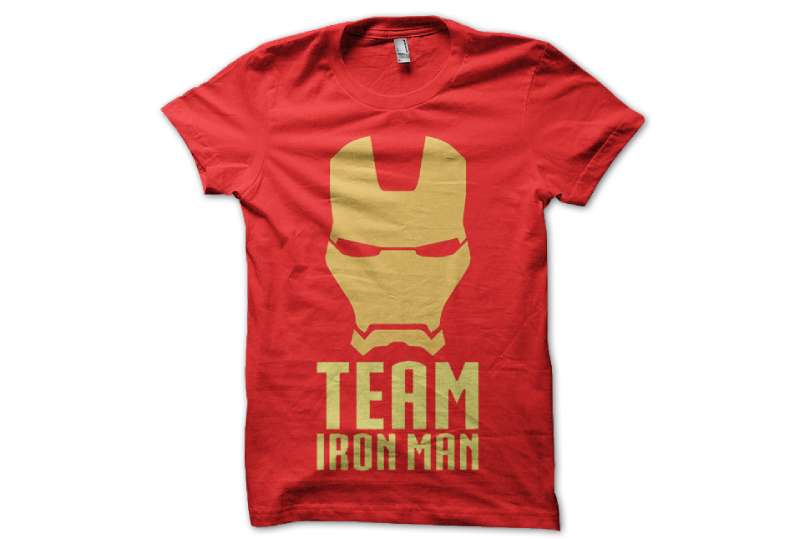
Few superhero symbols have crossed into mainstream culture the way Iron Man’s has since 2008.
Robert Downey Jr.’s portrayal turned the character from a second-tier Marvel figure into the anchor of a $22 billion film franchise. The logo followed. You see it on everything from children’s backpacks to custom car wraps to tattoo studios.
The arc reactor symbol specifically took on a life of its own. DIY versions appeared on cosplay suits, Halloween costumes, and even functional LED chest pieces made by hobbyist engineers.
There’s also a real-world resonance. Tony Stark’s image as a tech billionaire who builds things with his hands hit differently after Elon Musk and SpaceX became cultural phenomena. The logo became loosely associated with that broader Silicon Valley mythology of the engineer-as-hero. Whether that’s earned or not is a separate conversation.
In terms of color psychology, the red and gold combination reads as premium and powerful across cultures, which helped the logo translate globally without adaptation.
How Does the Iron Man Logo Fit Into the Overall Brand Identity?
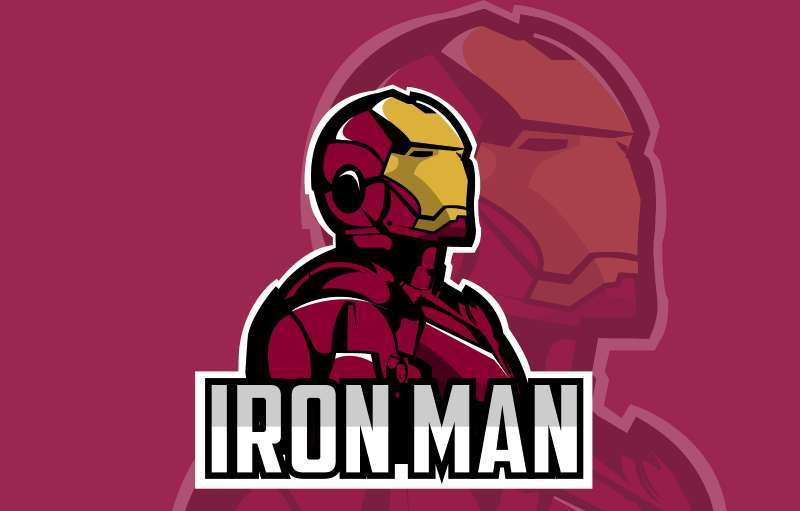
The Iron Man logo doesn’t exist in isolation. It sits within a layered brand structure that connects Tony Stark to Stark Industries, to the Avengers, to Marvel Studios, and ultimately to Disney.
Each layer has its own visual language, but the Iron Man mark remains consistent as the anchor.
Within the Avengers ensemble, Iron Man’s visual identity is the most corporate-feeling, which makes sense given the character’s background. Where Captain America’s shield or Thor’s hammer carry mythological weight, the Iron Man helmet reads like a product. A very good product, but a product.
This fits the character’s storytelling role perfectly. Tony Stark is a manufacturer. His armor is something he built, iterated on, and branded. The logo reflects that engineering mindset in its precision and detail.
The visual hierarchy of the MCU puts Iron Man at or near the top, and the logo design supports that positioning. It’s the most visually complex, most technically detailed, and most reproduced of any individual Avenger symbol.
Marvel’s broader brand guidelines ensure the Iron Man mark stays consistent across all touchpoints, from theme park signage to app icons to feature film end credits.
How Should the Iron Man Logo Be Used?
Official Usage Guidelines
- Do: Use official assets downloaded from Marvel’s licensed partner portals
- Do: Maintain the original color ratios and proportions in all applications
- Do: Use the vector version for any print or large-format application
- Don’t: Alter colors, stretch, rotate, or add effects to the official mark
- Don’t: Place the logo on backgrounds that reduce contrast or legibility
- Don’t: Combine the Iron Man logo with other brand logos without explicit Marvel approval
- Don’t: Use the logo on commercial products without a valid Marvel licensing agreement
Where to Access Official Logos
Official Iron Man logo assets are available through Marvel’s brand licensing portal for approved partners. Consumers can access lower-resolution versions through Marvel’s official press kit. Unauthorized redistribution of official assets violates Marvel’s trademark protections.
Licensing and Trademark Details
- Trademark Owner: Marvel Entertainment, LLC
- Parent Company: The Walt Disney Company
- Licensing Contact: Marvel’s consumer products and licensing division
- Protection Scope: The Iron Man name, helmet design, arc reactor symbol, and associated trade dress are all protected under U.S. and international trademark law
- Fan Use: Non-commercial fan art operates in a legal gray area; Marvel has historically tolerated it but retains the right to enforce trademark protections
- Commercial Use: Any commercial application requires a formal license agreement with Marvel/Disney
FAQ on The Iron Man Logo
What Does the Iron Man Logo Represent?
The Iron Man logo represents Tony Stark’s identity as a self-made armored hero.
The helmet symbolizes protection and concealed identity. The arc reactor chest symbol stands for the technology keeping him alive, literally his heart made visible.
What Colors Are Used in the Iron Man Logo?
The primary colors are red, gold, and black, with a glowing blue arc reactor accent.
Red signals power and urgency. Gold reflects Tony Stark’s wealth and genius. The color palette has stayed consistent since the 1966 comics redesign.
Who Designed the Iron Man Logo?
The original armor design came from Don Heck and Jack Kirby in 1963.
The MCU version was shaped by concept artists Phil Saunders and Ryan Meinerding. No single external agency holds credit for the Iron Man emblem as a unified brand asset.
What Is the Iron Man Chest Symbol Called?
It’s commonly called the arc reactor symbol or chest emblem.
In the comics and MCU, the arc reactor is the fictional power source built into the armor. The circular chest piece became one of the most copied color palette and design references in pop culture cosplay.
Has the Iron Man Logo Changed Over Time?
Yes, significantly. The original 1963 design was gray and bulky.
The red and gold version came in 1966. The MCU introduced a photorealistic, three-dimensional version in 2008 that became the global standard for the Stark Industries visual identity.
What Font Is Used in the Iron Man Logo?
There’s no official standalone typeface registered specifically for the Iron Man logo.
Marketing materials typically use heavy, condensed geometric sans-serif lettering. The style echoes the armor’s hard, mechanical edges, prioritizing readability and authority over personality.
Is the Iron Man Logo Trademarked?
Yes. The helmet design, arc reactor symbol, and Iron Man name are all registered trademarks.
Marvel Entertainment, LLC, a Disney subsidiary, owns full trademark protection across U.S. and international markets. Commercial use without a licensing agreement is a trademark violation.
Where Can I Download the Iron Man Logo?
Official assets are available through Marvel’s licensed partner portal for approved commercial partners.
For personal or fan use, lower-resolution versions appear in Marvel’s official press materials. Unauthorized redistribution of the Iron Man vector or high-resolution files violates Marvel’s intellectual property rights.
How Does the Iron Man Logo Compare to Other Marvel Logos?
It’s the most visually complex individual hero mark in the Marvel roster.
Unlike the Deadpool logo or Hawkeye logo, which work as flat, simplified icons, the Iron Man helmet symbol carries significant detail that requires careful scaling across applications.
What Makes the Iron Man Logo Effective as a Brand Symbol?
It communicates the character’s core traits instantly: technology, power, and precision.
The Stark logo works because every element earns its place. The helmet is the identity. The arc reactor is the power. Together they tell a complete story without a single word.
Conclusion
The Iron Man logo is more than a superhero emblem. It’s a piece of visual storytelling that has held up across six decades, two major design eras, and a billion-dollar film franchise.
From the gray comic book armor of 1963 to the MCU’s polished Tony Stark symbol, every iteration reflects where the character stood culturally at that moment.
The red and gold color scheme, the angular helmet, the arc reactor chest piece – none of it is accidental. Each element connects directly to the Marvel Cinematic Universe’s broader Avengers insignia system and the Stark Industries brand identity underneath it.
As a piece of logo design, it sets a high bar for complexity done right.

Renowned for his expertise in logo design and visual branding, Bogdan has developed a multitude of logos for various clients.
His skills extend to creating posters, vector illustrations, business cards, and brochures. Additionally, Bogdan's UI kits were featured on marketplaces like Visual Hierarchy and UI8.
He also wrote in the past years on sites like Design Your Way, WebDesignerDepot, WPDean, Designmodo, Speckyboy, Slider Revolution, and more.
- The Windsurf Logo History, Colors, Font, And Meaning - 10 October 2026
- How to Remove Background From Product Photos (No Photoshop) - 10 October 2026
- How Designers can Build a Stronger Online Creative Identity - 9 October 2026

Bogdan Sandu is a seasoned designer who has been designing websites since 2008. Renowned for his expertise in logo design and visual branding, Bogdan has developed a multitude of logos for various clients. His skills extend to creating posters, vector illustrations, business cards, and brochures. Additionally, Bogdan's UI kits were featured on marketplaces like Visual Hierarchy and UI8. He also wrote in the past years on sites like Design Your Way, WebDesignerDepot, WPDean, Designmodo, Speckyboy, Slider Revolution, and more.
You Might Also Like