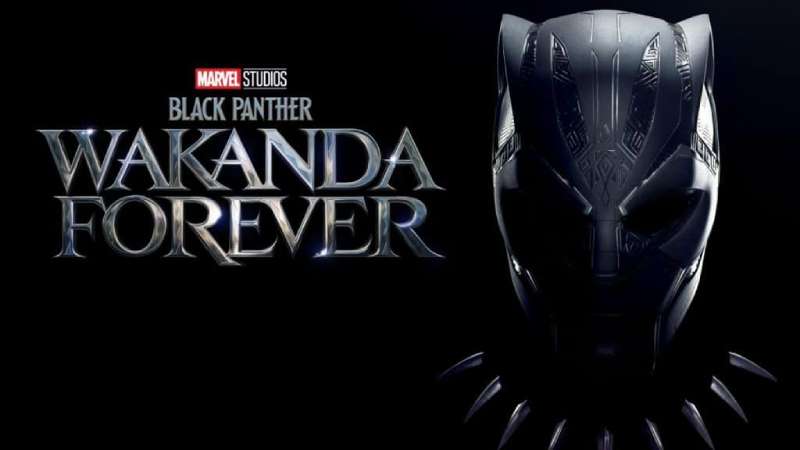
The Black Panther logo is one of Marvel’s most recognizable symbols, built around the sleek panther head and claw motifs that represent T’Challa, king of Wakanda. It sits at the intersection of comic book art and modern brand design, carrying cultural weight that goes well beyond the usual superhero logos. The symbol first appeared in Marvel Comics in 1966, created by Stan Lee and Jack Kirby. Since then, it’s gone through several iterations across print, film, and merchandise, each version reflecting where Marvel was as a brand at that moment.
What Is the Black Panther Logo?
The Black Panther logo is a mascot-based emblem featuring a stylized panther head and claw marks, officially tied to Marvel’s 1966 comic debut of the character. It uses deep black, silver, and purple tones to communicate power, royalty, and precision.
- Design Type: Mascot-based emblem and combination mark
- Primary Elements: Panther head silhouette, claw slash marks, occasional wordmark
- Official Introduction Date: 1966 (comics); 2018 film version widely adopted
- Designer/Agency: Jack Kirby (original concept); Marvel Studios design team (film adaptations)
- Trademark Status: Registered trademark of Marvel Characters, Inc.
- Color Palette: Black (#0A0A0A), Silver (#C0C0C0), Deep Purple (#4B0082), Gold (#D4AF37)
- Usage Context: Comic book covers, film marketing, merchandise, digital platforms, theme park branding
How Has the Black Panther Logo Evolved Over Time?
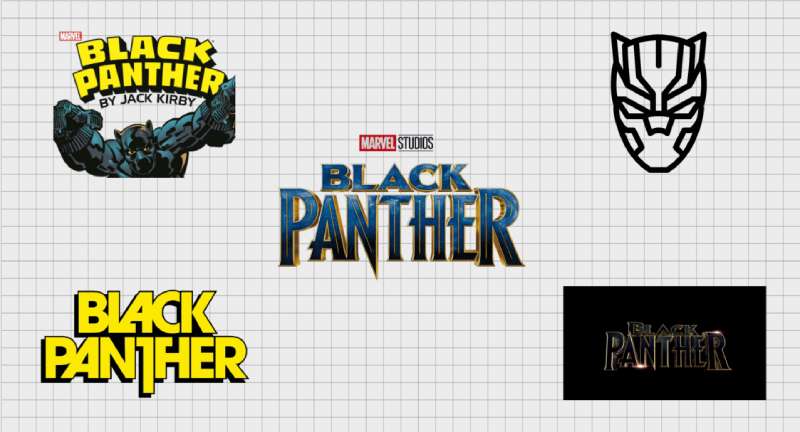
The logo has shifted from raw comic book linework to a polished cinematic mark. Each version reflects a specific era of Marvel’s growth, from a niche comics publisher to a global entertainment brand.
Original Black Panther Comic Logo (1966–1990s)
- Years Active: 1966–1990s
- Design Description: Bold, hand-drawn panther figure with thick outlines typical of Silver Age comic art. Often appeared alongside the character’s name in heavy block lettering.
- Color Scheme: Black and white with flat color fills
- Designer: Jack Kirby
- Context: Introduced during the Civil Rights Movement; the first Black superhero in mainstream American comics
- Key Changes from Previous: N/A, this was the original
- Cultural Significance: Groundbreaking representation in popular media; immediately tied to Black identity and pride
Modern Comics Redesign (1998–2017)
- Years Active: 1998–2017
- Design Description: Cleaner, more refined panther silhouette. The claw motif became more defined. Christopher Priest’s 1998 relaunch brought a sharper visual identity to the character.
- Color Scheme: Deep black, silver highlights
- Designer: Various Marvel Comics artists
- Context: A period of major character development and expanded Wakandan lore
- Key Changes from Previous: More geometric, less hand-drawn feel; stronger use of negative space
- Cultural Significance: Repositioned Black Panther as a serious, globally relevant character
MCU Film Logo (2018–Present)
- Years Active: 2018–present
- Design Description: Highly refined panther head with metallic texture and three-dimensional depth. The vibranium suit aesthetic heavily influenced the mark’s feel.
- Color Scheme: Black, silver, purple, and gold
- Designer: Marvel Studios design team
- Context: Black Panther (2018) became a cultural phenomenon; the logo needed to carry that weight across global markets
- Key Changes from Previous: Far more polished, cinematic; designed to work across massive digital and physical formats
- Cultural Significance: Became a symbol of Afrofuturism and Black excellence globally
What Do the Design Elements of the Black Panther Logo Mean?
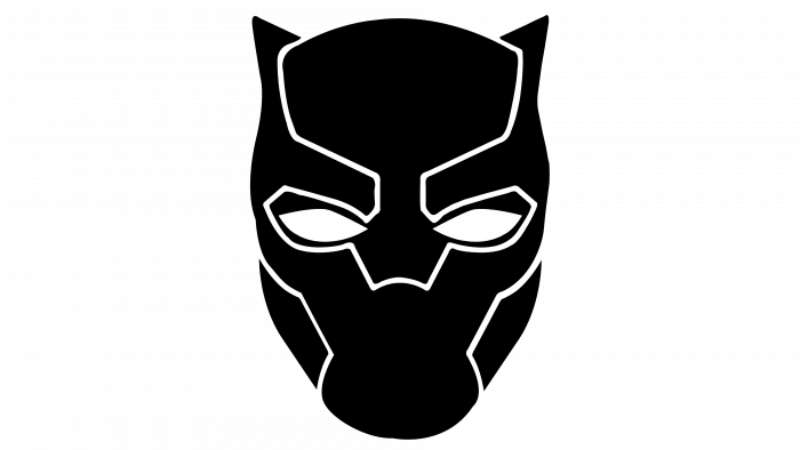
Every element in the logo is intentional. The panther shape communicates stealth and power. The claw marks suggest speed and precision. Nothing is decorative for its own sake.
What Does the Panther Silhouette Represent?
The panther is a universal symbol of strength, agility, and protection.
In African cultures, big cats often represent royal authority and spiritual connection.
For T’Challa specifically, the panther links directly to the Panther God Bast, a key part of Wakandan mythology.
The silhouette is deliberately minimal, so it reads instantly at any size.
What Is the Historical Context Behind the Symbol?
The character launched in 1966, the same year as the Black Panther Party. That timing wasn’t planned, but the cultural overlap was immediate.
Marvel later considered renaming the character to avoid association, but didn’t. The symbol carried both meanings for years in popular culture.
The Afrofuturist angle came later, especially with the 2018 film, where Wakanda as a technologically advanced African nation reshaped what the logo communicated to audiences worldwide.
What Cultural References Are Embedded in the Design?
The geometric patterning in the suit and surrounding design elements pulls from real African textile and architectural traditions.
The Wakandan script seen in film marketing materials was developed specifically for the MCU, adding authenticity to the broader visual identity.
Gold accents reference both royalty and the wealth of an African nation that was never colonized.
Why Did Marvel Choose These Specific Colors?
- Black (#0A0A0A): Stealth, power, elegance. Also directly tied to the character’s name and suit. Black in color psychology communicates authority and mystery.
- Silver (#C0C0C0): Technology, precision, the vibranium suit. It adds a metallic, futuristic quality.
- Deep Purple (#4B0082): Royalty, spiritual depth, the connection to Bast. Purple has historically signified nobility across cultures.
- Gold (#D4AF37): Wakandan wealth, African heritage, royal status. Check out how gold logos work across different brand contexts.
What Typography Style Is Used in the Black Panther Logo?
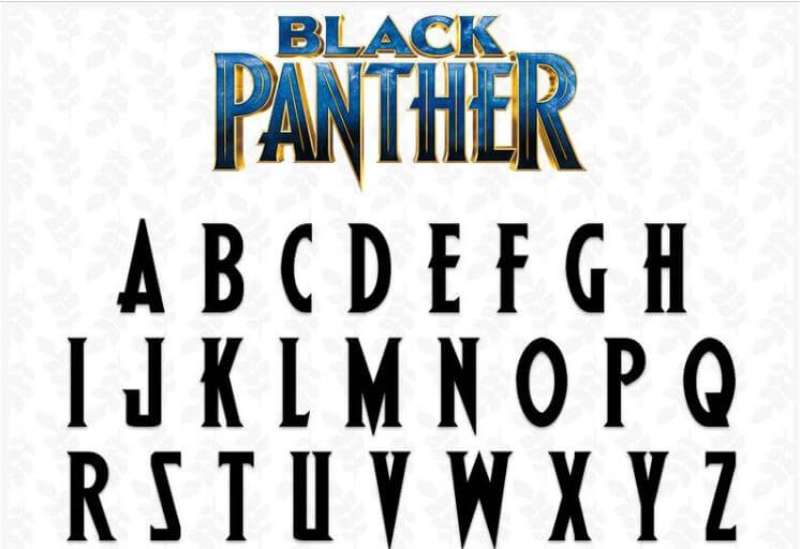
The wordmark uses a bold, custom sans-serif with sharp angular cuts that mirror the panther’s claw geometry.
There’s no serif influence here. The sans-serif font keeps things modern and aggressive.
Letter spacing is tight, which adds to the sense of power and compression.
The film version of the wordmark introduced a slightly more refined cut, with thinner strokes that felt more cinematic than the comics version.
What Are the Hidden Meanings in the Black Panther Logo?
The three claw marks are the most consistent hidden element. Three claws, not four or five. Some designers suggest this mirrors the triadic structure of Wakandan governance.
The panther head’s downward-facing orientation suggests a predator locked onto prey, which is consistent with T’Challa’s tracking abilities as a hunter-king.
The negative space within the panther silhouette, particularly around the eyes, creates a mask effect that connects directly to the character’s dual identity as king and warrior.
How Does the Black Panther Logo Compare to Competitor Logos?
Within Marvel’s lineup, the Black Panther mark is distinctly more refined than most. It avoids the primary color loudness of other characters and sits closer to luxury branding than typical comic book design.
Compare it to the Spider-Man logo, which uses red and blue with a web motif that’s immediately playful. Black Panther is the opposite: restrained, dark, deliberate.
The Iron Man logo leans heavily into tech and red, communicating energy and aggression. Black Panther’s palette communicates something closer to authority than aggression.
DC’s Wonder Woman logo uses a stylized W with strong symmetry and gold tones. Both logos use gold to signal royalty, but Wonder Woman’s is more decorative, while Black Panther’s is more architectural.
Among black logos across all of branding, the Black Panther mark is notable for how much it communicates without relying on color variety. Most brands avoid black-dominant marks because they read as heavy. Here it’s a strength.
What Are the Technical Specifications of the Black Panther Logo?
Official Color Codes:
- Primary Color: Black
Hex: #0A0A0A | RGB: (10, 10, 10) | CMYK: (0, 0, 0, 96) | Pantone: Black 6 C
- Secondary Color: Silver
Hex: #C0C0C0 | RGB: (192, 192, 192) | CMYK: (0, 0, 0, 25) | Pantone: Cool Gray 4 C
- Accent Color: Deep Purple
Hex: #4B0082 | RGB: (75, 0, 130) | CMYK: (42, 100, 0, 49) | Pantone: 2627 C
- Accent Color: Gold
Hex: #D4AF37 | RGB: (212, 175, 55) | CMYK: (0, 17, 74, 17) | Pantone: 872 C
Dimensions and Proportions:
- Aspect Ratio: Primary mark approximately 1:1 for emblem; combination mark typically 3:1 (wide)
- Minimum Size: Emblem no smaller than 16px digital / 0.5 inch print to preserve detail
- Clear Space: Minimum clear space equal to the height of the panther ear on all sides
- Official Usage: Governed by Marvel Characters, Inc. brand licensing guidelines
For print applications, CMYK values apply. For screen, RGB and hex codes are standard. Pantone matching is required for official merchandise production.
The logo is available as vector graphics through Marvel’s official licensing channels, ensuring it scales without quality loss across all formats.
What Cultural Impact Has the Black Panther Logo Had?

The logo became a grief symbol after Chadwick Boseman’s death in 2020. The crossed-arms Wakanda Forever gesture and the panther emblem appeared globally as tributes.
It’s one of the few superhero marks to carry genuine political and cultural weight outside of entertainment contexts.
During the Black Lives Matter movement in 2020, the Black Panther symbol resurfaced constantly in art, murals, and social media, often stripped of its Marvel context and used as a standalone symbol of Black power and resilience.
The 2018 film’s marketing was the first time a Marvel property received full-scale luxury brand treatment, with partnerships that placed the logo in contexts far removed from comic books or action figures.
For younger generations, especially in Africa and the diaspora, the logo carries meaning that no other Marvel character has managed to achieve. It’s tied to identity in a way that goes well past fandom.
How Does the Black Panther Logo Fit Into the Overall Brand Identity?
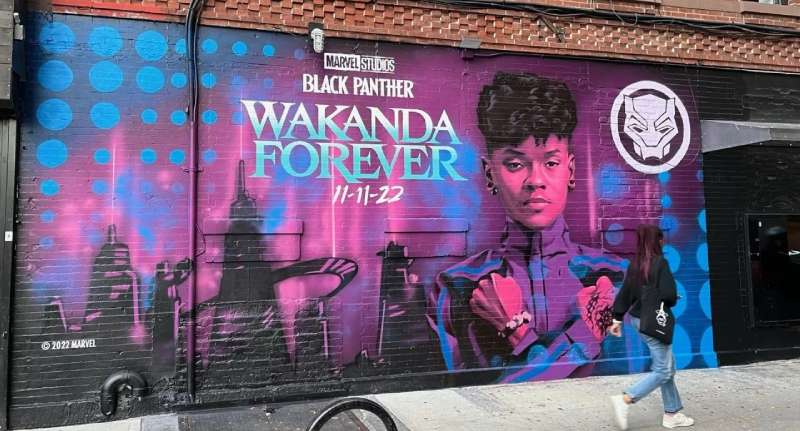
The Black Panther visual identity connects several related entities: Wakanda as a nation, vibranium as a material, the Panther God Bast as a spiritual symbol, and T’Challa as both king and hero.
The logo sits within Marvel’s broader brand system while maintaining a distinct identity that feels separate from it.
Where most Marvel characters share a visual language built on primary colors and bold outlines, Black Panther’s identity leans toward dark luxury, something closer to how high-end fashion brands construct their visual presence.
The brand guidelines for official Black Panther merchandise treat the mark with unusual strictness compared to other Marvel properties, reflecting the cultural sensitivity around the character’s identity.
The logo also connects outward to Afrofuturism as a design movement, to African visual traditions, and to the broader conversation around Black representation in mainstream media. It doesn’t exist in isolation.
How Should the Black Panther Logo Be Used?
Official Usage Guidelines:
- Do: Use approved files from Marvel’s official licensing portal. Maintain clear space rules. Use on approved color backgrounds only (black, white, and Wakanda purple).
- Don’t: Stretch, recolor, add drop shadows, or combine with non-Marvel intellectual property without explicit licensing approval.
- Where to Access: Official logo files are available exclusively through Marvel’s brand licensing division. There’s no public download portal for commercial use.
- Licensing: All commercial applications require a licensing agreement with Marvel Characters, Inc. Fan art use falls under separate fair use considerations.
- Trademark Protection: The Black Panther name, logo, and associated Wakanda marks are fully trademarked. Unauthorized commercial use carries significant legal risk.
For fan and editorial use, the logo appears frequently as a pixel-perfect digital asset in press kits released around film launches. These are cleared for editorial and non-commercial use only.
Worth noting: the crossed-arms Wakanda Forever gesture has become so embedded in culture that it functions almost as a separate symbol, though it’s not a trademarked logo in the traditional sense. The panther emblem itself remains the core protected mark.
FAQ on The Black Panther Logo
What Does the Black Panther Logo Represent?
The Black Panther logo represents T’Challa’s dual identity as king of Wakanda and a warrior.
The panther silhouette connects directly to the Panther God Bast, a core part of Wakandan mythology. Power, stealth, and African royalty are baked into every version of the mark.
Who Designed the Original Black Panther Symbol?
Jack Kirby created the original Black Panther character design in 1966, alongside Stan Lee.
Kirby’s visual concept established the panther head and suit aesthetic that still shapes the Black Panther emblem today. The MCU version was later refined by Marvel Studios’ in-house design team.
What Colors Are Used in the Black Panther Logo?
The primary colors are black (#0A0A0A), silver (#C0C0C0), deep purple (#4B0082), and gold (#D4AF37).
Black signals stealth and authority. Purple ties to royalty and the spiritual connection to Bast. Gold references Wakanda’s wealth and African heritage. Each color carries deliberate symbolic weight.
How Many Times Has the Black Panther Logo Changed?
There have been three major iterations: the original 1966 comic design, a modernized comics version from the late 1990s, and the 2018 MCU film logo.
Each shift reflected where Marvel was as a brand at that point in time.
What Font Is Used in the Black Panther Wordmark?
The wordmark uses a custom sans-serif with sharp angular cuts that mirror the panther claw geometry.
It’s not a standard commercial typeface. The letterforms were specifically designed to feel aggressive and cinematic, with tight tracking that compresses the text into something that feels almost architectural.
Is the Black Panther Logo Trademarked?
Yes. The Black Panther name, panther emblem, and associated Wakanda marks are fully trademarked by Marvel Characters, Inc.
Commercial use without a licensing agreement carries real legal risk. Editorial and fan art use falls under separate fair use considerations, but that line gets blurry fast.
What Is the Cultural Significance of the Black Panther Symbol?
Few superhero logos carry the cultural weight this one does. After Chadwick Boseman’s death in 2020, the panther emblem became a global grief symbol almost overnight.
It’s tied to Afrofuturism, Black identity, and the broader conversation around representation in mainstream media in a way no other Marvel character has achieved.
Where Can I Download the Official Black Panther Logo?
Official Black Panther logo files are only available through Marvel’s brand licensing division, not via any public download portal.
Press kit versions in PNG and vector format are released around film launches for editorial use. Those are cleared for non-commercial purposes only.
How Does the Black Panther Logo Compare to Other Marvel Logos?
It’s the most restrained mark in Marvel’s lineup. Where the Deadpool logo leans into chaos and the Captain America logo uses patriotic red and blue, Black Panther goes dark and architectural.
It reads less like a comic book symbol and more like a luxury brand mark.
What Are the Technical File Formats Available for the Black Panther Logo?
Licensed versions come as vector files (SVG, AI, EPS) and high-resolution raster formats (PNG, TIFF).
For print production, CMYK files with Pantone spot color specs are standard. Screen applications use RGB hex values. Minimum recommended DPI for print is 300.
Conclusion
The Black Panther logo is one of the rare marks in entertainment branding that means something beyond its source material.
It carries the weight of Wakandan identity, Afrofuturism, and decades of evolving Marvel visual design, all compressed into a panther silhouette and a handful of carefully chosen colors.
From Jack Kirby’s original 1966 comic concept to the refined MCU emblem, the T’Challa symbol has grown into a genuine cultural icon.
The Wakanda panther emblem works because every design decision, color, form, and proportion, connects back to something real.
That’s what separates it from every other Marvel character logo.

Renowned for his expertise in logo design and visual branding, Bogdan has developed a multitude of logos for various clients.
His skills extend to creating posters, vector illustrations, business cards, and brochures. Additionally, Bogdan's UI kits were featured on marketplaces like Visual Hierarchy and UI8.
He also wrote in the past years on sites like Design Your Way, WebDesignerDepot, WPDean, Designmodo, Speckyboy, Slider Revolution, and more.
- Versatile Work Sans Font Pairing for Every Project - 16 September 2026
- Organize Digital Files Like a Pro Before Your Next Client Handoff - 16 September 2026
- How to Set Up a Digital Menu Board: Hardware to Layout - 15 September 2026

Bogdan Sandu is a seasoned designer who has been designing websites since 2008. Renowned for his expertise in logo design and visual branding, Bogdan has developed a multitude of logos for various clients. His skills extend to creating posters, vector illustrations, business cards, and brochures. Additionally, Bogdan's UI kits were featured on marketplaces like Visual Hierarchy and UI8. He also wrote in the past years on sites like Design Your Way, WebDesignerDepot, WPDean, Designmodo, Speckyboy, Slider Revolution, and more.
You Might Also Like