The Sacramento Kings basketball franchise uses a logo built around a crown and basketball design.
This professional sports emblem represents decades of NBA history and team identity.
The current version launched in 2016, when RARE Design modernized the 1985 mark. The basketball team operates out of California’s capital city, with a visual identity rooted in royal symbolism and athletic achievement.
Since the franchise started as Rochester Royals in 1948, it’s gone through eight different logo iterations across four cities.
What is the Sacramento Kings Logo?
A combination mark featuring a purple crown positioned above a half basketball with “KINGS” displayed across the crown and “SACRAMENTO” above. Introduced in April 2016, the logo was designed by Rodney Richardson of RARE Design and pays homage to the team’s 1985-1994 emblem.
Design Type: Combination mark merging wordmark and emblem elements
Primary Elements:
- Geometric crown with five peaks
- Half basketball displayed in metallic silver
- Bold uppercase typography for team name
- City identifier in white capitals
Official Introduction Date: April 26, 2016
Designer/Agency: Rodney Richardson, founder of RARE Design (Hattiesburg, Mississippi)
Trademark Status: Registered trademark held by the Sacramento Kings organization
Color Palette:
- Kings Purple: #5A2D81 (Pantone 268)
- Silver: #63727A (Pantone 431)
- White: #FFFFFF
- Black: #000000
Usage Context: Team jerseys, arena signage, merchandise, digital platforms, broadcast graphics, marketing materials, and fan apparel
How Has the Sacramento Kings Logo Evolved Over Time?
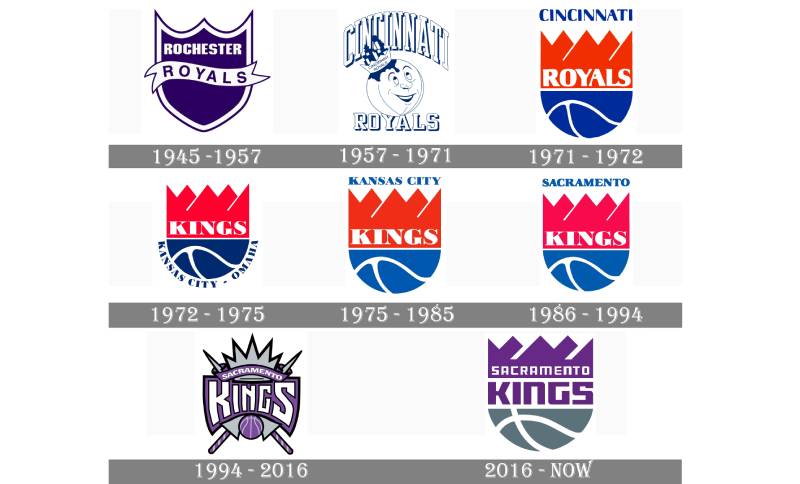
The basketball franchise identity began with Rochester Royals designs in 1948 and transformed through multiple cities. Each relocation brought subtle modifications while maintaining core royal themes.
Cincinnati, Kansas City, and Sacramento all shaped the visual direction before the 2016 refresh restored classic elements.
Original Rochester Royals Logo (1948-1957)
Years Active: 1948-1957
Design Description: Traditional shield emblem featuring blue and white with horizontal ribbon banner containing team name
Color Scheme: Royal blue and white
Designer: Unknown
Context: Created when team joined NBA after Basketball Association of America and National Basketball League merger
Key Changes from Previous: First professional league identity for franchise
Cultural Significance: Established royal iconography that influenced later designs
Cincinnati Royals Logo (1957-1971)
Years Active: 1957-1971
Design Description: Cartoon basketball character wearing crown with city skyline, designed by Enquirer cartoonist Harold Russell
Color Scheme: White figure with blue outline
Designer: Harold Russell
Context: Marked franchise relocation from Rochester to larger Ohio market
Key Changes from Previous: Shifted from shield to playful character design
Cultural Significance: Represented team during Oscar Robertson era and 1964 championship run
Cincinnati Royals Crowned Ball Logo (1971-1972)
Years Active: 1971-1972
Design Description: Red crown positioned above blue half basketball with “ROYALS” in white lettering across crown
Color Scheme: Red, blue, and white
Designer: Robert Grove (unsolicited spec design at age 25)
Context: Created for team’s final Cincinnati season under coach Bob Cousy
Key Changes from Previous: Abandoned cartoon character for geometric symbolism
Cultural Significance: This design survived 23 years across three cities and two team names
Kansas City-Omaha Kings Logo (1972-1975)
Years Active: 1972-1975
Design Description: Retained crowned ball with “KINGS” replacing “ROYALS” and dual city names
Color Scheme: Red, blue, and white
Designer: Robert Grove (original concept adapted)
Context: Team split home games between Missouri and Nebraska markets
Key Changes from Previous: Updated team name and added hyphenated city identifier
Cultural Significance: Bridged identity between Royals heritage and Kings future
Kansas City Kings Logo (1975-1985)
Years Active: 1975-1985
Design Description: Simplified to single city name above crowned basketball
Color Scheme: Red, blue, and white
Designer: Robert Grove (original concept adapted)
Context: Team consolidated home games exclusively in Kansas City
Key Changes from Previous: Removed Omaha reference and adjusted placement of text
Cultural Significance: Longest continuous use of single logo version during this era
Sacramento Kings Logo (1985-1994)
Years Active: 1985-1994
Design Description: Same crowned ball structure with “SACRAMENTO” replacing “KANSAS CITY”
Color Scheme: Pink-toned red, darker blue, and white
Designer: Robert Grove (original concept adapted)
Context: Franchise relocated to California capital after Kansas City market struggles
Key Changes from Previous: Updated geographic identifier with slightly adjusted color tones
Cultural Significance: First Sacramento identity connecting new city to established franchise history
Sacramento Kings Modern Logo (1994-2016)
Years Active: 1994-2016
Design Description: Radical departure featuring purple shield with geometric crown, crossed lances, and arched wordmark banner
Color Scheme: Purple, silver, black, and white
Designer: Unknown
Context: Complete rebrand during mid-1990s NBA design modernization wave
Key Changes from Previous: Abandoned classic crowned ball for complex heraldic composition
Cultural Significance: Defined team’s look during Chris Webber era and early 2000s playoff runs
Sacramento Kings Current Logo (2016-Present)
Years Active: 2016-Present
Design Description: Modernized return to 1985 crowned ball with refined geometry and updated color palette
Color Scheme: Purple, silver, and white
Designer: Rodney Richardson, RARE Design
Context: Launched alongside Golden 1 Center opening and Nike uniform partnership
Key Changes from Previous: Simplified complex 1994 design, restored historical elements with contemporary execution
Cultural Significance: Reconnected franchise to roots while positioning for future growth
What Do the Design Elements of the Sacramento Kings Logo Mean?
The crown symbolizes basketball royalty and championship aspirations. Five points represent the five players on court.
The half basketball below anchors the design in athletic competition while the wordmark establishes geographic identity and team pride.
Why Did Sacramento Kings Choose These Specific Colors?
Purple carries royal connotations across cultures.
The specific shade (Kings Purple #5A2D81) differentiates the team from competitors like the Los Angeles Lakers logo which uses brighter purple tones. Color psychology research shows purple evokes luxury, ambition, and creativity.
Silver (#63727A) adds modern sophistication and metallic shine suggesting trophy aspirations. The monochrome colors of silver and white create clean contrast against the rich purple base.
Black provides emphasis and definition in outlines and borders.
What Typography Style Is Used in the Sacramento Kings Logo?

The font features geometric sans-serif font characteristics with custom modifications.
Block letters use sharp angles and straight lines conveying strength. Designers widened strokes for better visibility across sizes and applications from massive arena displays to small mobile screens.
The NBA Kings typeface balances readability with distinctive character, avoiding generic sports fonts while maintaining professional athletic aesthetics.
What Are the Hidden Meanings in the Sacramento Kings Logo?
The five crown peaks represent five starting players working as unit.
Designer Rodney Richardson intentionally shaped the basketball gradient to suggest motion and energy. The symmetry in crown design reflects team balance and organization.
Purple placement in upper crown section versus silver in lower basketball creates visual hierarchy directing attention downward. Some fans interpret the color division as representing franchise past (purple royalty) meeting present performance (silver basketball).
How Does the Sacramento Kings Logo Compare to Competitor Logos?
Western Conference teams favor aggressive animal mascots or regional symbols. Kings chose abstract royal iconography instead of literal representation.
The Chicago Bulls logo uses red bull imagery while Golden State Warriors logo features blue bridge and team name. Sacramento’s purple crown distinguishes from both approaches.
Among purple logos in professional sports, Kings purple sits darker than Lakers gold-purple but lighter than Charlotte Hornets logo teal-purple. The crowned basketball concept remains unique across NBA logos.
Utah Jazz logo and Phoenix Suns logo both use circular basketball elements but lack the crown’s regal symbolism.
What Are the Technical Specifications of the Sacramento Kings Logo?
Official Color Codes:
- Kings Purple: Hex #5A2D81, RGB (91,43,130), CMYK (81,100,12,2), Pantone 268
- Silver: Hex #63727A, RGB (99,113,122), CMYK (15,0,0,65), Pantone 431
- Black: Hex #000000, RGB (6,25,34), CMYK (30,0,0,100), Pantone Black
- White: Hex #FFFFFF, RGB (255,255,255), CMYK (0,0,0,0)
Dimensions and Proportions:
- Aspect ratio: Approximately 1:1.2 (width to height)
- Minimum size: 0.5 inches width for print design applications
- Clear space: Minimum padding equal to height of letter “K” in wordmark
- DPI requirements: 300 for print, 72 for screen
Official Usage Guidelines:
Logo must maintain proportions without distortion. Background colors require sufficient contrast for legibility. Vector graphics formats preferred over bitmap for scalability.
Purple version serves as primary mark while silver and white versions function as alternates for specific applications.
What Cultural Impact Has the Sacramento Kings Logo Had?
The purple and silver combination became synonymous with Sacramento civic pride beyond basketball.
Local businesses adopted similar color schemes. The crowned ball appeared in street art, tattoos, and community murals throughout California’s capital region.
Robert Grove’s 1971 design survived 45 years and four cities, making it one of sports’ most durable marks. The 2016 revival connected older fans who remembered 1980s-90s teams with younger generation experiencing Golden 1 Center era.
“Purple Reign” became rallying cry linking logo colors to championship aspirations.
How Does the Sacramento Kings Logo Fit Into the Overall Brand Identity?
The primary mark anchors comprehensive identity system including secondary lion logo, crown-only mark, and “SAC” badge.
Brand guidelines specify applications across jerseys, court design, arena signage, and digital platforms. Mascot Slamson the Lion reinforces royal theme established in logo.
Typography, color usage, and graphic elements maintain unity across touchpoints. The crowned ball serves as focal point for all branded materials from tickets to packaging design.
Team president Chris Granger emphasized connecting franchise history with future ambitions through cohesive visual system.
How Should the Sacramento Kings Logo Be Used?
Official Usage Do’s:
- Maintain minimum size specifications
- Use approved color versions
- Preserve clear space around mark
- Download official files from Kings.com
- Apply to appropriate backgrounds with sufficient contrast
Official Usage Don’ts:
- Distort proportions or stretch logo
- Change colors or add effects
- Rotate at angles
- Place on busy patterns reducing legibility
- Recreate logo from scratch
Where to Access Official Logos: Sacramento Kings official website provides vector graphics and high-resolution files for approved media use. Contact Kings marketing department for commercial licensing.
Licensing Information: Logo remains registered trademark. Media outlets may use for editorial coverage. Commercial applications require written permission and licensing agreements.
Trademark Protection Details: Sacramento Kings organization actively protects intellectual property. Unauthorized commercial use violates trademark law. Fair use applies to news reporting and commentary.
FAQ About the Sacramento Kings Logo
When was the Sacramento Kings logo created?
The current logo launched April 26, 2016. However, the crowned basketball concept originated in 1971 when Robert Grove designed it for Cincinnati Royals.
The 2016 version modernizes that 45-year-old design with updated colors and refined geometry while maintaining core elements.
Who designed the Sacramento Kings logo?
Rodney Richardson of RARE Design led the 2016 redesign working with Kings staff, NBA Properties, and uniform partners.
The original 1971 crowned ball was created by Robert Grove, then a 25-year-old Cincinnati designer who submitted the concept unsolicited.
What do the colors in the Sacramento Kings logo mean?
Purple represents royalty, ambition, and the team’s regal identity. Silver suggests modern sophistication and championship trophy aspirations.
White provides clean contrast while black adds definition. The specific purple shade distinguishes Kings from other purple logos in professional sports.
How many times has the Sacramento Kings logo been redesigned?
Eight major versions spanning 1948-present across Rochester, Cincinnati, Kansas City, and Sacramento eras.
The most significant changes occurred in 1971 (introducing crowned ball), 1994 (complex heraldic design), and 2016 (return to classic concept).
Where can I download the official Sacramento Kings logo?
Visit the Sacramento Kings official website media section for approved logo files. High-resolution vector graphics and JPEG formats available for editorial use.
Commercial applications require contacting team’s licensing department.
Is the Sacramento Kings logo trademarked?
Yes, the logo remains registered trademark owned by Sacramento Kings organization.
The team actively protects intellectual property rights. Media may use logo for news coverage under fair use while commercial applications require licensing agreements.
What font is used in the Sacramento Kings logo?
NBA Kings, a custom geometric sans-serif font with angular characteristics and bold strokes.
The typeface was specifically designed for team branding and isn’t publicly available. Similar fonts include Impact and Agency FB but lack the custom modifications.
Why did Sacramento Kings choose crown for their logo?
The crown symbolizes basketball royalty and championship aspirations while honoring franchise roots as Rochester Royals.
Five crown peaks represent five starting players. The royal iconography differentiates Sacramento from animal-based or geographic symbols used by competitors.
Conclusion
The Sacramento Kings use a crown and basketball combination mark designed by RARE Design in 2016.
Purple (#5A2D81), silver (#63727A), and white define the color palette with royal symbolism. Robert Grove’s 1971 Cincinnati Royals concept survived 45 years across four cities before Rodney Richardson modernized it.
The geometric crown, half basketball, and bold typography create distinctive NBA identity. Professional sports branding increasingly values heritage connections, making Kings’ return to classic elements strategically sound for building fan loyalty across generations.
If you liked this article about the Sacramento Kings logo, you should check out this article about the Dallas Mavericks logo.
There are also similar articles discussing the Washington Wizards logo, the Atlanta Hawks logo, the Brooklyn Nets logo, and the New York Knicks logo.
And let’s not forget about articles on the Orlando Magic logo, the Denver Nuggets logo, the Los Angeles Lakers logo, and the Minnesota Timberwolves logo.

Renowned for his expertise in logo design and visual branding, Bogdan has developed a multitude of logos for various clients.
His skills extend to creating posters, vector illustrations, business cards, and brochures. Additionally, Bogdan's UI kits were featured on marketplaces like Visual Hierarchy and UI8.
He also wrote in the past years on sites like Design Your Way, WebDesignerDepot, WPDean, Designmodo, Speckyboy, Slider Revolution, and more.
- How to Embed Fonts in PDF for Reliable Printing - 30 September 2026
- How to Create Product Design Principles That Evolve With Your Product - 29 September 2026
- Canva vs Midjourney: AI Design Tools Compared - 28 September 2026

Bogdan Sandu is a seasoned designer who has been designing websites since 2008. Renowned for his expertise in logo design and visual branding, Bogdan has developed a multitude of logos for various clients. His skills extend to creating posters, vector illustrations, business cards, and brochures. Additionally, Bogdan's UI kits were featured on marketplaces like Visual Hierarchy and UI8. He also wrote in the past years on sites like Design Your Way, WebDesignerDepot, WPDean, Designmodo, Speckyboy, Slider Revolution, and more.
You Might Also Like