A rebrand makes sense when the name, the identity or the message no longer matches what the business sells or who buys it. It tends to happen after a structural event (a merger, an acquisition or a spin-off) or after reputation damage. Sometimes the market just moves past what the current name can carry.
One peer-reviewed study of Hong Kong listed companies split name changes by reason. Changes announced for a merger, a restructuring or a new line of business drew a positive stock price reaction, while changes made for clarity or reputation drew none (Kot, Pacific-Basin Finance Journal, 2011).
The same study found no long-term relationship between a name change and operating performance. So a dated logo on its own calls for a brand refresh, not a full rebrand.
Companies That Need Rebranding
| Company/Organization | Primary Industry | Reason for Rebranding | Year Founded | Current Status |
|---|---|---|---|---|
| Taco Bell | Fast Food | Modernize image | 1962 | Active |
| Levi’s | Apparel | Refresh brand appeal | 1853 | Active |
| Twinings | Tea Production | Update packaging | 1706 | Active |
| Prudential | Financial Services | Stay competitive | 1875 | Active |
| Pepsi | Beverages | Appeal to new generations | 1893 | Active |
| Monster Energy | Beverages | Expand audience | 2002 | Active |
| Capital One | Financial Services | Simplify brand message | 1994 | Active |
| The Republican Party | Political Party | Political repositioning | 1854 | Active |
| eBay | Online Marketplace | Reinvigorate platform | 1995 | Active |
| Johnson & Johnson | Healthcare | Trust restoration | 1886 | Active |
| Avon | Cosmetics | Modernize direct sales | 1886 | Active |
| Yahoo! | Internet Services | Revitalize brand | 1994 | Active |
| SanDisk | Technology | Innovate product lines | 1988 | Acquired by WD |
| Evri (formerly Hermes UK) | Parcel Delivery | Overcome negative image | 2009 | Active |
What Signs Show a Company Needs Rebranding?
Look at tracked numbers before you look at the logo. The signs that count show up in metrics, not in opinions about how the logo looks, and a few of them come up again and again.
- The people buying are no longer the people the brand talks to. Call it audience mismatch.
- The offer has widened or shifted, but the name and messaging still describe the old one (positioning lag).
- Unaided awareness or Net Promoter Score slides while product satisfaction holds steady.
- Next to direct competitors, the identity reads as a different era.
Teams miss positioning lag from the inside. When how the brand is positioned still describes a product line the company has outgrown, sales reps spend the first meeting explaining what the company does.
Airbnb’s graphic design lead, Andrew Schapiro, said in 2014 that the identity in use since 2008 no longer captured what the company was (Design Week, July 2014).
Inconsistent messaging is trickier, because nearly every company has it. Lucidpress, a brand templating vendor, surveyed more than 200 organizations in 2019. It found that 81% of companies deal with off-brand content.
A symptom that common does not justify a rebrand on its own. Enforce the existing guidelines first, and rebrand only when the guidelines themselves describe a company that no longer exists.
Before any budget moves, run a brand audit, which checks the company’s assets and messaging against customer feedback and competitor positioning. Jean-Noel Kapferer’s brand identity prism is the other tool people reach for. It rates six facets (physique, personality, culture, relationship, reflection, self-image) for consistency with each other.
Recall and Net Promoter Score (the survey metric of how likely customers are to recommend a company) only mean something as trends over several quarters. Teams that track how loyal customers stay over time spot a widening brand gap early.
Which Events Force a Company to Rebrand?
A merger, an acquisition, a spin-off or a legal dispute changes what the company is. Reputation damage and market shifts leave the company alone and change how the market sees it.
Structural triggers
Ownership and legal events settle the name question whether the company wants that or not.
Google created the holding company Alphabet in 2015 and became its subsidiary. Facebook followed on October 28, 2021, renaming the parent company Meta while the Facebook app, Instagram and WhatsApp kept their own names (Billboard, 2021).
A trademark conflict is the legal version. The rename happens on the other party’s schedule, which rules out a slow, researched launch.
After a merger or acquisition, the real decision is brand architecture. Both names can survive, or one can fold into the other. A new third name is also on the table.
Reputation triggers
Reputation damage usually comes from a scandal tied to the company name, or from customer trust broken by a safety, privacy or conduct failure. Sometimes a name or symbol simply picks up an unwanted association.
A new name repairs none of these. The work of managing a brand through a crisis comes first (public response, plus a fix to the conduct itself), and a rename only makes sense once the cause is gone.
Market-driven triggers
Dunkin’ announced in September 2018 that it would drop “Donuts” from its name starting January 2019, repositioning as a beverage-led brand while keeping donuts on the menu (Dunkin’ Brands, 2018).
Weight Watchers renamed itself WW in September 2018 as it widened from weight management to wellness (Fortune, September 2018).
Both changes followed a shift in what the business sells, not a shift in taste. The test for a market-driven rebrand is whether the current name rules the company out of the category it is moving into. If it does not, leave the name alone.
When Should a Company Not Rebrand?
A new identity changes naming and perception. It does nothing for a problem that sits in the product, the service, the price or the organization.
Customers who complain about what they get or what it costs are not complaining about what the company is called. And when leadership disagrees on direction, any new identity gets rewritten within a year. A brand that just launched is a separate case, since recognition takes time to build and a second change resets it.
Consignia shows the first case. Britain’s Post Office Group unveiled the Consignia name in January 2001 at a cost of 2 million pounds, then dropped it for Royal Mail in 2002 (Post & Parcel, May 2002).
Consignia attributed most of its 1.1 billion pound loss for the year to restructuring costs, as the Financial Times reported in June 2002, so the new name had nothing to act on.
Before approving budget, list what customers actually complain about. If the complaints are about the offer, fix the offer. Trouble with recognition, relevance or trust in the company’s identity is a different story, and that one points to a rebrand.
Cheaper options exist and are worth trying first. Enforce the existing brand guidelines, update the website and templates, or rewrite messaging without touching the name. All of that costs less than a new identity.
Refresh, Partial Rebrand or Full Rebrand: Which Does the Company Need?
Scope is where rebrand quotes go wrong, so it needs a label first. A logo redesign changes one part of the brand, while a rebrand changes the identity the other parts depend on. The fuller definition of rebranding stretches from a new color palette to a new company name. At its widest, it replaces or restructures name, visual identity, positioning and messaging to close the gap between how the market sees the business and what the business is.
Agencies label scope differently, so the table below sets the terms this article uses.
| Scope | What changes | What stays | Main risk |
|---|---|---|---|
| Brand refresh | Logo, colors, typography, templates | Name, positioning, messaging | Looks new, leaves the mismatch in place |
| Partial rebrand | Positioning, messaging, visual identity | Company name | Old and new assets clash across channels |
| Full rebrand | Name, identity, positioning, messaging | The operating business | Loss of recognition and search visibility |
Match the scope to where the symptom sits. If customers still recognize the company and only the look has aged, a refresh of the company’s visual identity does the job.
If the offer has widened but the name still fits, a partial rebrand covers it, with new positioning and messaging under the existing name. A new owner, a new market or a name that blocks growth calls for a full rebrand.
Start at the smallest scope that addresses the symptom, and move up only when the symptom survives it.
What Do Documented Rebrands Show About Success and Failure?

The documented cases split on whether the change kept or removed the cues customers already recognized. Most lists of companies that rebranded sort by industry, but the cases below are sorted by what each company kept and what it removed.
Rebrands that held up
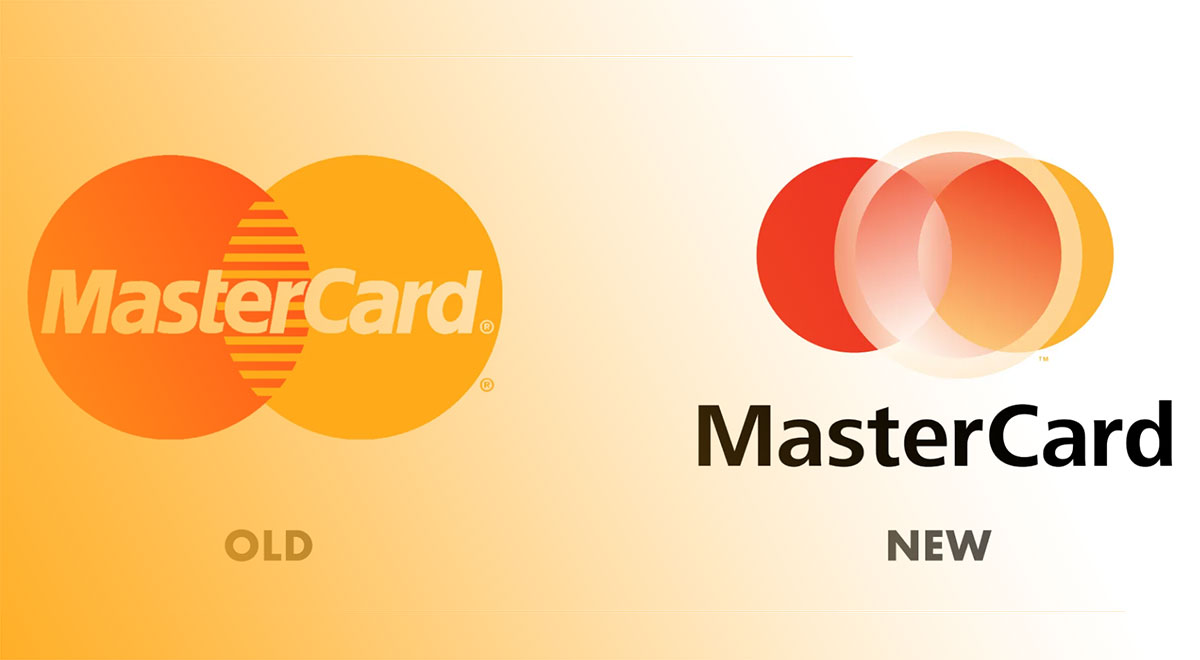
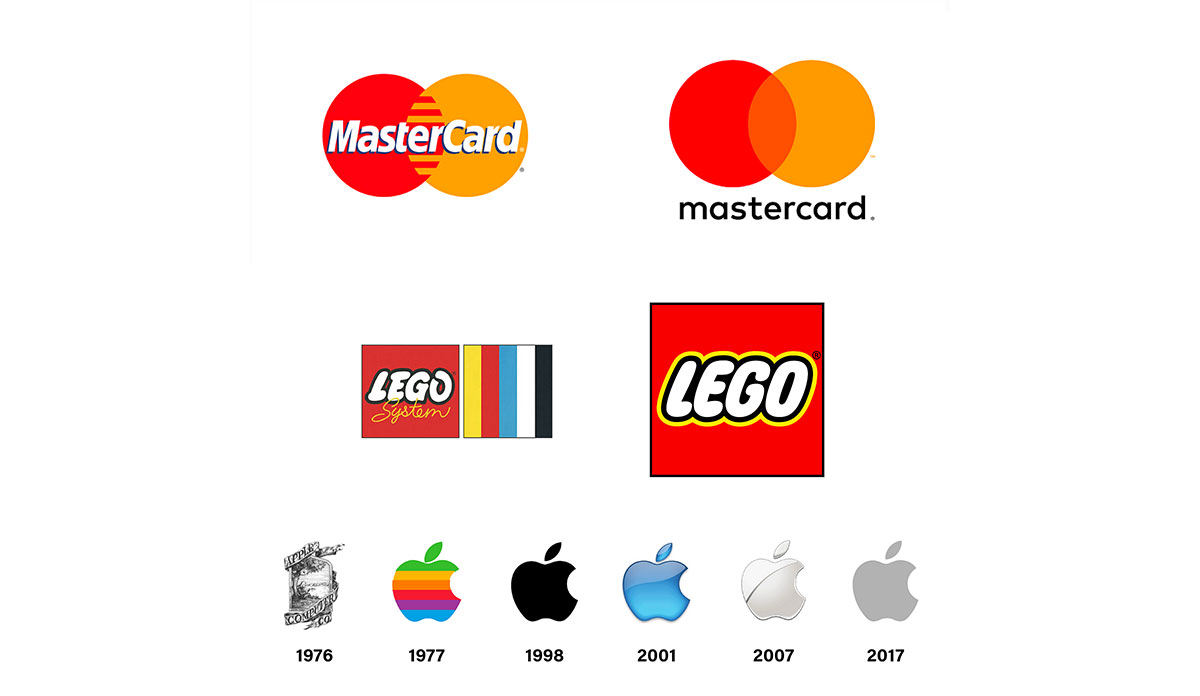
Mastercard dropped its name from the logo on January 7, 2019, after its own research found that more than 80% of people recognized the interlocking circles without the word (Mastercard announcement, January 2019).
The recognition already existed, so the change removed a word, not an identity. Debbie Millman of the School of Visual Arts said only logos with decades of global recognition can do this (reported by PYMNTS, 2019).
Airbnb introduced its Belo symbol in July 2014 with London studio DesignStudio, after a team interviewed 480 employees, guests and hosts and landed on the idea of belonging (Fortune, 2017).
In both cases, diagnosis or existing recognition came before the design work.
Rebrands that were reversed or damaged
Reversals follow one pattern. Across documented rebranding failures, the new identity removed the cues customers used to find the brand, and the company gave them no build-up.
Tropicana’s new cartons launched in January 2009. Unit sales fell about 20% and dollar sales 19% in the first two months, Florida’s Natural and Minute Maid gained double digits, and PepsiCo went back to the old packaging (Fortune, 2024).
Gap launched its new logo in early October 2010 and withdrew it about a week later after customer backlash. Gap’s North America president said the company had not handled the process properly (CNNMoney, 2010).
Twitter became X on July 23, 2023, and the lost brand value is where sources disagree most. Bloomberg reported in July 2023 that Brand Finance valued the brand at about $4 billion, while Vanderbilt University’s estimate ran $15 billion to $20 billion.
The reporting does not reconcile the two, and Brand Finance’s figure already showed a decline before the rename. Insider Intelligence analyst Jasmine Enberg argued that much of the equity was gone among users and advertisers by then, so the loss cannot be assigned to the rename alone.
How Much Does Company Rebranding Cost?
Scope sets the price before company size does, so a logo-level brand refresh and a strategy-led full rebrand at the same company land in different budget tiers.
Price guides from 2026 give a feel for the range.
- Branding services run from $5,000 for a basic visual identity from a freelancer to well over $100,000 for a full corporate overhaul from a top agency (NewMedia, May 2026)
- A full rebrand of a small UK business covering the core components costs 5,000 to 15,000 pounds (Huddle Creative, August 2026)
- A positioning plus visual refresh for a small to mid-sized business costs $75,000 to $150,000 (Avo Brands, 2026)
These figures do not line up because the labels differ. Avo Brands files positioning work under “refresh” and prices it well above what Huddle charges for a small company’s full rebrand, so compare deliverables, not names.
Huddle Creative says a UK rebrand price moves with strategy depth, the number of brand elements replaced, organization size, whether naming is involved, and whether the agency sits in London or a regional city.
Several costs never appear on the agency quote.
- Engineering time to build a new design system into the live product is a separate cost that rarely appears in a design agency’s proposal, according to We and the Color’s 2026 cost guide. A design system is the component library that keeps digital products consistent.
- Replacing signage, printed materials, vehicles, packaging and uniforms gets pricier with every location.
- Legal work for trademark clearance and filings on a new name.
- Internal time for audits, stakeholder interviews and rollout, which no invoice shows.
Most solo founders and small B2B companies are better served by a refresh-level package (logo refinement, palette, typography, a small template set) than by a strategy-led rebrand, a position We and the Color takes in the same guide.
Spend more only when the audit points to a positioning problem that a visual change cannot reach.
How Long Does a Rebrand Take?
Scope sets the schedule first and company size second, and published estimates for the same company size disagree by months.
Branded Agency’s April 2026 timeline guide splits a rebrand into brand audit and research, positioning and messaging, identity development, and rollout and implementation.
Design is rarely the slow phase. Huddle Creative (August 2026) makes the same point from the other side: a rebrand delivered too fast tends to get done twice.
The mid-market estimates show the spread. Branded Agency and Huddle Creative both put a mid-market rebrand at 3 to 6 months, while Inkbot Design (2026) puts a mid-sized firm at 6 to 9 months from decision to full rollout.
None of the three explains the gap, so plan from the wider range. A late launch costs less than a rushed one.
For small companies, how fast leadership signs off matters more than design complexity (Branded Agency, April 2026). At mid-market size, getting agreement drives the calendar. Every location, vehicle and template adds rollout time, and a fuller audit adds weeks at the front while removing rework at the back.
Start the trademark review and the redirect map first. Both can stall a launch date that design has already met.
What Risks Does Company Rebranding Carry?
Rebranding puts the brand equity customers already hold at risk, along with the organic search visibility the old name earned. The legal and operational footing of the new name is exposed too.
Brand equity and recognition
Cracker Barrel’s chief financial officer told investors in September 2025 that restaurant traffic had fallen about 8% since the August 19 logo change, after traffic was down only about 1% in early August (USA Today, September 2025).
The logo had been in use since 1977. The company reversed the change on August 26, so the figure includes the weeks after the reversal, and management tied the decline to a logo that stood for about a week.
Recognition assets are the expensive thing to remove, and the cost shows up in traffic, not only in social media comments.
Search visibility
Google’s documentation, as of the June 2026 site move guide, is specific about the order of operations.
- Redirects come first. The Change of Address tool is used after the site has moved and redirected, and it is not used for http to https moves (Google Search Console Help).
- A domain move needs the tool run for all subdomain variants of the old domain, including www and non-www, even unused ones, a rule added on June 17, 2026 (PPC Land, June 2026; Google Search Console Help).
- Moving several old sites into one new location can cause confusion and traffic loss, and site moves cannot be chained straight away (Google Search Console Help).
Google’s Search Advocate John Mueller recommends keeping 301 redirects in place for at least a year, because Google’s systems need to see a redirect several times before they record the change.
John Mueller’s summary of the site move documentation, reported by Search Engine Land, adds that processing takes months and that more important URLs are handled first. Schedule the move for a period when a traffic dip is affordable.
Legal and operational exposure
A new name can fail before launch, which is the cheapest place for it to fail.
The USPTO recommends a clearance search before filing, because an application is refused when it is likely to cause confusion with an earlier mark, and goods in different classes do not remove that risk.
For several countries, WIPO’s Madrid System takes one application, but the international registration depends on the national basic mark for five years and lapses if that basic application is refused or cancelled in that window (Patentstyret, Norway’s industrial property office).
Customer and staff confusion comes from assets that miss the switch. Updated brand guidelines that list every asset type, from email signatures to vehicle wraps, give each team a checklist to work from.
How to Roll Out a Rebrand in the Right Order
Each step blocks the next one for a reason, so the order matters more than the speed.
- Run the brand audit and check the pattern of customer complaints. If the complaints are about the offer, stop and fix the offer.
- Agree positioning and messaging before any visual work, since the identity should express decisions already made (Inkbot Design, 2026).
- Shortlist names and clear them with a trademark search before any asset is produced, so no artwork is built on a name that cannot be registered.
- Build the visual identity and publish the full brand guidelines, covering every asset type the rollout will touch.
- Brief staff before the public launch, starting with the customer-facing teams who will field the first questions.
- Prepare the migration on a staging site: map each old URL to its new equivalent, set up 301 redirects, update sitemaps and internal links, then use the Change of Address tool once the redirects are live.
- Edit the Google Business Profile name after the website and signage show the new name, because Google asks that the profile match the real-world name (Google Business Profile guidelines).
- Announce to existing customers through the channels they already use, replace assets in phases, and monitor old and new URL performance in Google Search Console.
When the name changes, steps three and four set the critical path. A refused trademark after the identity is built means redoing step four, which is why a structured brand naming process screens candidates against the register early.
Lead the rebrand announcement with what stays the same for customers. Then say what changed and where to send questions.
Company Rebranding FAQ
How often should a company rebrand?
No fixed interval applies. A company rebrands when a structural event or a measurable gap between brand and business appears.
A brand refresh of the visual identity covers ordinary aging in between.
Do B2B companies rebrand differently from B2C companies?
Yes, mainly in who notices first. Inkbot Design (2026) flags the risk that a long-standing client reads the change as instability, so sales and account teams brief key clients before launch.
B2C companies put more weight on keeping the recognition cues shoppers already use.
Can a small business rebrand without an agency?
Yes, when the scope is a brand refresh: logo, palette, typography and templates, applied on a site builder the owner already controls.
Pay for a trademark clearance search on any new name, because the USPTO does not rule on similarity for individual cases in advance.
How should a company tell employees about a rebrand?
Brief managers first, then customer-facing staff, then everyone else, all before the public launch.
Give each group the reason for the change, what stays the same, and one place to send customer questions, so staff repeat the message customers hear.
How to Tell Whether a Rebrand Paid Off
Judge the result against a baseline frozen before launch. If recall and Net Promoter Score, the measures that justified the project, improve against it, the rebrand has paid off.
Start with search visibility against the pre-launch baseline, then move to the recall and Net Promoter Score trend. Revenue and traffic by channel come last.
Search visibility reacts soonest and revenue absorbs every other change, so a slow search recovery is not mistaken for a failed identity.
The trade-off is lead time. The baseline must be captured before the old assets change, which puts the start of measurement ahead of the launch date.
This order holds as of October 1, 2026, and a revision to Google’s site move guidance would change the first step. A guide to measuring brand performance covers the metrics behind each one.

Renowned for his expertise in logo design and visual branding, Bogdan has developed a multitude of logos for various clients.
His skills extend to creating posters, vector illustrations, business cards, and brochures. Additionally, Bogdan's UI kits were featured on marketplaces like Visual Hierarchy and UI8.
He also wrote in the past years on sites like Design Your Way, WebDesignerDepot, WPDean, Designmodo, Speckyboy, Slider Revolution, and more.
- The Windsurf Logo History, Colors, Font, And Meaning - 10 October 2026
- How to Remove Background From Product Photos (No Photoshop) - 10 October 2026
- How Designers can Build a Stronger Online Creative Identity - 9 October 2026

Bogdan Sandu is a seasoned designer who has been designing websites since 2008. Renowned for his expertise in logo design and visual branding, Bogdan has developed a multitude of logos for various clients. His skills extend to creating posters, vector illustrations, business cards, and brochures. Additionally, Bogdan's UI kits were featured on marketplaces like Visual Hierarchy and UI8. He also wrote in the past years on sites like Design Your Way, WebDesignerDepot, WPDean, Designmodo, Speckyboy, Slider Revolution, and more.
You Might Also Like