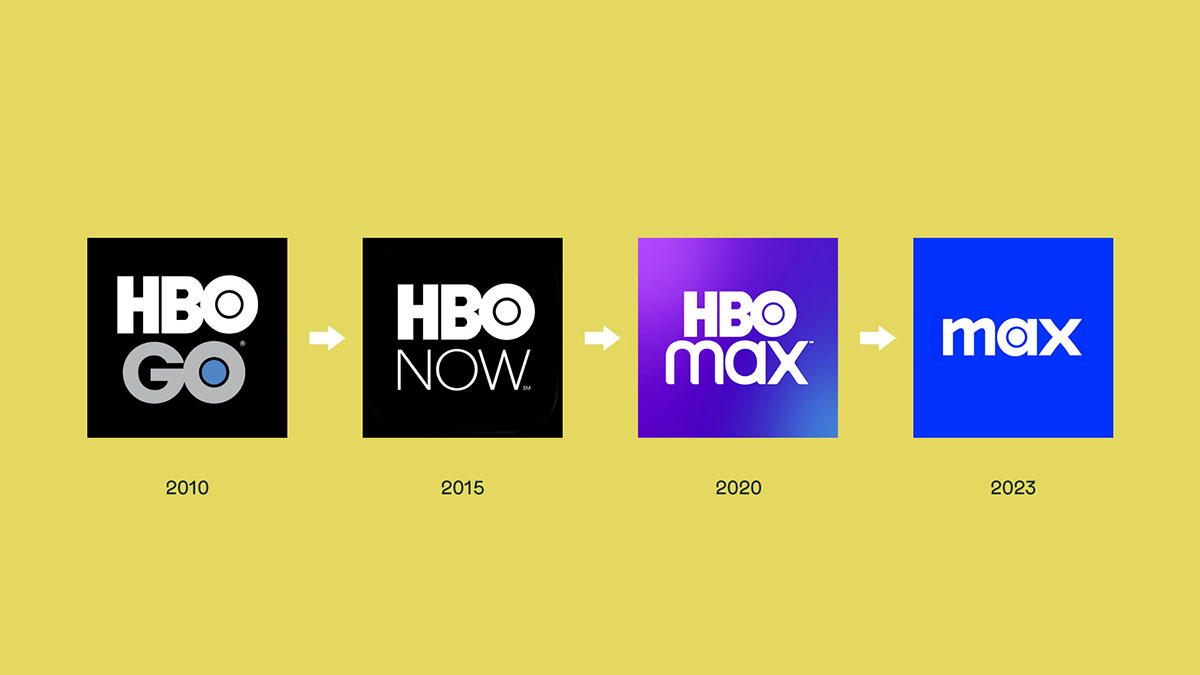
HBO’s streaming service has been renamed three times, not five. HBO Go and HBO Now only look like renames because they ran side by side as separate products from 2015 to 2020.
AT&T’s consolidation produced HBO Max in 2020, and the Discovery merger turned it into Max in 2023. The 2025 switch back to HBO Max had no deal behind it, just a content reset under the same owner.
For that latest switch, Warner Bros. Discovery’s May 2025 release said consumers want better content, not more of it.
HBO’s Streaming Names in Order, From HBO Go to HBO Max Again

HBO has put five labels on its streaming product since 2010: HBO Go, HBO Now, HBO Max, Max, and HBO Max again.
Only three of them count as switches of the service itself, namely the 2020 consolidation into HBO Max, the 2023 move to Max and the 2025 return. HBO Go and HBO Now ran side by side as separate products for five years before any of that.
| Name | Period | Owner at launch or switch | What it carried |
|---|---|---|---|
| HBO Go | 2010 to July 2020 | Time Warner | HBO for cable subscribers only |
| HBO Now | April 2015 to 2020 | Time Warner | HBO standalone, no cable needed |
| HBO Max | May 27, 2020 to May 2023 | AT&T (WarnerMedia) | HBO plus Warner Bros. and Turner libraries |
| Max | May 23, 2023 to July 9, 2025 | Warner Bros. Discovery | HBO plus Discovery+ content |
| HBO Max | From July 9, 2025 | Warner Bros. Discovery | HBO originals, films, docuseries, Max Originals |
A new product is not a rebrand in the strict sense, which is why HBO Go and HBO Now sit outside the switch count.
Outlets do not agree on the tally. Distractify called Max the fourth rebrand in May 2023, while The Week counted the 2025 return as the fourth in a decade.
Both cannot hold under one rule, so this article counts switches of the service itself.
The brand under all five names started in 1972 as Home Box Office, a premium cable channel.
HBO Go and HBO Now were separate products, not renames
HBO Go arrived in 2010 as a streaming companion for customers who already bought HBO through a pay TV package. HBO Now followed in April 2015 and worked as a standalone subscription for people with no cable or satellite plan at all.
HBO Now launched at $14.99 a month, according to the March 2015 announcement from Apple and HBO.
Both apps carried the same HBO catalog. Same library, different billing relationship.
Why Did HBO Go and HBO Now Become HBO Max in 2020?
AT&T’s WarnerMedia wanted one service that carried HBO alongside the wider Warner Bros. and Turner catalog, so it launched HBO Max on May 27, 2020 and folded the two older apps into it. The new name marked a broader product than the HBO channel and ended the overlap between Go and Now.
The ownership shift came first. After AT&T acquired Time Warner, HBO sat inside WarnerMedia next to a far larger library.
HBO Max launched in the US at $14.99 a month, the same price as HBO Now. On June 12, 2020, WarnerMedia said HBO Go would be sunset and the HBO Now app rebranded as plain HBO. HBO Go left primary platforms on July 31. Viewers whose TV provider had no HBO Max deal, such as Dish and Sling, could still use it on the web through August 31.
The Associated Press reported that HBO Max opened with about 10,000 hours of programming from HBO, Warner Bros. and Turner brands.
The name carried that scope. Anything from HBO Go or HBO Now fit under it, and so did a new slate labeled Max Originals.
That label is worth remembering. The “Max” half of the name already stood for non-HBO programming in 2020.
Bob Greenblatt, then chairman of WarnerMedia Entertainment and Direct-to-Consumer, described the goal in WarnerMedia’s April 2020 launch announcement as content for everyone in the family.
The rollout left the brand crowded. Until the older apps were retired, the US had the HBO channel, HBO Go, HBO Now and HBO Max all running at once, four HBO-branded products for one company.
Platform gaps stretched it out. Variety reported at launch that WarnerMedia was still negotiating with Roku and that Amazon talks looked slower.
Why Did HBO Max Become Max in 2023?
Warner Bros. Discovery merged HBO Max with Discovery+ and left HBO out of the name because executives saw it as a barrier for households with children. The announcement came on April 12, 2023 and the service launched as Max on May 23.
The trigger was the merger. Discovery completed its combination with AT&T’s WarnerMedia business on April 8, 2022, according to the company’s SEC filings, which left two streaming services inside one company.
JB Perrette said on April 12, 2023 that Max marked a move from two narrower products to a broader offering, per the launch release. David Zaslav said on the Q1 2023 earnings call that cutting churn mattered more than adding subscribers, and that Discovery+ churned less than HBO Max. Bloomberg and TheWrap had already reported in March 2023 that the company believed the HBO name “turns off many potential subscribers”.
For decades HBO’s brand positioning rested on edgy, adult, premium drama. Perrette described it at the launch event as a five-decade brand built for adult entertainment.
Variety reported that executives felt the name held back uptake among households with children. A wider audience needed a name without that baggage.
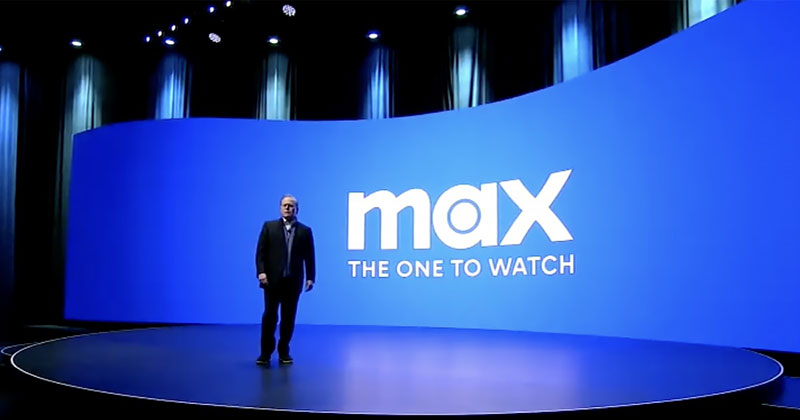
Max launched with 35,000 hours of content, more than twice HBO Max’s library at the same price, according to Warner Bros. Discovery’s launch release.
Discovery+ kept running as a separate, cheaper service. Marketing Dive described its portfolio as food, home, reality and lifestyle programming.
Zaslav framed the split simply. HBO drama brings subscribers in, and Discovery’s comfort viewing keeps them. Perrette said the team liked Max as a short, tight name.
The relaunch also replaced the app. Marketing Dive noted that executives acknowledged performance problems on HBO Max and promised a product that worked better.
Perrette later said the name was “heavily debated” inside the company, per Variety.
Why Did Max Go Back to HBO Max in 2025?
Warner Bros. Discovery concluded that viewers wanted better programming rather than more of it, and that the HBO name was the clearest quality signal it owned. The reversal was announced on May 14, 2025 and went live on July 9.
The company staged the change as a rebrand announcement to advertisers at its upfront. David Zaslav described HBO as the brand that stands for the highest quality in media.
The release framed the logic in plain terms. Consumers were asking for better content, not more of it, and no brand had supplied that more consistently than HBO.
Content had already moved that way. Max had pulled hundreds of hours of Discovery-branded reality programming and de-prioritized genres that drove less engagement, as Vulture summarized the release.
The awards calendar set the date. Variety reported that executives wanted the name restored before the July 15 Emmy nominations, since HBO and Max had been entered under one combined label all along.
That label carried weight. Warner Bros. Discovery’s Q2 2023 earnings release counted 127 nominations for HBO and Max, the most of any network or platform.
Casey Bloys gave the clearest account months later. In a November 2025 interview with The Hollywood Reporter he called the Max change a misstep in the race to match Netflix’s scale, and said research pointed viewers to HBO originals, pay-one films and the Warner Bros. library.
He also named a second problem. Viewers could not tell HBO series from Max Originals.
The Penguin and The Last of Us are HBO series. Doom Patrol, Raised by Wolves and Peacemaker sit under the Max Originals label, which is exactly where the blur came from.
Bloys now gives Max Originals a defined job. They are cheaper but elevated series with more episodes that can return every year, aimed at viewers adjacent to HBO fans and built to fill a 52-week release calendar.
Stream TV Insider pointed out the catch. Hacks and The Pitt carry no HBO branding, yet they read as HBO-grade television anyway.
Linear channel renames that followed in September 2025
Less than two months after the app switched, six of HBO’s roughly seven linear channels got new names, according to The Hollywood Reporter. TheWrap noted the new names also appear in the live Channels section of the HBO Max app.
- HBO2 to HBO Hits
- HBO Signature to HBO Drama
- HBO Zone to HBO Movies
- MoreMAX to Cinemax Hits
- ActionMAX to Cinemax Action
- 5starMAX to Cinemax Classics
These side channels barely matter commercially, by The Hollywood Reporter’s read. They do show the owner tidying the naming around the app once the HBO name came back.
Did Dropping “HBO” Cost Subscribers, and How Did People React?
The evidence does not show a clean penalty. Subscriber counts fell in the quarter Max launched, but expected account overlap explains much of the drop, and a survey cited by Puck showed no slide in Max’s perceived quality.
The raw number comes from Warner Bros. Discovery’s own Q2 2023 earnings release, which reported fewer global streaming subscribers after the Max launch.
Several sources point to overlap rather than the name. CNBC said customers dropping Discovery+ for Max were the likely cause, and TechCrunch cited a Goldman Sachs analyst who had flagged a sizeable overlap between HBO Max and Discovery+ accounts.
JB Perrette added that the uptick in Discovery+ cancellations matched what the company expected. A service that merges two subscriptions will shed some of them whatever it is called, which makes the loss a poor test of the name.
Perception data cuts the other way. Puck’s Matthew Belloni reported in August 2023 that perceived quality among Max subscribers held level with January while the other streamers slipped.
Critics did care. Rolling Stone put the relaunch on its list of the worst decisions in television history, as Puck noted. eMarketer’s later summary named confusion about what Max even was and diluted prestige as the lasting damage, with the press mockery piled on top.
The look changed as much as the name. The service reset its visual identity twice in two years, moving from HBO Max purple to blue and then to silver on black, which a brand-familiarity analysis published by Interaksyon tied to the confusion.
Comedians piled on too. John Oliver ran through the whole name sequence on Last Week Tonight, and the official HBO and Max accounts joked about it themselves.
Plenty of commentary files the Max switch under rebranding failures. The company’s own 2025 release called the reversal iteration guided by consumer data, and eMarketer noted that nobody at the upfront labeled it a mistake.
Here are the figures behind the argument.
- Global streaming subscribers fell by 1.8 million in the quarter Max launched (Warner Bros. Discovery, Q2 2023 release).
- 70% of HBO Max subscribers moved to Max in its first week, per TechCrunch’s report of Perrette’s Wall Street Journal interview.
- Perceived quality of Max among subscribers sat at 55%, unchanged from January 2023 (Puck, August 2023).
- The company said it added 22 million global streaming subscribers in the year to May 2025, a company claim that cannot isolate the name’s effect.
Measured by subscribers, the rename looks survivable. Measured by clarity, the company reversed it 25 months later (Stream TV Insider), which says more.
What Actually Triggers an HBO Rename?
A change in ownership, or in what the owner wants the service to hold. The 2020 and 2023 names followed corporate moves (AT&T’s consolidation, then the Discovery merger), while the 2025 name followed a content strategy reset under the same owner.
The warning signs show up well before the switch, as the table below shows.
| Switch | First public signal | Name live | Lead time |
|---|---|---|---|
| HBO Max | Name announced July 9, 2019 | May 27, 2020 | About 10 months |
| Max | CNBC report naming Max the likely choice, December 5, 2022 (official announcement April 12, 2023) | May 23, 2023 | About 24 weeks (41 days from the official announcement) |
| HBO Max (return) | Upfront announcement, May 14, 2025 | July 9, 2025 | 56 days |
Dates come from WarnerMedia’s 2019 announcement, CNBC’s December 2022 report and Warner Bros. Discovery’s April 2023 announcement, and the company’s May 2025 release.
Read together, the cases share an order. A corporate event changes what the service contains, then the name changes to match. Measured from the official announcement, the gap before the switch shrank from about 10 months in 2019 to 41 days in 2023 and 56 days in 2025.
Ownership could trigger another one. Paramount Skydance signed a deal on February 27, 2026 valuing Warner Bros. Discovery at about $110 billion including debt. On a March 2 investor call, David Ellison said HBO Max and Paramount+ would be combined into one service.
Ellison added that HBO should stay HBO. Australian Associated Press reported that no name was given for the combined service.
The Associated Press reported that Paramount settled the state and Writers Guild lawsuits on September 21, 2026, and that a federal judge approved the states’ settlement on September 30, which cleared the way to closing.
Where the ownership explanation does not hold
Warner Bros. Discovery chose Max in 2023 and reversed it in 2025 with no ownership change in between. Going the other way, AT&T completed its Time Warner purchase in 2018 and named HBO Max only in July 2019. And HBO Now arrived in 2015 as a launch under the existing owner, not as a merger.
Ownership sets the stage, but the content plan behind the service is what ends up deciding the name.
HBO Rebranding FAQ
Is HBO the same thing as HBO Max?
No. HBO is the premium programming brand that began as the Home Box Office cable channel in 1972, while HBO Max is the streaming service that carries HBO’s shows alongside Max Originals and Warner Bros. titles.
Do I need a new app or account after a rename?
Not for the 2025 switch. Existing installations updated to the HBO Max name on their own, and the App Store note called it “Same app. New-ish name.”
The 2023 change to Max was less tidy, since some subscribers had to download the new app.
Did pricing change with the 2025 rename?
No. Coverage of the May 2025 announcement reported that HBO Max pricing stayed unchanged, because the switch altered the name and logo of the existing service.
Prices move on their own schedule, so check the plans shown in the app.
Was the 2025 rename limited to the US?
No. Variety reported that apps across the service’s territories switched from Max to HBO Max around July 9, 2025, though not all at once.
Markets that launched later, including Germany and Italy in January 2026 and the UK and Ireland on March 26, 2026, launched under the HBO Max name (Warner Bros. Discovery Q1 2026 shareholder letter).
Will HBO Max be renamed again after the Paramount deal?
Undecided. Paramount Skydance plans to merge HBO Max and Paramount+ into a single service, and David Ellison did not name it when he announced the plan.
He did say HBO should stay HBO, which concerns the brand’s independence rather than the app’s name.
Which Signals Precede an HBO Rename?
Ownership events are the earliest warning of HBO rebranding, followed by executive remarks on earnings calls and then a trade report or announcement that fixes the name. TheWrap reported in March 2023 that Zaslav had put the Max unveiling date on an earnings call.
Deal milestones and regulatory clearances come first, and remarks on earnings and investor calls follow. Trade reports and the upfront or launch announcement land last.
That order means a subscriber who watches only the app learns of a rename last.
The next signal would be Paramount Skydance’s first integration announcement. As of October 1, 2026, the coverage reviewed contains no name for the combined service.
For a comparison outside streaming, the list of companies that rebranded is the natural next read.

Renowned for his expertise in logo design and visual branding, Bogdan has developed a multitude of logos for various clients.
His skills extend to creating posters, vector illustrations, business cards, and brochures. Additionally, Bogdan's UI kits were featured on marketplaces like Visual Hierarchy and UI8.
He also wrote in the past years on sites like Design Your Way, WebDesignerDepot, WPDean, Designmodo, Speckyboy, Slider Revolution, and more.
- The Windsurf Logo History, Colors, Font, And Meaning - 10 October 2026
- How to Remove Background From Product Photos (No Photoshop) - 10 October 2026
- How Designers can Build a Stronger Online Creative Identity - 9 October 2026

Bogdan Sandu is a seasoned designer who has been designing websites since 2008. Renowned for his expertise in logo design and visual branding, Bogdan has developed a multitude of logos for various clients. His skills extend to creating posters, vector illustrations, business cards, and brochures. Additionally, Bogdan's UI kits were featured on marketplaces like Visual Hierarchy and UI8. He also wrote in the past years on sites like Design Your Way, WebDesignerDepot, WPDean, Designmodo, Speckyboy, Slider Revolution, and more.
You Might Also Like