That white box behind your logo is killing your branding. Every time you drop it onto a website header, a product mockup, or a presentation slide, the solid background clashes with everything around it.
Learning how to make a logo transparent fixes this in minutes. You do not need expensive software or design skills to pull it off.
This guide walks you through the full process using Photoshop, Canva, Illustrator, PowerPoint, free online tools, and mobile apps. You will also learn which file formats preserve transparency, how to check your results, and what mistakes to avoid so your logo looks clean on any background.
What Is a Transparent Logo

A transparent logo is a version of your brand mark with no background color behind it. The image contains only the shapes, text, and colors of the logo itself.
Every pixel that would normally be white or solid gets replaced by an alpha channel, which is the part of an image file that stores transparency data.
Think of it like a sticker. You peel off the backing and place it on any surface. A transparent logo works the same way on screens, paper, fabric, or packaging.
Without transparency, your logo sits inside a visible rectangle. That white box clashes with dark website headers, colored merchandise, and layered print layouts. It looks amateur fast.
What Is the Difference Between a Transparent Logo and a Regular Logo
A regular logo file has a solid background baked into the image, usually white. A transparent logo removes that background entirely, leaving only the design visible through the alpha channel.
The file format matters here. JPEG files cannot hold transparency data, so they always flatten the background into a solid color. PNG files support full alpha channel transparency, which is why PNG is the standard format for transparent logos.
Why Do You Need a Transparent Logo
A transparent background logo works across every placement without manual editing per use. Website headers, social media profiles, business cards, video overlays, packaging design, presentation slides, merchandise printing, watermarks on photography.
Your brand guidelines should include a transparent version as a standard deliverable. Most professional designers hand over multiple file formats, but if you only received a JPG, you will need to remove the background yourself.
What File Formats Support Logo Transparency
Not every image format can store transparency information. The format you save your logo in determines whether the transparent background survives or gets flattened into a solid color.
Choosing the wrong file type is one of the most common mistakes people make. They spend ten minutes removing a background, then save as JPG and lose everything.
What Is a PNG File
PNG (Portable Network Graphics) is a raster image format that supports full alpha channel transparency and lossless compression. It is the default format for transparent logos used on websites, apps, and digital platforms.
PNG-24 stores millions of colors with smooth transparency edges. PNG-8 supports transparency too, but with a limited 256-color palette that can leave rough edges on complex logos.
Can an SVG File Have a Transparent Background
Yes. SVG (Scalable Vector Graphics) files are transparent by default because they contain no background layer unless you specifically add one.
SVG is a vector format, so it scales to any size without losing quality. Logos built in Adobe Illustrator or Figma export cleanly to SVG for web design and responsive layouts.
Does a JPG Support Transparency
No. JPEG does not support transparency at all. The format compresses images by discarding data, and the alpha channel is one of the first things it drops.
If you save a transparent logo as JPG, the background fills in with white (or sometimes black, depending on the software). JPG is still useful for photographs and large images where file size matters, but never for logos that need a clear background.
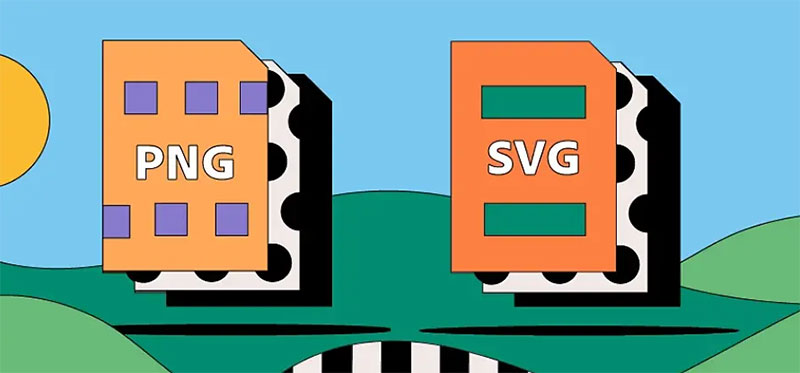
What Is the Difference Between PNG and SVG for Transparent Logos
PNG is a bitmap format made of pixels. SVG is a vector format made of mathematical paths.
PNG works everywhere but loses quality when scaled up. SVG stays sharp at any resolution and produces smaller file sizes for simple logos.
Use PNG when you need broad compatibility (email signatures, social media uploads, older CMS platforms). Use SVG when you need scalability and performance (modern websites, responsive designs, print design workflows).
For logos with complex gradients, photographic elements, or heavy texture, PNG handles those details better. For clean, shape-based logos with flat colors, SVG is the stronger choice.
How to Make a Logo Transparent in Photoshop

Adobe Photoshop has been the go-to tool for image editing for over three decades. Removing a background from a logo in Photoshop takes about 60 seconds once you know where the tools are.
Open your logo file in Photoshop. If the image has a locked Background layer (you will see a small lock icon in the Layers panel), double-click it and press OK to convert it into an editable layer.
Select the Magic Wand Tool from the toolbar (shortcut: W). Click on the background area you want to remove. The tool selects pixels of similar color automatically.
Adjust the Tolerance value in the top options bar. A tolerance of 20-30 works for most logos with clean, solid-color backgrounds. Higher values select more color variation; lower values are more precise.
Once the background is selected, press Delete. The checkerboard pattern that appears means the area is now transparent.
If your logo sits on a more complex or multi-colored background, use Select > Subject instead. Photoshop’s AI-powered selection detects the logo edges automatically, and you can then invert the selection (Select > Inverse) and delete the background.
How to Remove a White Background From a Logo in Photoshop
The Magic Eraser Tool is the fastest method for white backgrounds. Select it from the toolbar (hidden under the Eraser Tool), click once on the white area, and it vanishes instantly.
For logos with thin lines or fine typography details, the Quick Selection Tool gives more control. Paint over the background area, then refine the edge using Select and Mask to clean up any fringe pixels.
How to Export a Transparent Logo From Photoshop
Go to File > Export > Export As. Choose PNG as the format. Make sure the Transparency checkbox is enabled.
Avoid using “Save As” with older Photoshop versions because certain save methods flatten the transparency. Export As or the legacy Save for Web (Alt+Shift+Ctrl+S) both preserve the alpha channel correctly.
Set the image DPI based on where you plan to use the logo. 72 DPI works for screens, 300 DPI for print.
How to Make a Logo Transparent in Canva
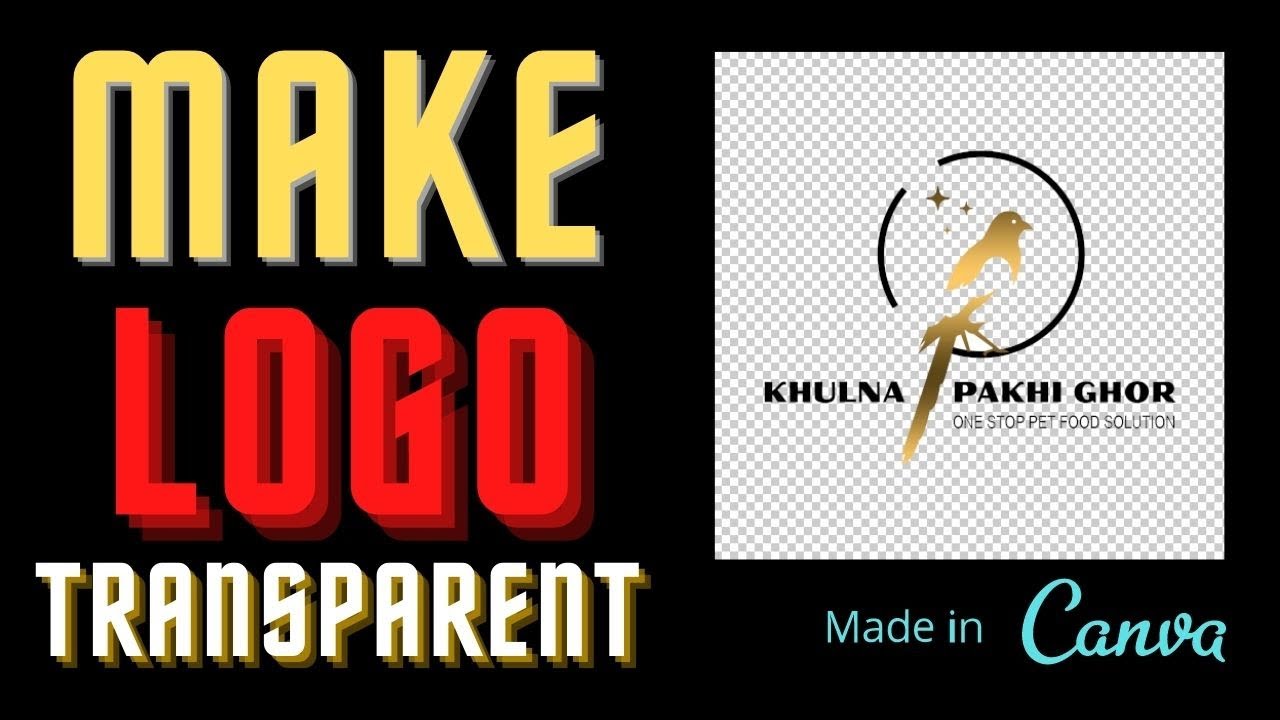
Canva is a browser-based graphic design tool used by millions of non-designers for quick branding tasks. Making a logo transparent in Canva is straightforward, but there is a catch.
Upload your logo to Canva. Click on the image, then select Edit Image. Look for the Background Remover tool (called BG Remover in some versions).
Click it once and Canva’s AI removes the background automatically. You can then manually restore or erase areas the tool missed.
When downloading, select PNG as the file type and check the “Transparent background” option before hitting the download button.
Can You Make a Logo Transparent in Canva for Free
The transparent background download and the BG Remover tool both require Canva Pro, which costs around $13/month (as of 2025).
Free Canva accounts can design logos, but any downloaded PNG will include a white or colored background. If you only need to remove a background once, Canva’s free trial gives you access to Pro features for 30 days.
How to Make a Logo Transparent Online for Free
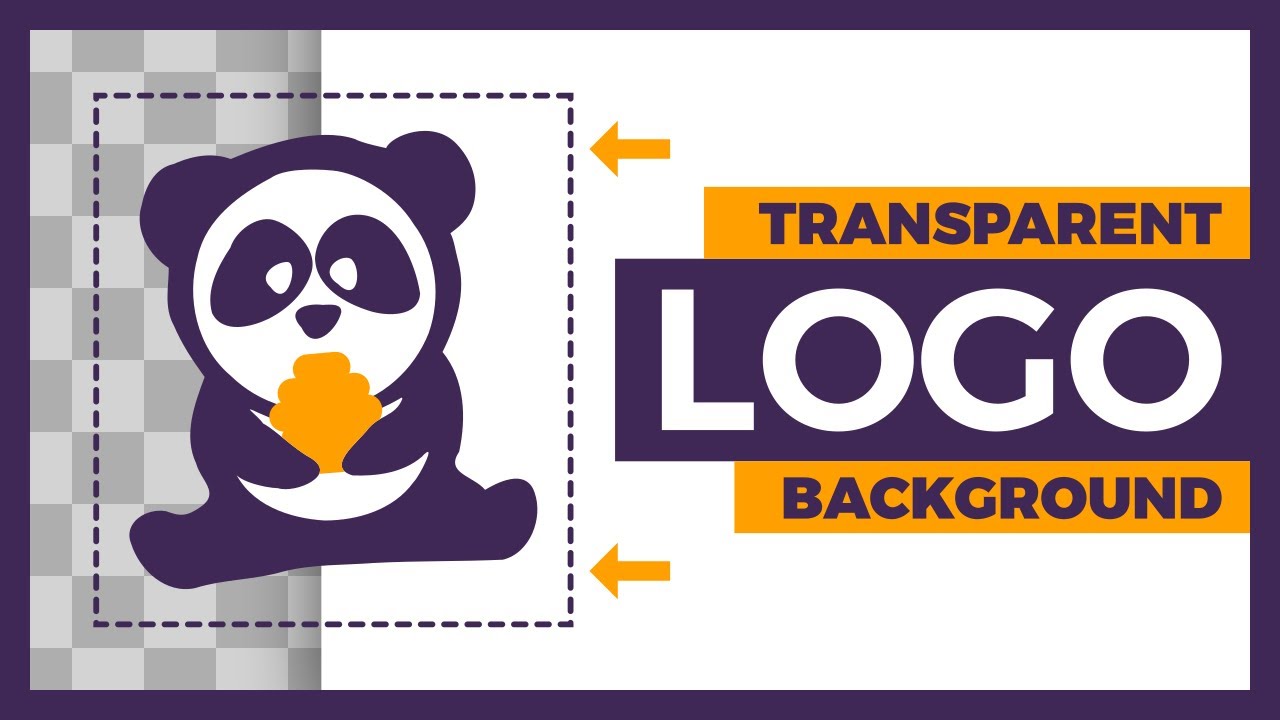
You do not need paid software to get a transparent logo. Several free online tools handle background removal in seconds using AI-powered edge detection.
Upload your logo image (PNG, JPG, or WebP), and the tool automatically identifies the foreground elements. Most produce a downloadable transparent PNG with no watermark.
The quality varies. Logos with clean edges and high contrast between the design and background convert the best. Logos with subtle color differences, semi-transparent shadows, or complex textures can trip up automated tools.
How Does an AI Background Remover Work for Logos
AI background removers analyze the image using trained neural networks that separate foreground subjects from background regions. The model identifies edges, color boundaries, and object shapes to create a mask.
For logos, these tools compare hue and saturation differences between the logo elements and the surrounding area to determine what stays and what gets removed.
Which Free Online Tool Is Best for Making a Logo Transparent
- remove.bg – Best overall accuracy for logos; one-click removal, free downloads up to 500×500 resolution
- PhotoRoom – Fast processing with clean edge detection; free via web browser with watermark-free results
- Adobe Express – Free background remover built into Adobe’s online suite; solid results for simple logos
- LunaPic – Older interface but fully free; lets you adjust transparency levels manually and pick specific colors to remove
- Pixlr – Full browser-based image editor with Magic Wand and eraser tools for manual background removal
For logos with a single solid-color background, any of these will work fine. For logos with gradient backgrounds or detailed edges, remove.bg and PhotoRoom produce the cleanest results.
How to Make a Logo Transparent in PowerPoint
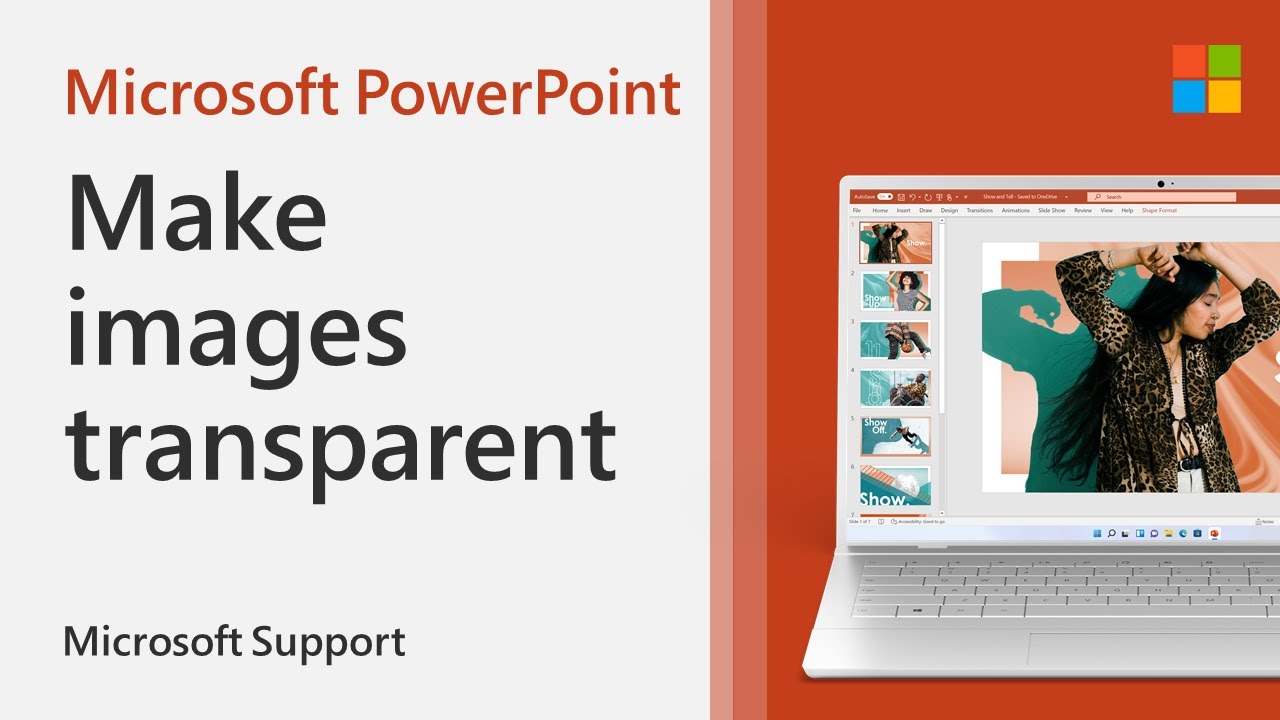
Microsoft PowerPoint has a built-in background removal tool that works surprisingly well for logos with solid-color backgrounds. No extra software needed.
Insert your logo image onto a blank slide. Click the image, then go to Picture Format > Remove Background.
PowerPoint highlights the areas it plans to delete in purple. Use Mark Areas to Keep and Mark Areas to Remove to fine-tune the selection. Once it looks right, click Keep Changes.
The background disappears and the checkerboard pattern shows through. Works in PowerPoint 2016, 2019, 2021, and Microsoft 365.
How to Save a Transparent Logo From PowerPoint as PNG
Right-click the logo image on the slide and select Save as Picture. Choose PNG as the file type. The saved file keeps the transparent background intact.
Do not export the entire slide as an image because that flattens the transparency into the slide’s background color.
How to Make a Logo Transparent in Illustrator

Adobe Illustrator is built for vector graphics, so logos created here are typically transparent by default. The white area you see on the artboard is just a preview, not an actual background layer.
If your logo file does have a white rectangle behind it, select it with the Selection Tool (V) and delete it. Check the Layers panel to make sure no hidden background objects remain.
Go to View > Show Transparency Grid to confirm the background is clear. You should see a gray-and-white checkerboard behind your logo elements.
How to Export a Transparent Logo From Illustrator as PNG or SVG
For PNG: go to File > Export > Export As, select PNG, and check the Background Color is set to Transparent. Set resolution to 72 PPI for web, 300 PPI for print.
For SVG: go to File > Save As and choose SVG. SVG files carry no background by default, so the transparency is preserved automatically. Best for responsive web layouts where the logo needs to scale cleanly.
How to Make a Logo Transparent on a Phone

You can remove a logo background directly from your phone. Several mobile apps handle background removal with one tap using the same AI detection that desktop tools use.
The process is nearly identical across apps: upload your logo, let the AI process it, adjust edges if needed, download as a transparent PNG.
Quality depends on your source image. A high-resolution logo with strong color contrast between the design and background produces the cleanest results on mobile.
What Is the Best App to Make a Logo Transparent on iPhone
- PhotoRoom – One-tap background removal, batch processing, free tier available with watermark
- Adobe Express – Clean results, integrates with Creative Cloud, free background remover included
- Background Eraser – Manual and auto modes, good for tricky edges on detailed logos
What Is the Best App to Make a Logo Transparent on Android
- PhotoRoom – Same functionality as iOS version, consistent AI detection quality
- Remove BG – Lightweight app, fast processing, exports PNG with no background
- Canva – Full design suite with background remover (requires Pro subscription for transparent export)
How to Check if a Logo Has a Transparent Background
Open the file in any image editor or preview tool. A checkerboard pattern (alternating gray and white squares) behind the logo means the background is transparent.
On Mac, open the file in Preview and look for the checkerboard. On Windows, open it in Photos or Paint.NET.
Another quick check: drag the logo onto a colored background in any design tool. If a white box appears around it, the file is not transparent. Also check the file extension. If it is a .jpg file, it does not have transparency regardless of how it looks in a thumbnail.
What Are Common Mistakes When Making a Logo Transparent

Most problems come down to file format errors and sloppy edge work. Took me a while to stop making these myself.
- Saving as JPG instead of PNG – JPG cannot store transparency data; the alpha channel gets flattened into a white or black background every time
- Rough edges from poor selection – Using a Magic Wand tolerance that is too high eats into the logo edges; too low leaves background fringe pixels behind
- Low-resolution source files – Starting with a tiny or compressed image means the background remover has less data to work with, producing jagged results
- Not checking on both dark and light backgrounds – A logo can look transparent on white but show a faint halo or leftover pixels on a dark surface
- Ignoring semi-transparent elements – Drop shadows, outer glows, and soft edges need careful handling; automated tools often clip these or leave artifacts
- Flattening layers before export – In Photoshop or Illustrator, merging all layers onto a background layer destroys transparency before you even get to the save dialog
What Is the Best Logo File Format for Print vs Digital Use
The format you pick depends entirely on where the logo goes. Digital and print have different requirements for resolution, color mode, and scalability.
For digital: PNG with a transparent background covers most needs. Social media, websites, email signatures, presentations. Universal compatibility.
For print: SVG or EPS (Encapsulated PostScript) files give print shops the vector data they need to scale your logo to any size without quality loss. Most professional printers prefer vector files in CMYK color mode.
Keep both versions on hand. A transparent PNG for everyday digital use and a vector SVG or EPS for anything that gets printed.
What Resolution Should a Transparent Logo Be for Web Use
72 DPI at double the display size. If your website header shows the logo at 200×50 pixels, export at 400×100 pixels for sharp rendering on retina screens.
For favicons, export at 32×32 and 16×16 pixels. For social media profile images, 800×800 pixels minimum. File size matters for web performance, so run the PNG through a compression tool like TinyPNG before uploading.
What Resolution Should a Transparent Logo Be for Print
300 DPI minimum. Business cards, brochures, posters, and merchandise all need high-resolution files to avoid pixelation.
Use CMYK color mode for print, not RGB. RGB is for screens. Colors shift when a printer converts RGB to CMYK automatically, so converting beforehand in Photoshop or Illustrator gives you control over how the final output looks. If your brand uses specific Pantone colors, include those values in your files for accurate spot color reproduction.
FAQ on How To Make A Logo Transparent
How do I make a logo transparent for free?
Upload your logo to a free online background remover like remove.bg, PhotoRoom, or Adobe Express. The AI detects and deletes the background automatically. Download the result as a transparent PNG file with no watermark.
What file format keeps a logo transparent?
PNG is the standard format for transparent logos because it supports alpha channel data. SVG files are also transparent by default. JPEG does not support transparency and will flatten any clear background into a solid color.
Can I make a logo transparent in Canva?
Yes, but transparent background downloads require a Canva Pro subscription. Upload your logo, use the BG Remover tool, then export as PNG with the transparent background option checked during download.
How do I remove a white background from a logo?
Open the logo in Photoshop and use the Magic Wand Tool or Magic Eraser Tool. Click the white area and delete it. The checkerboard pattern confirms the background is gone. Save as PNG to keep it transparent.
How do I check if my logo has a transparent background?
Open the file in any image editor. A gray-and-white checkerboard pattern behind the logo means it is transparent. If the file is a .jpg, it has no transparency regardless of appearance.
Can I make a logo transparent on my phone?
Yes. Apps like PhotoRoom and Adobe Express on both iOS and Android remove logo backgrounds with one tap. The output downloads as a transparent PNG directly to your phone’s gallery.
Why does my transparent logo have a white background when I upload it?
You likely saved the file as JPG instead of PNG. JPEG does not store transparency data. Re-export your logo as a PNG-24 file with the transparency option enabled in your image editor.
How do I make a logo transparent in PowerPoint?
Insert the logo onto a slide, click it, then go to Picture Format and select Remove Background. Adjust the selection areas, click Keep Changes, then right-click the image and save as PNG.
What resolution should a transparent logo be?
For web use, 72 DPI at double the display size works best for sharp rendering on retina screens. For print, use 300 DPI minimum with colors set to CMYK mode.
What is the difference between PNG and SVG for transparent logos?
PNG is a raster format made of pixels that loses quality when scaled up. SVG is a vector format that stays sharp at any size. Use PNG for broad compatibility, SVG for websites and scalable print files.
Conclusion
Knowing how to make a logo transparent gives you a file that works everywhere without extra editing. One clean PNG or SVG covers your website, social media, printed materials, and merchandise in a single export.
The tool you pick matters less than the output format. Photoshop, Illustrator, PowerPoint, Canva, or a free browser-based background remover all get you to the same result.
Always save as PNG for raster files. Always check on both dark and light backgrounds before using the file anywhere.
Keep a vector version (SVG or EPS) alongside your transparent PNG. That combination handles every brand identity scenario, from a 16×16 favicon to a billboard-sized poster.
Your logo is a core branding asset. A transparent version should be the first file in every brand style guide.

Renowned for his expertise in logo design and visual branding, Bogdan has developed a multitude of logos for various clients.
His skills extend to creating posters, vector illustrations, business cards, and brochures. Additionally, Bogdan's UI kits were featured on marketplaces like Visual Hierarchy and UI8.
He also wrote in the past years on sites like Design Your Way, WebDesignerDepot, WPDean, Designmodo, Speckyboy, Slider Revolution, and more.
- Canva vs PowerPoint: Which Is Better for Presentations? - 22 September 2026
- How to Install Fonts on Mac (Step-by-Step Guide) - 20 September 2026
- From Mockup to Code: How AI-Augmented Development Speeds Up the Design Handoff - 19 September 2026

Bogdan Sandu is a seasoned designer who has been designing websites since 2008. Renowned for his expertise in logo design and visual branding, Bogdan has developed a multitude of logos for various clients. His skills extend to creating posters, vector illustrations, business cards, and brochures. Additionally, Bogdan's UI kits were featured on marketplaces like Visual Hierarchy and UI8. He also wrote in the past years on sites like Design Your Way, WebDesignerDepot, WPDean, Designmodo, Speckyboy, Slider Revolution, and more.
You Might Also Like