The Charlotte Hornets logo represents a professional basketball franchise competing in the NBA’s Eastern Conference.
This brand identity has evolved through multiple iterations since the franchise’s inception in 1988, reflecting the team’s turbulent history of relocation, rebranding, and eventual return to its original name in 2014.
The current primary mark features an aggressive hornet with extended wings, piercing eyes, and a sharp stinger, with a basketball integrated as the insect’s body. The logo design symbolizes the city of Charlotte’s fighting spirit, dating back to General Cornwallis’s Revolutionary War description of Charlotte as a “hornet’s nest of rebellion.”
The franchise’s visual identity journey includes the original teal-and-purple Hornets era (1988-2002), the Charlotte Bobcats period (2004-2014), and the modern Hornets rebirth that honors the team’s legacy while pushing toward a contemporary aesthetic.
What is the Charlotte Hornets Logo?
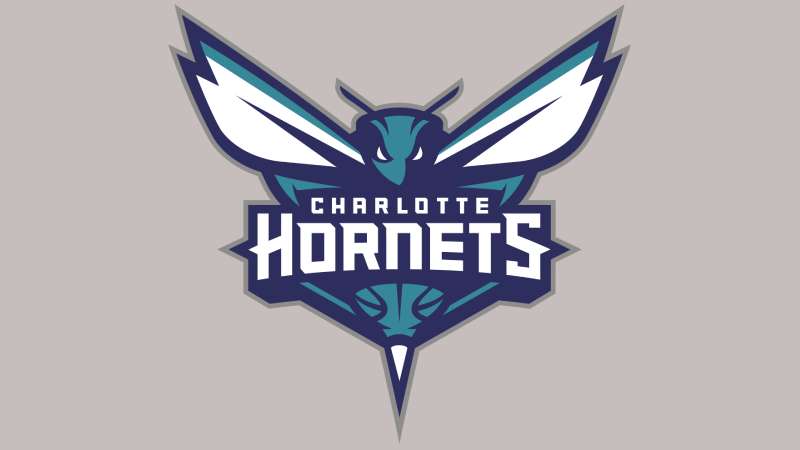
The Charlotte Hornets logo is a combination mark featuring a fierce hornet mascot with spread wings and an integrated basketball body, accompanied by the “Charlotte Hornets” wordmark. Introduced in 2014 when the franchise reclaimed its historic name, the design was created by Darrin Crescenzi in collaboration with Brand Jordan and Rare Design, incorporating teal, purple, and gray colors that honor the original franchise while establishing a modern identity.
Design Type: Combination mark (mascot-based with integrated wordmark)
Primary Elements:
- Hornet mascot positioned in profile with attacking stance
- Basketball integrated as the insect’s lower body section
- White wings with detailed feather segments
- “Charlotte Hornets” wordmark overlaying the design
- Sharp stinger and raised antennae conveying aggression
Official Introduction Date: December 21, 2013 (unveiled), implemented for 2014-15 NBA season
Designer/Agency: Darrin Crescenzi (primary logo concept), in collaboration with Brand Jordan (Nike) and Rare Design agency
Trademark Status: Registered trademark owned by Charlotte Hornets franchise, which is majority owned by a group led by Gabe Plotkin and Rick Schnall (Michael Jordan sold his majority stake in 2023 but retains minority ownership)
Color Palette:
- Hornets Purple: Hex #1D1160, RGB (29, 17, 96), CMYK (96, 98, 38, 44), Pantone PMS 275 C
- Teal: Hex #00788C, RGB (0, 120, 140), CMYK (100, 38, 39, 7), Pantone PMS 3145 C
- Gray: Hex #A1A1A4, RGB (161, 161, 164), CMYK (0, 1, 0, 43), Pantone PMS Cool Gray 8 C
- White (accent color)
Usage Context:
- Team uniforms and court design at Spectrum Center
- Official merchandise and fan apparel
- Marketing materials and digital platforms
- Broadcast graphics and arena signage
- Licensed products through Nike and Jordan Brand partnership
How Has the Charlotte Hornets Logo Evolved Over Time?
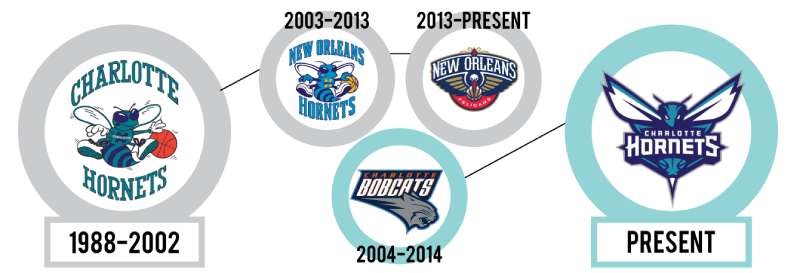
The Charlotte Hornets brand identity spans three distinct eras across more than 30 years. The franchise began with cartoonish mascot designs, transitioned through a completely different identity as the Bobcats, then returned to modernized Hornets branding that balances nostalgia with contemporary sports design.
Each iteration reflects ownership changes, market realities, and shifting design trends in professional basketball.
Original Charlotte Hornets Logo (1988-1989)
Years Active: 1988-1989
Design Description: The inaugural logo featured a bold geometric hornet rendered in black, positioned across a stylized “H” and enclosed within an oversized teal “C.”
The design emphasized clean lines and strong contrast between black and teal elements.
Color Scheme: Teal (Pantone PMS 3145 C) and black with white accents
Designer: Created through franchise design competition during expansion team formation
Context: George Shinn brought NBA basketball to Charlotte as the league’s 24th franchise. The Hornets nickname won a fan vote over alternatives like “Charlotte Spirit.”
Teal and purple were revolutionary color choices that broke from traditional sports palettes.
Key Changes from Previous: First logo design for the expansion franchise
Cultural Significance: Introduced teal as a primary sports color, influencing 1990s athletic apparel trends. The color combination became instantly recognizable and drove massive merchandise sales.
Charlotte Hornets “Hugo” Logo (1989-2002)
Years Active: 1989-2002
Design Description: An anthropomorphic hornet character wearing white gloves and sneakers, dribbling an orange basketball. The mascot displayed a confident smirk with the letter “H” prominently featured on its chest.
Hugo was surrounded by the full “Charlotte Hornets” wordmark in an arched composition.
Color Scheme: Teal (Hex #00778B), purple (Hex #280071), white, and orange basketball
Designer: Created during franchise contest, became primary logo unexpectedly when it resonated with fans
Context: The original Hornets era represented Charlotte’s first sustained NBA success, featuring stars like Larry Johnson, Alonzo Mourning, and Kemba Walker. The team wore the first pinstriped uniforms in NBA history, designed by Alexander Julian.
This period established Charlotte as “Buzz City.”
Key Changes from Previous: Shifted from abstract geometric design to fully realized character mascot. Added orange as accent color through the basketball element.
Incorporated more playful, accessible personality.
Cultural Significance: Hugo became one of basketball’s most commercially successful logos, appearing on Starter jackets that defined 1990s streetwear. The design influenced how NBA teams approached mascot-based branding and merchandise strategies.
Charlotte Bobcats Logo (2004-2007)
Years Active: 2004-2007
Design Description: An orange bobcat head shown in profile, facing right with an aggressive expression. The “Bobcats” wordmark appeared in stylized white lettering on a blue background, with “Charlotte” positioned above in simple sans-serif font.
The design emphasized sharp angles and fierce attitude.
Color Scheme: Orange (red-orange), blue, white, black, and silver accents
Designer: Chris Weiller created the initial bobcat imagery for the expansion franchise
Context: After the original Hornets relocated to New Orleans in 2002, Charlotte received a new expansion franchise in 2004. Owner Bob Johnson chose the Bobcats name, referencing the wildcat species native to the Carolinas.
The rebrand represented a complete departure from Hornets identity.
Key Changes from Previous: Entirely new franchise identity with different colors, mascot, and design philosophy. Abandoned teal and purple for orange and blue palette.
Shifted from insect to mammal mascot.
Cultural Significance: Represented Charlotte’s determination to maintain NBA basketball despite losing the original franchise. However, the Bobcats struggled both on court and in fan engagement compared to the beloved Hornets era.
Charlotte Bobcats Logo (2007-2012)
Years Active: 2007-2012
Design Description: Retained the orange bobcat profile design with refined color values. The palette shifted to less vibrant, more muted tones of orange and blue while maintaining the same compositional structure.
The adjustments aimed for a more sophisticated, less aggressive appearance.
Color Scheme: Subdued orange, darker blue, white, silver
Designer: Internal franchise design team modification of original Chris Weiller concept
Context: The Bobcats continued searching for competitive success and fan connection during Michael Jordan’s acquisition of ownership stake in 2006 and eventual majority ownership in 2010.
The subtle rebrand attempted to mature the visual identity.
Key Changes from Previous: Reduced color vibrancy and saturation, creating more restrained palette. Typography remained consistent with only minor spacing adjustments.
Cultural Significance: The subdued colors reflected the franchise’s struggles both competitively and in building passionate fan support comparable to the Hornets era.
Charlotte Bobcats Logo (2012-2014)
Years Active: 2012-2014
Design Description: The bobcat graphic changed from orange to gray, while the blue background extended upward to encompass the “Charlotte” text. The “Charlotte” wordmark itself changed from blue to orange, creating stronger color separation.
A Carolina blue outline was added around the entire composition.
Color Scheme: Gray bobcat, blue background, orange text, Carolina blue outline, white accents
Designer: Internal franchise design team final Bobcats iteration
Context: This logo served as the bridge period between the Bobcats and the return to Hornets branding. Jordan began negotiations to reclaim the Hornets name from the New Orleans franchise, which was rebranding to the Pelicans.
Fan pressure mounted for a return to Hornets identity.
Key Changes from Previous: Replaced orange bobcat with gray rendering. Extended blue background. Changed “Charlotte” text from blue to orange. Added Carolina blue outline as regional reference.
Cultural Significance: Represented the final Bobcats era before the franchise reclaimed its heritage. The addition of Carolina blue hinted at the team’s desire to strengthen local connections before the major rebrand.
Current Charlotte Hornets Logo (2014-Present)
Years Active: 2014-present
Design Description: An aggressive hornet rendered in profile with wings spread wide in attacking position. The insect features piercing eyes, raised antennae, and a prominent stinger.
A basketball is integrated as the hornet’s body, creating a clever double meaning. The “Charlotte Hornets” wordmark appears across the design in white lettering with the hornet’s legs gripping the “Charlotte” text.
Color Scheme: Hornets Purple (Hex #1D1160), Teal (Hex #00788C), Gray (Hex #A1A1A4), White
Designer: Darrin Crescenzi (concept development), with collaboration from Brand Jordan design team and Rare Design agency
Context: When the New Orleans franchise rebranded as the Pelicans for 2013-14, Charlotte moved quickly to reclaim the Hornets identity. Michael Jordan, as majority owner, orchestrated the name change and comprehensive rebrand.
The NBA unanimously approved the switch in July 2013. Charlotte also reclaimed all original Hornets history and records from 1988-2002.
Key Changes from Previous: Complete return to Hornets identity after 12 years. Modernized the hornet mascot with more aggressive, angular styling compared to playful Hugo.
Restored teal and purple palette while adding gray as tertiary color. Replaced cartoon aesthetic with fierce, competitive design language.
Cultural Significance: The rebrand generated massive fan enthusiasm and merchandise sales. The “Buzz City” marketing campaign reconnected Charlotte with its basketball heritage.
The design balances nostalgia for the original Hornets with contemporary sports branding standards, reflecting both Jordan Brand’s aesthetic influence and Charlotte’s regional pride.
What Do the Design Elements of the Charlotte Hornets Logo Mean?
The Charlotte Hornets logo communicates aggression, speed, and protective instinct through its insect mascot rendered in attacking stance. The design references both the natural characteristics of hornets and Charlotte’s Revolutionary War history when British General Cornwallis called the city a “hornet’s nest of rebellion” due to fierce colonial resistance.
Every visual element reinforces themes of relentless intensity and swarming defense.
The hornet’s biological attributes translate directly to desired basketball team characteristics. Raised antennae signal alertness and readiness.
Extended wings suggest explosive movement and territorial dominance. The sharp, prominent stinger represents offensive threat and the ability to strike quickly.
Piercing eyes convey focused determination and intimidation factor.
The basketball integration as the hornet’s body creates sophisticated visual unity between mascot and sport. This design decision eliminates the need for the mascot to hold or interact with a ball, instead making the basketball an organic part of the creature itself.
The curved body shape subtly forms a “C” representing Charlotte.
White wing accents reference the original Hugo design, creating continuity across franchise eras. The legs gripping the “Charlotte” wordmark suggest possession and protection of the city’s basketball identity.
Gray outlining adds depth and definition while maintaining visual hierarchy between the mascot and background.
Why Did Charlotte Hornets Choose These Specific Colors?
Hornets Purple (Hex #1D1160):
This deep, rich purple serves as the primary brand color, chosen to reference the original Hornets palette while incorporating Jordan Brand’s signature color associations. Purple carries psychological connections to royalty, power, and ambition.
In sports branding, purple distinguishes the Hornets from the NBA’s many red-and-blue teams.
The specific shade leans toward navy undertones, creating sophistication and intensity rather than lighter, more playful purples.
Teal (Hex #00788C):
Teal became synonymous with Charlotte basketball during the original Hornets era, representing one of the most distinctive color palette choices in 1980s sports. The franchise retained this signature hue to maintain connection with beloved team history.
Teal psychologically suggests energy, communication, and uniqueness. Its position between blue and green creates a fresh, modern feel that separated Charlotte from traditional sports color schemes.
Gray (Hex #A1A1A4):
Gray was introduced in the 2014 rebrand as a neutral, modern accent that provides balance between the vibrant purple and teal. It adds sophistication and versatility to the palette, working well across different media applications from print to digital to textiles.
Gray also references urban Charlotte’s contemporary identity as a major financial and cultural center.
What Typography Style Is Used in the Charlotte Hornets Logo?
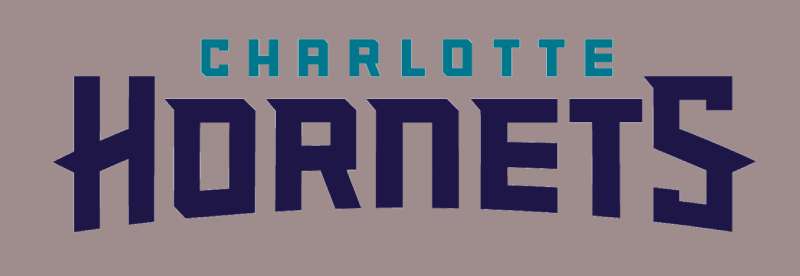
The Charlotte Hornets wordmark employs a custom typeface called “NBA Hornets Buzz City” designed specifically for the franchise. The lettering features sharp angles, aggressive serifs, and dynamic slant that conveys motion and intensity.
The font balances readability with character, ensuring the team name remains legible at various sizes while expressing the brand’s fierce personality. Letters incorporate subtle stinger-like terminals and wing-inspired flourishes that connect typographically to the hornet mascot.
The customization ensures no other team can replicate this exact typographic identity.
What Are the Hidden Meanings in the Charlotte Hornets Logo?
The hornet’s curved body subtly forms the letter “C” for Charlotte, creating a geographical claim embedded in the mascot’s posture. The six segments visible in the wings reference hexagonal honeycomb patterns, adding biological accuracy while suggesting organizational structure and teamwork.
The basketball pattern integrates exactly where a hornet’s striped abdomen would naturally appear, making the ball feel anatomically correct rather than arbitrarily placed. The specific wing position mirrors the franchise’s forward-facing ambition while the stinger points upward, suggesting rising competitiveness rather than defensive retreat.
How Does the Charlotte Hornets Logo Compare to Competitor Logos?
The Charlotte Hornets logo occupies a unique position among NBA logos through its insect mascot, distinguishing it from the league’s predominant animals (bulls, raptors, grizzlies) and abstract concepts. Its combination of aggressive mascot design with integrated basketball element creates sophisticated visual problem-solving compared to simpler icon-based marks.
The teal and purple color scheme remains one of the NBA’s most distinctive palettes, contrasting sharply with traditional red-blue-white combinations used by franchises like the Los Angeles Clippers logo and Washington Wizards logo.
Compared to the Chicago Bulls logo, which uses simple, iconic bull imagery, the Hornets embrace complexity with detailed wings, antennae, and integrated elements. This creates higher visual interest but requires more space for effective reproduction.
The Miami Heat logo uses abstract flame-basketball fusion, while the Hornets choose literal biological representation.
Regional rivals like the Atlanta Hawks logo employ similar aggressive bird poses, but the Hornets’ insect choice provides greater originality. The design philosophy aligns more closely with the Memphis Grizzlies logo in its fierce, forward-facing mascot stance rather than profile orientations used by the Toronto Raptors logo.
The Jordan Brand influence is evident in the logo’s premium aesthetic and attention to detail, distinguishing it from teams without signature shoe company partnerships. This creates brand coherence between the Hornets identity and Jordan merchandise bearing the Jumpman symbol.
What Are the Technical Specifications of the Charlotte Hornets Logo?
Official Color Codes:
Primary Color: Hornets Purple
Secondary Color: Teal
- Hex: #00788C
- RGB: (0, 120, 140)
- CMYK: (100, 38, 39, 7)
- Pantone: PMS 3145 C
Accent Color: Cool Gray
- Hex: #A1A1A4
- RGB: (161, 161, 164)
- CMYK: (0, 1, 0, 43)
- Pantone: PMS Cool Gray 8 C
Accent Color: White
- Hex: #FFFFFF
- RGB: (255, 255, 255)
- CMYK: (0, 0, 0, 0)
Dimensions and Proportions:
The primary logo maintains a roughly 1.2:1 aspect ratio (slightly wider than tall) to accommodate the extended wing span. Minimum reproduction size is 0.75 inches in width for print applications and 72 pixels for digital use to ensure legibility of fine details.
Clear space requirements mandate buffer zone equal to the height of the “H” in “Hornets” on all sides of the logo. This prevents visual crowding and maintains impact.
The logo must never be stretched, compressed, or modified in aspect ratio.
Official usage guidelines specify the logo should appear on solid backgrounds only, never over complex patterns or photographs that reduce contrast. When reproducing in single-color applications, the logo should appear in purple or white only, never gray or teal alone.
Vector graphics formats (EPS, SVG) are required for professional printing to maintain crisp edges at any scale. Bitmap formats like PNG should only be used for web applications at appropriate DPI settings (minimum 300 DPI for print).
What Cultural Impact Has the Charlotte Hornets Logo Had?
The original Hornets teal-and-purple aesthetic dominated 1990s sports fashion, with Starter jackets and Mitchell & Ness throwback gear becoming streetwear staples. This color combination influenced an entire generation of sports apparel and established teal as a viable primary sports color.
The franchise’s bold palette choices gave permission to other expansion teams to experiment beyond traditional schemes.
Charlotte’s return to the Hornets identity in 2014 sparked one of the NBA’s most successful rebrand campaigns, generating $1 million in merchandise sales within 24 hours of logo unveiling. The “Buzz City” marketing initiative reconnected the franchise with lapsed fans and attracted new audiences through nostalgia-driven branding.
The rebrand demonstrated how sports franchises could honor history while modernizing visual identity for contemporary audiences. Other teams facing similar identity challenges studied Charlotte’s approach to balancing heritage with innovation.
The logo appears in popular culture beyond sports contexts, featured in hip-hop music videos, fashion collaborations, and streetwear designs that reference 1990s nostalgia.
How Does the Charlotte Hornets Logo Fit Into the Overall Brand Identity?
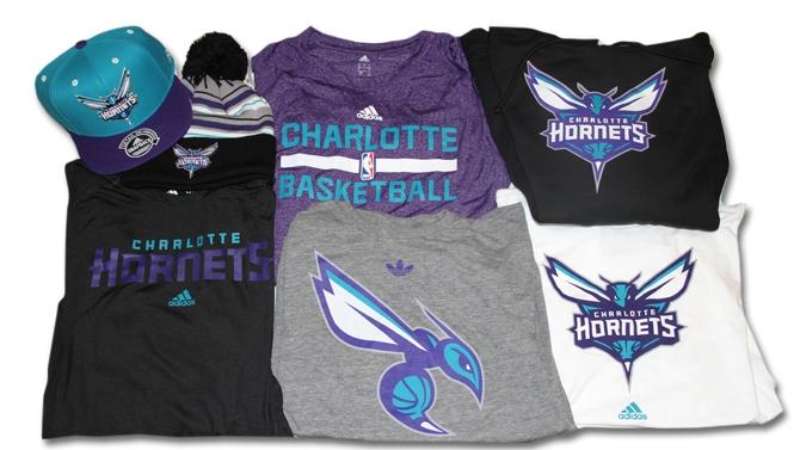
The primary logo serves as the centerpiece of a comprehensive brand system including secondary marks, alternate logos, and specialized applications. A simplified hornet silhouette functions as an icon for social media profiles and app interfaces.
The hexagon-shaped alternate logo references honeycomb patterns while providing geometric variety in the brand architecture.
The modernized Hugo mascot logo maintains visual continuity with the original character while matching the contemporary aesthetic of the primary mark. This allows the franchise to serve different audience segments – the fierce primary logo appeals to competitive basketball fans while Hugo connects with families and younger audiences.
Court design at Spectrum Center incorporates the logo alongside hexagonal cell patterns that extend the honeycomb metaphor. Uniform designs feature the Jumpman logo on jerseys, creating visual partnership between Hornets and Jordan Brand identities.
The purple-teal-gray color system maintains consistency across all touchpoints from packaging design to digital platforms to arena signage.
Brand guidelines documents specify exact usage parameters for logos, colors, typography, and supporting graphic elements. These standards ensure consistent application whether the logo appears on broadcast graphics, poster design materials, or licensed merchandise.
How Should the Charlotte Hornets Logo Be Used?
Official Usage Guidelines:
The primary logo must always maintain its original color specifications without modification. Single-color versions should only appear in purple or white, never altered to other hue values.
Users cannot add effects like shadows, gradients, or outlines that deviate from official specifications.
The logo cannot be placed on busy backgrounds that reduce legibility. Solid colors or subtle textures only.
Rotation, skewing, or perspective distortion is prohibited to maintain brand integrity.
Where to Access Official Logos:
Official Charlotte Hornets logos are available through the NBA’s media portal for credentialed media members. Fans and commercial users should contact the Hornets’ business operations department for licensing inquiries.
High-resolution logos appear on the official Hornets website in limited capacity for editorial use only.
Licensing Information:
Commercial use of Charlotte Hornets logos requires licensing agreements through the team’s legal department and NBA Properties. Unauthorized reproduction for merchandise, promotional materials, or commercial purposes violates trademark protection.
Editorial and news organizations may use logos under fair use provisions when reporting on the team, but should verify usage rights for specific applications.
Trademark Protection Details:
The Charlotte Hornets name, logos, and associated marks are registered trademarks of Hornets Sports & Entertainment. The franchise actively enforces trademark rights to prevent unauthorized commercial exploitation and maintain brand style guide consistency.
FAQ About the Charlotte Hornets Logo
When was the Charlotte Hornets logo created?
The current Charlotte Hornets logo was created in 2013 and unveiled on December 21, 2013, during halftime of a game against the Utah Jazz. It officially became the franchise’s primary logo beginning with the 2014-15 NBA season when the team reclaimed the Hornets name from its previous identity as the Charlotte Bobcats.
Who designed the Charlotte Hornets logo?
Darrin Crescenzi designed the primary concept for the current Charlotte Hornets logo in collaboration with Nike’s Brand Jordan design team and Rare Design agency. Crescenzi developed the initial hornet mascot concept, which Rodney Richardson of Rare Design refined through collaborative iterations. The comprehensive brand identity package involved multiple designers across the three organizations working under Michael Jordan’s ownership direction.
What do the colors in the Charlotte Hornets logo mean?
The colors represent both franchise history and Charlotte’s identity. Hornets purple symbolizes royalty, power, and competitive ambition while referencing Jordan Brand associations. Teal honors the original Hornets era (1988-2002) and represents energy and uniqueness.
Gray adds modern sophistication and reflects Charlotte’s contemporary urban character. White provides contrast and references the original Hugo logo’s wing details.
How many times has the Charlotte Hornets logo been redesigned?
The Charlotte basketball franchise has had six major logo iterations: the original geometric Hornets logo (1988-89), the Hugo mascot logo (1989-2002), three distinct Bobcats logos (2004-07, 2007-12, 2012-14), and the current modernized Hornets logo (2014-present). This count includes only primary logos, not secondary marks or alternates. The current design represents the team’s return to its roots after 12 years under the Bobcats identity.
Where can I download the official Charlotte Hornets logo?
Official Charlotte Hornets logos are available through the NBA’s media resources portal for credentialed press members. For commercial licensing or high-resolution files, contact the Charlotte Hornets business operations department directly through the team’s official website.
Fans should note that downloading logos for commercial use without proper licensing violates trademark protections. Editorial and personal uses should verify appropriate usage rights before downloading.
Is the Charlotte Hornets logo trademarked?
Yes, the Charlotte Hornets logo is a registered trademark owned by Hornets Sports & Entertainment and protected under NBA Properties intellectual property rights. All variations of the logo including primary, secondary, and alternate marks carry trademark protection.
Unauthorized commercial use, reproduction, or modification of the logo constitutes trademark infringement and may result in legal action. The team actively enforces its trademark rights to protect brand integrity.
What font is used in the Charlotte Hornets logo?
The Charlotte Hornets logo uses a custom typeface called “NBA Hornets Buzz City” designed specifically for the franchise. This proprietary font features aggressive angles, dynamic slant, and stinger-inspired terminals that connect typographically to the hornet mascot.
The custom design ensures unique brand identity that cannot be replicated using standard commercial fonts. The typeface is not available for public licensing or download.
Why did Charlotte Hornets choose a hornet for their logo?
Charlotte chose the hornet mascot based on Revolutionary War history when British General Charles Cornwallis called Charlotte a “hornet’s nest of rebellion” due to fierce colonial resistance. The nickname has deep local significance, previously used by Charlotte’s minor league baseball team (1901-1973) and World Football League team (1974-75). Fan voting in 1988 selected “Hornets” over alternatives like “Charlotte Spirit,” establishing the insect as the city’s basketball identity.
Conclusion
The Charlotte Hornets logo represents more than basketball team branding. It embodies a city’s sporting heritage, Revolutionary War legacy, and passionate fan base that fought for 12 years to reclaim their identity.
The 2014 rebrand successfully merged nostalgia for the original teal-and-purple era with contemporary design sophistication influenced by Jordan Brand aesthetics. Key attributes include the aggressive hornet mascot with integrated basketball body, distinctive purple-teal-gray color palette, and custom typography that conveys fierce competitiveness.
Darrin Crescenzi’s collaboration with Brand Jordan and Rare Design created a logo design that honors Charlotte’s past while positioning the franchise for future success.
The logo’s cultural impact extends beyond the court into fashion, streetwear, and 1990s nostalgia markets, demonstrating how sports branding can transcend athletic performance to become cultural iconography. As Charlotte continues building competitive teams, the logo serves as a visual promise of the relentless, swarming intensity that both hornets and the city itself represent.

Renowned for his expertise in logo design and visual branding, Bogdan has developed a multitude of logos for various clients.
His skills extend to creating posters, vector illustrations, business cards, and brochures. Additionally, Bogdan's UI kits were featured on marketplaces like Visual Hierarchy and UI8.
He also wrote in the past years on sites like Design Your Way, WebDesignerDepot, WPDean, Designmodo, Speckyboy, Slider Revolution, and more.
- The Windsurf Logo History, Colors, Font, And Meaning - 10 October 2026
- How to Remove Background From Product Photos (No Photoshop) - 10 October 2026
- How Designers can Build a Stronger Online Creative Identity - 9 October 2026

Bogdan Sandu is a seasoned designer who has been designing websites since 2008. Renowned for his expertise in logo design and visual branding, Bogdan has developed a multitude of logos for various clients. His skills extend to creating posters, vector illustrations, business cards, and brochures. Additionally, Bogdan's UI kits were featured on marketplaces like Visual Hierarchy and UI8. He also wrote in the past years on sites like Design Your Way, WebDesignerDepot, WPDean, Designmodo, Speckyboy, Slider Revolution, and more.
You Might Also Like