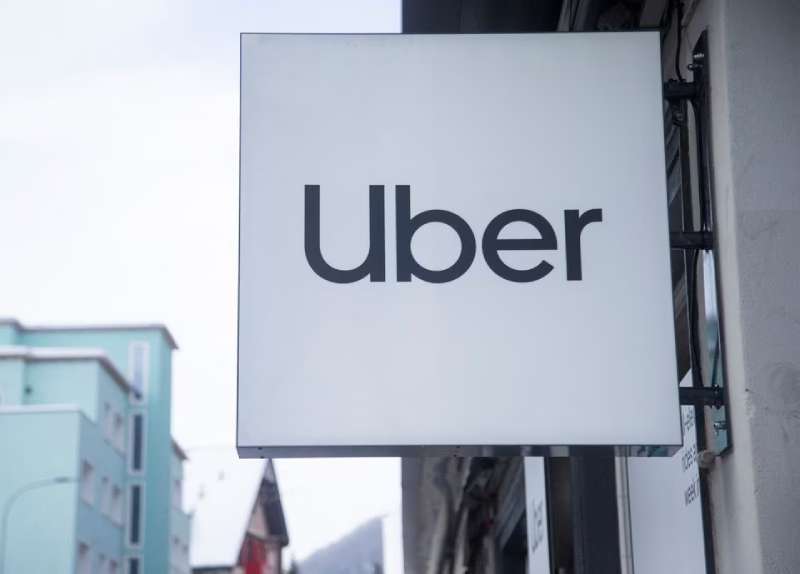
Uber uses Uber Move, a custom sans-serif font commissioned specifically for the brand.
MCKL type foundry designed Uber Move in collaboration with branding agency Wolff Olins and Uber’s in-house design team. Uber introduced it in September 2018 as the centerpiece of a full brand overhaul, and it has been used across every brand touchpoint since.
What Type of Font Is Uber Move?

Uber Move is a geometric sans-serif with some grotesque characteristics mixed in. The overall construction is clean and geometric, but the lowercase “a” breaks from that pattern and leans toward a double-story grotesque form. It feels slightly unexpected up close, which is exactly what keeps it from looking generic.
The family ships in 4 weights and 2 optical sizes. Display is tracked tightly and built for headlines. Text is spaced more generously and slightly condensed, optimized for small UI elements like buttons and labels.
Technically, it draws from early 20th-century typefaces like Futura and Neuzeit Grotesk, then filtered through the lens of transportation signage from around the world, including Highway Gothic and the German traffic typeface DIN. You can see it if you look closely. The letterforms feel functional in a way that pure geometric sans-serifs usually don’t.
Key characteristics:
- Classification: Geometric sans-serif with grotesque details
- x-height: Generous, built for mobile legibility
- Optical sizes: Display (tight tracking) and Text (condensed, open spacing)
- Weights: 4 (Light, Regular, Medium, Bold)
Who Designed Uber Move?
Jeremy Mickel of design studio MCKL created Uber Move. He worked alongside Wolff Olins, the global brand consultancy behind the 2018 rebrand, and Uber’s internal brand experience team.
Mickel described the process as developing the typeface and the logo simultaneously, each informing the other. The wordmark came first, then the full type system grew from it.
Uber Move is proprietary. It was commissioned exclusively for Uber Technologies and is not publicly available for licensing or commercial use.
Is Uber Move Free to Use?
No. Uber Move is exclusively licensed to Uber. You will not find it on Google Fonts, Adobe Fonts, or any legitimate font marketplace.
Some third-party font download sites have uploaded copies of Uber Move, but using those files puts you in a legally tricky position. The font is copyrighted and not cleared for public use.
If you need something similar for a project, your best options are the free alternatives listed in the next section.
What Are the Best Free Alternatives to Uber Move?
Uber Move sits in a specific spot: geometric construction, good screen legibility, slightly humanist touches. These 5 fonts come closest to that combination without the licensing problem.
| Font | Similarity | License | Source |
| Inter | Generous x-height, strong screen legibility | Free / OFL | Google Fonts |
| DM Sans | Geometric structure, clean weight range | Free / OFL | Google Fonts |
| Work Sans | Optical size variation, similar proportions | Free / OFL | Google Fonts |
| Space Grotesk | Geometric with quirky details, similar personality | Free / OFL | Google Fonts |
| Proxima Nova alternatives | Hybrid geometric-humanist, clean UI feel | Paid | Adobe Fonts |
Inter is probably the closest match for UI work. It was literally built for screen legibility at small sizes, and the proportions overlap enough that it reads similarly in a mobile interface context.
If you want something with a bit more personality in the letterforms, Space Grotesk is worth trying. The quirky details feel closer to Uber Move’s mixed geometric-grotesque approach.
What Font Did Uber Use Before Uber Move?

Before 2018, Uber’s primary typeface was Clan Pro, a commercial sans-serif licensed from a third-party foundry. The app’s UI also relied on system fonts and Helvetica Neue in various contexts during earlier phases.
The 2016 rebrand (the “bits and atoms” era, designed in-house by then-CEO Travis Kalanick) kept Clan Pro but applied it inconsistently across markets. There was no real unified type system during that period.
When Uber commissioned Uber Move in 2018, part of the motivation was practical: owning the typeface outright eliminates ongoing licensing fees for Clan Pro. Airbnb, YouTube, and Netflix made the same calculation around the same time.
How to Use Uber Move Alternatives in Your Design Tools
In Figma
Inter and DM Sans are both available directly inside Figma via Google Fonts integration. No install needed. Just open the font picker, search the name, and they show up.
For Space Grotesk, same process. All three are free and render well at display and body sizes.
In Photoshop or Illustrator
Download the font files from Google Fonts, unzip the folder, and install them directly into Illustrator or Photoshop via your operating system’s font manager.
On Mac, double-click the .ttf or .otf file and click Install. On Windows, right-click and select “Install.” The fonts appear in Adobe apps after a restart.
On the Web (CSS)
Using Inter via Google Fonts embed:
“ <link href="https://fonts.googleapis.com/css2?family=Inter:wght@400;500;700&display=swap" rel="stylesheet"> `
Then in your CSS:
` body { font-family: 'Inter', sans-serif; } `
This gets you a reliable, fast-loading alternative that covers the same use cases as Uber Move Text across most UI contexts.
Why Did Uber Choose This Font?

The 2018 rebrand happened under new CEO Dara Khosrowshahi, who took over after Travis Kalanick’s exit. The company needed a visual reset that communicated safety and accessibility rather than what the Fast Company piece at the time called “masculine bravado.”
Uber Move was a direct response to that brief. Transportation typefaces like Highway Gothic and DIN were the reference points because they are built around one thing: legibility under pressure. You read them fast, at a distance, under bad conditions. That functional quality mapped onto what Uber needed in a ride-hailing app.
The font also solved a practical brand consistency problem. Before 2018, Uber operated across dozens of markets with no unified type system. Different regions used different fallback fonts. Uber Move gave the brand a single typographic voice globally, which matters when your logo is just your name in a wordmark.
Owning the typeface outright also meant no recurring licensing fees and full control over how the font evolves. If Uber decides to expand the family or add new weights for specific use cases, they can. That kind of flexibility is hard to get with a commercially licensed third-party font.
Brands like Airbnb and Netflix went through the same process around the same period. Custom typefaces became the standard move for companies that were scaling fast enough to justify the investment and needed stronger visual hierarchy across their platforms.
It also connects to a broader conversation about font psychology. Geometric sans-serifs read as modern and efficient. Add the transportation signage reference, and the typeface quietly reinforces what Uber does without being heavy-handed about it. That’s usually how good typography works in brand systems. It just feels right without you being able to say exactly why.
Other rideshare and tech brands worth comparing: DoorDash, Notion, and Instacart all made custom or near-custom type decisions in the same era, suggesting the trend wasn’t specific to Uber’s situation. It reflected a broader shift in how tech companies think about brand assets.
FAQ on The What Font Does Uber Use
What is the name of the font Uber uses?
Uber uses a custom typeface called Uber Move.
It is a proprietary geometric sans-serif commissioned in 2018 and used across the app, logo, and all marketing materials. It is not available for public use.
Who designed the Uber font?
Jeremy Mickel of type studio MCKL designed Uber Move.
He worked alongside branding agency Wolff Olins and Uber’s in-house design team. The three parties developed the typeface and the logo wordmark in parallel.
Is Uber Move free to download?
No. Uber Move is exclusively licensed to Uber Technologies.
It does not appear on Google Fonts or Adobe Fonts. Some unofficial sites host copies, but using them is a copyright violation. Stick to free sans-serif alternatives like Inter instead.
What font did Uber use before Uber Move?
Uber’s previous primary typeface was Clan Pro, a commercially licensed sans-serif.
The app also relied on Helvetica Neue and platform system fonts before the 2018 rebrand unified everything under Uber Move.
What type of font is Uber Move?
Uber Move is a geometric sans-serif with grotesque details mixed in.
It comes in 4 weights and 2 optical sizes: Display for headlines and Text for small UI elements. The lowercase “a” has a double-story form, which sets it apart from pure geometric typefaces.
What fonts look similar to Uber Move?
The closest free alternatives are Inter, DM Sans, and Space Grotesk.
All three share Uber Move’s generous x-height and clean geometric structure. Inter is the most practical choice for UI mockups and web design work.
Does Uber use the same font across all its apps?
Yes. Uber Move is the standard typeface across the Uber app, Uber Eats, and brand communications globally.
Some regional marketing materials use locally appropriate typefaces, but the core app typography stays consistent with Uber Move across all markets.
Why did Uber create a custom font?
Owning a typeface cuts ongoing font licensing fees and gives the brand full typographic control.
It also solved a consistency problem. Before 2018, Uber had no unified type system across markets. Uber Move replaced that fragmented approach with one typeface for every surface.
What inspired the design of Uber Move?
Transportation signage. Specifically, typefaces like Highway Gothic and the German traffic standard DIN.
MCKL also drew from early 20th-century sans-serifs like Futura and Neuzeit Grotesk. The goal was legibility under real-world conditions, which matched what a ride-hailing app actually needs.
How does Uber Move compare to fonts used by similar brands?
Airbnb uses its own custom typeface, Cereal, also designed by Dalton Maag.
Both brands commissioned proprietary fonts around the same period. Uber Move leans more geometric and transport-influenced. Cereal reads warmer and more rounded. Different briefs, same strategic logic.
Conclusion
If you’ve ever wondered what font does Uber use, the answer is Uber Move, a proprietary geometric sans-serif built from scratch for the brand’s 2018 identity overhaul.
It is not publicly licensed, but free alternatives like Inter and DM Sans cover most UI and web design needs without the legal complications.
The typeface reflects a clear design decision: prioritize legibility, global consistency, and brand recognition over decorative detail. That’s a calculation more tech companies are making with their typographic hierarchy systems.
For anyone working on app interfaces or brand typography, Uber Move is worth studying even if you can’t use it directly.

Renowned for his expertise in logo design and visual branding, Bogdan has developed a multitude of logos for various clients.
His skills extend to creating posters, vector illustrations, business cards, and brochures. Additionally, Bogdan's UI kits were featured on marketplaces like Visual Hierarchy and UI8.
He also wrote in the past years on sites like Design Your Way, WebDesignerDepot, WPDean, Designmodo, Speckyboy, Slider Revolution, and more.
- Canva vs PowerPoint: Which Is Better for Presentations? - 22 September 2026
- How to Install Fonts on Mac (Step-by-Step Guide) - 20 September 2026
- From Mockup to Code: How AI-Augmented Development Speeds Up the Design Handoff - 19 September 2026

Bogdan Sandu is a seasoned designer who has been designing websites since 2008. Renowned for his expertise in logo design and visual branding, Bogdan has developed a multitude of logos for various clients. His skills extend to creating posters, vector illustrations, business cards, and brochures. Additionally, Bogdan's UI kits were featured on marketplaces like Visual Hierarchy and UI8. He also wrote in the past years on sites like Design Your Way, WebDesignerDepot, WPDean, Designmodo, Speckyboy, Slider Revolution, and more.
You Might Also Like