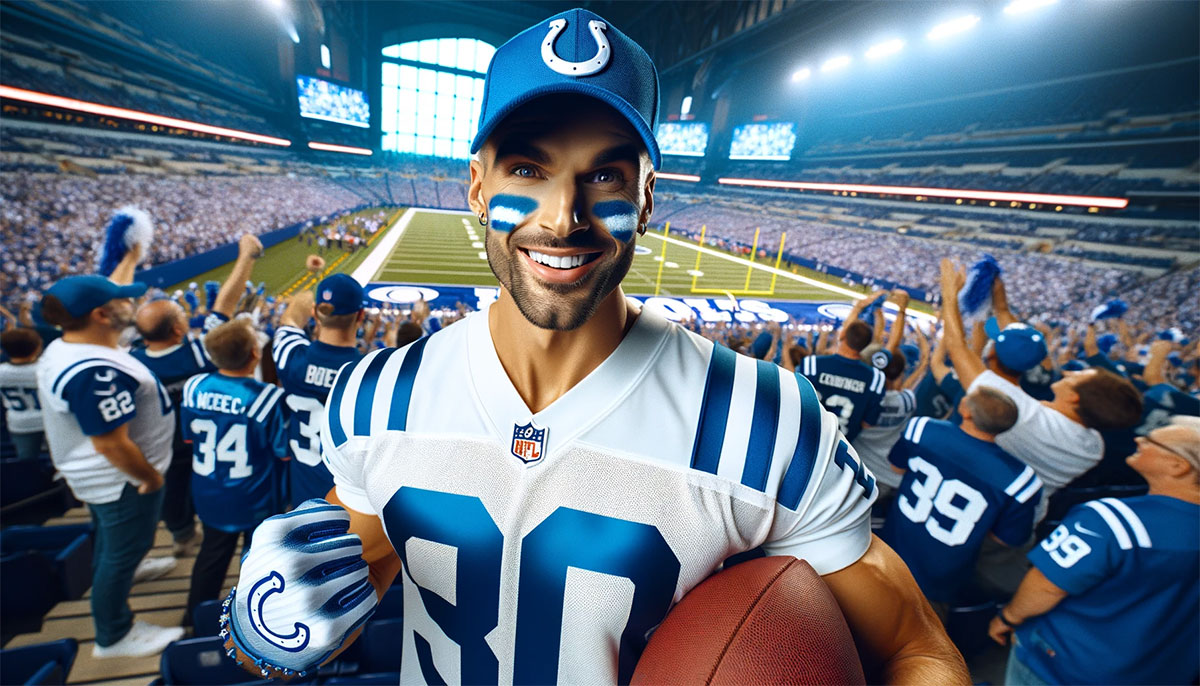
The Indianapolis Colts logo stands as one of the most recognizable symbols in professional football. A simple blue horseshoe. Nothing more, nothing less.
This logo has represented the franchise since its Baltimore days, making it one of the oldest continuous designs among NFL team logos. The Colts organization was founded in 1953, and the horseshoe emblem has undergone only minor refinements across seven decades.
The current version features a slightly modernized horseshoe shape introduced in 2020. Indianapolis holds the distinction of using essentially the same logo longer than most NFL franchises. Four subtle updates. Same core identity.
What is the Indianapolis Colts Logo?
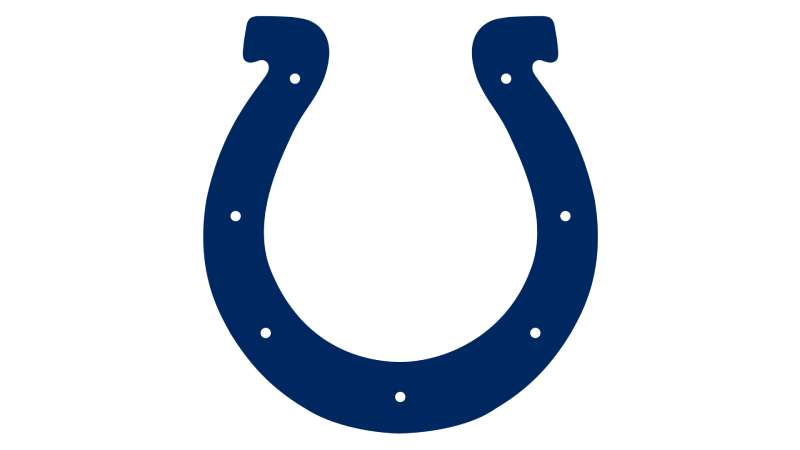
The Indianapolis Colts logo is a blue horseshoe facing right, officially adopted in 1953 when the franchise joined the NFL. The design carries themes of luck, strength, and equestrian heritage. No designer has been publicly credited for the original concept.
Design Specifications:
- Design Type: Icon-based symbol (no wordmark)
- Primary Elements: Single horseshoe shape, open end facing right
- Official Introduction: 1953
- Designer/Agency: Unknown (original), NFL Properties (refinements)
- Trademark Status: Registered trademark of the Indianapolis Colts, LLC
- Color Palette: Speed Blue (#002C5F), White (#FFFFFF)
- Usage Context: Helmets, jerseys, Lucas Oil Stadium, merchandise, digital platforms
How Has the Indianapolis Colts Logo Evolved Over Time?
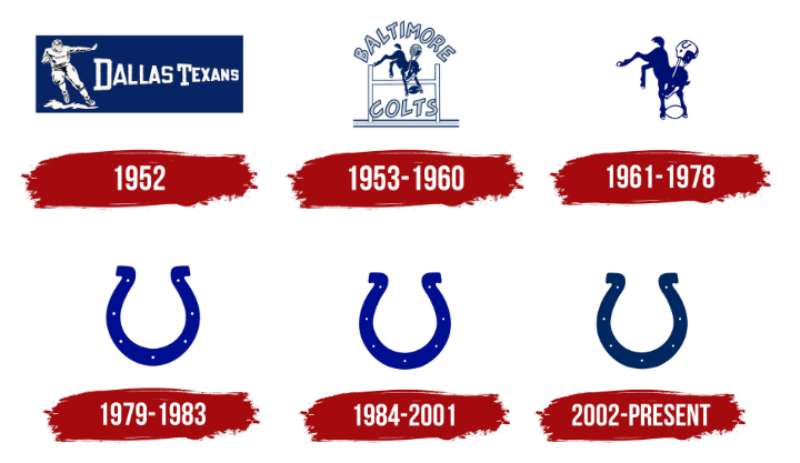
The Colts horseshoe has remained remarkably consistent since 1953.
Minor adjustments to proportions and color shades mark the only real changes.
This makes it one of the least-altered logos in professional sports history.
Original Baltimore Colts Logo (1953-1978)
- Years Active: 1953-1978
- Design Description: Blue horseshoe with rounded edges, open end pointing right
- Color Scheme: Royal blue with white trim on helmets
- Designer: Uncredited
- Context: Created when the franchise entered the NFL after the previous Baltimore Colts folded in 1950
- Key Changes from Previous: Original design (no predecessor)
- Cultural Significance: Became associated with Johnny Unitas and the “Greatest Game Ever Played” in 1958
Late Baltimore Era Logo (1979-1983)
- Years Active: 1979-1983
- Design Description: Slightly bolder horseshoe with sharper edges
- Color Scheme: Darker blue shade
- Designer: NFL Properties
- Context: Subtle modernization as the league updated visual standards
- Key Changes from Previous: Thicker stroke weight, more defined corners
- Cultural Significance: Final years in Baltimore before controversial relocation
Indianapolis Era Logo (1984-2019)
- Years Active: 1984-2019
- Design Description: Clean horseshoe with refined proportions
- Color Scheme: Speed Blue (#002C5F)
- Designer: NFL Properties
- Context: Team relocated to Indianapolis in March 1984
- Key Changes from Previous: Standardized blue shade, slightly narrower shape
- Cultural Significance: Peyton Manning era, Super Bowl XLI championship
Current Indianapolis Colts Logo (2020-Present)
- Years Active: 2020-Present
- Design Description: Modernized horseshoe with cleaner lines
- Color Scheme: Speed Blue (#002C5F), White (#FFFFFF)
- Designer: NFL Properties in collaboration with team
- Context: Part of league-wide brand refresh initiative
- Key Changes from Previous: Slightly adjusted curves, optimized for digital display
- Cultural Significance: Represents new chapter in franchise history
What Do the Design Elements of the Indianapolis Colts Logo Mean?
The horseshoe carries straightforward symbolism.
Luck, strength, and connection to equestrian tradition.
Indiana has deep horse racing roots, so the symbol fits perfectly.
Why Did the Colts Choose These Specific Colors?
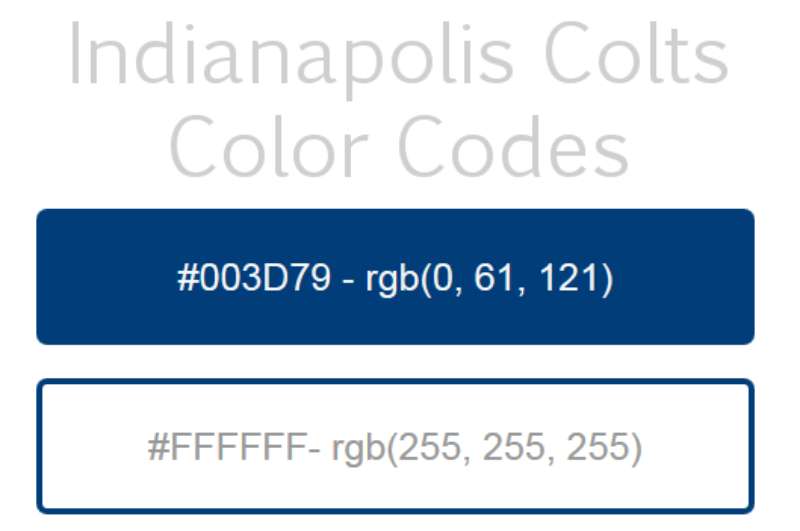
Blue communicates trust, stability, and professionalism. The psychology behind color choices in sports branding matters more than most fans realize.
Speed Blue creates strong contrast against white backgrounds. It photographs well under stadium lights.
Teams with blue in their logos often project reliability. The Colts lean into this fully.
- Speed Blue: Hex #002C5F, Pantone 289 C. Represents strength, dependability, and Indiana’s winter skies
- White: Hex #FFFFFF. Provides clarity, cleanliness, and helmet visibility. White logo applications work well across merchandise
What Typography Style Is Used in the Indianapolis Colts Logo?
The primary logo contains no typography at all. Just the horseshoe.
Secondary wordmarks use a custom sans-serif font with athletic characteristics.
Bold, condensed letterforms appear on uniforms and marketing materials. The team name typically renders in all capitals with tight letter spacing.
What Are the Hidden Meanings in the Indianapolis Colts Logo?
The horseshoe opens to the right. Traditional superstition says this lets luck “fall out,” but sports teams often ignore folklore.
Some designers note the shape creates a natural “C” form. Coincidence or intentional? Nobody has confirmed either way.
The psychology of curved shapes suggests approachability and movement. The horseshoe arch feels dynamic without being aggressive.
How Does the Indianapolis Colts Logo Compare to Competitor Logos?
AFC South rivals use completely different approaches.
The Houston Texans logo features a bull head with aggressive angles.
Tennessee Titans use a flaming “T” with sharp edges.
The Jacksonville Jaguars emblem shows a snarling cat face.
Against these complex designs, the Colts horseshoe stands out through simplicity. Most division rivals use mascot-based imagery while Indianapolis sticks to pure symbolism. This minimalist approach makes it instantly recognizable even at small sizes.
What Are the Technical Specifications of the Indianapolis Colts Logo?
Official Color Codes:
- Speed Blue (Primary)
- Hex: #002C5F
- RGB: (0, 44, 95)
- CMYK: (100, 76, 12, 70)
- Pantone: 289 C
- White (Secondary)
- Hex: #FFFFFF
- RGB: (255, 255, 255)
- CMYK: (0, 0, 0, 0)
- Pantone: White
Dimensions and Proportions:
- Aspect Ratio: Approximately 1:1.15 (width to height)
- Minimum Size: 0.5 inches for print, 50 pixels for digital
- Clear Space: Minimum padding equal to 25% of logo height on all sides
- File Formats: Vector formats (AI, EPS, SVG) for scalability, PNG for digital use
What Cultural Impact Has the Indianapolis Colts Logo Had?
The horseshoe became synonymous with professional football excellence during the Peyton Manning era.
Super Bowl XLI in 2007 put the symbol on a global stage.
Indiana residents adopted the logo as a regional identifier beyond just football fandom. You see it on cars, businesses, even tattoos throughout the state.
The design influenced how fans perceive simple sports logos. It proved you don’t need complexity to build lasting brand recognition.
How Does the Indianapolis Colts Logo Fit Into the Overall Brand Identity?
The horseshoe anchors everything. Jerseys, stadium signage, merchandise, digital presence.
Lucas Oil Stadium incorporates the shape into architectural elements and wayfinding systems.
Team mascot “Blue” (a blue horse character) extends the equine theme while the logo maintains its clean, classic aesthetic.
Secondary marks include wordmarks and combination logos, but the standalone horseshoe remains the primary identifier. Following sound logo design principles, the Colts keep their visual identity tight and consistent.
How Should the Indianapolis Colts Logo Be Used?
Official Usage Guidelines:
- Do: Maintain clear space around the logo, use approved color versions, scale proportionally
- Don’t: Stretch, rotate, add effects, place on busy backgrounds, alter colors
- Access: Official logos available through NFL media portals for credentialed media
- Licensing: Commercial use requires NFL Properties licensing agreement
- Trademark: Protected under federal trademark registration, unauthorized commercial use prohibited
The team publishes brand guidelines for partners and vendors. These documents specify exact usage parameters for every application from billboards to social media avatars.
FAQ on The Indianapolis Colts Logo
What Does the Indianapolis Colts Logo Represent?
The horseshoe logo represents luck, strength, and Indiana’s horse racing heritage.
It connects to the team name while honoring regional equestrian traditions. The symbol has defined the franchise identity since 1953.
Simple. Timeless. Immediately recognizable across NFL merchandise and broadcasts.
When Was the Indianapolis Colts Logo Created?
The original logo debuted in 1953 when the Baltimore Colts joined the NFL.
It moved with the franchise to Indianapolis in 1984. The team emblem has remained essentially unchanged for over 70 years.
Few professional sports logos can claim that kind of continuity.
Why Is the Colts Logo a Horseshoe?
Horseshoes connect directly to the “Colts” name. Young horses. Equestrian imagery.
The symbol also represents good luck in American folklore. Indiana hosts major horse racing events, making the connection even stronger.
It works on multiple levels without being complicated.
What Are the Official Indianapolis Colts Colors?
Speed Blue and white make up the official color palette.
The blue carries hex code #002C5F. Understanding color theory helps explain why this combination projects trust and professionalism.
Clean. Bold. Perfect for helmet visibility under stadium lights.
Has the Colts Logo Ever Changed?
Only minor refinements. The logo evolution includes four subtle updates since 1953.
Designers adjusted proportions and standardized the blue hue over time. The 2020 version optimized curves for digital display.
Core shape? Basically identical to the original.
Who Designed the Indianapolis Colts Logo?
The original designer remains unknown. No public records credit a specific artist.
NFL Properties handled later refinements. Unlike logos created by well-known designers, the Colts horseshoe emerged from the early NFL’s informal branding era.
What Font Does the Indianapolis Colts Use?
The primary logo contains no text. Just the horseshoe symbol.
Secondary wordmarks use a custom athletic typeface with bold, condensed characteristics. The typographic hierarchy keeps the horseshoe dominant across all applications.
Can I Use the Colts Logo for Personal Projects?
Personal, non-commercial use typically falls under fair use. Selling products? That requires NFL licensing.
The horseshoe holds federal trademark protection. Commercial applications need written permission from the team or NFL Properties.
Why Does the Horseshoe Face Right?
Traditional superstition says horseshoes should face up to “hold luck in.” The Colts version opens to the right instead.
Some see this as the shoe in motion. Others note it creates a subtle “C” shape. The team has never officially explained the orientation.
Where Can I Download the Official Colts Logo?
Credentialed media access official files through NFL media portals.
Fans can find approved images on the team website. High-resolution files for print projects require proper DPI specifications to maintain quality.
Always verify you’re using legitimate sources.
Conclusion
The Indianapolis Colts logo proves that simplicity wins. Seven decades. One horseshoe. Minimal changes.
While other NFL franchises chase trends with complex mascot designs, the Colts stick to what works. The blue horseshoe creates instant recognition from Lucas Oil Stadium to living rooms across the AFC South.
This approach to visual storytelling offers a lesson for any brand. Strong design elements don’t need constant reinvention.
Sometimes the best team identity is the one you never change.

Renowned for his expertise in logo design and visual branding, Bogdan has developed a multitude of logos for various clients.
His skills extend to creating posters, vector illustrations, business cards, and brochures. Additionally, Bogdan's UI kits were featured on marketplaces like Visual Hierarchy and UI8.
He also wrote in the past years on sites like Design Your Way, WebDesignerDepot, WPDean, Designmodo, Speckyboy, Slider Revolution, and more.
- Minecraft Font Generator - 8 October 2026
- How Top Meta Ad Creative Is Designed for E-commerce Brands - 8 October 2026
- How photo recovery software works and when to use it - 7 October 2026

Bogdan Sandu is a seasoned designer who has been designing websites since 2008. Renowned for his expertise in logo design and visual branding, Bogdan has developed a multitude of logos for various clients. His skills extend to creating posters, vector illustrations, business cards, and brochures. Additionally, Bogdan's UI kits were featured on marketplaces like Visual Hierarchy and UI8. He also wrote in the past years on sites like Design Your Way, WebDesignerDepot, WPDean, Designmodo, Speckyboy, Slider Revolution, and more.
You Might Also Like