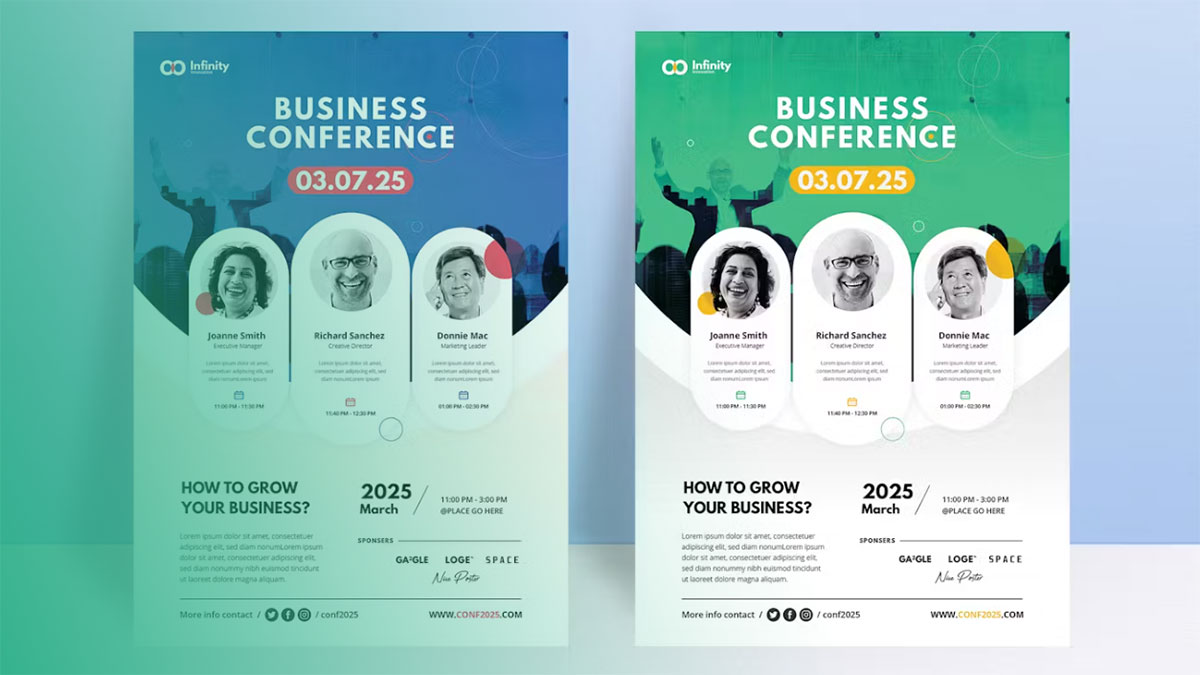
Full color, letter-size flyers on 100 lb gloss cost about 6 to 28 cents per piece at a print shop, based on Acme Prints’ 2023 price list for runs of 500 to 5,000. Quantity accounts for most of that gap.
Small same-day jobs are priced by the sheet instead. A full color letter copy costs $0.20 at the Rancho Santiago Community College District print shop (2024 price sheet).
Printing is rarely the largest line in a mailed campaign. USPS Every Door Direct Mail postage rose to $0.260 per piece on July 12, 2026, per 4OVER4’s rate breakdown, and that is more than a flyer costs to print in a 1,000-piece order.
How Much Does It Cost to Print a Flyer?
Print shops charge roughly 6 to 28 cents per piece for a full color letter-size flyer. A walk-in color copy at a college print shop runs about 20 to 33 cents, and commercial copy centers often charge more.
Order size moves that number more than anything else on the quote.
For 8.5 x 11 in full color, the published figures look like this:
- 500 flyers, one side, on 100 lb gloss cost $142.31, about 28 cents each (Acme Prints price list, 2023).
- 1,000 of the same come to $153.56, about 15 cents each.
- 5,000 cost $322.88, or about 6.5 cents each.
- A color copy on 32 lb paper is $0.20 single sided and $0.33 double sided (Rancho Santiago Community College District print shop, July 2024).
The per-piece price and the order total tell different stories. In the Acme list, 5,000 flyers cost about 2.3 times as much as 500, for ten times the count.
Unless stated otherwise, every price here assumes letter size, full color, 100 lb gloss text and standard turnaround.
Published price lists were checked in September 2026. Shops reprice often (paper costs move), so treat these as a reference point for a live quote, not a promise.
As a rough rule, copy shops charge per sheet and come out ahead below about 100 pieces. Online and commercial printers charge per run, and they win from 500 up.
Price per Flyer by Quantity
Doubling a flyer order almost never doubles the bill. In Acme Prints’ 2023 list, going from 500 to 1,000 letter flyers adds just $11.25.
Most of that comes down to setup. Preparing the file and running test sheets costs the same whether the press prints 500 or 5,000, so the fixed cost gets spread thinner as the run grows. Unit prices fall in steps, not in a smooth line.
Going from 500 to 1,000 drops the unit price about 46 percent. From 1,000 to 5,000 it falls another 58 percent, though the order total more than doubles. Above 5,000 the savings per piece get small, and most shops switch to a custom quote.
Online printers follow the same curve with wider ranges. Vistaprint, for example, sells flyers from 25 up to 20,000 pieces and asks for a quote request above that.
Cheap flyers you never hand out are still the most expensive ones you buy. A flyer with a date or a limited offer expires with the promotion, so order what you can realistically distribute in four to six weeks and accept the higher unit price.
Evergreen pieces are where a bigger run actually pays off. A menu or a service list can sit in a drawer for a year and still be right.
How Size and Paper Stock Change the Price
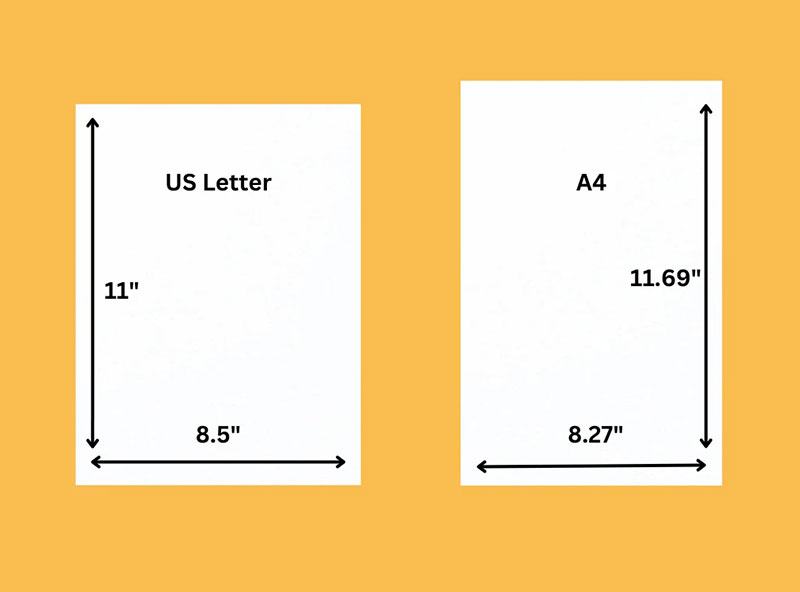
After quantity, size and paper move the price most. Going up one size roughly doubles it, and heavier or specialty stock can add more than the size change does.
Flyer Sizes
Smaller flyers are cheaper because printers fit several on one press sheet and cut them apart. A half-letter flyer prints two per letter sheet, a quarter-letter prints four.
| Size (inches) | Common name | Price effect |
|---|---|---|
| 4.25 x 5.5 | Quarter letter | Lowest, four per sheet |
| 5.5 x 8.5 | Half letter | Low, two per sheet |
| 8.5 x 11 | Letter | The baseline |
| 11 x 17 | Tabloid | About 2.7x letter at 1,000 pieces |
That tabloid figure comes from Acme Prints: 1,000 single-sided 11 x 17 flyers list at $412.50, against $153.56 for letter size.
Helloprint’s pricing guide shows the same pattern in metric sizes. 5,000 A5 flyers cost 48 pounds, while 5,000 A4 flyers cost 91.
Stick to stock sizes. Vistaprint offers 11 flyer sizes and no custom sizes at all, and a comparison guide from 4OVER4 points out that an odd size wastes press sheet, which you pay for. A full rundown of standard flyer dimensions helps before you lock the layout.
Paper Weight and Finish
At the light end, 80 lb text (about 118 gsm) is the cheapest, a little floppy, and the back side can show through. Most printers default to 100 lb gloss text (about 148 gsm), the everyday flyer sheet. Step up to 100 lb cover (about 270 gsm) or 14 pt cardstock and you get something closer to a postcard, stiffer and pricier.
The 100 lb gloss text figure matches 4OVER4’s flyer guide, and the other gsm conversions are standard approximations. Pound ratings are confusing because text and cover stock are measured on different base sheets, so a clear breakdown of how paper weight relates to thickness saves a lot of guessing on order forms.
Weight costs real money. In Helloprint’s examples, 5,000 A5 flyers on 135 gsm run 48 pounds, and the same order on 250 gsm runs 92.
Finish can cost even more, and not the way most people expect. Gloss has the brightest color but is hard to write on, and matte has a softer look that reads well under shop lighting. Uncoated is the one you can write on with a pen, and at heavier weights it is often the priciest option.
Helloprint lists 5,000 writable uncoated A5 flyers on 250 gsm at 234 pounds, versus 72 for matte. If nobody needs to write on the flyer, skip uncoated.
Vistaprint’s spec sheet notes that its 14 pt and 16 pt glossy papers are coated on the front only, so the back takes ballpoint pen better than the face.
Color, Sides and Printing Method
Full color about doubles the price of a copy-shop flyer. A second printed side adds far less than most buyers assume.
The Rancho Santiago Community College District print shop’s July 2024 price sheet charges $0.10 for a black and white letter copy and $0.20 for color on the same 32 lb paper.
On a commercial run, the gap for printing both sides is small. Acme Prints charges $173.25 for 1,000 double-sided letter flyers, about 13 percent more than single sided.
On quotes, 4/0 means full color on the front and nothing on the back, and 4/4 means full color on both sides. The “4” stands for the four process inks. Anyone setting up files should understand how CMYK color works, because a file left in screen color gets converted by the printer, sometimes with an art fee.
A 4/1 job (full color front, black back) is the quiet money saver. According to 4OVER4, a black-only back saves plates on offset and ink on digital.
Brand colors add cost too. Matching an exact Pantone spot color means an extra ink and, on offset, an extra plate, which few small flyer jobs justify.
The press matters as well.
| Factor | Digital printing | Offset lithography |
|---|---|---|
| Setup cost | Minimal, no plates | Plates for each ink color |
| Best run length | Up to about 1,000 | Roughly 1,000 to 3,000 and up |
| Unit cost as quantity grows | Drops slowly | Drops steeply |
| Variable data (names, codes) | Yes | No |
Sources disagree on where the crossover sits. A UK litho printer writing on UK Business Forums puts it around 1,000 sheets, while the Sedmoy Legion print house in Yekaterinburg says offset starts making sense near 1,000 but only clearly pays off from about 3,000.
Both are right for their own presses. Plate costs and press size differ from shop to shop, which moves the break-even point.
You rarely pick the press yourself. A quote that looks cheap at 500 and expensive at 10,000 comes from a digital shop, and the reverse pattern comes from an offset shop, per 4OVER4. Get one of each above 1,000 pieces.
Where Is the Cheapest Place to Print Flyers?
It depends on the count. Below about 100 flyers needed today, a retail copy center wins. From a few hundred up, online printers usually do, and a local commercial shop makes sense once you need thousands and want a person to call.
Published prices rarely tell the whole story, because each type of printer quotes a different product under the same word.
| Printer type | Example | Typical turnaround | Pickup or ship |
|---|---|---|---|
| Retail copy center | FedEx Office | Same day or within 24 hours | Pickup, or 1 to 3 business days shipped |
| Online printer | Vistaprint | As soon as 6 business days, 2 with rush | Ship only |
| Local commercial shop | Independent offset printer | A few business days after proof | Pickup or local delivery |
FedEx Office sells flyers in set quantities from 50 to 1,000 on 32 lb laser paper as the default stock, per its product page (checked September 2026).
That is copy paper, not the gloss text stock most online printers quote. Treat them as two different products.
One more thing on the retail side. FedEx Office prints uploaded files with a small white margin and only offers edge-to-edge printing through its Canva templates, so anyone sending a Canva design to print gets full bleed there without extra setup.
Retail copy center
Same-day pickup and no shipping cost are the main draws, and a person can look at the file before it prints. The downsides are lighter default paper and set quantities. Per-sheet pricing also stops making sense past a few hundred pieces.
Online printer
This is where the lowest unit price at volume lives. Heavy coated stocks and many sizes come standard, and live price calculators make quotes easy to compare. Against that, shipping adds time and cost on top of production days, and the cheapest quotes are usually gang runs.
A gang run places several customers’ jobs on one press sheet so they share plates and press time. Color can shift slightly from one run to the next as a result, which matters only if the flyer must match another printed piece.
Local commercial shop
A local shop is rarely the cheapest line on a price list, but it can be the cheapest outcome.
A local printer can run your job on a dedicated sheet and catch a file problem before it becomes a reprint. Delivery comes without freight charges. For a run of several thousand with a brand color that has to match, that phone call is worth more than a few cents per piece.
Small runs are the weak spot, since many commercial shops set minimums that make 100 flyers poor value.
Hidden Fees That Raise a Flyer Quote
The advertised price covers printing. The invoice covers printing plus every fix and shipping charge, and those lines can add more than the paper does.
- File fixes for missing bleed, screen-color images, low-resolution logos or fonts that were not embedded
- Hard proofs, since a PDF proof is normally free but a printed one is not
- Rush fees, which pay for press priority and get wasted if you miss the daily upload cutoff
- Shipping weight, because paper is heavy and residential delivery costs more than a dock
- A second shipping address, which means a second freight charge
- Sales tax, plus cutting or folding if the job needs it
Weight surprises people most. 5,000 letter flyers on 100 lb gloss text weigh close to 100 pounds before the box is added, enough for shipping zone to cancel a small price advantage.
Turnaround hides a cost too. According to 4OVER4’s turnaround guide, a “2 business day” quote is production time only. Production starts at proof approval, and ground transit (typically 2 to 3 days) is counted separately, so the job takes roughly five to six business days from upload to delivery.
If the event date is fixed, count backward from it. Take the delivery date, subtract transit and production days, then subtract your own approval time.
Print-Ready Files Avoid Most of Them
Most art charges come from files that were never set up for a press. Build the document at final trim size with a 0.125 inch bleed on every edge, and keep text at least 0.125 inch inside the cut line (0.25 inch is safer).
Designers who skip that step usually do not understand what bleed does in print design. Cutting varies slightly from job to job, per 4OVER4, so artwork that stops exactly at the edge can show a white sliver.
Export a PDF (PDF/X if your software offers it) with fonts embedded and images at print resolution. A short checklist for setting up a print-ready file covers the rest.
Thin borders are another trap. A frame that must sit perfectly even around the flyer is, in practice, a reprint argument waiting to happen.
The Total Cost of a Flyer Campaign
Printing is often the smallest line. Once design and delivery are added, a mailed flyer campaign can cost three times the print bill.
Work through the budget in this order:
- Decide how you will distribute, because mailing rules can dictate the size.
- Choose size, stock and ink sides, then write the spec down.
- Get the design done, in-house or hired.
- Prepare the print-ready PDF.
- Quote the exact quantity at two or three printers, shipping included.
- Add postage or hand-distribution time.
Distribution goes first for a reason. A half-letter flyer cannot go through the cheapest mail option at all (more on that below).
Design Costs
Upwork puts median rates for graphic designers on its platform at $15 to $35 per hour, and estimates a flyer takes anywhere from one hour to more than ten.
The spread depends on what you hand over. A clear brief with final copy and photos ready keeps a flyer near the one-hour end. Rounds of feedback from several people push it past ten.
Free templates in Canva or Adobe Express cost nothing but your time, and they are fine for a yard sale or a class announcement. A freelancer is worth it for a business flyer with a real offer on it, and anyone setting their own rates can check typical flyer design pricing before quoting a client. An agency only makes sense when the flyer belongs to a larger brand campaign.
Distribution and EDDM Postage
USPS Every Door Direct Mail Retail cost $0.260 per piece as of July 12, 2026, per 4OVER4’s breakdown of the new rates.
That rate followed the USPS mailing price increase that took effect the same day. Guides written in spring 2026 list $0.247, so check the date on any EDDM figure before budgeting.
The rate is flat for every eligible size up to 3.3 ounces. But the piece has to qualify as a flat, which means taller than 6.125 inches, longer than 11.5 inches, or thicker than 0.25 inch (meeting any one of the three is enough).
- An 8.5 x 11 letter flyer qualifies.
- A 5.5 x 8.5 half-letter flyer does not.
EDDM Retail needs no permit and caps each drop at 5,000 pieces per ZIP code per day. You mail to whole carrier routes, so the route count sets the quantity, not you.
For 1,000 letter flyers mailed, the numbers work out like this:
| Line | Cost | Basis |
|---|---|---|
| Design | $75 | 3 hours at Upwork’s roughly $25 average rate |
| Printing | about $154 | 1,000-piece baseline quote from the quantity section |
| EDDM postage | $260 | 1,000 x $0.260 |
| Total | about $489 | roughly 49 cents per household |
Postage costs more than printing here. That is the normal result, not a bad quote, and the full math for mailing 1,000 flyers changes with route size and paper weight.
Hand distribution cuts the postage line to zero and replaces it with hours. One rule to know is that flyers cannot go inside mailboxes without postage, so door-to-door teams stick to doors and door hangers, or leave them on counters.
Flyer Printing Cost FAQ
Is a flyer the same thing as a postcard?
No. A flyer is usually a single sheet on text-weight paper, handed out or posted.
A postcard runs on thicker cover stock built to survive the mail stream. A quick look at what defines a flyer helps when a printer’s menu blurs the two.
Is printing flyers at home cheaper than a print shop?
Only for a handful. Home inkjets burn through cartridges fast on full color pages and cannot print edge to edge, and the paper is usually thin copy stock.
Past a couple dozen sheets, a copy center or online printer usually wins on both price and look.
How many flyers should I order?
Order what you can hand out or mail before the offer expires. For mailing, the carrier route count decides the quantity, since EDDM routes are all or nothing.
For handouts, estimate real foot traffic, then round up to the next price break.
Can I get flyers printed the same day?
Yes, at retail copy centers. FedEx Office says most flyer orders placed before noon Central time are ready for same-day pickup, depending on quantity.
Online printers need days, even on rush.
Which file format do printers want for flyers?
A PDF with fonts embedded and bleed included is the safest choice everywhere.
Many printers accept more. Vistaprint takes JPG, PNG, TIFF, PSD, AI and even PowerPoint files, but image formats can flatten text and soften small type.
Do coupon codes actually lower the price?
Often, yes, and on larger orders the savings are real. FedEx Office listed $20 off print orders of $100 or more in September 2026.
Check whether the code excludes shipping or rush fees before counting on it.
Which Change Cuts Flyer Printing Cost the Most?
Quantity cuts flyer printing cost the most. Moving an order up to the next price break lowers the unit price more than any change to paper or size.
After quantity, settle the stock size, and use letter if you are mailing. Paper and sides come last.
Paper comes last because the figures point one way. A heavier sheet nearly doubled Helloprint’s price, while a second printed side added about 13 percent at Acme Prints, so adding a back side buys more space for less money than upgrading the stock.
The trade-off is thinner paper in the hand. For a door handout nobody notices. For a menu kept on a counter, spend on the stock.
Prices here were verified in September 2026 and move with paper costs and postal rates. With the budget set, building the flyer in Canva is the next step.

Renowned for his expertise in logo design and visual branding, Bogdan has developed a multitude of logos for various clients.
His skills extend to creating posters, vector illustrations, business cards, and brochures. Additionally, Bogdan's UI kits were featured on marketplaces like Visual Hierarchy and UI8.
He also wrote in the past years on sites like Design Your Way, WebDesignerDepot, WPDean, Designmodo, Speckyboy, Slider Revolution, and more.
- Beautiful Fonts Similar to Poppins You Should Try - 22 October 2026
- Website Redesign: How to Improve Your Website without Losing SEO Rankings - 22 October 2026
- The Coda Logo History, Colors, Font, And Meaning - 20 October 2026

Bogdan Sandu is a seasoned designer who has been designing websites since 2008. Renowned for his expertise in logo design and visual branding, Bogdan has developed a multitude of logos for various clients. His skills extend to creating posters, vector illustrations, business cards, and brochures. Additionally, Bogdan's UI kits were featured on marketplaces like Visual Hierarchy and UI8. He also wrote in the past years on sites like Design Your Way, WebDesignerDepot, WPDean, Designmodo, Speckyboy, Slider Revolution, and more.
You Might Also Like