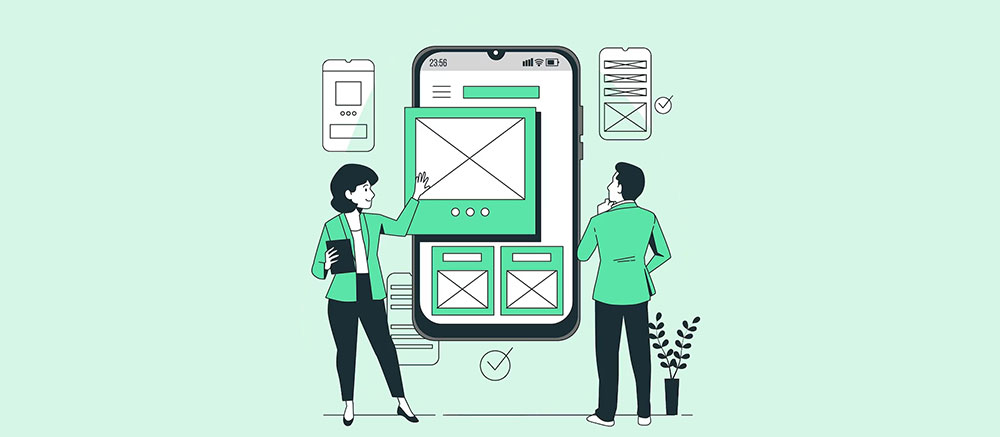
Ask most clients what separates a graphic designer from a web designer and you’ll get a shrug. Fair enough. On a job board, though, the line is pretty clear, and it mostly comes down to what you hand over at the end.
Graphic designers finish with fixed, exportable files for brands, packaging, and print collateral. Web work doesn’t end with a file you can print. The layout has to reflow across phones, tablets, and desktops, and a developer still has to wire it into a live site after the designer is done.
The two fields are closer in size than people assume. The U.S. Bureau of Labor Statistics counted 265,900 graphic designer jobs against 214,900 web developer and digital designer jobs in the United States as of May 2024. That’s a gap of roughly 51,000 positions, even though the projected growth rates look very different.
What Is a Graphic Designer?

Logos, packaging, brochures, posters. The output is almost always a static visual asset, something that looks the same on a shelf as it does in a PDF.
The job grew out of commercial art and print advertising, well before anyone had to worry about screens or scroll behavior.
Day to day, it pulls on a handful of skills:
- Typography and font pairing
- Color theory, contrast especially
- Layout and grid-based composition
- Vector illustration, plus a lot of photo editing
Type does most of the heavy lifting. Swap a single typeface and a brand can go from trustworthy to playful. Most designers treat typography as the first skill worth learning, not the last, and I’d agree with them.
A lot of graphic designers work for themselves, too. Self-employed workers make up 18% of the graphic design workforce, more than any single employer type (U.S. Bureau of Labor Statistics).
People also mix the role up with illustration. The difference is usually purpose, not talent. Look at how a graphic designer differs from an illustrator and you’ll see one is solving a communication problem while the other is making original artwork.
Mastercard is a good example of the communication side. Pentagram’s 2016 redesign simplified the mark and moved the Mastercard name, in lowercase, beneath the circles rather than dropping it. Then in 2019 Mastercard removed the wordmark entirely, betting that the two overlapping circles were recognizable enough on their own.
What Is a Web Designer?

This job covers the layout, navigation, and visual interface of a website, and all of it has to hold up across screens and browsers.
Where the role stops matters. Web designers hand off finished layouts and interaction states. A developer writes the code that makes them actually run. Plenty of designers can code a bit, sure, but that’s a bonus rather than the job description.
The skill set looks different from print work:
- Wireframing and layout planning
- Responsive design across screen sizes
- Basic HTML and CSS literacy
- User experience fundamentals
A big chunk of the work is visual hierarchy. In practice that means getting a visitor’s eye to the signup button before anything else on the page competes for attention.
And the scope of web design keeps growing as browsers pick up things like motion and voice interaction.
Airbnb’s redesign around large photography and card-based listings is the one everybody copied. Most travel platforms borrowed that template afterward.
Graphic Designer vs Web Designer: Core Differences

It comes down to medium. Graphic design lives in fixed, exportable files. Web layouts have to respond to whatever device opens them, and that changes almost every decision downstream.
| Aspect | Graphic Designer | Web Designer |
|---|---|---|
| Medium | Print and static digital files | Interactive, responsive screens |
| Primary deliverable | Logos, brochures, packaging | Website layouts, app interfaces |
| Key constraint | Paper size, bleed, print color | Screen size, browser, load time |
| Main collaborators | Printers, brand teams | Developers, product teams |
Structure matters on both sides. Graphic design leans on grid systems to organize a page, and web design uses the same logic, just applied to responsive breakpoints instead of print margins.
Job titles muddy this at some companies, where one hire covers prints and pixels. Roles like UI designer sit right at that overlap point, borrowing from both traditions.
Bigger companies sometimes solve it with a shared rulebook. IBM publishes a single design language that its print and web teams both follow, so a logo and a landing page still feel like the same brand.
Software and Tools Each Role Depends On

Graphic designers live in Adobe’s raster and vector apps. Web designers spend most of the day in interface and prototyping tools, usually Figma.
| Tool Category | Graphic Designer | Web Designer |
|---|---|---|
| Raster editing | Adobe Photoshop | Photoshop for asset prep only |
| Vector illustration | Adobe Illustrator | Rarely a primary tool |
| Layout and prototyping | Adobe InDesign | Figma, Adobe XD, Sketch |
Graphic Design Software
Photoshop handles photo editing and raster work. Logos and vector graphics get built in Illustrator.
InDesign comes out for multi-page print layouts, and some designers go weeks without opening it.
This kind of work rewards muscle memory. Most working designers keep a quick shortcuts reference for Photoshop open for their first few months on a new machine.
Web Design Software
Most design time happens in Figma or Adobe XD, going from wireframe to a near-final interface before a developer ever touches the file.
Canva has crept in too, mostly on smaller teams that don’t need Figma’s full prototyping depth. The practical difference between the two usually comes down to speed versus control.
Duolingo’s design team has talked publicly about running its whole interface through shared Figma components, which keeps every screen consistent across updates.
Education Path for Graphic Designers and Web Designers
For graphic design, the usual way in is a bachelor’s degree in graphic design or a related art program. Web designers show up from all over the place.
The graphic design route tends to look like this:
- Bachelor’s degree in graphic design, fine art, or visual communication
- Portfolio built during school internships or student competitions
Web design is messier.
- Bootcamps or self-teaching, built around a project portfolio
- Some employers accept a certificate instead of a full degree
- A formal computer science degree mostly matters for developer-heavy roles
The U.S. Bureau of Labor Statistics lists a bachelor’s degree as the typical entry point for graphic designers. For web developers and digital designers, education ranges anywhere from a high school diploma to a four-year degree.
General Assembly has run cohort-based UX and web design bootcamps since 2013, aimed at career-changers who don’t have a design degree.
Graphic Designer vs Web Designer Salary Comparison
Web designers earn more. At the median, the gap runs into the tens of thousands of dollars a year.
Graphic designers had a median pay of $61,300 per year (U.S. Bureau of Labor Statistics, May 2024). For web and digital interface designers, the figure was $98,090 per year (BLS, May 2024).
Growth points the same way. Graphic designer jobs are projected to grow 2% from 2024 to 2034, which is slower than average (BLS). Web designer jobs sit at 7% projected growth from 2024 to 2034, much faster than average (BLS).
I don’t think the pay gap is a mystery. Web and digital interface work sits inside product teams that are tied directly to revenue, and that shows up in the paycheck.
Freelance rates mostly follow the same pattern. Web projects tend to get higher day rates than comparable print work, though client budget and region swing both a lot.
Squarespace built its whole pitch around small business owners skipping the web designer entirely. That tells you something about how much the skill costs to buy.
Which Career Should You Choose, Graphic Design or Web Design?
If print, branding, and static visuals hold your attention longer than interaction and code, go with graphic design. Web design suits people who’d rather watch someone use what they built.
Graphic design gives you deep creative control over identity systems and print collateral, and a wide range of industries hire for it, in-house or freelance. The downside is slower projected job growth and a lower salary ceiling.
Web design flips some of that. The earning ceiling is higher and growth is faster.
You’ll also be chasing new browsers and frameworks constantly, with less solo creative freedom and a lot more back-and-forth with developers. Some people love that part. Others burn out on it.
Anyone drawn to the interface side who wants more research and testing in the job usually drifts toward product roles, where the difference between the two disciplines starts to matter.
Print designers feel a similar pull. The ones who enjoy problem-solving more than illustration sometimes move from branding into UX, and it helps to know how those two roles actually differ in daily work before making that jump.
Jessica Walsh has built a career moving between print branding and full digital product design, so the split isn’t permanent.
Should You Hire a Graphic Designer or a Web Designer for Your Project?

If the deliverable is a logo, a brochure, or anything headed to a printer, you want a graphic designer. A website or app interface that people will actually click through needs a web designer.
A graphic designer is usually the right call in cases like these.
- The project ends in a printed or exported file, not a live product
- Brand identity work has to stay consistent across packaging and collateral
- Turnaround matters more than technical integration
Web designers earn their fee when the project looks more like this:
- The deliverable has to work across phones, tablets, and desktops
- Somebody needs to hand it off to a developer for a working build
- Ongoing updates and testing are part of the scope
Most businesses don’t build sites alone anyway. Clutch’s 2025 survey found 45% of small business websites are built by outsourced partners, 37% by in-house teams, and just 8% by the owner directly.
It also depends on whether you need design or a working build. The difference between a web designer and a web developer usually decides who touches code at all.
Mailchimp did it in order. It brought in outside brand design work first, then rebuilt its own web presence around that identity instead of running both at once.
Overlap Roles Between Graphic Design and Web Design

A lot of job titles now sit between the two fields instead of picking a side. UI designer, digital designer, and visual designer are the ones you’ll run into most.
| Job Title | Primary Focus | Typical Background |
|---|---|---|
| UI designer | Visual design inside a web or app interface | Web design or graphic design |
| Digital designer | Mixed web and digital graphic work | Either discipline |
| Visual designer | Brand and interface consistency | Graphic design |
Survey data shows it too. The UX Tools Design Survey found 60.8% of respondents now hold a Product Designer or UX/UI Designer title, combined.
That number says more than any job description about how far cross-disciplinary titles have taken over hiring.
If you look at how a web designer differs from a UI designer, the gap is mostly about scope, not skill. Same with how a graphic designer differs from a visual designer. There, the title change usually reflects the employer’s industry more than the actual work.
Spotify, like many tech companies, now hires broadly under a single Product Designer title that folds in what used to be separate visual design and interface design roles.
Moving from graphic design into one of these hybrid roles usually means picking up layout software and a little HTML. You’re not starting over.
How to Become a Graphic Designer or Web Designer
In outline the two paths look alike. You learn the fundamentals, get comfortable in the right software, build a portfolio, and then start applying or freelancing.
Becoming a Graphic Designer
Most people go in a straight line here, theory first and tools second, before any client work.
- Learn design fundamentals like typography, alignment, and color theory
- Get fluent in Adobe Illustrator, Photoshop, and InDesign
- Build a portfolio with 8 to 12 real or spec projects
- Apply for junior roles or take freelance work to build a client history
Fluency comes faster with a reference nearby. Keeping a shortcuts sheet for Illustrator open during early practice cuts down on hunting through menus.
Becoming a Web Designer
Bootcamps can work. Springboard’s own student outcomes report found that over two-thirds of job-qualified graduates received an offer within six months of finishing its UX design program (Fortune).
- Learn layout, UX basics, and responsive design principles
- Get fluent in Figma or Adobe XD, plus basic HTML and CSS
- Build a portfolio around 3 to 5 real website or app projects
- Apply for junior roles or start with small freelance builds
Some people find this path bending toward research and testing instead of layout. If that’s you, check how the path to becoming a UX designer differs before committing to one direction.
IKEA’s in-house design team has said it weighs a candidate’s portfolio more heavily than a specific design degree when hiring.
When the Graphic Designer vs Web Designer Comparison Does Not Apply
The split holds up on paper. Real jobs ignore it all the time, especially on small teams and anywhere no-code tools are doing the building.
Solo operators skip it completely. A one-person studio or startup usually has the same person doing the branding and the website, because specialization is a luxury most early-stage teams can’t afford.
On small projects, no-code tools can remove the need for either role. Founders build a landing page from a template instead of hiring anyone, and AI-assisted layout tools now handle basic branding and site structure together.
Clutch’s 2025 survey found 41% of small business websites launched in the past year were built on DIY platforms, with only 12% fully custom-built from scratch.
When a founder grabs a drag-and-drop builder instead of hiring anyone, the comparison doesn’t matter for that project. The gap between a lightweight tool and full Photoshop-level control explains why.
Agencies with a shared design language sometimes skip the distinction too. The web designer gets a locked brand system and no room to touch the logo or color rules.
Basecamp’s marketing site and product interface are both built and maintained by the same small internal team, with no separate print or brand designer involved.
If the basic vocabulary between the two fields still feels fuzzy, a general glossary of graphic design terms is a good place to start.
FAQ on Graphic Designer Vs Web Designer
Is a web designer considered a type of graphic designer?
No. Web designers work in interactive, code-dependent layouts, while graphic designers produce static visual assets for print and branding.
They share principles like typography and visual hierarchy, but web design sits in its own professional category.
Is web design harder to learn than graphic design?
Not really, it’s just hard in different places. Web design adds a technical layer through HTML, CSS, and responsive design.
Graphic design asks for a deeper grasp of typography, color theory, and print constraints like bleed and DPI. Which one feels harder depends on the person.
Do graphic designers and web designers work in the same industries?
Often, yes. You’ll find both in advertising agencies, publishing, and specialized design services.
Web designers cluster more in computer systems design and technology companies. Graphic designers lean toward print, packaging, and branding work.
What mistakes do beginners make when choosing between the two paths?
A common one is skipping design fundamentals to chase software fluency, or building a portfolio before learning typography and layout.
Some pick a path on salary alone, without checking whether static branding or interactive interfaces actually holds their interest day to day.
Where Does Graphic Designer Vs Web Designer Stop Being the Right Question?
Once you know what the deliverable is, the question mostly answers itself. The deliverable decides the tool, the platform, and who you hand the work to next.
So check the format first. Print or screen? After that, figure out whether it’s a page or a product, and whether the next person in line is a printer or a developer.
The Bureau of Labor Statistics figures cited earlier point to a scarcity premium. Web and digital interface work pays $36,790 more per year at the median than graphic design, while employing about 51,000 fewer people nationally.
Fewer employers hire for it, but the ones that do pay more.
If you settle this one quickly, the next question is usually narrower. That’s the split covered in UI designer vs UX designer, where the same logic applies at a finer grain.

Renowned for his expertise in logo design and visual branding, Bogdan has developed a multitude of logos for various clients.
His skills extend to creating posters, vector illustrations, business cards, and brochures. Additionally, Bogdan's UI kits were featured on marketplaces like Visual Hierarchy and UI8.
He also wrote in the past years on sites like Design Your Way, WebDesignerDepot, WPDean, Designmodo, Speckyboy, Slider Revolution, and more.
- The Windsurf Logo History, Colors, Font, And Meaning - 10 October 2026
- How to Remove Background From Product Photos (No Photoshop) - 10 October 2026
- How Designers can Build a Stronger Online Creative Identity - 9 October 2026

Bogdan Sandu is a seasoned designer who has been designing websites since 2008. Renowned for his expertise in logo design and visual branding, Bogdan has developed a multitude of logos for various clients. His skills extend to creating posters, vector illustrations, business cards, and brochures. Additionally, Bogdan's UI kits were featured on marketplaces like Visual Hierarchy and UI8. He also wrote in the past years on sites like Design Your Way, WebDesignerDepot, WPDean, Designmodo, Speckyboy, Slider Revolution, and more.
You Might Also Like