Almost everyone who ends up running creative at an agency did something else there first. Usually that’s copywriting or art direction, and usually for a long time.
Even the step before the title takes years. Most art directors (the role that typically comes right before creative director) have five or more years of experience in another creative occupation before they get there, according to the U.S. Bureau of Labor Statistics (2025).
What Is a Creative Director in Advertising?
Inside an agency, this is the person who says yes or no. Concept, tone, the look of the campaign. None of it goes to the client or the public until they’ve signed off.
At most agencies the role sits above art directors and copywriters and below the chief creative officer.
Most of the actual work is taking a client brief, landing on one strong idea, and then making sure every piece of the campaign still connects back to it. That includes the TV spot, the banner ad, and the Instagram post nobody in the meeting thought about. Plenty of people contribute ideas. The creative director is the one with final creative approval, and that’s what separates the job from everything below it.
They also own brand consistency across channels. Sounds dull until you see a campaign where the social team and the print team clearly never talked.
Print, film, social, out of home. It all falls under the same umbrella of advertising design, and the creative director shapes all of it.
Dan Wieden, co-founder of Wieden+Kennedy, is widely credited with writing Nike’s “Just Do It” line while he was leading creative on the account. So yes, the person at the top still writes sometimes.
Creative Director vs Art Director: What Is the Difference?
People outside the industry swap these titles all the time. Inside an agency they’re different jobs.
An art director handles how the work looks: layout, photography, type, the visual execution of a specific piece.
Whether the idea behind it is right in the first place is the creative director’s call, and so is the approval before the work moves further down the line.
| Aspect | Art Director | Creative Director |
|---|---|---|
| Scope | Visual execution of a project | Concept and final approval across a campaign |
| Reports to | Creative director | Chief creative officer |
| Seniority | Mid-level creative role | Senior leadership role |
Pay follows the scope. The median annual wage for an art director was $114,850 in May 2025, according to the U.S. Bureau of Labor Statistics. Most creative directors earn well above that once they’re responsible for creative across the agency and not just one project.
If you’re still at the earlier stage, our guide on how to become an art director covers the entry-level side of this ladder.
David Droga spent years working as a creative director inside agencies such as Saatchi & Saatchi before he had the standing to start his own shop, Droga5. Even the famous names did the time.
What Does a Creative Director Do?

No two days look alike. The core of it stays pretty steady, though. You take a creative brief, find the big idea, and then spend weeks protecting that idea from everything in production that tries to water it down.
A lot of that is just talking. With copywriters and art directors, with the account team, and eventually with the client.
- Shaping the concept before it gets pitched
- Presenting to the client, and defending the work when someone in the room wants to change it
- Running creative reviews and giving the team direction they can actually act on
- Approving every asset before it ships
Visuals only get you so far. Good creative direction depends on storytelling just as much, and a campaign without a clear narrative rarely survives a client review.
Early in a project, a creative director will often build or review a mood board to set the tone before anyone writes a script or opens a layout file. I’d argue it’s the cheapest step in the whole process and the one that prevents the most arguments later.
Lee Clow, longtime creative lead at TBWA\Chiat\Day, is closely tied to Apple’s “Think Different” campaign and its move away from spec-sheet advertising.
Where the Creative Director Sits in the Agency Structure
Every agency does this a little differently, but the basic ladder is fairly consistent.
Junior creatives report to a senior art director or senior copywriter. The seniors report to an associate creative director, and the ACD reports to the creative director.
| Title | Reports To | Typical Scope |
|---|---|---|
| Junior copywriter or art director | Senior art director | Single assets or small tasks |
| Associate creative director | Creative director | One account or a few campaigns |
| Creative director | Chief creative officer | Multiple accounts or a whole department |
These structures get big. IPA member agencies employed just over 26,787 people as of September 2024, according to the IPA Agency Census, spread across creative, media, and other departments.
With that many people touching an account, somebody has to stop the brand guidelines from drifting. Often that somebody is the creative director.
At Ogilvy, a worldwide chief creative officer sits above regional executive creative directors, who in turn oversee the creative directors running individual client accounts.
What Skills Does a Creative Director Need?
Being the most talented person in the department isn’t enough. Sometimes it isn’t even required.
Concepting comes first, since you have to be able to find the big idea before anyone touches production. After that, the job shifts toward reading other people’s work. You need to understand layouts and visuals well enough to give real notes, and you need to spot a weak line of copy even though you won’t be writing most of the lines yourself.
Then there’s feedback. Some creative directors give notes that push a team forward. Others give notes that shut things down, and after a while people stop bringing them ideas. Most of us have worked for one of each.
A working knowledge of graphic design principles matters too, even for creative directors who came up through copywriting. An eye for visual hierarchy is what lets a creative director see why a layout feels off before the art director can put it into words.
Droga5’s “The Truth Is Hard” campaign for The New York Times, which ran during the 2017 Oscars broadcast, often gets cited as proof that strong creative instinct can turn a brand message into something people actually watch.
The Career Path to Creative Director
Almost nobody starts here.
Most people spend years as a copywriter or art director, then move up through associate and group titles before an agency gives them the top creative seat on an account. The usual order:
- Junior copywriter or junior art director
- Senior copywriter or senior art director
- Associate creative director
- Creative director
- Group or executive creative director
- Chief creative officer
Not everyone climbs it at the same speed, or with the same odds. The 2024 IPA Agency Census found men still hold roughly 75% of creative leadership roles, even though the industry’s overall workforce leans female.
Susan Credle worked her way up through copywriting roles and built her name at Leo Burnett before becoming global chief creative officer of FCB.
Portfolio School Route vs Traditional Degree Route
That first junior title usually comes one of two ways. Neither one guarantees a straight shot to creative director, but they shape the first few years differently.
| Route | Focus | Best For |
|---|---|---|
| Portfolio school | Building a book of concept-driven ad campaigns | People targeting agency creative roles directly |
| Traditional degree | Broader design, writing, or marketing foundation | People keeping options open beyond advertising |
Whichever route you take, you’ll need a mentor once you’re inside an agency.
In my experience, a senior creative who gives you blunt feedback does more for your career than whichever school printed your diploma.
How Long Does It Take to Become a Creative Director?
There’s no fixed number of years. Most people spend the better part of a decade in copywriting or art direction before an agency hands them the title.
The pay figures give a rough sense of the distance. Art directors had a median pay of $114,850 a year as of May 2025 (U.S. Bureau of Labor Statistics), while Glassdoor puts average pay for advertising creative directors at $126,844 a year as of 2025. The BLS also projects 4 percent job growth for art directors between 2024 and 2034, with about 12,300 openings a year on average.
The pay curve between those two numbers tracks roughly with the years spent climbing from art director to creative director. It rarely happens in a straight line, and a handful of things tend to speed it up or slow it down:
- Award wins that raise a junior creative’s profile inside the agency
- Moving agencies instead of waiting for an internal opening
- Working at a smaller shop, where titles move faster but scope stays narrower
- Staying somewhere with slow turnover at the top (this one can stall you for years)
None of that changes the basic requirement. An agency won’t hand over final creative approval to someone who hasn’t already shown they can carry a big idea from brief to finished campaign.
Creative Director Salary
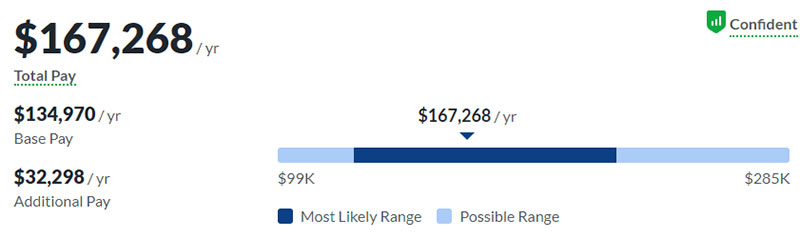
Agency size, city, and staff versus freelance all move the number. There’s no single figure that covers the role.
At the top end, the highest 10 percent of art directors (the rung just below creative director) earned more than $213,050 in May 2025, per the U.S. Bureau of Labor Statistics. Top earners among advertising creative directors reported up to $211,524 a year in 2025, based on Glassdoor’s 90th percentile. Those two are closer than you might expect.
Freelance is its own thing. The average day rate for a freelance creative director sits at £475, based on real booking data from YunoJuno’s 2026 contractor rate report.
The spread isn’t random. Staff roles at large network agencies pay more predictably. Freelance pays more per day, but nobody promises you enough days.
Industry matters as much as title. Creative directors inside tech or finance companies tend to earn more than their counterparts at small independent agencies, mostly because those industries pay design and creative leadership better across the board.
Do You Need a Degree to Become a Creative Director?
No single credential gets you this job. A strong book usually does more than a diploma.
That said, the U.S. Bureau of Labor Statistics lists a bachelor’s degree as the typical entry-level education for art directors, which is the role most creative directors pass through on the way up.
What the degree is in matters less than agencies like to suggest. Bill Bernbach earned a B.A. in English from New York University, not a design degree. He was promoted to creative director at Grey Advertising by 1947 and went on to co-found Doyle Dane Bernbach, one of the most influential agencies in advertising history.
Job postings also ask for things recruiters don’t really screen for. In practice they open the portfolio first and the resume second. The degree field comes third, if anyone looks at it at all.
Agency, In-House, or Freelance: Choosing Your Creative Director Path
Same title in all three settings. Very different day.
| Factor | Agency | In-house | Freelance |
|---|---|---|---|
| Creative variety | High, multiple clients | Low, one brand | High, project by project |
| Income stability | Steady salary | Steady salary | Variable, feast or famine |
| Advancement speed | Slower, structured ladder | Depends on company growth | Self-directed, no ladder |
Alex Bogusky joined Crispin Porter as its 16th employee in 1989 and was named creative director five years later.
In 2010 he left the agency world entirely to launch FearLess Cottage, an independent creative consultancy. A traditional agency ladder doesn’t have a rung for that.
Going independent means you pick the clients and the projects, and you get paid more per day of actual work. Nobody from another department gets a vote on your concept before it reaches approval, either, which is a relief.
The downsides are real, though. There’s no steady paycheck between projects. There’s also no creative team to hand execution to, so you end up doing a lot of the production yourself, and it’s harder to build the kind of large-scale campaign credit that agency work gives you.
How to Build a Creative Director Portfolio
A hiring creative director is looking for judgment. Polish helps, but the book has to prove you can carry an idea and not just execute someone else’s.
- Pick four to six campaigns that show a full arc, from brief to finished execution
- Cut anything that only shows craft without a concept behind it
- Lead with the strongest, most concept-driven piece, not the most recent one
- Include a mix of channels: print, film, digital, social
- Write one line per project explaining the problem it solved, not just what it looks like
The strongest books tend to show how to create a brand identity end to end. Ten disconnected spec ads for the same client don’t do that.
VCU Brandcenter was founded in 1996 by former Martin Agency creative director Diane Cook-Tench. Its board was built with senior agency leaders, including longtime board chairman Mike Hughes of The Martin Agency, specifically to keep the program’s output agency-ready.
Using Award Show Recognition to Strengthen a Portfolio
Cannes Lions received 26,900 award submissions from 96 countries in 2025, according to the festival’s own organizers.
That’s why a shortlist or a win there carries weight. Thousands of other creatives entered the same categories and didn’t place.
One award rarely changes a career. A pattern of them does more, especially in categories tied to brand narrative and effectiveness, because it tells a hiring creative director the work held up under outside judgment and not just internal praise.
When the Traditional Creative Director Path Does Not Apply
Everything above assumes a mid-size or large agency with a formal title at every rung. Plenty of real careers skip that entirely.
- Small agencies and studios that never formalize titles past “creative”
- Founders who take the creative director title on day one of their own shop
- In-house brand teams where the role exists outside any agency structure
- Careers that bounce between agency, in-house, and freelance instead of climbing one ladder
Independent agencies made up nearly one-third of all Cannes Lions entries in 2026, a share that has grown as more creatives skip the network-agency track.
Tori Nygren started at Droga5, went in-house as a creative at Uber, and then co-founded the independent agency Hogwash Studios instead of waiting for an internal promotion (Adweek, 2025).
The traditional ladder still works. It’s just one route, and a lot of people earn the title without it.
FAQ on How To Become A Creative Director In Advertising
What Is the Difference Between a Creative Director and a Chief Creative Officer?
Mostly scope. The chief creative officer oversees the whole creative department across every account and office and sets the agency’s overall creative vision. A creative director manages concept and execution for specific accounts and reports up through the agency hierarchy to that CCO.
How Do You Prepare for a Creative Director Interview?
Bring a portfolio built around big ideas, not just polished execution. Know the story behind each campaign well enough to tell it without notes, starting from the brief. Expect questions about leading a creative team and running creative reviews, and be ready to talk about a client presentation where you had to defend the work.
What Tools Does a Creative Director Use Day to Day?
Most rely on Adobe Creative Cloud for reviewing layouts, presentation software for client decks, and some kind of project management tool to track a campaign through production. Honestly the software matters less than the judgment you bring when reviewing an art director’s work.
Can You Become a Creative Director Without Agency Experience?
It happens, mostly in-house at brands or by founding an independent studio. A portfolio with strong creative concepts counts for more than where the work was made. Still, agency experience is the more common way into the title.
What Is the Average Age People Reach Creative Director?
No government source tracks this figure directly. Industry accounts put it anywhere from the early thirties to mid-forties, depending on portfolio strength, agency size, and how quickly internal promotions happen.
What Should You Fix First?
Start with portfolio quality. Agencies judge concept and craft before they care about pedigree, degree, or the years on your resume, and a weak book stalls every later step no matter how much experience you have.
After that, work on your network, meaning the people who are already in the room when hiring decisions get made. Awards come last. Submit once the book has been tested with real clients, not before.
The order matters more than how fast you move through it.
Putting the portfolio ahead of formal credentials does cost you something. Some entry-level roles screen candidates by degree before anyone opens a portfolio, and you’ll miss those.
Once that’s in place, a good next question is how a single visual identity stays consistent across every channel a creative director signs off on.

Renowned for his expertise in logo design and visual branding, Bogdan has developed a multitude of logos for various clients.
His skills extend to creating posters, vector illustrations, business cards, and brochures. Additionally, Bogdan's UI kits were featured on marketplaces like Visual Hierarchy and UI8.
He also wrote in the past years on sites like Design Your Way, WebDesignerDepot, WPDean, Designmodo, Speckyboy, Slider Revolution, and more.
- The Windsurf Logo History, Colors, Font, And Meaning - 10 October 2026
- How to Remove Background From Product Photos (No Photoshop) - 10 October 2026
- How Designers can Build a Stronger Online Creative Identity - 9 October 2026

Bogdan Sandu is a seasoned designer who has been designing websites since 2008. Renowned for his expertise in logo design and visual branding, Bogdan has developed a multitude of logos for various clients. His skills extend to creating posters, vector illustrations, business cards, and brochures. Additionally, Bogdan's UI kits were featured on marketplaces like Visual Hierarchy and UI8. He also wrote in the past years on sites like Design Your Way, WebDesignerDepot, WPDean, Designmodo, Speckyboy, Slider Revolution, and more.
You Might Also Like