

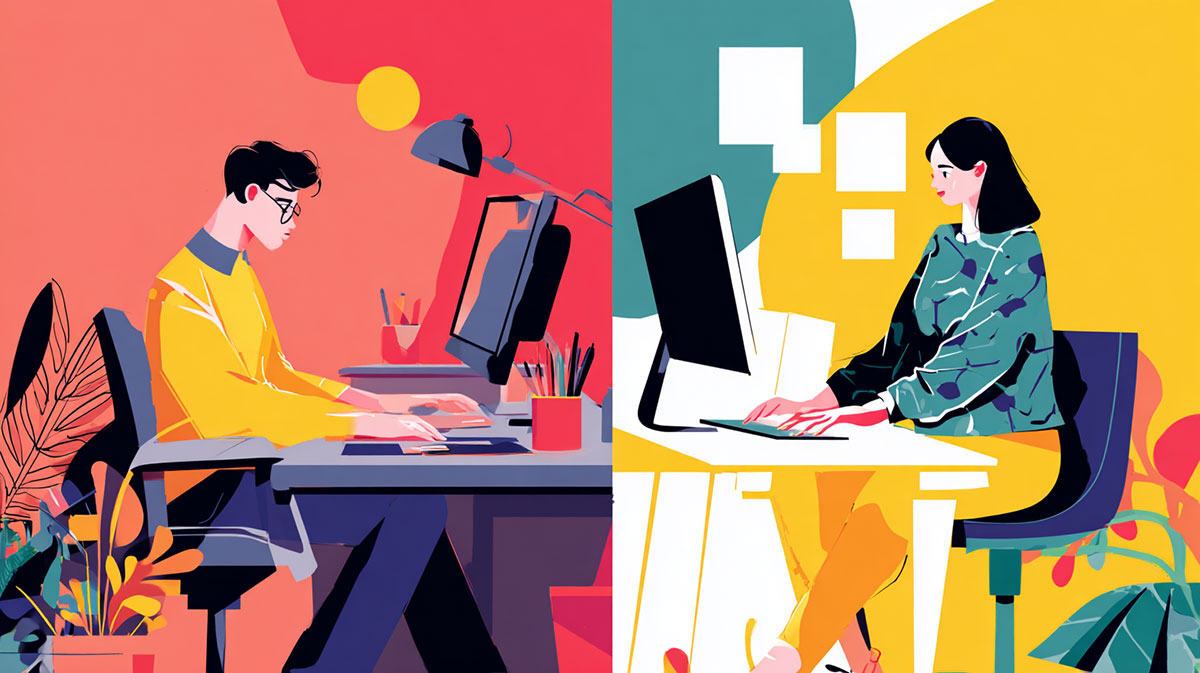
Both roles work with visuals. Both sit in the creative industry. But a graphic designer and an illustrator do very different things with very different tools, and choosing the wrong one to hire (or become) costs time and money.
The graphic designer vs illustrator question comes up constantly, whether you’re picking a college major, hiring for a project, or figuring out what to actually call yourself on LinkedIn.
This guide breaks down the real differences. Skills, salaries, daily work, software, career paths, and how to figure out which role fits you better. No fluff, just the practical stuff that actually matters when making the decision.
What Is a Graphic Designer?
A graphic designer is a visual communicator who arranges text, images, and layout elements to solve specific communication problems for businesses and organizations. That’s the short version.
The longer version gets into the daily reality. Graphic designers work within constraints. A brand style guide tells them which colors to use. A client brief tells them what message to push. The job isn’t about raw artistic expression. It’s about organizing information so people actually understand it.
The U.S. Bureau of Labor Statistics counted roughly 265,900 graphic design jobs in 2024, with a median annual wage of $61,300.
Most of their output falls into these categories:
- Logo creation and brand identity design
- Packaging design for products on shelves and in online stores
- Web design layouts and social media design assets
- Print design like brochures, business cards, and marketing collateral
- Advertising design across digital and traditional channels
The tools they reach for daily include Figma, Adobe InDesign, and Adobe Illustrator (for vector layout work, not illustration). Canva shows up more at entry-level positions. Photoshop handles asset editing.
Here’s what separates this role from everything else in the creative space. Graphic designers think in systems. They build things that need to work across a dozen different formats, from a tiny app icon to a highway billboard. Grid systems, typography rules, and color theory are their bread and butter.
The global graphic design market hit approximately $52 billion in 2024, according to NextMSC research, with branding and logo work driving the largest service segment.
What Is an Illustrator?

An illustrator creates original images to tell stories, explain concepts, or give a brand a unique visual voice. Where designers arrange existing elements, illustrators make new ones from scratch.
The BLS groups illustrators under “fine artists, including painters, sculptors, and illustrators,” reporting a median wage of $76,450 (mean annual) in May 2024. But that number needs context. A huge chunk of working illustrators are freelance, and their income swings wildly based on niche, client base, and how good they are at marketing themselves.
Illustrators work across a surprisingly wide range of industries:
- Children’s book cover design and interior illustrations
- Editorial art for magazines and newspapers
- Character design for games, animation, and entertainment
- Concept art for film and TV production
- Surface pattern design for textiles and products
Their toolkit looks different too. Procreate on iPad Pro, Clip Studio Paint, and Photoshop (for painting and rendering, not layout) are the go-to digital options. Plenty of illustrators still work with traditional media. Ink, watercolor, gouache, Copic markers. Some mix both.
A Wacom tablet or iPad Pro isn’t a nice-to-have for illustrators. It’s a core tool, as fundamental as a keyboard is to a developer.
The work starts differently than graphic design. An illustrator might receive a manuscript, an article draft, or a product concept and then interpret it visually. The brief is looser. The output is more personal. And the storytelling element runs much deeper.
Salary.com data from 2025 shows the median salary for an Illustrator II at around $69,530, with ranges from $64,620 to $85,150 depending on specialization and location.
Core Skill Sets Compared

Both roles demand strong visual thinking. But the specific skills you need day-to-day? Pretty different.
| Skill Area | Graphic Designer | Illustrator |
|---|---|---|
| Primary focus | Layout, composition, information hierarchy | Drawing, painting, visual narrative |
| Typography | Core skill (choosing, pairing, spacing type) | Rarely needed beyond basic awareness |
| Drawing ability | Helpful but not required | Absolutely required |
| Brand systems | Building and maintaining them | Working within existing ones |
| Color application | Brand-driven, systematic | Mood-driven, expressive |
Graphic designers lean heavily on typographic hierarchy, visual hierarchy, and spatial organization. They need to understand kerning, leading, and tracking at an instinctive level. A bad font pairing can kill a design faster than a wrong color choice.
Illustrators lean on drawing fundamentals. Anatomy, perspective, light and shadow, composition within a single image. These are skills that take years to develop and honestly never stop developing.
Where the Two Skill Sets Overlap
Both roles share a working knowledge of color psychology and composition, but they apply these differently.
Shared ground includes:
- Understanding graphic design principles like contrast, balance, and emphasis
- Client communication and brief interpretation
- Brand comprehension (illustrators working within brand guidelines is increasingly common at companies like Mailchimp, Headspace, and Slack)
The overlap is real, but it’s thinner than most people assume. A designer who can sketch a rough concept is valuable. An illustrator who understands layout basics is valuable. Neither skill automatically transfers to the other role.
Day-to-Day Work and Typical Projects
Theory is one thing. What these roles actually look like on a random Wednesday morning is another.
A Graphic Designer’s Typical Week

Think structure, repetition, and systems thinking.
Monday might start with adapting a brand template for a new product launch. Tuesday is laying out a pitch deck in Figma, making sure every slide follows the company’s visual identity. Wednesday could mean prepping files for print, converting RGB color to CMYK, and checking DPI settings.
BLS data shows about 20% of graphic designers are self-employed. The rest work for design agencies, marketing departments, publishing companies, or tech firms.
Turnaround is fast. Multiple revision rounds on the same project in a single day isn’t unusual. You might touch five or six different projects before lunch.
An Illustrator’s Typical Week
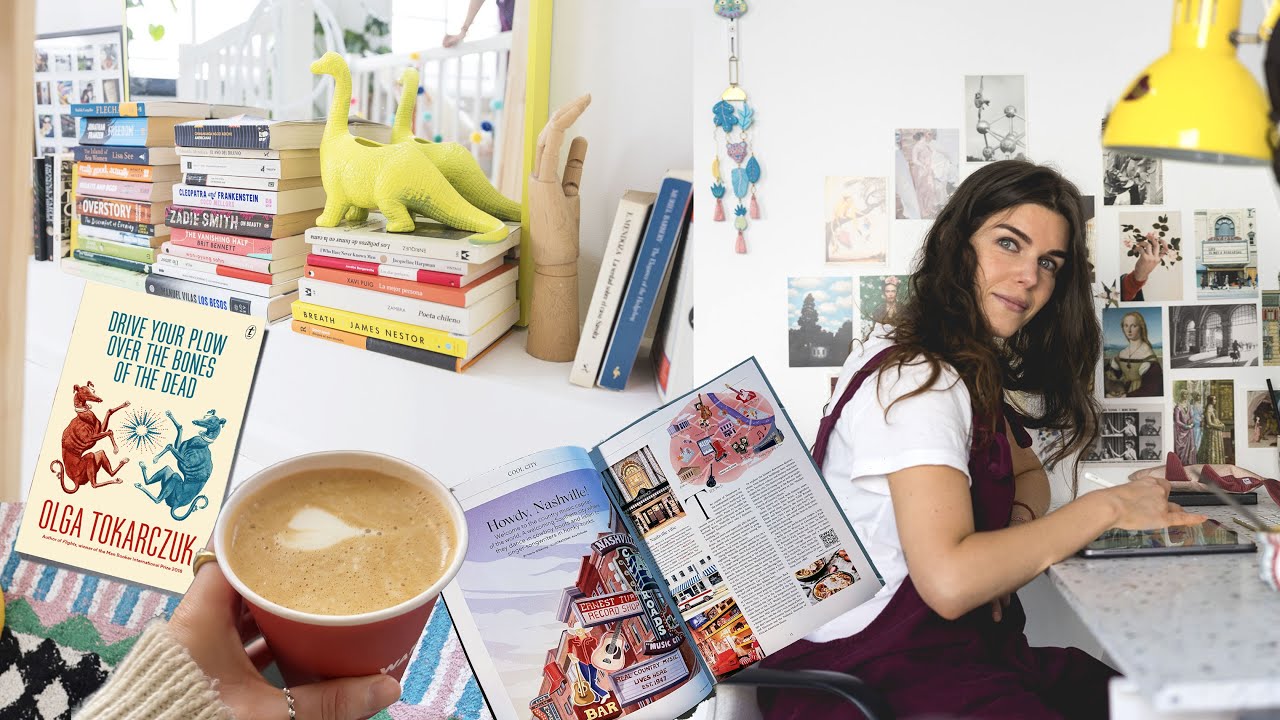
The pace is different. Slower, deeper, more focused on single outputs.
An illustrator might spend Monday through Wednesday sketching concepts for an editorial piece, getting approval on rough compositions, then refining the chosen direction. Thursday and Friday could be painting and rendering the final illustration.
Or maybe they’re working through character sheets for a children’s book, creating ten to fifteen character variations across multiple poses and expressions. That’s a project measured in weeks, not hours.
PayPal research found that 30% of businesses use freelancers specifically for graphic design and illustration work, making it one of the top freelance skill categories alongside web design and programming.
Client types differ too. Designers work with marketing teams, agencies, and internal brand departments. Illustrators work with publishers, ad agencies, game studios, and independent authors. The relationship dynamic changes. Illustration clients tend to give more creative latitude. Design clients tend to give tighter constraints.
Software and Tools Each Role Uses
Took me a while to realize how different the toolkits actually are. On paper, both roles use “Adobe products.” In practice, they use completely different features of completely different applications.
The Graphic Design Stack

Figma has taken over collaborative design work. It handles UI layouts, presentations, mood boards, and prototyping. If you’re designing for screens, you probably live in Figma now.
Adobe InDesign remains the standard for multi-page documents. Magazines, annual reports, catalogs. Nothing else does long-form layout as well.
Adobe Illustrator handles vector graphics work, but designers use it for logos, icons, and scalable assets. Not for drawing in the traditional sense.
Canva fills the gap for quick social posts and marketing materials, especially at smaller companies where speed matters more than pixel-perfect output.
The Illustration Stack

Procreate: The iPad-native app that changed digital illustration. Natural brush feel, intuitive interface, massive community. By far the most popular choice for digital illustrators who work on tablets.
Clip Studio Paint: Huge in manga, comics, and animation. Better brush engine than Photoshop for illustration work, with frame-by-frame animation tools built in.
Photoshop: Still used for digital painting and photo-based illustration, though Procreate and Clip Studio have eaten into its market share among pure illustrators.
Hardware makes a bigger difference for illustrators. A Wacom Cintiq or iPad Pro with Apple Pencil isn’t optional. It’s the equivalent of a carpenter’s workbench. Designers can work entirely with a mouse and keyboard. Illustrators really can’t.
The Adobe Illustrator Overlap

This confuses people constantly. Adobe Illustrator is used by both roles, but for completely different purposes.
| Usage | Graphic Designers | Illustrators |
|---|---|---|
| Primary task | Logos, icons, vector layouts | Vector-style illustration, flat art |
| Pen tool usage | Precise geometric shapes | Organic, freehand paths |
| Output format | SVG, PDF, EPS for brand assets | High-res exports for print or web |
| Time spent | Daily tool for most designers | One option among several |
The name of the software doesn’t help. “Adobe Illustrator” sounds like it was made for illustrators. It was originally, back in 1987. But designers adopted it for technical vector work, and that’s where most of its user base sits today.
Education and Training Paths
Both fields technically require “a degree in a related field.” Both fields also have plenty of successful people who never finished one. The portfolio matters more than the diploma in every hiring conversation I’ve seen play out.
But the paths into each role look different.
Getting Into Graphic Design
The most common route is a bachelor’s degree in graphic design or visual communication. BLS confirms this as the typical entry-level education requirement.
Programs at schools like RISD, SVA (School of Visual Arts), and Parsons carry weight. But they’re expensive. And honestly, the gap between a state school graduate with a great portfolio and an Ivy-adjacent graduate with a mediocre one closes fast in real hiring situations.
Alternative paths that actually work:
- The Google UX Certificate on Coursera (covers adjacent UX/UI skills, not pure graphic design, but it opens doors)
- Bootcamps like Designlab that compress core skills into intensive programs
- Self-taught through YouTube, Skillshare, and a lot of personal projects
Adobe certifications exist. They’re not make-or-break, but they signal baseline competence to employers who don’t know how to evaluate portfolios (which is more employers than you’d think).
Getting Into Illustration
BFA programs in illustration are the traditional entry point. Schools like RISD, SVA, Falmouth University (UK), and SCAD have dedicated illustration programs that separate the discipline from general fine arts.
The self-taught path is arguably more common in illustration than in graphic design. Social media changed this field dramatically. An illustrator with 50,000 Instagram followers and no degree will get more client inquiries than an MFA graduate with no online presence. That’s just how it works now.
Certifications matter less here. Nobody asks an illustrator for an Adobe certification. They ask to see the work.
The Society of Illustrators and organizations like AIGA provide networking and professional development, though neither is a requirement. Behance and Dribbble portfolios carry more practical weight than membership cards.
One freelance illustrator documented reaching six-figure income in 2024 through diversified revenue streams including book advances, character design gigs, gallery sales, and speaking engagements, showing that the path isn’t always linear or traditional.
Salary and Earning Potential
Money. Let’s get specific about it.
The Bureau of Labor Statistics reported a median annual wage of $61,300 for graphic designers in May 2024. The lowest 10% earned under $37,600, while the top 10% pulled in over $103,030.
Illustrator salaries are trickier to pin down. BLS groups them under “fine artists, including painters, sculptors, and illustrators,” which skews the numbers. Glassdoor data from 2026 puts the average illustrator salary at $70,937, with top earners reaching $125,133.
| Metric | Graphic Designer | Illustrator |
|---|---|---|
| Median salary (BLS 2024) | $61,300 | $56,260 (craft/fine artists) |
| Top 10% earners | $103,030+ | $133,220+ (craft/fine artists) |
| Freelance hourly range | $50–$150/hr | Highly variable by niche |
| Career ceiling | Art director ($111,040 median) | Concept art lead, author-illustrator |
The Corporate Ladder Factor
Design has a clearer upward path. Junior designer to senior designer to art director to creative director. The BLS reported the median art director salary at $111,040 in May 2024, with the top 10% earning over $211,410.
Illustration doesn’t have that ladder. You either get better clients, raise your rates, or diversify your income streams. There’s no “senior illustrator” title waiting for you at most companies.
The Royalties and Licensing Angle
Here’s something designers almost never access. Illustrators can earn passive income through licensing and book royalties.
The reality is complicated though. According to The Artist’s Greenhouse survey of children’s book illustrators, only about 25% of respondents actually earned royalties on their books. Of those, over 90% earned less than $10,000 a year from royalties.
One author-illustrator (Anoosha Syed) documented earning more from passive book royalties than client work in 2024. But she also noted that out of forty book projects over a decade, only four had earned out their advance enough to generate royalties. That’s the honest math.
Surface pattern licensing, merchandise deals, and print sales are other revenue streams illustrators can tap. Graphic designers rarely have this option because their work is typically produced under work-for-hire agreements tied to a specific brand.
Freelance vs. In-House Opportunities
The split between freelance and in-house work looks different for each role. And it affects everything from daily routine to tax season.
Graphic Designers in the Workforce
BLS data from 2024 shows that roughly 20% of graphic designers are self-employed. The remaining 80% work in-house at agencies, corporate marketing departments, publishing companies, or tech firms.
That ratio makes sense. Design work often lives inside a team structure. Someone needs to be there for the daily Slack requests, the last-minute social posts, the brand asset updates that pop up every Tuesday.
Freelance designers typically charge between $50 and $150 per hour, according to Invoice Fly’s 2025 salary guide. Top freelancers with strong client relationships can clear $100,000 annually, though that’s not typical.
Illustrators as Independents
Illustrators freelance at a much higher rate. Full-time, salaried illustration positions exist, but they’re rarer.
Companies like Mailchimp, Headspace, and Slack built dedicated in-house illustration teams that became part of their brand identity. Those roles are coveted and competitive. But they’re the exception.
Most working illustrators piece together income from multiple sources:
- Book contracts and editorial commissions
- Character design for games and animation studios
- Licensing deals and print sales
- Teaching, courses, and YouTube ad revenue
Upwork reported $4.1 billion in gross services volume during 2025, with creative work accounting for a large chunk. Platforms like Behance, Dribbble, and Instagram serve as portfolio-first marketplaces where illustrators attract clients directly.
The Hybrid Path
A growing number of creatives do both. Design work during the week for steady income. Illustration projects on evenings and weekends for creative fulfillment (and sometimes better pay per hour).
That model works, especially at smaller studios where one person handles everything from a company logo to custom spot illustrations for the blog. But it requires managing two distinct portfolios and two very different client expectations.
Can You Be Both a Graphic Designer and an Illustrator?
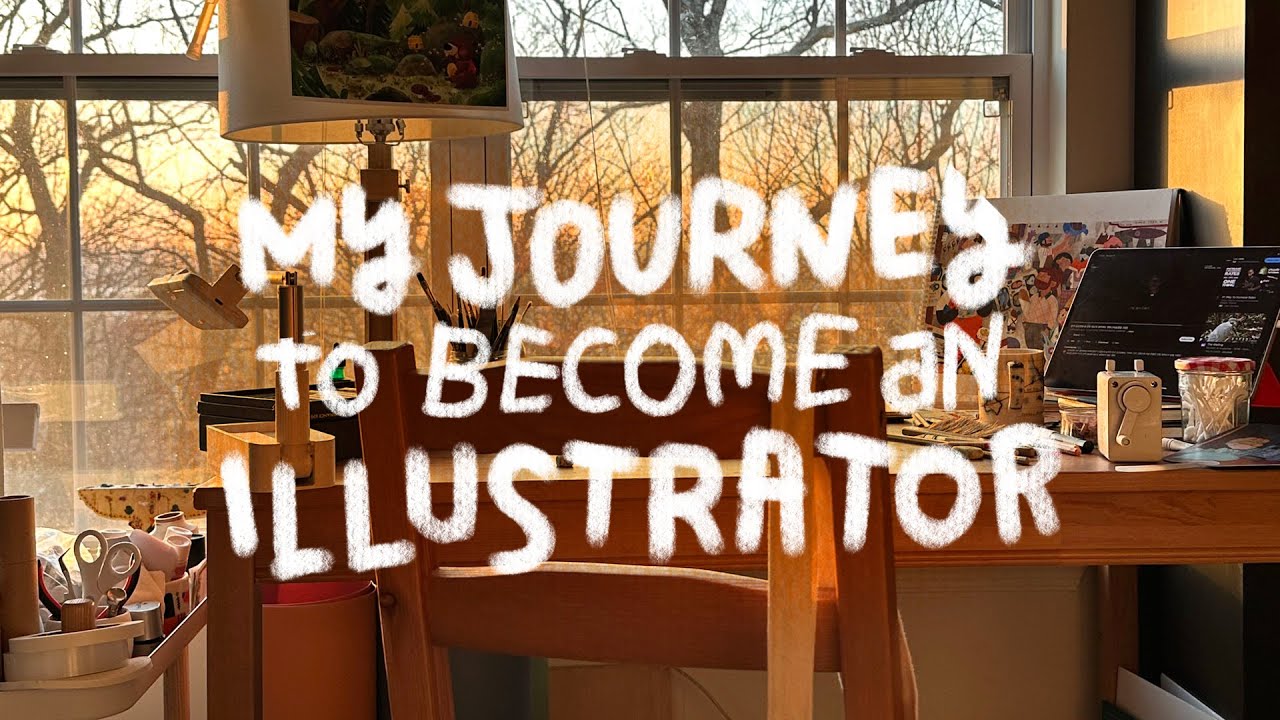
Yes. And a lot of people are.
But “I can do both” doesn’t mean “I’m equally good at both.” That’s the part people skip over.
When the Combination Works
The “designer who draws” is a marketable combination. Small companies and startups that can’t hire separately love this profile. You can build a brand identity system and then create original illustrations that fit within it.
Jessica Hische built her career at the intersection of lettering, illustration, and design. Aaron Draplin sits firmly on the design side but brings an illustration-adjacent energy to his work. Both found commercial success by blending skills without pretending each skill set was interchangeable.
Pentagram, one of the most recognized design studios in the world, has partners whose work crosses into illustration territory regularly. The line between roles gets blurry at the top.
The Generalist Trap
The risk is real. When you market yourself as “designer + illustrator,” some clients assume they’re getting two people for the price of one.
Others can’t categorize you. They need a graphic designer or a graphic artist, and your portfolio that tries to do everything confuses them.
Portfolio strategy matters here. Separate portfolios (or clearly divided sections) work better than mixing everything together. A potential design client doesn’t need to scroll past your watercolor animal portraits to find your branding work.
How to Decide Which Path Fits You

Forget aptitude tests. The simplest filter is this: what do you do when nobody’s paying you?
Signs You’re Wired for Design
You notice bad font spacing on restaurant menus. You redesign app interfaces in your head while waiting for coffee. You get genuinely excited about brand guideline documents.
Design suits people who prefer working within systems and constraints. There’s a problem to solve, a brief to follow, a set of design elements to arrange until the message clicks.
If you’d rather organize information than draw a picture, you’re probably a designer.
Signs You’re Wired for Illustration
You fill sketchbooks. Not because someone asked you to, but because your hand needs to move.
You see a story and immediately picture how it would look. Character poses, lighting, composition, all forming in your head before you’ve finished reading the brief.
Illustration fits people who think in images first and words second. People who lose track of time drawing, not arranging.
The Practical Decision Framework
| Factor | Graphic Design Leans Better | Illustration Leans Better |
|---|---|---|
| Employment preference | Steady paycheck, benefits, team | Project-based, independent |
| Core skill | Organizing visual information | Creating original images |
| Risk tolerance | Lower (more in-house jobs) | Higher (more freelance) |
| Growth path | Art director, creative director | Higher-profile clients, licensing |
Try both before committing. Take a typography course and a figure drawing course. See which one makes you lose track of time.
The BLS projects 2% growth for graphic designer roles from 2024 to 2034, while craft and fine artist positions (which include illustrators) show little to no projected change. Neither field is booming. Both still produce roughly 20,000+ annual openings as people retire or move on.
Your mileage may vary. But the work itself should be the deciding factor. The career stuff, you can figure out as you go. The question of whether you want to spend eight hours arranging layouts or eight hours drawing, that one answers itself pretty quickly once you start doing both.
FAQ on Graphic Designer Vs Illustrator
What is the main difference between a graphic designer and an illustrator?
Graphic designers arrange text, images, and layout elements to communicate messages for brands. Illustrators create original artwork from scratch to tell stories or explain concepts. One organizes existing visual pieces. The other makes new ones.
Can a graphic designer also be an illustrator?
Yes, many professionals do both. But each role demands a distinct skill set. Designing a logo with strong design principles is very different from painting a children’s book cover. Separate portfolios help.
Who earns more, a graphic designer or an illustrator?
BLS data from 2024 shows graphic designers earning a $61,300 median salary. Illustrator pay varies widely based on niche and freelance rates. Art directors (a common design promotion) earn $111,040 median.
Do illustrators need to know graphic design software?
Most illustrators use Procreate, Clip Studio Paint, or Photoshop for painting. They rarely need InDesign or Figma. Some familiarity with Adobe Illustrator helps for vector-based work, but it’s not a daily requirement.
Is graphic design or illustration better for freelancing?
Illustrators freelance at higher rates than designers. About 20% of graphic designers are self-employed, per BLS. Most working illustrators are independent contractors or freelancers, piecing together income from multiple project types.
What degree do I need for graphic design vs illustration?
Both fields typically call for a bachelor’s in their respective discipline. Schools like RISD and SVA offer dedicated programs for each. That said, a strong creative portfolio often matters more than the diploma itself.
Do graphic designers need to know how to draw?
Not necessarily. Graphic designers work primarily with type, layout, and composition. Drawing ability helps for sketching rough concepts, but it’s not a core job requirement the way it is for illustrators.
What tools do graphic designers use vs illustrators?
Designers rely on Figma, InDesign, and Adobe Illustrator for layout and branding. Illustrators use Procreate, Clip Studio Paint, and Photoshop for creating original art. A drawing tablet is standard gear for illustrators, optional for designers.
Is illustration harder than graphic design?
“Harder” depends on your strengths. Illustration requires years of developing drawing fundamentals like anatomy, perspective, and color harmony. Graphic design requires mastering systems thinking, brand typography, and multi-format layouts.
Which has better job prospects, graphic design or illustration?
BLS projects 2% growth for graphic designers through 2034, with about 20,000 annual openings. Illustration positions show little projected change. Both fields are stable but not booming. Digital skills and specialization improve prospects in either path.
Conclusion
The graphic designer vs illustrator debate isn’t about which role is better. It’s about which one matches how your brain works and what kind of creative career you want to build.
Graphic designers solve communication problems through layout, typeface selection, and visual systems. Illustrators create original images that tell stories, explain ideas, or give a brand its unique visual voice.
The salary ranges overlap. The tools don’t. The daily work feels completely different.
If you prefer structure, brand systems, and solving problems within constraints, design is your lane. If you think in sketches and lose hours drawing without noticing, illustration is where you belong.
Some people thrive doing both. Most are better off going deep in one direction first, then expanding later. Pick the one that pulls you in, build a portfolio around it, and let the career follow the work.

Renowned for his expertise in logo design and visual branding, Bogdan has developed a multitude of logos for various clients.
His skills extend to creating posters, vector illustrations, business cards, and brochures. Additionally, Bogdan's UI kits were featured on marketplaces like Visual Hierarchy and UI8.
He also wrote in the past years on sites like Design Your Way, WebDesignerDepot, WPDean, Designmodo, Speckyboy, Slider Revolution, and more.
- How to Install Fonts on Mac (Step-by-Step Guide) - 20 September 2026
- From Mockup to Code: How AI-Augmented Development Speeds Up the Design Handoff - 19 September 2026
- The Beehiiv Logo History, Colors, Font, And Meaning - 18 September 2026

Bogdan Sandu is a seasoned designer who has been designing websites since 2008. Renowned for his expertise in logo design and visual branding, Bogdan has developed a multitude of logos for various clients. His skills extend to creating posters, vector illustrations, business cards, and brochures. Additionally, Bogdan's UI kits were featured on marketplaces like Visual Hierarchy and UI8. He also wrote in the past years on sites like Design Your Way, WebDesignerDepot, WPDean, Designmodo, Speckyboy, Slider Revolution, and more.
You Might Also Like


