


The wrong paper stock can ruin a perfectly good print job. It is one of those decisions that gets made last and matters most.
Choosing between uncoated vs coated paper stock affects everything: ink absorption, color vibrancy, surface texture, print quality, and how the finished piece feels in someone’s hand.
This guide covers the physical differences between both stock types, how each performs across offset and digital printing, which projects call for which surface treatment, what they actually cost, and how to make the right call before you send files to print.
What Is Coated Paper Stock
Coated paper stock is paper that has been treated with a surface layer applied after manufacturing. That layer typically contains minerals such as kaolinite (a fine clay), calcium carbonate, or latex-based compounds. The coating fills in the natural gaps between paper fibers, creating a smoother, less porous surface.
The result is a paper that holds ink near the surface rather than pulling it down into the fiber structure. That matters a lot for image sharpness and CMYK color reproduction.
According to Market Research Future, the global coated paper market was valued at USD 22.5 billion in 2023 and is projected to reach USD 31.7 billion by 2032, growing at a CAGR of 4.4%. Coated paper currently accounts for over 40% of the total printing paper market share.
Types of Coated Paper
Not all coated stock behaves the same way. The finish type changes how light interacts with the surface, which changes how the final print looks and feels.
| Finish Type | Surface Character | Best For |
| Gloss | High reflectivity, very smooth | Magazines, catalogs, photography |
| Matte | Low sheen, soft appearance | Annual reports, art books, lookbooks |
| Silk / Satin | Between gloss and matte | Brochures, premium marketing materials |
Gloss coated paper delivers the most vibrant color output. Matte coated reduces glare, which makes it easier to read under direct light. Silk sits between the two and is probably the most commonly used finish in commercial print work.
Common paper weights run from 90gsm for lighter brochure pages up to 300gsm+ for covers and packaging. Sappi, Mohawk Fine Papers, and UPM are the major mill brands you’ll encounter most often when sourcing coated stock.
How the Coating Affects Ink Behavior
Ink holdout is the key term here. Because the surface is sealed, ink stays where it lands rather than wicking into the fiber. This keeps halftone dots tight and clean.
Dot gain on coated stock is typically around 23% at the 40% tone for a 150 lpi screen (Wikipedia / Print Wiki data). On uncoated stock, that figure climbs significantly higher, which is why the two stock types require completely different ICC color profiles and press setups.
C1S (Coated One Side) is common for postcards and packaging where only one face needs print quality. C2S (Coated Two Sides) is the standard for book interiors, brochures, and catalogs.
—
What Is Uncoated Paper Stock
Uncoated paper has no surface treatment applied after manufacturing. The natural cellulose fiber structure stays exposed, which makes the surface more porous and absorbent than coated alternatives.
That porosity is not a flaw. It gives uncoated paper its characteristic feel and makes it the right choice for specific print and stationery applications where texture and writability matter more than color sharpness.
The uncoated paper market was valued at USD 24.4 billion in 2024 and is expected to grow to USD 34 billion by 2030 at a 5.7% CAGR (Research and Markets). Over 42% of printing companies globally now prefer uncoated woodfree paper for digital printing, citing better ink absorption and output consistency (Printing Industries of America, 2024).
Surface Finishes on Uncoated Stock
Smooth: The most common uncoated finish. Minimal visible texture, suitable for clean typographic work and business stationery.
Vellum: A slightly rougher, toothier surface. Holds pencil and pen ink well. Often used for writing paper and journals.
Laid: Has a visible linear pattern pressed into the surface during manufacturing. Associated with traditional, high-end correspondence and legal stationery.
Wove: Even, uniform texture with no visible pattern. A clean, neutral option for forms and documents.
Neenah Paper, Mohawk Via, and Strathmore Writing are the brands most associated with premium uncoated stock. For commodity uncoated (copy paper, forms, transactional mail), International Paper and Domtar dominate North American supply. In early 2025, Domtar acquired a Midwestern mill to strengthen its uncoated freesheet supply chain, reporting an 18% revenue gain in graphic paper segments (DataM Intelligence, 2025).
Why Uncoated Paper Costs More Than You’d Expect
There’s a common assumption that uncoated paper is cheaper. That’s true for commodity grades. But specialty uncoated stock, particularly woodfree paper from brands like Neenah Classic Crest or Strathmore Writing, can run more expensive per sheet than standard gloss art paper.
The reason is volume. High-end uncoated is produced in smaller runs for premium applications. Standard gloss coated is produced in massive quantities for publishing and advertising, which keeps per-unit costs down despite the more complex coating process.
—
Physical Differences Between Coated and Uncoated Paper
Side by side, the differences are immediately obvious. Coated stock feels slick. Uncoated feels like paper. But the functional differences go deeper than surface feel.
Surface Smoothness and Brightness
Paper brightness is measured on a scale of 0 to 100. Most premium coated stocks run between 92 and 98 brightness. Quality uncoated papers typically sit in the 84 to 92 range, though some specialty uncoated stocks are engineered for higher brightness ratings.
Surface smoothness is measured in Sheffield or Bekk units. Gloss coated paper can reach Bekk smoothness values above 1,000 seconds. A quality smooth uncoated paper might land in the 100 to 300 range. That gap directly affects how fine a halftone screen can be used without noticeable dot gain.
Opacity, Caliper, and Show-Through
Opacity determines whether ink on one side bleeds visually through to the other. This matters on double-sided print work.
| Property | Coated Paper | Uncoated Paper |
| Opacity (typical) | 90–96% | 84–92% |
| Surface Texture | Smooth to very smooth | Porous, visible fiber |
| Ink Holdout | High (ink stays on surface) | Low (ink absorbs into fibers) |
| Caliper at 100gsm | Thinner (coating adds weight) | Thicker (bulk from fiber structure) |
One practical issue: uncoated stock under 80gsm can show significant show-through with heavy ink coverage. If you’re printing double-sided with dense imagery on uncoated, 100gsm or above is a safer starting point.
Folding and Scoring Behavior
Coated paper is more prone to cracking on folds, especially heavier stocks above 170gsm. The coating layer does not flex as well as bare fiber. Scoring before folding is not optional on heavy gloss stock. It is standard practice.
Uncoated stock folds cleaner at lighter weights. At heavier uncoated weights (above 250gsm for cover stock), scoring is still required, but cracking is less severe because the fiber structure has more natural flex. This is worth knowing if you are designing something like a folded invitation or a gatefold brochure where clean fold lines matter.
—
Print Quality on Coated vs. Uncoated Stock
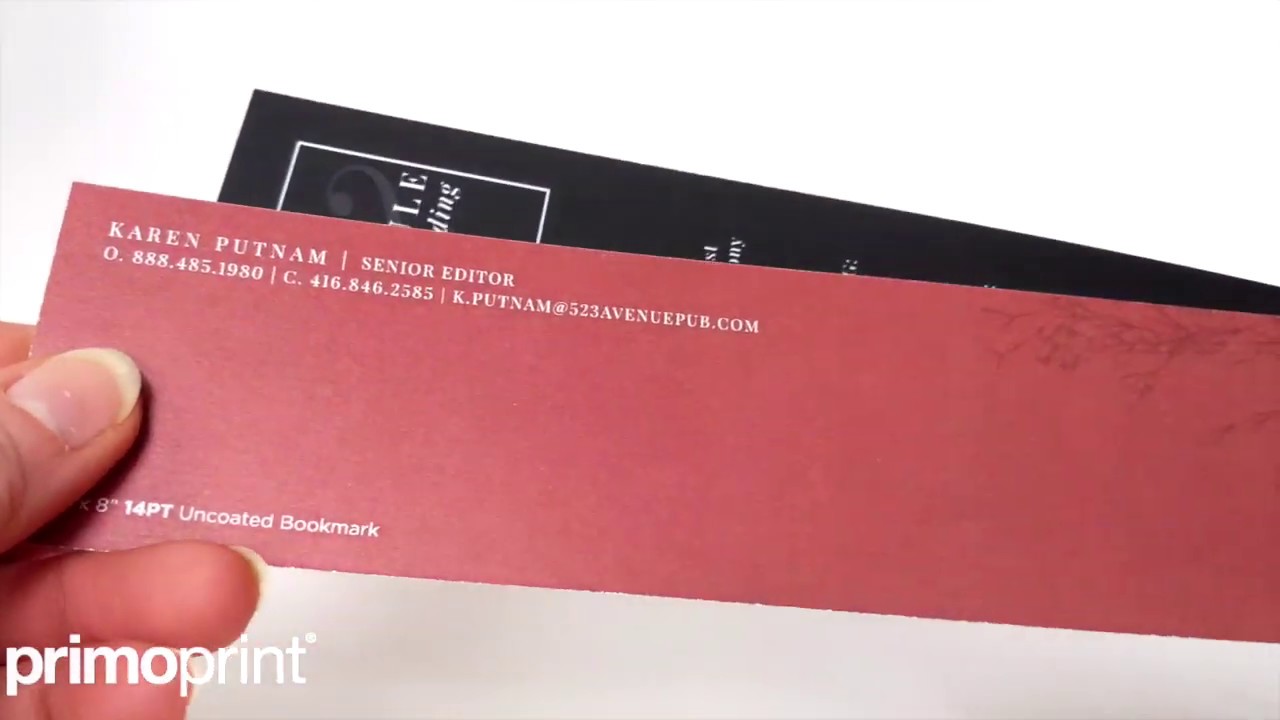
This is where the real decision gets made. Paper stock selection is a print design decision as much as it is a material decision. The stock changes what your file actually looks like in the real world.
Offset Printing Results
Offset lithography on coated stock delivers the sharpest, most color-accurate results available in commercial printing. Ink sits on the surface, light reflects off the pigment cleanly, and halftone dots stay tight.
Total ink coverage (TAC) for coated stock on sheetfed offset runs at 300 to 340%. On uncoated stock, TAC drops to 240 to 260%, and dot gain is significantly higher, requiring completely different press profiles and prepress compensation (colourphil.co.uk).
Sappi’s McCoy and Flo papers are two coated stocks that print community professionals reach for on high-end catalogs and photo books. Both are engineered for consistent ink holdout and tight color tolerances across large print runs.
Digital Printing Results
Toner-based digital (HP Indigo, Canon ImagePress, Xerox iGen): Toner adheres differently than offset ink. Both coated and uncoated work, but results on coated stock can sometimes show toner adhesion issues if the stock is not specifically designed for digital presses.
Inkjet digital (wide-format and production inkjet): Uncoated woodfree paper actually performs better than expected on modern production inkjet presses. The ink absorbs into the fiber in a controlled way that produces a clean, natural-looking result. This is why over 42% of printing companies prefer uncoated woodfree for digital printing (PIA, 2024).
The practical advice here: always request a stock-specific ICC profile from your printer. Using a generic coated or uncoated profile instead of a press-specific one is one of the most common causes of color shift between what you see on screen and what comes off the press. Color proofing for print on the right stock before committing to a full run saves significant reprinting costs.
UV Coating and Varnish Compatibility
Both stock types can receive a post-print spot UV coating or flood varnish. The results differ.
On gloss coated stock, spot UV creates a dramatic contrast between the coated and uncoated areas because the base stock already has a reflective surface. On uncoated stock, the effect is softer but still effective. Matte uncoated with spot UV is a popular choice for premium packaging and book covers where the contrast between matte and gloss areas creates a tactile, high-end feel.
See also: spot varnish vs flood varnish for a breakdown of when each finishing technique makes the most sense for your project.
—
Best Use Cases for Coated Paper
Coated stock is not the default right answer. It is the right answer for specific types of work where image quality, color accuracy, or durability are the primary requirements.
High-Image Print Products
Magazines, catalogs, and photography books are the obvious applications. The coating allows screens of 175 lpi or higher, which means finer detail in images, sharper gradients, and richer saturation in color photography.
Retail product catalogs from companies like IKEA and Pottery Barn specify gloss or silk coated stocks specifically because accurate color representation of products directly affects purchase decisions. A sofa that prints 15% darker than it actually is becomes a customer service problem.
When Gloss vs. Matte Coated Is the Right Call
Gloss coated: Maximum color vibrancy. Best for photography-heavy layouts, retail catalogs, and any work where the client specifically wants impact. The surface catches light, which makes colors pop but can create glare under certain lighting conditions.
Matte coated: Cleaner reading experience. Better for text-heavy layouts, annual reports, and premium brand materials where readability matters as much as visual impact. Also works better in environments with strong overhead lighting.
Silk / satin coated: The middle ground that most commercial brochures land on. Enough surface smoothness for sharp image reproduction, but enough matte quality to reduce glare. Honestly the safest default for general commercial print work if you’re not sure which to choose.
Packaging Applications
Coated stock in 300gsm and above is the default for retail packaging, folding cartons, and product boxes. The surface accepts foil stamping cleanly, works well with embossing, and provides a consistent base for varnish or lamination finishes.
When creating packaging files, the dieline and print layers need to be set up correctly for the printer. See: what is a dieline in packaging design for a walkthrough of how to structure those files properly.
—
Best Use Cases for Uncoated Paper
Uncoated paper is not a budget compromise. For a significant number of print applications, it is the correct choice based on function, not just cost.
Stationery and Business Documents
Letterheads, envelopes, business stationery, and forms all work better on uncoated stock. The surface accepts ballpoint pen, gel pen, and pencil cleanly without the ink beading or smearing that happens on coated paper.
Law firms, financial institutions, and consultancies almost universally use premium uncoated stock for correspondence. The feel communicates something that gloss paper cannot. A proposal printed on 120gsm Neenah Classic Crest reads as more considered than the same document on 100gsm gloss art paper. That’s brand typography and visual identity thinking applied to paper selection.
Books, Reports, and Long-Form Reading
Uncoated stock reduces eye strain in long-form reading formats. Books and reports printed on uncoated paper are easier on the eyes over extended periods because the surface does not reflect overhead light back at the reader the way gloss coated does.
Nearly 2.1 billion packages globally in 2024 used uncoated paper for shipping and packaging, reflecting a wider industry shift toward natural-feel substrates in line with sustainability goals (UNEP, 2024). That same preference for uncoated surfaces extends to premium printed books and editorial design where a natural, unmanipulated feel is part of the brand positioning.
Premium Brand Applications Where Feel Matters
Sometimes the tactile experience of a printed piece carries more weight than color accuracy. This comes up in luxury brand packaging, high-end invitations, and editorial design for independent publishing.
Uncoated stock paired with metallic inks or a single spot UV element on a matte uncoated cover creates a tactile, restrained effect that would be impossible to replicate on a gloss coated base. The paper’s texture becomes part of the design. Brands that lean into uncoated for printed materials often do so deliberately as part of their brand style guide.
Cost Differences Between Coated and Uncoated Stock
The common assumption is that uncoated paper is cheaper. It is not always true. Commodity uncoated (copy paper, newsprint, standard offset stock) costs less than coated art paper. But specialty uncoated from mills like Neenah or Strathmore Writing can cost up to 170% more than a comparable coated sheet like Sappi McCoy (Sappi).
The reason: uncoated paper requires a higher ratio of wood fiber per pound than coated stock. Fiber is expensive. Coating mineral (clay, calcium carbonate) is not.
What Drives the Price Gap
Fiber ratio: Uncoated stock uses more wood pulp per sheet than coated equivalents at the same weight.
Production volume: Standard coated art paper is produced in massive volumes for publishing and advertising. Smaller specialty uncoated runs cost more per unit.
Market conditions: Uncoated freesheet prices rose 5 to 8% in early 2024 as mills dealt with capacity reductions and increased pulp costs (Specialty Print Communications, 2024). Coated freesheet demand was up 10% year-to-date by mid-2024, after shipments had fallen significantly in 2023.
Short-Run vs. Large-Run Cost Behavior
On short runs (under 1,000 sheets), the cost difference between coated and uncoated stock is often negligible. The paper itself is a small line item compared to press setup, prepress, and finishing costs.
On large commercial runs, stock selection directly affects the budget. A catalog printing 50,000 copies with a 5% paper cost difference per sheet adds up fast. That is where working with a paper merchant or print rep to request competitive quotes on specific stock weights and finishes is worth the time.
Lightweight coated text papers (below 80gsm) are a separate challenge. Only a few mills in North America produce them, which means longer lead times and less price flexibility (Phoenix Group, 2024).
Sourcing Considerations
Premium uncoated brands (Neenah Classic Crest, Mohawk Via Vellum) are available through specialty paper merchants rather than general print suppliers. Lead times can run longer.
Commodity coated stock (standard gloss or silk art) is broadly available with short lead times. Billerud’s ArborWeb and Sterling grades, along with Sappi’s commodity lines, are widely stocked at most print trade distributors. Getting paper samples before committing to a full run is always the right move, especially if the project involves a non-standard weight or finish.
Environmental Considerations
Paper stock choice has real environmental consequences. Both coated and uncoated stock have sustainability options, but their default recyclability profiles differ.
About 52% of global paper production now uses recycled fibers (Kunak, 2024). Recycling one ton of paper conserves around 17 trees. The paper industry overall accounts for roughly 2% of global industrial emissions.
Recyclability Differences
Uncoated paper is the easier stock to recycle. No coating means no additional separation step in the pulping process. Standard uncoated woodfree paper breaks down cleanly in most recycling facilities.
Coated paper with mineral-based coatings (clay, calcium carbonate) is also recyclable in most facilities. The coating breaks down during pulping without significantly contaminating the fiber. The challenge is de-inking. Glossy surfaces can cause inks to embed more deeply, making the de-inking step less efficient than with uncoated stock (FESPA, 2023).
Plastic-coated or wax-coated paper (common in food packaging) is a different matter entirely. Those coatings do not separate from the fiber during pulping and contaminate the recycled pulp batch.
FSC and PEFC Certification
Both stock types are available with FSC (Forest Stewardship Council) and PEFC (Programme for Endorsement of Forest Certification) certification. Certification is about sourcing, not coating.
Brands like Mohawk Fine Papers and Neenah offer FSC-certified options across both coated and uncoated lines. Recycled content options exist for both as well, though recycled coated stock is less common than recycled uncoated.
| Factor | Coated Paper | Uncoated Paper |
| Recyclability | Recyclable (utilizes mineral coatings) | Highly and easily recyclable |
| De-inking Difficulty | Higher (especially for high-gloss) | Lower; fibers are more accessible |
| FSC / PEFC Availability | Yes, widely available | Yes, widely available |
| Recycled Content Options | Often limited to maintain smoothness | Broad range available (up to 100% PCW) |
Soy-Based and Water-Based Ink Compatibility
Soy-based inks work on both coated and uncoated stock. They are a cleaner option than petroleum-based inks and are compatible with offset lithography on either surface type.
Water-based inks perform better on uncoated stock because the fiber absorbs the water carrier more readily. On coated stock, water-based inks require more controlled drying conditions to avoid set-off and surface scuffing. Recycling paper saves approximately 40% of the energy required to produce virgin stock (The Planet Journey, 2025), which applies regardless of which stock type you specify.
How to Choose Between Coated and Uncoated for Your Project
Paper stock selection is a design decision, not just a production one. The stock affects how color theory translates from screen to print, how typography reads at small sizes, and how the finished piece feels in someone’s hand.
Work through these questions before specifying stock on any project.
Questions to Ask Before Specifying Stock
The answers to these drive the decision faster than any stock chart:
- Is color accuracy critical? (Product imagery, photography, retail catalogs: go coated)
- Will someone write on the piece? (Forms, notepads, stationery: go uncoated)
- What printing method is being used? (Digital inkjet often performs well on uncoated woodfree)
- What does the brand tone require? (Premium and tactile: often uncoated. Vibrant and impactful: coated)
- Does the piece need post-print finishing? (Foil, spot UV, embossing: check stock compatibility first)
If two of those answers point in opposite directions, request samples from the printer and test them before committing. A lot of client approval problems come from choosing stock based on a specification sheet rather than a physical sample.
Matching Stock to Print Method
Offset lithography: Both stock types work well. Use coated for image-heavy layouts, uncoated for text-dominant work and stationery.
Digital toner (HP Indigo, Xerox iGen, Canon ImagePress): Verify the stock is rated for the specific press. Not all coated stocks are compatible with toner-based digital presses without causing adhesion issues.
Production inkjet: Uncoated woodfree performs consistently well. Coated inkjet-specific stocks also exist but are a separate product category from standard coated art paper.
Getting the right color profile for your chosen stock is non-negotiable. Running a coated ISO profile on an uncoated job will shift your colors significantly. Always confirm the ICC profile with your printer before sending files. See also the guides on color proofing for print and how to calibrate your monitor for print to get the full setup right.
When to Request Samples
Always request samples when:
- The project involves a non-standard stock weight
- Post-print finishing (foil, UV, embossing) is specified
- The client has not approved a physical proof before
- You are using a specialty uncoated stock from a premium brand like Neenah or Strathmore
Most paper merchants and print suppliers will send sample packs on request at no cost. Appvion Specialty Papers and Clearwater Paper both maintain sample programs for designers and print buyers. This step costs nothing and prevents expensive reprints. It is probably the most skipped step in print production workflows, and also the one that causes the most problems when it gets skipped.
For a full overview of the different paper types in print design, including how paper weight relates to thickness and a breakdown of paper finishes explained, those resources cover the broader selection process in detail.
FAQ on Uncoated Vs Coated Paper Stock
What is the main difference between coated and uncoated paper?
Coated paper has a surface treatment (clay or calcium carbonate) applied after manufacturing. Uncoated paper has none. The coating seals the fiber, reducing ink absorption and producing sharper, more vibrant print results.
Which paper stock is better for printing photos?
Coated paper is the right choice for photography. The sealed surface keeps ink on top of the fiber, producing tight halftone dots, accurate color reproduction, and higher image sharpness than uncoated stock can achieve.
Can you write on coated paper?
Not reliably. Ballpoint and gel pens bead or smear on coated surfaces because the sealed surface resists absorption. Uncoated paper, with its natural fiber texture, accepts pen and pencil cleanly. Use uncoated for anything requiring handwriting.
Is uncoated paper more eco-friendly than coated paper?
Generally, yes. Uncoated paper recycles more cleanly because there is no coating to complicate the pulping process. Both stock types are available with FSC certification, but recycled content options are broader for uncoated.
Does coated paper cost more than uncoated?
Not always. Commodity coated stock is cheap due to high production volumes. Premium uncoated from brands like Neenah or Strathmore can cost significantly more. Sappi data shows specialty uncoated can run up to 170% above comparable coated stock.
What paper stock should I use for business cards?
It depends on brand tone. Coated stock (gloss or silk) gives sharp color output and a polished feel. Uncoated stock reads as more tactile and considered. Premium brands often choose uncoated cover stock for exactly that reason.
What is dot gain and why does it matter?
Dot gain is the expansion of halftone ink dots during printing. Uncoated paper absorbs more ink, causing dots to spread and images to print darker than intended. Coated stock limits dot gain significantly, keeping colors accurate and detail sharp.
Which paper stock works best for digital printing?
Both work, but with conditions. Toner-based digital presses (HP Indigo, Xerox iGen) require stock rated for digital use. Over 42% of printing companies prefer uncoated woodfree for digital printing due to consistent ink absorption (Printing Industries of America, 2024).
What does gsm mean when choosing paper stock?
GSM stands for grams per square meter. It measures paper weight, which corresponds roughly to thickness and stiffness. Text pages typically run 90 to 130gsm. Cover stocks run 250 to 350gsm. Higher gsm means a heavier, more substantial sheet.
When should I request paper samples before printing?
Always, when the stock is unfamiliar, post-print finishing is involved, or the client has not approved a physical proof before. Most paper merchants provide free sample packs. Skipping this step is the most common cause of costly reprints.
Conclusion
This conclusion is for an article presenting the core differences between uncoated vs coated paper stock, and the decision comes down to function over preference.
Coated stock delivers sharp dot gain control, high color vibrancy, and consistent ink holdout across offset and digital press runs. Uncoated woodfree paper wins on tactile feel, writability, and cleaner recyclability.
Neither is the default right answer. Paper stock selection should follow the project requirements: print method, brand tone, finishing specs, and budget.
Request physical samples before approving any job. Verify your ICC profiles match the stock. Work with your print rep or paper merchant on weight and surface treatment decisions.
Get that right, and the paper becomes part of the design.

Renowned for his expertise in logo design and visual branding, Bogdan has developed a multitude of logos for various clients.
His skills extend to creating posters, vector illustrations, business cards, and brochures. Additionally, Bogdan's UI kits were featured on marketplaces like Visual Hierarchy and UI8.
He also wrote in the past years on sites like Design Your Way, WebDesignerDepot, WPDean, Designmodo, Speckyboy, Slider Revolution, and more.
- The Cursor Logo History, Colors, Font, And Meaning - 24 September 2026
- Top 7 Web Design Subscription Services That Replace Full-Time Hires - 24 September 2026
- Canva vs PowerPoint: Which Is Better for Presentations? - 22 September 2026

Bogdan Sandu is a seasoned designer who has been designing websites since 2008. Renowned for his expertise in logo design and visual branding, Bogdan has developed a multitude of logos for various clients. His skills extend to creating posters, vector illustrations, business cards, and brochures. Additionally, Bogdan's UI kits were featured on marketplaces like Visual Hierarchy and UI8. He also wrote in the past years on sites like Design Your Way, WebDesignerDepot, WPDean, Designmodo, Speckyboy, Slider Revolution, and more.
You Might Also Like


