Plenty of what gets called positioning is a tagline with a media budget behind it. A real position names the audience and the rival it is up against, then backs one claim with proof a buyer can check.
Buyers also notice less than marketers hope. A peer-reviewed study by Romaniuk, Sharp and Ehrenberg (Australasian Marketing Journal, 2007) found low perceived differentiation among competing brands in two countries, and customers kept buying those brands anyway.
So a position only counts when buyers actually perceive the difference.
What Counts as a Brand Positioning Example?
Not every famous campaign qualifies. What counts is a documented company case where a brand claimed a distinct spot against named competitors, inside a defined customer segment.
The idea was popularized by Al Ries and Jack Trout, whose 1972 Advertising Age series was followed by their 1981 book “Positioning: The Battle for Your Mind”. Their argument was that a brand competes for a place in the buyer’s head, not on a shelf.
If you want the concept before the cases, there’s a short explainer on how brand positioning is defined. The rest of this works from real companies.
Every case below gets read against the same card. It needs a target audience narrow enough to exclude someone, and the rival or substitute the buyer would otherwise pick. It needs one promise that separates the brand from that alternative, plus product features or practices that make the promise believable. And it needs a result from a published source, with the year attached.
A tagline with no competitor behind it is a slogan, and a campaign that names no segment and no alternative is just advertising. A company’s visual identity can express a position, but a logo and a color palette are not the position itself.
Brand Positioning Examples Compared at a Glance
The 13 cases split roughly in half. Some brands win through contrast with a rival or by owning one attribute, and the rest compete on status, values or a new category.
First up are the brands built on a rival or a single claim.
| Brand | Type | Target audience | Competitive alternative | Core claim |
|---|---|---|---|---|
| Avis | Challenger | Renters who want better service | Hertz | “We try harder” as the No. 2 |
| 7UP | Challenger | Younger, countercultural drinkers | Coca-Cola and Pepsi | The “Uncola” |
| Dollar Shave Club | Value challenger | Men who resent razor prices | Gillette | Good razors, delivered, at a low monthly price |
| Volvo | Benefit-based | Safety-minded drivers and families | Other carmakers | Safety first |
| FedEx | Benefit-based | Businesses with time-sensitive shipments | Postal and freight carriers | Overnight delivery |
| Southwest Airlines | Value-based | Price-sensitive domestic travelers | Legacy airlines | Low fares, simple service |
The next seven stop fighting head-on. They sell status or values, or they invent a category.
| Brand | Type | Target audience | Competitive alternative | Core claim |
|---|---|---|---|---|
| Apple | Premium | Creative professionals and premium tech buyers | Windows PC makers | Design and ease of use |
| Tesla | Premium | Affluent, tech-minded buyers | Combustion luxury cars | Electric performance |
| Dove | Mission-led | Women | Conventional beauty advertising | Real beauty over idealized beauty |
| Patagonia | Mission-led | Outdoor buyers who care about the environment | Other outdoor apparel makers | Environmental mission before sales |
| Nike | Emotion-led | Athletes and aspiring athletes | Other sportswear brands | Performance and personal aspiration |
| Oatly | Category creation | Buyers moving away from dairy | Dairy milk | A plant-based drink that stands on its own |
| Liquid Death | Niche | Younger buyers bored by bottled water | Bottled water | Canned water with a heavy-metal brand and an anti-plastic message |
How Did Avis, 7UP and Dollar Shave Club Position Against Market Leaders?
Each of them found one soft spot in its category and put the whole message there. For Avis it was service effort, for 7UP the fact that it wasn’t a cola, and for Dollar Shave Club the price of razors.
The pattern repeats. Whatever the leader leaves open becomes the reason to pick the challenger.
The numbers are fairly clear. Avis went from a $3.2 million loss to a $1.2 million profit within a year of launching “We Try Harder” in 1962 (Slate, 2013), and the market share gap between Hertz and Avis narrowed from 61-29 in 1963 to 49-36 in 1966 (Slate, 2013). Dollar Shave Club received 12,000 orders in the first 48 hours after its March 2012 launch video (The New York Times, 2013).
Avis and the No. 2 claim
In 1962 Avis trailed Hertz in US car rental. It worked with Doyle Dane Bernbach, whose campaign rested on admitting Avis was only number two.
The tagline turned second place into a service promise, and the promise needed proof that Avis barely had. Its fleet was no newer than Hertz’s and its rates were no lower. It didn’t have more locations either.
So the claim had to be delivered by staff, every day.
7UP and the Uncola
J. Walter Thompson ran the campaign in 1967, aimed at younger drinkers in the counterculture years. The alternative was Coca-Cola and Pepsi, and the proof was simple enough: a clear lemon-lime soda with no caffeine.
The Seven-Up Company’s own history credits the campaign with a nationwide jump in sales. The “Uncola” tag entered everyday vocabulary and stayed tied to the brand through later campaigns.
Dollar Shave Club and razor pricing
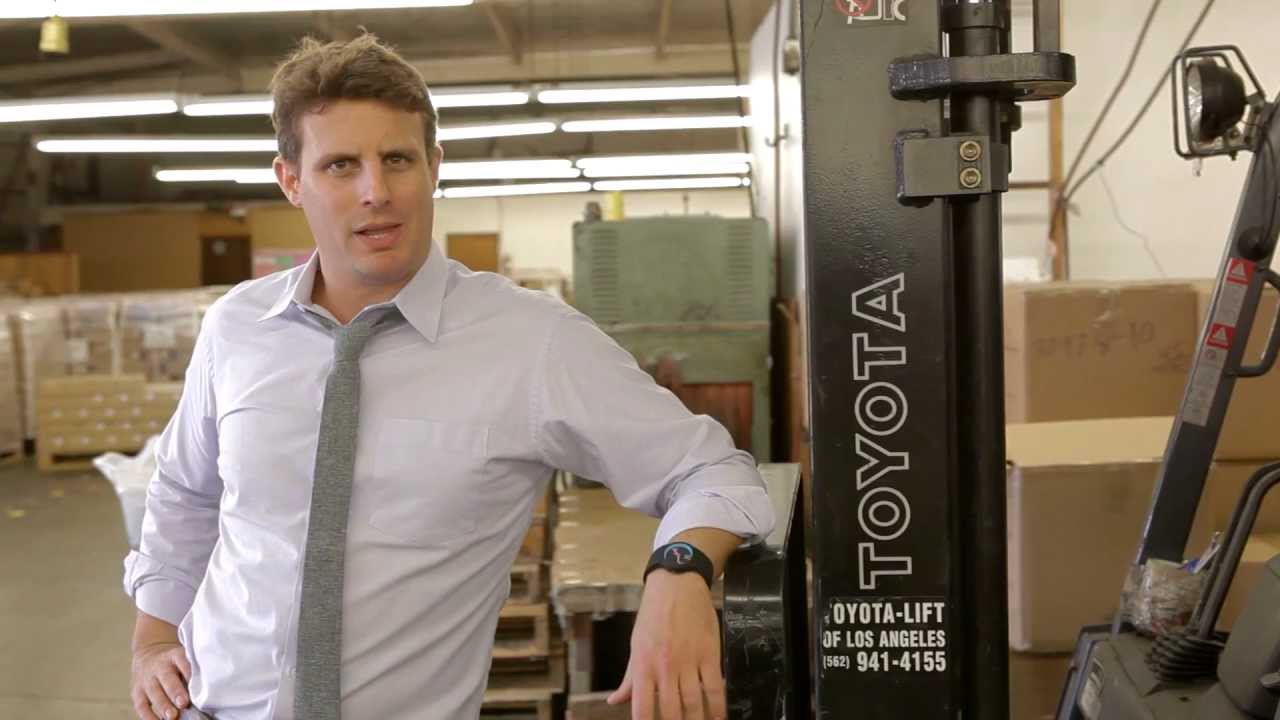
Dollar Shave Club launched on March 6, 2012 with a video starring founder Michael Dubin, aimed at men who resented what razors cost at retail.
The pitch was good blades, delivered, at a low monthly price. The subscription itself served as the proof because it removed the store trip.
The claim outran the operation. The same Times report says the site crashed within the first hour, and Dubin and a crew of friends and contractors packed the orders by hand in a Gardena, California warehouse.
A challenger claim depends on the ranking staying put, and rankings move. Avis dropped the tagline in 2012, and Slate’s retrospective places it third, behind Hertz and Enterprise, after Enterprise’s neighborhood, insurance-replacement model pulled business away from airport counters.
Single-Attribute Positioning: Volvo, FedEx and Southwest Airlines
Owning one attribute works when the brand can prove it inside the product or the operation, not only in advertising.
Volvo’s proof was engineering. FedEx built a hub network to back up its speed, and Southwest got its low cost from a simple operating model.
Engineer Nils Bohlin developed the three-point seat belt, introduced in 1959, and Volvo made the patent available to every carmaker. More than a million people are estimated to have survived crashes because of it, according to a Volvo Cars press release (2009).
Federal Express began overnight operations out of Memphis on April 17, 1973. One carrier ran its own aircraft, vans and a central sorting hub, so every package moved through a single system.
Southwest reported 47 consecutive profitable years from 1973 through 2019 in its January 2020 results release. It flew predominantly one aircraft type, the Boeing 737, which simplifies training and maintenance.
Opening the seat belt patent made the belt an industry standard. That means Volvo’s safety claim has to rest on the next system, not the last one.
One attribute carries the whole brand, so an industry-wide shock lands directly on it. Southwest’s profit streak ended in 2020, when the pandemic hit the entire airline sector.
Premium Positioning: How Apple and Tesla Justify Higher Prices
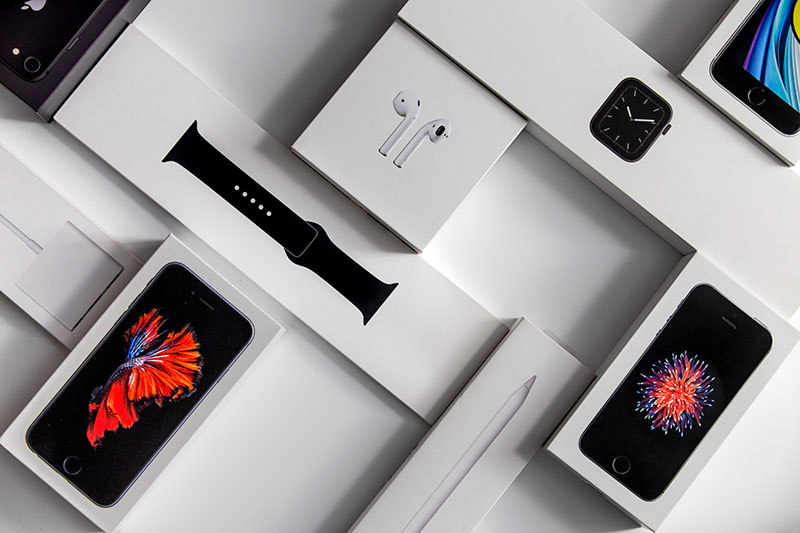
A premium price holds when the buyer believes the product delivers something the cheaper alternative cannot, and the brand keeps proving it.
Apple leans on design and an integrated product experience. Tesla’s case rests on electric performance.
Apple sells to creative professionals and premium technology buyers, and the alternative it is up against is Windows PC makers. The claim moved over time. “Think Different” launched in 1997 with TBWA/Chiat/Day after Steve Jobs returned, shifting the message from features and price to what the brand stands for.
Tesla aims at affluent, tech-minded buyers who might otherwise buy a combustion luxury car. For years it ran no paid advertising, with Musk saying in 2019 that the money goes into the product instead of ads or endorsements.
That stance shifted in 2023, when Musk told shareholders Tesla would try some advertising, Benzinga reported.
Premium positioning depends on perception staying ahead of the price gap. Interbrand’s 2025 ranking recorded a 35% drop in Tesla’s brand value, from 12th place to 25th, and trade coverage tied the fall to shifting consumer sentiment and more competition.
A premium price is a standing promise, so the proof behind it has to keep up.
Mission and Emotion-Led Positioning: Dove, Patagonia and Nike
Brands in this group sell a belief or a feeling, and the belief holds only while the brand’s conduct matches it.
Dove and the self-image gap
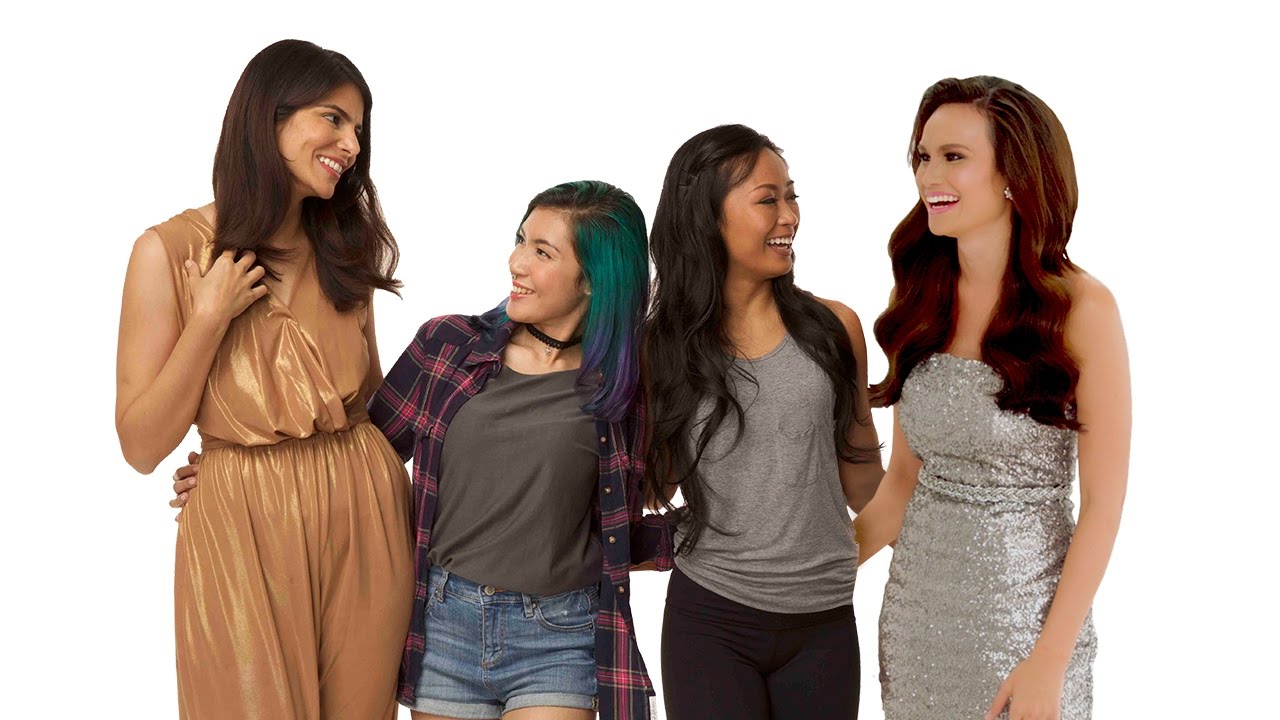
The number Dove started from was small. Its 2004 global study found that only 2% of women describe themselves as beautiful.
The Real Beauty campaign, built with Ogilvy, claimed that gap as the brand’s territory. The casting was the proof, with real women standing where models usually do.
The sales story behind the campaign changes depending on who tells it. A figure attributed to Ad Age puts Dove’s growth at $2 billion to $4 billion in three years, while most case studies give $2.5 billion to $4 billion across ten years.
Both are secondary accounts, so the direction is reliable and the exact size is not.
Patagonia and the cost of the claim
On Black Friday 2011, a full-page New York Times ad told readers not to buy its R2 fleece and listed what making it costs the environment. Sales rose about 30% in the nine months after the ad, according to an IMD case study.
The structural proof came later. In September 2022 the Chouinard family transferred all ownership to the Patagonia Purpose Trust and the Holdfast Collective, so profit that is not reinvested goes to fighting the environmental crisis (Patagonia press release, 2022).
The mission costs Patagonia something, which is why buyers believe it.
Nike and the everyday athlete

Nike sold effort more than shoes.
Wieden+Kennedy coined “Just Do It” in 1988, while Reebok was aiming its advertising at the aerobics craze. Nike answered with a tougher tone and a line that applied to anyone, not only competitive athletes.
The emotional claim was the push to start, and the audience was people of any age or fitness level.
Category Creation and Niche Positioning: Oatly and Liquid Death
Both of these step out of the head-on fight. A category creator defines a market of one. A niche brand just finds a segment where the leader’s rules fit badly.
W. Chan Kim and Renee Mauborgne’s “Blue Ocean Strategy” (2005) describes the first route as moving into uncontested market space instead of fighting for share in a crowded one.
Oatly and the non-dairy category

Until 2012, Oatly was a Swedish oat drink sitting on shelves meant for people with allergies. Toni Petersson became CEO that year and hired creative director John Schoolcraft, and the relaunch poked at the dairy industry with lines such as “Wow No Cow” (Bloomberg Businessweek, 2019).
Sweden’s milk lobby sued over the line “It’s like milk but made for humans,” and Oatly is legally barred from airing its jingle there, Adweek reported in 2021.
The product proof was a foamable barista edition aimed at specialty coffee shops in the US and UK (CNN Business, 2021). The cartons carried the attitude too, with hand-drawn type and blunt copy that made the packaging design part of the pitch.
Liquid Death and the canned water niche
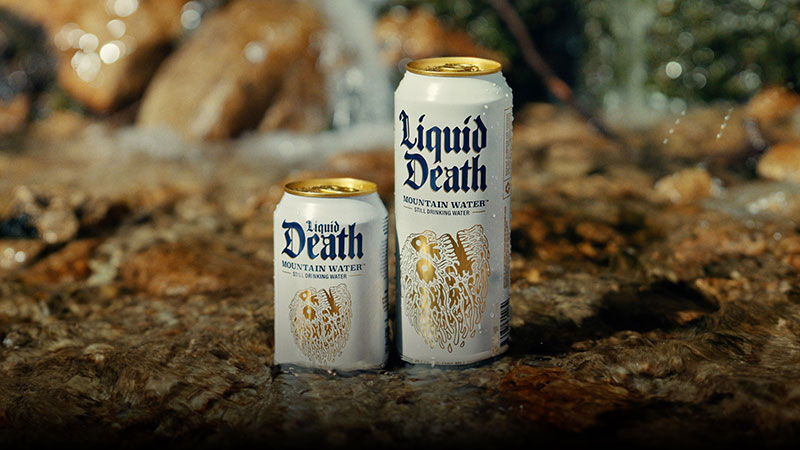
Liquid Death reported $263 million in retail scanned sales in 2023, its third straight year of triple-digit growth, according to the company (Business Wire, 2024).
The anti-plastic message rests on the packaging, which means water sold in aluminum cans instead of plastic bottles.
Retail Dive (2024) also describes a brand moving aggressively beyond water, into flavored sparkling water and iced tea. Niche brands tend to follow that path, since once the segment is won, growth comes from adding categories.
Category creation means building demand for something buyers did not know to ask for, and April Dunford flags that as the main cost of creating a new market.
How to Write a Positioning Statement
Work out the inputs before writing a word of the statement, then drop them into Geoffrey Moore’s template. If you write the sentence first and find the inputs later, you end up with a slogan.
The steps follow April Dunford’s components from “Obviously Awesome” (2019), with two checks added here.
- List the competitive alternatives, starting with what customers would do if the product did not exist. Non-products count. Christensen’s milkshake study found the rivals were bananas, bagels and coffee, not other shakes.
- Isolate the unique attributes. Keep only capabilities the alternatives lack.
- Convert attributes into value and proof. Buyers respond to what a feature does for them, and the claim needs evidence.
- Pick the target customer by the job. Choose the segment that cares most about that value, and state its need as a job to be done, not a demographic.
- Choose the category frame. Plot the brand and its rivals on a perceptual map with two axes buyers care about, such as price and quality, and look for an open space.
- Fill in Moore’s template. Write it once, then cut any word that a rival could also claim.
An open space on the map is not proof of demand. Check why nobody occupies it before building on it.
A worked statement built from Oatly
Moore’s template, from “Crossing the Chasm,” runs in a fixed order. It starts with the target customer and their need, then the product and its category, the key benefit, the primary competitive alternative and the point of difference.
Run through Oatly, it comes out like this.
For coffee drinkers who want a non-dairy milk that foams properly, Oatly is an oat drink that behaves like milk in a cup. Unlike dairy milk, it comes from oats, not cows.
That sentence is reconstructed from public positioning, not Oatly’s internal wording. Once a statement like it is settled, put it at the top of your brand guidelines so designers and writers work from the same line.
Which Positioning Type Fits Your Brand?
Match the type to the position the brand already holds and the proof it can show, not to the campaign someone admires.
| Situation | Type that fits | Proof required |
|---|---|---|
| Second or third in the category, with a leader weakness buyers notice | Challenger | A service or price gap buyers can verify |
| Structural cost advantage | Value-based | An operating model rivals cannot copy quickly |
| Buyers pay for status or identity | Premium | Design or performance that keeps improving |
| Real conviction about a cause | Mission-led | Conduct that costs the company something |
| Underserved segment or a new way to use a product | Niche or category creation | Demand you can see, or can afford to build |
The one choice I’d skip is low-price positioning without a structural cost advantage. A rival with deeper pockets matches a price cut quickly, and the claim disappears.
Pick a type only when buyers can verify the claim in the product or service and rivals can’t match it quickly. The target segment also has to be large enough to serve profitably.
Dunford describes niche positioning as carving off a subsegment where the rules differ just enough to beat the category leader, which is easier than competing head to head.
When Brand Positioning Stops Working
Positioning breaks when the claim outruns the proof or when buyer perception drifts away from it. A category that stops growing does the same damage from the outside.
Claims the brand cannot back up
Pepsi released a protest-themed ad with Kendall Jenner in April 2017 and pulled it the next day, apologizing for missing the mark (Salon, 2017).
Critics read the borrowed protest imagery as a sales device, because nothing in the product or the company’s conduct backed the message. A quick retreat is sound brand crisis management, but it cannot repair a claim the brand never earned.
Perception that drifts
Interbrand’s Best Global Brands 2025 report moved Nike from 14th to 23rd, with brand value down 26%, while the company overhauled its strategy to regain marketing momentum (Media Marketing).
The claim itself had not changed, but the buyer’s view of it had.
Categories that stop growing
Oatly’s North American sales fell 10% year over year in the third quarter of 2025, offset by growth in Europe and China (Food Processing magazine). The Motley Fool (2025) argued the company saturated its market sooner than expected and shifted from rapid growth to profitability.
A category creator’s ceiling is the category’s ceiling, whatever the strength of the brand.
Brand Positioning FAQ
How does positioning differ from branding, a tagline or a USP?
Where a brand sits against competitive alternatives for a chosen segment is the positioning decision. Branding, visual identity, taglines and the unique value proposition only express it.
A tagline with nothing behind it is just a slogan.
Which brands have repositioned successfully?
Apple in 1997 and Oatly in 2012 both did. Apple’s “Think Different” campaign moved its message from features and price to what the brand stands for.
Oatly left shelves meant for people with allergies through a relaunch that poked at the dairy industry.
Do B2B brands position differently from B2C brands?
Yes, mainly in the competitive alternative. A B2B buyer’s alternative can be a spreadsheet or a new hire, and sometimes just another internal budget priority, while a B2C buyer’s is usually a rival brand.
The other inputs stay the same.
Can a small or local business use these approaches?
Yes, and niche positioning suits it best. Dunford’s view is that carving off a subsegment where the rules differ just enough to beat the category leader is easier than competing head to head.
A customer type or a specific use case will do as the subsegment.
Can a brand hold two positions at once?
Rarely. Strong brands anchor on one differentiating claim and build proof around it, because two competing claims dilute the message.
Several proof points can support that one claim.
How long does a new position take to show results?
No fixed timeline exists. Avis turned a profit within a year of its 1962 campaign, while the sales figures cited for Dove’s Real Beauty span three to ten years depending on the source.
Challenger claims tend to move results faster than mission-led positioning, which has to earn belief through conduct first.
Testing Whether Buyers See the Position You Chose
A chosen position is confirmed when target buyers place the brand where its positioning statement says it sits. A survey against two or three named rivals measures that gap.
Ask buyers directly how different the brand is, not only where it plots. Romaniuk, Sharp and Ehrenberg’s 2007 paper warns that perceptual mapping highlights small differences almost regardless of their size.
Survey buyers on two attributes first, then rate perceived difference directly, and repeat the whole thing after any rival copies the claim.
The trade-off is cost, since every round needs a fresh sample of buyers. Teams that keep the first round as a baseline can move on to measuring brand performance over time.
This advice holds as of October 2026 and changes when a rival launches the same differentiating claim with proof behind it.

Renowned for his expertise in logo design and visual branding, Bogdan has developed a multitude of logos for various clients.
His skills extend to creating posters, vector illustrations, business cards, and brochures. Additionally, Bogdan's UI kits were featured on marketplaces like Visual Hierarchy and UI8.
He also wrote in the past years on sites like Design Your Way, WebDesignerDepot, WPDean, Designmodo, Speckyboy, Slider Revolution, and more.
- The Windsurf Logo History, Colors, Font, And Meaning - 10 October 2026
- How to Remove Background From Product Photos (No Photoshop) - 10 October 2026
- How Designers can Build a Stronger Online Creative Identity - 9 October 2026

Bogdan Sandu is a seasoned designer who has been designing websites since 2008. Renowned for his expertise in logo design and visual branding, Bogdan has developed a multitude of logos for various clients. His skills extend to creating posters, vector illustrations, business cards, and brochures. Additionally, Bogdan's UI kits were featured on marketplaces like Visual Hierarchy and UI8. He also wrote in the past years on sites like Design Your Way, WebDesignerDepot, WPDean, Designmodo, Speckyboy, Slider Revolution, and more.
You Might Also Like