


To run a PR campaign for a mobile app, set specific measurable goals, choose the channels and media outlets your audience actually uses, write a press release with a clear headline, quotes and a call to action, distribute it through an agency or a wire service, and then share it across your own channels. Nearly every category already has an app, so the goal of PR is to make your target market aware of what yours does differently. It builds visibility, engagement and downloads at the same time, and it works best when the five steps below happen in order.
How do you define goals for a mobile app PR campaign?
Write goals that are specific and measurable, tied to the business and set against a deadline. Without them, PR efforts lack direction and are hard to judge afterward. These principles help:
- Specific: avoid vague aims like “get more active users”. A better goal is “increase app downloads by 20% within three months”.
- Measurable: track downloads, conversion rates, churn rates and media mentions, so you can see what the campaign changes.
- Relevant: match the goal to your stage. If you have just launched and have no loyal users yet, prioritize user acquisition over revenue.
- Achievable: keep goals realistic for your resources, timeline and market. Unrealistic targets frustrate teams.
- Time-bound: deadlines and milestones show whether you are on schedule, and prompt changes of strategy if you fall behind.
- Flexible: refine goals as you gather insights and user feedback during the campaign.
These goals give the team a roadmap and let it focus on results that can be counted. The next decision is where the campaign will run.
Which communication platforms should an app PR campaign use?
The ones your potential users frequent, which you find through target audience analysis. That could be social channels such as Instagram, Twitter or LinkedIn, tech blogs, or industry forums and communities. Tailor the message to the platforms where your audience already spends time.
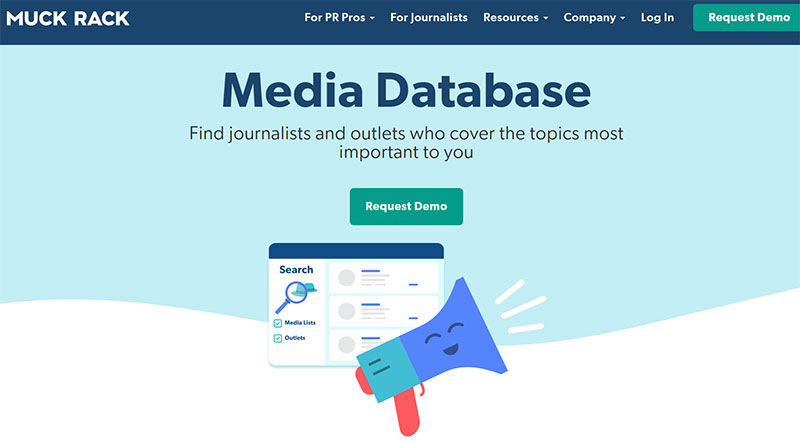
Next, research the media in your app’s niche. Identify the journalists, bloggers and thought leaders who cover it, and work out which outlets have the highest readership, credibility and relevance. Tools such as Muck Rack’s media database help you find journalists and outlets by topic. Prioritize building relationships with those outlets and winning coverage there. If you lack the time or contacts, you can outsource this to a PR service agency that already has strong media relations.
A solid plan mixes three kinds of media:
- Owned: your app’s website and social profiles, where you control the message and its distribution.
- Earned: coverage and mentions from media outlets, which add credibility to the app.
- Paid: sponsored content, influencer marketing and social ads, which extend the reach of organic efforts to new audiences.
With goals and channels in place, the press release is the main document to prepare.
How do you write a press release for a mobile app?
Treat it as a short, structured document that gives journalists what they need in one read. The press release for a payments app from Bloxcross and GoDirectPay, published on PR Newswire, shows each element below in practice.
Write a headline and opening that earn attention
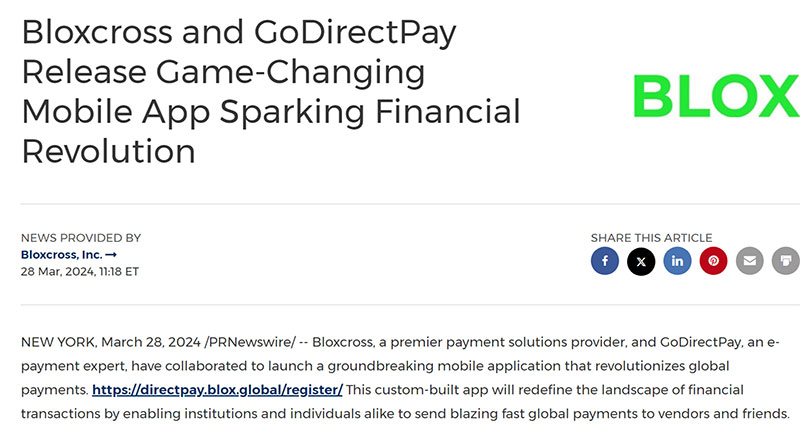
The headline is the first thing journalists and readers see, so use strong, action-oriented language that makes them want to read on. In the example, the headline names both companies and the product, and the first paragraph says exactly what was launched and who it is for.
Use the opening paragraph as a hook to keep people reading. That could be a striking statistic, a thought-provoking question or a short anecdote related to the app.
Keep the message concise and structured
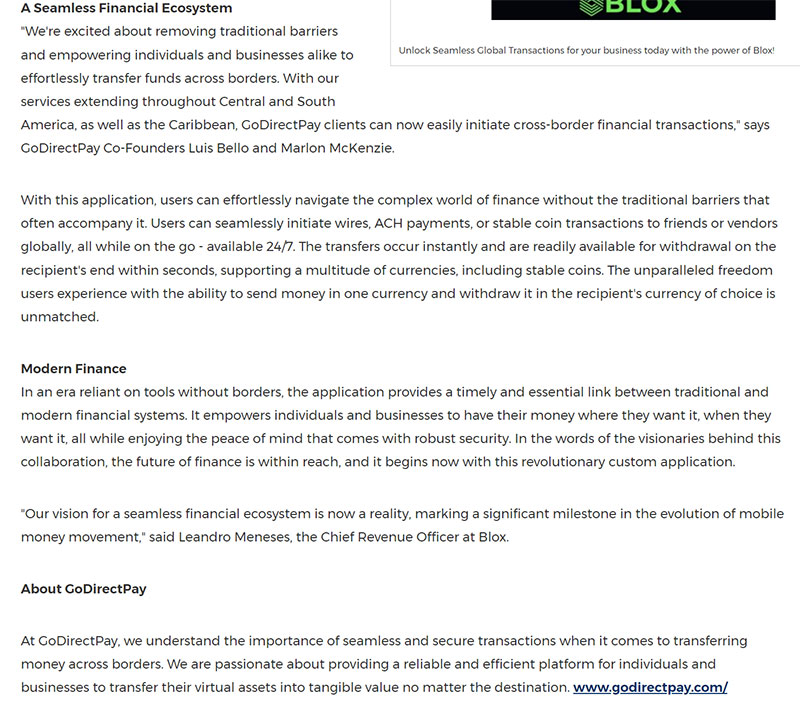
Focus on the most important information: key features, benefits and the unique selling points that set your app apart. Break it up with short paragraphs, bullet points and subheadings, as the example does. Avoid technical jargon and over-promotional language, which distract from the main message.
Add images, demo videos and screenshots

Visuals make the release more engaging, and they give journalists assets they can use when they cover your app. The example embeds a demo video, a screenshot of the app dashboard and a promotional graphic.
Include quotes from key people

Quotes from the developer, founder or CEO add credibility and a human voice, as shown above. You can also add social proof in the form of testimonials from app users.
Finish with a clear call to action
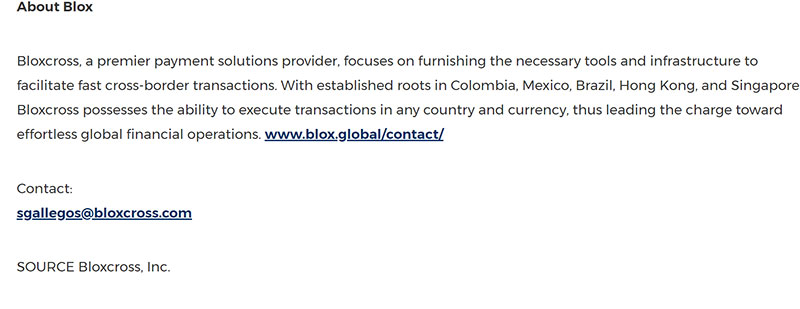
End with a specific, actionable next step, such as downloading the app, visiting your website or contacting you for more information. It should match the objectives of your wider app marketing campaign. The example closes with company background and contact details, so a journalist knows where to follow up.
Optimize the release for search and speed up drafting
Work relevant keywords and phrases into the text naturally, which improves its chances of ranking in search results and reaching potential users. You also do not have to write everything manually. Generative AI can draft a release in minutes, but first learn the main Generative AI use cases so you know where it helps and where a person needs to edit.
How do you choose a media agency to distribute your release?
Choose one with proven experience in your niche, strong media relationships and a style that fits your own. Look at these points:
- Niche expertise: a track record of generating coverage and tangible results for clients like you.
- Relationships: established connections with journalists, editors and influencers across outlets and platforms make placements easier.
- Fit: shared values, culture and objectives lead to better collaboration and trust.
- Budget: larger agencies offer more services and cost more, while boutique or specialist firms may give more personal attention but have limited resources.
Pick the agency that balances cost against capability for your needs. Once the release is out, the next job is spreading it further.
How do you promote the release across different channels?
Use several channels, so you reach different parts of your audience and keep a consistent brand presence. Share snippets, teaser videos or highlights from the release on social platforms such as Facebook, Instagram and TikTok, and consider video promos for the teasers. Email, influencer marketing and SMS can carry the release and later updates to subscribers. For stronger visual consistency on social platforms, see this guide to social media branding.
If you are rebranding and your app already has a loyal user base, add in-app notifications that link to the press release or a blog post. Two examples show a launch handled this way.
Distribution platform example: Cision

Bookdialysis announced its app launch through the distribution platform Cision, in a press release that carried app store download buttons and a clear description of what the app does.
Owned channel example: Instagram

The same company supported the release with its own channels, including its blog and an Instagram post. Every channel has its own characteristics, so adapt the message and the format for each one instead of pasting the same text everywhere.
Frequently asked questions
How long should an app PR campaign run?
Set the length when you set the goals. A three-month window, like the downloads example above, gives you a clear deadline and enough time to adjust the plan.
Do I need a PR agency to promote my app?
No, but one with established media relationships can speed up coverage. If you do it yourself, put your time into researching the right journalists and outlets.
What should a mobile app press release include?
A strong headline, a hook in the opening paragraph, key features and benefits, visuals, quotes from stakeholders and a clear call to action, such as downloading the app.
Which metrics show whether the campaign worked?
Downloads, conversion rates, churn rates and media mentions are the main ones, tracked against the targets you set at the start.
What is the first step for your app’s PR campaign?
Write down one measurable goal with a deadline, then list ten journalists or outlets that cover your niche. Draft a press release with a headline, a quote and a call to action, and send it through the channel that suits your budget. Track downloads and mentions weekly, and adjust.

Renowned for his expertise in logo design and visual branding, Bogdan has developed a multitude of logos for various clients.
His skills extend to creating posters, vector illustrations, business cards, and brochures. Additionally, Bogdan's UI kits were featured on marketplaces like Visual Hierarchy and UI8.
He also wrote in the past years on sites like Design Your Way, WebDesignerDepot, WPDean, Designmodo, Speckyboy, Slider Revolution, and more.

Bogdan Sandu is a seasoned designer who has been designing websites since 2008. Renowned for his expertise in logo design and visual branding, Bogdan has developed a multitude of logos for various clients. His skills extend to creating posters, vector illustrations, business cards, and brochures. Additionally, Bogdan's UI kits were featured on marketplaces like Visual Hierarchy and UI8. He also wrote in the past years on sites like Design Your Way, WebDesignerDepot, WPDean, Designmodo, Speckyboy, Slider Revolution, and more.
You Might Also Like


