Inkscape has no Add Font button. There isn’t one buried in a submenu either. The font goes into your operating system first, and Inkscape picks it up from there the next time it launches. Windows, macOS, Linux, same arrangement on all three.
That hasn’t changed in years. The current stable build, version 1.4.4, published on May 6, 2026, still ships without a font installer of any kind, and Inkscape’s own release documentation says as much. Fonts have to be registered with the OS before Inkscape will list them in the Text and Font dialog or the toolbar dropdown.
What Does Adding a Font to Inkscape Actually Mean
The phrase is a bit misleading. Nothing gets added to Inkscape. You install a font on your computer, Inkscape notices, and that’s the whole transaction.
Every launch, the program checks wherever your OS keeps fonts and builds its list from what’s sitting there. A font is just a file describing one typeface’s letterforms, weights, and spacing. Inkscape borrows that file. It never keeps a copy.
Two consequences worth holding onto:
- The font list gets built at startup and never rechecks while the program is running
- Nothing in the File menu installs anything
Once a font does register, it shows up in two places, the toolbar dropdown and the Text and Font dialog.
Illustrator and CorelDRAW behave the same way. No built-in font manager in either one. They read what the system already has.
Which Font Formats Does Inkscape Support
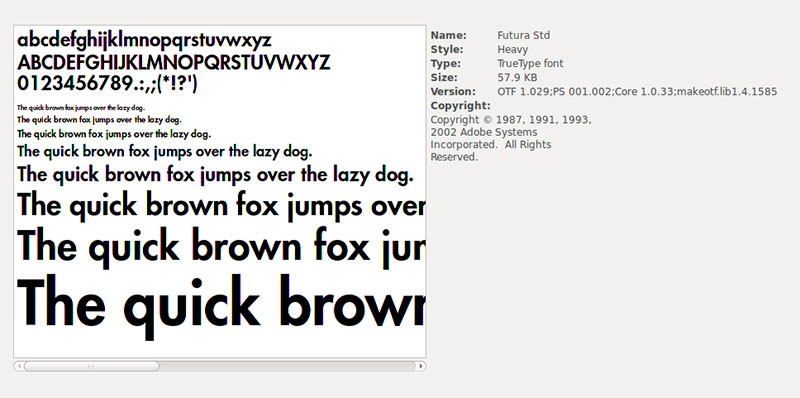
TrueType and OpenType files work with no fuss at all. Variable fonts work too, assuming a couple of library versions underneath are recent enough. Everything else gets complicated.
Type 1 is the real casualty. And WOFF files were built for browsers, so expecting them in a desktop font list was always optimistic.
- Most free fonts and nearly every system font arrive as TrueType (.ttf), and Inkscape takes them as they come
- OpenType (.otf) carries more glyphs and behaves better across platforms
- A variable font packs multiple weights and widths into one file through adjustable axes
- Type 1 is dead weight now, convert it to OpenType or skip it
A few version numbers explain why this still catches people out.
- Native variable font support landed in Inkscape version 1.0, out in 2020 (Inkscape Wiki)
- Reading a variable font’s axes requires Pango 1.41.1 and FreeType 2.8 as the minimum library versions underneath (Inkscape Wiki, Variable Fonts support page)
- Pango 1.44, from 2019, is the release that dropped Type 1 and bitmap fonts entirely and handed shaping over to HarfBuzz (GNOME Pango project changelog)
Inkscape’s 1.0 release notes demoed the new slider controls with Decovar, a variable font whose letterforms go wildly different across its axes. Good choice for a demo, honestly. Hard to miss what’s changing.
Variable fonts hold every weight and width in a single file, which is why you get sliders instead of a style list once one is selected.
How Inkscape Finds the Fonts Installed on Your Computer
There’s no Inkscape font database. The program scans your OS font folders at launch and passes what it finds down a short chain of libraries that turn a file into letters on screen.
On Linux that scan belongs to fontconfig, running quietly whenever any app asks for a font.
- fontconfig finds the installed files and matches names to family requests
- Pango handles layout, so line breaks, spacing, glyph order
- HarfBuzz shapes the glyphs, variable font axis positions included
- FreeType renders the outlines you see on canvas
By default fontconfig scans /usr/share/fonts and ~/.local/share/fonts on Linux, recursively, per the Arch Linux Wiki’s font configuration page.
Inside Inkscape, a component called FontLister takes the combined list and builds what you actually see in the dialog and the dropdown.
This is also the reason one install usually covers your whole desktop. The same list feeds other open-source tools, which is why getting a new typeface working inside GIMP reads almost identically.
Paid software isn’t different here. Anyone who has been through the process of adding a custom typeface to Adobe Illustrator will recognize what follows, because Illustrator pulls from that same system list.
Should You Install a Font System-Wide or Load It From a Custom Font Directory
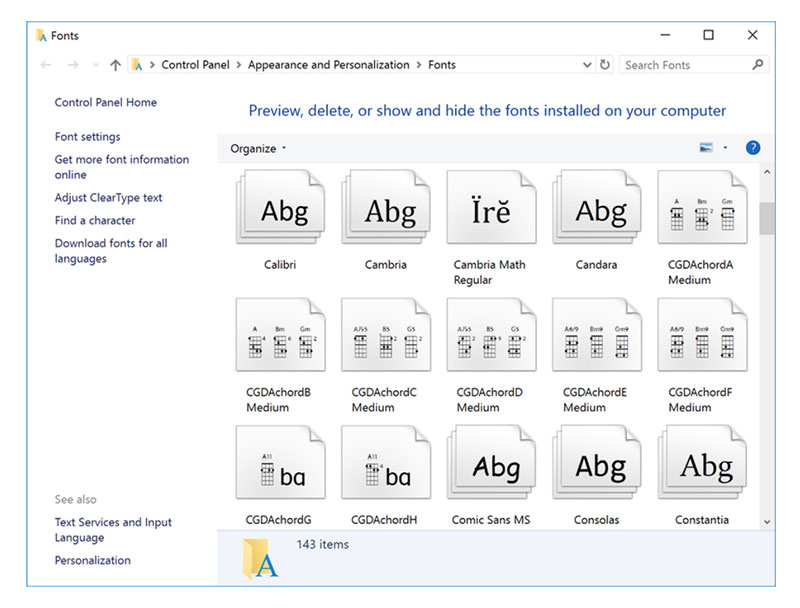
Install it system-wide if you plan to use the font everywhere. That’s most fonts, most of the time.
A custom directory earns its keep in narrower situations. Trial fonts you haven’t committed to, a file a client sent over for one job, or a personal collection large enough that dumping it into the system would bloat the font menu in every app you own.
| Method | Restart Needed | Visible To Other Apps | Best For |
|---|---|---|---|
| System-wide install | Yes | Yes | Fonts you use everywhere |
| Custom font directory | Yes | No | Trial or client fonts |
| Font manager app | Yes | Depends on app | Large rotating collections |
Inkscape’s Preferences panel has a field called Custom Font Directories under System, built for exactly this. Point it at a folder and every font inside becomes available without the rest of your OS ever knowing.
Worth flagging before you go shopping for a font manager: Inkscape’s forums and bug tracker document long-running friction with third-party apps like FontBase. A manager can flip a font on or off instantly for other programs, and Inkscape will still sit there needing a restart.
Simple wins when you’ll use a font once. Structure wins when you won’t.
How to Install a Font for Inkscape on Windows, macOS, and Linux
The font never goes into Inkscape on any platform. It goes into the OS, and Inkscape reads the result on its next launch.
Installing a Font on Windows
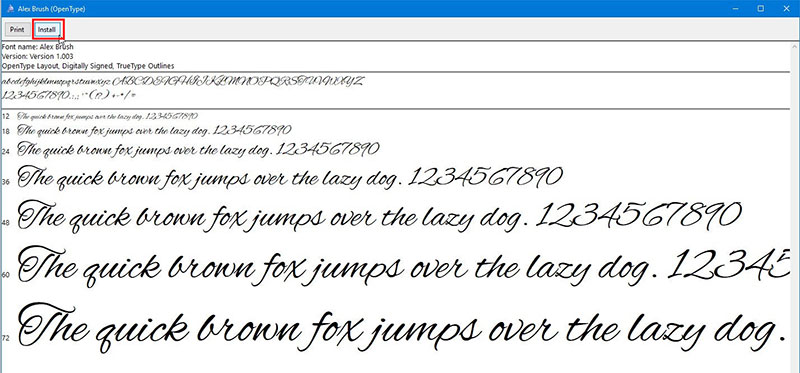
A right-click covers most files here, no extra software.
- Download or copy the font file (.ttf or .otf) onto your computer
- Right-click the file and choose Install, or Install for all users to make it available system-wide
- Close and reopen Inkscape so it reads the updated font list
Windows will also auto-detect a TrueType file and offer to install it when you double-click, skipping the right-click menu completely.
Installing a Font on macOS
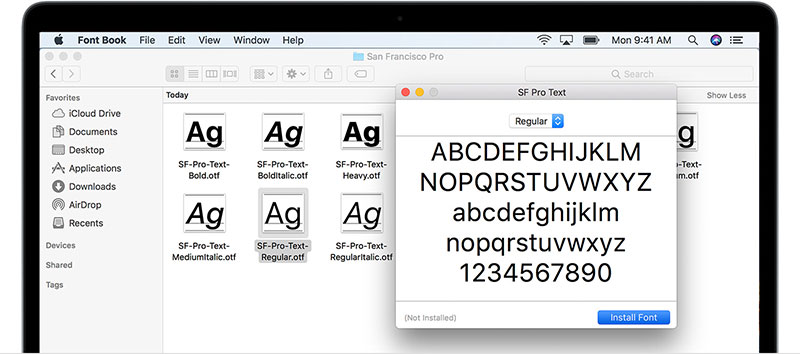
Font Book does the work.
- Double-click the downloaded font file to open it in Font Book
- Click Install Font in the preview window that appears
- Restart Inkscape so the new entry appears in the Text and Font dialog
Font Book also flags a damaged font before installing it, which quietly saves you a troubleshooting session that would have gone nowhere. This overlaps with the general steps for installing fonts on a Mac, since Inkscape adds nothing on top of them.
Installing a Font on Linux
No graphical installer required. fontconfig runs this.
- Copy the font file into ~/.local/share/fonts for your account only, or /usr/local/share/fonts for every user
- Run fc-cache -f -v from a terminal to rebuild the font cache right away
- Restart Inkscape to see the font in the toolbar dropdown
Ubuntu’s Software Center packages plenty of fonts under names starting with fonts-, the current Debian and Ubuntu convention, and those register with fontconfig on their own. A handful of older packages, ttf-mscorefonts-installer among them, still carry the legacy ttf- prefix for historical reasons.
Why a New Font Does Not Show Up Until You Refresh Inkscape
The font list gets built once, at startup, and Inkscape never looks again while it’s running. Install something mid-session and the program has no way of knowing.
Custom Font Directories don’t get an exemption. Add a folder there, restart anyway.
| Platform | Why It Lags | Quick Fix |
|---|---|---|
| Windows | Font list loads only at startup | Restart Inkscape |
| macOS | Same startup read, plus Font Book validation | Restart Inkscape after Font Book finishes |
| Linux | fontconfig cache not yet rebuilt | Run fc-cache -f -v, then restart |
There’s an open request on Inkscape’s development tracker, sitting there a long while now, asking for fonts to load without a restart. So this is a known limitation of the current build. Not something you did.
Why a Font Looks Missing, Grayed Out, or Wrong Inside Inkscape
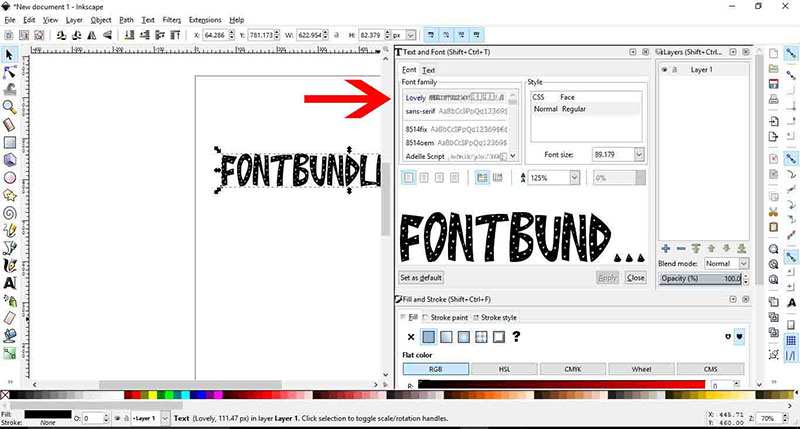
Almost every font complaint from Inkscape users lands in one of a few buckets, and each has a specific cause you can act on.
The Font Name Shows a Strikethrough or a Fallback Style
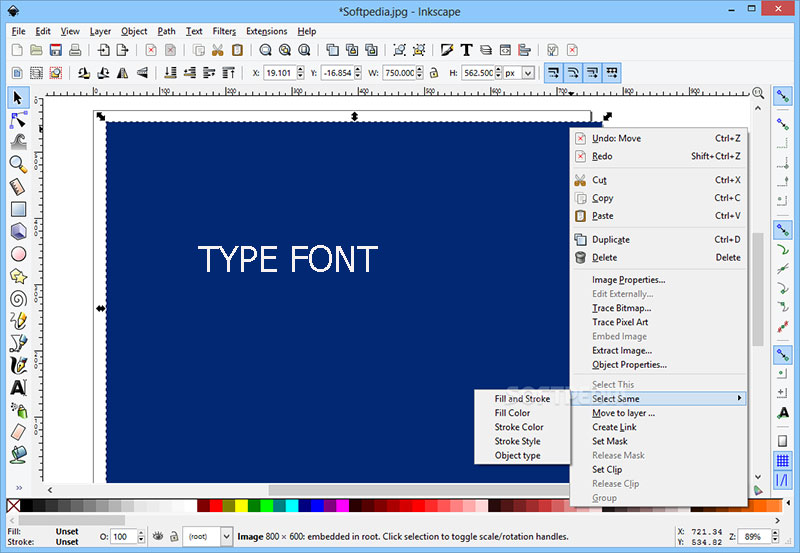
Strikethrough means the open document is asking for a font that isn’t installed on this machine. Inkscape keeps listing it, crossed out, so at least you know what’s missing.
- The file came from another computer with a font you don’t have
- The font was removed or renamed after the file was saved
- The font went in after this file was already open, with no refresh since
Converting the text to a path kills the dependency permanently, though that’s a separate job from fixing your font list.
Bold or Italic Will Not Apply to a Selected Font
Rarely a bug.
Long threads on Inkscape’s support forum trace this symptom back to the font family missing that style, not to anything wrong with the software. A lot of free display fonts ship regular and nothing else, so when you ask for bold, Inkscape reaches for the closest system font instead.
- Try reselecting the font after you highlight the text rather than before
- Check the font’s own site for whether a bold or italic cut exists at all
Inkscape Crashes After You Add a Large Font Folder
Inkscape’s GitLab tracker carries multiple reports of crashes while loading or scrolling the font list, usually on machines with unusually large or unusual font collections. The cause traces back to how Pango and the font-rendering libraries beneath it enumerate installed families, rather than to any one Inkscape release.
Big collections dropped in all at once trigger it far more often than adding a font or two.
- Add fonts in small batches instead of hundreds in one go
- Keep a lighter folder for active projects and archive the rest somewhere else
- Update to a newer release, since crash fixes land in point releases regularly
Where to Get Free Fonts for Inkscape and Which Source to Trust
Google Fonts, dafont.com, Font Squirrel, and Adobe Fonts cover most of what Inkscape users go looking for. They handle licensing and installation very differently, and that gap matters more than catalog size ever will.
| Source | Cost | License Clarity | Format |
|---|---|---|---|
| Google Fonts | Free | High, open source | TrueType, variable |
| dafont.com | Free | Varies by file | Mostly TrueType |
| Font Squirrel | Free | Pre-checked for commercial use | TrueType, OpenType |
| Adobe Fonts | Subscription | High, covered by Creative Cloud terms | OpenType, variable |
Google’s own FAQ confirms every font in its catalog is open source and free of cost, cleared for commercial and logo use, most often under the SIL Open Font License. That’s about as clean as licensing gets.
Google Fonts pros and cons:
- Every family is cleared for commercial use from the start
- TrueType files throughout, plus a growing set of variable fonts
- The catalog stays smaller and more conservative than a paid marketplace
dafont.com sits at the far end of that spectrum. Every font belongs to a different designer, so freeware, shareware, and public domain files end up sitting side by side on the same page.
- Huge, eclectic catalog, heavy on display and novelty styles
- Read the license note on every download before you use it commercially
Font Squirrel pre-screens instead. Its FAQ marks each font with symbols showing whether commercial desktop use, @font-face web embedding, ebook and PDF use, or application use is permitted.
Which makes picking a font from Font Squirrel’s library quicker when a client project needs a clean paper trail.
- Commercial clearance happens before a font is even listed
- The catalog is smaller than dafont’s, which is the cost of that screening
Adobe Fonts runs on subscription and syncs at the OS level through the Creative Cloud desktop app. That app only supports Windows and macOS, according to Adobe’s own system requirements documentation, so a Linux install of Inkscape has no route to a synced Adobe Fonts family at all.
Anyone weighing Google Fonts against Adobe Fonts for recurring work is choosing between free-and-open and paid-and-managed. Not two flavors of the same product.
- Library size and quality hold up against paid marketplaces
- Needs an active subscription, and it doesn’t reach Linux desktops the same way
How to Avoid Font Problems When You Share or Export an Inkscape File
A file that calls for a font the next computer doesn’t have won’t come up blank. It substitutes something automatically, and the substitute almost never matches the original’s spacing or shapes. That silent swap is the actual problem.
Path > Object to Path turns every selected letter into vector outlines and removes the dependency.
- Files headed to a different computer or a client’s machine
- Artwork going to a print shop or sign shop
- An SVG destined for a web browser, where substitution is just as common
Inkable Label Co., a label printing company, tells customers on its help page that outlining text before submission speeds up prepress and avoids extra charges for fixing font issues later.
PDF export gets you a similar result without touching the original. Embedding the fonts inside the exported PDF keeps the text portable for whoever opens it next, no outlining required.
There’s no undo on this one, though. Once text becomes a path it stops being text, spelling fixes included.
Save an editable copy before you convert anything. Learn that lesson once and you never forget it.
When a Font Will Not Work in Inkscape No Matter What You Try
Some fonts won’t work, full stop, no matter how you install them or where they came from. These aren’t bugs waiting on a fix. They’re limits baked into the format or the platform.
| Condition | Why It Fails |
|---|---|
| Web-only format (WOFF, WOFF2) | Built for browsers, not desktop font lists |
| Type 1 font, unconverted | No longer read by the underlying rendering stack |
| Font embedded in an imported PDF | Arrives as outlines or a substitute, not an installed font |
| Subscription-locked font, no local install | Never reaches the operating system’s font list |
The W3C’s WOFF2 specification states outright that these fonts do not persist for use by other applications on the system. Designed that way on purpose.
Inkscape’s PDF importer confirms it from the other side. The Poppler/Cairo import mode turns embedded text into outlined paths immediately, while the Internal mode tries matching names against what’s installed and substitutes when it can’t, according to discussion on Inkscape’s bug tracker.
Type 1 fonts land in the trap described earlier. The rendering change that dropped support never came with a route back, short of converting the file to OpenType yourself.
- Ask the source for a TrueType or OpenType version instead of a web-only file
- Run a stubborn Type 1 font through FontForge before installing
- Treat imported PDF text as artwork, not as a font you can install
- License a real desktop version if a subscription font has to appear in Inkscape specifically
FAQ on How To Add Fonts To Inkscape
Does Inkscape Support Bitmap Font Formats Like .fon or .fnt
No. Pango, the text layout library behind Inkscape, dropped bitmap and legacy font formats in the same rendering change that ended Type 1 support. A .fon or .fnt file will not appear in the Text and Font dialog, installed or not.
Do Variable Fonts Behave the Same in Inkscape as in a Web Browser
Not entirely. Browsers read variable font axes through CSS and update live as a page adjusts. Inkscape exposes the same weight and width axes through sliders in the Text and Font dialog, driven by Pango and HarfBuzz, not a browser engine.
Does Inkscape Support Color or Emoji Fonts
Support is inconsistent. Inkscape can display some color font formats through Cairo and Pango, but full-color emoji layers often render as a single flat glyph or fall back to an outline, depending on the installed font and the build’s library versions.
Can Other Programs Such as GIMP or LibreOffice Use the Same Installed Font as Inkscape
Yes. LibreOffice, GIMP, and other open source creative tools read fonts through the same operating system font list Inkscape uses. Install a font once at the system level and it becomes available across every program that shares that list, no per-application setup required.
Is It Legal to Use a Free Downloaded Font in a Commercial Inkscape Project
It depends on the license attached to that specific font file, not on where it came from. SIL Open Font License and Font Squirrel’s commercial picks are safe. A freeware or personal-use-only font stays off limits for client work until you buy a commercial license.
Can FontForge Convert an Old Type 1 Font So Inkscape Can Use It
Usually, yes. FontForge opens a Type 1 file and exports it as OpenType or TrueType, formats Pango still renders. Spacing and hinting can shift slightly during conversion, so check the result in the Text and Font dialog before relying on it for finished work.
Does the Custom Font Directory Setting Carry Over After an Inkscape Update
In most cases, yes. Inkscape stores that path in your personal preferences folder, separate from the program files a routine update replaces. A major version upgrade or a manual preferences reset can clear it, so confirm the folder still shows fonts afterward.
Is There a Limit to How Many Fonts Inkscape Can Load Before It Slows Down
There is no official cap, but performance drops before any real limit is reached. Inkscape’s own support forum documents long load times on systems carrying a large TeX Live font collection, a different problem from the crash triggered by dropping a batch of new files into one folder at once.
What Is the Keyboard Shortcut for Opening the Font Dialog in Inkscape
Shift+Ctrl+T opens the Text and Font dialog directly on Windows and Linux, without going through the Text menu first. On macOS, Inkscape substitutes the Command key for Ctrl in most of its default bindings, so the same dialog opens with Shift+Cmd+T instead. The underlying action and menu structure stay consistent across all three platforms; only that one modifier key changes on a Mac.
What Should You Fix First When How To Add Fonts To Inkscape Goes Wrong?
Nine times out of ten it’s a stale font cache or a program you haven’t restarted. Check that before you start doubting file formats, custom directories, or the site you downloaded from.
After that, work through the rest in order. Restart Inkscape and rebuild the cache first. Then confirm the style you want actually exists inside that font family. Then confirm the file is a format Inkscape reads at all, not a legacy or web-only one.
Cache and restart come first because they cost seconds and rule out the most common failure. Jumping straight to reinstalling or converting the file burns time a quick cache check would have saved you.
Once everything renders the way it should, pairing fonts well becomes the next thing worth getting right.

Renowned for his expertise in logo design and visual branding, Bogdan has developed a multitude of logos for various clients.
His skills extend to creating posters, vector illustrations, business cards, and brochures. Additionally, Bogdan's UI kits were featured on marketplaces like Visual Hierarchy and UI8.
He also wrote in the past years on sites like Design Your Way, WebDesignerDepot, WPDean, Designmodo, Speckyboy, Slider Revolution, and more.
- Versatile Work Sans Font Pairing for Every Project - 16 September 2026
- Organize Digital Files Like a Pro Before Your Next Client Handoff - 16 September 2026
- How to Set Up a Digital Menu Board: Hardware to Layout - 15 September 2026

Bogdan Sandu is a seasoned designer who has been designing websites since 2008. Renowned for his expertise in logo design and visual branding, Bogdan has developed a multitude of logos for various clients. His skills extend to creating posters, vector illustrations, business cards, and brochures. Additionally, Bogdan's UI kits were featured on marketplaces like Visual Hierarchy and UI8. He also wrote in the past years on sites like Design Your Way, WebDesignerDepot, WPDean, Designmodo, Speckyboy, Slider Revolution, and more.
You Might Also Like