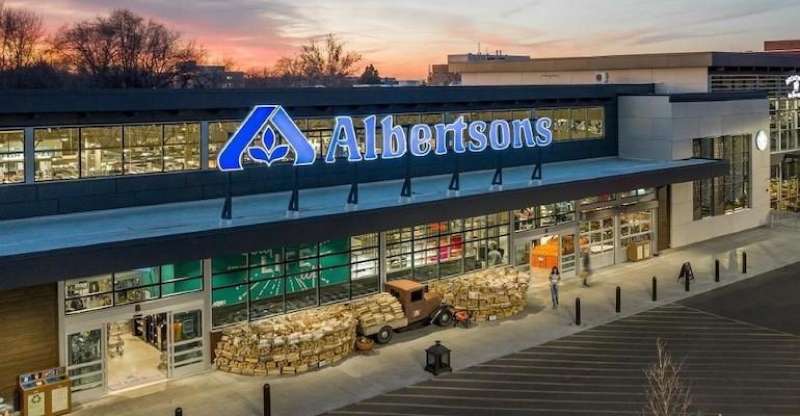
The Albertsons logo is the official visual mark of Albertsons Companies, Inc., one of the largest grocery retail chains in the United States. It functions as the primary brand identifier across thousands of store locations, digital platforms, and marketing materials. The current design is a clean wordmark that reflects the company’s long-standing presence in American food retail.
Within grocery retail branding history, Albertsons sits alongside chains like Kroger and Safeway as brands that have steadily modernized their visual identity without abandoning consumer familiarity. The logo has gone through several iterations since the company’s founding in 1939, tracking broader shifts in graphic design movements across decades.
The current version was refined as part of a broader corporate identity update, using a bold sans-serif wordmark in Albertsons’ signature blue. No external design agency has been officially credited publicly. The company has gone through at least five notable logo versions since Joe Albertson opened the first store in Boise, Idaho.
What Is the Albertsons Logo?
The Albertsons logo is a bold blue wordmark using a custom sans-serif typeface. The current version was introduced in the early 2010s during a brand refresh. It represents accessibility, trust, and familiarity in everyday grocery retail, with no standalone icon or symbol.
- Design Type: Wordmark (text-only logotype)
- Primary Elements: Bold custom sans-serif lettering, no standalone icon or symbol
- Official Introduction Date: Current version introduced approximately 2013-2015 during corporate rebrand
- Designer/Agency: No publicly credited designer or agency on record
- Trademark Status: Registered trademark under Albertsons Companies, Inc.
- Color Palette: Primary blue (#003087 or close variant), white lettering used on colored backgrounds
- Usage Context: Store signage, shopping bags, digital platforms, employee uniforms, marketing materials, and packaging
How Has the Albertsons Logo Evolved Over Time?
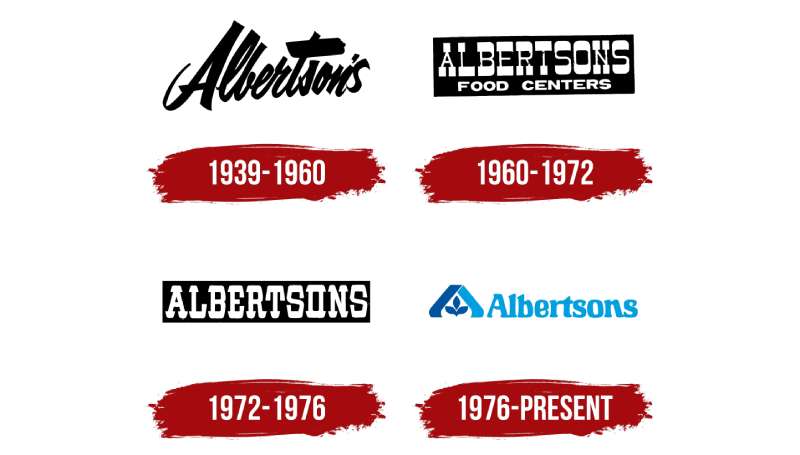
The Albertsons logo has changed significantly since 1939, moving from decorative mid-century lettering to a clean, modern wordmark. Each redesign reflected both internal brand strategy shifts and wider changes in retail visual identity standards.
Original Albertsons Logo (1939-1960s)
- Years Active: 1939-1960s
- Design Description: Script-style lettering with decorative flourishes, typical of mid-century American retail signage
- Color Scheme: Red and white, common for food retail at the time
- Designer: Unknown
- Context: Joe Albertson opened the first store in Boise, Idaho in 1939. The logo matched the hand-lettered aesthetic common across American grocery stores of that era.
- Key Changes from Previous: N/A – original version
- Cultural Significance: Represented a single-owner neighborhood grocery concept before the chain expanded regionally
Mid-Century Albertsons Logo (1960s-1970s)
- Years Active: 1960s-1970s
- Design Description: Bolder block lettering, cleaner than the original script, with a more structured layout suited to larger store signage
- Color Scheme: Red and white, with some uses of orange tones
- Designer: Unknown
- Context: Rapid chain expansion across the western United States pushed a need for more scalable, legible signage
- Key Changes from Previous: Dropped the script flourishes, moved toward a more standardized block letter approach
- Cultural Significance: Reflected the postwar American supermarket boom and the move toward standardized retail branding
Transitional Albertsons Logo (1980s-1990s)
- Years Active: 1980s-1990s
- Design Description: Introduced a more contemporary sans-serif style with the early adoption of blue as a primary brand color
- Color Scheme: Blue and white, shifting away from red
- Designer: Unknown
- Context: National expansion and growing competition from chains like Kroger and Safeway pushed a more polished identity
- Key Changes from Previous: Major color shift to blue; cleaner, more corporate typography
- Cultural Significance: Blue became a trust signal in retail and financial branding during this period. Albertsons leaned into that.
Modern Albertsons Logo (2000s-Present)
- Years Active: Early 2000s to present
- Design Description: Streamlined bold wordmark with a clean, custom sans-serif font. The letters are tight, confident, and optimized for both large-format store signage and small digital applications.
- Color Scheme: Deep blue (#003087 approximate) and white
- Designer: Unknown/internal
- Context: Refinements came through multiple ownership transitions, including the Cerberus Capital Management era and the eventual public listing on NYSE as ACI
- Key Changes from Previous: Tighter letterforms, removal of any decorative elements, fully optimized for digital use
- Cultural Significance: Signals a mature, corporate grocery brand that prioritizes consistency over personality
What Do the Design Elements of the Albertsons Logo Mean?
The Albertsons logo uses a bold wordmark to communicate reliability and scale. Every element, from the typeface weight to the blue color, is chosen to signal a brand that is stable, accessible, and familiar to everyday shoppers.
The absence of an icon or symbol is itself a design choice. It puts full weight on the name recognition the company has built over 80+ years.
This is a brand that doesn’t need a graphic device to be recognized. The name alone carries the identity.
Why Did Albertsons Choose These Specific Colors?
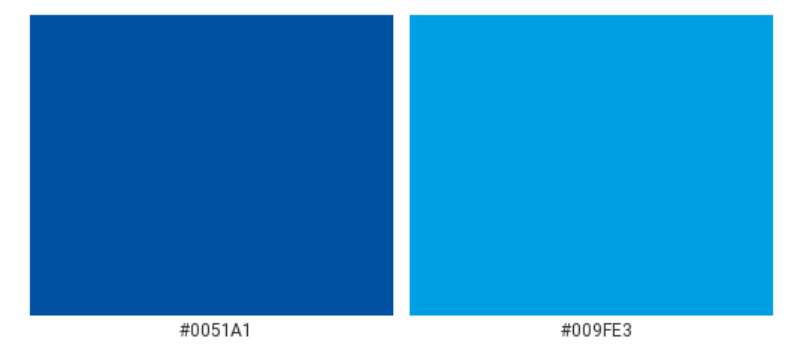
Deep Blue (#003087 approximate)
- Color Name: Navy/Corporate Blue
- Hex Code: Approximately #003087
- Pantone Reference: Close to Pantone 289 C
- Symbolic Meaning: Trust, stability, dependability
- Psychological Impact: Blue consistently ranks as the color consumers associate most with trustworthy brands, especially in food retail and finance. Understanding color psychology makes this choice obvious in hindsight.
- Brand/Industry Connection: Blue is one of the most used colors across grocery store logos, including Walmart, Kroger, and Whole Foods. Albertsons fits naturally within that visual category.
White
- Color Name: White
- Symbolic Meaning: Cleanliness, simplicity, openness
- Psychological Impact: Creates contrast and readability, especially critical for large-format store signage
- Brand/Industry Connection: White backgrounds in grocery branding reinforce ideas of freshness and hygiene
What Typography Style Is Used in the Albertsons Logo?
The current Albertsons wordmark uses a custom or heavily modified sans-serif font. The letterforms are bold and wide, with consistent stroke weight throughout.
There are no serifs, no decorative terminals, and no visible variation in stroke thickness. This keeps the mark legible at any size, from a store fascia sign to a mobile app icon.
Earlier versions used more expressive letterforms. The gradual move toward a neutral, sturdy typeface reflects a broader shift in retail branding away from personality-driven typography toward functional clarity.
The tight tracking between letters gives the wordmark a compact, solid presence. Nothing feels loose or casual about it.
What Are the Hidden Meanings in the Albertsons Logo?
There are no widely documented subliminal or hidden elements in the Albertsons logo. Unlike some brand marks that embed shapes or symbols within letterforms, the Albertsons wordmark is straightforward.
The real intentional choice here is what’s missing. No cart icon, no food imagery, no leaf or sun graphic. That restraint signals confidence.
Some branding analysts note that the tight, unified letterforms create a sense of cohesion, the letters feel like they belong together, which subtly communicates the idea of a community-centered store. Whether that’s intentional or a byproduct of clean design is hard to say.
The emphasis placed entirely on the brand name, with no supporting visual elements, is a deliberate move that bets everything on name recognition.
How Does the Albertsons Logo Compare to Competitor Logos?
Albertsons uses a clean blue wordmark with no icon, while most major competitors combine text with a distinct graphic element. This makes Albertsons more name-dependent but also cleaner in execution at large formats.
Kroger uses a red wordmark with a different energy, more urgent and promotional-feeling. Whole Foods leans into green and organic associations. Publix uses a combination mark with a classic emblem approach.
Albertsons sits closer to Walmart in terms of visual strategy: straightforward, utilitarian, not trying to be premium but not cheap-feeling either.
Compared to European grocery brands, Albertsons is more conservative. Lidl and Tesco, for example, use bolder graphic systems with more distinctive color combinations.
Among its own subsidiary brands, the contrast is notable. Vons and Safeway each maintain separate identities, which shows that Albertsons Companies intentionally keeps parent and sub-brands visually distinct.
What Are the Technical Specifications of the Albertsons Logo?
Official Color Codes (approximate, based on publicly available brand assets):
- Primary Color: Corporate Blue
- Hex: #003087
- RGB: (0, 48, 135)
- CMYK: (100, 64, 0, 47)
- Pantone: Approximately Pantone 289 C
- Secondary Color: White
- Hex: #FFFFFF
- RGB: (255, 255, 255)
- CMYK: (0, 0, 0, 0)
Dimensions and Proportions:
- Aspect Ratio: Approximately 4:1 (wide horizontal wordmark)
- Minimum Size: Not publicly specified, but standard retail brand practice requires a minimum of 1 inch wide in print to maintain legibility
- Clear Space: Standard practice applies: clear space equal to the height of the capital letter on all sides
- File Formats Available: Vector graphics (EPS, SVG) for print and signage; PNG with transparent background for digital use
- DPI Requirements: Minimum 300 DPI for print applications; 72 DPI for standard web use
- Color Modes: Full color (blue on white), reversed (white on blue), and single-color black versions for monochrome applications
What Cultural Impact Has the Albertsons Logo Had?
The Albertsons logo has become a familiar part of everyday American life for millions of shoppers across 34 states. It appears in neighborhoods ranging from rural towns to dense urban areas, giving it a broad cultural footprint that few retail brands match.
It’s not a logo people talk about the way they might discuss the Nike swoosh or the Apple mark. But that’s kind of the point.
Grocery store logos work differently. They build recognition through repetition, through weekly shopping trips, through loyalty cards and bags and receipts. The Albertsons wordmark has accumulated decades of that kind of quiet, consistent visibility.
During the COVID-19 pandemic, Albertsons stores became essential infrastructure for communities. The logo gained an unplanned layer of meaning during that period, appearing on storefronts that people depended on for basic needs.
The brand also appears across subsidiary chains, making the parent company’s identity quietly present in stores that many shoppers don’t even realize are connected to Albertsons.
How Does the Albertsons Logo Fit Into the Overall Brand Identity?
The Albertsons logo anchors a larger brand system that includes subsidiary chains, private-label products, loyalty programs, and digital platforms. It functions as the top-level mark in a multi-brand architecture that spans dozens of regional grocery identities.
The brand guidelines for Albertsons connect the logo to a broader visual system including store interior design, uniform colors, signage typography, and app UI.
The deep blue carries across touchpoints. Walk into an Albertsons and you’ll see it on price tags, employee vests, shopping carts, and self-checkout screens. That repetition is intentional.
Private-label products under the Albertsons brand use the same core color palette, which tightens the visual connection between the store identity and the products on its shelves.
The unity across all these touchpoints is what makes the brand feel coherent rather than fragmented, especially given how many regional chains operate under the Albertsons Companies umbrella.
It’s worth comparing this to how the Instacart logo handles brand identity in the grocery delivery space. Instacart uses a warmer, more energetic palette to signal speed and convenience. Albertsons stays cooler and more grounded, which fits its physical, in-store experience.
How Should the Albertsons Logo Be Used?
Official Usage Guidelines:
- Do: Use the logo at approved sizes with adequate clear space on all sides
- Do: Use approved color versions only (full color, reversed white, or black single-color)
- Do: Download official assets from Albertsons Companies’ official media or press resources
- Do: Maintain the original proportions of the wordmark at all times
- Don’t: Stretch, compress, or skew the logo
- Don’t: Apply unauthorized color treatments or gradients to the wordmark
- Don’t: Place the logo on busy backgrounds that reduce legibility
- Don’t: Recreate the logo using standard system fonts. The letterforms are custom or modified and cannot be accurately reproduced with off-the-shelf typefaces.
- Don’t: Use the logo in any context that implies endorsement or partnership without written authorization from Albertsons Companies
Where to Access Official Logos:
- Albertsons Companies’ official press room and media kit at albertsonscompanies.com
- Direct media requests can be submitted through their corporate communications contact page
Licensing and Trademark Protection:
- The Albertsons name and logo are registered trademarks of Albertsons Companies, Inc.
- Unauthorized commercial use of the logo constitutes trademark infringement
- Editorial and informational uses (news coverage, academic references) generally fall under fair use, but commercial applications require explicit licensing
- Any vendor, supplier, or partner requiring logo usage for co-branded materials must obtain written approval through Albertsons Companies’ marketing or legal department
FAQ on the Albertsons Logo
What does the Albertsons logo look like?
The Albertsons logo is a bold blue wordmark with no icon or symbol.
It uses a clean, custom sans-serif typeface with tight letter spacing. The design is simple by intent, putting full weight on name recognition built over decades of retail presence.
What color is the Albertsons logo?
The primary color is a deep corporate blue, approximately #003087, paired with white.
Blue was chosen for its strong association with trust and reliability. It’s a common choice across blue logos in the grocery and retail sector.
Has the Albertsons logo ever changed?
Yes. The logo has gone through at least five major versions since 1939.
Early designs used script lettering and red tones. The shift to a sans-serif wordmark in blue happened gradually through the 1980s and 1990s, with the current version refined in the 2010s.
What font does the Albertsons logo use?
The wordmark uses a custom or heavily modified sans-serif typeface.
It isn’t a standard off-the-shelf font. The letterforms are bold, evenly weighted, and optimized for large-format store signage as well as small digital applications.
Who designed the Albertsons logo?
No designer or agency has been officially credited for the current Albertsons logo.
This is actually pretty common with large retail chains. Brand updates at this scale often happen through internal teams or undisclosed agency relationships, with no public announcement.
What is the Albertsons logo supposed to represent?
The logo represents reliability and accessibility in everyday grocery retail.
The clean wordmark communicates a no-frills, community-focused brand. It doesn’t try to signal premium quality or excitement. It signals familiarity, and for a grocery chain operating since 1939, that’s enough.
How does the Albertsons logo compare to other grocery store logos?
Most major competitors combine a wordmark with a graphic icon. Albertsons uses text only.
The Trader Joe’s logo and Wegmans logo both carry more personality. Albertsons goes the other direction, prioritizing consistency and legibility over charm.
Where can I download the official Albertsons logo?
Official logo files are available through the Albertsons Companies press room at albertsonscompanies.com.
For editorial or media use, their corporate communications team handles requests directly. Avoid pulling logo files from third-party sites since color accuracy and file quality vary widely.
Is the Albertsons logo trademarked?
Yes. The Albertsons name and logo are registered trademarks of Albertsons Companies, Inc.
Commercial use without authorization is infringement. Editorial and news coverage generally falls under fair use, but any co-branded or commercial application requires written approval from the company.
What file formats is the Albertsons logo available in?
Official assets are typically available as vector EPS or SVG files for print, and PNG with transparent background for digital use.
For high-quality print work, always use the vector version. Bitmap formats like JPEG are fine for web but degrade at large sizes.
Conclusion
The Albertsons logo is a straightforward example of corporate retail branding done with consistency in mind.
Its deep blue wordmark, clean sans-serif typography, and absence of decorative elements reflect deliberate choices built around long-term brand recognition rather than visual trends.
From its script lettering origins in 1939 to the refined Albertsons corporate identity it carries today, the logo’s evolution tracks closely with how American supermarket branding has matured overall.
For anyone studying grocery store logo design or retail visual identity, Albertsons is a useful case study in restraint, consistency, and the quiet power of name-first branding.

Renowned for his expertise in logo design and visual branding, Bogdan has developed a multitude of logos for various clients.
His skills extend to creating posters, vector illustrations, business cards, and brochures. Additionally, Bogdan's UI kits were featured on marketplaces like Visual Hierarchy and UI8.
He also wrote in the past years on sites like Design Your Way, WebDesignerDepot, WPDean, Designmodo, Speckyboy, Slider Revolution, and more.
- The Windsurf Logo History, Colors, Font, And Meaning - 10 October 2026
- How to Remove Background From Product Photos (No Photoshop) - 10 October 2026
- How Designers can Build a Stronger Online Creative Identity - 9 October 2026

Bogdan Sandu is a seasoned designer who has been designing websites since 2008. Renowned for his expertise in logo design and visual branding, Bogdan has developed a multitude of logos for various clients. His skills extend to creating posters, vector illustrations, business cards, and brochures. Additionally, Bogdan's UI kits were featured on marketplaces like Visual Hierarchy and UI8. He also wrote in the past years on sites like Design Your Way, WebDesignerDepot, WPDean, Designmodo, Speckyboy, Slider Revolution, and more.
You Might Also Like