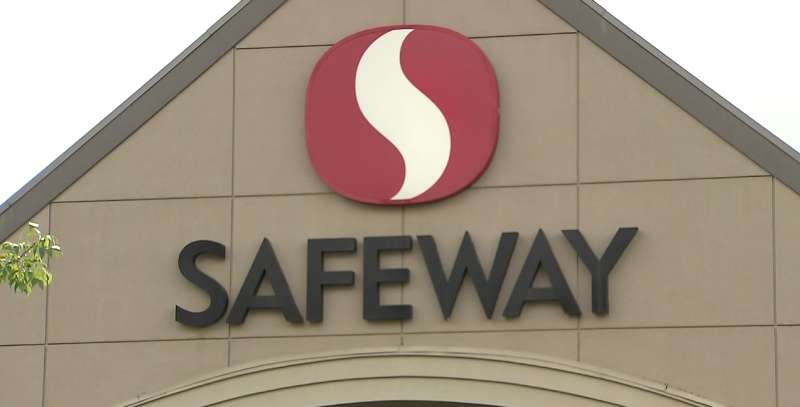
The Safeway logo is the primary visual mark for one of North America’s largest grocery chains, representing over a century of retail history. It functions as a brand identifier that signals trust, accessibility, and everyday value to millions of shoppers. Safeway has operated under several logo versions since its founding in 1915, with each iteration reflecting shifts in retail culture and design standards. The current wordmark, introduced in the mid-2000s, is the chain’s most streamlined identity to date.
What Is the Safeway Logo?
The Safeway logo is a red-and-white wordmark featuring bold, custom sans-serif lettering. Introduced around 2005 following the Albertsons Companies merger era, it was developed to modernize the brand’s retail presence. The design communicates reliability and approachability, dropping decorative elements in favor of clean, direct typography.
- Design Type: Wordmark (text-only logotype)
- Primary Elements: Custom sans-serif lettering, red background block, white text
- Official Introduction Date: 2005 (current version)
- Designer/Agency: Not publicly disclosed; developed internally under Albertsons Companies
- Trademark Status: Registered trademark under Albertsons Companies, Inc.
- Color Palette: Safeway Red (#CC0000), White (#FFFFFF)
- Usage Context: Store signage, packaging, digital platforms, marketing materials, private label products, and employee uniforms
How Has the Safeway Logo Evolved Over Time?
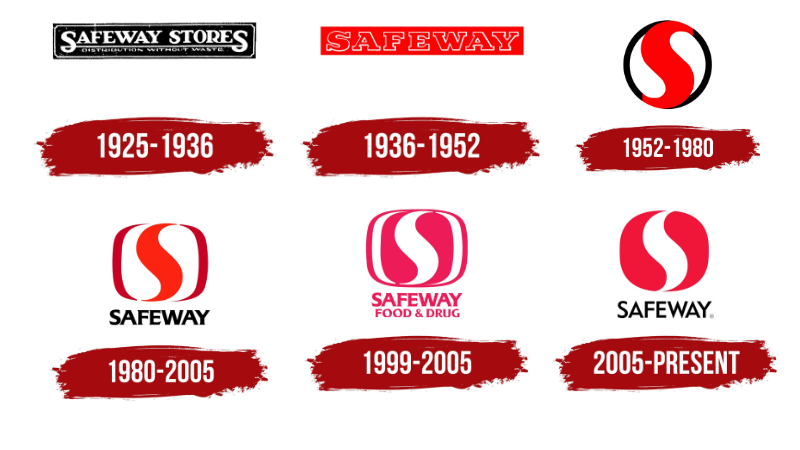
Safeway’s visual identity has gone through roughly six distinct phases since 1915, shifting from ornate script-based marks to the bold, minimal wordmark used today. Each redesign tracked closely with broader changes in American retail and design movements of their respective eras.
Original Safeway Logo (1915-1930s)
- Years Active: 1915-early 1930s
- Design Description: Decorative script lettering, typical of early 20th-century hand-lettered signage
- Color Scheme: Black and white (print-based)
- Designer: Unknown
- Context: Founded by Marion Barton Skaggs in American Falls, Idaho; branding was minimal and locally produced
- Key Changes from Previous: N/A, first iteration
- Cultural Significance: Reflected the hand-crafted commercial lettering common to small American grocery operations of the era
Mid-Century Safeway Logo (1930s-1960s)
- Years Active: 1930s-1960s
- Design Description: Bolder block lettering, cleaner presentation, influenced by Bauhaus design thinking spreading through commercial art at the time
- Color Scheme: Red introduced as a dominant brand color
- Designer: Unknown
- Context: Safeway’s major national expansion period; branding needed to work across hundreds of locations
- Key Changes from Previous: Shift from script to block type; red color formalized
- Cultural Significance: Red became a recognizable signal for Safeway stores across the western United States
1960s-1980s Safeway Logo
- Years Active: ~1960s-1980s
- Design Description: Stylized “S” mark introduced alongside the wordmark; logo gained a more structured, corporate feel consistent with Swiss design influences entering American branding
- Color Scheme: Red and white
- Designer: Unknown
- Context: Post-war consumer boom; supermarkets competed heavily on visual identity and store experience
- Key Changes from Previous: Added symbolic “S” mark; typography became more geometric
- Cultural Significance: Helped differentiate Safeway in an increasingly competitive grocery market
1980s-2000s Safeway Logo
- Years Active: ~1980s-2005
- Design Description: Refined wordmark with a red rectangle enclosing white lettering; cleaner proportions, more consistent across signage and print
- Color Scheme: Red (#CC0000) and white
- Designer: Unknown
- Context: Safeway expanded into Canada and the UK during this period; brand consistency became a priority
- Key Changes from Previous: Dropped the “S” symbol; focused entirely on the wordmark within a solid red field
- Cultural Significance: This version became the most widely recognized Safeway identity for an entire generation of shoppers
Current Safeway Logo (2005-Present)
- Years Active: 2005-present
- Design Description: Clean, bold sans-serif wordmark in white on a red background; slight refinements to letterform proportions
- Color Scheme: Red (#CC0000) and white (#FFFFFF)
- Designer: Developed under Albertsons Companies direction
- Context: Modernization effort to align with updated store formats and digital presence
- Key Changes from Previous: Tighter letterforms, updated typography, cleaner overall proportions
- Cultural Significance: Represents Safeway’s positioning as a contemporary, accessible grocery brand under the Albertsons corporate umbrella
What Do the Design Elements of the Safeway Logo Mean?
The Safeway logo uses a direct, no-frills approach. Red signals urgency and appetite, white provides contrast and clarity, and the bold wordmark communicates confidence without relying on abstract symbols or icons.
The absence of a separate icon or emblem is a deliberate choice. The brand name itself carries enough recognition that additional graphic elements would only add visual noise.
This kind of restraint reflects solid understanding of graphic design principles, specifically the idea that unity and simplicity often outperform complexity in retail environments where split-second recognition matters.
What Symbolic Meaning Does the Safeway Logo Carry?
Red has long been associated with food retail, energy, and action. Safeway’s consistent use of it over decades has made the color practically synonymous with the brand in the western U.S.
The wordmark approach places trust in the brand name itself, which makes sense for a chain with over a century of history. The name “Safeway” already communicates security and reliability without needing visual reinforcement.
Clean, bold lettering creates a sense of emphasis on the brand name, making it the sole focal point of the mark.
Why Did Safeway Choose These Specific Colors?
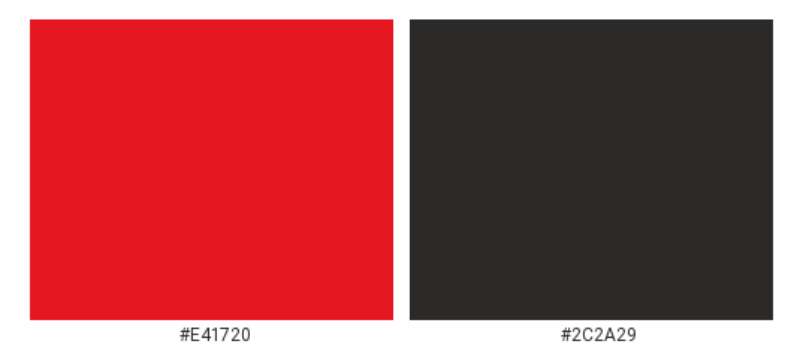
- Safeway Red
- Hex: #CC0000
- Pantone: Pantone 485 (approximate)
- Symbolic Meaning: Energy, urgency, appetite stimulation
- Psychological Impact: Draws attention quickly; well-documented in retail color psychology as a driver of impulse and action
- Brand Connection: Red is dominant across grocery retail branding, including competitors like Target and Kroger
- White
- Hex: #FFFFFF
- Symbolic Meaning: Cleanliness, clarity, simplicity
- Psychological Impact: Creates strong contrast against red, maximizing legibility across all sizes
- Brand Connection: Reinforces Safeway’s positioning around freshness and trust
What Typography Style Is Used in the Safeway Logo?
The current Safeway wordmark uses a custom or heavily modified sans-serif font. The letterforms are thick, evenly weighted, and designed for maximum legibility at distance, which is critical for store signage.
Tracking is tight, keeping the word compact and visually solid. There’s no decorative variation between letters.
Earlier logo versions used rounder, more casual letterforms. The current version is more structured and confident, reflecting a shift toward a cleaner retail aesthetic that works equally well in digital and physical contexts.
What Are the Hidden Meanings in the Safeway Logo?
There aren’t many hidden or subliminal elements in the Safeway logo. It’s deliberately straightforward. The brand name itself does most of the work, “safe” + “way” communicating a path toward reliable, trustworthy shopping.
The red rectangle framing the white text creates a badge-like quality. It reads less like a decorative design and more like a stamp of approval, which aligns with what the brand wants to communicate.
No known designer has publicly stated specific hidden intentions behind the current version. What you see is largely what you get, and that transparency is probably the point.
How Does the Safeway Logo Compare to Competitor Logos?
Safeway’s logo sits squarely in the red-dominant grocery branding space, alongside competitors like Kroger, Target, and Vons. It’s more restrained than most, relying entirely on typography where others use icons, shields, or abstract marks.
Compare it to the Kroger logo, which uses a flowing script and blue tones to suggest a softer, more personal feel. Safeway goes the opposite direction: bold, blocky, no-nonsense.
The Albertsons logo (Safeway’s parent company) takes a similar minimalist approach but uses blue instead of red, creating a slightly more corporate feel. Safeway’s red reads warmer and more urgent by comparison.
Chains like Whole Foods Market and Trader Joe’s use earthy greens and hand-drawn aesthetics to signal organic and artisanal values. Safeway’s design makes no such claim. It’s positioned as a mainstream, accessible option, and the logo reflects that honestly.
Other grocery store logos in the U.S. market generally fall into two camps: the clean corporate wordmark (Safeway, Albertsons, Kroger) and the more expressive or illustrative mark (Publix, Trader Joe’s, Sprouts). Safeway firmly belongs to the first group.
What Are the Technical Specifications of the Safeway Logo?
Official Color Codes
- Primary Color: Safeway Red
- Hex: #CC0000
- RGB: (204, 0, 0)
- CMYK: (0, 100, 100, 20)
- Pantone: 485 C (approximate)
- Secondary Color: White
- Hex: #FFFFFF
- RGB: (255, 255, 255)
- CMYK: (0, 0, 0, 0)
- Pantone: White
Dimensions and Proportions
- Aspect Ratio: Approximately 4:1 (width to height) for the standard horizontal lockup
- Minimum Size: Not publicly disclosed; standard practice for retail logos requires legibility at minimum 1 inch wide for print
- Clear Space: Standard brand practice requires clear space equal to the cap-height of the wordmark on all sides
- File Formats Available: The logo is distributed in vector graphics formats (SVG, EPS, AI) for scalable use, and raster formats (JPEG, PNG) for digital applications
- Digital Use: PNG with transparent background for web; SVG for UI applications
- Print Use: EPS or PDF for high-DPI print production
What Cultural Impact Has the Safeway Logo Had?
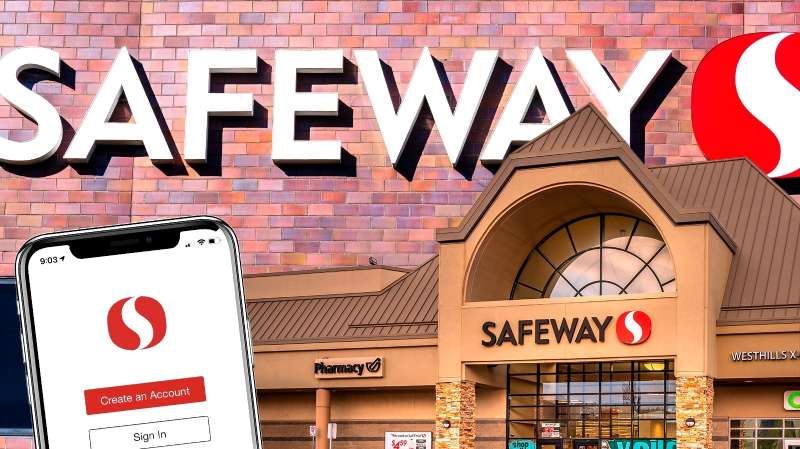
Safeway’s red logo has been a fixture of West Coast American life for decades. For many people who grew up in California, Arizona, or the Pacific Northwest, seeing that red sign is tied to a specific kind of routine, weekend grocery runs, after-school snack runs, holiday shopping.
That kind of cultural embedding is hard to manufacture. It builds over generations of consistent brand presence.
The logo also carries regional identity weight. Safeway never became a truly national brand the way Walmart or Kroger did, so in the markets where it operates, recognition is especially strong. It’s a neighborhood brand for a lot of communities.
During the 1980s and 1990s, Safeway’s store brand products carried the same red-and-white visual identity, reinforcing the logo’s reach into home kitchens. Shoppers didn’t just see it on storefronts. They saw it on canned goods, dairy products, and frozen meals.
That kind of repetition is exactly how repetition works in branding. Consistent exposure builds recognition, and recognition builds trust over time.
How Does the Safeway Logo Fit Into the Overall Brand Identity?
The logo is the anchor of Safeway’s broader visual system. Everything else, store signage, employee uniforms, private label packaging, digital ads, circular flyers, pulls from the same red-and-white palette established by the mark.
Safeway’s private label lines (like Signature Select and O Organics) use modified versions of the color palette with additional design layers, but always within a system that traces back to the core logo.
The brand guidelines that govern Safeway’s visual identity are managed at the Albertsons Companies level, meaning the logo exists within a larger corporate identity framework shared with sister banners like Vons, Jewel-Osco, and Shaw’s.
Despite that corporate umbrella, Safeway’s mark retains distinct recognition. Shoppers don’t think “Albertsons” when they see the red wordmark. They think Safeway. That’s a sign of strong independent brand equity, even within a conglomerate structure.
The overall system demonstrates solid visual hierarchy, with the logo serving as the top-level identifier and sub-brands nested below it in a coherent structure.
How Should the Safeway Logo Be Used?
Official Usage Guidelines
- Do: Use the logo on white or light backgrounds when the full red lockup is not appropriate
- Do: Maintain clear space around the logo at all times
- Do: Use approved file formats provided through official Albertsons Companies brand resources
- Don’t: Stretch, distort, or alter the proportions of the wordmark
- Don’t: Change the colors, add drop shadows, or apply unauthorized effects
- Don’t: Place the logo on busy backgrounds that reduce legibility
- Don’t: Recreate the logo from scratch using generic fonts
Where to Access Official Logo Files
- Official logo assets are available through Albertsons Companies’ internal brand portal for authorized partners and vendors
- Media and press inquiries can access approved assets through Safeway’s official press kit
- Third-party use requires written permission from Albertsons Companies’ legal or brand team
Trademark and Licensing
- The Safeway name and logo are registered trademarks of Albertsons Companies, Inc.
- Unauthorized commercial use of the logo is a trademark violation
- Editorial and journalistic use is generally permitted under fair use provisions, but commercial reproduction requires licensing
- Any vendor or supplier using the logo on co-branded packaging must obtain explicit written approval
FAQ on The Safeway Logo
What colors does the Safeway logo use?
The Safeway logo uses two colors: red and white. The primary red sits at #CC0000, close to Pantone 485 C. White text sits against that red field, creating strong contrast and instant shelf recognition.
What font is used in the Safeway logo?
Safeway uses a custom-modified typeface based on a bold sans-serif structure. The exact font has never been publicly released. Letterforms are thick, evenly weighted, and built for legibility on large-format store signage.
When was the current Safeway logo introduced?
The current version of the Safeway logo was introduced around 2005. It came alongside broader brand updates tied to the Albertsons Companies restructuring. This wordmark has remained largely unchanged since, making it one of the more stable identities in American grocery retail branding.
Who designed the Safeway logo?
No specific designer or agency has been publicly credited for the current Safeway logo. It was developed under the direction of Albertsons Companies. Many large retail rebrands at that scale are handled internally or through undisclosed agency partnerships.
What type of logo is the Safeway logo?
It is a wordmark, meaning it relies entirely on styled text with no separate icon or symbol. This keeps the design direct and easy to reproduce across store signage, packaging, and digital platforms without losing visual consistency.
How many times has the Safeway logo changed?
The Safeway logo has gone through roughly six major iterations since the company was founded in 1915. Early versions used decorative script. Later designs moved toward bold block lettering. The current red-and-white wordmark represents the most refined and minimal version in the brand’s history.
What does the Safeway logo represent?
The name “Safeway” itself does most of the symbolic work, implying a reliable, trustworthy path for everyday shoppers. The bold red reinforces urgency and energy. Together, the Safeway brand identity communicates accessibility and consistency rather than premium or artisanal positioning.
How does the Safeway logo compare to other grocery store logos?
Compared to chains like Publix or Wegmans, Safeway’s mark is more stripped down. It skips illustrative elements entirely. Among red logos in retail, it sits closer to Target and Kroger in its directness.
Where can I download the official Safeway logo?
Official Safeway logo files are only available through Albertsons Companies’ brand portal, accessible to approved vendors and media partners. For press use, the Safeway newsroom provides approved assets. Unauthorized downloads from third-party sites carry trademark risk.
Is the Safeway logo trademarked?
Yes. The Safeway name and logo are registered trademarks of Albertsons Companies, Inc. Commercial use without written permission is a trademark violation. Editorial and news coverage generally falls under fair use, but any branded merchandise or co-marketing requires explicit licensing approval.
Conclusion
The Safeway logo is a case study in retail brand identity done without unnecessary complexity. A red field, white wordmark, clean proportions. That’s it. And it has worked across store signage, private label packaging, and digital platforms for decades.
What makes it hold up is consistency. The Safeway corporate identity hasn’t chased trends, and that restraint is exactly why shoppers across the western U.S. and Canada recognize it immediately.
For anyone studying logo design principles, Safeway is worth paying attention to. Sometimes the most effective supermarket visual branding is the kind that never asks you to think twice.

Renowned for his expertise in logo design and visual branding, Bogdan has developed a multitude of logos for various clients.
His skills extend to creating posters, vector illustrations, business cards, and brochures. Additionally, Bogdan's UI kits were featured on marketplaces like Visual Hierarchy and UI8.
He also wrote in the past years on sites like Design Your Way, WebDesignerDepot, WPDean, Designmodo, Speckyboy, Slider Revolution, and more.
- The Windsurf Logo History, Colors, Font, And Meaning - 10 October 2026
- How to Remove Background From Product Photos (No Photoshop) - 10 October 2026
- How Designers can Build a Stronger Online Creative Identity - 9 October 2026

Bogdan Sandu is a seasoned designer who has been designing websites since 2008. Renowned for his expertise in logo design and visual branding, Bogdan has developed a multitude of logos for various clients. His skills extend to creating posters, vector illustrations, business cards, and brochures. Additionally, Bogdan's UI kits were featured on marketplaces like Visual Hierarchy and UI8. He also wrote in the past years on sites like Design Your Way, WebDesignerDepot, WPDean, Designmodo, Speckyboy, Slider Revolution, and more.
You Might Also Like