

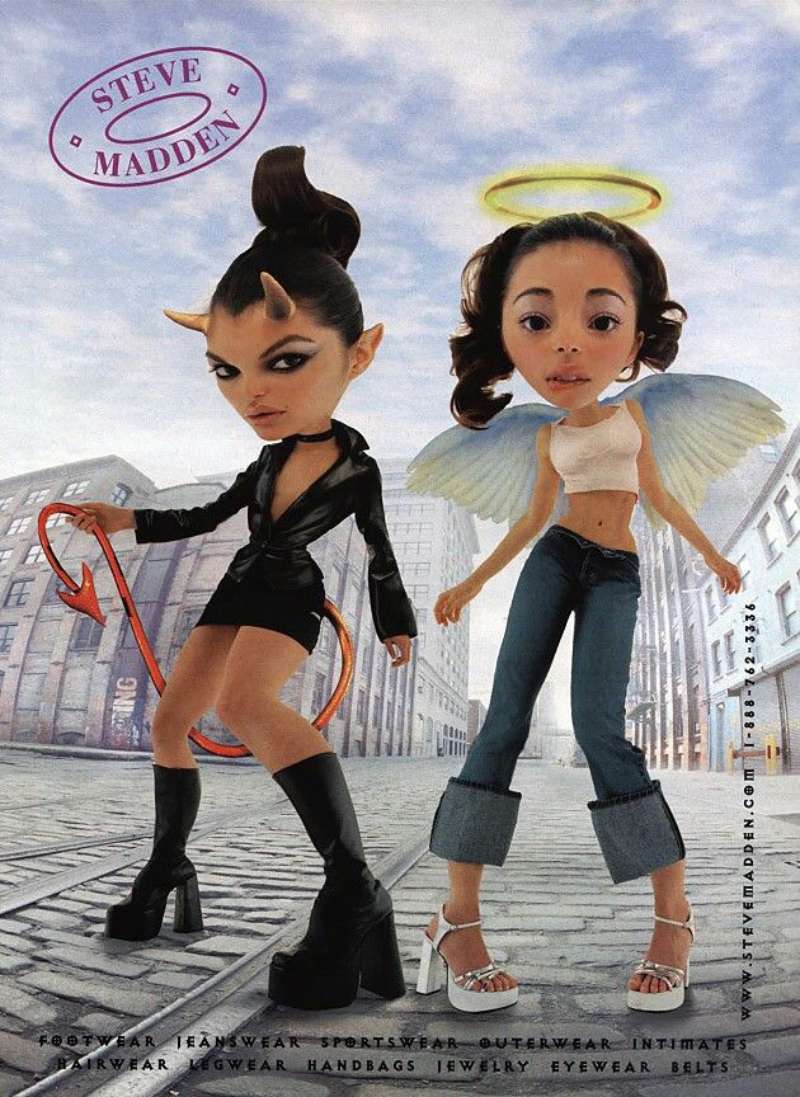
A shoe brand made its models look like Bratz dolls before Bratz dolls existed. Steve Madden ads ran that distortion device for 8 years, from 1997 to 2005, and the look is still recognizable 3 decades later.
Hampel Stefanides built the print campaign with photographer Butch Belair and art director Tommy Kane. Golden Projects and director Steven Brahms took the brand somewhere else entirely in 2024.
This page covers every major Steve Madden ad campaign by name, with the year, the agency and the market behind each one.
You will also get the layout analysis most galleries skip:
- Why the shoe is the only accurately rendered object in the frame
- How the wordmark holds across print, television and social film
- What the composition rules transfer to your own work
Steve Madden advertising spans 3 decades, 2 defining creative shops and 6 flagship campaigns, from the Big Head Girls print work launched in 1997 to the Bait and Switch summer campaign of 2026. The work runs on distorted proportion, deadpan humor and New York street casting, executed through print, television, out of home and short-form social film.
This page covers the campaigns by name, with the agency, year and market behind each one, plus the layout, typography and color decisions that make them work.
Steve Madden Advertising at a Glance
Steve Madden has advertised since the early 1990s, working primarily with Hampel Stefanides and Golden Projects. Its best-known campaigns are Big Head Girls, Never Miss a Beat and Everyone Has Something to Say About Shoes. The visual signature combines distorted proportion, flat backdrops and oversized footwear.
| Attribute | Value |
|---|---|
| First major campaign | “Big Head Girls,” 1997 |
| Lead agencies | Hampel Stefanides (1997 to 2005), Golden Projects (2024), in-house creative team from 2021 |
| Best-known lines | “Everyone Has Something to Say About Shoes” (2025), “Never Miss a Beat” (2024) |
| Primary media | Print, television, out of home, social film |
| Recognition | The 2001 Chick Walker spot entered the Museum of Modern Art permanent collection |
| Visual signature | Oversized heads, tiny torsos, saturated flat backgrounds, shoe rendered at full detail |
| Primary markets | United States, Canada, Mexico, India, Middle East |
| Headquarters | Long Island City, Queens, New York |
Statista figures put worldwide advertising spend at 89.44 million dollars in 2023, against roughly 86 million in 2022.
Company revenue reached 2.28 billion dollars in 2024, up 15.2 percent year over year, according to the Steven Madden, Ltd. fourth quarter filing. The brand trades on Nasdaq under SHOO, with Edward Rosenfeld as chairman and chief executive.
Which Steve Madden Ad Campaigns Are the Most Famous?
The 6 best-known Steve Madden ad campaigns are Big Head Girls (1997 to 2005), Chick Walker (2001), the Steve Maddenverse (2021), Maddenwood (2022), Never Miss a Beat (2024) and Everyone Has Something to Say About Shoes (2025). Each one reset the brand’s visual language for a decade or a season.
Big Head Girls (1997 to 2005)

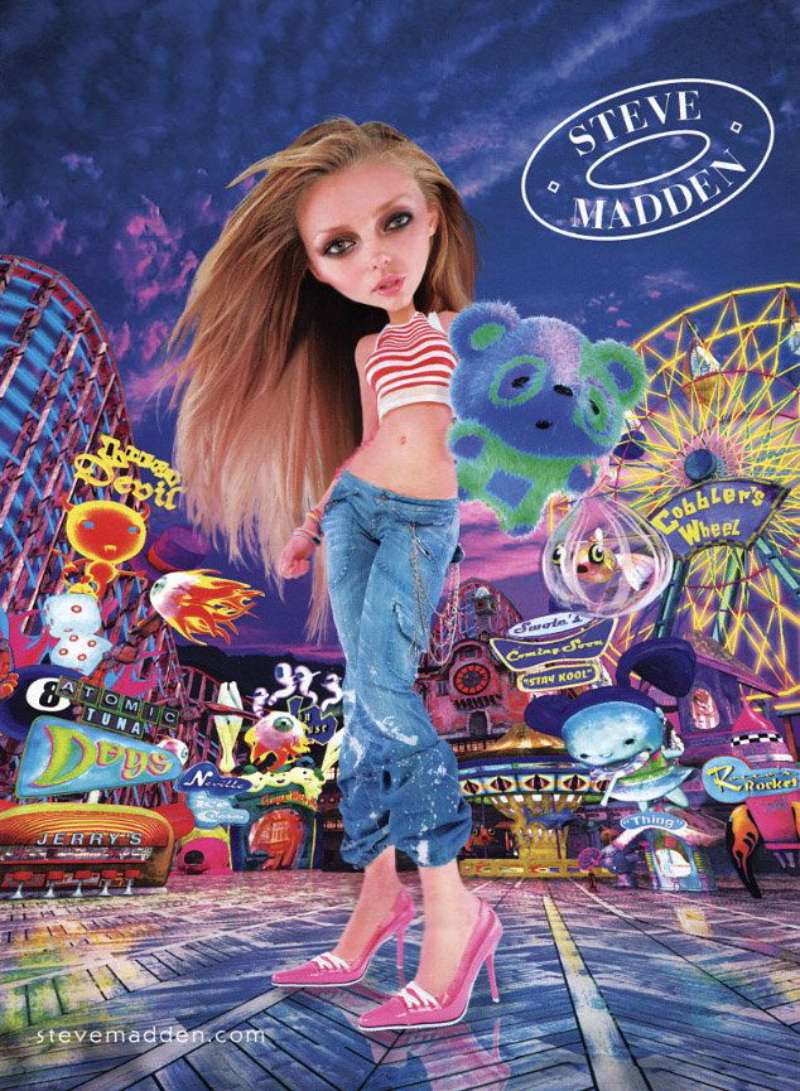
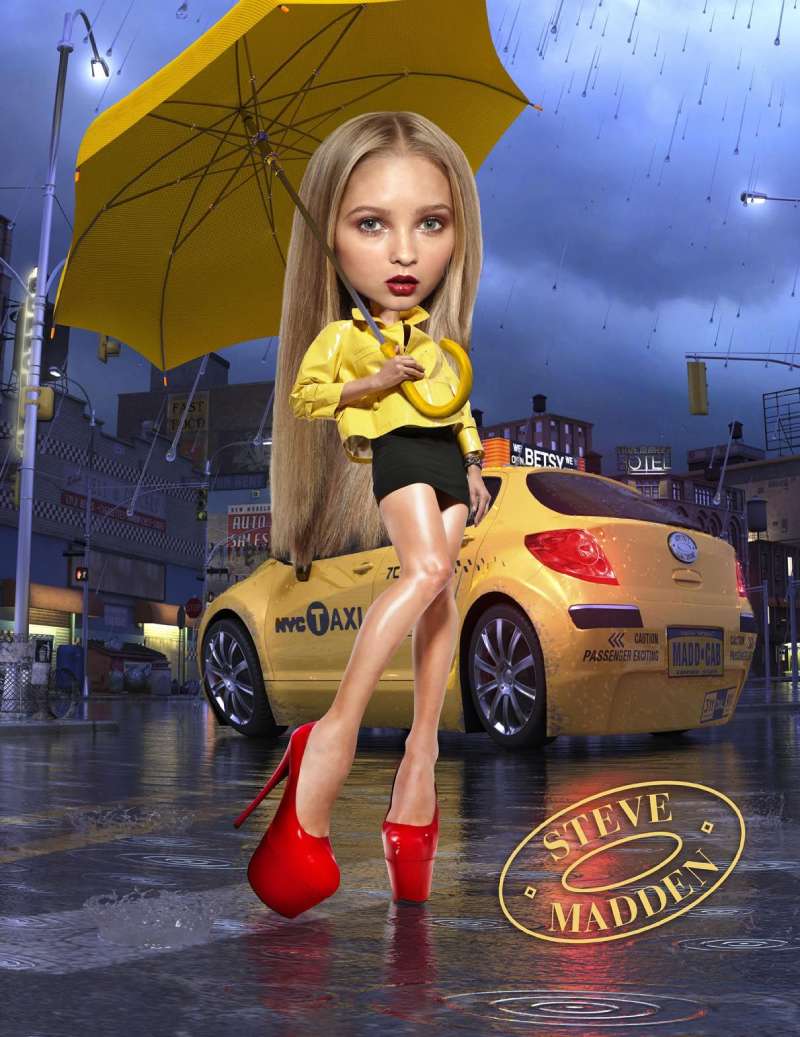
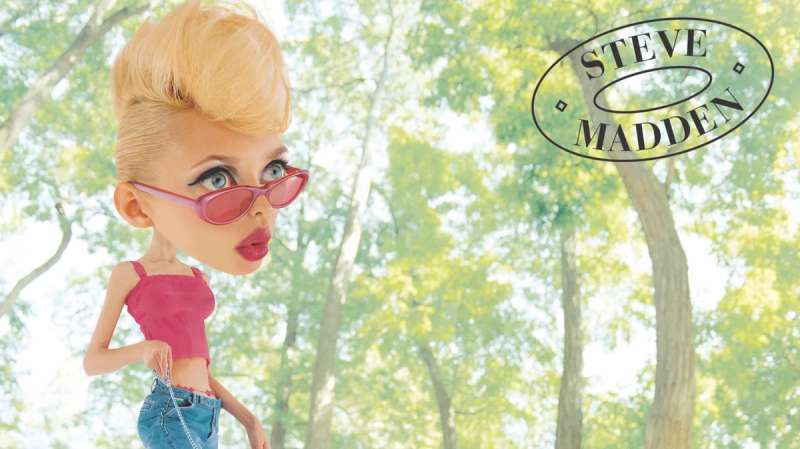
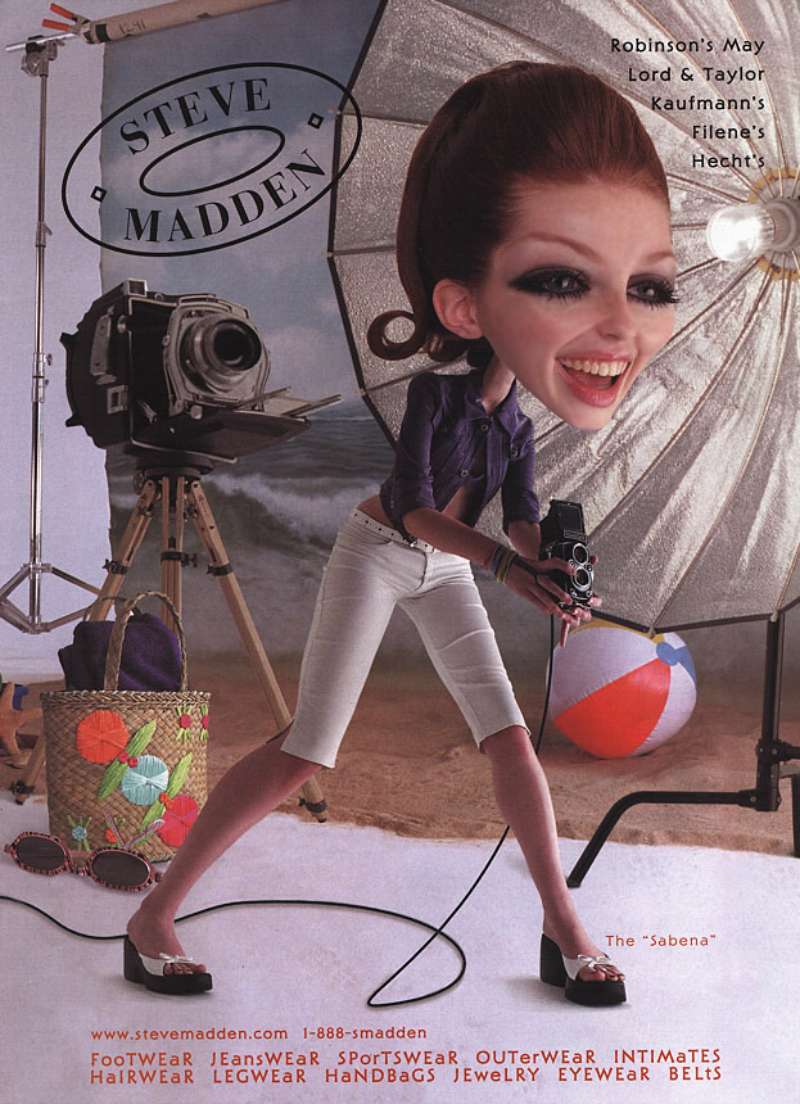
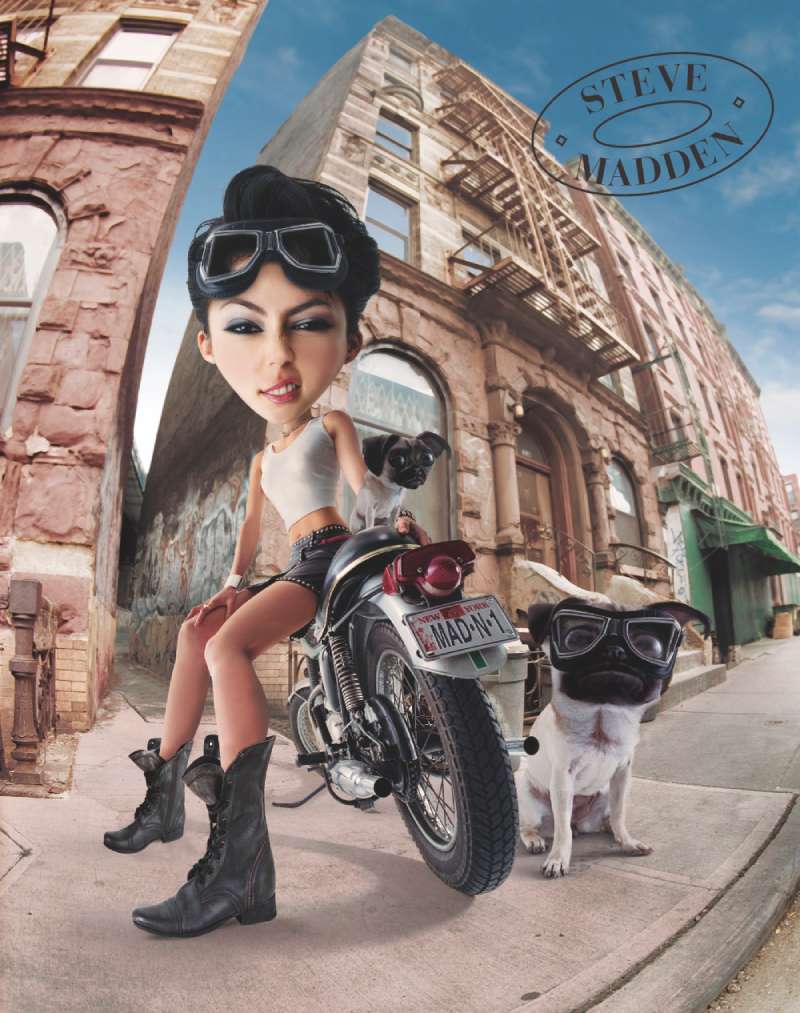
Big Head Girls ran for 8 years across United States print and out of home, produced by the New York agency Hampel Stefanides with photographer Butch Belair and art director Tommy Kane. Belair shot at least 4 separate frames of each model and composited them into a single figure.
The construction is the whole design argument. Head, eyes and feet get inflated, the waist gets cut, and the shoe stays the only element rendered at honest scale and proportion. Flat saturated backdrops carry no texture, so the eye lands on the footwear before it lands on the face.
The ads ran in Seventeen and Teen People. Madden told Footwear News that the children’s book Eloise at the Plaza was the original reference point.
Chick Walker (2001)

Director: David Kelley of Curious Pictures, New York
Art direction: Tommy Kane, with Butch Belair shooting the stills
Medium: Television, adapted directly from the print campaign
Belair photographed each woman in 6 walking positions and cut them together, so the animation reads as stop-motion collage rather than film. The spot ends tight on the Steve Madden storefront logo. It later entered the Museum of Modern Art permanent collection.
Steve Maddenverse and Maddenwood (2021 to 2022)
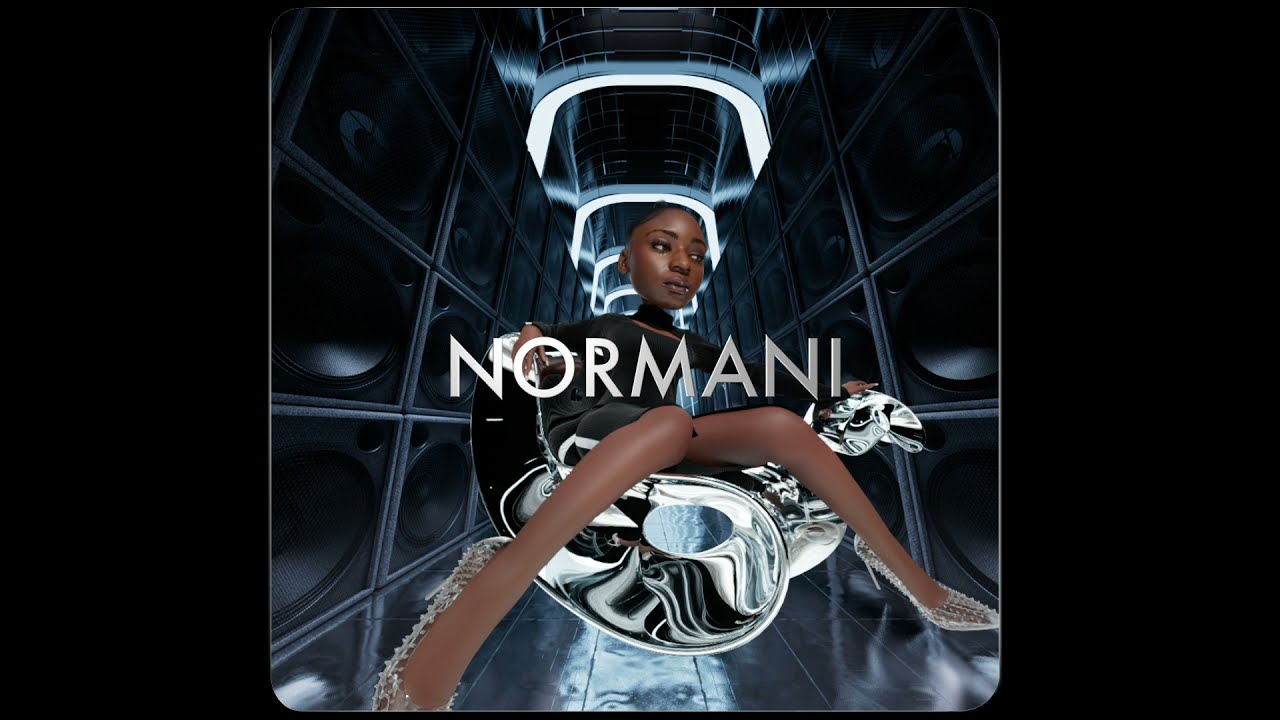
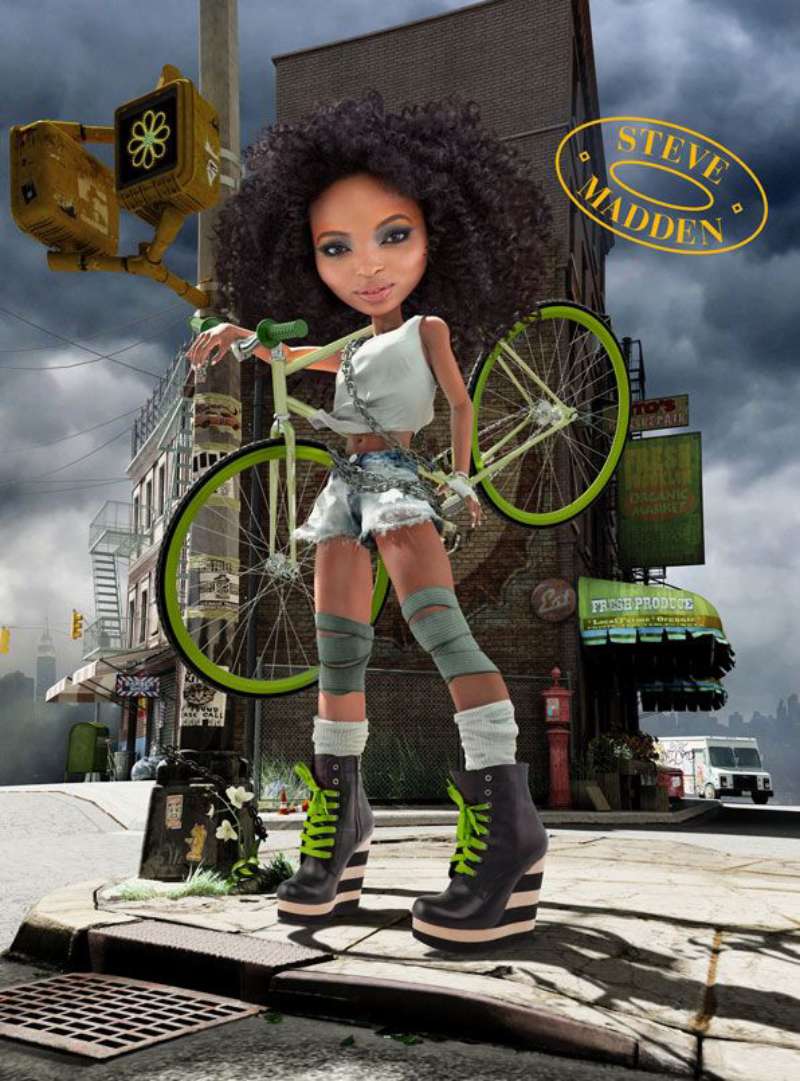
On October 18, 2021, the brand rebuilt the Big Head look as digital avatars for the Steve Maddenverse campaign.
The cast covered Normani, Jordan Alexander, Sydney Sweeney, Nessa Barrett and Justine Skye. Fall 2022 followed with Maddenwood, an augmented reality campaign starring Chloe Cherry, Latto and Bella Poarch, built with QR codes that unlocked 30-second clips instead of a conventional shoot.
- Same distortion device, rendered in 3D rather than composited photography
- Distribution shifted from magazine spreads to stevemadden.com and social feeds
Never Miss a Beat (2024)

The 2024 fall campaign dropped the distortion entirely.
Golden Projects director Steven Brahms shot it in New York City to Deee-Lite’s 1990 track Groove Is In The Heart, street-casting Tai Chi practitioners, showtime dancers, subway performers, hot dog vendors and an animatronic rat. Brahms shot in camera and skipped visual effects, which is why the film reads as documentary rather than fashion.
Guest appearances included The Green Lady, Richie Rich, Mickey Boardman, Lady Bunny, Lynn Yaeger and Steve Madden himself. Jisoo Hong, creative director at Steve Madden, described the brief as bringing Weird New York to life.
Everyone Has Something to Say About Shoes (2025)
The fall 2025 campaign ran as 4 short films directed and written by Marissa Velez, styled by Gabriella Karefa-Johnson, with dialogue built around the shoes as characters.
| Film | Styles featured |
|---|---|
| The Shoe Shrink | Shay slingback, Azure heel, Natal loafer |
| Heel Theory | Ramos sandal, Noir pump, Alexi-s mule |
| Fur in September | Icon fuzzy boot, Dixon sneaker |
| Kill the Scene | Twain, Luca, Distortion, Revive boots |
Grace VanderWaal, Tanner Zagarino and Alana Morrison led the cast. The series streamed across global channels and inside stores, with extra sequences staged at the SoHo flagship.
Delilah Belle Campaigns (2026)

Delilah Belle fronted every major Steve Madden campaign of 2026, starting with the March spring launch, then a festival miniseries recreating famous album covers, then the summer campaign Bait and Switch.
The album cover series, photographed by Marissa Velez, included a restaging of The Freewheelin’ Bob Dylan with Levi Dylan, Bob Dylan’s grandson, walking arm in arm with Delilah Belle in the Haynes and Raptor boots.
The strategic shift: chief marketing officer Alex Frias framed the repeat casting as a move toward long-term talent partnerships and recognizable faces, rather than one-season brand ambassador deals.
How Do Steve Madden Print Ads Work Visually?
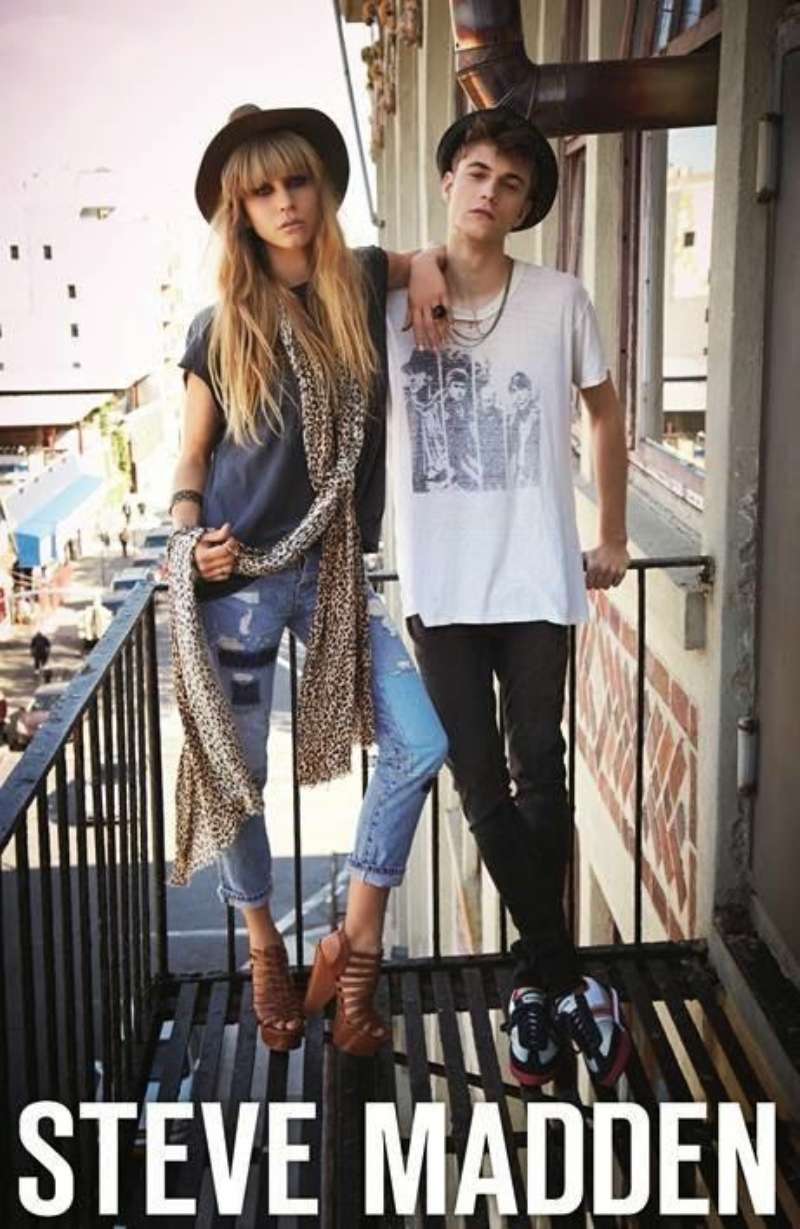
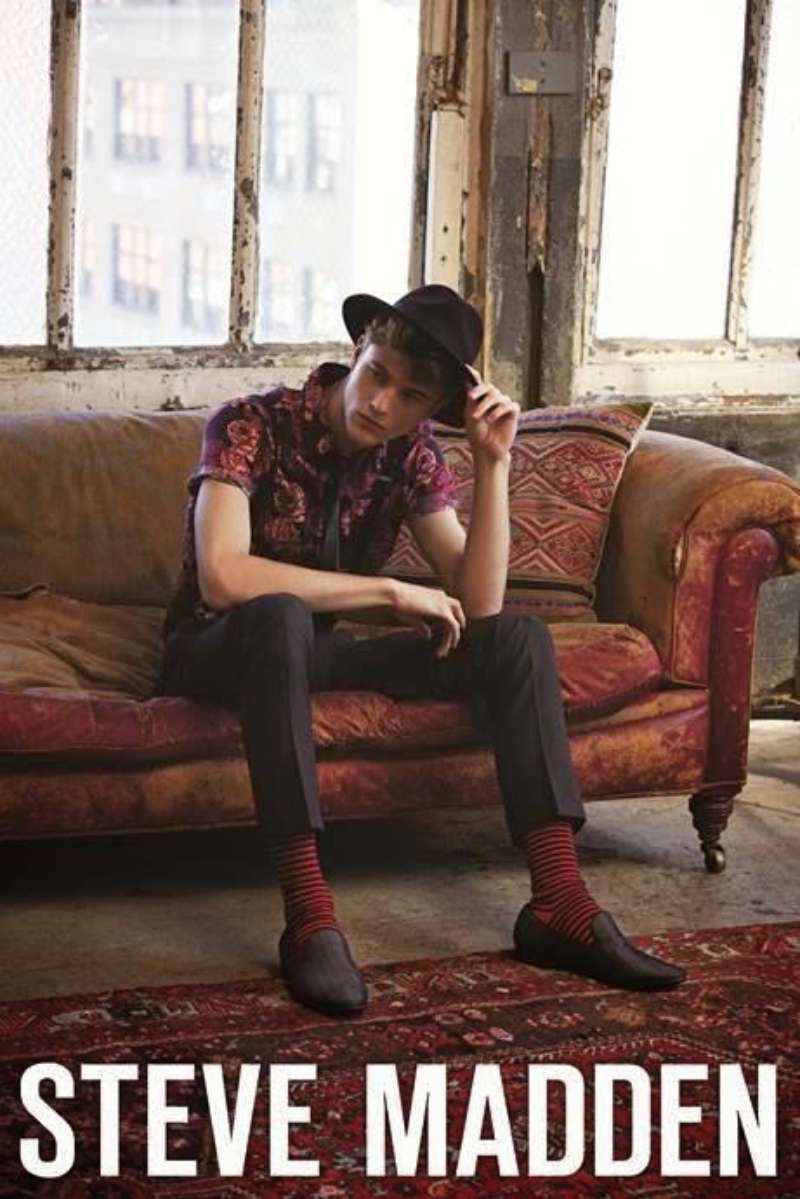
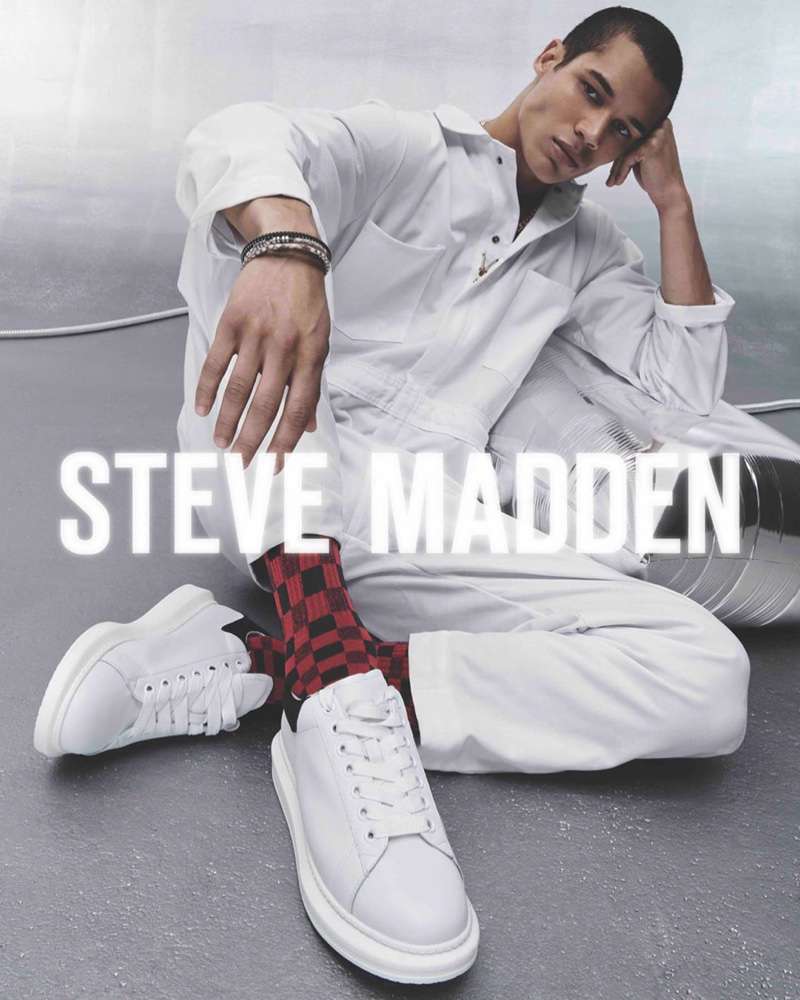
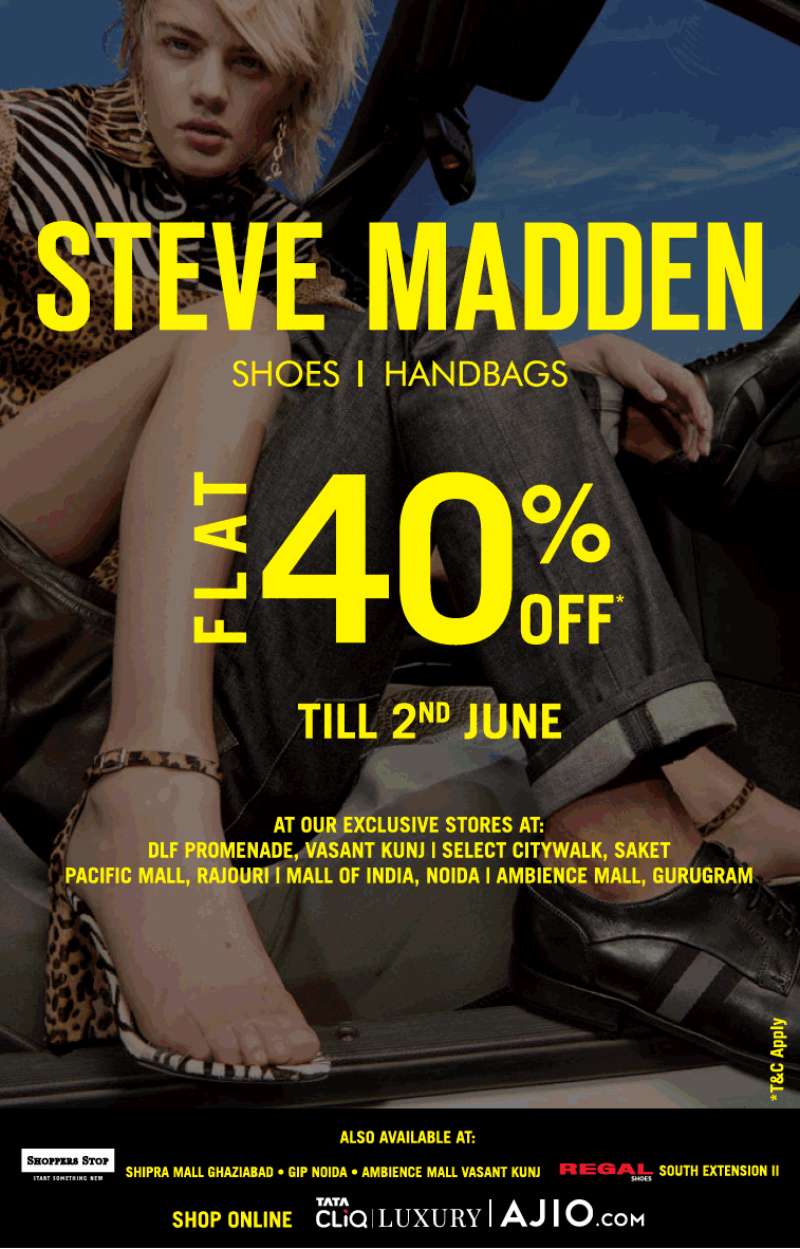
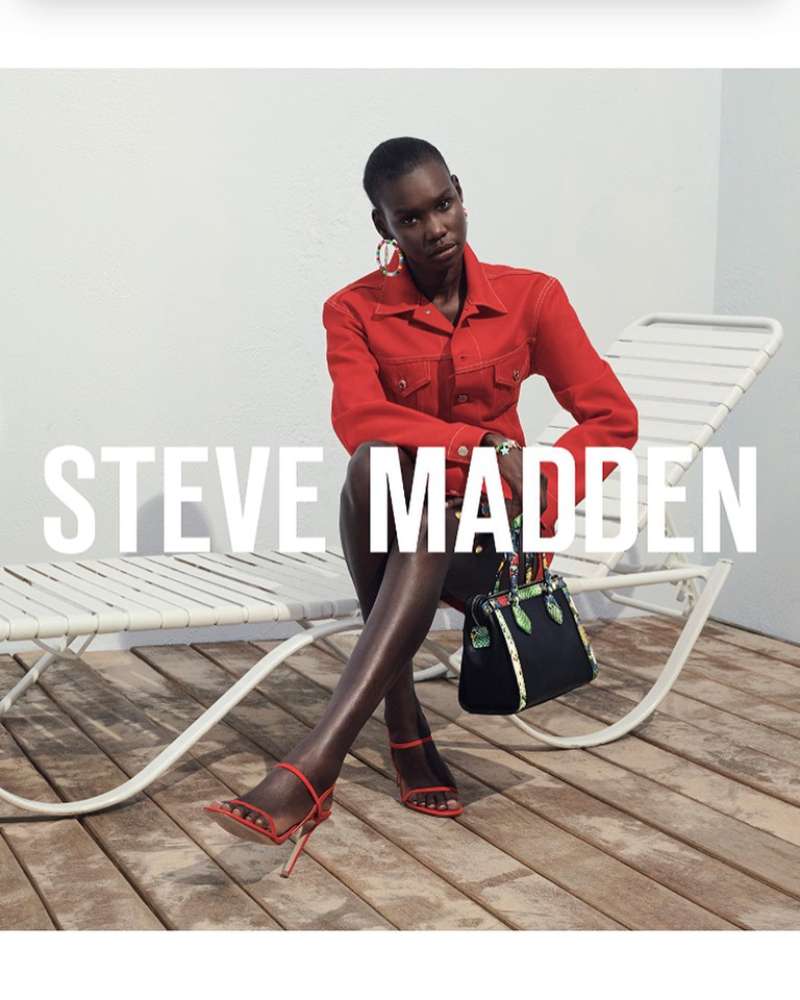
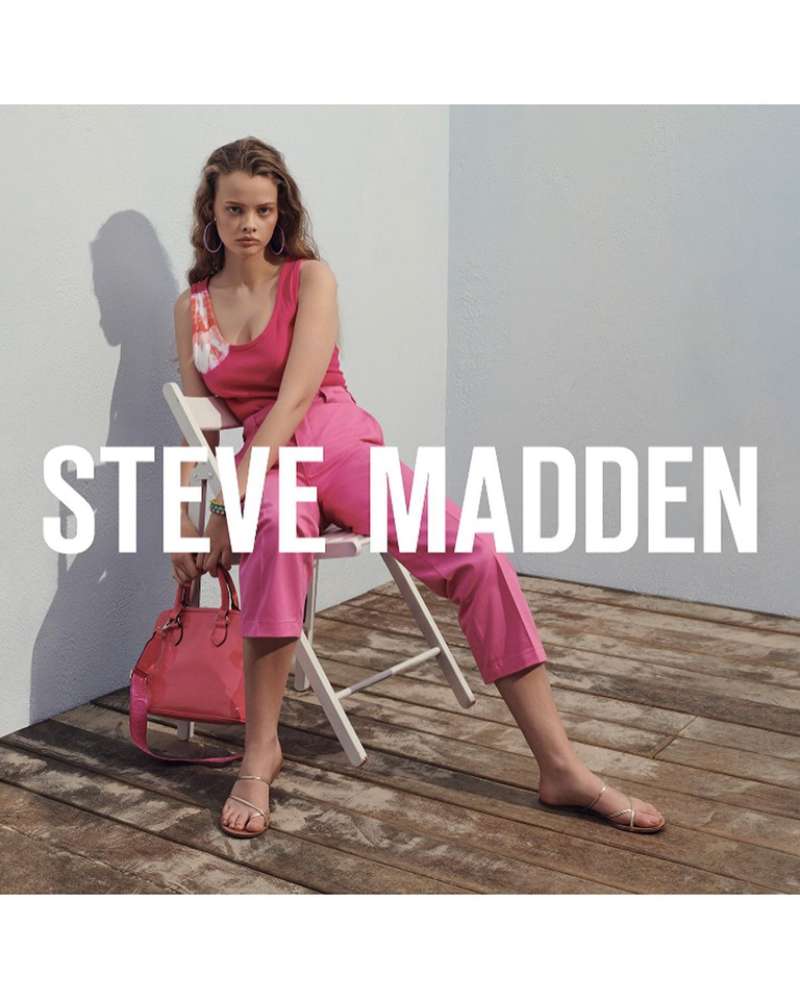
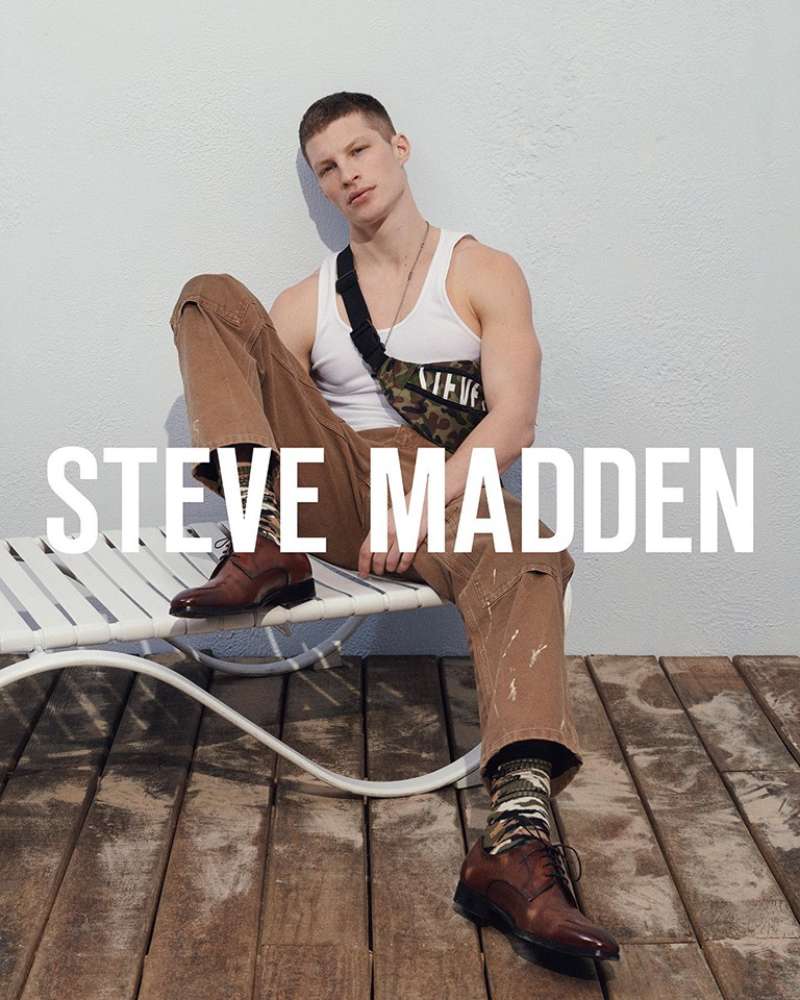
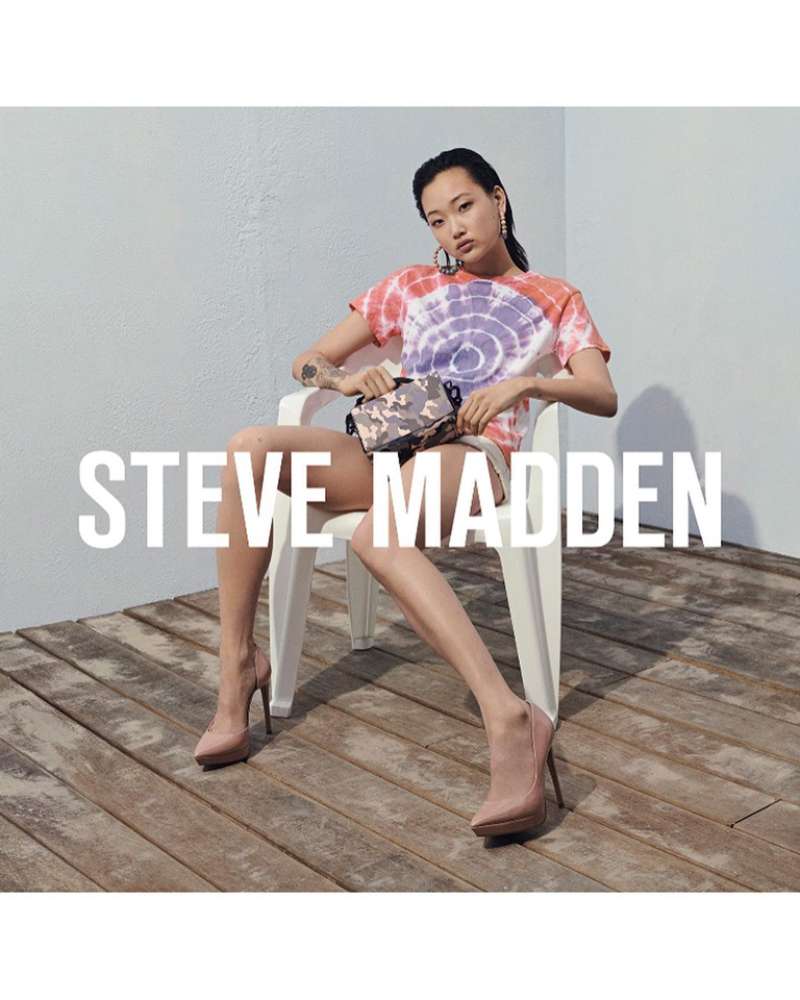
Steve Madden print ads work by breaking human proportion and leaving the product untouched. The distorted figure absorbs attention, then hands it to the shoe, which is the only object rendered accurately. Backgrounds stay flat and saturated, copy stays minimal, and the logo sits small.
Composition. The figure usually sits off-center with the feet pushed toward the lower third of the frame. That asymmetry is deliberate, because a centered figure would split attention evenly between head and shoe.
Color. The classic layouts run 2 or 3 hues maximum against a single flat field. Skin tone and background sit close in value, while the footwear carries the highest chroma, which builds contrast exactly where the product is.
Look at where the empty area sits. Madden layouts hold most of their white space above the head and beside the legs, never under the shoe. Nothing competes with the product line at the bottom edge.
Typography. The wordmark is a wide-tracked sans-serif font set in caps at a single weight. Tracking is opened well past default, and the kerning between the two words stays even enough that STEVE and MADDEN read as one block.
That restraint is why the visual hierarchy holds across formats. Figure first, shoe second, wordmark third, and no headline fighting for position.
Most competing footwear brands of the same period ran the opposite structure: model shot straight, shoe barely visible, logo enlarged. Madden inverted it, which is the single most useful lesson in the archive for anyone working in advertising design.
How Do Steve Madden TV Commercials Differ From Its Print Ads?
Steve Madden television spots add dialogue, music and narrative, none of which exist in the print work. Print isolates a single distorted figure on a flat field. The commercials place characters in real locations, give them scripts, and let the shoe enter the story late.
Chick Walker (2001, Curious Pictures). Two women size each other up on a sidewalk. The blonde clocks the newcomer’s shoes, concedes the point and keeps walking. Belair’s stills were animated frame by frame, so the motion stutters like collage.
Shoe Shrink (2025, directed by Marissa Velez). A woman lies on a therapist’s couch talking through her footwear problems. The joke lands in under 60 seconds and the Shay slingback carries the punchline.
Kill the Scene (2025, directed by Marissa Velez). Four boot styles, Twain, Luca, Distortion and Revive, are treated as the cast rather than the props. Velez wrote and directed all 4 films in the series.
The shared thread is storytelling. Print gives you one arrested moment. Film gives the brand a setup and a payoff, which is why the 2024 and 2025 campaigns carry dialogue while the 1997 ads carry none.
How Has Steve Madden Advertising Evolved Since 1997?
Steve Madden advertising has moved through 4 phases since 1997: composited print distortion, television adaptation, digital avatar experiments, and documentary-style New York film. The distortion device disappeared around 2005, returned in 3D form in 2021, then gave way to street casting and short narrative films.
| Period | Strategic shift | Representative campaign |
|---|---|---|
| 1997 to 2005 | Own a proportion device nobody else has | “Big Head Girls” |
| 2001 to 2004 | Move the print look into broadcast | “Chick Walker” |
| 2021 to 2022 | Rebuild the archive as avatars and AR | Steve Maddenverse, Maddenwood |
| 2024 to 2026 | Real people, real locations, long-term casting | “Never Miss a Beat,” “Bait and Switch” |
One detail from the middle years is worth keeping. Madden was sentenced in 2002, the campaign kept running, and he told Footwear News the team slipped his prison identification numbers into the layouts as an in-joke.
The Jordan Belfort connection belongs to a different story. Stratton Oakmont underwrote the 1993 initial public offering, and Martin Scorsese used the Big Head aesthetic in The Wolf of Wall Street.
Which Agencies Created Steve Madden Advertising?
Hampel Stefanides created the Big Head Girls print campaign for Steve Madden from 1997, with Tommy Kane as art director and Butch Belair as photographer. Golden Projects produced Never Miss a Beat in 2024. Steve Madden’s in-house creative team has led campaigns since 2021.
| Creator | Role | Work |
|---|---|---|
| Hampel Stefanides, New York | Agency | “Big Head Girls” print and out of home |
| Butch Belair | Photographer | “Big Head Girls” stills, “Chick Walker” source frames |
| Tommy Kane | Art director and illustrator | “Big Head Girls,” “Chick Walker” |
| Golden Projects | Production company | “Never Miss a Beat,” directed by Steven Brahms |
| Marissa Velez | Director, writer, photographer | Fall 2025 film series, 2026 album cover series |
Belair’s copyright suit against Bratz designer Carter Bryant failed for lack of direct similarity, and Steve Madden stayed out of the dispute. Kane’s stated brief was recognition: build something distinct enough that a reader identifies the brand in an instant, before reading a word.
Jisoo Hong runs creative direction internally. Alex Frias holds the chief marketing officer role. Christina Ciglar, chief product officer, describes the summer 2026 line as dopamine dressing with a throwback to brand heritage.
What Can Designers Learn From Steve Madden Ads?
Steve Madden ads teach 6 transferable lessons: distort the figure and not the product, hold the palette to 3 values, set the wordmark once and never again, place empty area above the subject, cast for character over polish, and let the product deliver the punchline.
- Distort the human figure, never the product
- Cap the layout at 2 hues plus a neutral, and give the shoe the highest saturation
- Set the wordmark in one weight, one size, one position across the whole campaign
- Push the product to the lower third and keep the empty area above it
- Street-cast for faces that carry a story, the way Never Miss a Beat did
- Write the joke so the product lands it, not the headline
Applying the first rule alone changes most footwear layouts. Once the body reads as unreal, the accurately rendered shoe becomes the only trustworthy object in the frame, and attention follows it without any typographic help.
The palette rule matters more in print design than on screen, since CMYK reproduction flattens close values that look fine on a monitor.
How Do Steve Madden Ads Compare to Skechers and Puma Ads?
Steve Madden builds campaigns around a proprietary visual device. Skechers builds them around celebrity volume. Puma builds them around athlete performance. The three brands sit in overlapping price tiers and share almost no creative logic.
Skechers ads lean on rotating famous faces and product benefit claims, with layouts that change every quarter. The brand recognition sits in the celebrity, not the composition, which means the work does not accumulate a look over time.
Puma advertising campaigns run on motion, sport context and team partnerships, with typography doing far more structural work than it does at Madden. Reebok ads follow similar territory, anchored in archive silhouettes and heritage color.
The closest structural comparison is UGG advertising, another brand that built recognition on a single silhouette rather than a spokesperson. Converse ads take the opposite route again, handing the frame to subcultures and letting the shoe sit almost incidentally in the shot.
Madden’s advantage is that a 1999 spread and a 2021 avatar read as the same brand. Very few footwear archives survive that test.
What Makes Steve Madden Advertising Work?
The work holds up because the brand picked a device and defended it. Distorted figure, accurate shoe, flat field, small wordmark.
That formula gave the company a recognizable visual identity at a price tier where most competitors rented recognition from celebrities instead of building it into the layout.
The recent films dropped the distortion but kept the underlying rule: the product carries the punchline, never the headline. Casting one model across three consecutive seasons applies the same logic to faces.
Pick one structural idea, hold the color palette tight around it, and repeat until the audience recognizes the frame before it reads the name. That is the whole method, and it survived a founder’s prison sentence, a format shift to social film, and 3 decades of trend cycles.
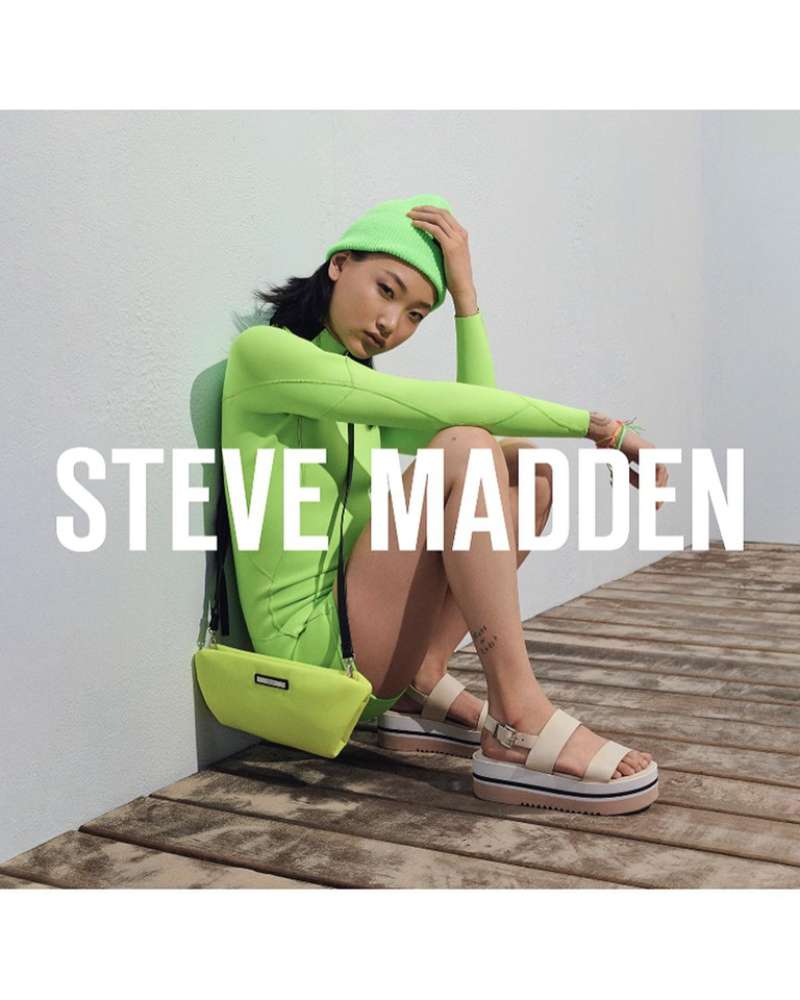
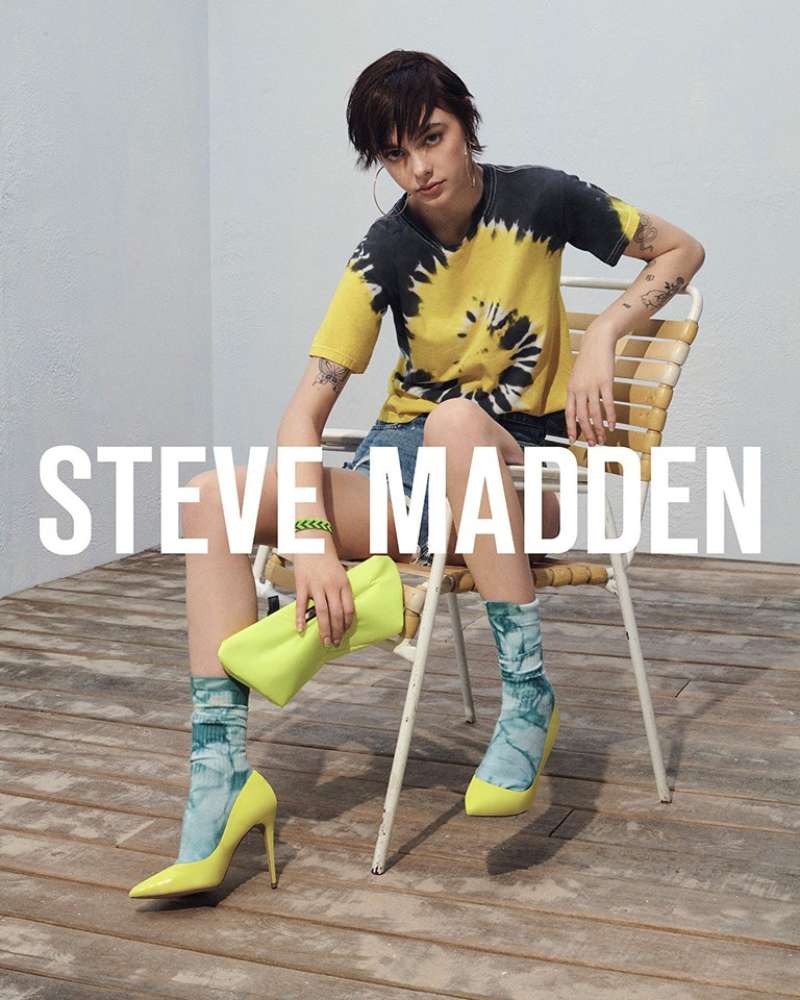
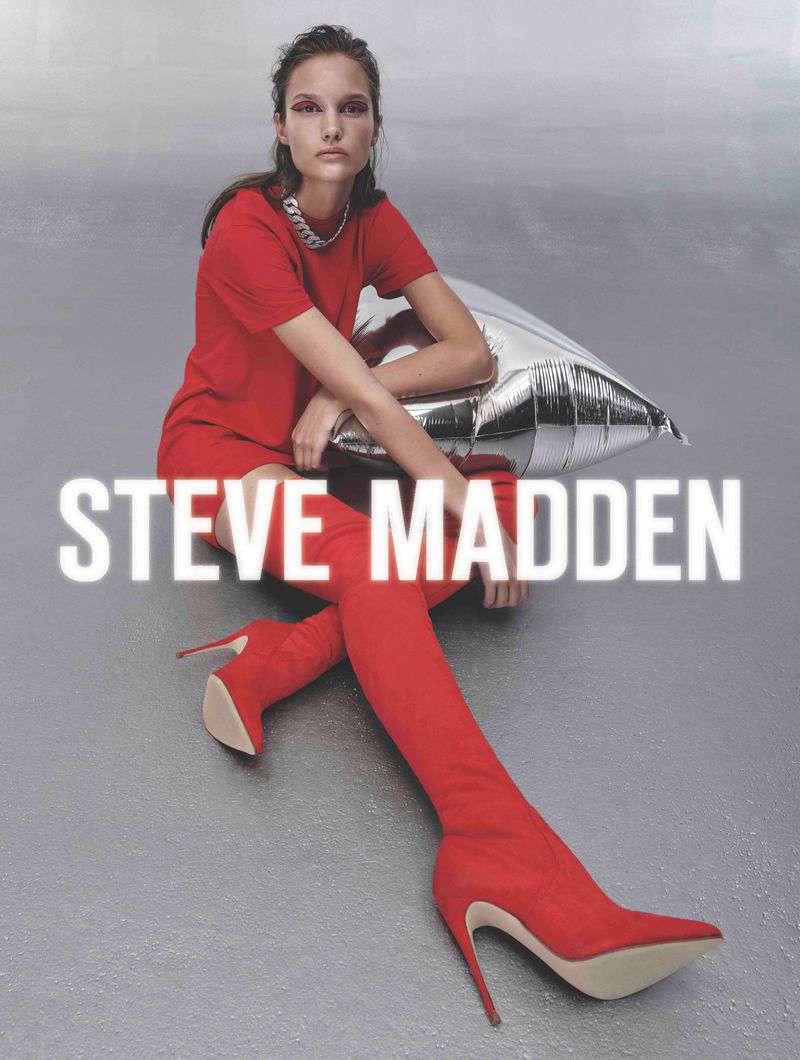
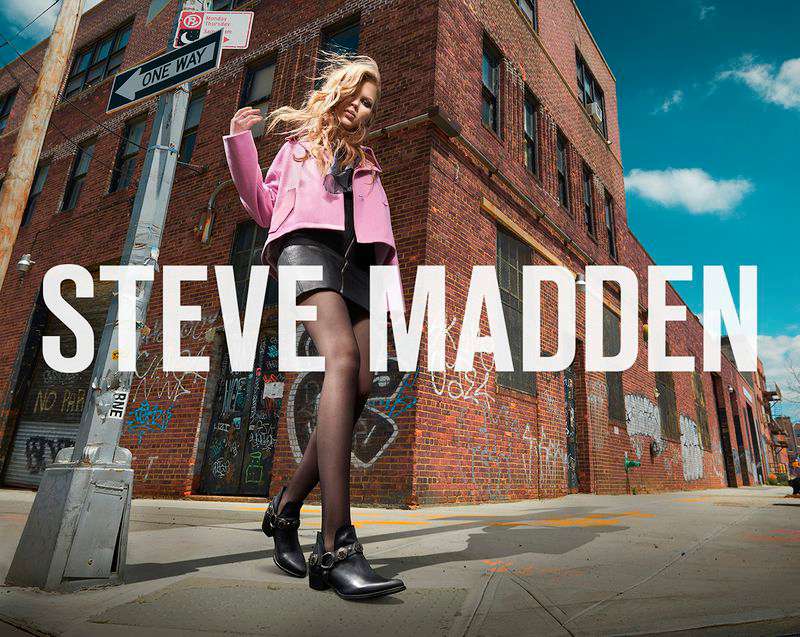
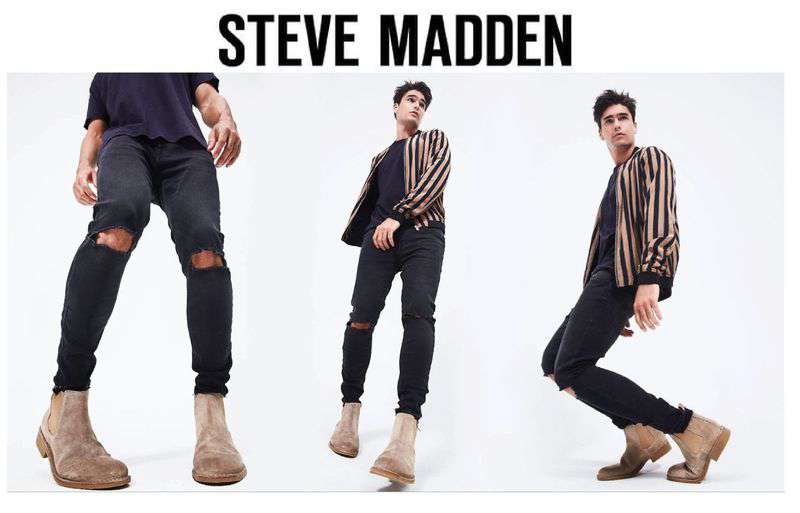
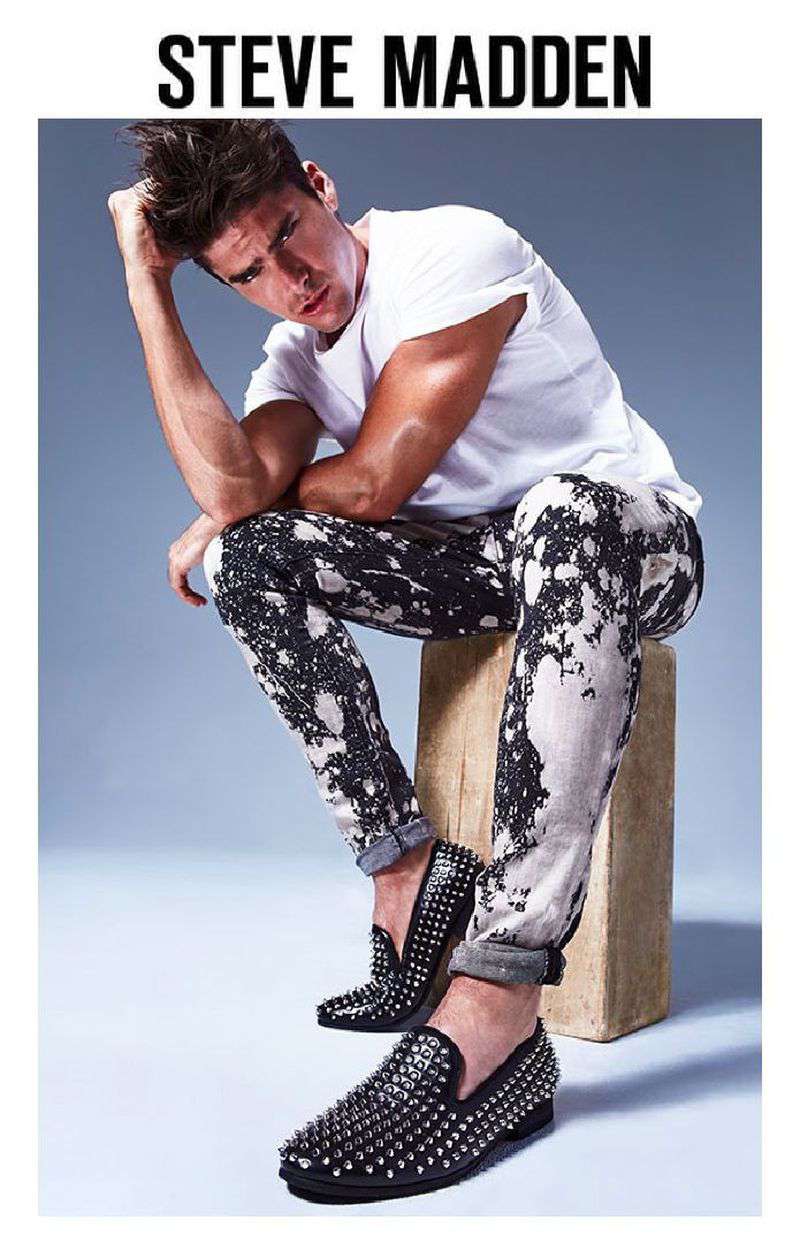
Steve Madden Ads Examples
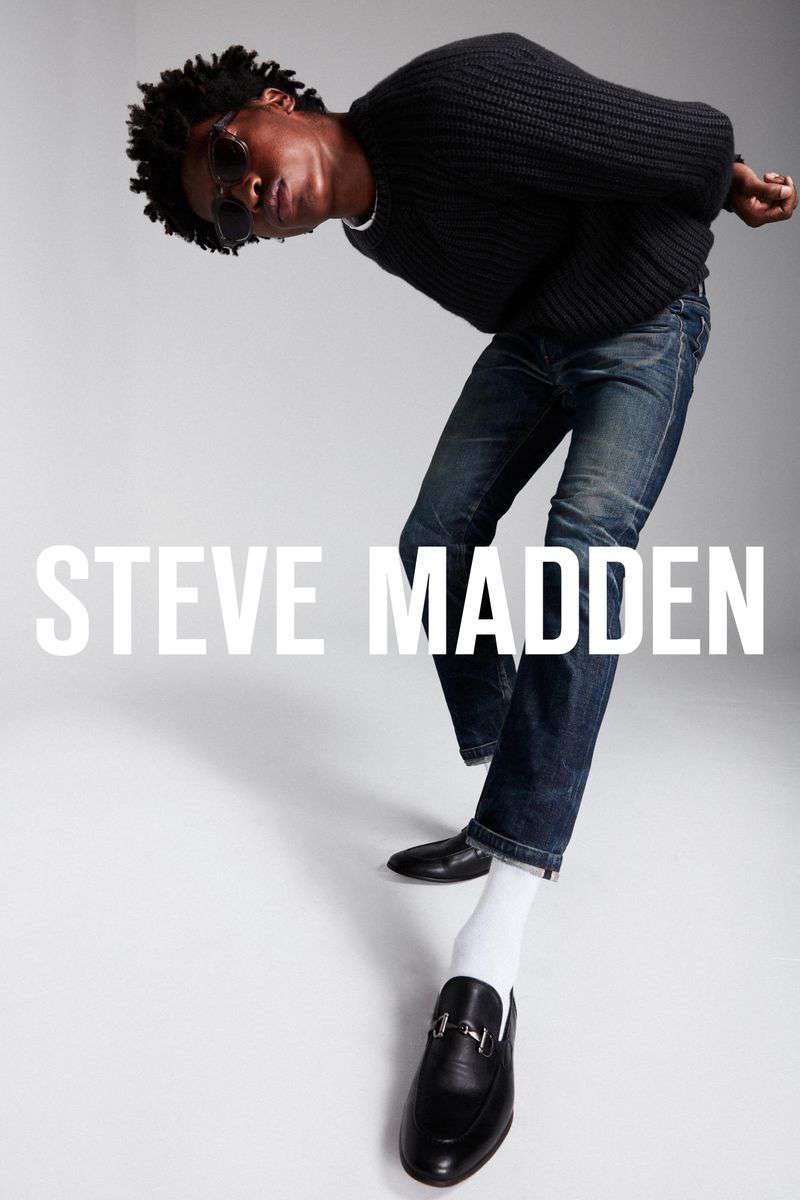
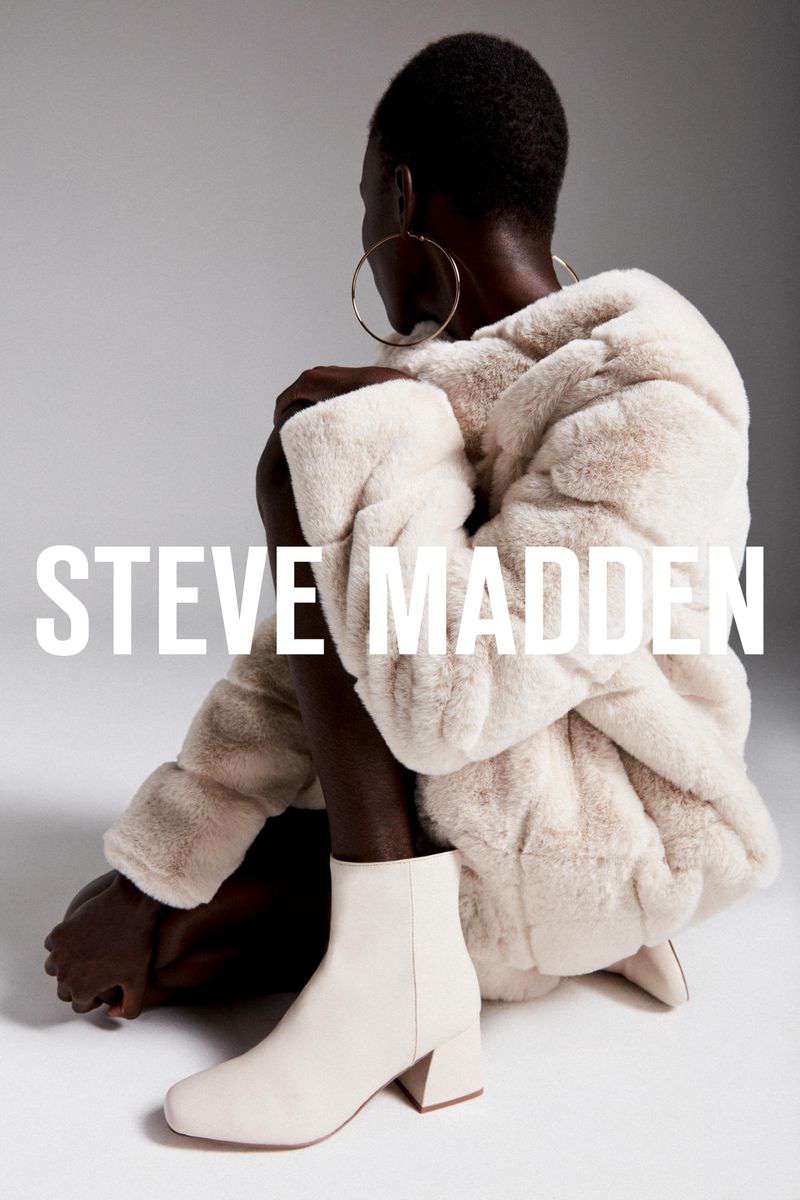
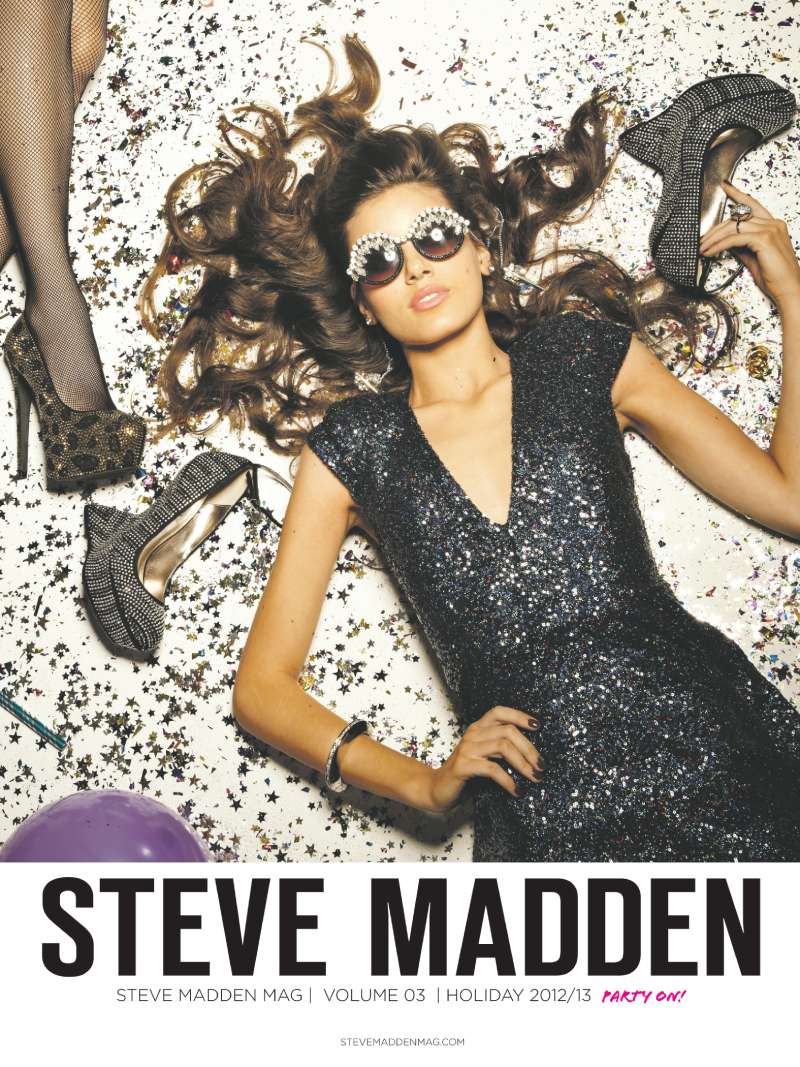
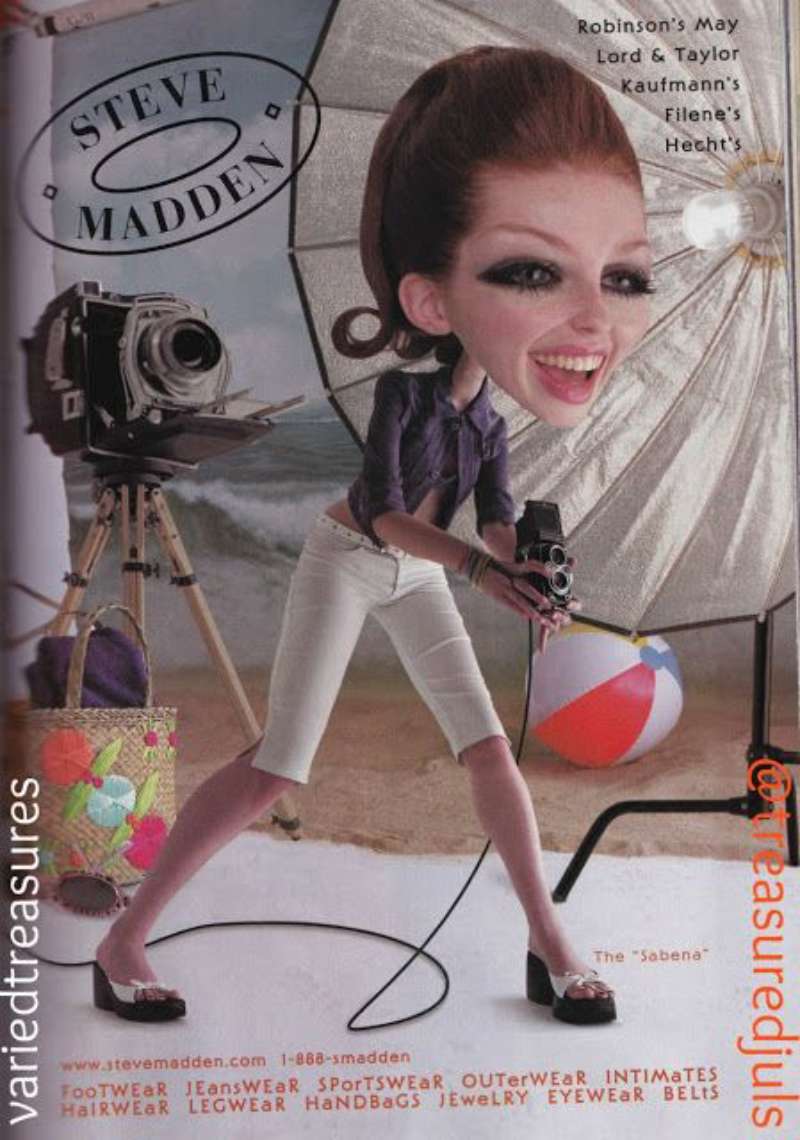
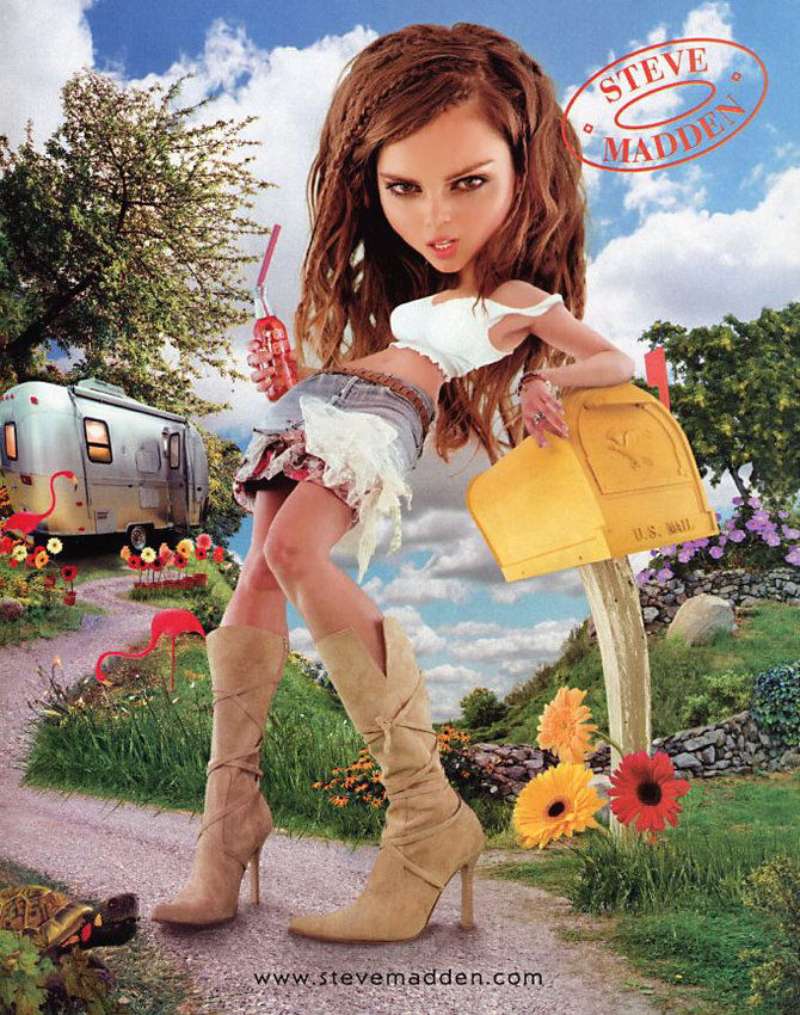
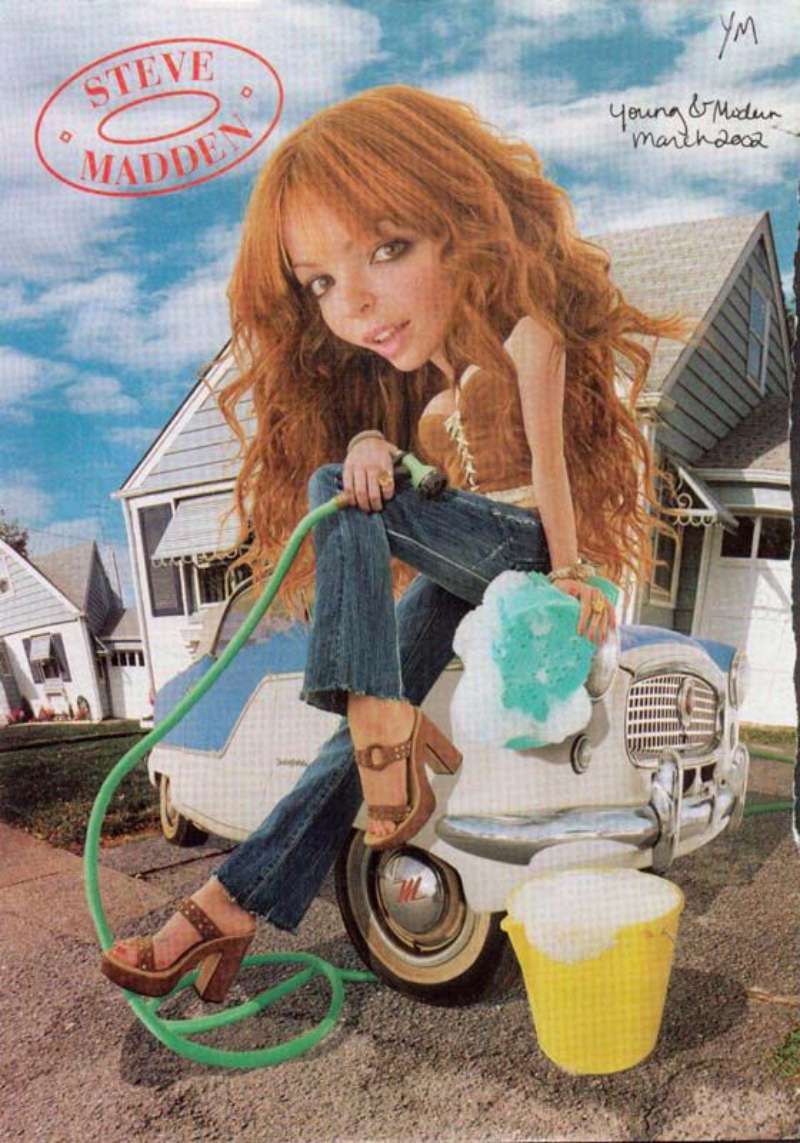

FAQ on Steve Madden Ads
When did the Big Head campaign end?
The original run finished in 2005 after 8 years. Madden told Footwear News in 2018 he would never rule out a return, and the brand revived the look in 2021 as digital avatars rather than composited photography.
Who directed the Chick Walker commercial?
David Kelley of Curious Pictures, New York, directed the 2001 spot. Butch Belair shot the source frames and Tommy Kane handled art direction, carrying the print look straight into broadcast without redesigning it.
Are Steve Madden ads photographed or illustrated?
Photographed, then rebuilt. Belair shot at least 4 separate frames of each model and composited the body parts into one distorted figure. Nothing in the classic print work is drawn, despite the cartoon impression.
What typeface do Steve Madden ads use?
The wordmark is a wide-tracked geometric sans set in caps at a single weight. The company has never published the typeface name, and the letterforms have been redrawn rather than licensed straight from a foundry release.
What was the Steve Maddenverse?
A virtual-first campaign announced October 18, 2021. Normani, Sydney Sweeney, Jordan Alexander, Nessa Barrett and Justine Skye appeared as 3D avatars wearing fall styles, reviving the proportion device in rendered form.
Did The Wolf of Wall Street feature Steve Madden ads?
Yes. Martin Scorsese used the Big Head aesthetic in the 2013 film, built around Jordan Belfort making 22 million dollars on the 1993 initial public offering underwritten by Stratton Oakmont.
Where is the brand headquartered?
Long Island City, Queens, New York. Steven Madden, Ltd. trades on Nasdaq under the ticker SHOO, with Edward Rosenfeld as chairman and chief executive and a SoHo flagship used for campaign activations.
What music has appeared in Steve Madden commercials?
Never Miss a Beat ran on Deee-Lite’s 1990 track Groove Is In The Heart. The spring 2025 film, shot at New York nightclub The Box, used Salt-N-Pepa’s 1993 single Shoop.
Has Steve Madden won advertising awards?
No Cannes Lions, D and AD or Clio record appears publicly. The strongest recognition sits elsewhere: the 2001 Chick Walker television spot entered the Museum of Modern Art permanent collection.
Do Steve Madden ads still run in print?
Print placement has shrunk sharply since the Seventeen and Teen People years. Campaigns from 2024 onward launch through short film, social channels and in-store screens, with layouts closer to minimalist design than the saturated 1999 spreads.
Conclusion
Steve Madden ads earned their place in the archive by owning one structural idea and refusing to trade it for a bigger celebrity.
The oversized head pulled the eye. The platform sandal kept its honest proportions. The wordmark stayed small in the corner while every competitor was enlarging theirs.
That discipline carried the brand from teen magazine spreads into a Museum of Modern Art collection, then into avatars, then into street-cast film shot in Long Island City and Manhattan.
Recent seasons dropped the distortion but kept the rule underneath it. Marissa Velez writes the shoes as characters. Delilah Belle returns season after season, so recognition builds the way a repetition device should.
Steal the method, not the big heads.

Renowned for his expertise in logo design and visual branding, Bogdan has developed a multitude of logos for various clients.
His skills extend to creating posters, vector illustrations, business cards, and brochures. Additionally, Bogdan's UI kits were featured on marketplaces like Visual Hierarchy and UI8.
He also wrote in the past years on sites like Design Your Way, WebDesignerDepot, WPDean, Designmodo, Speckyboy, Slider Revolution, and more.
- Canva vs PowerPoint: Which Is Better for Presentations? - 22 September 2026
- How to Install Fonts on Mac (Step-by-Step Guide) - 20 September 2026
- From Mockup to Code: How AI-Augmented Development Speeds Up the Design Handoff - 19 September 2026

Bogdan Sandu is a seasoned designer who has been designing websites since 2008. Renowned for his expertise in logo design and visual branding, Bogdan has developed a multitude of logos for various clients. His skills extend to creating posters, vector illustrations, business cards, and brochures. Additionally, Bogdan's UI kits were featured on marketplaces like Visual Hierarchy and UI8. He also wrote in the past years on sites like Design Your Way, WebDesignerDepot, WPDean, Designmodo, Speckyboy, Slider Revolution, and more.
You Might Also Like


