Neon color palettes transform ordinary designs into electric visual experiences that demand attention. These high-saturation, fluorescent-inspired schemes create instant impact whether you’re building a cyberpunk interface, retro gaming brand, or modern nightlife identity.
This guide presents 15 carefully curated neon color palettes with hex codes, practical use cases, and design tips.
You’ll learn how to balance vibrant hues with dark backgrounds, which color combinations work for specific industries, and how to apply color theory principles to neon schemes without overwhelming your audience. Each palette includes mood descriptions and strategic implementation advice for immediate application.
Neon Color Palettes
Classic Neon Rainbow
| #00F0FF | #FF007F | #FFEF00 | #4BFF36 | #BF4BF8 |
Color Codes
Electric Blue (#00F0FF), Hot Pink (#FF007F), Neon Yellow (#FFEF00), Lime Green (#4BFF36), Purple Glow (#BF4BF8).
Mood and Aesthetic
Bold, playful energy with maximum visual impact. Channels arcade lights and classic blacklight posters from the 80s.
Best Use Cases
Event posters, gaming interfaces, nightclub branding, retro-themed social media graphics. Works best against deep black or charcoal backgrounds where the fluorescent effect pops.
Color Relationships
Five high-saturation hues create a triadic color scheme with near-perfect spacing on the color wheel. Hot pink and lime green form complementary colors.
Design Tips
Use one color as the dominant focal point, limit others to accents. Apply glow effects in design software to simulate neon tube lighting.
Synthwave Sunset
| #FF1493 | #FF7F11 | #00F5FF | #3F3D56 | #05030F |
Color Codes
Deep Magenta (#FF1493), Bright Orange (#FF7F11), Aqua Cyan (#00F5FF), Dark Purple (#3F3D56), Midnight Black (#05030F).
Mood and Aesthetic
Retro-futuristic vibe inspired by 1980s album covers and Miami Vice aesthetics. Creates nostalgic warmth with gradient transitions.
Best Use Cases
Music production branding, podcast artwork, motion graphics, streaming overlays. Strong choice for vaporwave or synthwave-themed projects.
Color Relationships
Warm magenta and orange dominate while cool cyan provides contrast. Dark purple and black create depth, letting bright hues appear luminous.
Design Tips
Layer colors in horizontal bands to mimic sunset horizons. Add purple-to-black gradients in backgrounds, reserve cyan for highlights and text overlays.
Cyberpunk City
| #FE0194 | #00E5FF | #EFFE01 | #7C4DFF | #0B0D17 |
Color Codes
Neon Pink (#FE0194), Electric Cyan (#00E5FF), Acid Yellow (#EFFE01), Violet Glow (#7C4DFF), Deep Navy (#0B0D17).
Mood and Aesthetic
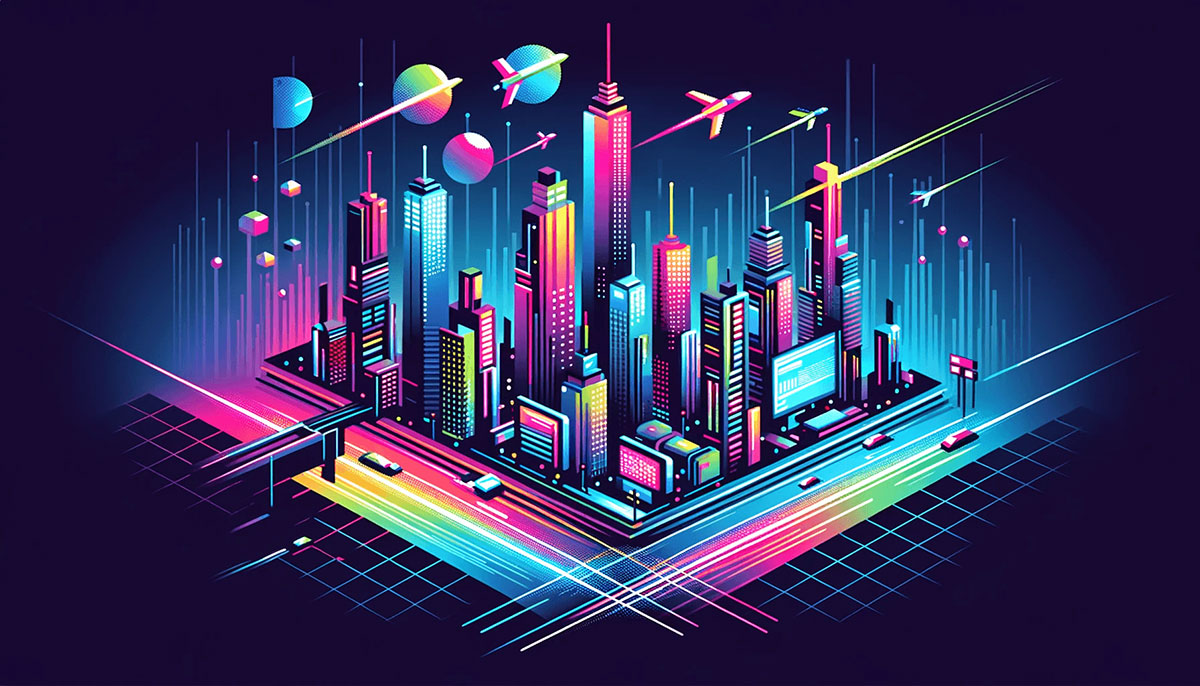
High-tech urban nightlife with glowing signage reflected on wet streets. Captures the essence of dystopian future cities and neon-lit alleyways.
Best Use Cases
Tech startup branding, gaming UI design, sci-fi poster design, digital art projects. Perfect for dark mode interfaces and futuristic themes.
Color Relationships
Pink and cyan form a vibrant complementary color scheme. Yellow adds unexpected energy while violet bridges warm and cool tones.
Design Tips
Use deep navy for 70% of the composition to create proper visual hierarchy. Limit bright neons to buttons, icons, and key messaging for maximum impact.
Retro Arcade
| #F500EB | #0CD4FF | #8DFF0A | #FFEF06 | #FF3A06 |
Color Codes
Fuchsia (#F500EB), Vivid Sky Blue (#0CD4FF), Chartreuse (#8DFF0A), Canary Yellow (#FFEF06), Hot Red (#FF3A06).
Mood and Aesthetic
Pure vintage arcade energy reminiscent of Pac-Man and classic pinball machines. Ultra-saturated colors demand attention instantly.
Best Use Cases
Retro gaming branding, entertainment venues, fun social media campaigns, youth-oriented packaging. Works exceptionally well on black backgrounds to simulate CRT screens.
Color Relationships
Five colors create near-complete rainbow coverage with extreme saturation levels. Fuchsia and chartreuse provide the strongest visual tension.
Design Tips
Apply subtle glow effects to text and shapes. Use pixel-style typography to reinforce retro gaming aesthetic.
Neon Dreams
| #FF5BFF | #D34DEE | #BF4BF8 | #2AC9F9 | #56F1FF |
Color Codes
Ultra Pink (#FF5BFF), Tyrian Purple (#D34DEE), Phlox (#BF4BF8), Vivid Sky Blue (#2AC9F9), Electric Blue (#56F1FF).
Mood and Aesthetic
Dreamy, ethereal quality with soft purple-to-blue transitions. Creates surreal atmospheres similar to neon pink lighting in contemporary art installations.
Best Use Cases
Beauty and cosmetics branding, fashion photography, nightlife marketing, creative portfolio color palettes. Particularly effective for feminine-leaning designs.
Color Relationships
Analogous colors in the purple-blue spectrum create smooth gradient color palettes. Multiple shades of similar hue build cohesive harmony.
Design Tips
Blend colors using soft gradients rather than hard edges. Pair with white space to prevent visual overload.
Miami Nights
| #EE018F | #F23CA6 | #41FEFF | #3E1340 | #BFFFFC |
Color Codes
Hollywood Cerise (#EE018F), Persian Rose (#F23CA6), Aqua (#41FEFF), Dark Purple (#3E1340), Celeste (#BFFFFC).
Mood and Aesthetic
Glamorous tropical nightlife with Art Deco influences. Evokes palm trees silhouetted against glowing hotel signs.
Best Use Cases
Luxury hospitality branding, travel marketing, fashion editorials, cocktail bar identities. Strong association with Miami Vice and 1980s luxury culture.
Color Relationships
Hot pink and aqua create maximum emphasis through temperature contrast. Dark purple anchors the palette, celeste adds refreshing lightness.
Design Tips
Use dark purple for large background areas. Reserve bright pink for logo elements and CTAs, aqua for secondary highlights.
Tropical Neon
| #4DEEEA | #74EE15 | #FFE700 | #F000FF | #001EFF |
Color Codes
Neon Cyan (#4DEEEA), Lime Electric (#74EE15), Bright Yellow (#FFE700), Hot Magenta (#F000FF), Royal Blue (#001EFF).
Mood and Aesthetic
Electric paradise combining bright color palettes with tropical vibrancy. Feels energetic and youthful without losing sophistication.
Best Use Cases
Sports apparel, energy drink branding, festival marketing, youth culture campaigns. Popular in gaming color palettes for vibrant UI elements.
Color Relationships
Cyan and yellow lean warm, magenta and blue add cool depth. Creates balanced color psychology despite high intensity.
Design Tips
Maintain strong contrast ratios for readability. Apply colors in distinct zones rather than mixing them densely.
Electric Citrus
| #9BFE01 | #02F7D8 | #FFDD88 | #FF9535 | #1A1C1B |
Color Codes
Lime Green (#9BFE01), Electric Cyan (#02F7D8), Neon Yellow (#FFDD88), Bright Orange (#FF9535), Charcoal (#1A1C1B).
Mood and Aesthetic
Fresh, zesty energy like citrus under blacklight. Combines warm color palettes with electric intensity.
Best Use Cases
Food and beverage branding, health product packaging, fitness apps, sustainable product marketing. Works well for organic energy drink labels.
Color Relationships
Lime and cyan provide the primary glow effect. Orange adds warmth, charcoal creates necessary negative space for eye rest.
Design Tips
Use charcoal for 60% of layouts to prevent sensory overload. Let lime and cyan dominate the remaining 40% with orange as small accents.
Cosmic Glow
| #BC0EEF | #FC1FF9 | #E42536 | #FC5E31 | #443061 |
Color Codes
Electric Purple (#BC0EEF), Hot Fuchsia (#FC1FF9), Poppy Red (#E42536), Giants Orange (#FC5E31), Russian Violet (#443061).
Mood and Aesthetic
Otherworldly and cosmic with deep space vibes. Feels like nebula clouds and distant galaxies rendered in vibrant fluorescent tones.
Best Use Cases
Science fiction branding, planetarium marketing, astronomy apps, space color palettes for educational content. Strong choice for futuristic tech products.
Color Relationships
Purple and fuchsia dominate with analogous colors creating smooth transitions. Red and orange add warmth, Russian violet provides depth.
Design Tips
Layer colors with gradient overlays to simulate cosmic dust. Use Russian violet as base, reserve brightest fuchsia for key elements.
Neon Jungle
| #95FF77 | #59FF00 | #1A1C1B | #2A2E2E | #555D58 |
Color Codes
Screamin’ Green (#95FF77), Bright Green (#59FF00), Eerie Black (#1A1C1B), Jet Gray (#2A2E2E), Olive Shade (#555D58).
Mood and Aesthetic
Bio-luminescent jungle with glowing plants against midnight darkness. Creates mysterious, organic energy with technological edge.
Best Use Cases
Environmental campaigns, organic tech products, nature color palettes with modern twist, gaming interfaces. Perfect for eco-conscious brands wanting bold presence.
Color Relationships
Two green color palettes variations against three dark neutrals. Extreme light-dark contrast creates dramatic glow effect.
Design Tips
Use eerie black for backgrounds, bright green sparingly for maximum impact. Jet gray and olive create subtle layering without competing with primary green.
Vaporwave
| #89D3F0 | #FD7EAF | #FFAA8C | #FFDD88 | #F0FF9D |
Color Codes
Sky Blue (#89D3F0), Tickle Me Pink (#FD7EAF), Atomic Tangerine (#FFAA8C), Jasmine (#FFDD88), Mindaro (#F0FF9D).
Mood and Aesthetic
Soft neon glow meets pastel color palettes aesthetics. Dreamy and approachable without losing energetic edge.
Best Use Cases
Lifestyle branding, wellness apps, creative agency portfolios, modern kids color palettes. Works for brands wanting neon energy with softer touch.
Color Relationships
Gentle gradient color palettes from cool blue through warm yellows. Creates rainbow effect with reduced saturation for easier viewing.
Design Tips
Works on both light and dark backgrounds unlike traditional neons. Blend colors smoothly, avoid harsh transitions for dreamy aesthetic.
Neon Gradient
| #3A0CA3 | #560BAD | #7209B7 | #B5179E | #F72585 |
Color Codes
Zaffre (#3A0CA3), Chrysler Blue (#560BAD), Grape (#7209B7), Fandango (#B5179E), Rose Pink (#F72585).
Mood and Aesthetic
Smooth purple color palettes transition from deep indigo to hot pink. Creates mesmerizing flow like fading neon tubes.
Best Use Cases
Music streaming interfaces, creative software branding, gradient backgrounds for social posts, modern app design. Perfect for brands emphasizing smooth user experience.
Color Relationships
Five-step progression demonstrates perfect monochrome colors with hue shift. Creates natural gradient without jarring transitions.
Design Tips
Apply as diagonal or radial gradient for maximum impact. Works beautifully for button hover states and loading animations.
Dark Neon
| #270576 | #D80AFC | #F71B9C | #42B7ED | #F0E84D |
Color Codes
Persian Indigo (#270576), Phlox Purple (#D80AFC), Hollywood Cerise (#F71B9C), Picton Blue (#42B7ED), Maize Yellow (#F0E84D).
Mood and Aesthetic
Mysterious depth with explosive bright accents. Combines dark color palettes foundation with neon punctuation.
Best Use Cases
Nightlife venues, electronic music branding, dark mode interfaces, luxury tech products. Creates premium feel while maintaining energetic vibe.
Color Relationships
Deep indigo anchors tetradic color scheme with four bright accents. High contrast creates instant drama.
Design Tips
Use Persian indigo for 70-80% of composition. Distribute bright colors strategically for emphasis and visual hierarchy.
Acid Tech
| #2FFF00 | #ACFF78 | #02F7D8 | #0D00FF | #ABFF19 |
Color Codes
Electric Lime (#2FFF00), Neon Green (#ACFF78), Turquoise Glow (#02F7D8), Electric Blue (#0D00FF), Yellow Green (#ABFF19).
Mood and Aesthetic
Hyper-digital with radioactive energy. Evokes neon green and neon blue chemical reactions.
Best Use Cases
Tech startups, crypto platforms, gaming peripherals, extreme sports branding. Popular in vivid color palettes for competitive gaming.
Color Relationships
Cool greens and blues with extreme brightness. Creates technological, artificial aesthetic through saturated color palettes.
Design Tips
Pair with black or very dark navy backgrounds. Add subtle glow effects to simulate LED lighting strips.
Highlighter Heat
| #FF8800 | #EFFE01 | #9BFE01 | #00ECFF | #FF00C2 |
Color Codes
Neon Orange (#FF8800), Lemon Lime (#EFFE01), Spring Bud (#9BFE01), Electric Blue (#00ECFF), Shocking Pink (#FF00C2).
Mood and Aesthetic
Sporty and bold like highlighter marker on black paper. Maximum visibility with athletic energy.
Best Use Cases
Sportswear brands, fitness apps, street art projects, fun color palettes for youth marketing. Excellent for safety gear and high-visibility products.
Color Relationships
Warm orange and yellow color palettes dominate with cool blue and pink accents. Creates balance through temperature contrast.
Design Tips
Choose one warm color as hero (orange or yellow), use others as accents. Keep blue for small elements like badges to avoid competition.
FAQ on Neon Color Palettes
What are neon color palettes?
Neon color palettes are collections of high-saturation, fluorescent-inspired colors that appear to glow, especially against dark backgrounds. They typically include electric blues, hot pinks, lime greens, and bright yellows with RGB values maximized for intensity and visual impact in digital and print design.
Do neon colors work on light backgrounds?
Neon colors lose their glowing effect on light backgrounds and appear flat. They perform best against dark backgrounds like black, deep navy, or charcoal where the high contrast simulates the luminous quality of actual neon lighting and creates maximum visual punch.
What hex codes define true neon colors?
True neon hex codes include #00FF00 (electric lime), #FF00FF (hot magenta), #00FFFF (cyan glow), and #FFFF00 (bright yellow). These colors feature maximum saturation in at least two RGB channels, creating the characteristic fluorescent appearance associated with neon aesthetics.
How many neon colors should I use together?
Limit designs to 2-3 primary neon colors to maintain visual hierarchy and prevent sensory overload. Use one dominant color for main elements, a secondary for accents, and reserve additional hues for small details. This creates effective color combinations without causing visual fatigue.
Are neon palettes accessible for all users?
Neon colors often fail WCAG accessibility standards due to extreme brightness and vibration effects that strain eyes. Always provide alternative color options for text-heavy content, test contrast ratios, and consider users with photosensitivity or color vision deficiencies when implementing fluorescent schemes.
What design styles work best with neon colors?
Neon palettes excel in cyberpunk, synthwave, retro arcade, and postmodern design aesthetics. They’re perfect for nightlife branding, gaming interfaces, tech startups, and youth-oriented campaigns. The 80s design revival and vaporwave movements heavily feature neon color schemes for nostalgic appeal.
How do I convert neon RGB to CMYK for print?
Standard CMYK printing cannot reproduce true neon intensity. For authentic glow effects in print design, use fluorescent Pantone spot colors or UV-reactive inks. Test printed proofs early, as screen colors will appear significantly brighter than physical output.
Can I use neon colors in professional branding?
Neon colors work for professional branding in tech, entertainment, fitness, and creative industries targeting younger demographics. However, they’re typically unsuitable for finance, healthcare, or luxury sectors. Use strategically as accent colors within broader color palette systems for professional applications.
What’s the difference between neon and pastel neon?
Pastel neon blends fluorescent hues with white, reducing saturation while maintaining energetic appeal. Traditional neons feature maximum brightness and intensity. Pastel neons offer softer alternatives that work on both light and dark backgrounds, making them more versatile for modern design applications and broader audiences.
How do I create glow effects with neon colors?
Apply outer glow, drop shadow, or blur effects using the same hex codes as your base neon colors. In CSS, use text-shadow or box-shadow with multiple layers. Increase opacity gradually from center to edge, simulating light diffusion for authentic neon tube appearance.
Conclusion
These neon color palettes offer electric solutions for brands demanding bold visual presence. From cyberpunk interfaces to retro arcade aesthetics, each scheme balances vibrant hues with strategic dark backgrounds to maximize fluorescent impact.
Success with neon colors depends on restraint. Limit primary colors to three, maintain strong contrast ratios, and reserve brightest tones for key elements like CTAs and logos.
Remember that RGB displays show neon intensity better than CMYK printing. Test accessibility before launch, especially for text-heavy applications.
Apply these hex codes to transform ordinary designs into glowing experiences that capture attention and communicate energy. Whether building web design projects, packaging design, or motion graphics, neon palettes deliver instant recognition in crowded digital spaces.

Renowned for his expertise in logo design and visual branding, Bogdan has developed a multitude of logos for various clients.
His skills extend to creating posters, vector illustrations, business cards, and brochures. Additionally, Bogdan's UI kits were featured on marketplaces like Visual Hierarchy and UI8.
He also wrote in the past years on sites like Design Your Way, WebDesignerDepot, WPDean, Designmodo, Speckyboy, Slider Revolution, and more.
- Top Source Sans Pro Font Pairing for Clean UIs - 6 October 2026
- Best Email Design System Examples From Leading Brands - 5 October 2026
- Canva AI Features Reviewed: Are They Actually Useful? - 4 October 2026

Bogdan Sandu is a seasoned designer who has been designing websites since 2008. Renowned for his expertise in logo design and visual branding, Bogdan has developed a multitude of logos for various clients. His skills extend to creating posters, vector illustrations, business cards, and brochures. Additionally, Bogdan's UI kits were featured on marketplaces like Visual Hierarchy and UI8. He also wrote in the past years on sites like Design Your Way, WebDesignerDepot, WPDean, Designmodo, Speckyboy, Slider Revolution, and more.
You Might Also Like