The McLaren Logo stands as one of the most recognized symbols in motorsport and luxury automotive manufacturing. This British brand has built its visual identity around speed, precision, and racing heritage since Bruce McLaren founded the company in 1963.
The current speedmark design was introduced in 1997. It replaced earlier iterations that featured more traditional racing emblems.
McLaren has used approximately four distinct logo versions throughout its history. The brand operates across Formula 1 racing and supercar production, making consistent visual identity critical for global recognition.
What is the McLaren Logo?
The McLaren logo is a stylized swoosh symbol called the “speedmark,” officially introduced in 1997 by McLaren’s design team. It represents aerodynamic flow and forward motion through a curved, wing-like shape rendered in the brand’s signature colors.
Design Type: Abstract symbol combined with wordmark (combination mark)
Primary Elements:
- Speedmark swoosh symbol
- McLaren wordmark in custom sans-serif typography
- Variations exist for Racing and Automotive divisions
Official Introduction Date: 1997
Designer/Agency: McLaren internal design team under Ron Dennis’s leadership
Trademark Status: Registered trademark of McLaren Group Limited
Color Palette:
- McLaren Orange (Papaya): #FF8000
- McLaren Black: #000000
- Chrome Silver (secondary): #C0C0C0
Usage Context: Formula 1 cars, road vehicles, merchandise, digital platforms, dealership signage, and corporate communications
How Has the McLaren Logo Evolved Over Time?
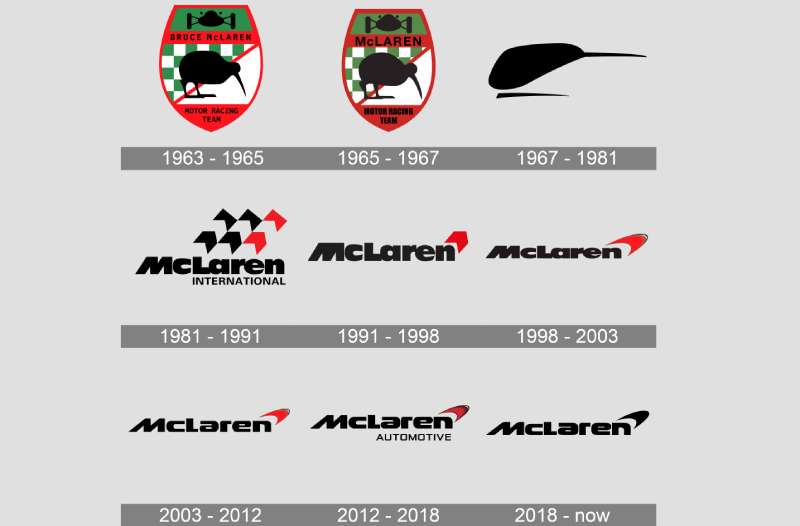
McLaren’s visual identity shifted from functional racing graphics to a refined corporate symbol across six decades.
The earliest versions were simple text-based marks. Later iterations introduced the speedmark that defines the brand today.
Each change reflected broader shifts in the company’s ambitions.
Original McLaren Logo (1963-1967)
Years Active: 1963-1967
Design Description: Simple text reading “Bruce McLaren Motor Racing” in basic serif lettering. No symbol or graphic element.
Color Scheme: Black text on white, occasionally reversed
Designer: Unknown (likely in-house)
Context: Bruce McLaren established the racing team in 1963. The mark was purely functional, identifying cars and equipment.
Cultural Significance: Represented the grassroots era of the team before major sponsorship and corporate identity became standard in motorsport.
Kiwi Bird Era (1967-1981)
Years Active: 1967-1981
Design Description: A stylized Kiwi bird, referencing Bruce McLaren’s New Zealand heritage. The bird appeared in various poses across different applications.
Color Scheme: Black silhouette, often paired with orange branding elements
Designer: Team graphics department
Context: The Kiwi honored founder Bruce McLaren’s nationality. It remained after his death in 1970 as a tribute.
Key Changes from Previous: First introduction of a graphic symbol rather than text alone
Cultural Significance: Connected the team to its founder’s personal story during a period of grief and rebuilding
Ron Dennis Modernization (1981-1997)
Years Active: 1981-1997
Design Description: Clean wordmark reading “McLaren” in a custom sans-serif typeface. The Kiwi was phased out.
Color Scheme: Red and white during Marlboro sponsorship years, later transitioning to silver and black with West sponsorship
Designer: Corporate rebrand under Ron Dennis
Context: Ron Dennis merged his Project Four team with McLaren. He wanted a more corporate, sophisticated look.
Key Changes from Previous: Removal of the Kiwi bird, shift toward minimalist design principles
Cultural Significance: Marked McLaren’s transformation into a technology-focused organization beyond just racing
Speedmark Introduction (1997-Present)
Years Active: 1997-present
Design Description: The iconic swoosh symbol representing aerodynamic motion. Curved lines suggest speed and forward progress.
Color Scheme: Black, silver, and Papaya Orange depending on application
Designer: McLaren design team
Context: McLaren Automotive was preparing to launch the McLaren F1 road car. They needed a symbol that worked beyond motorsport.
Key Changes from Previous: First abstract symbol in brand history, designed for global scalability
Cultural Significance: Unified the racing team and automotive division under one recognizable mark
What Do the Design Elements of the McLaren Logo Mean?
The speedmark communicates velocity and aerodynamic precision through its curved, swept-back form.
Every element was chosen to connect with McLaren’s engineering heritage and racing DNA.
The shape suggests a wing cutting through air at high speed.
Why Did McLaren Choose These Specific Colors?
Papaya Orange
- Hex: #FF8000
- Pantone: 1505 C
- Symbolic meaning: Heritage color chosen by Bruce McLaren himself
- Psychological impact: Energy, excitement, visibility on track
- Brand connection: Returns to the team’s roots after years of sponsor-dictated colors
McLaren Black
- Hex: #000000
- Symbolic meaning: Sophistication, technology, premium positioning
- Psychological impact: Authority and exclusivity
- Brand connection: Reflects the precision engineering focus
Chrome Silver
- Hex: #C0C0C0
- Symbolic meaning: Technology and innovation
- Psychological impact: Modernity, sleekness
- Brand connection: References carbon fiber and advanced materials used in McLaren vehicles
Understanding how colors affect perception explains why these specific choices work for a performance brand.
What Typography Style Is Used in the McLaren Logo?
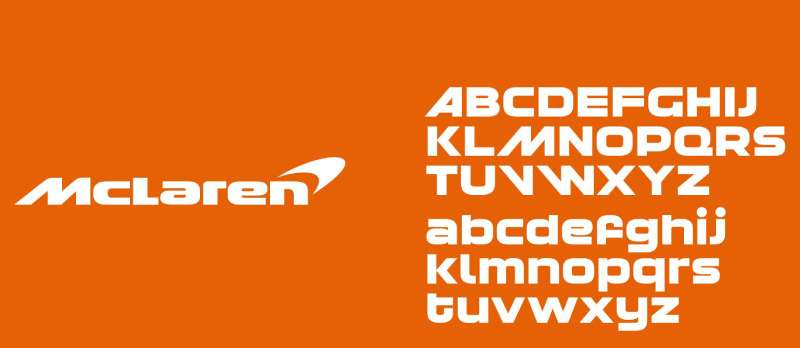
McLaren uses a custom sans-serif typeface for its wordmark.
The letters are clean and geometric. No unnecessary flourishes.
The font reflects engineering precision. Every character has calculated proportions.
Readability works at any size, from tiny badge to massive billboard. The typography evolved slightly over time but maintains consistent DNA.
What Are the Hidden Meanings in the McLaren Logo?
The speedmark’s angle mimics the optimal attack angle of a racing car’s front wing.
Some see a stylized “M” in the negative space. Others interpret it as a checkered flag in motion.
Designers intended the swoosh to suggest constant forward progress. Never standing still.
The psychology behind curved shapes creates feelings of dynamism and approachability despite the luxury positioning.
How Does the McLaren Logo Compare to Competitor Logos?
McLaren’s speedmark takes a different approach than most supercar manufacturers.
Where competitors use heritage crests or animal mascots, McLaren chose pure abstraction.
This sets the brand apart in showrooms and on track.
The Ferrari logo features the prancing horse. It’s steeped in Italian heritage and racing history.
The Lamborghini logo uses a charging bull. Aggressive and unmistakable.
The Porsche logo incorporates the Stuttgart coat of arms. Old-world prestige.
McLaren rejected this approach. The speedmark says “future” where others say “heritage.”
Among British rivals, the Aston Martin logo and Bentley logo both use wing motifs. McLaren’s swoosh is more abstract and less literal.
What Are the Technical Specifications of the McLaren Logo?
Official Color Codes:
Primary Color: Papaya Orange
- Hex: #FF8000
- RGB: (255, 128, 0)
- CMYK: (0, 50, 100, 0)
- Pantone: 1505 C
Secondary Color: McLaren Black
- Hex: #000000
- RGB: (0, 0, 0)
- CMYK: (0, 0, 0, 100)
Tertiary Color: Chrome Silver
- Hex: #C0C0C0
- RGB: (192, 192, 192)
- CMYK: (0, 0, 0, 25)
Dimensions and Proportions:
- Aspect ratio: Approximately 3:1 (full lockup with wordmark)
- Minimum size: 25mm width for print applications
- Clear space: Minimum of “M” height on all sides
- The speedmark can be used independently at smaller sizes
The logo exists as vector graphics for scalability across all applications.
What Cultural Impact Has the McLaren Logo Had?
The speedmark became synonymous with Formula 1 success during the late 1990s and 2000s.
Champions like Mika Hakkinen, Kimi Raikkonen, and Lewis Hamilton wore it on their helmets.
The symbol appears on some of the most expensive road cars ever built. The McLaren F1 remains legendary.
In gaming culture, McLaren’s branding features prominently in racing simulators and arcade titles. Younger audiences recognize the speedmark even without understanding its history.
How Does the McLaren Logo Fit Into the Overall Brand Identity?
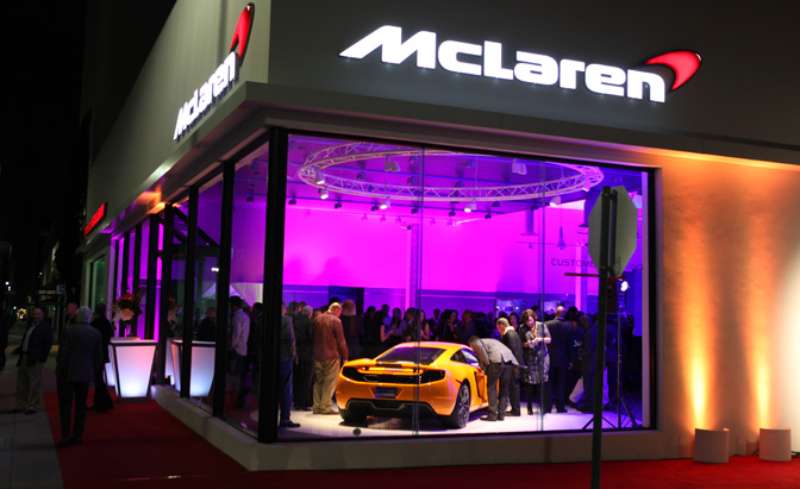
The speedmark anchors a complete visual system covering everything from F1 cars to dealership architecture.
McLaren’s brand guidelines specify exactly how the logo interacts with photography, typography, and color fields.
The Technology Centre in Woking, England even incorporates the swoosh into its building design. Architecture and branding merge.
McLaren Racing and McLaren Automotive use variations of the mark. But the core speedmark stays consistent.
This unified approach builds recognition across very different contexts. A fan sees the same symbol on a P1 hypercar and on Lando Norris’s helmet.
How Should the McLaren Logo Be Used?
Official Usage Guidelines:
- Never stretch, rotate, or distort the speedmark
- Maintain minimum clear space around the logo
- Use only approved color combinations
- Do not place on busy backgrounds that reduce legibility
- The speedmark should not be recreated or redrawn
Where to Access Official Logos:
McLaren provides approved assets through its press office and corporate communications team. Licensed partners receive access to digital asset management systems.
Licensing Information:
Commercial use requires written permission from McLaren Group. Merchandise licenses are managed through official partnerships.
Trademark Protection:
The speedmark and McLaren wordmark are registered trademarks in major markets worldwide. Legal teams actively protect against unauthorized use and counterfeiting.
FAQ on The McLaren Logo
What Does the McLaren Logo Represent?
The McLaren logo represents aerodynamic motion and racing heritage. The speedmark symbol mimics airflow over a wing.
It communicates speed, precision engineering, and forward progress. Bruce McLaren’s vision lives in every curve of this British supercar emblem.
Who Designed the Current McLaren Logo?
McLaren’s internal design team created the speedmark in 1997 under Ron Dennis’s direction. No single designer receives public credit.
The team applied core logo design principles to build something that would last decades. And it has.
What Is the McLaren Logo Called?
It’s officially called the speedmark. Simple name. The swoosh shape suggests velocity and aerodynamic flow.
McLaren Racing and McLaren Automotive both use this symbol. Sometimes paired with the wordmark, sometimes standing alone on vehicle badges.
What Are the Official McLaren Logo Colors?
Papaya Orange (#FF8000) is the heritage color. Black and chrome silver complete the color palette.
Bruce McLaren chose orange originally. The hue returned after years of sponsor-dictated liveries in red, white, and silver.
Has the McLaren Logo Changed Over Time?
Yes. Four major versions exist. The original was text only. Then came the Kiwi bird honoring Bruce McLaren’s New Zealand roots.
Ron Dennis stripped everything back in the 1980s. The speedmark arrived in 1997 and remains current.
Why Did McLaren Choose a Swoosh Shape?
The swoosh creates visual movement. It draws the eye forward, suggesting constant acceleration.
Curved lines feel dynamic. The shape also references aerodynamic components found on F1 cars and supercars. Form follows function here.
Can I Use the McLaren Logo for Personal Projects?
No. The speedmark and wordmark are registered trademarks. Commercial use requires written permission from McLaren Group.
Fan art exists in gray areas. But selling merchandise or using it for business purposes will attract legal attention. Don’t risk it.
What Font Does McLaren Use in Its Logo?
McLaren uses a custom typeface for its wordmark. Clean geometric letterforms with no serifs.
The font was designed specifically for the brand. You won’t find it available for download anywhere. Proper kerning keeps it readable at any size.
How Does the McLaren Logo Compare to Other Supercar Brands?
Most competitors use animal mascots or heritage crests. The Bugatti logo and Maserati logo both lean into European prestige.
McLaren went abstract instead. The speedmark says technology over tradition. It stands out in any car logos lineup.
Where Can I Download the Official McLaren Logo?
McLaren provides assets through its press office. Journalists and licensed partners get access to approved files.
Public downloads aren’t officially supported. The brand protects its brand style guide carefully. Check McLaren Media for press resources.
Conclusion
The McLaren Logo tells the story of a racing team that became a supercar manufacturer. From Bruce McLaren’s Kiwi bird to the modern speedmark, every iteration reflects the company’s evolution.
The current design works everywhere. Formula One cars. Woking showrooms. Digital platforms.
Papaya Orange connects today’s brand to its 1960s roots. The swoosh communicates what McLaren does best: move fast and look good doing it.
Few automotive emblems balance heritage and modernity this well. The speedmark earns its place among motorsport’s most recognized symbols.

Renowned for his expertise in logo design and visual branding, Bogdan has developed a multitude of logos for various clients.
His skills extend to creating posters, vector illustrations, business cards, and brochures. Additionally, Bogdan's UI kits were featured on marketplaces like Visual Hierarchy and UI8.
He also wrote in the past years on sites like Design Your Way, WebDesignerDepot, WPDean, Designmodo, Speckyboy, Slider Revolution, and more.
- The Windsurf Logo History, Colors, Font, And Meaning - 10 October 2026
- How Designers can Build a Stronger Online Creative Identity - 9 October 2026
- Minecraft Font Generator - 8 October 2026

Bogdan Sandu is a seasoned designer who has been designing websites since 2008. Renowned for his expertise in logo design and visual branding, Bogdan has developed a multitude of logos for various clients. His skills extend to creating posters, vector illustrations, business cards, and brochures. Additionally, Bogdan's UI kits were featured on marketplaces like Visual Hierarchy and UI8. He also wrote in the past years on sites like Design Your Way, WebDesignerDepot, WPDean, Designmodo, Speckyboy, Slider Revolution, and more.
You Might Also Like