The Cole Haan logo stands as a quiet mark of American craftsmanship in footwear. Founded in 1928 in Chicago by Trafton Cole and Eddie Haan, this brand has built nearly a century of reputation on quality leather goods and dress shoes.
The current Cole Haan logo is a clean wordmark. Simple. Understated. It reflects the brand’s position in the premium footwear market without screaming for attention.
Cole Haan has gone through several logo iterations since its founding. The brand changed ownership multiple times, including a notable period under Nike from 1988 to 2012. Each transition brought subtle visual updates while maintaining the core identity.
Today’s version emphasizes modern sophistication. The typography feels current but timeless, which is exactly what a heritage brand needs.
What Is the Cole Haan Logo?

The Cole Haan logo is a text-based wordmark featuring the brand name in elegant capitalized letters. Introduced in its current form after the 2013 brand refresh following Nike’s divestiture, the logo uses clean sans-serif typography to communicate premium quality and contemporary style.
Design Specifications
- Design Type: Wordmark (text-only logo)
- Primary Elements: “COLE HAAN” rendered in uppercase letters with generous letter spacing
- Official Introduction Date: Current version introduced circa 2013
- Designer/Agency: Internal brand team following Apax Partners acquisition
- Trademark Status: Registered trademark in the United States and internationally
- Color Palette: Primary black (#000000) on white, with flexibility for reversed applications
- Usage Context: Product labels, retail signage, e-commerce platforms, packaging design, marketing materials
How Has the Cole Haan Logo Evolved Over Time?
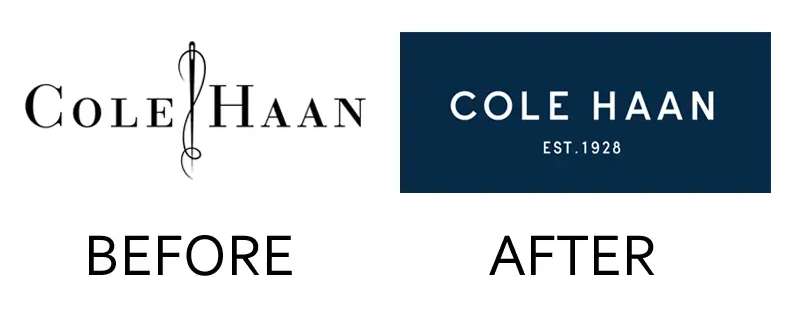
Cole Haan’s visual identity has shifted through distinct eras since 1928.
The brand started with traditional script lettering typical of that period.
Nike’s acquisition in 1988 brought modernization. The 2013 independence marked the most recent significant update.
Each version reflected its moment while honoring heritage.
Original Cole Haan Logo (1928-1970s)
- Years Active: 1928 through the 1970s
- Design Description: Traditional script or serif lettering, often with decorative flourishes common to early American brands
- Color Scheme: Predominantly black and gold, reflecting luxury positioning
- Designer: Unknown, likely in-house or local Chicago design services
- Context: Established during the golden age of American shoemaking when Chicago was a manufacturing hub
- Cultural Significance: Represented quality craftsmanship during the Depression era and post-war prosperity
Nike Era Cole Haan Logo (1988-2012)
- Years Active: 1988 to 2012
- Design Description: Cleaner, more streamlined wordmark with refined spacing and weight
- Color Scheme: Black primary with occasional use of brown tones
- Designer: Nike’s internal brand teams
- Context: Nike purchased Cole Haan to expand into lifestyle and dress footwear categories
- Key Changes from Previous: Modernized letterforms, removed decorative elements, increased legibility
- Cultural Significance: Bridged traditional craftsmanship with athletic innovation (think Nike Air technology in dress shoes)
Current Cole Haan Logo (2013-Present)
- Years Active: 2013 to present
- Design Description: Refined uppercase wordmark with balanced proportions and contemporary sans-serif styling
- Color Scheme: Pure black (#000000) as primary, white for reversed applications
- Designer: Brand team under Apax Partners ownership
- Context: Developed after Nike sold the brand, marking a new chapter of independence
- Key Changes from Previous: Subtle refinements to letter spacing and weight for digital optimization
- Cultural Significance: Represents the brand’s pivot toward younger consumers while maintaining heritage appeal
What Do the Design Elements of the Cole Haan Logo Mean?
The Cole Haan logo communicates through restraint.
Its wordmark approach puts the founders’ names front and center. No symbols. No distractions.
This choice signals confidence. The brand doesn’t need a clever icon to be remembered.
The simplicity also ensures the logo works everywhere, from tiny shoe labels to storefront signage.
Why Did Cole Haan Choose These Specific Colors?
Black serves as the primary brand color. It’s classic and never goes out of style.
For a footwear company rooted in leather goods, black just makes sense. It photographs well against products and reads clearly at any size.
The psychology behind color choices here points toward authority and sophistication.
White provides contrast for reversed applications. Together, this monochrome color palette keeps things timeless.
What Typography Style Is Used in the Cole Haan Logo?
The current logo uses a custom sans-serif font with clean geometric characteristics.
Letter spacing is generous. This creates breathing room that feels premium.
The x-height and stroke weights are balanced for legibility across applications.
Earlier versions leaned more traditional. The current typography reflects modern sensibilities while avoiding trends that might date quickly.
What Are the Hidden Meanings in the Cole Haan Logo?
Honestly, there isn’t much hidden here. And that’s intentional.
The logo’s power comes from what it doesn’t do. No forced symbolism or clever tricks.
Using both founders’ last names carries meaning though. It honors the partnership that started everything in 1928.
The spacing between “Cole” and “Haan” creates subtle visual balance. Two equal parts forming one whole.
How Does the Cole Haan Logo Compare to Competitor Logos?
Among shoe brand logos, Cole Haan sits in interesting company.
Compared to athletic brands, it’s quieter. No swooshes or stripes here.
Against luxury competitors, it holds its own through understatement.
The Clarks logo takes a similar wordmark approach but feels more British and traditional. Timberland’s logo uses a tree symbol alongside text, adding outdoor ruggedness that Cole Haan doesn’t pursue.
The Steve Madden logo skews younger and edgier. Meanwhile, Rockport’s logo shares some DNA with Cole Haan given both brands’ comfort-focused positioning.
What sets Cole Haan apart? That blend of heritage credibility with modern minimalism. Few competitors nail that specific combination.
What Are the Technical Specifications of the Cole Haan Logo?
Official Color Codes
- Primary Color: Black
- Hex: #000000
- RGB: (0, 0, 0)
- CMYK: (0, 0, 0, 100)
- Secondary Color: White
- Hex: #FFFFFF
- RGB: (255, 255, 255)
- CMYK: (0, 0, 0, 0)
Dimensions and Proportions
- Aspect Ratio: Approximately 5:1 (horizontal wordmark)
- Minimum Size: Generally 1 inch width for print, 100 pixels for digital to maintain legibility
- Clear Space: Minimum clear space equal to the height of the letter “C” on all sides
- File Formats: Available as vector graphics (AI, EPS, SVG) and raster formats (JPEG, PNG)
What Cultural Impact Has the Cole Haan Logo Had?

Cole Haan’s logo hasn’t achieved the instant recognition of a Nike swoosh. That’s okay.
Its impact is subtler. The brand helped define what premium American footwear looks like.
For business professionals, seeing “Cole Haan” on a shoe box signals quality without flashiness.
The logo appears in corporate offices and airports worldwide, quietly marking comfortable dress shoes on feet that value function and style equally.
How Does the Cole Haan Logo Fit Into the Overall Brand Identity?
The logo anchors a broader visual system built on restraint and sophistication.
Product photography emphasizes clean backgrounds. Marketing copy stays minimal.
Store interiors use neutral tones with the wordmark as a quiet anchor.
Everything works together. The brand guidelines ensure consistency whether you’re seeing Cole Haan on Instagram or walking past a retail location.
This cohesion matters. A logo is just one piece of brand style that customers experience.
How Should the Cole Haan Logo Be Used?
Official Usage Guidelines
- Do: Maintain clear space around the logo, use approved color variations, scale proportionally
- Don’t: Stretch, rotate, add effects, change colors outside approved palette, or place on busy backgrounds
- Backgrounds: Works best on solid white, black, or neutral backgrounds with sufficient contrast
Accessing Official Assets
- Press and Media: Contact Cole Haan’s corporate communications for official logo files
- Retail Partners: Access through brand portal with proper credentials
- Licensing: Unauthorized use of the Cole Haan trademark is prohibited without written permission
Trademark Protection
The Cole Haan name and logo are registered trademarks. This protects against counterfeit products and unauthorized brand usage.
If you spot fake Cole Haan products using the logo improperly, the brand encourages reporting through their official channels.
FAQ on The Cole Haan Logo
What Does the Cole Haan Logo Look Like?
The Cole Haan logo is a clean wordmark displaying the brand name in uppercase letters.
No symbols. No icons. Just text.
The typography uses a modern sans-serif style with generous letter spacing. Black on white is the standard application for this American shoe brand.
Who Founded Cole Haan and When?
Trafton Cole and Eddie Haan started the company in 1928.
Chicago was home base. They focused on men’s dress shoes and quality leather goods.
The founders’ last names became the brand identity that still exists today, nearly a century later.
Has the Cole Haan Logo Changed Over the Years?
Yes. The logo evolved through several versions since 1928.
Early designs used traditional script lettering. Nike’s ownership from 1988 to 2012 brought modernization.
The current version emerged around 2013 after Apax Partners acquired the brand. Each iteration refined the visual hierarchy.
What Font Does Cole Haan Use in Its Logo?
Cole Haan uses a custom typeface with geometric characteristics.
The font feels contemporary but avoids trendy details. Clean lines and balanced proportions make it work across digital platforms and print materials equally well.
What Colors Are in the Cole Haan Logo?
Black is primary. That’s it.
The brand keeps its color palette minimal. White serves as the secondary color for reversed applications on dark backgrounds.
This simplicity aligns with premium footwear positioning. No gradients or multiple hues needed.
Why Doesn’t Cole Haan Have a Symbol in Its Logo?
Not every brand needs an icon. Cole Haan chose a text-only approach following solid logo design principles.
The founders’ names carry enough weight. A wordmark lets the heritage speak for itself without visual clutter or unnecessary design elements.
Is Cole Haan a Luxury Brand?
Cole Haan sits in the premium footwear category. Not quite luxury, not mass market.
Think accessible quality. The brand competes with other lifestyle shoe companies targeting professionals who want comfort and style together.
Did Nike Own Cole Haan?
Yes. Nike Inc purchased Cole Haan in 1988.
They owned the brand for 24 years. Nike brought athletic technology like Air cushioning into dress shoes during this period.
The partnership ended in 2012 when Nike sold to Apax Partners.
Where Can I Find the Official Cole Haan Logo?
Official logo files require authorization from Cole Haan’s corporate team.
Press contacts and retail partners access assets through brand portals. The trademark is protected, so unauthorized use of the visual identity isn’t permitted.
What Makes the Cole Haan Logo Effective?
Simplicity works. The minimalist design scales perfectly from tiny shoe labels to storefront signs.
Strategic use of white space creates breathing room. The kerning between letters feels intentional. It reads as confident without shouting.
Conclusion
The Cole Haan logo proves that restraint works. Nearly a century of brand history distilled into a simple wordmark.
Trafton Cole and Eddie Haan probably never imagined their names would still mark premium leather goods in 2024. But here we are.
The logo evolution from Chicago startup to global footwear company shows smart storytelling. Each version honored heritage while staying current.
No flashy symbols needed. The brand recognition comes from consistent quality and clear graphic design principles applied across every touchpoint.
Sometimes the best logo is the simplest one.

Renowned for his expertise in logo design and visual branding, Bogdan has developed a multitude of logos for various clients.
His skills extend to creating posters, vector illustrations, business cards, and brochures. Additionally, Bogdan's UI kits were featured on marketplaces like Visual Hierarchy and UI8.
He also wrote in the past years on sites like Design Your Way, WebDesignerDepot, WPDean, Designmodo, Speckyboy, Slider Revolution, and more.
- The Cursor Logo History, Colors, Font, And Meaning - 24 September 2026
- Top 7 Web Design Subscription Services That Replace Full-Time Hires - 24 September 2026
- Canva vs PowerPoint: Which Is Better for Presentations? - 22 September 2026

Bogdan Sandu is a seasoned designer who has been designing websites since 2008. Renowned for his expertise in logo design and visual branding, Bogdan has developed a multitude of logos for various clients. His skills extend to creating posters, vector illustrations, business cards, and brochures. Additionally, Bogdan's UI kits were featured on marketplaces like Visual Hierarchy and UI8. He also wrote in the past years on sites like Design Your Way, WebDesignerDepot, WPDean, Designmodo, Speckyboy, Slider Revolution, and more.
You Might Also Like