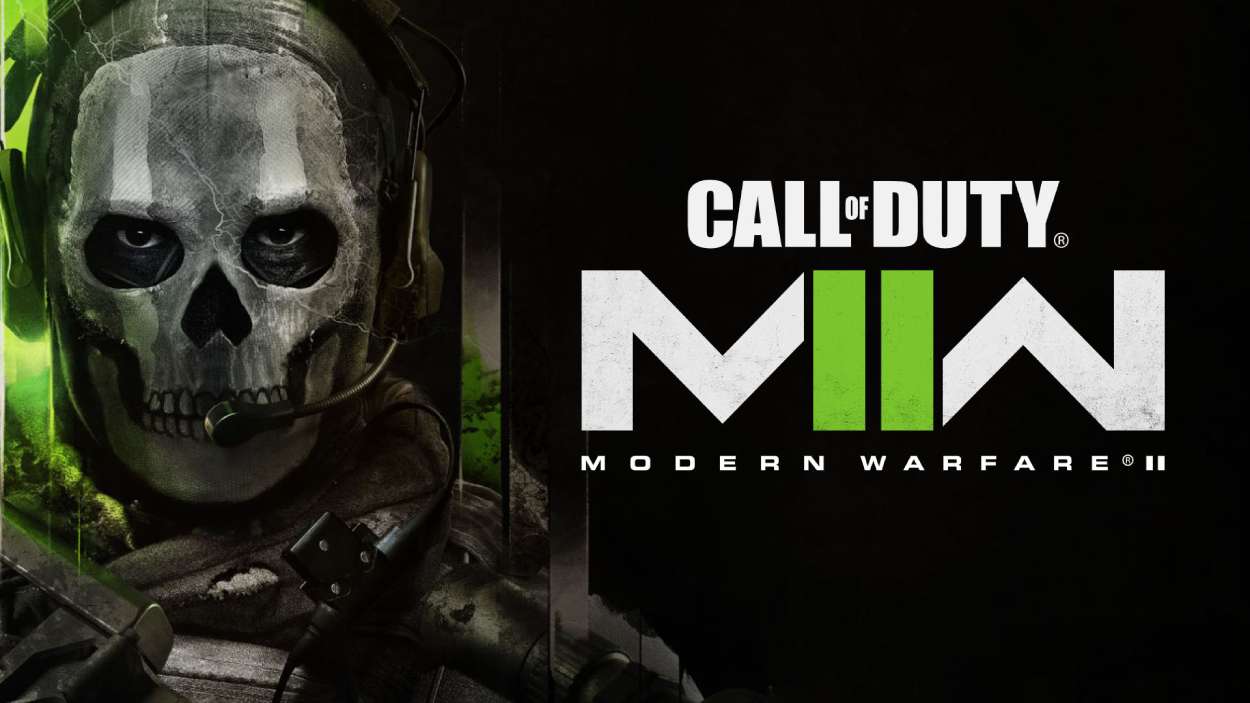
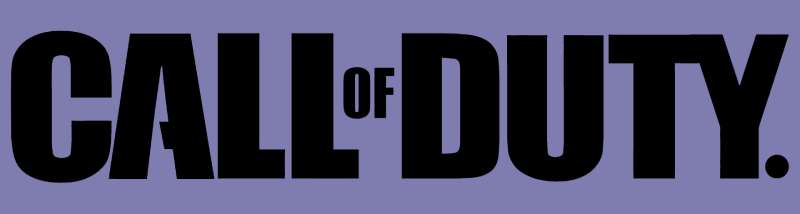
Call of Duty currently uses Hitmarker, a custom proprietary typeface commissioned from type foundry NaN in collaboration with branding studio Koto LA. Activision introduced Hitmarker in 2023 as part of a full franchise rebrand, replacing the long-standing use of Impact, which served as the franchise’s logo font from 2003 until 2023.
Hitmarker is a condensed, geometric sans-serif display typeface built specifically for the Call of Duty brand system. It was not licensed from an existing library. It is a fully bespoke creation, unavailable to the public.
What Type of Font Is Hitmarker?
Hitmarker is a condensed, geometric sans-serif typeface with sharp angular letterforms and a sturdy, blocky construction. The design draws on military hardware aesthetics, with tight letter spacing and high visual weight across all widths.
The family ships as 3 width variants (Normal, Wide, Condensed), each available in 5 fixed weights, plus a separate Hitmarker Text variant optimized for small-scale and body copy use. There is also a Hitmarker VF variable font file that allows fine-tuned control over weight and width axes in a single installable file.
Unlike standard commercial fonts, Hitmarker was engineered for brand versatility across vastly different surfaces: from large-format screens like the Las Vegas Sphere down to mobile UI at small sizes. The x-height is generous, which keeps text readable at small scales without losing its aggressive character.
Hitmarker supports 317 languages across all weights and widths, with 5 exceptions (Thai, Arabic, Korean, Japanese, and Chinese) that require separate font options. For most Latin-based and Cyrillic scripts, a single font file covers the full global audience of the franchise.
Who Designed Hitmarker?
Hitmarker was designed by NaN, an independent type foundry, working directly with Koto LA, the branding agency that led the full Call of Duty rebrand.
The NaN team members credited on the project include Luke Prowse, Jean-Baptiste Morizot, Léon Hugues, Daria Cohen, Florian Runge, and Benjamin Blaess. Koto LA’s involvement started in 2021 and spanned roughly two years, covering not just the typeface but the entire CoD masterbrand system, including logo refinement, franchise guidelines, and seasonal identities for Warzone.
Jowey Roden, Koto’s Chief Creative Officer, described the typeface as something that needed to “bring a distinctive and adaptable design element that could seamlessly integrate with diverse brand touchpoints.” What started as a logo refinement project grew into a full custom type commission. That expansion reflects a broader trend in game branding toward bespoke typography rather than licensed commercial fonts.
Hitmarker is not publicly available for download or licensing. It is a proprietary asset owned by Activision, restricted to official CoD brand use.
What Font Did Call of Duty Use Before?
From 2003 to 2023, the Call of Duty franchise used Impact as its primary logo font. Impact is a realist sans-serif designed by Geoffrey Lee in 1965, originally released by the Stephenson Blake foundry in Sheffield, England. The font was copyrighted in 2011 by Monotype Corporation, though “Impact” remains a trademark of Stephenson Blake (Holdings) Ltd.
That’s 20 years of Impact across the franchise. Over that period, specific sub-series titles used additional or modified fonts. A modified Eurostile Extended Bold (with an inverted W used as M) appeared in the Modern Warfare sub-series logo. The Call of Duty: Modern Warfare 2019 game UI used Bio Sans and ITC Conduit for in-game menus and gun statistics, with Noto Sans appearing in chat windows. Call of Duty: Black Ops Cold War used Courier for tweet-style text within the game.
The switch to Hitmarker came from a specific business need. Activision wanted to unify 23 titles under a single masterbrand. Using a licensed commercial font like Impact across all touchpoints, from esports to mobile to merchandise, created inconsistency in how the brand scaled. A custom typeface resolved that. Hitmarker gave every CoD IP a shared typographic foundation while still leaving room for individual series identities.
Is Hitmarker Free to Use?
No. Hitmarker is a proprietary, custom-commissioned typeface. It is not available on Google Fonts, Adobe Fonts, or any public font platform. Activision owns it exclusively. You cannot download, license, or use it in personal or commercial projects.
Impact, the previous logo font, is similarly not freely available in a clean form. It comes pre-installed on Windows and macOS as a system font, but it is not open-source. Technically you can use it if it’s already on your machine, though its font licensing status through Monotype means redistribution is restricted.
If you want something that looks like Hitmarker or the old CoD Impact style, you’ll need a free alternative (see the section below).
What Are the Best Free Alternatives to the Call of Duty Font?
Since Hitmarker is proprietary and Impact is not open-source, designers often look for similar condensed, heavy fonts for gaming projects, posters, or military-style branding. Here are 5 solid free options:
| Font | Similarity | License | Source |
| Anton | Closest free match to Impact’s condensed heavy weight | Free (OFL) | Google Fonts |
| Oswald | Condensed sans-serif with more refined letterforms | Free (OFL) | Google Fonts |
| Call of Ops Duty | Fan-made font directly inspired by CoD logo lettering | Free (personal + commercial) | DaFont / 1001 Fonts |
| Barlow Condensed | Condensed, military-adjacent, multiple weights | Free (OFL) | Google Fonts |
| Free Neue | All-caps display font with strong vertical presence | Free (OFL) | Google Fonts |
Call of Ops Duty is worth a specific mention. It was created by Chequered Ink, directly inspired by the original CoD logo lettering and Impact. It’s free for both personal and commercial use, making it the most appropriate choice for CoD-themed fan art, thumbnails, or game-adjacent design work.
Anton is the closest typographic match to Impact for general use. It was designed specifically for digital screens, so it renders more cleanly than Impact in web and app contexts, which makes it a better choice for anything beyond print.
How to Use a Call of Duty Style Font in Your Projects
In Canva
Search “Anton” or “Oswald” in Canva’s font selector. Both are available by default. For Call of Ops Duty, you’d need to upload the font to Canva after downloading it from DaFont.
Set tracking slightly tighter than default to get closer to CoD’s condensed feel. Adding a dark background with high contrast text is the fastest way to get that military FPS look without any custom assets.
In Photoshop
Anton and Call of Ops Duty both install system-wide, so they’ll appear automatically in Photoshop’s font dropdown once installed. If you want Hitmarker-like weight variation, use Barlow Condensed and cycle through its Black or ExtraBold weights.
One thing that makes CoD’s game UI typography distinct is tight leading combined with high contrast against dark or textured backgrounds. Recreating that in Photoshop means working with layer styles, specifically outer glow or drop shadow at low opacity, rather than just changing the font itself. The font is maybe 40% of the effect. The treatment is the rest.
For adding fonts to Photoshop specifically, you can follow a step-by-step guide here. Same goes if you’re working in Illustrator or Figma.
In CSS (Web)
Anton is available via Google Fonts, so embedding it is straightforward:
“ <link href="https://fonts.googleapis.com/css2?family=Anton&display=swap" rel="stylesheet"> `
Then in your CSS:
` font-family: 'Anton', Impact, sans-serif; `
That stack puts Anton first, falls back to Impact if it’s available locally, then falls back to any system sans-serif. Works well for gaming sites, stream overlays, or YouTube thumbnail mockups built in the browser.
Why Did Call of Duty Choose These Fonts?
Impact was never a deliberate, considered brand choice. The original CoD games from 2003 used it because it was everywhere. It was pre-installed on Windows, bold enough to read at small sizes, and aggressive enough to fit a military shooter aesthetic. Practical, not strategic.
Hitmarker was the opposite. It was a deliberate, two-year commission driven by a very specific problem: the franchise had 23 separate titles, each with its own visual identity. Black Ops looked nothing like Modern Warfare. Warzone had its own direction. From a brand standpoint, that fragmentation weakened the parent franchise’s logo and identity across platforms.
Koto identified that a custom typeface could function as a unifying brand layer without forcing every sub-series to look identical. Hitmarker carries the CoD visual identity at the masterbrand level, while each IP like Black Ops or Warzone can still have its own color system, imagery, and tone. The typographic hierarchy across the franchise now runs through a single, controlled system.
The name “Hitmarker” is a direct reference to the in-game mechanic that confirms a successful shot. Sharp angles and military-grade construction are baked into the letterforms at the concept level. This isn’t incidental. The font psychology here is deliberate: every character in Hitmarker is meant to feel like precision, not decoration.
The variable font format of Hitmarker VF also has a practical rationale. A single font file that adjusts weight and width across contexts reduces the number of assets that brand teams, agencies, and licensed partners need to manage. At the scale CoD operates, that matters. This is also why the typeface supports 317 languages out of the box. The franchise is genuinely global, and a brand system that breaks across regions because of font limitations isn’t a functional brand system.
Other games in the FPS genre (think Overwatch or Fortnite) have made similar moves toward bespoke typefaces in recent years. CoD’s Hitmarker fits into that broader shift in gaming typography, where major franchises treat type as brand infrastructure rather than an afterthought.
FAQ on What Font Does Call of Duty Use
What is the official Call of Duty font?
The current official CoD font is Hitmarker, a custom typeface commissioned from type foundry NaN.
It replaced Impact in 2023 as part of a full franchise rebrand led by branding studio Koto LA.
Did Call of Duty always use Hitmarker?
No. From 2003 to 2023, the franchise used Impact, a realist sans-serif designed by Geoffrey Lee in 1965.
Hitmarker was introduced specifically to unify the brand across all 23 CoD titles under one consistent visual identity.
What font does the Call of Duty Black Ops series use?
The Black Ops series has used various custom lettering styles across its titles, separate from the franchise masterbrand font.
Hitmarker now serves as the overarching franchise font, though individual series retain distinct visual identities within that system.
What font does Call of Duty: Modern Warfare use?
The Modern Warfare 2019 UI used Bio Sans for menus, ITC Conduit for gun statistics, and Noto Sans in chat windows.
The “Modern Warfare” logo text used a modified Eurostile Extended Bold with an inverted W substituted as the M.
Is the Call of Duty font free to download?
Hitmarker is not publicly available. It is a proprietary asset owned by Activision, restricted to official brand use only.
The closest free alternative is Anton on Google Fonts, or Call of Ops Duty from DaFont for CoD-specific fan projects.
What font looks most like the Call of Duty logo?
Call of Ops Duty, created by Chequered Ink, is the closest match. It was designed specifically to mimic the original CoD logo lettering.
It is free for personal and commercial use, available on DaFont and 1001 Fonts.
Who made the Hitmarker font?
Hitmarker was designed by NaN type foundry, with team members Luke Prowse, Jean-Baptiste Morizot, and Léon Hugues among those credited.
The project was commissioned through Koto LA as part of a two-year collaboration with Activision on the CoD masterbrand identity.
What font does Call of Duty Warzone use?
Warzone uses Hitmarker as its primary brand typeface following the 2023 rebrand.
Before the rebrand, the Modern Warfare 2019 Warzone UI relied on Bio Sans for most on-screen text across loading screens and menus.
Is Hitmarker a variable font?
Yes. Hitmarker VF is a variable font that allows fine-tuned control over weight and width in a single installable file.
The standard fixed version ships as 15 individual OTF files across 3 widths and 5 weights, plus a separate Hitmarker Text variant for body copy.
What font should I use for a Call of Duty-style design?
Anton (Google Fonts) is the most practical free option for CoD-inspired military typography in posters, thumbnails, or game UI mockups.
For something closer to the actual logo lettering, use Call of Ops Duty from Chequered Ink. Free for commercial use.
Conclusion
So, what font does Call of Duty use? Since 2023, the answer is Hitmarker, a fully custom typeface built by NaN foundry and Koto LA to unify the franchise’s CoD branding across every title and platform.
Before that, Impact carried the logo for two decades. A bold, condensed military typeface that did the job, even if it was never designed specifically for the franchise.
For designers who want a similar aggressive sans-serif style, Anton and Call of Ops Duty are the most practical free options available today.

Renowned for his expertise in logo design and visual branding, Bogdan has developed a multitude of logos for various clients.
His skills extend to creating posters, vector illustrations, business cards, and brochures. Additionally, Bogdan's UI kits were featured on marketplaces like Visual Hierarchy and UI8.
He also wrote in the past years on sites like Design Your Way, WebDesignerDepot, WPDean, Designmodo, Speckyboy, Slider Revolution, and more.
- The Windsurf Logo History, Colors, Font, And Meaning - 10 October 2026
- How to Remove Background From Product Photos (No Photoshop) - 10 October 2026
- How Designers can Build a Stronger Online Creative Identity - 9 October 2026

Bogdan Sandu is a seasoned designer who has been designing websites since 2008. Renowned for his expertise in logo design and visual branding, Bogdan has developed a multitude of logos for various clients. His skills extend to creating posters, vector illustrations, business cards, and brochures. Additionally, Bogdan's UI kits were featured on marketplaces like Visual Hierarchy and UI8. He also wrote in the past years on sites like Design Your Way, WebDesignerDepot, WPDean, Designmodo, Speckyboy, Slider Revolution, and more.
You Might Also Like