Those flowing, whiplash curves aren’t just pretty decoration. They’re visual echoes of a movement that transformed design forever.
Art nouveau fonts capture the organic elegance of the Belle Époque, when Alphonse Mucha’s posters and Paris Metro signs defined a new aesthetic. These typefaces blend botanical motifs with architectural lettering, creating ornamental letterforms that feel both vintage and surprisingly modern.
Whether you’re working on wedding invitations, branding materials, or poster design projects, understanding these decorative typefaces opens up possibilities most designers miss.
This guide covers everything from identifying authentic art nouveau characteristics to pairing these elegant display fonts with contemporary typography. You’ll discover where to find quality options, how to avoid common mistakes, and when these stylized characters actually work (spoiler: not everywhere).
Art Nouveau Fonts
| Font Name | Primary Style Characteristic | Decorative Elements | Best Use Case |
|---|---|---|---|
| Aetrina | Elegant organic curves with botanical influence | Flowing serifs with natural flourishes | Wedding invitations, luxury branding |
| Bagerich | Bold geometric Art Nouveau with strong verticals | Angular ornamental details with sharp terminals | Poster designs, architectural signage |
| Solente | Delicate script with whimsical character alternates | Graceful swashes and connecting ligatures | Editorial headers, feminine product packaging |
| De Arloy | Classic Parisian-inspired letterforms with refinement | Subtle art deco transitions with minimal embellishment | Restaurant menus, upscale boutique branding |
| Hornbuckle | Vintage display type with theatrical presence | Ornate inline detailing with high contrast strokes | Event posters, vintage-themed advertisements |
| Melvca | Contemporary Art Nouveau revival with clean lines | Simplified organic motifs with modern proportions | Modern branding, cosmetics packaging |
| Wallington Pro | Versatile display serif with extended glyph set | Multiple stylistic alternates with decorative capitals | Book covers, editorial design, branding systems |
| Elodie | Romantic handwritten style with natural flow | Organic flourishes with variable baseline | Personal branding, lifestyle blogs, stationery |
| Oracle | Mystical decorative display with esoteric influence | Intricate symbolic details with celestial motifs | Occult branding, tarot cards, spiritual products |
| Affair | Sophisticated condensed serif with tall x-height | Refined serif details with elegant proportions | Magazine mastheads, luxury fashion branding |
| Taylor | Handcrafted script with authentic brush texture | Natural ink variations with expressive terminals | Artisanal packaging, creative agency branding |
| Roseva | Floral-inspired display with botanical accuracy | Petal-shaped terminals with vine-like connectors | Garden events, floral shop branding, nature products |
| Alathena | Classical Art Nouveau with symmetrical structure | Balanced ornamental elements with consistent rhythm | Museum exhibitions, classical music branding |
| Terra Cotta | Earthy retro display with warm personality | Rounded corners with playful counter spaces | Cafe branding, artisan food packaging, bohemian themes |
| Kenjo | Japanese-influenced Art Nouveau fusion design | Eastern calligraphic elements with Western curves | Asian fusion restaurants, cultural event design |
Aetrina
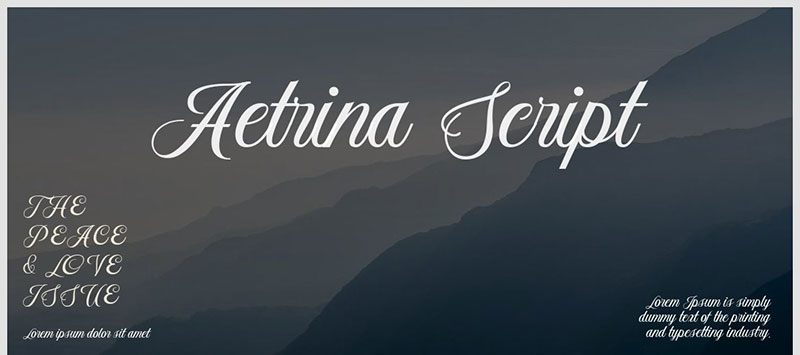
Aetrina brings organic beauty and flowing letterforms to any design project that needs elegance.
The typeface features sweeping curves and botanical-inspired details that work across wedding invitations, social media graphics, and product designs.
Design Characteristics
Organic flowing forms. The letters follow natural curves rather than geometric precision.
Curved lines dominate the character set. Each glyph connects harmoniously with adjacent letters through carefully designed terminals.
The font includes both uppercase and lowercase Latin characters with extensive punctuation support. Alternative characters and ligatures expand creative possibilities beyond basic letterforms.
Line weight varies subtly throughout each character, creating visual interest without sacrificing readability.
Use Cases
Works across branding projects where sophistication matters.
Wedding materials benefit from the romantic aesthetic. Product packaging design gains depth through the ornamental qualities.
Social media designers can deploy Aetrina for attention-grabbing posts that need to stand out from generic sans-serif options. The decorative nature makes it unsuitable for body text but perfect for headlines and featured content.
Pairing Recommendations
Combine with clean sans-serif fonts for body copy.
Simple geometric sans serifs like Futura or Montserrat create strong contrast against the ornate capitals. Neutral typefaces let Aetrina dominate without competing for attention.
Avoid pairing fonts with equally decorative characteristics.
Bagerich

Bagerich merges classic Art Nouveau elegance with contemporary design needs through its refined letterforms and multilingual capabilities.
Design Characteristics
Sleek sophistication defines the structure. Stylistic alternates and ligatures add layers of visual refinement.
The font balances ornamental flair with functional readability. Curves appear throughout but never overwhelm the basic letterform integrity.
Each character maintains consistent weight distribution while incorporating decorative elements at strategic points. Multiple language support expands usability beyond English-only projects.
Alternative glyphs provide design flexibility without requiring separate font files.
Use Cases
Logotype design benefits from the distinctive personality.
Magazine layouts gain sophistication through headline applications. Branding projects requiring both elegance and uniqueness find Bagerich suitable.
Works equally well for small-scale boutique projects and large commercial campaigns. The multilingual support makes it practical for international brands.
Pairing Recommendations
Pair with serif fonts featuring transitional characteristics.
Garamond or Baskerville complement without competing. These pairings maintain visual hierarchy while establishing clear roles.
Modern sans serifs work for supporting text. Avoid script fonts that would create decorative overload.
Solente
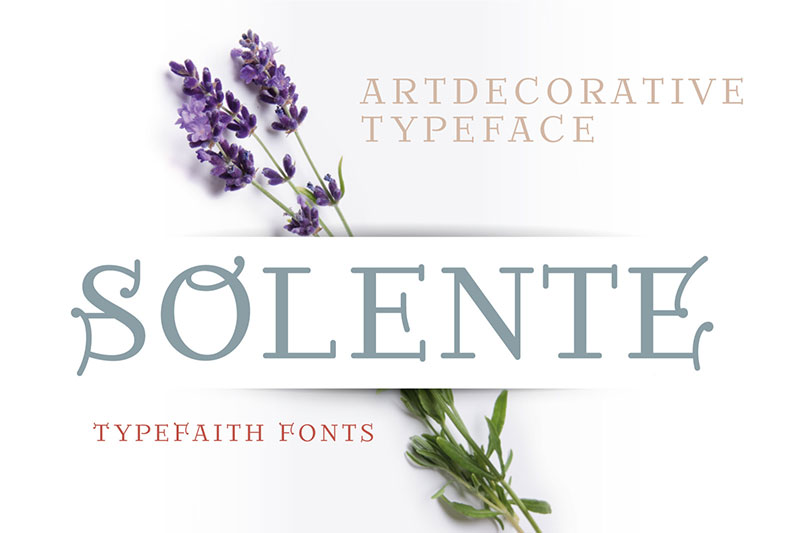
Solente merges early 1900s Art Deco and Jugendstil influences into a versatile slab serif perfect for contemporary projects needing vintage character.
Design Characteristics
Slab serif foundation meets geometric precision. The structure combines clean lines with Art Nouveau curves.
Stylistic alternates exist for all capital letters. Extra ligatures replace specific letter combinations automatically in supported software.
The font balances the ornamental nature of Art Nouveau with the structural clarity expected in modern design work. Each character maintains legibility while incorporating period-appropriate flourishes.
Weight distribution stays consistent, making it suitable for both display and subhead applications.
Historical Context
Created by Leon Hulst through TypeFaith Fonts, drawing inspiration from early 1900s European design movements.
The design synthesizes multiple historical influences rather than copying any single source. This approach creates authenticity without limiting modern applications.
Use Cases
Headline text benefits from the strong presence.
Subhead applications work well due to maintained readability at smaller sizes. Vintage aesthetic projects gain authenticity through historically informed letterforms.
Commercial packaging requiring nostalgic appeal finds Solente appropriate. The clean geometry prevents the font from feeling outdated despite period influences.
Pairing Recommendations
Match with geometric sans serifs for body text.
Avenir or Circular work well for contemporary contrast. These combinations respect the vintage headline character while keeping overall designs modern.
Avoid pairing with other decorative display fonts. Simple supporting typefaces let Solente carry the visual weight.
De Arloy
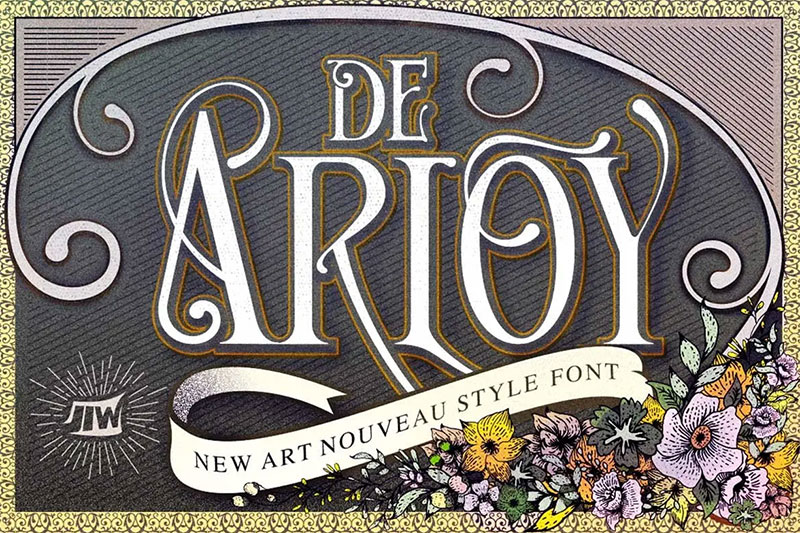
De Arloy captures the feminine elegance of 1890-1910 Art Nouveau period through ornate letterforms suitable for upscale branding and packaging.
Classic typography principles merge with decorative Victorian-inspired details throughout the character set.
Design Characteristics
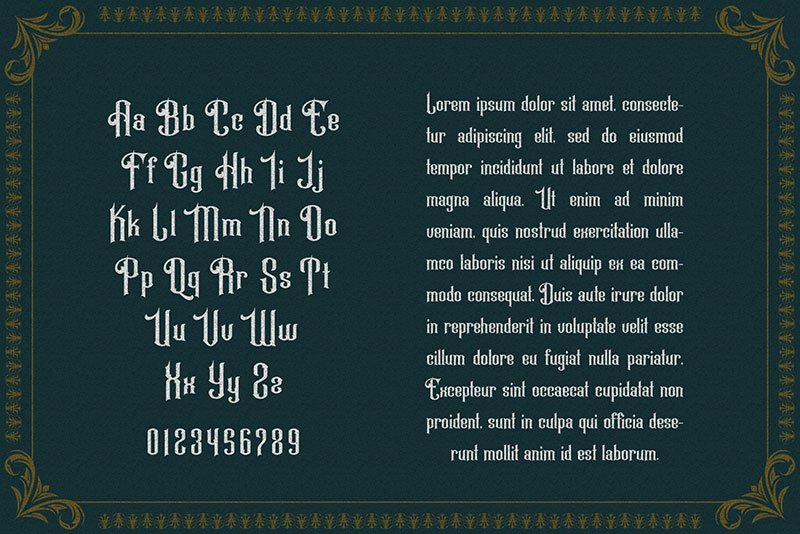
Elaborate ornamentation defines the style. Uppercase and lowercase characters both feature decorative elements.
Ligatures and alternates expand creative options. The OpenType features include multiple stylistic choices for key letters.
Curved lines dominate but never compromise character recognition. Each letter maintains distinct identity while contributing to cohesive word shapes.
Numbers and punctuation match the ornamental quality of letter characters.
Historical Context
Design period: 1890-1910 Art Nouveau movement. The typeface references classic Belle Epoque aesthetics.
Victorian influences appear through the elaborate flourishes and decorative terminals. This places it firmly within the ornamental typography tradition of turn-of-century Europe.
Use Cases
Wine packaging gains sophisticated appeal.
Classic shop signage benefits from the historical authenticity. Coffee shop branding finds appropriate vintage character.
Movie titles requiring period-appropriate lettering can deploy De Arloy effectively. The ornate nature limits body text use but excels in display applications.
Pairing Recommendations
Combine with minimalist design elements and clean sans serifs.
Inter or Helvetica provide neutral contrast. These pairings prevent visual competition while maintaining clear communication hierarchy.
Consider using generous white space to let the ornate characters breathe.
Hornbuckle
Hornbuckle fuses Victorian styling with western font elements, creating a versatile vintage typeface for liquor labels, packaging, and badge designs.
The font offers alternative characters and multilingual support across OTF and TTF formats.
Design Characteristics
Victorian ornamentation meets western typography. Decorative flourishes appear throughout the character set.
Alternative characters expand design possibilities. Each variant maintains stylistic consistency while offering distinct visual options.
The letterforms balance elaborate decoration with functional readability. Thick and thin strokes create dynamic rhythm throughout text blocks.
Multilingual character support extends usability beyond English markets.
Use Cases
Liquor label design benefits from the authentic vintage appeal.
Badge designs gain character through the ornamental qualities. Packaging design projects requiring nostalgic branding find Hornbuckle appropriate.
Poster design applications work well for events or products targeting vintage aesthetics. The decorative nature makes it unsuitable for lengthy text blocks.
Pairing Recommendations
Works with condensed sans serifs for supporting information.
Franklin Gothic Condensed or similar compressed typefaces provide functional contrast. These pairings maintain balance while letting Hornbuckle dominate visually.
Script fonts should be avoided to prevent decorative overload.
Melvca
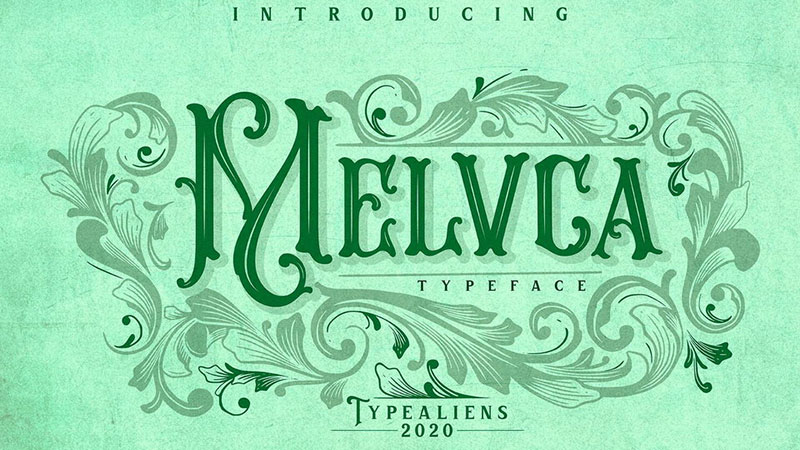
Melvca draws inspiration from botanical elements, creating a display font ideal for floral-themed designs and organic branding projects.
Leaves and tendrils influence the letterform construction, reflecting the natural world emphasis common in Art Nouveau work.
Design Characteristics
Botanical motifs shape the letterforms. Organic curves mimic plant growth patterns.
Alternative characters provide stylistic variety. The font includes vector ornaments, illustrations, and badges as bonus elements.
Both uppercase and lowercase letters maintain the natural aesthetic while preserving readability. Decorative elements integrate seamlessly rather than appearing as afterthoughts.
Number and punctuation designs echo the organic theme established by letter characters.
Historical Context
Inspired by Art Nouveau’s nature-focused design philosophy. The movement celebrated organic forms and natural patterns.
Turn-of-century decorative arts emphasized botanical subjects, which this font references through its structural choices.
Use Cases
Beer logo design gains authentic period character.
Liquor labels benefit from the sophisticated botanical aesthetic. Badge designs for organic or natural product lines find appropriate visual language.
Branding projects emphasizing natural ingredients or traditional processes can deploy Melvca effectively. The included vector elements expand design possibilities beyond typography alone.
Pairing Recommendations
Pair with transitional serif typefaces for supporting text.
Times New Roman or Georgia provide familiar readability against the decorative display font. These combinations maintain professional appearance while incorporating artistic flair.
Avoid geometric sans serifs that would clash with the organic aesthetic.
Wallington Pro

Wallington Pro merges Old English and Art Nouveau influences through 721 glyphs including 268 ligatures, creating an ornamental yet functional typeface.
The font delivers vintage elegance through curved lines inspired by natural forms and 19th-century design principles.
Design Characteristics
721 glyphs create extensive typographic possibilities. 268 unique ligatures enable organic text shaping.
Ten stylistic sets provide alternate alphabets for varied design approaches. Contextual alternates adjust automatically based on surrounding letters.
Over 30 catchwords add decorative elements to designs. Old Style numerals maintain period authenticity.
The font balances elaborate ornamentation with maintained legibility through careful attention to letterform structure and spacing.
Historical Context
Designed by D.S. Sjahputra, published by Zeune Type Foundry.
Draws from mid-12th century Old English typography and 19th-century Art Nouveau. This dual influence creates unique character combining medieval weight with organic Art Nouveau curves.
The design respects historical sources while remaining practical for contemporary applications.
Use Cases
Digital lettering projects benefit from the extensive glyph library.
Print materials gain sophisticated vintage character. Logo design projects requiring distinctive personality find abundant options.
Poster design, t-shirt graphics, and packaging all suit Wallington Pro’s experimental nature. The variety of stylistic sets prevents repetitive appearance across multiple projects.
Fantasy book covers frequently deploy this font for title treatments.
Pairing Recommendations
Combine with modern geometric sans serifs for body text.
Avenir, Circular, or Brandon Grotesque provide clean contrast against ornamental headlines. These pairings establish clear typographic hierarchy while maintaining contemporary feel.
Simple script fonts can work for accents if used sparingly. Avoid multiple decorative typefaces in single compositions.
Elodie
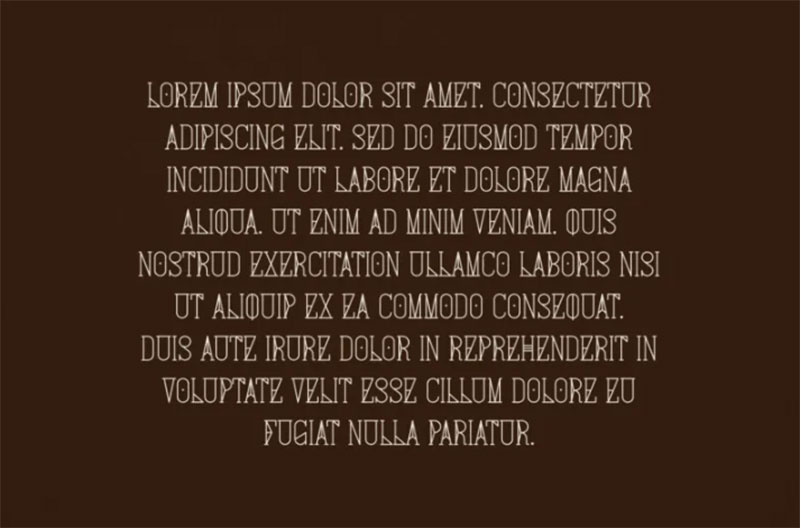
Elodie delivers hand-drawn Art Nouveau character through brush pen construction, offering all-caps design with quirky uppercase alternatives.
Created by Franzi Paetzold, the font brings artisanal authenticity to titles, quotes, and product names.
Design Characteristics
Hand-drawn with brush pen creates organic texture. Each character shows natural variation from manual construction.
All-caps format with two character sets: standard lowercase positions provide regular letters while uppercase slots contain quirky alternatives.
Multilingual support includes Western, Central, and Eastern European languages. The brush pen construction creates varied line weights within individual letters.
Character shapes balance readability with artistic personality. The handmade quality distinguishes it from digitally perfect geometric fonts.
Historical Context
Created by Franzi Paetzold under the Franzi draws foundry name.
The design references Art Nouveau’s embrace of handcrafted artistry over industrial uniformity. This approach honors the movement’s rejection of mass production aesthetics.
Use Cases
Title treatments benefit from the distinctive hand-drawn quality.
Short quotes work well due to maintained legibility at display sizes. Product naming gains personality through the quirky uppercase alternates.
Best suited for projects requiring artisanal or boutique aesthetics. The all-caps format limits long-form text applications but excels in attention-grabbing display use.
Pairing Recommendations
Works with clean serif fonts for descriptive text.
Garamond or Caslon provide traditional elegance without competing visually. These combinations balance handmade character with formal readability.
Simple sans serifs like Helvetica or Arial work for functional information. Avoid other script or brush fonts that would muddy the aesthetic.
Oracle
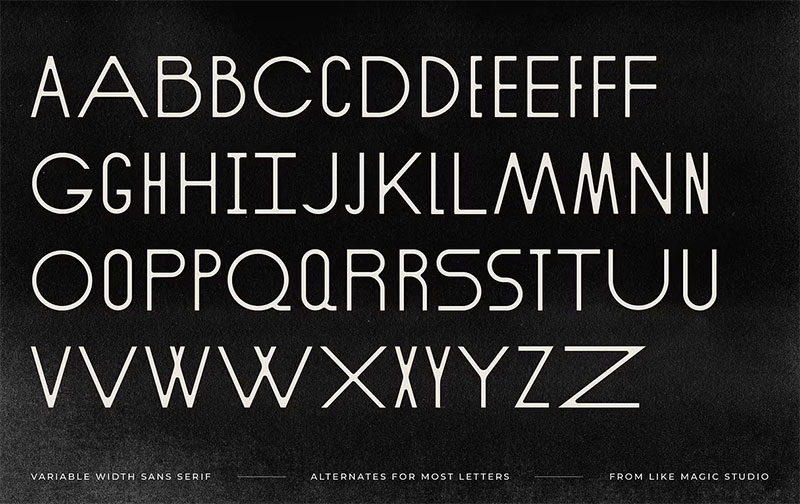
Oracle combines handcrafted authenticity with vintage sensibility through inline and regular versions suitable for display applications.
The bold hand-lettering approach creates immediate visual impact for projects requiring period character.
Design Characteristics
Two versions expand design flexibility. Inline and regular styles offer distinct aesthetic choices for different contexts.
Handcrafted construction shows throughout the letterforms. Each character maintains vintage authenticity while remaining legible at display sizes.
The font includes uppercase and lowercase Latin characters plus international character support. Numbers and punctuation match the vintage aesthetic established by letter characters.
Bold weight makes it suitable for attention-grabbing applications where subtle typography wouldn’t work.
Use Cases
Branding projects benefit from the distinctive vintage personality.
Poster design applications gain authentic period character through the handcrafted quality. Quote graphics work well due to maintained readability.
Logo development finds appropriate vintage language. Movie titles, music projects, and invitation designs all suit Oracle’s bold presence.
The inline version adds decorative interest for special applications. Regular version provides cleaner alternative for contexts requiring less ornamentation.
Pairing Recommendations
Combine with neutral sans serifs for body text.
Helvetica or Arial provide functional contrast without competing. These pairings let Oracle dominate visually while maintaining practical information delivery.
Transitional serif fonts work for more formal contexts. Avoid other decorative display fonts that would create visual competition.
Affair
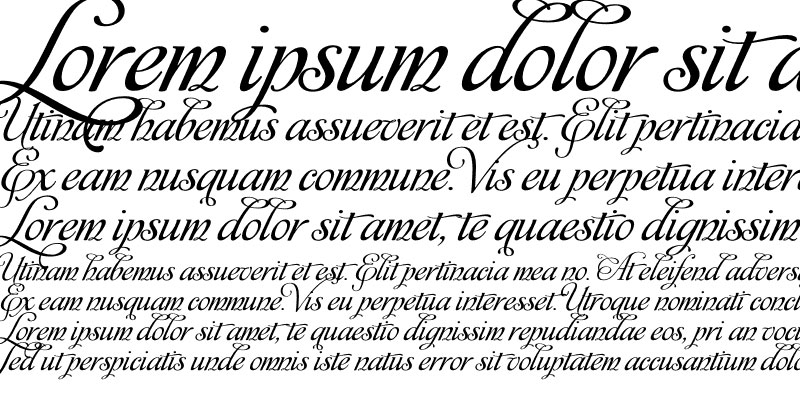
Affair delivers old-school Art Nouveau character through extensive ligatures enabling organic text shapes.
The all-caps format creates classic lettering compositions suitable for posters, flyers, and logo designs.
Design Characteristics
Extensive ligatures create organic flow. Letter combinations connect seamlessly for natural word shapes.
Standard character set includes uppercase letters, numbers, and punctuation. The ligature collection expands far beyond typical offerings.
Each character maintains Art Nouveau sensibility through curved lines and decorative terminals. The style references turn-of-century poster art without copying specific historical sources.
All-caps construction suits display applications. Lowercase options don’t exist, focusing the design on headline use.
Historical Context
Art Nouveau style inspiration. The design captures period aesthetics through ornamental details and organic letterforms.
Created by Gleb Guralnyk, the font synthesizes vintage influences into contemporary practicality. Historical authenticity meets modern technical requirements.
Use Cases
Classic lettering compositions find appropriate stylistic language.
Poster and flyer designs gain authentic vintage character. Logo design projects requiring distinctive personality benefit from the ornamental qualities.
Best suited for projects embracing retro aesthetics. Modern minimalist contexts wouldn’t suit the decorative nature.
Bonus vector graphics (included with some versions) expand design possibilities beyond typography alone. The illustration of a woman in foliage adds thematic elements.
Pairing Recommendations
Works with simple geometric sans serifs.
Futura or Avenir provide clean supporting text without stylistic competition. These combinations establish clear visual hierarchy through dramatic stylistic difference.
Script fonts should be avoided to prevent decorative overload.
Taylor
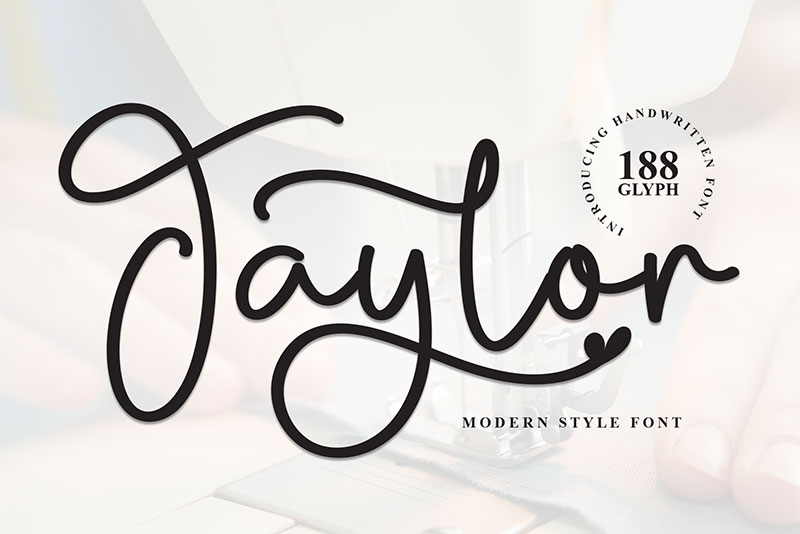
Taylor blends classic Art Nouveau elegance with modern sensibility through multiple weights and extensive OpenType features.
The minimalist approach delivers vintage character without overwhelming contemporary design contexts.
Design Characteristics
Four weights provide typographic flexibility. From thin to bold, each weight maintains stylistic consistency.
Beautiful ligatures appear throughout the character set. Stylistic alternates expand design options beyond basic letterforms.
All-caps format focuses on display applications. The letterforms balance ornamental details with maintained legibility.
Decorative elements integrate naturally rather than appearing forced. Multilingual support extends usability across multiple markets.
Historical Context
Inspired by Art Nouveau and Art Deco movements. The design references both periods without strictly copying either.
Sometimes marketed as “Classy Taylor,” the font synthesizes historical influences into versatile modern typeface. This dual influence creates unique character combining organic curves with geometric precision.
Use Cases
Branding projects gain sophisticated vintage appeal.
Logo design applications benefit from the weight variety. Product packaging finds appropriate period character without feeling outdated.
Magazine headers work well due to attention-grabbing presence. The font excels as stylish text overlays on background images.
Clothing branding applications suit the elegant aesthetic. Wedding invitations and upscale event materials find appropriate sophistication.
Pairing Recommendations
Pair with clean sans-serif fonts for body copy.
Modern grotesques like Aktiv Grotesk or Inter provide functional text delivery. These pairings maintain typographic hierarchy while keeping overall aesthetic contemporary.
Simple slab serif fonts can work for supporting heads. Avoid multiple decorative typefaces in single designs.
Roseva

Roseva captures the transitional French art decade between Art Nouveau and Art Deco through elegant letterforms combining both movements’ characteristics.
Classic typography principles merge with period-appropriate features for authentic vintage appeal.
Design Characteristics
Transitional styling bridges two movements. Geometric precision meets organic curves throughout the character set.
Uppercase and lowercase characters both feature decorative elements. Numbers and punctuation maintain stylistic consistency with letter characters.
Ligatures and alternates provide design flexibility. Multilingual support expands usability beyond English-language projects.
The font works at multiple sizes from short text blocks to long passages. This versatility distinguishes it from display-only Art Nouveau fonts.
Historical Context
French art decade inspiration (1900s-1920s). The design period marks the transition from flowing Art Nouveau to geometric Art Deco.
Created by Keristyper Studio, drawing from the Belle Epoque aesthetic. This historical moment produced distinctive visual language that informed modern graphic design.
Use Cases
Logo design projects benefit from the sophisticated character.
Social media graphics gain vintage appeal without sacrificing readability. Movie and book titles find appropriate period styling.
The font handles both short and longer text applications. This makes it practical for projects requiring typography at multiple levels.
Secondary text pairings with sans or serif fonts work well due to the balanced letterforms.
Pairing Recommendations
Combines effectively with modern sans serifs.
Circular or Brandon Grotesque provide contemporary contrast against vintage display text. These pairings bridge historical and modern design sensibilities.
Transitional serifs like Baskerville work for more traditional contexts.
Alathena
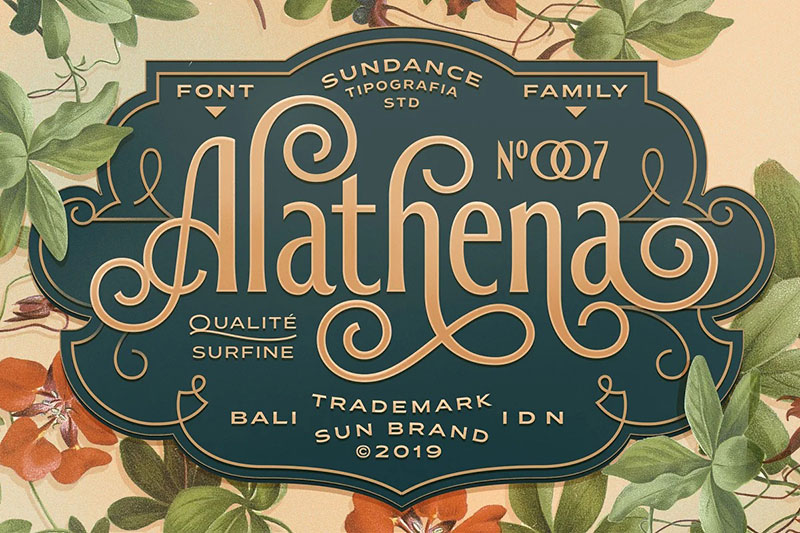
Alathena synthesizes French Art Nouveau and Art Deco influences through six weights and two distinct styles offering extensive creative flexibility.
Over 400 swash characters and complex ligatures enable sophisticated typographic hierarchy across multiple applications.
Design Characteristics
Six weight options from thin to extra bold. Each weight maintains stylistic consistency while offering distinct visual presence.
Two style variations expand design possibilities: Alternative Swash and Modern Deco. Modified ligatures create organic letter connections.
Matching small caps exist for all weights. Old Style figures provide period-appropriate number styling.
Over 400 swash characters enable extensive decorative options. Full ligature set includes 20+ discretionary combinations.
Multilingual support covers 75+ languages through Latin Pro character set.
Historical Context
Designed by Cahya Sofyan, published by Studio Sun.
French art decade between Art Nouveau and Art Deco provides dual inspiration. The design captures transitional period aesthetics while remaining practical for contemporary use.
Use Cases
Invitations benefit from the elegant swash characters.
Product labels gain sophisticated vintage appeal. Branding projects requiring versatile weight options find Alathena suitable.
The extensive glyph library enables complex typographic compositions. Editorial designs can establish clear hierarchy through weight variations alone.
Fashion-related projects suit the elegant aesthetic. Luxury product packaging finds appropriate visual language.
Pairing Recommendations
Works with neutral geometric sans serifs.
Gotham or Montserrat provide functional body text without competing stylistically. These pairings let Alathena’s decorative qualities dominate.
Simple script fonts can work sparingly for accents. Avoid multiple ornamental typefaces in single compositions.
Terra Cotta
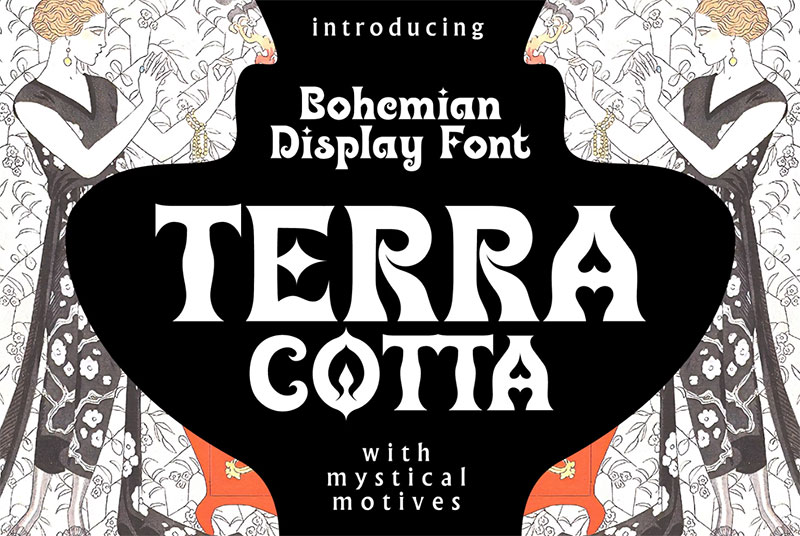
Terra Cotta merges mystical and Art Nouveau motifs through Bohemian styling decorated with swirls and peaks suitable for spiritual design themes.
Created by Viktoryia Strukouskaya and Viktor Strukouski under Struvictory.art, the font targets niche aesthetic applications.
Design Characteristics
Bohemian decorative elements define the style. Swirls and peaks appear throughout letter characters.
Mystical motifs integrate naturally into letterform construction. The design balances ornamental flourishes with maintained character recognition.
Art Nouveau influences appear through organic curves and asymmetrical balance. Modern display font functionality meets historical aesthetic references.
Extensive language support includes English, French, German, Italian, Spanish, Portuguese, Danish, Norwegian, Swedish, Finnish, Estonian, and Turkish.
Historical Context
Art Nouveau movement influence. The design references period aesthetics while targeting contemporary niche markets.
Created specifically for mystical, spiritual, and handcraft-themed projects. This focused application separates it from general-purpose Art Nouveau fonts.
Use Cases
Tarot and mysticism designs find appropriate visual language.
Spirituality and fortune-telling applications suit the mystical aesthetic. Handcraft projects (ceramics, candle making, soap production) benefit from the artisanal character.
Bohemian-themed branding gains authentic stylistic foundation. The decorative nature makes it unsuitable for corporate or minimalist contexts.
Best deployed in contexts where mystical or spiritual themes align with project goals.
Pairing Recommendations
Combine with simple serif fonts for supporting text.
Garamond or similar traditional serifs provide readable body copy without competing. These pairings maintain proximity between decorative and functional elements.
Clean sans serifs work for practical information. Avoid other mystical or decorative fonts that would muddy the aesthetic.
Kenjo
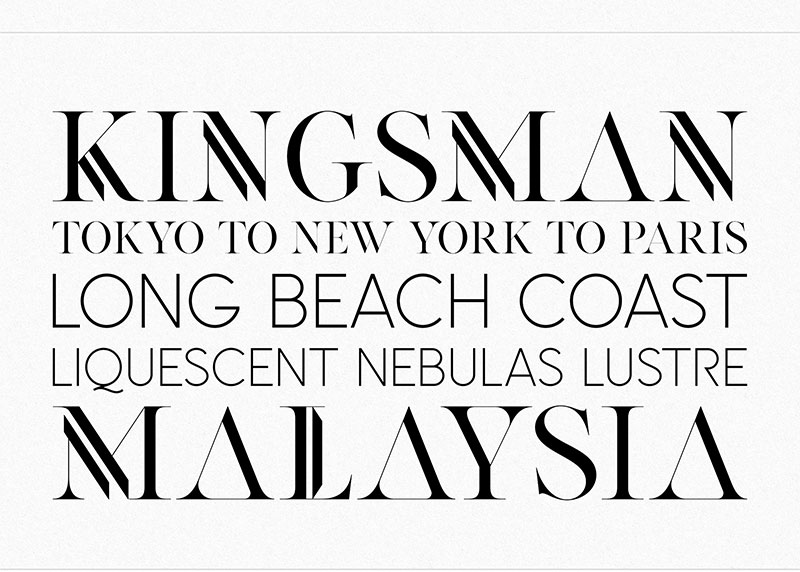
Kenjo fuses Japanese and Art Deco influences through uppercase character sets available in multiple weights for display applications.
Created by Anthony James, the font offers both versatile serif (Kenjo I) and stylized fashion-forward (Kenjo II) options.
Design Characteristics
Japanese design principles meet Art Deco geometry. The fusion creates distinctive visual language uncommon in Western typography.
All-caps format focuses on display use. Four weight options provide flexibility from light to bold applications.
Kenjo I delivers versatile legibility suitable for varied contexts. Kenjo II offers more fashion-conscious styling with elaborate details.
Unique ligature collection adds creative possibilities. Multilingual support includes 80 Latin-based languages.
Well-balanced letterforms maintain readability despite decorative elements. The design walks the line between artistic and functional.
Historical Context
Art Deco and Japanese design fusion. This cross-cultural influence creates unique aesthetic rarely seen in Art Nouveau-adjacent fonts.
The design references early 20th-century graphic design movements while incorporating Eastern design principles. This synthesis produces distinctive character.
Use Cases
Display headlines benefit from the bold presence.
Fashion branding projects suit the stylized characteristics. Magazine layouts gain sophisticated visual interest through the unique aesthetic.
Professional logos requiring distinctive personality find appropriate language. Wedding invitations and upscale event materials work well.
Sharp displays and blog titles benefit from the attention-grabbing qualities. Social media graphics stand out through the uncommon styling.
Pairing Recommendations
Omega Sans (included with some versions) provides purpose-built companion.
The classic sans-serif family offers four weights ideal for subheadings and body text. This pairing creates intentional visual hierarchy.
Other clean geometric sans serifs work if Omega Sans unavailable. Avoid decorative fonts that would compete with Kenjo’s distinctive character.
FAQ on Art Nouveau Fonts
What defines art nouveau typography?
Organic curves, floral patterns, and asymmetrical design distinguish these typefaces from other historical styles. Think whiplash lines borrowed from nature, elongated letterforms, and decorative capitals that look hand-drawn. The Bauhaus design movement came later with opposite principles.
Where can I download free art nouveau fonts?
FontSquirrel and Dafont host collections with commercial use licenses clearly marked. Google Fonts offers limited options. Always check font licensing terms before downloading, especially for client work or products you’ll sell.
How do I pair art nouveau style fonts effectively?
Match ornamental display fonts with clean sans-serif fonts for body text. Never use two decorative typefaces together. The contrast between flowing headlines and readable content creates professional hierarchy without visual chaos.
What’s the difference between art nouveau and Art Deco fonts?
Art nouveau emphasizes curved, nature-inspired forms from 1890-1910. Art Deco emerged in the 1920s with geometric shapes and straight lines. One’s organic, the other’s angular. Completely different aesthetics despite both being vintage.
Are art nouveau fonts suitable for web design?
Use them sparingly for headlines only. These ornate letterforms lose detail at small sizes and hurt readability in paragraphs. Web design demands legibility above decoration, so save the flowing scripts for hero sections or logo treatments.
Which famous designers influenced art nouveau lettering?
Alphonse Mucha created iconic poster typography that defined the movement. Hector Guimard designed the Paris Metro entrances and signage. Gustav Klimt incorporated decorative letterforms into artwork. These famous graphic designers shaped what we recognize today.
What projects work best with art nouveau fonts?
Wedding invitations, vintage branding, cosmetic packaging, and art exhibition materials suit this style perfectly. Restaurant menus for upscale venues work too. Basically anything requiring elegant, period-specific atmosphere. Packaging design projects especially benefit from this aesthetic.
How do I adjust kerning in art nouveau typefaces?
These ornamental letters need manual spacing adjustments. Default kerning often fails with elaborate swashes. Pull decorative capitals away from subsequent characters. Tighten spacing where curves create awkward gaps. Your design software’s optical spacing helps.
Can I use art nouveau fonts for modern brands?
Absolutely, when done right. Blend vintage typefaces with contemporary color palettes and minimalist design principles. This contrast makes brands feel established yet current. Just avoid making everything look like a museum piece.
What file formats work best for art nouveau fonts?
OpenType fonts offer the most glyphs and special characters. These ornate typefaces rely on ligatures and alternate characters that older formats can’t handle. Vector graphics maintain quality when scaling elaborate details for print design projects.
Conclusion
Art nouveau fonts bring that Belle Époque elegance into contemporary projects when you use them thoughtfully. Not every design needs curvilinear forms and botanical elements, but the right moment makes these vintage typefaces irreplaceable.
The key? Understanding typographic hierarchy and knowing when ornamental lettering serves your message versus overwhelming it.
Consider the Vienna Secession approach-blend period-specific aesthetics with modern graphic design principles. Jugendstil designers balanced decoration with function, something today’s projects still require.
Check your font spacing twice. Adjust leading carefully. These stylized characters demand more attention than standard typeface selections.
Whether you’re designing book covers or creating brand guidelines, these flowing letterforms offer distinction that generic choices never will. Just don’t overdo it.

Renowned for his expertise in logo design and visual branding, Bogdan has developed a multitude of logos for various clients.
His skills extend to creating posters, vector illustrations, business cards, and brochures. Additionally, Bogdan's UI kits were featured on marketplaces like Visual Hierarchy and UI8.
He also wrote in the past years on sites like Design Your Way, WebDesignerDepot, WPDean, Designmodo, Speckyboy, Slider Revolution, and more.
- The Cursor Logo History, Colors, Font, And Meaning - 24 September 2026
- Canva vs PowerPoint: Which Is Better for Presentations? - 22 September 2026
- How to Install Fonts on Mac (Step-by-Step Guide) - 20 September 2026

Bogdan Sandu is a seasoned designer who has been designing websites since 2008. Renowned for his expertise in logo design and visual branding, Bogdan has developed a multitude of logos for various clients. His skills extend to creating posters, vector illustrations, business cards, and brochures. Additionally, Bogdan's UI kits were featured on marketplaces like Visual Hierarchy and UI8. He also wrote in the past years on sites like Design Your Way, WebDesignerDepot, WPDean, Designmodo, Speckyboy, Slider Revolution, and more.
You Might Also Like