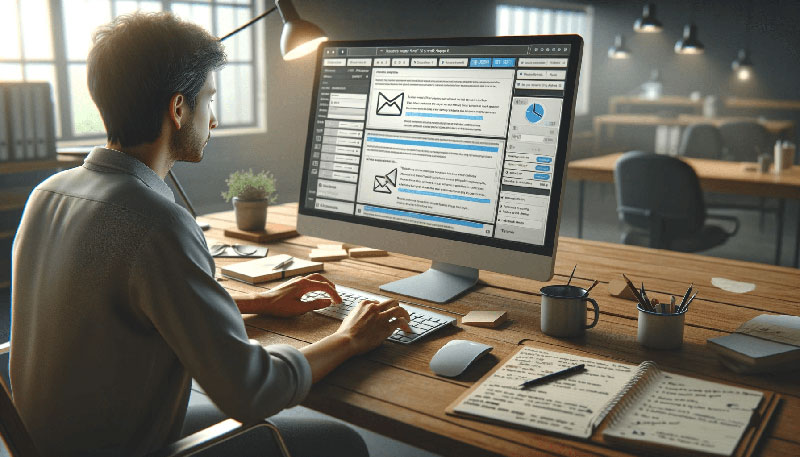
Web designers are no longer simply creators of attractive interfaces. They are architects of entire brand ecosystems, where design, functionality, and marketing converge. Now more than ever, email marketing sits squarely at the center of this dynamic. And while flashy trends like TikTok ads and influencer partnerships continue to generate massive buzz, the reality is simple: email remains the most enduring and high-performing channel available. All the stats point in this direction!
For web designers looking to extend value to their clients and boost their brand in the process, weaving innovative email marketing strategies into site designs is the flavor of the day. All the standard accouterments are still required, like color palette generation, responsive platforms, appropriate fonts, UX design, etc. But it’s equally important to include the appropriate email marketing strategies in the mix.
Luckily, there’s good news. With options like the cheapest email marketing platforms, even boutique designers and small studios can integrate top-notch campaigns without straining the budget or sacrificing quality. This is where innovation meets practicality and where clever designers shine.
Designing for a New Kind of Engagement
At its core, a website without email integration is like a storefront with no customer service desk. People might walk in. Some might even browse. But will they stay? Will they return? Will they build a lasting relationship with the brand?
Probably not.
Modern web design is about more than homepage sliders and sleek typography. It’s about constructing digital spaces that invite users to connect and engage. And the bridge between a one-time visitor and a long-term customer is email marketing – plain and simple.
From embedded signup forms that feel native to innovative, subtle pop-ups triggered by user behavior, web designers have a dozen opportunities to lead users toward meaningful engagement. If done properly, these design integrations will be seamless. They don’t disrupt the user experience – they always enhance it.
Building Funnels by Design, Not by Accident
Ask any seasoned marketer, and they’ll tell you the best conversions don’t happen by luck. They happen by design. Expert website design is a deliberate set of tactics and strategies woven into the framework.
That’s where smart, conversion-focused web design comes into play. Designers who understand user journey mapping – from curiosity to consideration to conversion – can guide users more effectively with the right visual cues, placement strategies, and call-to-action dynamics.
Email signup forms should never feel like afterthoughts. Whether these registration forms are tucked into high-visibility areas like navigation bars or carefully positioned at critical decision points like checkout pages, they deserve as much thought as any other key page element.
Remember: Every form should have a reason for existing. Every placement should serve a strategic purpose. In 2025, the guessing is over. Data-backed design is the new creative standard.
How Smart Designers Future-Proof Their Client Projects
Here’s another hard truth: Web designers who ignore email marketing risk making themselves obsolete.
Clients are looking for functional pretty pages nowadays. They’re looking for tangible results: higher engagement, more leads, better sales performance. Everything that goes into the sales funnel must be relevant and helpful to goal attainment.
Designers who understand how to embed functional marketing elements like signup sequences, automated email workflows, and segmentation-ready data capture into the websites they build are in a different league. Part of this role involves setting up the technical infrastructure for deliverability, where a free SPF record generator becomes an essential tool to ensure that every automated email reaches the client’s audience.
Some of the most successful agencies offer superb web design packages in addition to growth platforms – complete digital experiences that start with a stunning website and extend into email, social, ecommerce, and beyond.
And here’s the kicker: Most heavy lifting can be handled by lightweight, cost-effective tools that don’t require a massive agency budget or a full-time dev team. That’s what makes the opportunity so perfect open for savvy designers right now.
Practical Email Marketing Integrations for 2025
Here’s what best-in-class integrations look like today:
- Header Signup Forms: Subtle but visible at all times without distracting from the page flow.
- Exit-Intent Offers: Smart pop-ups that offer users something valuable before they click away.
- Behavior-Triggered Emails: Automated sequences that launch based on on-site actions like abandoned carts or page views.
- Dynamic Content Personalization: Forms that adapt to different user segments for better relevance and conversion.
None of this is speculative anymore. It’s all well within reach for web designers who know which tools to plug in – and how to build the pathways that make them hum.
What’s written inside those sequences decides whether someone stays subscribed. Small details, like consistent sign-offs, build brand trust.
That’s a Wrap!
There’s a saying among seasoned marketing professionals: “Own the list, own the customer.”
Websites that only attract visitors without capturing their details are short-lived marketing platforms. The real value – the real brand loyalty – is built over time through consistent, smart, relevant communication. And email marketing is the best vehicle for that. The results speak volumes.
Web designers who understand this are positioning themselves as critical partners in their clients’ growth stories as artists and strategists. As solution providers. As digital architects who understand the full scope of what a website needs to deliver.
In a landscape crowded with plenty of noise, attention spans shorter than ever, and competition around every corner, the website alone isn’t enough anymore. It’s always the system behind the site that wins.

Renowned for his expertise in logo design and visual branding, Bogdan has developed a multitude of logos for various clients.
His skills extend to creating posters, vector illustrations, business cards, and brochures. Additionally, Bogdan's UI kits were featured on marketplaces like Visual Hierarchy and UI8.
He also wrote in the past years on sites like Design Your Way, WebDesignerDepot, WPDean, Designmodo, Speckyboy, Slider Revolution, and more.
- The Windsurf Logo History, Colors, Font, And Meaning - 10 October 2026
- How to Remove Background From Product Photos (No Photoshop) - 10 October 2026
- How Designers can Build a Stronger Online Creative Identity - 9 October 2026

Bogdan Sandu is a seasoned designer who has been designing websites since 2008. Renowned for his expertise in logo design and visual branding, Bogdan has developed a multitude of logos for various clients. His skills extend to creating posters, vector illustrations, business cards, and brochures. Additionally, Bogdan's UI kits were featured on marketplaces like Visual Hierarchy and UI8. He also wrote in the past years on sites like Design Your Way, WebDesignerDepot, WPDean, Designmodo, Speckyboy, Slider Revolution, and more.
You Might Also Like