Creating an illustration portfolio that stands out is a thrilling challenge. It’s more than just a collection of your best work; it’s a visual narrative of your creative journey.
Having a well-crafted illustration portfolio is crucial for capturing the attention of potential clients and employers.
Imagine your portfolio as an artist’s showcase at a prestigious art exhibition or featured on platforms like Behance and Dribbble.
This article will guide you through exceptional illustration portfolio examples, offering insights and tips on how to craft a compelling online portfolio that highlights your unique style and expertise.
From the basics of portfolio design to advanced visual storytelling techniques, you’ll discover how to present your digital art and illustration projects effectively.
By the end, you’ll not only know what makes a great portfolio but also how to create one that truly represents your creative process and artistic vision. Prepare to be inspired and equipped with practical strategies to elevate your visual portfolio.
Are you drawing or illustrating?
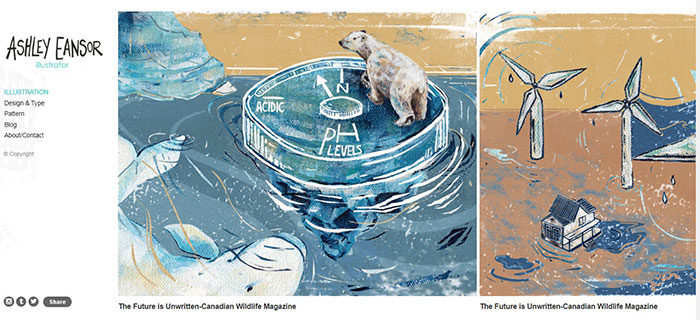
You should really ask yourself this because illustration is quite different from drawing. Illustrators create images that work with text or to clarify it. Most of the times we are talking about certain project that require this kind of work.
Illustrators really need to create a key message when they are creating something because they are communicating with an audience. So, the main difference between an illustration and drawing is the fact that drawing is a form of self-expression and illustration is a commercial work that is focused on more people.
Drawing also is more about representing an object in a plan or sketch and an illustration is a picture or image that is being used to clarify or decorate a text.
How to Create an Outstanding Illustration Portfolio
It doesn’t matter how much you work on your website if it doesn’t have the essential information like an about me page or maybe a portfolio. Having an illustration portfolio on your website is a good way to go about this because somebody that notices it might consider working with you in the future. Here are some guides that you should check out.
Define Yourself
Having your own style is good in anything that you do so this is why making your portfolio look great is quite important. It might sound tempting to be able to offer all types of design services or different illustration styles but this might make you look like a confused designer. Just show what you are really good at, you have a higher chance of getting projects this way.
Take advantage of anything that can make you look more attractive and show your clients the potential that you have. Maybe it will be an online art portfolio or the fact that you specialize in some kind of designs. Go for it and see what you can accomplish.
If You Simply Must Display a Lot of Work, Organize
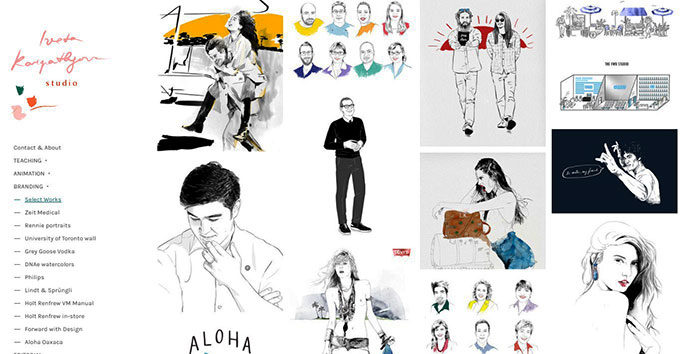
When you have a lot of work that you want to display in your illustration portfolio bring them all together in a single project. Any tricks that you can do in order to make your portfolio seem less dense can go a long way towards the visitor and having a better experience when it comes to navigating through the art that you create.
Separate your work into galleries on your site and be ready to show off everything that you like to create. You can even use different categories for your illustration portfolio because they help when your possible client wants to see what kind of work you can do or if there are job openings.
Focus your efforts
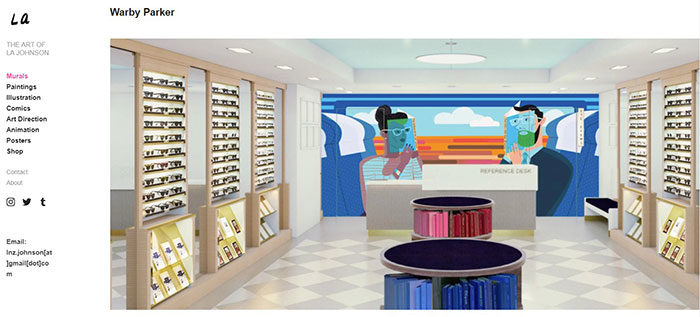
A lot of artists do a lot of personal work regularly and most of the times they don’t show it to other people. If you put focus on the type of artwork that is relevant to your skills and what people need then you get a perfect match.
Even your illustrator website can be an example of a portfolio. Another thing that you can do is to think about the types of clients that you want to work for when making your online portfolio examples. Maybe you like to create book covers, logo designs, character designs and so on. Show off the best work that you have done until now and for sure you are going to get a lot of attention.
Show Some Variety
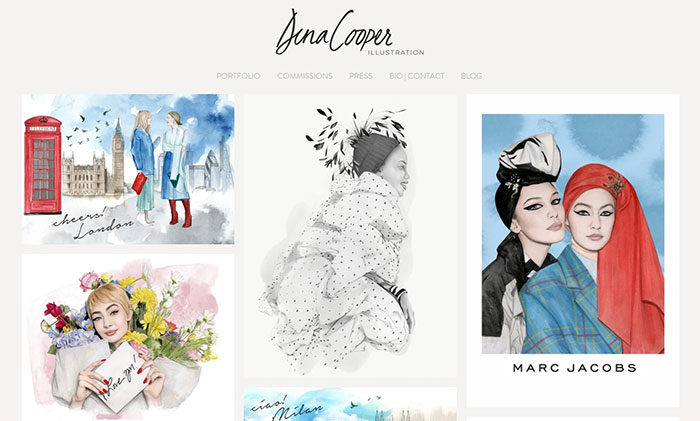
Even though consistency is important you also need to make sure that your work has some variety into it. We are not talking here about adapting a new style but maybe using a similar composition, texture and so on. You are in charge here so get creative about it.
If you are able to do more than one style then consider the option of creating multiple illustrator portfolios so you can showcase each one depending on your client need. This is a smart move that any illustrator should think about especially if he likes to create a different style of illustrations.
Quality Over Quantity
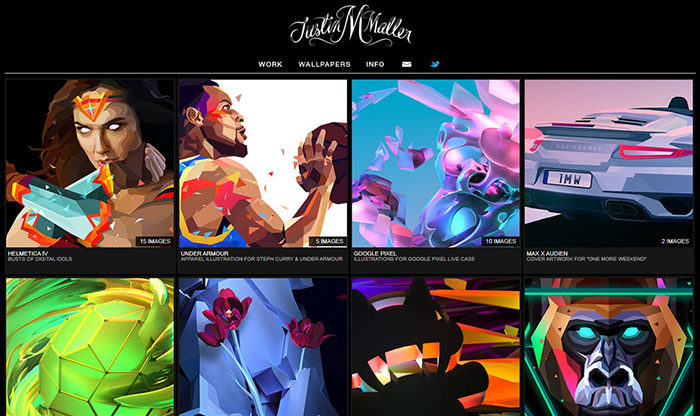
Although this is something that you have heard before we need to repeat it again. It is always better to show two or three projects that you have worked on and that look great instead of ten projects that don’t look that good.
The quality that your work has is probably one of the top things that you need to pay attention to when you are building your illustration portfolio. This is because when you are showing something that is going to be judged you want to go there with the best option that you have got. Clients will always choose the designers that impress them and if you want to have big chances the best option is to play your best hand.
Remember to always show just your best work so you don’t stay in peoples mind like a medium skilled designer.
Include the Type of Work That You Actually Want To Do
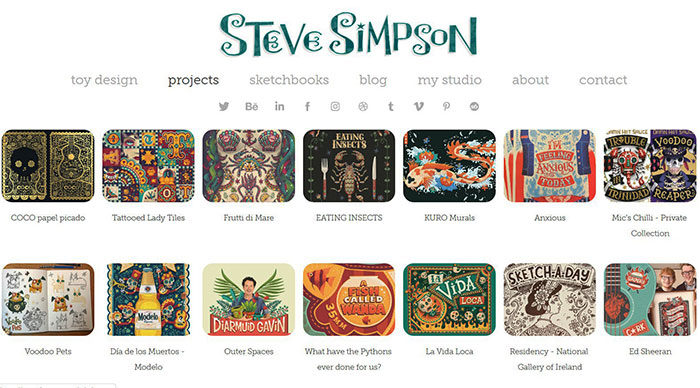
If you don’t like to make logos then do not include any design like this. Sometimes designers put a bit more designs, even the ones that they don’t really like to do and guess what more often than you think they get hired to do exactly that job. This means that they will be working on something that they don’t like in particular to do.
It is probably better to avoid this type of situations and the best way to do it is by not putting this type of designs in your illustration portfolio.
Illustration portfolio examples
Ping Zhu
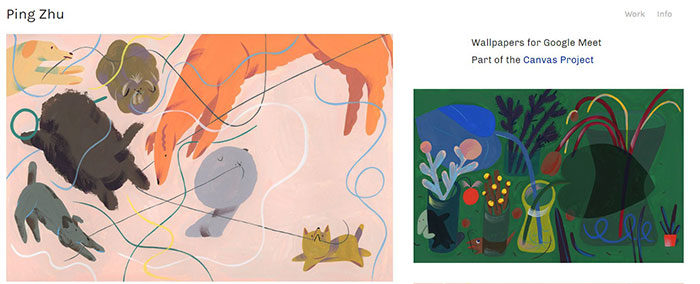
Ping is based in Brooklyn and has illustrated for clients big and small. Her work has been recognized by fancy institutions as well as her parents. Laying on a sun-baked rock near a body of water is a good feeling.
Deshi Deng
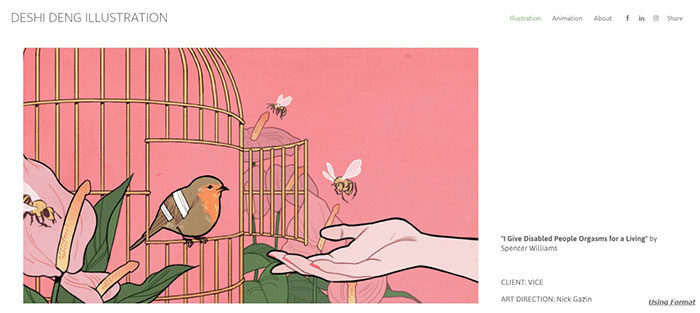
Deshi Deng (pronounced: deh-shee deng) is a Canadian illustrator based in Toronto, Ontario. She loves to find inspiration in everyday life, whether it’s from traveling to new places or from quietly observing people in public. These observations are often given new life through illustrations, comics, or animations.
Zach Meyer
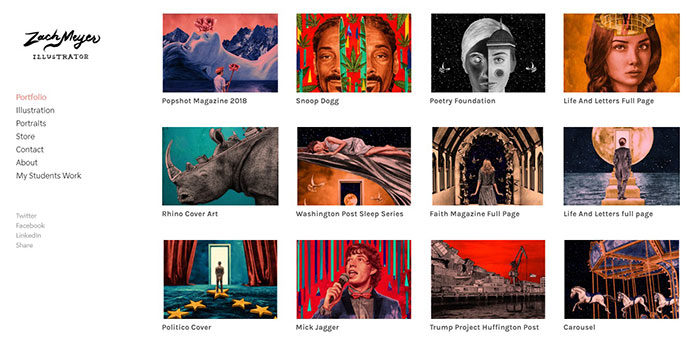
Zach Meyer is an Illustrator based in Long Beach, CA. Known for his detailed portraits and narrative works published most notably in Playboy, The New York Times, Harper Collins, Adweek, Los Angeles Times, Smithsonian and internationally in PopShot Magazine.
Nate Kitch
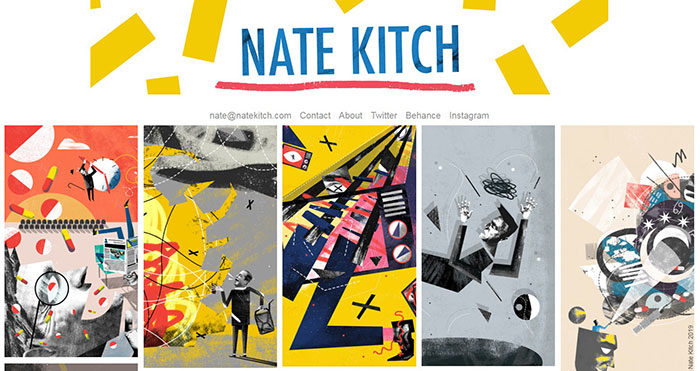
Nate Kitch is an award-winning UK illustrator who works using a mix of pattern, collage, mark-making, photos and textures, and whose clients include Tate, Wired, The Guardian and New Scientist.
Paul Pateman
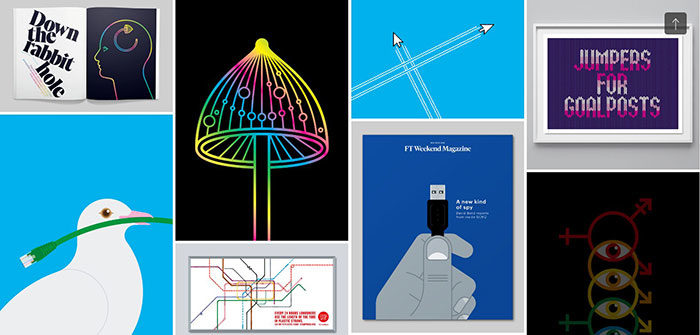
Pâté, also known as Paul Pateman, is a graphic artist with a quick wit and a strong, simple aesthetic. Based in London, he creates concept-led images and type compositions for a diverse collection of personal and commercial projects.
Alvaro Tapia Hidalgo
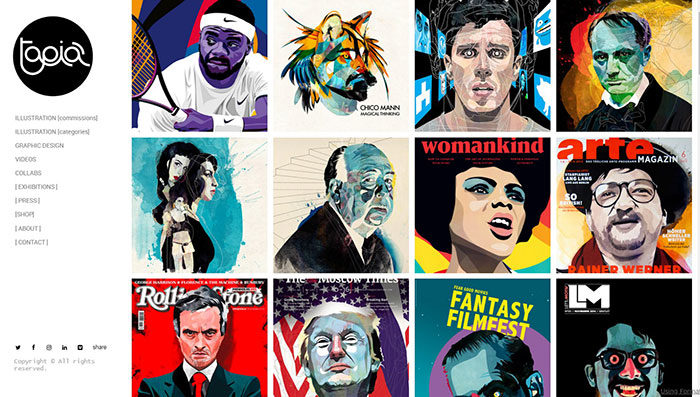
Alvaro Tapia Hidalgo is a graphic designer and illustrator based in Valparaíso, Chile.
Since 2000, Alvaro has worked as Art Director in design projects and as Film Editor and Post-producer in audiovisual projects.
Cressida Djambov
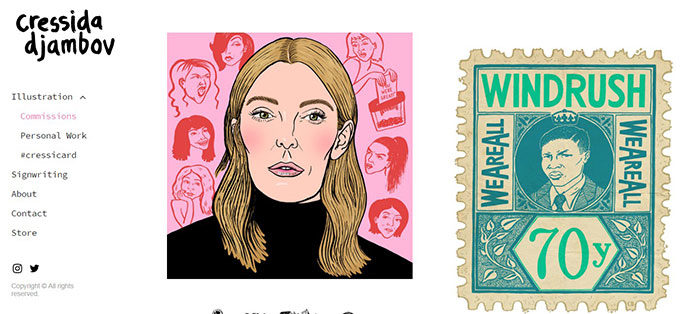
Cressida Djambov is an illustrator and artist based in London who specialises in portraits and hand-drawn type. With a passion for tactile processes, her confidence spans many media.
Michael C. Hsiung
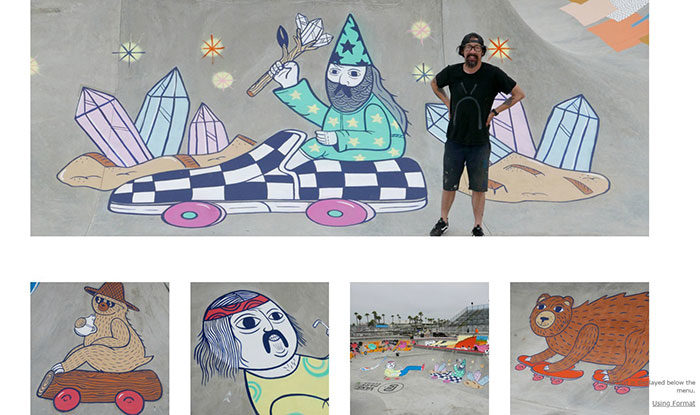
An Artist, Illustrator, Drawer. It’s easy to explore the LA-based artist’s extensive portfolio without having to click back to the home page.
Maria Källström
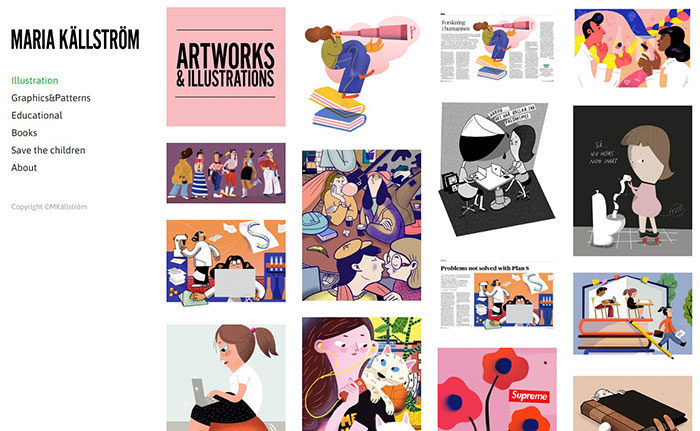
Källström’s illustrations are vividly colorful and modern, especially when it comes to her children’s book work, which is full of playful characters.
Nayeon Lee
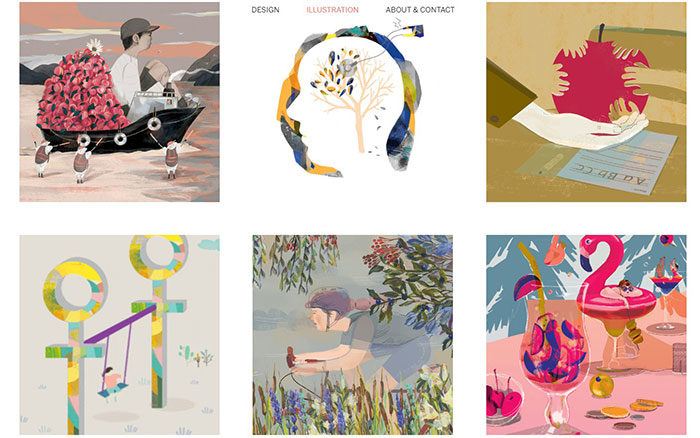
Nayeon is an illustrator who is engaged in conceptual thinking to create visual stories and design for commercial applications. She wants to share her experiences, perspectives, and beliefs with you – and wishes you could find connections through her visuals.
Jan Bowman
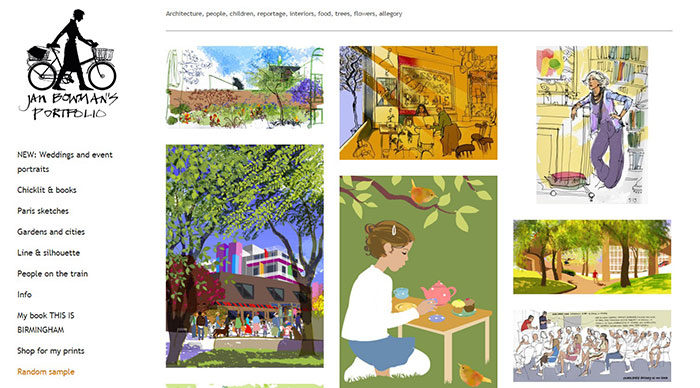
Jan Bowman is an architect-trained artist, author and illustrator. Originally from Scotland via Canada and now based in London.
Marne Grahlman
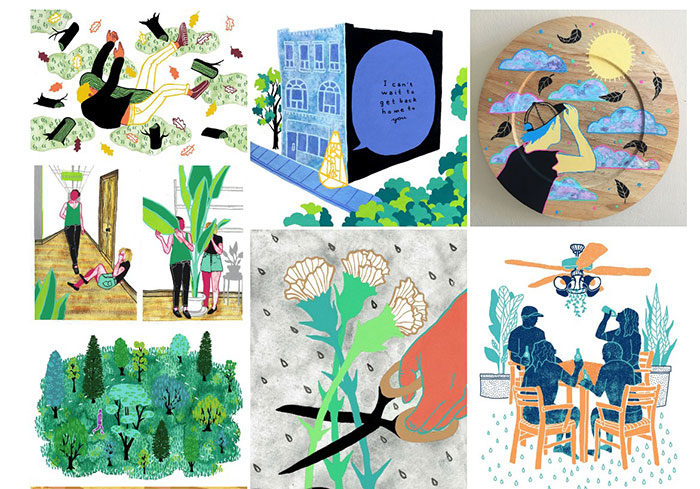
Marne Grahlman, a freelance illustrator from a small woodsy town and currently inhabit the city of Toronto, Canada. His illustrations are conceptually-based and explore metaphors in a surreal environment using characters that are both awkward and comely.
Gizem Vural
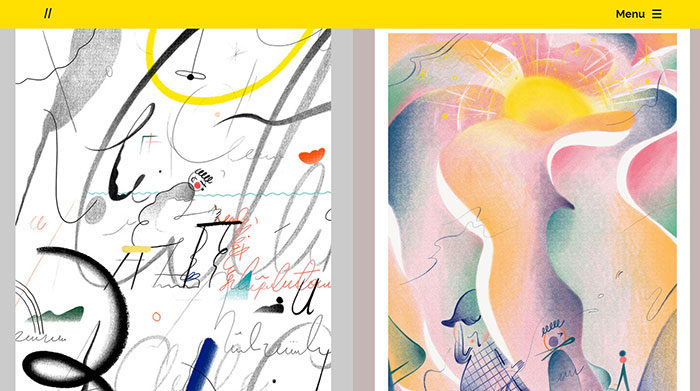
Gizem Vural is an award-winning illustrator who, unlike most, never knew she wanted to illustrate. Instead, Vural thought she wanted to be graphic designer – that’s what she studied, had trained for, and had always imagined she would do. But when she moved from her home town of Istanbul to New York, Vural realized she wanted to draw for a living instead.
Nick Alston
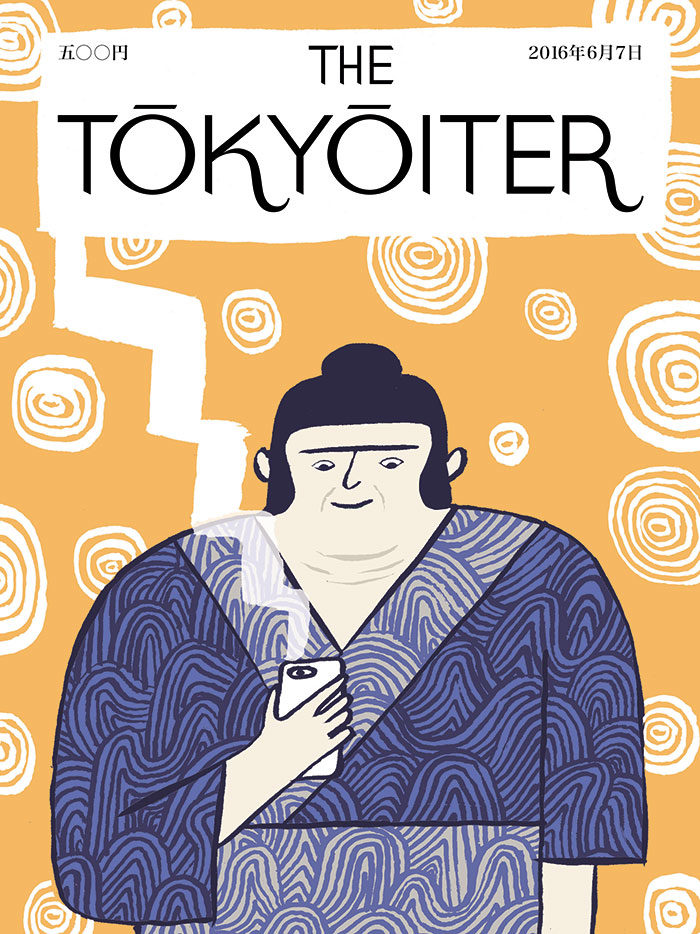
Nick Alston is a British illustrator based in Tokyo, Japan. He loves to create simplistic, fun images.
Genevieve Godbout
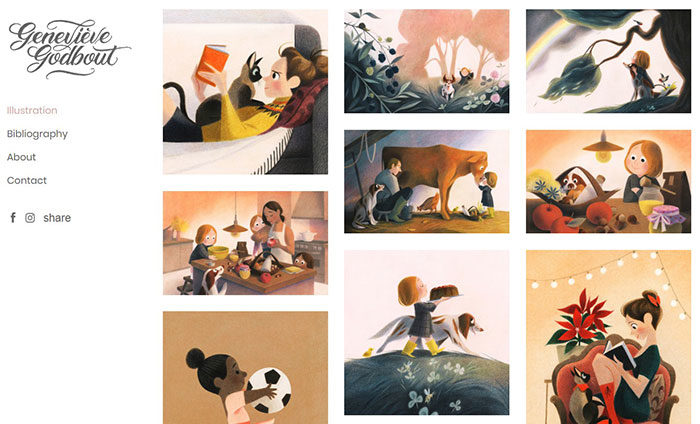
Genevieve was born and raised in Quebec. Her clients include The Walt Disney Company, Chronicle Books, Tundra Books, Random House, Houghton Mifflin Harcourt, les éditions Milan, Comme des Géants and La Pastèque.
Nick Grant
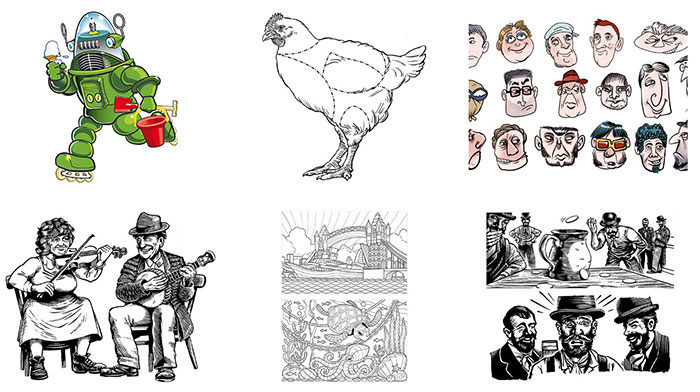
Nick is a versatile and long-established artist, who lives and works from his home in the foothills of Shoreditch, in East London. After graduating from Norwich School of Art, Nick has been pleased to provide high-quality illustrations for many different clients over the years.
FAQ On Illustration Portfolios
What should be included in an illustration portfolio?
An illustration portfolio should showcase your best work, highlighting your unique style and versatility. Include illustration projects that demonstrate your range, from concept art to digital art pieces.
Don’t forget to add a brief description of each piece to provide context and insight into your creative process.
How many pieces should be in an illustration portfolio?
Quality over quantity is key. Aim for 10-20 strong, diverse pieces. Your portfolio should represent your best work, so only include pieces that reflect your artistic vision and skills. This gives potential clients a clear view of your capabilities without overwhelming them.
How do you organize an illustration portfolio?
Organize your portfolio by theme, style, or project type. Start with a compelling piece to grab attention, and end with a strong piece to leave a lasting impression.
This structure helps in creating a coherent narrative, making it easier for viewers to follow your visual storytelling.
Should an illustration portfolio be digital or physical?
Both have their benefits, but in today’s digital age, a digital portfolio is essential. Platforms like Behance and Dribbble make your work accessible to a wider audience.
However, a well-crafted physical portfolio can leave a lasting impression during in-person meetings.
What are common mistakes to avoid in an illustration portfolio?
Avoid overcrowding your portfolio with too many pieces. Focus on quality and relevance. Ensure all included pieces are polished and professionally presented.
Don’t forget to update your portfolio regularly to reflect your latest and best work, keeping it fresh and current.
How do you create a standout illustration portfolio?
To create a standout illustration portfolio, focus on cohesive branding and portfolio design. Use a clean, professional layout, and include a mix of illustration techniques.
Highlight projects that showcase your strengths and versatility. Adding a personal touch, like your creative process, can make it memorable.
How important is the layout and design of an illustration portfolio?
The layout and design of your illustration portfolio are crucial. A well-organized, visually appealing portfolio enhances the presentation of your work.
Use a simple, clean design that lets your illustration samples shine. Pay attention to details like typography and spacing for a polished look.
What platforms are best for showcasing an illustration portfolio?
Behance and Dribbble are top platforms for showcasing your illustration portfolio. These platforms offer a wide audience and networking opportunities.
Having your own portfolio website also provides a personalized space to display your work, making it easily accessible to potential clients.
How do you write descriptions for an illustration portfolio?
Write concise, engaging descriptions for each piece in your illustration portfolio. Explain the concept, your role, and any techniques used.
Highlight the visual storytelling elements and the purpose of the project. This provides viewers with a deeper understanding of your work and creative thought process.
How often should you update your illustration portfolio?
Regularly updating your illustration portfolio is essential. Add new projects and remove outdated ones to keep it current and relevant.
Aim to update it every few months or whenever you complete a significant project. This shows potential clients that you’re active and continuously evolving as an artist.
Conclusion
Crafting an exceptional portfolio is essential. As we’ve explored through various illustration portfolio examples, the key lies in showcasing your artistic vision and creative process effectively. A well-designed online portfolio not only highlights your best illustration projects but also demonstrates your versatility and skill.
Remember to include a mix of digital art and concept art, organized in a visually appealing manner. Utilize platforms like Behance and Dribbble to gain visibility and connect with potential clients. Focus on quality, not quantity, and ensure each piece is accompanied by a concise, insightful description.
Regular updates keep your portfolio fresh and relevant, reflecting your growth as an artist. By incorporating these strategies, your illustration portfolio will not only captivate but also leave a lasting impression, opening doors to new opportunities and creative ventures. Aim for a portfolio that is as dynamic and unique as your creative journey.
If you enjoyed reading this article about illustration portfolios, you should read these as well:
- Portfolio Website Examples And Tips To Create Them
- Free HTML templates for Portfolios, Real Estate, Business websites and more
- A Guide To Usable Portfolio Websites For Digital Designers & Creatives
- Japanese Graphic Design Artwork and Typography To Check Out

Renowned for his expertise in logo design and visual branding, Bogdan has developed a multitude of logos for various clients.
His skills extend to creating posters, vector illustrations, business cards, and brochures. Additionally, Bogdan's UI kits were featured on marketplaces like Visual Hierarchy and UI8.
He also wrote in the past years on sites like Design Your Way, WebDesignerDepot, WPDean, Designmodo, Speckyboy, Slider Revolution, and more.
- The Cursor Logo History, Colors, Font, And Meaning - 24 September 2026
- Top 7 Web Design Subscription Services That Replace Full-Time Hires - 24 September 2026
- Canva vs PowerPoint: Which Is Better for Presentations? - 22 September 2026

Bogdan Sandu is a seasoned designer who has been designing websites since 2008. Renowned for his expertise in logo design and visual branding, Bogdan has developed a multitude of logos for various clients. His skills extend to creating posters, vector illustrations, business cards, and brochures. Additionally, Bogdan's UI kits were featured on marketplaces like Visual Hierarchy and UI8. He also wrote in the past years on sites like Design Your Way, WebDesignerDepot, WPDean, Designmodo, Speckyboy, Slider Revolution, and more.
You Might Also Like