

Google Maps uses 2 distinct fonts depending on where you look. The Google Maps logo uses Product Sans, a geometric sans-serif font created by Google’s internal design team in 2015. The map interface itself (street labels, place names, navigation text) uses Roboto, also developed by Google, which has been the standard UI typeface for the app since 2013.
Product Sans is proprietary. Roboto is open-source and free to use under the Apache License 2.0.
What Type of Font Is Product Sans?
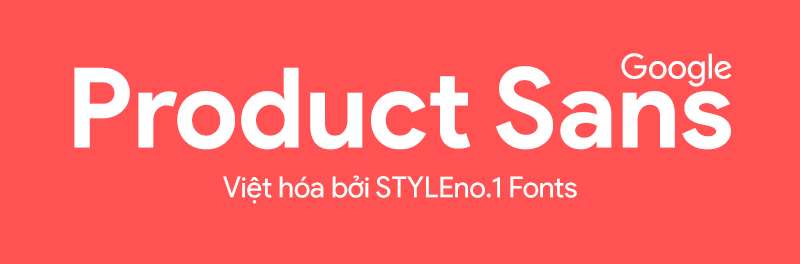
Product Sans is a geometric sans-serif typeface. That puts it in the same category as Futura, which clearly influenced its construction.
A few defining characteristics:
- Stroke terminals cut at roughly 45 degrees
- Nearly circular counters in characters like “6”, “8”, and “9”
- A double-story lowercase “a” (unusual for strictly geometric fonts)
- Consistent stroke width across all characters
- Tightly spaced letterforms suited to large display sizes
The double-story “a” is a deliberate choice. It contrasts the otherwise circular letter shapes and keeps the font from feeling too rigid or purely mechanical.
Roboto, used inside the map interface, is classified as a neo-grotesque sans-serif. It has a mechanical skeleton but pairs that with friendly, open curves, which is why it works well for both UI text and map labels at small sizes.
Who Designed These Fonts?
Product Sans was created by Google’s in-house design team during a week-long sprint in New York in early 2015. The sprint involved designers from the Creative Lab and Material Design teams. It was never a public commission and has no single named designer credited externally.
Roboto was designed entirely in-house by Christian Robertson, who had previously released fonts through his personal foundry, Betatype. Google officially released Roboto on January 12, 2012, on the Android Design website. Robertson also designed the Ubuntu Titling font before joining Google’s work.
Both typefaces are Google’s intellectual property. Neither came from an external type foundry for their original versions, though Google later partnered with Colophon Foundry to refine Google Sans (a size-optimized derivative of Product Sans).
Is Product Sans or Roboto Free to Use?
This is where things get tricky, and a lot of people get this wrong.
Product Sans: Not publicly available. Google has been clear about this. Their own documentation states: “Google offers many fonts under open source licenses. This is not one of them.” It is strictly limited to use within Google products and approved partner branding under direct Google oversight.
Roboto: Completely free. Most Roboto variants are licensed under the SIL Open Font License (OFL), and it is available directly from Google Fonts. You can use it in commercial projects with no restrictions.
As of December 10, 2025, Google released Google Sans (the UI-focused derivative of Product Sans) under the SIL Open Font License. Google Sans Flex, a variable-font evolution, was also open-sourced in November 2025. So if you want something close to the Google Maps logo style, Google Sans is now legally available for public use.
What Font Did Google Maps Use Before?
Before 2013, Google Maps relied on Arial as its primary map interface font. Arial is a Monotype Imaging proprietary typeface and was used as a reliable, widely available system font for map labels and UI text.
In 2013, Google made the switch to Roboto across Maps, Google Play, YouTube, and Google Images as part of a broader push toward the Material Design system. The shift was noticed by type designers at the time, with some noting that Roboto’s looser spacing and wider apertures performed noticeably better than Arial did for map readability at small sizes.
The logo font also changed. Before 2015, the Google wordmark (and by extension the Maps logo) used a modified serif typeface that had remained largely unchanged since 1999. Product Sans replaced it on September 1, 2015, when Google rolled out a complete visual identity overhaul.
| Era | Logo Font | UI / Map Labels | Strategic Note |
| Pre-2013 | Modified Serif | Arial | The “Early Web” era; relied on standard Windows/Mac fonts. |
| 2013–2015 | Modified Serif | Roboto | The “Material Design” launch; introduced Google’s custom Android font. |
| 2015–Present | Product Sans | Roboto / Google Sans | The “Identity” era; unified the Maps brand with the parent logo. |
Best Free Alternatives to Product Sans
You can’t use Product Sans. But you can get very close. Here are 4 solid options that share its geometric, clean construction.
| Font | Why It’s Similar | License | Source |
| Google Sans Flex | Direct evolution of Product Sans, now open-source | OFL (Free) | Google Fonts |
| Nunito | Rounded geometric sans-serif, similar warmth | OFL (Free) | Google Fonts |
| Poppins | Geometric construction, consistent stroke width | OFL (Free) | Google Fonts |
| Montserrat | Similar weight range and geometric approach | OFL (Free) | Google Fonts |
For Roboto alternatives specifically, Inter is the most common substitute. It was partly based on Roboto and sits in the same neo-grotesque space.
If you want something for building app interfaces with a Google-like feel, Roboto itself is still the obvious first choice since it is completely free.
How to Use Roboto or Google Sans in Your Projects
Web: Google Fonts Embed
Add this to your HTML <head> to load Roboto:
“ <link href="https://fonts.googleapis.com/css2?family=Roboto:wght@400;500;700&display=swap" rel="stylesheet"> `
For Google Sans Flex (now open-source):
` <link rel="stylesheet" href="https://fonts.googleapis.com/css?family=Google+Sans+Flex"> `
Then apply it in CSS:
` body { font-family: 'Roboto', sans-serif; } `
Design Tools
Figma: Roboto is available by default. Search it in the font picker. Google Sans Flex can be installed via Google Fonts plugin.
Canva: Roboto is in the default font library. You can also upload fonts to Canva if you’ve downloaded Google Sans Flex from Google Fonts.
Photoshop: Download the font files from Google Fonts and follow the standard process for adding fonts to Photoshop.
One thing developers often miss
When you embed Google Maps JavaScript API on a website, it automatically injects Roboto stylesheets into the page head. This can override your existing Roboto implementation if you’re using a non-standard weight like 900. Worth knowing before you debug for an hour wondering why your fonts look different on pages with a map.
Why Did Google Choose These Fonts for Maps?
The logo choice (Product Sans) was about brand unification at scale. After the 2015 rebrand, Google had hundreds of product lockups to update. Product Sans was built specifically to pair cleanly with the Google wordmark across constrained spaces like app icons, loading screens, and product names. Maps was one of those products.
Roboto for the interface was a different problem entirely. The map UI needs to display street names, transit labels, place names, and business listings all at once, often at very small sizes on a phone screen. Arial handled that reasonably well before 2013. But Roboto was purpose-built for higher-resolution Android displays with better differentiation between similar characters like “I” and “l”, which genuinely matters when you’re reading street labels quickly.
There’s also a consistency argument. Typography across a product ecosystem signals cohesion. Google using Roboto across Maps, Play, YouTube, and Android creates a visual system where everything feels like it belongs to the same family. That kind of visual hierarchy reduces cognitive load even when people don’t consciously notice it.
The same logic shows up in how Google uses typographic hierarchy inside Maps. Street names, labels for major cities, transit station names, and business listings all use different weights and sizes of Roboto. None of it is accidental. The tracking and leading choices for map labels are tuned specifically for quick scanning, not extended reading.
Google has also been deliberate about x-height. Google Sans Text (the variant used for smaller UI text) was specifically designed to have a taller, more condensed form than the regular Google Sans, to stay readable at the small sizes that a map interface demands. That level of detail is why cartographic typography is genuinely tricky to get right.
Worth noting: other navigation apps have made very different choices. Apple Maps uses San Francisco, Apple’s proprietary system font. The contrast in feel between the two apps comes partly from that font choice. San Francisco reads slightly cooler. Roboto reads a little more neutral and approachable. Whether that matters to a user trying to find a coffee shop is debatable, but it shapes the overall experience in subtle ways most people never consciously register.
For anyone working on a project where font psychology matters, that difference between neutral-approachable and cool-precise is worth thinking about when choosing between geometric and neo-grotesque sans-serif typefaces for interface work.
Related reads: Gmail font, Notion font, Roboto font pairing ideas, and what font Notion uses.
FAQ on What Font Does Google Maps Use
Does Google Maps use the same font everywhere in the app?
No. The Google Maps logo uses Product Sans, while street labels, place names, and navigation text use Roboto.
These are two separate typefaces serving two different purposes within the same product.
Is Roboto a custom font made just for Google Maps?
Roboto was designed by Google’s Christian Robertson as the system font for Android, not specifically for Maps.
Google Maps adopted it in 2013 as part of the broader Material Design rollout across all Google services.
Can I download the Google Maps font for free?
Roboto is completely free on Google Fonts under the SIL Open Font License.
Product Sans is proprietary and not available for public download. Google Sans Flex, a close relative, was open-sourced in November 2025.
What font type is Product Sans?
Product Sans is a geometric sans-serif. It shares structural DNA with Futura but adds a double-story lowercase “a” and circular counters for better legibility.
What font does Google Maps use for street names?
Street names and road labels on the map tiles use Roboto, a neo-grotesque sans-serif.
Different weights are applied across label types to create a clear visual hierarchy between major roads, streets, and local paths.
Did Google Maps always use Roboto?
No. Before 2013, the map interface used Arial as its primary typeface for labels and UI text.
The switch to Roboto came with the Material Design update, which affected Google Maps, YouTube, and Google Play simultaneously.
Is the Google Maps font the same on Android and iOS?
The map label font (Roboto) renders consistently across both platforms.
On iOS, system UI elements outside the map itself may fall back to San Francisco, Apple’s default typeface, but the map tile typography stays Roboto regardless of device.
What is the closest free alternative to the Google Maps logo font?
Google Sans Flex (now open-source) is the closest option. Poppins and Montserrat are also widely used substitutes with a similar geometric sans-serif structure.
Why did Google choose a sans-serif font for Maps?
Serif fonts add visual noise at small sizes on screen, which is a real problem for map label readability.
Sans-serif typefaces like Roboto render cleaner on digital displays, especially on mobile screens where cartographic typography needs to stay legible at a glance.
Does embedding Google Maps on a website affect my site’s fonts?
Yes, actually. The Google Maps JavaScript API automatically injects a Roboto stylesheet into your page’s .
If your site already uses Roboto with a non-standard weight, this injection can override your existing font settings and cause visible rendering differences.
Conclusion
So, what font does Google Maps use? Two typefaces, two jobs. Product Sans handles the logo, Roboto handles everything inside the map interface.
Neither choice was random. Both reflect deliberate decisions around map label legibility, mobile text rendering, and Google’s broader Material Design system.
If you need to replicate the look, Roboto is free and ready on Google Fonts. For something closer to the logo style, Google Sans Flex is now openly licensed.
The cartographic typography Google settled on works because it prioritizes function. Clean, neutral, readable at speed.

Renowned for his expertise in logo design and visual branding, Bogdan has developed a multitude of logos for various clients.
His skills extend to creating posters, vector illustrations, business cards, and brochures. Additionally, Bogdan's UI kits were featured on marketplaces like Visual Hierarchy and UI8.
He also wrote in the past years on sites like Design Your Way, WebDesignerDepot, WPDean, Designmodo, Speckyboy, Slider Revolution, and more.
- The Windsurf Logo History, Colors, Font, And Meaning - 10 October 2026
- How to Remove Background From Product Photos (No Photoshop) - 10 October 2026
- How Designers can Build a Stronger Online Creative Identity - 9 October 2026

Bogdan Sandu is a seasoned designer who has been designing websites since 2008. Renowned for his expertise in logo design and visual branding, Bogdan has developed a multitude of logos for various clients. His skills extend to creating posters, vector illustrations, business cards, and brochures. Additionally, Bogdan's UI kits were featured on marketplaces like Visual Hierarchy and UI8. He also wrote in the past years on sites like Design Your Way, WebDesignerDepot, WPDean, Designmodo, Speckyboy, Slider Revolution, and more.
You Might Also Like


