There are several approaches to software development which are based on different programming languages and utilize various tools, technology and frameworks. They are designed in a way that enables tech specialists to create applications which would work impeccably on smartphones, tablets, computers and are compatible with various web browsers.
These days the hot talk in software delivery world is a SaaS business model. The abbreviation stands for ‘software as a service’ and this concept basically means that the software providers offer their solutions as a service rather than a one-time product purchase. Given the prominence of technology in the digital era and immense deployment of cloud computing this method has gained extreme popularity over the past couple of years. In this article we are going to have a closer look at the SaaS business model and how it works.
SaaS revolution
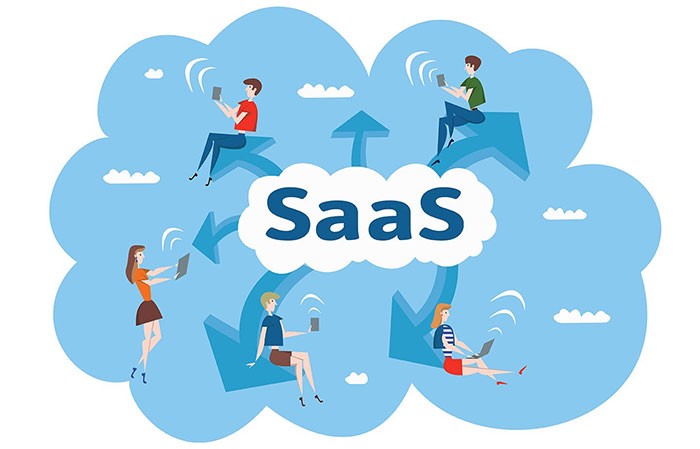
SaaS is the way of software delivery which allows users to get access to the product from any device using just a web browser and stable Internet connection. No servers or other sophisticated hardware is needed as all the applications are hosted and managed remotely by the provider. The vendor takes care of the security issues, troubleshooting, maintenance and regular updates. The customer, on the other hand, is only compelled to pay the subscription fee on time.
To better understand how SaaS works let’s take a look at its predecessor – on-premises model. It required customers to purchase a license from the software provider and acquire the hardware that is powerful enough to make the whole app package operational.
If we talk of companies rather than individual users they would also have to employ IT specialists who could upload these applications on the server and make it available on every office desktop. But that’s not where their work ended. Tech consultants would also be in charge of keeping the software up to date. The worst part of the whole thing began once that ready-made solution was lacking some specific features and thus upgrades were requisite. The customization process, in that case, involved cracking the source code and rewriting it to adjust the programs to the company’s needs.
Time passed and the more elegant solution came out. Some IT companies started offering to run the software on their servers and deliver it to customers via the Internet. That was the major shift that led to the emergence of the SaaS business model. Here customers don’t have to purchase any perpetual licenses or invest in high-end machinery, neither do they have to employ additional staff. On top of that, the amendment process goes seamlessly and automatically with all latest features ready to use right away.
Long-term Microsoft Office fans are quite familiar with this example. There used to be times when customers had to buy a set of floppy-discs and install the software suite on their computers. With Office 365 life became much easier. It allows users to exploit all the standard Microsoft applications, as well as cloud-based products for business environments practically in one click.
What makes SaaS model stand out?
Software is provided over the Internet
All data is stored in the cloud and it is available on any computer or mobile gadget connected to the World Wide Web. No servers, installation files or licenses are needed to get access to SaaS applications.
Flexible workspace
As the solution is not attached to specific hardware or run in the on-premises or colocation data center, users can work practically anywhere.
Pay-as-you-go
Customers pay a recurring fee only for the features they are currently using. Normally SaaS providers offer various tariff plans depending on a usage period, number of active users and the included tools. Thus, if customers want to expand the application’s functionality they just need to upgrade their subscription to the higher tier.
Vendors are fully responsible for the setup
The software is delivered and configured by the service provider, who is accountable for its hosting, daily upkeep, data security, updates, support, and maintenance.
Easy customization process
Clients can tweak the application in line with their needs, and it won’t require reprogramming the whole software. Providers try to pack all the major features of the given industry into their product and users just need to tick the components they utilize in their work.
ROI and efficiency reinforcement
Since cloud-based solutions are deployed much faster and require significantly less upfront investment, it helps to reduce the total cost of ownership and enables users to concentrate on their work instead of being preoccupied with ‘nerdy stuff’.
How to make it work
Even though the SaaS model presents tremendous opportunities it might not turn into a profitable enterprise if it lacks the capacity to attract customers. That’s why software vendors and marketing agency for SaaS companies have to address some user-related issues before launching their product.
Here are 4 points to take into consideration to create a truly successful SaaS business:
1. Define application requirements
The software development process starts with the identification of the pain point of the industry players.
Top SaaS development companies typically begin with this kind of problem validation before defining the product requirements and development scope.
To deliver the SaaS product that can solve that problem you need to do your homework and conduct the research, analyze the info you get from your potential clients and list out the functions that should be incorporated in the final application.
2. Know your competitors
To provide exceptional customer service you’ll need to understand what’s already available on the market. You should be familiar with the basic features as well as auxiliary services your rivals provide and comprehend their pricing scheme in order to surpass them.
3. Focus on UI/UX
Slick design and intuitive interface go hand in hand and are one of the major things to engaging and retaining the customers. The first impression does count so it’s worth thinking about efficient UI and UX strategy if you don’t want to churn users with poor looks of your product.
4. Work out your marketing tactics
Once there is a fully-tested SaaS application ready – let people know about it. Therefore, put time and effort into creating a viable marketing strategy to promote your product.

Renowned for his expertise in logo design and visual branding, Bogdan has developed a multitude of logos for various clients.
His skills extend to creating posters, vector illustrations, business cards, and brochures. Additionally, Bogdan's UI kits were featured on marketplaces like Visual Hierarchy and UI8.
He also wrote in the past years on sites like Design Your Way, WebDesignerDepot, WPDean, Designmodo, Speckyboy, Slider Revolution, and more.
- The Windsurf Logo History, Colors, Font, And Meaning - 10 October 2026
- How to Remove Background From Product Photos (No Photoshop) - 10 October 2026
- How Designers can Build a Stronger Online Creative Identity - 9 October 2026

Bogdan Sandu is a seasoned designer who has been designing websites since 2008. Renowned for his expertise in logo design and visual branding, Bogdan has developed a multitude of logos for various clients. His skills extend to creating posters, vector illustrations, business cards, and brochures. Additionally, Bogdan's UI kits were featured on marketplaces like Visual Hierarchy and UI8. He also wrote in the past years on sites like Design Your Way, WebDesignerDepot, WPDean, Designmodo, Speckyboy, Slider Revolution, and more.
You Might Also Like