Typography defines luxury before a single word gets read. A poorly chosen font undermines premium positioning faster than bad photography or weak copy.
The best luxury brand fonts communicate exclusivity through refined letterforms and deliberate design choices. Chanel’s geometric sans-serif, Dior’s elegant serifs, and Tiffany’s custom typeface all signal sophistication before delivering brand messages.
This guide examines twelve typefaces that luxury brands trust. You’ll discover specific design characteristics that create premium perception, learn which fonts work for different luxury sectors, and find alternatives when budget or licensing constraints matter.
From transitional serifs to geometric sans options, each entry reveals why certain letterforms command higher prices and customer trust.
The Best Luxury Brand Fonts
| Font Name | Classification | Era & Style | Luxury Brand Context |
|---|---|---|---|
| Didot | Serif (Modern/Didone) | Late 18th century, high contrast | Used by Vogue, Giorgio Armani. Conveys elegance and sophistication through extreme stroke contrast. |
| Bodoni | Serif (Modern/Didone) | 1798, neoclassical style | Favored by Niketalk, Calvin Klein. Sharp serifs create modern luxury aesthetic with editorial quality. |
| Garamond | Serif (Old Style) | 16th century Renaissance | Used by Apple, Abercrombie & Fitch. Timeless readability signals heritage and established authority. |
| Granjon Roman | Serif (Old Style) | Based on 16th century designs | Classic book typography. Projects intellectual luxury and literary sophistication for premium brands. |
| Baskerville | Serif (Transitional) | 1757, bridges Old Style and Modern | Favored by Kate Spade. Refined elegance balances tradition with contemporary appeal for fashion brands. |
| Cochin | Serif (Old Style) | 18th century French influence | Parisian luxury aesthetic. Distinctive serifs create romantic, artisanal character for high-end brands. |
| Futura | Sans-serif (Geometric) | 1927 Bauhaus movement | Used by Louis Vuitton, Volkswagen. Geometric precision communicates modern minimalist luxury. |
| Helvetica Neue | Sans-serif (Neo-Grotesque) | 1983 refinement of 1957 original | Favored by Panasonic, American Apparel. Neutral clarity provides Swiss design credibility and versatility. |
| Gotham | Sans-serif (Geometric) | 2000, inspired by NYC signage | Used by GQ, Spotify. American confidence and approachability suited for modern lifestyle luxury brands. |
| Optima | Sans-serif (Humanist) | 1958, flared strokes | Favored by Estée Lauder, Yale. Organic warmth bridges classical and contemporary for beauty and institutions. |
| Proxima Nova | Sans-serif (Humanist) | 2005, modern geometric-humanist hybrid | Used by BuzzFeed, Wired. Digital-first accessibility ideal for tech-forward luxury and lifestyle brands. |
| Univers | Sans-serif (Neo-Grotesque) | 1957, systematic font family | Favored by eBay, Deutsche Bank. Swiss rationalism conveys precision and corporate luxury credibility. |
| Avant Garde Gothic | Sans-serif (Geometric) | 1970, based on 1960s magazine logo | Used by Adidas, Calvin Klein. Bold geometric forms signal progressive, fashion-forward luxury identity. |
| Century Gothic | Sans-serif (Geometric) | 1991, based on 1930s design | Clean, approachable geometry. Provides accessible luxury for wellness and lifestyle brands seeking warmth. |
| FS Siena | Sans-serif (Contemporary) | 2016, Italian-inspired elegance | Modern luxury with Italian sophistication. Soft terminals balance professionalism with approachable elegance. |
| TT Neoris | Sans-serif (Neo-Grotesque) | Contemporary, technical precision | Neutral, technical luxury. Precise letterforms suit tech-luxury brands requiring data-rich communication. |
| Salina | Display/Decorative | Contemporary, artistic expression | High-fashion display type. Dramatic personality for editorial luxury brands emphasizing visual impact. |
| Nexa | Sans-serif (Geometric) | Contemporary, versatile geometric | Modern clarity with personality. Rounded terminals create friendly luxury for consumer-facing premium brands. |
| Mont | Sans-serif (Geometric) | Contemporary, Futura alternative | Geometric elegance with warmth. Provides affordable luxury alternative to Futura for startups and SMBs. |
| Clan Pro | Sans-serif (Humanist) | Contemporary, extended family | Professional yet approachable. Wide family provides system flexibility for corporate luxury brands. |
Didot
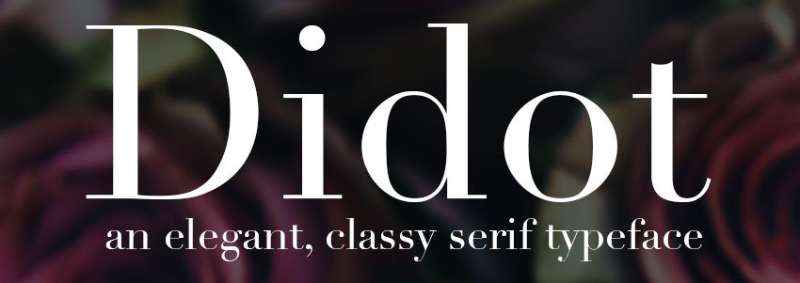
Created by Firmin Didot between 1784 and 1811, this serif font defined French printing for over a century. The Didot family operated the most influential print shop in France and served as official printers for the King.
Today, Didot remains synonymous with fashion publishing.
Typography Characteristics
Didot belongs to the Didone (or Modern) classification. The design features:
- Extreme contrast between thick and thin strokes
- Flat, unbracketed serifs
- Vertical stress axis
- Narrow letterforms with elongated ascenders
- Hairline serifs that require careful handling at small sizes
The “dazzle effect” occurs when thick verticals overpower thin strokes at smaller point sizes. Jonathan Hoefler’s revival for Hoefler & Co addresses this through optical sizing across 7 different sizes.
Luxury Brand Applications
Vogue magazine adopted Didot for its iconic masthead in 1955. The typeface appears across all international editions.
Harper’s Bazaar commissioned Hoefler & Co to create HTF Didot in 1991. Fabien Baron directed this redesign, which the American Society of Magazine Editors called “one of the most dramatic magazine reinventions in history.”
Other applications: Giorgio Armani logo, CBS network branding, Zara’s 2019 rebrand.
Visual Identity Impact
Didot signals grandeur and opulence. Research by Sarah Hyndman found that consumers rated Didot as appearing more expensive than other typefaces in controlled studies.
The hairline serifs create a “typographic veil” effect. Words set in Didot act as overlays on photography without obscuring imagery. Magazine covers benefit from this transparency.
Best Use Cases
Didot performs best for:
- Headlines and display sizes (24pt and above)
- Magazine mastheads and cover lines
- Fashion advertising campaigns
- Luxury packaging design
- Print design on high-gloss paper
Not recommended for body text or digital interfaces at small sizes.
Alternative Options
Bodoni: Similar Modern classification with Italian origins
Playfair Display: Free Google Fonts alternative with comparable contrast
HTF Didot: Hoefler’s contemporary revival with optical sizes
Bodoni
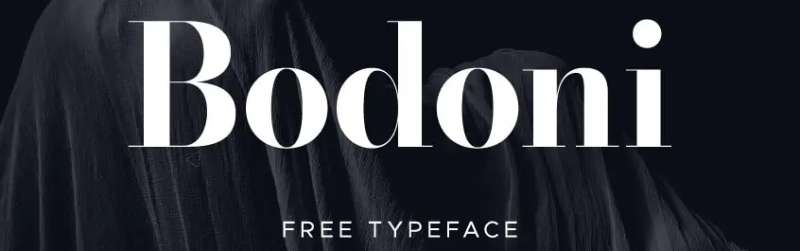
Giambattista Bodoni (1740–1813) developed this typeface in late 18th century Italy. Working in Parma, he earned the title “King of Printers.” The typeface evolved over his 40-year career.
Bodoni and Didot emerged simultaneously but independently. Both represent the Modern serif category.
Typography Characteristics
Bodoni shares the Didone classification with Didot. Key features include:
- High stroke contrast with dramatic thick-thin variation
- Flat, unbracketed hairline serifs
- Geometric construction and vertical stress
- Slightly condensed underlying structure
- Ball terminals on letters like ‘a,’ ‘c,’ ‘f,’ ‘r’
Like Didot, the typeface causes “dazzle” at smaller sizes. ITC Bodoni includes optical sizes for 6, 12, and 72 point to address legibility concerns.
Luxury Brand Applications
Vogue magazine also uses Bodoni variations throughout its pages. The typeface appears in Calvin Klein and Zara logos.
Burberry created a bespoke expanded version of Bodoni for their wordmark. Valentino, Elle, and Elizabeth Arden also use Bodoni or close derivatives.
Music industry adoption includes Nirvana (album covers) and Lady Gaga branding.
Visual Identity Impact
Bodoni conveys Italian craftsmanship and timeless elegance. The dramatic thick-thin contrast creates immediate visual impact.
Massimo Vignelli listed Bodoni among the handful of typefaces sufficient for all design needs. His 1989 collaboration with Tom Carnase produced “Our Bodoni.”
The typeface performs as a “scene-stealer” in brand applications. Its boldness demands attention.
Best Use Cases
Optimal for:
- Fashion logos and wordmarks
- Editorial headlines and pull quotes
- Luxury hotel and restaurant branding
- Movie title sequences
- High-end event invitations
Avoid for extended body copy or low-resolution digital applications.
Alternative Options
Didot: French counterpart with similar classification
ITC Bodoni: Optical size versions for improved legibility
Filosofia: Zuzana Licko’s contemporary Bodoni interpretation
Garamond

Claude Garamond created the original designs in 16th century France. The typeface represents Old Style (or Humanist) serif design. Robert Slimbach’s Adobe Garamond (1989) remains the most widely used digital version.
Garamond has influenced European typography for over 450 years.
Typography Characteristics
Old Style serifs differ from Modern designs like Didot and Bodoni:
- Moderate contrast between thick and thin strokes
- Bracketed serifs with curved connections
- Diagonal stress axis (tilted to the left)
- Organic letterforms inspired by handwriting
- Generous x-height for improved readability
EB Garamond maintains the original font’s elegance while improving online readability through five weights.
Luxury Brand Applications
Lancôme uses Garamond in navigation and captions. The hairline thin strokes communicate heritage and quality.
Rolex employs Garamond-inspired typography elements. The proportions convey craftsmanship.
Other users: Abercrombie & Fitch (2019 rebrand), American Eagle, book publishers including Harry Potter and Hunger Games series.
Visual Identity Impact
Garamond signals tradition without appearing dated. The typeface functions as what typographers call the “quiet aristocrat.” Refined but not showy.
Brands using Garamond communicate:
- Heritage and established reputation
- Intellectual credibility
- Understated sophistication
- Trustworthiness
Best Use Cases
Works well for:
- Book typography and long-form reading
- Luxury wine and spirits labels
- Art gallery and museum materials
- Premium publication body text
- Brands emphasizing heritage
The typeface excels where extended reading comfort matters.
Alternative Options
EB Garamond: Free Google Fonts version optimized for screens
Cormorant: High-contrast display font inspired by Garamond
Sabon: Jan Tschichold’s Garamond revival
Granjon Roman
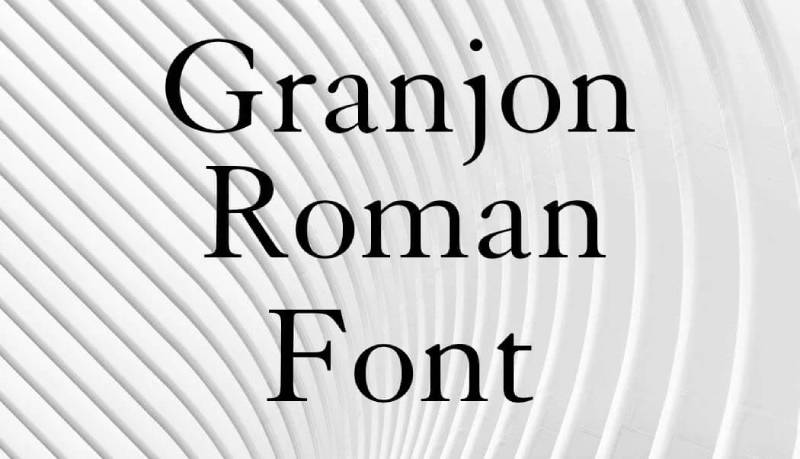
George W. Jones designed Granjon between 1928 and 1929 for Linotype. The typeface draws from Robert Granjon’s 16th century French work. Granjon was a contemporary of Claude Garamond.
This typeface carries serious fashion credentials.
Typography Characteristics
Granjon fits the Old Style serif classification:
- Classic contrast between thick and thin strokes
- Sharp, defined serifs
- Balanced geometric shapes
- Harmonious letter structure
- Refined proportions
The design incorporates calligraphic techniques from the Renaissance period. Thinner strokes suggest delicacy. Thicker strokes provide grounding.
Luxury Brand Applications
Gucci uses Granjon Roman for their wordmark. Aldo Gucci designed the iconic double-G logo in 1933, but the Granjon typography reinforces the brand’s Italian heritage.
The typeface appears across Gucci’s marketing, packaging, and retail environments. Louis Vuitton pairs Futura with Granjon (in logo treatments) to balance modern and classic elements.
Visual Identity Impact
Granjon projects:
- Renaissance refinement
- Italian craftsmanship traditions
- Timeless luxury
- Quiet confidence
The typeface connects modern fashion houses to historical precedent. Consumers perceive authenticity through this typographic heritage.
Best Use Cases
Ideal applications include:
- Fashion house wordmarks
- Luxury leather goods branding
- Premium retail signage
- Editorial applications
- High-end product packaging
Works across print and digital when sized appropriately.
Alternative Options
Garamond: Same historical roots with wider availability
Times New Roman: Similar characteristics, though overused
Cormorant Garamond: Free alternative with comparable elegance
Baskerville

John Baskerville (1706–1775) created this typeface in 1750s England. Initially criticized as “too drastic,” Baskerville’s designs later influenced Bodoni and Didot.
The typeface represents the Transitional classification between Old Style and Modern.
Typography Characteristics
Transitional serifs bridge classical and modern approaches:
- Greater stroke contrast than Old Style fonts
- More vertical stress axis
- Sharper, more refined serifs
- Open, precise letterforms
- Highly legible at various sizes
Baskerville achieved this refinement by inventing darker ink and redesigning his printing press with brass platens for even pressure.
Best Use Cases
Ideal applications:
- Law firm and financial services branding
- High-end real estate marketing
- Premium publication body text
- Academic and literary projects
- Brands requiring authority with approachability
The typeface works across print and screen.
Luxury Brand Applications
Kate Spade uses Baskerville in their branding. The typeface appears on Kindle e-readers as a reading option.
Clarins employs a Baskerville-similar serif as their primary typeface. The contrast and elegance suit beauty product presentation.
Bob Evans and Better Homes and Gardens magazine also use Baskerville, demonstrating its versatility across “homestyle” luxury sectors.
Visual Identity Impact
Baskerville communicates:
- Refined professionalism
- Classical education
- Trustworthiness
- Quiet elegance
The typeface feels like “a perfectly tailored suit.” Sophisticated without pretense. Some research suggests Baskerville increases reader trust in written statements.
Alternative Options
Libre Baskerville: Free Google Fonts version
Mrs. Eaves: Zuzana Licko’s 1996 interpretation
Georgia: Screen-optimized alternative
Cochin
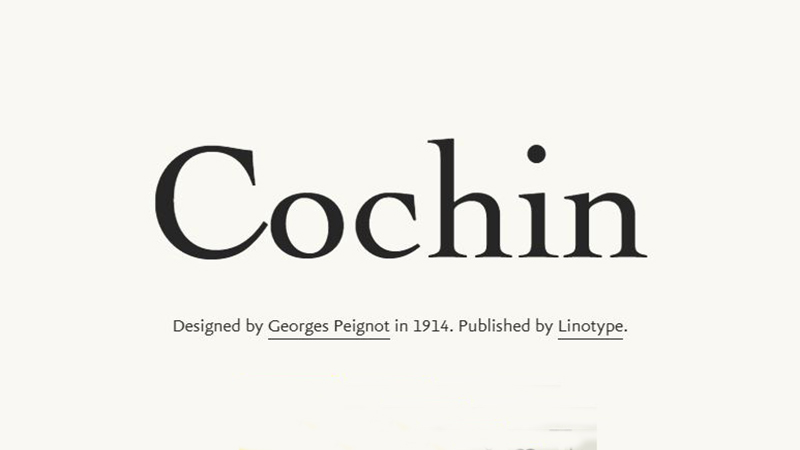
Georges Peignot designed Cochin in 1913, based on 18th century engravings by Nicolas Cochin. Matthew Carter updated the typeface for Linotype in 1977.
The design recently gained attention through Dior’s 2025 rebrand under Jonathan Anderson.
Typography Characteristics
Cochin displays distinctive Old Style features:
- Ornate details and decorative elements
- Elegant italic forms
- Large, expressive capitals
- Classic calligraphic influence
- Distinguished ascenders and delicate strokes
The typeface draws from engraving traditions rather than pen-based calligraphy. This creates an artistic, almost architectural quality.
Luxury Brand Applications
Dior’s 2025 rebrand retired their all-caps wordmark for Cochin typography. The new logo features a capital “D” followed by italicized lowercase letters.
Fashion magazines and luxury editorial frequently use Cochin. The ornate style suits high-end product labels and sophisticated marketing materials.
Visual Identity Impact
Cochin suggests:
- Artistic heritage
- French refinement
- Handcrafted quality
- Historical connection
The typeface’s engraving origins create associations with craftsmanship and attention to detail.
Best Use Cases
Works best for:
- Fashion brand identity
- Editorial headlines and titles
- Luxury product labels
- Event invitations
- Short-form elegant text
Screen resolution may affect intricate details at small sizes.
Alternative Options
Garamond: Similar Old Style classification
Baskerville: Comparable elegance with broader uses
Caslon: English alternative from same era
Futura
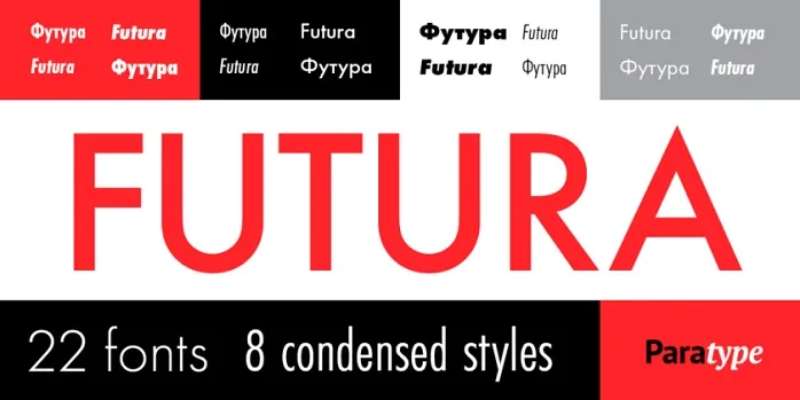
Paul Renner designed Futura in 1927 for the Bauer Type Foundry in Germany. The typeface represents Bauhaus design principles and geometric sans-serif font construction.
Futura was radical for its time. Nearly a century later, it still feels contemporary.
Typography Characteristics
Geometric sans-serif features include:
- Letterforms based on circles, triangles, and straight lines
- Near-monolinear stroke weights
- Tall ascenders and geometric “O” shapes
- Low stroke contrast
- Modern, forward-looking aesthetic
Renner refined early versions for readability without sacrificing geometric purity. Subtle optical adjustments ensure harmony across characters.
Luxury Brand Applications
Louis Vuitton uses Futura Medium for their wordmark. The clean geometry communicates modernity while the LV monogram (Georgia-inspired) provides heritage contrast.
Gucci pairs Granjon (logo) with Futura (body copy). This combination balances classic and modern elements.
Other users: Nike, Dolce & Gabbana, Supreme, Red Bull, Absolut Vodka. NASA used Futura on the plaque left on the moon in 1969.
Visual Identity Impact
Futura communicates:
- Innovation and progress
- Confidence and precision
- Timeless modernity
- Premium quality
The typeface suits brands wanting to appear forward-thinking while maintaining elegance. Its neutrality works across luxury, athletic, and technology sectors.
Best Use Cases
Optimal for:
- Brand wordmarks and logos
- Headlines and display text
- Modern luxury packaging
- Digital interfaces
- Advertising campaigns
Works across all media. The full font family (Light to Bold) provides typographic hierarchy flexibility.
Alternative Options
Avenir: Adrian Frutiger’s geometric alternative
Proxima Nova: Contemporary geometric option
Century Gothic: Similar aesthetic with wider availability
Helvetica Neue
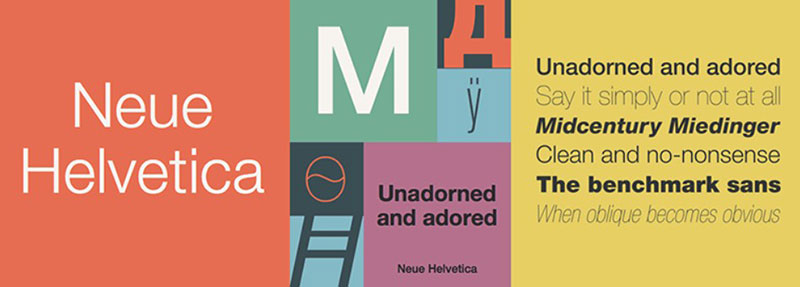
Helvetica emerged in 1957 from Swiss designers Max Miedinger and Eduard Hoffmann. Helvetica Neue refined the original in 1983 with consistent stroke widths and improved font spacing.
This typeface dominated digital design for decades.
Typography Characteristics
Neo-grotesque sans-serif features:
- Neutral, objective letterforms
- Uniform stroke weight
- Tight letter spacing
- Large x-height for legibility
- Minimal distinguishing characteristics
The 2019 release Helvetica Now updated the design with optical sizes (Micro, Text, Display) and modern alternates.
Luxury Brand Applications
Chanel uses Helvetica as supporting typography alongside their wordmark. The combination projects “pure, chic and timeless” identity.
Fendi, A.P.C., Fragment Design, Hood By Air, and The North Face all employ Helvetica or Helvetica Neue.
Apple used Helvetica Neue as their system font from 2010 to 2015 (then switched to San Francisco).
Visual Identity Impact
Helvetica Neue signals:
- Modernity and cleanliness
- Swiss design precision
- Universal accessibility
- Confident simplicity
The typeface functions as an “empty container.” Its neutrality allows brand imagery and messaging to dominate.
Fashion brands use Helvetica to signal new eras or creative director changes. Saint Laurent, Burberry, Balmain, and Celine all adopted cleaner sans-serif wordmarks.
Best Use Cases
Works well for:
- Brand wordmarks and logotypes
- User interface design
- Supporting typography
- Navigation and wayfinding
- Modern luxury retail signage
The neutrality suits brands prioritizing imagery over typographic personality.
Alternative Options
San Francisco: Apple’s custom replacement
Inter: Open-source alternative for digital
Univers: Adrian Frutiger’s systematic sans-serif
Gotham
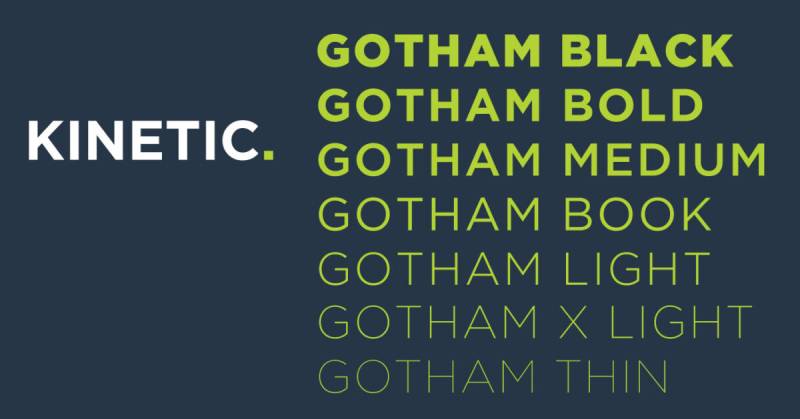
Gotham brings architectural strength into brand identity work. Designed in 2000 by Tobias Frere-Jones, this geometric sans-serif pulls inspiration from mid-century New York building signage.
Typography Characteristics
Geometric sans-serif with industrial roots
The letterforms trace back to Port Authority Bus Terminal signage. Tall x-height and wide apertures drive legibility across sizes.
Circular shapes combine with straight-cut terminals. No rounded edges soften the forms.
Weight range spans thin to ultra with matching italics. 33 weights total across four widths give flexibility without losing character.
Perfect stroke weight distribution. Neither too mechanical nor too humanist.
Luxury Brand Applications
Tom Ford, Chanel, and Netflix all adopted Gotham for their brand systems. Starbucks ran election promotions with it.
Fashion houses prefer the bold and medium weights for logos and navigation. Retail environments use book weight for product descriptions.
Spotify built their entire interface around this typeface. Twitter (pre-rebrand) ran headlines in Gotham Medium.
Works across packaging, advertising, and digital platforms. Print materials hold up at small sizes due to those wide apertures.
Beauty brands like Tom Ford use it for masculine edge that still reads as premium.
Visual Identity Impact
The font signals contemporary strength. Brands adopt it to communicate reliability without stuffiness.
Obama’s 2008 campaign proved its democratic appeal (the font reads as accessible yet authoritative). That association stuck.
Creates visual consistency across touchpoints. The geometric structure enforces order while curves prevent coldness.
Suburban associations work against luxury positioning in some contexts. Better suited for urban, modern brands than heritage houses.
Best Use Cases
Digital interfaces benefit from Gotham’s screen optimization. Mobile apps render cleanly at any resolution.
Primary applications:
- Logo design for tech-forward luxury brands
- Website navigation and UI elements
- Packaging when paired with refined serifs
- Corporate communications requiring approachable professionalism
Print holds up well for editorial work. Magazine spreads use it for pull quotes and captions.
Avoid body text beyond 300 words. The geometric precision fatigues readers in long passages.
Alternative Options
Brandon Grotesque offers similar geometric appeal with more warmth. Slightly condensed proportions work better for tight layouts.
Montserrat provides a free option inspired by Gotham’s structure. Open-source licensing suits smaller budgets.
Pair with Playfair Display for serif contrast. Didot works for ultra-luxury positioning.
TT Norms Pro delivers almost identical proportions with expanded language support.
Optima
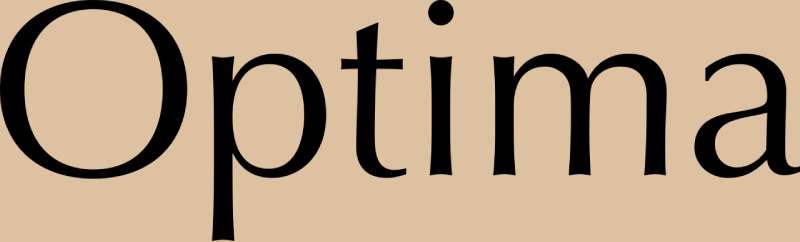
Hermann Zapf created Optima in 1958 after studying Renaissance tombstone lettering in Florence. This humanist sans-serif bridges classical proportions with modern simplicity.
Typography Characteristics
Humanist sans-serif with subtle flared stroke endings
The letterforms suggest serifs without adding them. Stroke terminals widen slightly, creating visual emphasis where serifs would traditionally sit.
Classical Roman capital proportions. Renaissance stone-carving techniques influenced the character shapes.
Wide spacing and low x-height create an open, splayed appearance. Seven weights from light to heavy.
Optima Nova (2002 redesign) added true italics instead of obliques. Old style figures and small caps expanded the family’s versatility.
Luxury Brand Applications
Estée Lauder built their entire brand identity around Optima’s refined elegance. Yves Saint Laurent adopted it for sophisticated minimalism.
Beauty sector dominates Optima usage. The font appears in 40% of luxury cosmetics branding.
Corporate identity work for law firms and financial services. Memorial inscriptions (Vietnam Veterans Memorial, September 11 Memorial).
Light weights suit premium packaging. The delicate strokes convey finesse on skincare products and fragrance boxes.
McCain’s 2008 presidential campaign chose it (though design critics questioned the execution).
Visual Identity Impact
Communicates timeless sophistication. The stone-carving heritage adds gravitas.
Bridges traditional and contemporary aesthetics. Works for heritage brands modernizing or new brands seeking credibility.
High-contrast strokes at light weights create fragility. This reads as delicacy in beauty contexts but weakness elsewhere.
Overused in cosmetics market (Monotype research shows pattern saturation). Hard to differentiate from competitors using identical choices.
Best Use Cases
Luxury skincare and beauty packaging leverages Optima’s delicate nature. Short text treatments in all caps maximize impact.
Corporate branding for professional services. Financial advisors and legal practices benefit from the classical authority.
Recommended contexts:
- Spa and wellness materials
- Premium food packaging
- Editorial mastheads
- Monument and memorial inscriptions
Text settings below 12pt lose clarity. Those hairline strokes disappear on screens at small sizes.
Avoid extended body copy. The wide spacing and low x-height reduce reading comfort.
Alternative Options
Filosofia delivers similar elegance with higher contrast. Modern Didone structure feels more fashion-forward.
Freight Sans combines warmth with professional polish. Better screen performance than Optima.
Hypatia Sans offers comparable stone-carved feel. Slightly more geometric, less expensive licensing.
Pair with Garamond or Baskerville for traditional luxury. Proxima Nova works for contemporary support text.
Proxima Nova
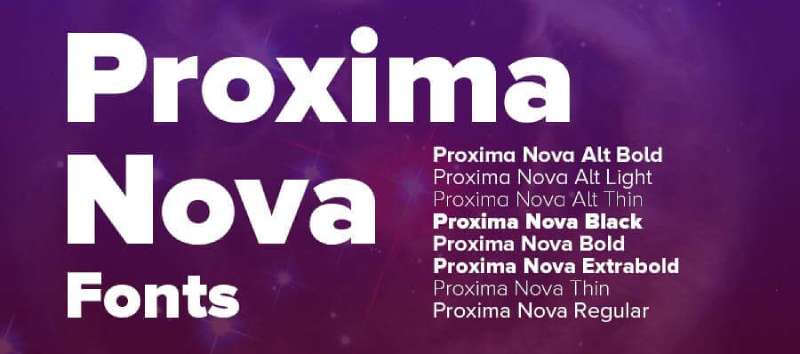
Mark Simonson released Proxima Nova in 2005 after 25 years of development. This geometric sans-serif blends Futura’s shapes with Akzidenz-Grotesk proportions.
Typography Characteristics
Hybrid geometric sans combining modernist geometry with humanist proportions
Circular forms meet functional spacing. Not purely geometric (like Futura) or strictly grotesque (like Helvetica).
Modern proportions prevent the dated feel of pure geometric fonts. Slightly open apertures aid legibility.
Eight weights from thin to black with matching italics. Small caps, condensed, and extra condensed widths.
Supports 110+ languages including Arabic, Thai, Devanagari, and Cyrillic. 80 font styles in the complete superfamily.
Neutral character with contemporary freshness. Approachable without sacrificing professionalism.
Luxury Brand Applications
Burberry uses Proxima Nova as primary font for headings, captions, and body copy. Clean modernism contrasts their heritage logo.
Fashion brands adopted it for web and digital: Jimmy Choo built dynamic visual relationships with it.
BuzzFeed, Mashable, NBC News, and Wired standardized on Proxima Nova. Over 25,000 websites deploy it.
Airbnb, Twitter (historical), and Spotify chose it for interface work. Tech companies favor its screen optimization.
Mid-2010s saw peak adoption. Now designers seek fresher alternatives to avoid ubiquity.
Visual Identity Impact
Projects contemporary sophistication without coldness. The humanist touches prevent geometric sterility.
Versatile across contexts. Works equally for luxury fashion and tech startups.
Overuse creates recognition challenges. Brands struggle to differentiate when competitors use identical typography.
Clean, minimalist look adapts to different resolutions. Smartphone to desktop rendering stays consistent.
Serious tone without stuffiness. More formal than rounded sans, less rigid than neo-grotesques.
Best Use Cases
Digital interfaces and websites represent ideal territory. The font was designed for screen rendering.
Editorial work (magazines, blogs, newsletters). Readable at text sizes while distinctive in headlines.
Strong applications:
- Mobile app UI
- E-commerce product pages
- Corporate presentations
- Minimalist packaging
Marketing materials for modern luxury brands. Fashion and lifestyle sectors get the most mileage.
Long-form reading works better than geometric alternatives. Extended articles stay comfortable.
Alternative Options
TT Norms Pro offers nearly identical graphics with comparable spacing. Almost interchangeable replacement.
Montserrat provides free geometric alternative. More energetic, less polished than Proxima Nova.
Proxima Sera (designed by Simonson) creates perfect serif companion. Mirrors rhythm and spacing.
Pair with Meno or IvyBodoni for high-fashion contrast. Freight series works for editorial sophistication.
Univers
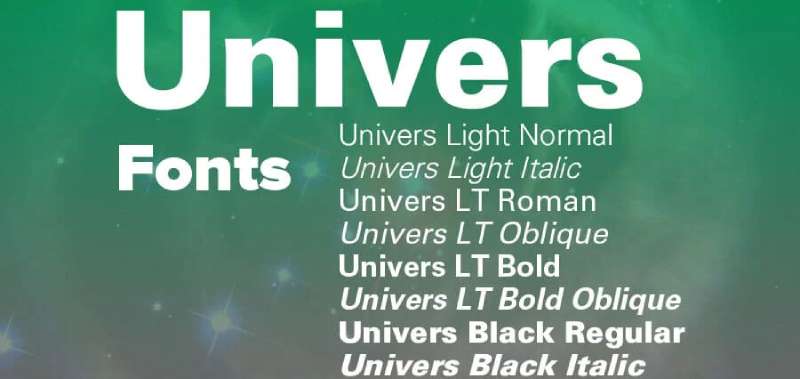
Adrian Frutiger designed Univers in 1957 as a comprehensive family system. This neo-grotesque sans-serif introduced numbered weight/width classification.
Typography Characteristics
Systematic neo-grotesque with coordinated family structure
Released for phototypesetting with 21 weights organized by numerical system. First digit = weight (3-8), second = width (3-9).
Even numbers indicate obliques. Inconsistent application across digital versions created confusion.
Lower x-height than Helvetica. Wide letter spacing gives splayed, low-slung appearance especially in bold weights.
Straight ascenders on numerals. Tail of lowercase ‘y’ descends straight down.
Revised in 1997 as Linotype Univers (renamed Univers Next in 2010). Expanded to include Greek, Cyrillic, and Arabic.
Luxury Brand Applications
Prada uses Univers for main navigation (all caps) on their website. Pairs with bespoke modern serif logo.
Bobbi Brown cosmetics adopted Univers Ultra Condensed for their logo. Only luxury beauty brand using narrow proportions in branding.
Audi contracted MetaDesign to create Audi Sans (variant based on Univers). Became corporate identity font through 1990s-2000s.
Apple used it for laptop keyboards until 2007 (switched to VAG Rounded).
Corporate applications dominated 1960s-1970s. Munich Re ran custom version until 2009.
Visual Identity Impact
Communicates professional dependability. Less trendy than Helvetica but equally Swiss-modern.
The systematic family structure enables precise visual hierarchy. Designers access exact weight/width combinations.
Wide spacing and low x-height create open feel. Text blocks appear less dense than Helvetica equivalents.
Neutral enough for varied industries. Contemporary without futuristic associations.
Lacks the warmth needed for certain luxury contexts. Better for minimalist brands than romantic ones.
Visual Identity Impact
Projects Swiss precision and rationality. The design system itself communicates order.
Timeless modernism without trendiness. Doesn’t date the way geometric fonts can.
Narrower condensed weights suit fashion applications. Luxury brands use them for editorial impact.
Accessibility across applications. Corporate literature to product packaging to signage.
Best Use Cases
Corporate identity systems benefit from the weight/width flexibility. Complex brand guidelines need systematic fonts.
Signage and wayfinding. Originally designed for legibility at distance (Charles de Gaulle Airport).
Ideal contexts:
- Luxury retail navigation
- Product labeling
- Technical documentation
- Print editorial (especially condensed weights)
Fashion brands use condensed weights for dramatic headlines. Works well set in all caps.
Web usage requires careful size consideration. The low x-height demands larger point sizes for readability.
Alternative Options
Helvetica offers similar neutrality with tighter spacing. More ubiquitous but also more recognized.
Akzidenz-Grotesk provides historical authenticity. Influenced both Univers and Helvetica.
Neue Haas Grotesk delivers refined grotesque alternative. Recently revised with exceptional quality.
Pair with Didot or Bodoni for luxury fashion. FS Siena creates sophisticated all-caps combinations.
ITC Avant Garde Gothic
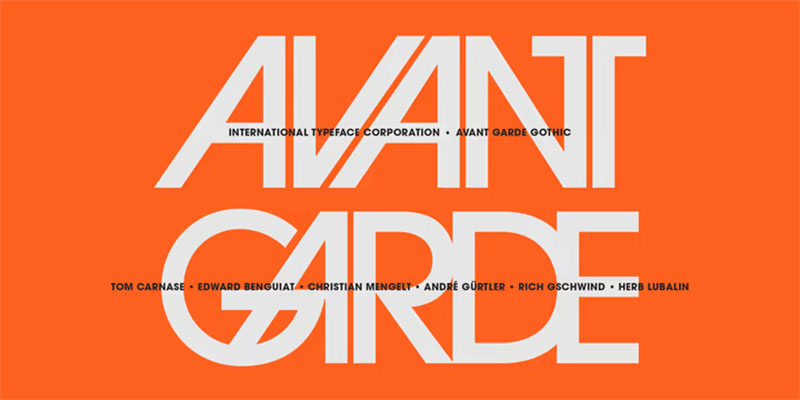
Herb Lubalin and Tom Carnase based this 1970 design on Avant Garde magazine’s logo. Geometric sans-serif with distinctive alternate characters and ligatures.
Typography Characteristics
Geometric sans-serif with extensive alternates
Heavily influenced by 1920s Bauhaus movement. Purely geometric construction from circles and straight lines.
Tall x-height and wide characters. No humanistic softening.
Five weights (four for condensed) with complementary obliques. Ed Benguiat drew condensed fonts in 1974.
33 alternate characters and ligatures in OpenType version. Includes sloped A and V that designers either love or overuse.
Large open counters make it friendly. Font reads as approachable despite geometric precision.
Luxury Brand Applications
Adidas built their logo around ITC Avant Garde Gothic. Geometric shapes communicate athletic modernity.
Beauty brands occasionally adopt condensed version. Creates narrow, elegant proportions for packaging.
Century 21 Real Estate, Macy’s department store used it historically. Bold presence projects confidence.
Fashion editorials in 1970s-1980s. The magazine heritage made it popular for layout work.
Less common in contemporary luxury branding. The 1970s associations feel dated to many designers.
Visual Identity Impact
Projects bold modernism with geometric clarity. Communicates progressive thinking.
The ligatures create typographic flair but require restraint. Ed Benguiat noted the font looks best in the words “Avant Garde.”
Distinctive enough for brand recognition. Geometric precision separates it from neo-grotesques.
1970s aesthetic persists despite redesigns. Works for retro-modern positioning but fights timeless luxury.
Friendliness from open counters. More approachable than Futura’s coldness.
Best Use Cases
Logo design and wordmarks leverage the distinctive alternates. Short text treatments maximize character.
Headlines and display typography. The geometric forms create visual impact at large sizes.
Recommended applications:
- Retro-modern branding
- Fashion editorial headlines
- Athletic and sportswear brands
- Cultural institutions
Avoid body text. The wide characters and tall x-height reduce reading efficiency.
Works better for American brands than European. The Bauhaus influence reads differently across markets.
Alternative Options
Century Gothic provides similar geometric structure (actually designed as Avant Garde replacement). Free availability on most systems.
Futura offers purer Bauhaus geometry. More timeless, less distinctive.
Twentieth Century (Monotype) served as basis for Century Gothic. Historical alternative to ITC version.
Pair with Baskerville or Palatino for refined contrast. Modern serif fonts often clash with the geometry.
Century Gothic
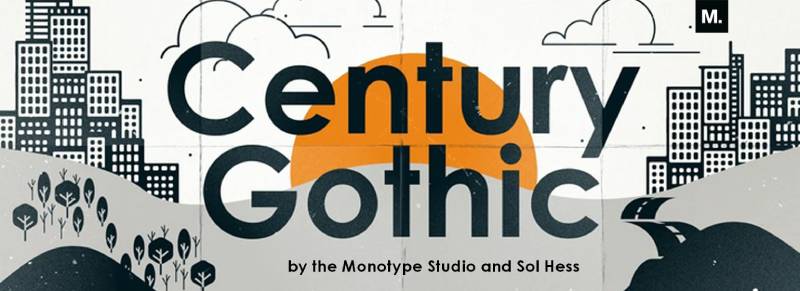
Sol Hess designed the original Twentieth Century in 1936-1947 (based on Futura). Monotype digitized it as Century Gothic, positioning it as metric-compatible alternative to ITC Avant Garde Gothic.
Typography Characteristics
Geometric sans-serif optimized for digital document sharing
Based on Monotype Twentieth Century, which itself referenced Futura’s geometric principles. Born digital during desktop publishing era.
Wide, open forms with circular geometry. Simple, unadorned letterforms.
Four weights (regular, bold, italic, bold italic) in standard release. Limited family compared to competitors.
Metric compatibility with ITC Avant Garde Gothic enables cross-platform layout consistency. Documents maintain formatting when fonts substitute.
Includes the distinctive geometric traits: circular O, geometric G without spur, consistent character widths.
Luxury Brand Applications
Dior’s website employs Century Gothic for supporting typography. Captions use all caps, body copy mixes case.
Light weight appears grey on screen, knocking back text hierarchy. Creates subtle sophistication.
Less prevalent in luxury contexts than Avant Garde Gothic. Budget constraints often drive the choice (system font availability).
Fashion brands sometimes use it for secondary materials. Invitations, thank-you cards, lookbook captions.
Corporate applications outnumber luxury uses. Professional service firms favor it for clean modernism.
Visual Identity Impact
Communicates contemporary minimalism. Geometric simplicity reads as straightforward and modern.
System font availability makes it accessible but also common. Harder to build distinctive brand identity.
Light weight’s grey appearance on screen creates elegant understatement. Heavy weights lack the refinement needed for true luxury.
Works better as supporting typography than hero font. Pairs well with stronger display faces.
The Futura heritage shows through. Designers familiar with type history recognize the lineage.
Best Use Cases
Budget-conscious luxury branding gets clean geometry without licensing fees. Small brands benefit from system availability.
Digital documents requiring font substitution. Corporate communications and PDFs that travel between systems.
Suitable contexts:
- Email newsletters
- Digital lookbooks
- Presentation decks
- Secondary brand applications
Pairs well with high-contrast serifs. The geometric simplicity creates effective counterpoint.
Avoid primary logo applications. The commonness undermines luxury positioning.
Alternative Options
ITC Avant Garde Gothic provides the premium version Century Gothic mimics. Worth the investment for serious branding.
Futura offers more refinement at similar geometric structure. Superior optical adjustments across weights.
Brandon Grotesque delivers geometric warmth. Better weight range and more sophisticated spacing.
Montserrat (free alternative) provides similar geometry with more weights. Open-source licensing appeals to startups.
FS Siena

Fontsmith created FS Siena specifically for luxury branding applications. Released to fill the gap between heritage serifs and geometric sans options.
Typography Characteristics
Contemporary sans-serif designed for premium positioning
Clean, modern letterforms with subtle refinement. Not purely geometric or strictly grotesque.
Carefully crafted for luxury contexts. Every detail considered for upscale applications.
Multiple weights providing flexibility across brand touchpoints. Designed as comprehensive family system.
High contrast between weights. Light versions convey delicacy, heavy weights communicate strength.
Open counters and refined proportions. Classical influences temper modern structure.
Luxury Brand Applications
Beauty sector represents primary market. Fontsmith developed it after research showed Optima/Gotham saturation.
Provides differentiation in crowded luxury cosmetics space. Helps brands establish unique identity.
Fashion and lifestyle brands adopted it for fresh luxury aesthetic. Neither too traditional nor overly trendy.
Works across packaging, editorial, and digital. Consistent performance in varied applications.
Premium positioning without heritage associations. Good for newer luxury brands building credibility.
Visual Identity Impact
Signals contemporary luxury. The bespoke nature communicates investment in brand identity.
Sophisticated without stuffiness. Balances accessibility with premium positioning.
Creates visual distinction from competitors using Optima or Gotham. Helps brands stand out in saturated markets.
Versatile enough for varied luxury sectors. Beauty, fashion, lifestyle, hospitality all work.
Modern refinement appeals to younger luxury consumers. Doesn’t alienate traditional clientele.
Best Use Cases
Luxury beauty and cosmetics packaging represents ideal application. Designed specifically for this market.
Premium lifestyle branding across categories. Hospitality, wellness, fashion accessories.
Strong contexts:
- Skincare product ranges
- Boutique hotel materials
- High-end food and beverage packaging
- Luxury service businesses
Editorial applications in fashion magazines. Works for both headlines and supporting text.
Digital branding for luxury e-commerce. Renders well on screens while maintaining premium feel.
Alternative Options
Optima provides classical alternative with stone-carving heritage. More traditional positioning.
Gotham offers geometric modernism. Stronger, more masculine than FS Siena’s refinement.
Proxima Nova delivers contemporary versatility. More ubiquitous but proven performance.
Create distinction by pairing with unique serif. Mrs Eaves or Freight Display add character.
TT Neoris
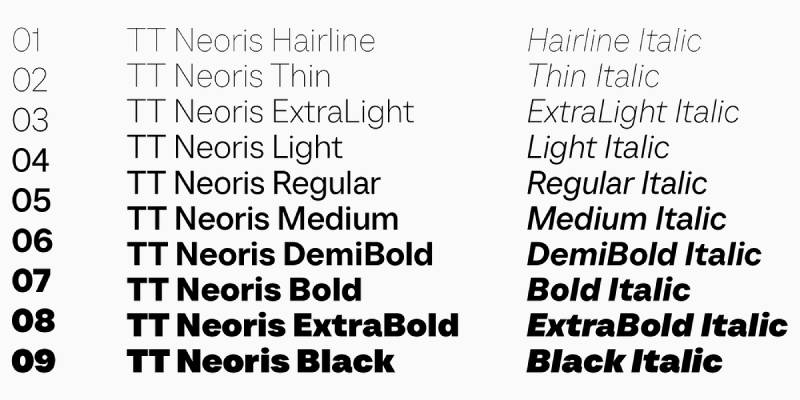
TypeType foundry developed TT Neoris as modern geometric sans-serif. Contemporary alternative to established geometric fonts.
Typography Characteristics
Geometric sans-serif with refined contemporary proportions
Clean geometric construction with modern adjustments. Avoids dated Bauhaus associations.
Wide range of weights and widths. Comprehensive family for complex brand systems.
Carefully balanced proportions prevent the coldness of pure geometry. Subtle optical corrections enhance readability.
Open apertures and generous spacing. Designed for both screen and print optimization.
Extended language support. Covers major European and Cyrillic character sets.
Luxury Brand Applications
Tech-forward luxury brands find TT Neoris appealing. Balances innovation with sophistication.
Fashion brands seeking contemporary edge. Works for streetwear-influenced luxury labels.
Less saturated than Proxima Nova or Gotham. Provides similar aesthetic with more distinction.
Digital-first luxury applications. E-commerce platforms and app-based services.
Appeals to brands targeting younger luxury consumers. Modern without sacrificing premium positioning.
Visual Identity Impact
Communicates contemporary sophistication. Geometric structure reads as precise and intentional.
Fresh alternative to overused geometrics. Helps brands avoid Proxima Nova fatigue.
Versatile across applications. Print, digital, environmental graphics all work.
Modern refinement without trendiness. Won’t date quickly like fashion-forward display fonts.
Professional polish suitable for luxury. Neither too casual nor excessively formal.
Best Use Cases
Digital luxury branding represents primary strength. App interfaces, websites, digital campaigns.
Contemporary fashion and streetwear-luxury crossover. Brands blending casual and premium.
Recommended contexts:
- Tech luxury products
- Modern fashion brands
- Digital-first services
- Contemporary art institutions
Corporate luxury applications. Financial technology, professional services with modern positioning.
Packaging when paired with refined serifs. The geometric simplicity creates effective contrast.
Alternative Options
Proxima Nova provides similar proportions with established track record. More widely recognized.
TT Norms Pro (same foundry) offers comparable quality with slight variation. Good for brands wanting TypeType aesthetic.
Circular delivers rounded geometric alternative. Softer, more approachable feel.
Gotham remains option for brands wanting architectural strength. More established in luxury contexts.
Salina
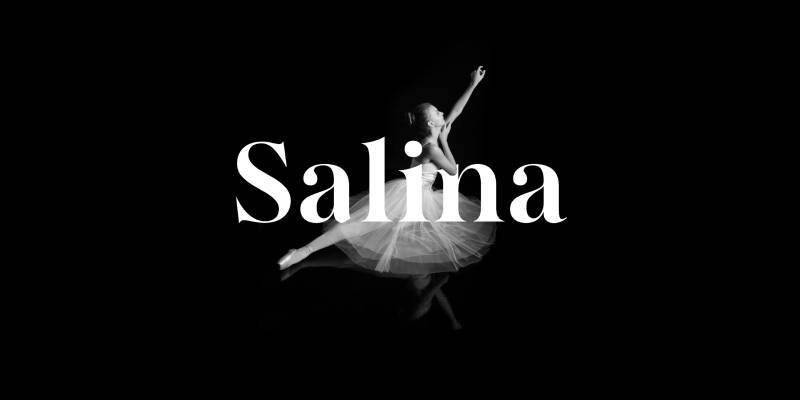
Ivelina Martinova designed Salina for Fontfabric with creative support from Plamen Motev and Vika Usmanova. This modern transitional serif brings high-contrast elegance to luxury branding.
Typography Characteristics
Transitional serif with striking stroke contrast
High contrast between thick and thin strokes creates dramatic visual impact. Smooth graceful ovals meet sharp bracketed serifs.
Round ball terminals add playful refinement. The delicate hairlines demand careful sizing.
28 static styles range from Extra Light to Black with matching italics. Variable font options provide infinite weight adjustment.
Swashes subfamily offers ornamental flourishes for added elegance. Advanced OpenType features include stylistic alternates and ligatures.
Supports Extended Latin and Cyrillic. Covers 130+ languages for international luxury brands.
Luxury Brand Applications
Fontfabric positions Salina specifically for luxury brand identity work. The high contrast communicates premium positioning.
Fashion and beauty sectors represent primary markets. Editorial layouts for luxury magazines benefit from the dramatic letterforms.
Packaging design for cosmetics and skincare products. The refined serifs suggest heritage and craftsmanship.
Premium food and beverage brands use it for sophisticated label design. Wine labels and gourmet product packaging.
Wedding invitations and luxury event materials. The swashes add ceremonial elegance.
Visual Identity Impact
Communicates timeless sophistication through classical proportions. The transitional structure bridges traditional and contemporary aesthetics.
High contrast creates strong visual presence. Headlines command attention while maintaining elegance.
Exclusivity signaling through refined details. The careful craftsmanship visible in every character.
Versatile enough for varied luxury contexts. Works for heritage brands and modern luxury equally.
The swashes enable customized elegance. Designers can adjust formality levels through alternate selections.
Best Use Cases
Editorial headlines and luxury magazine layouts maximize the dramatic contrast. Large display sizes showcase the refined details.
Packaging for premium beauty and cosmetics products. The delicate nature reads as sophistication.
Recommended applications:
- Fashion brand lookbooks
- Luxury product packaging
- Wedding and event stationery
- Premium wine and spirits labels
- High-end restaurant menus
Avoid small text sizes. Those hairline strokes disappear below 14pt in print, 16pt on screen.
Digital usage requires careful consideration. The high contrast can create rendering issues at body text sizes.
Alternative Options
Didot provides similar high-contrast elegance with stronger fashion associations. More recognizable in luxury contexts.
Bodoni delivers comparable drama with slightly different proportions. Classic choice for fashion branding.
Freight Display offers refined contrast with better screen performance. Modern alternative to classical didones.
Pair with Proxima Nova or Nexa for clean sans-serif contrast. Geometric simplicity balances ornate serifs.
Nexa
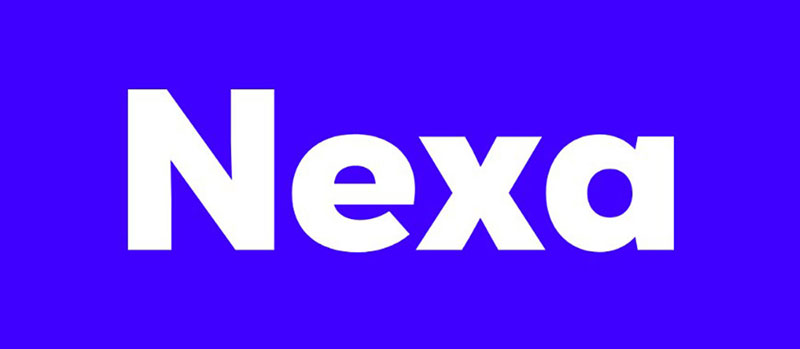
Svetoslav Simov created Nexa for Fontfabric in 2008, with updates by Mirela Belova, Stan Partalev, and team. This geometric sans-serif became one of Fontfabric’s bestselling typefaces.
Typography Characteristics
Geometric sans-serif with clean-cut forms
Pure geometric construction from circles and straight lines. Sharp edges create modern precision.
Prominent x-height drives legibility across sizes. Wide apertures keep counters open and clear.
36 styles total including 10 weights from Hairline to Black with italics. Nexa Text subfamily optimized for longer reading.
Extra Light weight added in 2020 update. Futurist stylistic set (SS02) provides alternative display look.
Extended Latin, Cyrillic, and Greek support. Covers 130+ languages with Bulgarian localization.
Luxury Brand Applications
Nike, Lipton, and Nestle use Fontfabric fonts in their brand systems. Nexa’s geometric clarity appeals to modern luxury brands.
Corporate identity work for tech-forward luxury companies. Clean modernism communicates innovation.
Advertising and packaging for contemporary luxury products. Works across print and digital touchpoints.
Web and app UI for premium e-commerce platforms. The optimized text subfamily handles interface typography.
Motion graphics and video branding. The geometric forms animate cleanly.
Visual Identity Impact
Projects modern sophistication without coldness. The balanced proportions prevent geometric sterility.
Versatile across luxury sectors. Fashion, technology, automotive, and lifestyle brands all find applications.
Strong headlines command attention. The geometric precision reads as intentional and premium.
Friendly yet professional. More approachable than strict geometrics like Futura.
Contemporary without trendiness. The design avoids dated associations while feeling current.
Best Use Cases
Branding and corporate identity systems benefit from the comprehensive weight range. Flexibility across applications.
Website and app UI design. Nexa Text handles body copy while display weights create hierarchy.
Strong contexts:
- Tech luxury products
- Modern fashion brands
- Premium automotive branding
- Luxury hospitality websites
- Contemporary art institutions
Advertising posters and billboards. The geometric forms scale effectively.
Product packaging when paired with refined serifs. Creates effective typographic contrast.
Alternative Options
Mont (also Fontfabric) provides similar geometric structure with different character. Equally modern, slightly warmer feel.
Gotham offers comparable versatility with architectural heritage. More established in luxury markets.
Brandon Grotesque delivers geometric warmth. Rounded terminals soften the precision.
Pair with Playfair Display for luxury editorial work. Salina creates sophisticated serif companion for Fontfabric consistency.
Mont
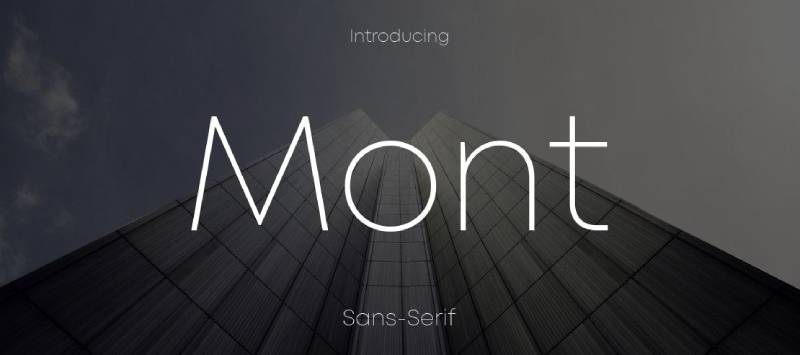
Svetoslav Simov and Mirela Belova designed Mont for Fontfabric in 2017. This geometric sans-serif earned #1 Bestselling Typeface recognition in 2018.
Typography Characteristics
Pure geometric sans-serif with balanced proportions
Construction based on fundamental geometric forms (triangle, square, circle). Clean modern aesthetic from mathematical precision.
Low contrast and prominent x-height define exceptional legibility. Circular foundations on round characters (b, d, p, q, o, c, e).
22 styles (2025 update) include 10 weights from Hairline to Black with italics. Variable fonts added for smooth weight transitions.
Distinctive pointed triangular bracketed “t” creates recognizable character. Unique detail separates it from generic geometrics.
Extended Latin, Cyrillic, and Greek. 130+ language support with improved screen hinting.
Luxury Brand Applications
Fontfabric recommends Mont alongside Nexa and Salina for modern luxury brands. Contemporary feel suits innovation-focused companies.
Premium tech and lifestyle brands appreciate the geometric clarity. Modern luxury positioning without heritage associations.
Fashion brands seeking contemporary edge. Works for streetwear-luxury crossover and minimalist aesthetics.
Corporate branding for professional services. The balanced proportions communicate competence and modernity.
Packaging design paired with luxury serifs. The geometric simplicity creates clean foundations.
Visual Identity Impact
Communicates modern confidence through geometric precision. The mathematical foundations read as intentional and professional.
Versatile across scales. Hairline weights for delicate elegance, Black weights for bold statements.
The distinctive “t” provides brand recognition. Small detail creates typographic personality.
Contemporary without dating quickly. Avoids trend-specific associations while feeling current.
Balanced enough for extended use. Text weights handle body copy comfortably.
Best Use Cases
Headlines and logos leverage the distinctive geometric character. Strong visual presence at display sizes.
Long text passages work with standard weights. The prominent x-height maintains readability.
Ideal applications:
- Modern luxury branding
- Tech product interfaces
- Contemporary fashion
- Professional services
- Editorial layouts
Web, print, and motion graphics. The 2025 update improved digital rendering significantly.
Packaging when sophistication matters more than heritage. Clean modernity over traditional luxury.
Alternative Options
Nexa (Fontfabric) offers similar geometric structure. Slightly different details, comparable applications.
Futura provides purer Bauhaus geometry. More historical weight, less contemporary refinement.
TT Norms Pro delivers comparable quality from TypeType foundry. Modern geometric alternative.
Pair with Salina for Fontfabric serif companion. Freight Display works for editorial sophistication.
Clan Pro

Lukasz Dziedzic created FF Clan for FontFont between 2006 and 2008. This versatile sans-serif system offers 84 weights across six width variations.
Typography Characteristics
Comprehensive sans-serif family with systematic width variations
84 weights range from Thin to Ultra across Compressed, Condensed, Narrow, Medium, Wide, and Extended. Each includes italics.
Humanist sans-serif proportions. More refined than pure geometric fonts, more structured than grotesques.
Advanced typographical features include ligatures, small capitals, case-sensitive forms, and fractions. Complete figure set options (oldstyle and lining, tabular and proportional).
Clean, professional letterforms. Neutral enough for varied applications while maintaining character.
Extensive language support. Designed for international luxury brand systems.
Luxury Brand Applications
Neil Summerour (French typeface designer) notes Clan Pro’s ability to stand out. Modern sans-serif family for distinctive branding.
Corporate identity systems for professional luxury services. Law firms, financial services, consulting.
Advertising and packaging across luxury sectors. The width variations provide precise typographic control.
Editorial and publishing for luxury magazines and catalogs. Small text legibility with display weight impact.
Wayfinding and signage for luxury retail environments. Extended family handles all hierarchy needs.
Logo and brand identity work. The systematic family supports complex brand guidelines.
Visual Identity Impact
Projects professional sophistication through refined letterforms. The humanist proportions feel polished and intentional.
Systematic family structure enables precise visual hierarchy. Designers access exact width/weight combinations needed.
Modern without trendiness. The design stays current without fashion-forward associations that date.
Versatile across luxury contexts. Professional services, fashion, automotive, hospitality all work.
The width variations create distinctive brand voices. Condensed for editorial impact, Extended for open luxury feel.
Best Use Cases
Complex brand systems requiring comprehensive typographic flexibility. Corporate identity programs with varied applications.
Luxury editorial and publishing. Magazines, catalogs, annual reports all benefit from the systematic family.
Recommended contexts:
- Professional service branding
- Luxury automotive materials
- High-end real estate marketing
- Fashion editorial layouts
- Retail wayfinding systems
Small text and body copy. The design maintains legibility at text sizes while providing display impact.
Packaging when precise typography control matters. The width variations enable exact spacing solutions.
Alternative Options
Univers provides similar systematic family structure. Classic grotesque alternative with numbered weights.
Frutiger offers comparable humanist proportions. Swiss design heritage with excellent legibility.
FF Meta (also FontFont) delivers humanist warmth with comprehensive family. More personality than Clan Pro’s neutrality.
Pair with Didot or Bodoni for luxury fashion. Baskerville works for professional services wanting traditional elegance.
FAQ on The Best Luxury Brand Fonts
What fonts do luxury brands use most?
Luxury brands favor Didot, Bodoni, Garamond, and Helvetica. These typefaces deliver timeless sophistication through clean lines and elegant proportions. Serif options dominate fashion houses, while sans-serif choices appear in modern luxury contexts.
Why do luxury brands prefer serif fonts?
Serif fonts convey tradition, craftsmanship, and prestige. The refined details in typefaces like Baskerville signal quality and heritage. These fonts establish trust through their historical associations with premium publications and established institutions.
Can I use luxury brand fonts legally?
Font licensing determines legal usage. Most premium typefaces require commercial licenses from foundries like Monotype or Adobe Fonts. Using brand-specific custom fonts without permission violates trademark and copyright laws.
What makes Didot perfect for luxury branding?
Didot’s high contrast between thick and thin strokes creates dramatic elegance. The sharp serifs and vertical stress deliver sophistication that fashion brands like Vogue leverage. Its refined geometry embodies exclusivity.
How do I pair luxury fonts effectively?
Combine serif and sans-serif typefaces for hierarchy. Pair Garamond with Futura or Bodoni with Gotham. Maintain consistent tracking and ensure adequate white space between elements for breathing room.
Are Google Fonts suitable for luxury brands?
Google Fonts like Playfair Display or Montserrat work for startups on budgets. True luxury brands invest in premium, exclusive typefaces. The accessibility of free fonts undermines the scarcity luxury positioning requires.
What’s the difference between Didot and Bodoni?
Both feature high contrast, but Didot has horizontal serifs while Bodoni’s are slightly bracketed. Didot feels French and fashion-forward. Bodoni skews Italian with warmer character, though both dominate luxury typography.
How important is kerning in luxury design?
Kerning proves critical for refinement. Poorly spaced letters destroy elegance instantly. Luxury brands obsess over micro-adjustments because visual precision signals the craftsmanship their products embody.
Should luxury brands use script fonts?
Script fonts work selectively for signatures, invitations, or feminine brands. Overuse reads decorative rather than prestigious. Tiffany & Co. balances script accents with clean sans-serif for modern sophistication.
What font size works best for luxury logos?
Logo sizing depends on application and medium. Prioritize legibility across scales. Luxury brands often use smaller, understated wordmarks that whisper rather than shout, trusting their reputation to draw attention.
Conclusion
The best luxury brand fonts balance timeless elegance with contemporary relevance. Whether choosing Didot’s dramatic hairlines or Gotham’s geometric strength, typography shapes brand perception before customers read a single word.
High-contrast serifs communicate heritage. Geometric sans options signal modern sophistication. The investment in premium typefaces or custom design separates authentic luxury from budget alternatives.
Pairing fonts requires strategic thinking. Combine refined serifs with clean sans-serifs for maximum visual hierarchy. Maintain consistent weight relationships across brand guidelines.
Remember that font psychology influences purchasing decisions. Letterforms create emotional responses that either reinforce or undermine premium positioning. Choose typefaces that align with brand values, target demographics, and competitive positioning.
Typography remains one of luxury branding’s most powerful yet underutilized tools.

Renowned for his expertise in logo design and visual branding, Bogdan has developed a multitude of logos for various clients.
His skills extend to creating posters, vector illustrations, business cards, and brochures. Additionally, Bogdan's UI kits were featured on marketplaces like Visual Hierarchy and UI8.
He also wrote in the past years on sites like Design Your Way, WebDesignerDepot, WPDean, Designmodo, Speckyboy, Slider Revolution, and more.
- The Windsurf Logo History, Colors, Font, And Meaning - 10 October 2026
- How to Remove Background From Product Photos (No Photoshop) - 10 October 2026
- How Designers can Build a Stronger Online Creative Identity - 9 October 2026

Bogdan Sandu is a seasoned designer who has been designing websites since 2008. Renowned for his expertise in logo design and visual branding, Bogdan has developed a multitude of logos for various clients. His skills extend to creating posters, vector illustrations, business cards, and brochures. Additionally, Bogdan's UI kits were featured on marketplaces like Visual Hierarchy and UI8. He also wrote in the past years on sites like Design Your Way, WebDesignerDepot, WPDean, Designmodo, Speckyboy, Slider Revolution, and more.
You Might Also Like