You can protect a design online with five steps: copyright it early, watermark it, monitor where it appears, secure your accounts and platforms, and license it clearly. None of them makes theft impossible, but together they make your work harder to steal and easier to defend. Artists, designers and creators put heart and soul into their work, so worry about plagiarism is natural. Whether you are experienced or just starting out, it pays to know how to protect your creations when you upload them, so you can keep track of your intellectual property and defend it when you need to.
What are the main ways to protect your artwork online?
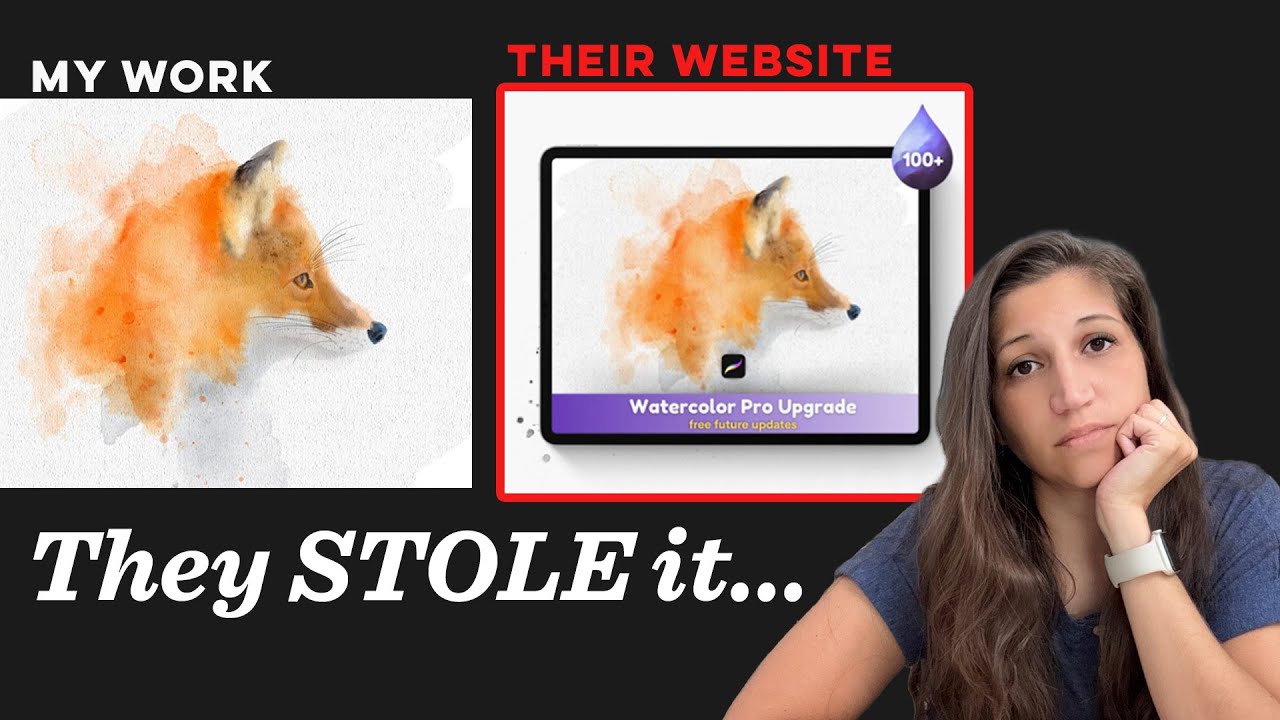
Combine prevention, detection and response. Copyright and watermarks discourage copying, monitoring tells you when it happens, and licensing and secure accounts limit how far a problem can go. The video below walks through the basics of keeping art from being stolen online, and the sections after it go through each step.
Should you copyright your work right away?
Yes. Copyright is one of the most basic protections for both traditional and digital art, and it marks you as the owner with the right to reproduce, distribute and display the work as you choose. In many countries, work is protected the moment it is created. Registering the copyright formally adds legal benefits, such as the ability to sue people who distribute your work illegally.
Include a copyright notice on every platform where you show your work, so nobody can claim they did not know whose it was. A visible mark on the image itself is the next layer.
How do watermarks protect your designs?
A watermark discourages unauthorized use and asserts your ownership. It only works if it is visible enough that people cannot simply remove it while editing your art. A few habits make it more effective:
- Adjust the watermark’s size and placement so it displays correctly on every platform and is hard to crop out.
- Check regularly whether anyone has used your artwork without permission, using a reverse image search tool.
- Add a short paragraph stating who the artwork belongs to and why respecting intellectual property matters.
Watermarks do not stop a determined thief, which is why you also need to know when a copy appears.
What proof of ownership should you keep?
Keep the evidence that you made the work. Save original layered files, sketches, work-in-progress exports and the dates they were created. If someone disputes your ownership or you file a takedown notice, these records show your process and the order of events. Store copies somewhere separate from the accounts you use to publish.
How do you monitor where your artwork is used?
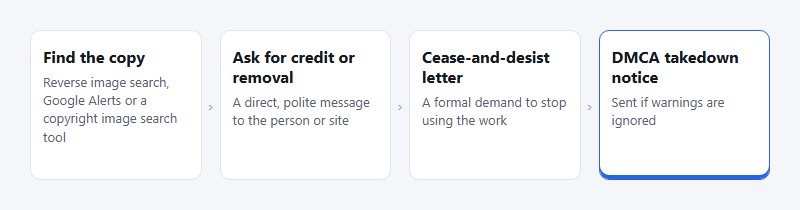
Set up alerts that tell you who uses your designs and how they are shared. A Google Alert works, and so does an alert on a copyright image search tool. The sooner you spot misuse, the easier it is to deal with.
When you find someone misusing your work, you can respond in increasing steps:
- Contact them and ask for credit.
- Send a cease-and-desist letter.
- File a Digital Millennium Copyright Act (DMCA) takedown notice if they ignore your warnings, so the infringing content is removed.
Keep screenshots and dates of each case, because they help if the matter escalates. Strong accounts keep a thief from taking your files at the source.
Why do strong passwords and secure platforms matter?
Not every platform has your interests at heart, especially where intellectual property is involved. Strong passwords and well-established, safe platforms prevent both security problems and copyright infringement. Security writers regularly point out how many people use birthdays and names as passwords, and those are easy to guess. A strong password or a password manager makes it much harder for someone to get into your accounts. For a broader grounding, see this quick guide on cybersecurity.
When you sell artwork online, pick a reputable e-commerce platform that prioritizes data protection and your safety. If you often work on public networks, a Virtual Private Network such as Surfshark VPN adds protection for your logins. Storing files carefully matters as well, and a safer digital asset workflow shows how designers organize it.
How do licensing agreements protect your work?
A license lets you give others permission to use your work while you keep ownership. You can make money from artwork in several ways, and licensing is one of the best ways to control how it is used and distributed online.
If you go this route, draft a clear licensing agreement that states how and when people may use your work. The more detail it has, the less room there is for disputes. If you need a professional to review it, bring one in early so no loose ends remain. These notes on graphic design contracts may also help.
Frequently asked questions
Do I need to register my copyright?
In many countries, work is protected from the moment you create it. Registration adds legal benefits, such as the right to sue over illegal distribution in some jurisdictions, so it is worth doing for work you care about.
Can a watermark be removed?
Yes, which is why it should be visible, sized properly and placed where cropping would damage the image. It deters casual copying but does not replace monitoring.
What is a DMCA takedown notice?
It is a formal request, based on the Digital Millennium Copyright Act, asking a website or host to remove content that infringes your copyright. You send it when someone ignores your warnings.
What is the first step to protect your designs?
Add a copyright notice and a visible watermark to your portfolio today, then set up a Google Alert or reverse image search for your best pieces. Those two steps take an hour and tell you immediately whether anything is already being copied.

Renowned for his expertise in logo design and visual branding, Bogdan has developed a multitude of logos for various clients.
His skills extend to creating posters, vector illustrations, business cards, and brochures. Additionally, Bogdan's UI kits were featured on marketplaces like Visual Hierarchy and UI8.
He also wrote in the past years on sites like Design Your Way, WebDesignerDepot, WPDean, Designmodo, Speckyboy, Slider Revolution, and more.
- How to Design Marketing Materials That People Actually Keep - 27 November 2026
- Behind the Logo: What Font Does Starbucks Use? - 26 November 2026
- Visual Hierarchy in Short Videos: How to Guide Attention Across a Sequence - 26 November 2026

Bogdan Sandu is a seasoned designer who has been designing websites since 2008. Renowned for his expertise in logo design and visual branding, Bogdan has developed a multitude of logos for various clients. His skills extend to creating posters, vector illustrations, business cards, and brochures. Additionally, Bogdan's UI kits were featured on marketplaces like Visual Hierarchy and UI8. He also wrote in the past years on sites like Design Your Way, WebDesignerDepot, WPDean, Designmodo, Speckyboy, Slider Revolution, and more.
You Might Also Like