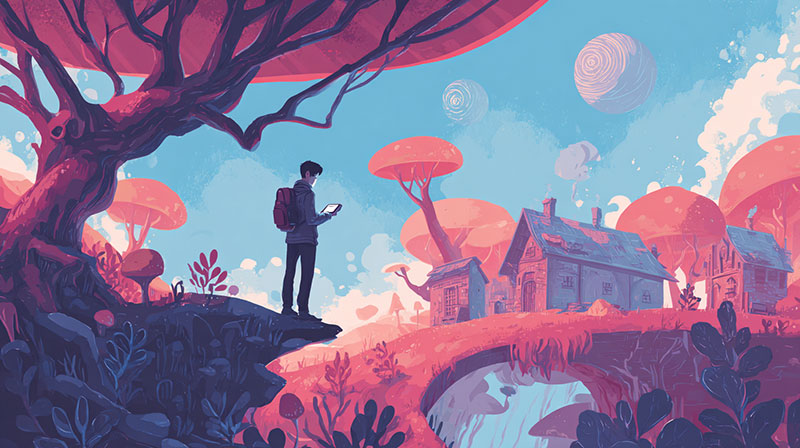
With the video game industry continuing to expand at a rapid rate, the role of a game art developer is evolving too! In 2025, game art developers will be faced with exciting challenges and new responsibilities due to advances in technology and a changing market. This article will focus on a game art developer’s key responsibilities, the fundamental role artificial intelligence (AI) plays, the essential skills, and much more.
What are Game Art Developer’s Key Responsibilities in 2025?
Game art developers in 2025 will continue to be a key player in the visual experience of video games. Their responsibilities will cover the visual aspect of game art development in ensuring the visual assets align with the vision and technical requirements of the game. Some responsibilities will include:
- Creating 3D Models: Creating characters, environments and assets at a high level of detail and condensation and realism including upund data and specs.
- Texturing and Shading: Texturing and materialifying models to increase visual integrity.
- Animating Characters and Objects: focusing on game animation including enabling smooth and realistic character actions and place-based object incentives.
- UI/UX Design: Making sure the GUI is functioning with an eye for a trendy aesthetic.
- Maintaining Consistency: keeping consistency of style and design for the overall experience with balance and practicality from the creative side to establish as a practical event united in synergy.
How Is AI Changing the Workflow of Game Art Developers?
AI is greatly influencing the gaming development space by automating certain areas of game art creation. One of the companies that I work for has said that in 2025, they expect AI tools to help game art companies reduce the amount of time spent on repetitive tasks and improve the use of their studio space and locate efficiencies. Here are some key examples of how AI is affecting game art development.
- Procedural Content Generation – AI can produce various environments, textures, and assets by simply making a few decisions at the outset based on a few simple rules. As a result, it saves valuable time and includes possibilities that add more variety.
- Automated Animation – Automated animation really can minimize the fidgety work associated with animation. For example, AI tools can be used to produce in-betweening or to create schools for procedural character movement.
- Enhance Texturing – A texturing AI tool can ensure the creation of reliable patterns, making the drawing and texture process more reliable and efficient.
What New Skills Are Essential for Game Art Developers in the Industry?
Game art developers will need to change with the times in 2025 and be well versed in technology and trends to help to build a successful game. Here are some of the skills developers will need to use in the future:
- Understanding AI Tools: Learning how to use AI tools to help complete animation and modeling for video games will be key moving forward.
- Understanding Real-Time Rendering: Since real-time rendering has been gaining traction as one of the two popular game engine types, learning how to create art that can be rendered in real-time is going to be very important.
- 3D Modeling and Sculpting Skills: Good artists will still need to know how to use key 3D modeling tools and software like Blender, ZBrush, and Maya. This software will still be prevalent.
- VR and AR Understanding: Once VR and AR gaming become a household name or commonly used, artists are going to have to learn how to present and create art for these specifically immersive experiences.
- Ability to Optimize Art for platforms: Game developers will need to learn how to create art that can then optimize across platforms – from consoles to mobile devices to PCs.
How Do Game Art Developers Balance Creativity and Technical Constraints?
One of the constant struggles for game art developers is to find a balance between creativity and technical limitations. It can feel like game design has made the most demands on your creativity ranging from polycount restrictions, textures sizes and frame rates, etc., and is oftentimes the same reason your creativity is constrained. In 2025, as a developer you will need to explore your creativity while leveraging the technology to create visually vibrant and immersive world design and presentations.
- Optimizing Assets: Stay ahead of the technical team when optimizing assets while still preserving visual fidelity.
- Efficiency of Design: It will be most effective to design in a way that streamlines the artistic process while still meeting a high standard of art design. This may be anything from reusing assets, adequately optimizing textures, and limiting load times.
What Role Does Procedural Generation Play in Modern Game Art Creation?
Procedural generation is becoming more and more important for game art studios in 2025. Procedural generation allows developers to create large and diverse environments without needing to create every piece of art from scratch. Procedural generation techniques can be particularly beneficial for:
- Creating Dynamic Worlds: In open-world development, procedural generation provides a means to create massive and continually evolving landscapes.
- Improving Replayability: Procedurally generated games can dynamically modify their environments and elements, so players will have a different experience each time they play.
As procedural generation becomes more common, game art developers will need to understand the principles of procedural generation so that they can best apply it to both designing game worlds.
What Is Cross Collaboration for Game Art Developers Today?
Cross-collaboration between different teams, such as designers, developers, and animators, is necessary in modern game art creation. Game art developers in 2025 must be able to collaborate with professionals in various roles, ensuring the artistic vision matches the technical possibilities for the game. Being able to communicate effectively with designers or coders is vital, to reduce redundancy and quickly find solutions to problems.
What Tools and Software Should Game Art Developers Master in 2025?
As the tools for gaming development evolve, game art developers must keep up-to-date with the latest software. Some of the most important tools to master in 2025 include:
- Blender, Maya, and ZBrush for modeling and sculpting.
- Substance Painter for texturing.
- Unreal Engine and Unity for real-time rendering.
- Adobe Photoshop and Illustrator for 2D assets and textures.
- Houdini for procedural generation and complex simulations.
- Marvelous Designer for fabric and clothing simulation.
How Can Game Art Developers Stay Competitive in a Rapidly Changing Market?
The evolution of the video game business moves at a rapid pace, with continually emerging technologies, platforms, and tools. To stay ahead in the fast-evolving marketplace of 2025, game art developers should:
- Keep learning: Staying updated on new software and trends, as well as understanding industry benchmarks.
- Expand networking and collaborating: Building relationships with other professionals and game art companies to open up new possibilities.
- Try out new technologies: Game art developers should be exploring these exciting areas such as VR, AR, and AI, which present exciting possibilities for innovation in game art.
Conclusion
In 2025, game art developers will be forging new paths with exciting new technologies and consumer demand for better quality gaming experiences. The new landscape will challenge developers to think creatively while adhering to technical constraints, mastering new tools with the latest advancements in AI and learning to collaborate. So long as game art developers are tuned into the state of the art software, they will continue to be challenged in their ability to create and see results through visual storytelling. Along with the technical abilities, developers will be in a good position to build a strong future with procedural generation and continued reference to concept art, game animations, and video game design.
If you are a game art developer, keeping up with these trends will continue to keep you relevant, and allow you to help shape the evolution of the gaming industry.

Renowned for his expertise in logo design and visual branding, Bogdan has developed a multitude of logos for various clients.
His skills extend to creating posters, vector illustrations, business cards, and brochures. Additionally, Bogdan's UI kits were featured on marketplaces like Visual Hierarchy and UI8.
He also wrote in the past years on sites like Design Your Way, WebDesignerDepot, WPDean, Designmodo, Speckyboy, Slider Revolution, and more.
- Best Visual Regression Testing Tools for Web and App Design in 2026 - 13 October 2026
- Jujutsu Kaisen Font Generator - 12 October 2026
- The Windsurf Logo History, Colors, Font, And Meaning - 10 October 2026

Bogdan Sandu is a seasoned designer who has been designing websites since 2008. Renowned for his expertise in logo design and visual branding, Bogdan has developed a multitude of logos for various clients. His skills extend to creating posters, vector illustrations, business cards, and brochures. Additionally, Bogdan's UI kits were featured on marketplaces like Visual Hierarchy and UI8. He also wrote in the past years on sites like Design Your Way, WebDesignerDepot, WPDean, Designmodo, Speckyboy, Slider Revolution, and more.
You Might Also Like